
Conquer your first isle with ten practical moves, sparked by the Pax Romana blueprint.
Start your adventure in Latium
Launch your first settlement on Latium’s shores in Anno 117: Pax Romana. Place your initial camp amid fertile fields and coastal access to secure food, timber, and trade routes right away. Assign workers to basic needs like farms and markets while scouting nearby resources for quick expansion. Build simple housing and roads to draw in more settlers, forming the base for your Roman province.
Anno 117: Pax Romana‘s campaign isn’t just about the story; it also introduces the game’s many features, and thus serves as a lengthy tutorial. It’s therefore highly recommended to start your first game of Anno 117 in campaign mode.
That said, the campaign always pursues set objectives, so you aren’t fully free to develop your empire your own way. If you’d rather start a game without main quests and story, you might want to choose endless mode instead, but in that case, it’s best to pick Latium as your starting region rather than Albion. The Roman Latium is more peaceful, doesn’t make you choose between Romans and Celts, and has a more forgiving environment, whereas Albion’s marshlands and political tensions are harder to manage.
Mind the processing time
New players often overlook how long construction and upgrades take in Anno 117: Pax Romana. Queue up multiple buildings ahead of time to keep expansion moving without long waits. Check production chains regularly, since delays in one spot cascade across your island. This habit prevents idle moments and lets you focus on growing your first settlement smoothly.
If there was only one Anno 117: Pax Romana tip we could give you, it would be this one. In Anno 117, buildings are part of production lines; you click on an end product such as timber, porridge, or tunics, and you’ll see all the buildings required to obtain that product: the woodcutter and sawmill for timber, the oat farm and porridge stand for porridge, the hemp farm and spinner for tunics, etc.
If you hover over the products in a production line, you will see their processing times. This allows you to place exactly the right amount of buildings to fulfill your citizens’ needs and ensure that no building ever produces too much or too little. Early game production lines are usually quite simple. The woodcutter and sawmill both have a processing time of 30 seconds, so whenever the sawmill is ready to work on the next batch of timber, the woodcutter provides a fresh stack of wood.
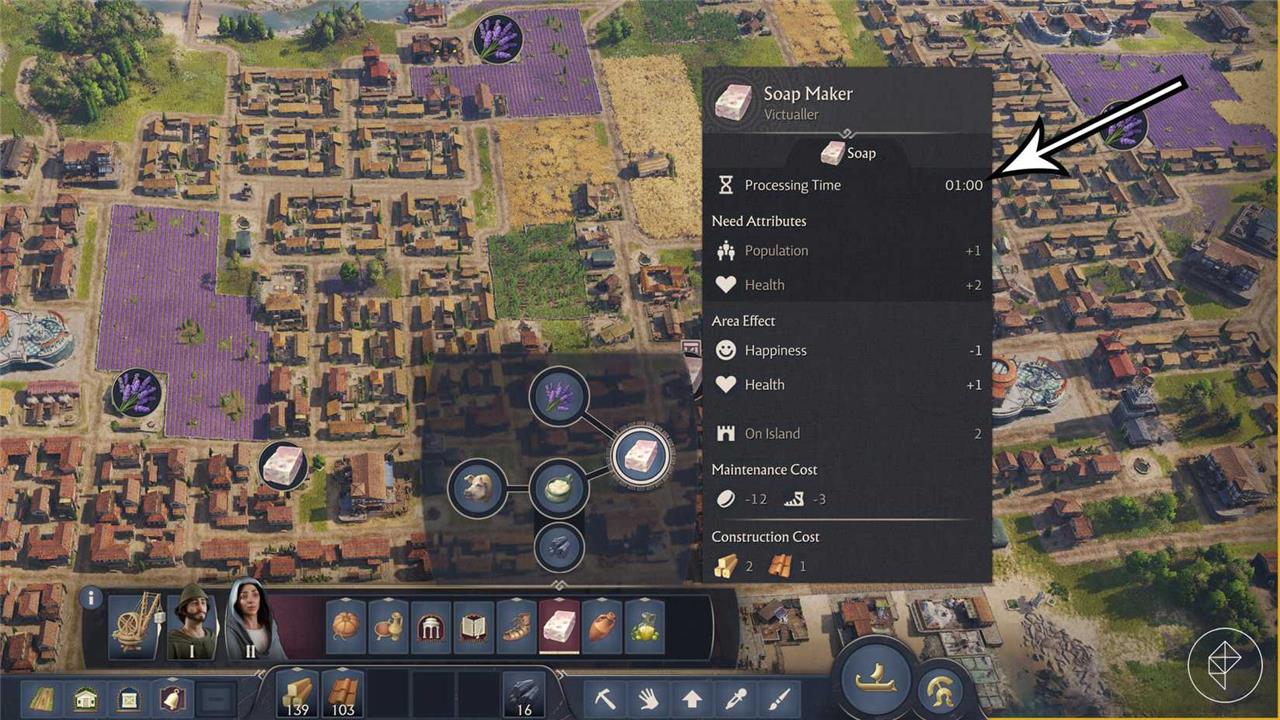
But if you wish to produce soap, for example, you must use the processing times to calculate the number of production buildings required to make one stack of soap. Here’s how that works:
- Soap has a processing time of one minute.
- Lavender has a processing time of two minutes. It takes twice as long to produce compared to the end product, so you need two lavender farms (running at max capacity) to produce one soap.
- The renderer has a processing time of one minute, which matches the soap production perfectly.
- Charcoal and pigs, resources used for the renderer, each have a processing time of 30 seconds, which makes them twice as fast as the renderer. You therefore only need one of each to produce soap and gain a surplus to boot. Keep in mind, though, that both resources are used for other end products as well. If you build two tanneries, for example, you must recalculate processing times; you’d need three pigs per minute while a single pig farm only produces two.
Upgrade to paved roads as soon as you can
Upgrading dirt roads to paved ones quickly boosts your island’s productivity and speed. Carriers move supplies faster, trade routes become smoother, and construction times drop noticeably. It also helps maintain steady production chains since resources reach workshops and warehouses without delay. Prioritize paving routes between resource sites, marketplaces, and key buildings once your brick supply allows.
Once you’ve reached population tier three, a new resource is unlocked: concrete. Start producing concrete as fast as you can, and once you have five stacks, open the research tree. As the second node after “Warehouse Organization” (on the economic side), you’ll find the “Paved Roads” research. Unlock it and use the upgrade button to improve the dirt roads in your empire.
Not only do paved roads improve every building’s range, but they also speed up production. Almost every type of building will benefit from better infrastructure, so be sure to make this upgrade a priority.
There’s no need to fulfill every need
Master the basics without chasing every request-focus on sustainable growth, smart resource use, and steady progress to build a thriving, resilient island.
Anno 117: Pax Romana‘s progression system works with population tiers: In Latium, for example, you start with Liberti (tier one), and if you fulfill their needs, you gain access to Plebeians (tier two). Plebeians come with new building types to further advance your empire.
To reach the next population tier, you don’t need to produce every kind of end product. To fulfill the Liberti’s need for food, for example, you can choose between sardines ( 1 population, 1 income) and porridge ( 2 population). It can be useful to produce both, since that will give you a double bonus ( 1 income and 3 population) but you don’t have to do so. To unlock the Plebeians, having sardines, tunics, and a market is quite enough.
It can be beneficial to rush into the next population tier, as doing so unlocks more valuable goods, more advanced technologies, and perhaps most importantly (as mentioned earlier), access to better roads. Boost the tier progress first, come back for additional bonuses later.
Don’t upgrade every residential area
Upgrading every residential area too early can strain your resources and halt city growth. Higher-tier citizens demand more goods and services, which can overwhelm your supply chains if your economy isn’t balanced. Keep some lower-tier neighborhoods intact to maintain steady production and taxes while you gradually prepare for the next expansion tier. This approach ensures smoother development and prevents sudden shortages that disrupt progress.
Progress means upgrading the population, right? Well, only to some extent, as every type of building requires a specific type of workforce. For example, the woodcutter, warehouse, and every building linked to the Liberti population also requires Liberti to operate. If you upgrade every residential building on your island to Plebeian level, you won’t have any Liberti workforce left, thus halting all woodcutter and warehouse operations.
To prevent workforce deficits, check the population stats next to your player icon at the top of the screen (left side) before you commit to a residential upgrade. This will tell you exactly how many available workers you have.
Build small lavender fields to make your citizens happy
Lavender fields add a pleasant touch to your settlement while boosting citizen satisfaction. They require fertile soil and workers but reward you with higher happiness levels and decorative value. A few small plots near residential areas can make neighborhoods feel lively and improve desirability without taking much space. Balancing aesthetic appeal with production buildings nearby helps keep productivity and morale high.
Romans love lavender fields so much that they gain one happiness if they live near one. The only problem is that a lavender field requires 180 tiles, which seems way too much to make it a feasible building to place in your city center. but there is a workaround.
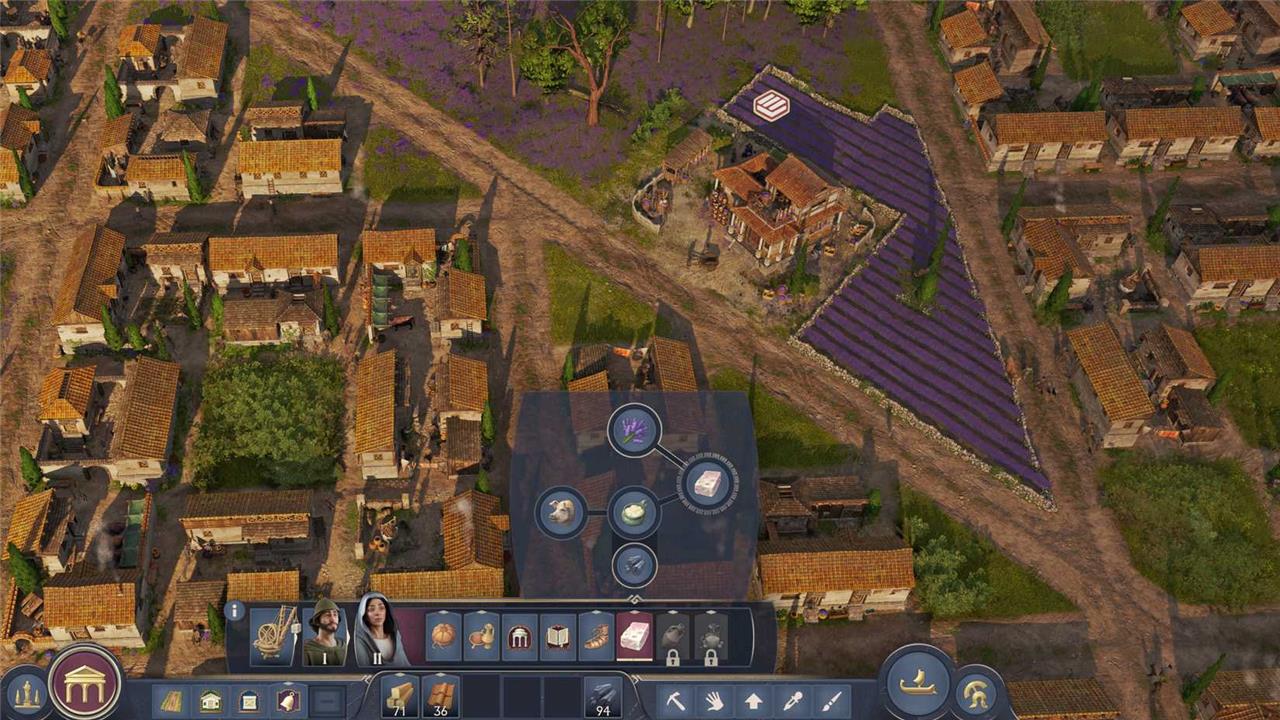
Although a lavender farm operating at full capacity would, indeed, require 180 tiles, you only need 27 tiles to activate the happiness bonus – enough to run the farm at its lowest output capacity. Build tiny lavender farms throughout the city (but avoid overlap) to make maximum use of this exploit.
Don’t forget to colonize a second island
Once your first island hums with steady production and trade, claim a second one right away. This spreads out your workforce needs and opens new building spots without cramming everything onto a single landmass. Early expansion keeps shortages at bay and fuels bigger Roman ambitions faster.
It’s easy to focus on your first island and forget about the rest of the Anno 117 map, but try to colonize a second island around the time you reach population tier two. The main reason is for the island fertilities. Every island has a limited set of natural resources, and you’re unlikely to find every resource you’ll (eventually) need on your starting isle, such as resin and olives.
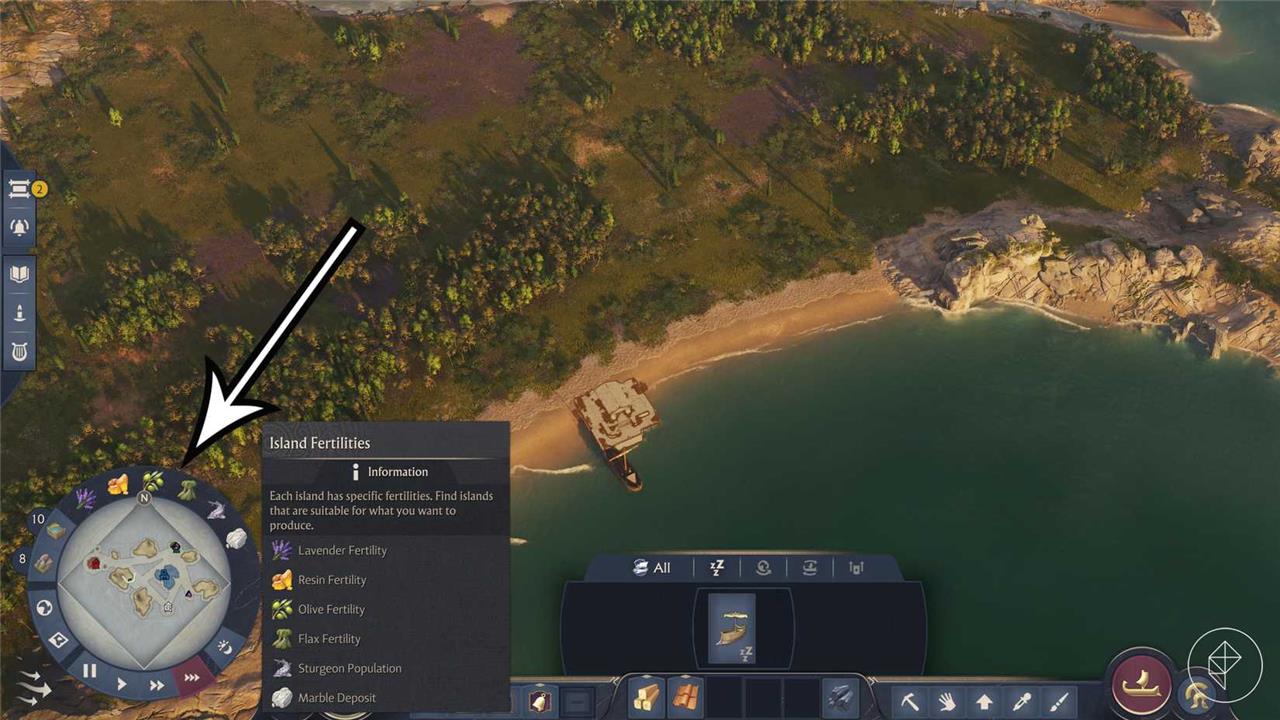
So, before your rivals have had a chance to colonize the good islands, send one of your ships to scout for new land, get close to the shore, and build a trading post to claim the island for yourself. Island fertilities are displayed on the circle around the mini-map.
Ornaments aren’t just ornamental
Decorative items in Anno 117: Pax Romana do more than beautify your settlement-they influence citizen satisfaction and can subtly boost nearby productivity. Placing statues, plazas, and fountains near housing or administrative buildings helps maintain a harmonious city layout and improves morale. Thoughtful decoration placement can be the difference between a struggling colony and a thriving Roman hub, so treat design choices as strategic tools, not distractions.
Next to the “construction” menu, you’ll find the “ornaments” menu, which appears to be purely decorative. However, ornaments are a great way to boost prestige in Anno 117: Pax Romana. For some reason, the game doesn’t tell you this, nor does it disclose how much prestige you gain by placing ornaments, but check your prestige stat before and after placing a few fancy statues in your city, and you’ll notice the difference.
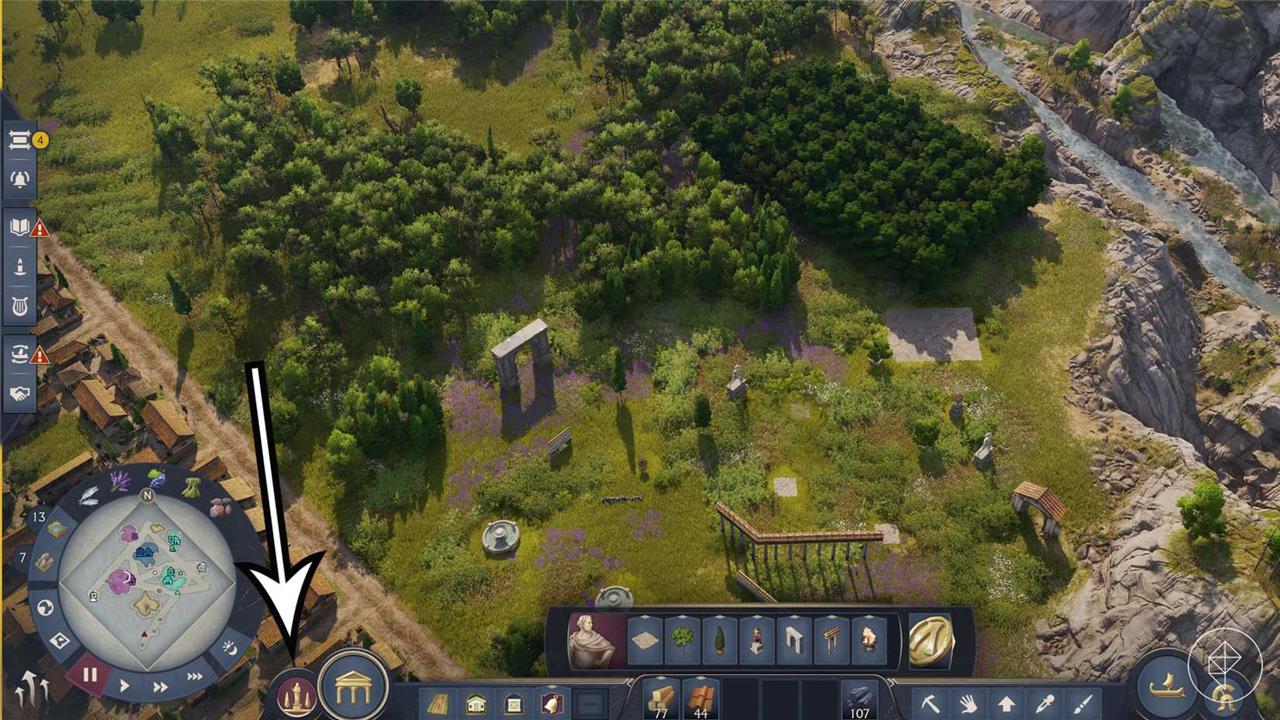
Not every type of ornament improves prestige. Ground patterns, walls, and hedges are exempt, but every type of natural foliage, horticultural display, statue, ornamental structure or building, and everything that falls under “miscellaneous” adds four to five points of prestige per tile. To gain a quick prestige boost, select any of these ornaments and place them in bulk, but make sure you have enough money, as ornaments are quite costly.
On a side note, ornamental trees do not count as fertile forest for woodcutters and charcoal burners – if only it were that easy!
Make sure to improve fire safety
Fire outbreaks can destroy your settlements quickly, so placing fire stations early near residential and industrial zones is a smart move. Make sure each station covers all nearby buildings and keep roads clear for patrol access. Avoid clustering production facilities that generate heat, such as bakeries or workshops, too close together. Maintaining a steady water supply also helps your firefighters respond quickly if flames spread across dense urban blocks.
Fires can become a huge problem in Anno 117, as your island’s fire safety drops super fast as your city expands. Depending on your chosen difficulty level, you can suffer fires almost every other minute if you don’t take any preventive measures.
In early game, the best thing to do is place city watch towers in central locations. You can also research “wells” in the civic research tree. If a fire nonetheless breaks out, pause the game and use the relocation tool to relocate neighboring, unharmed buildings before the fire has a chance to spread. You’ll always lose a few buildings, but it’s nothing you can’t fix.
Enter first-person mode for a fun time
Switching to first-person mode adds a playful twist to managing your settlement. You can walk through your streets, stand by the forum, or watch workers haul supplies firsthand. It’s a great perspective for admiring your city’s growth and spotting layout issues you might miss from above. Taking a pause to stroll through your villas or markets makes the world feel more personal and alive.
Last but not least, here’s something you can do for fun, even though it doesn’t affect gameplay: Walk around your islands in first-person mode. Want to truly feel what it’s like to be a citizen of Latium or Albion? Press “Ctrl,” “Shift,” and “R” to enter first-person mode. On a controller, you must use the Konami code: up, up, down, down, left, right, left, right, B, A, start.
Apa perbedaan mode kampanye vs mode tanpa tujuan pada Anno 117 Pax Romana
Mode kampanye dan mode tanpa tujuan (endless/sandbox) di Anno 117: Pax Romana punya fokus dan struktur yang cukup berbeda.
Mode kampanye
-
Berbasis cerita: Kamu bermain sebagai Marcus atau Marcia dengan alur naratif tentang politik kekaisaran, intrik, dan pembangunan kota Juliana, lalu berlanjut ke wilayah lain seperti Albion.
-
Tutorial terstruktur: Fitur-fitur seperti rantai produksi, kelas penduduk, politik, dan militer diperkenalkan pelan-pelan lewat misi, objektif, dan dialog, jadi cocok untuk pemain baru.
-
Misi dan babak: Setiap chapter punya tujuan jelas (bangun kota, hadapi krisis, urus hubungan dengan Kaisar), dengan keputusan dialog yang memengaruhi bonus dan jalan cerita.
-
Durasi terbatas: Kampanye diperkirakan sekitar 8-10 jam, lalu bisa “lanjut” menjadi permainan sandbox setelah ceritanya selesai, dengan kota
Bagaimana memilih Marcus atau Marcia di mode kampanye Anno 117
Pemilihan Marcus atau Marcia di mode kampanye Anno 117: Pax Romana dilakukan di awal permainan dan memengaruhi cerita, tapi tidak mengubah gameplay inti.
Cara Memilih
Pada layar awal kampanye, pilih salah satu dari dua saudara kandung ini: Marcus Naukratius (putra bungsu gubernur Kemet yang dipanggil Kaisar Lucius untuk memimpin provinsi Latium) atau Marcia Tertia (putri ketiga dari keluarga Naukratia yang seharusnya menikah demi kekuasaan, tapi malah naik ke posisi kepemimpinan).
Pilihan ini permanen untuk satu playthrough kampanye, tapi kamu bisa ulang kampanye dengan karakter lain untuk lihat cerita berbeda.
Perbedaan Cerita
-
Marcus: Cerita lebih archetypal tentang politisi muda tak berpengalaman yang terjerat konspirasi, konflik kekaisaran, dan perjalanan dari Latium ke Albion. Lebih ringan dengan elemen komedi, tapi dia kurang punya agency kuat.
-
Marcia: Fokus pada manipulasi sistem Romawi sebagai wanita (seolah-olah menikah dengan gubernur sakit/tiada), intrik politik gelap, rumor, dan perjuangan naik tangga kekuasaan. Dianggap lebih mendalam dan dramatis oleh banyak pemain.
Kedua cerita punya event serupa ( pesta ulang tahun Julia, konflik Albion), tapi perspektif, dialog, dan tema beda; ending mirip tapi narasi unik per karakter.
Dampak Gameplay
Tidak ada perbedaan mekanik: tugas, objektif, rantai produksi, dan progres sama persis. Hanya cerita/dialog yang berubah, jadi pilih berdasarkan preferensi naratif.
Rekomendasi Pilihan
| Preferensi Cerita | Pilih… |
|---|---|
| Drama politik intens, intrik wanita | Marcia |
| Cerita ringan, komedi, pemula politik | Marcus |
| Ingin replay untuk dua perspektif | Coba keduanya |
Mulai dengan Marcia jika suka cerita kuat; Marcus lebih santai untuk pemula. Setelah kampanye selesai, transisi ke sandbox dengan progres kota tetap.
