
Soil, seeds, and dwarven sweat-success in Dwarf Fortress farming isn’t luck, it’s planning. Master the rhythms of growth, from muddy plots to bumper harvests, and your fortress will never starve again.
Farming basics
Farming in Dwarf Fortress begins with creating a farm plot using the Build menu and selecting a spot on soil or mud. Underground plots require irrigation, usually achieved by channeling water from a nearby source like a river or pond. Once the plot is placed, you assign crops suited to each season, such as plump helmets or sweet pods. Dwarves with the Farming (Fields) labor enabled will automatically plant and harvest seeds. Keeping seeds stored in food stockpiles and maintaining a steady supply of drinkable water or alcohol helps ensure your dwarves stay productive year-round.
Farming starts with building a Farm Plot. Building one, planting seeds, and harvesting require at least one dwarf with the Planter Labor (or to have the Planters Labor set to everybody). Farm Plots have to be built on some sort of dirt (not stone) – clay, loam, sand, and silt. These tend to be close to the surface.
A fortress doesn’t need a lot of farmland to function. Each dwarf eats about twice and drinks about five times per season. Since a single seed can produce up to six harvestable plants (or more – see fertilizing below) and each plant yields one (easy) meal at a Kitchen, a fortress with the max population of 200 dwarves could (hypothetically) survive on a 6×6 farm plot for food. Making a drink at a still produces five drinks per plant, so you can (ideally) supply a full fortress with alcohol with a plot of the same size.
Those are ideal world numbers, though, and Dwarf Fortress is too fun for that, so you’ll eventually need a little more farmland. It’s going to take you a long time to hit the max population, though, so start small. We like to make two (and, eventually, four) 5×5 plots in a large room.
To build a Farm Plot, open Build (b) > Workshops (o) > Farming (f) > Farm Plot (p). Once it’s built, you’ll have to assign a crop to each season.
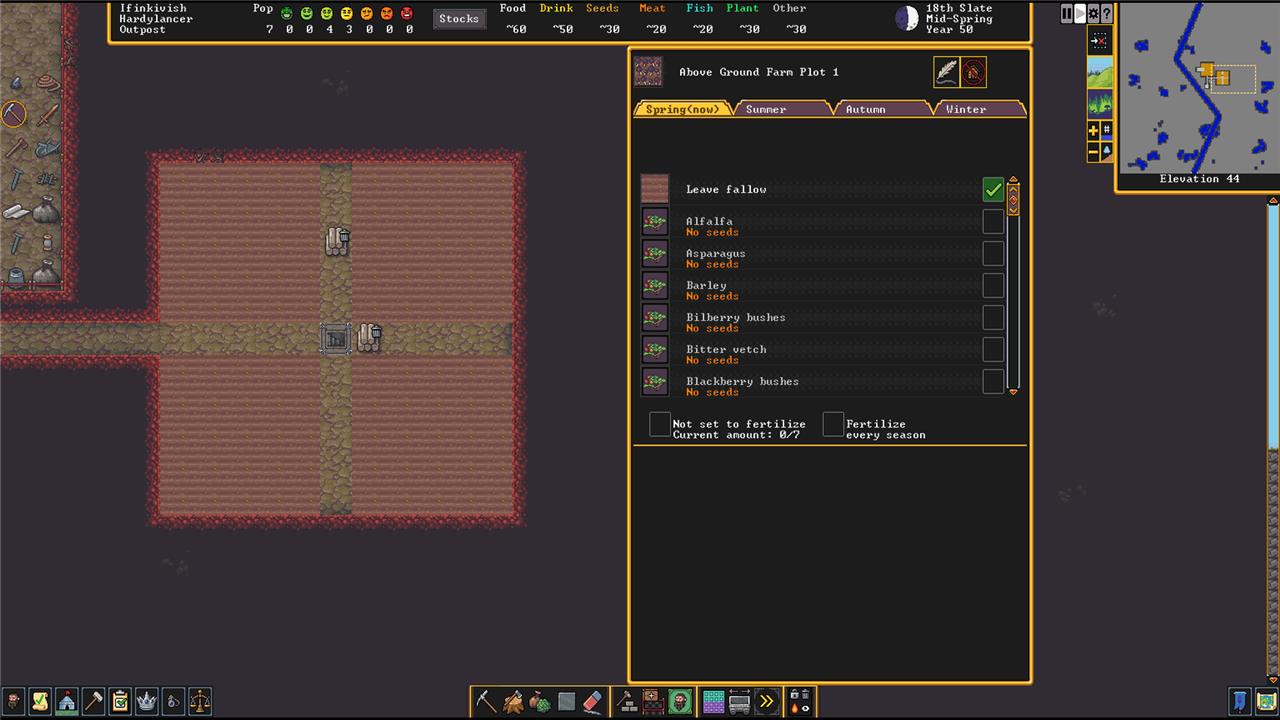
Which crops you can plant in each plot depends on the season and where the Farm Plot is located (or thinks it’s located). Some crops can only be planted in a subterranean plot and others can only be planted above ground. Let’s look at that distinction now.
Above Ground versus Subterranean crops
Above-ground crops grow on the surface and rely on sunlight, making them suitable for outdoor farm plots during the warmer seasons. They include plants like wheat and strawberries, which cannot grow underground. Subterranean crops, such as plump helmets and cave wheat, thrive in soil that has been exposed to underground water sources and need no sunlight. These are often farmed inside the fortress, providing a steady food supply year-round regardless of surface conditions.
Every block in Dwarf Fortress is either a subterranean block or an above ground block. An above ground block is one that, effectively, can see the sky – there are no blocks anywhere above it except for sky. Subterranean blocks are everything else.
The trick here is that a block only has to see the sky at some point to think of itself as an above ground block. That means you can cover an above ground farm plot with a floor and make it a, basically, indoor above ground plot.
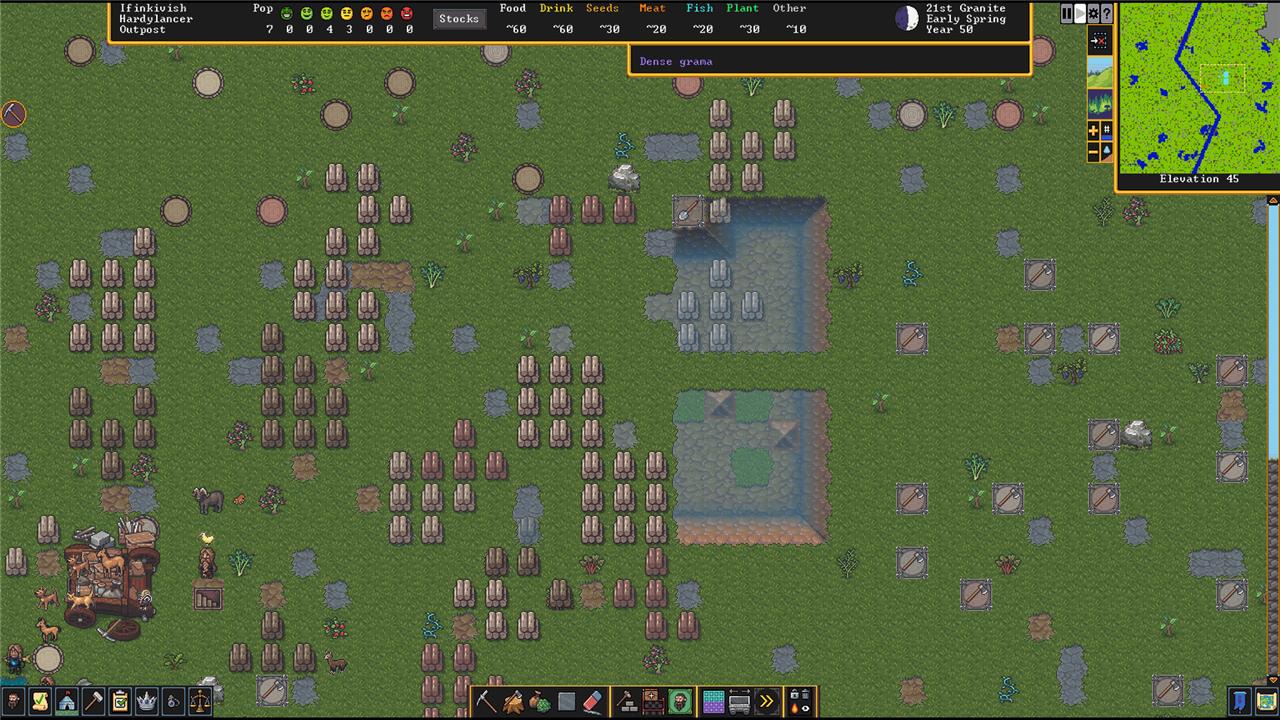
The fastest way to do this is to channel from ground level and clear a plot. Once it’s been dug out, you’re free to cover over it with a floor to prevent anything from sneaking in and causing mayhem.
Irrigation, flooding, and mud
Water management shapes the success of any underground farm. Crops need damp soil, so directing water through channels or buckets keeps plots fertile without drowning the seeds. Carefully flooding an area and then letting the water drain leaves a thin layer of mud where new plants can grow. Too much water washes everything away, while too little leaves dry, unusable ground. Balancing irrigation and drainage creates the perfect conditions for steady harvests.
There is also a workaround to needing soil to build a Farm Plot. When water drains off of a flooded block, it leaves behind mud, and mud can support a Farm Plot no matter what the underlying block is made of. You’ll see it described as a “muddy” block when you hover your mouse over it.
You can flood a block (or a room or, frankly, your fortress) with any water – either by draining a stagnant pool, diverting part of a river, or even with an aquifer. However you decide to flood the plot, it’s best to (try to) contain the water with doors linked to levers – this will (usually) prevent you from flooding your fortress. Bear in mind, it can take quite a while for that floodwater to evaporate.
It’s also possible to move water manually, but it takes a lot more time. Channel a hole into the roof of the future Farm Plot and designate it as a Pond Zone. This will make a new task for dwarves (usually children) to haul water to that location and dump it. Each Pond only gets one task at a time, so designate multiple Pond Zones in the same spot to speed up the process. The water will then disperse around the room. When you have mud covering your future Farm Plot, remove the zones or make them inactive to stop the dwarves from dumping water.
Fertilizing with Potash
Potash is used to boost soil quality, helping crops grow faster and produce larger yields in your farm plots. You can create potash by burning wood into ash at a Wood Burner’s Workshop and then processing it in an Ashery. Apply it through the farming interface to fertilize a plot before planting seeds. Fertilized fields tend to produce more plants per harvest, which is especially useful in small underground farms where space is limited.
A block of planted Farm Plot will grow up to six harvestable plants. It’s possible to increase that yield by roughly 50% if you fertilize the plot with potash.
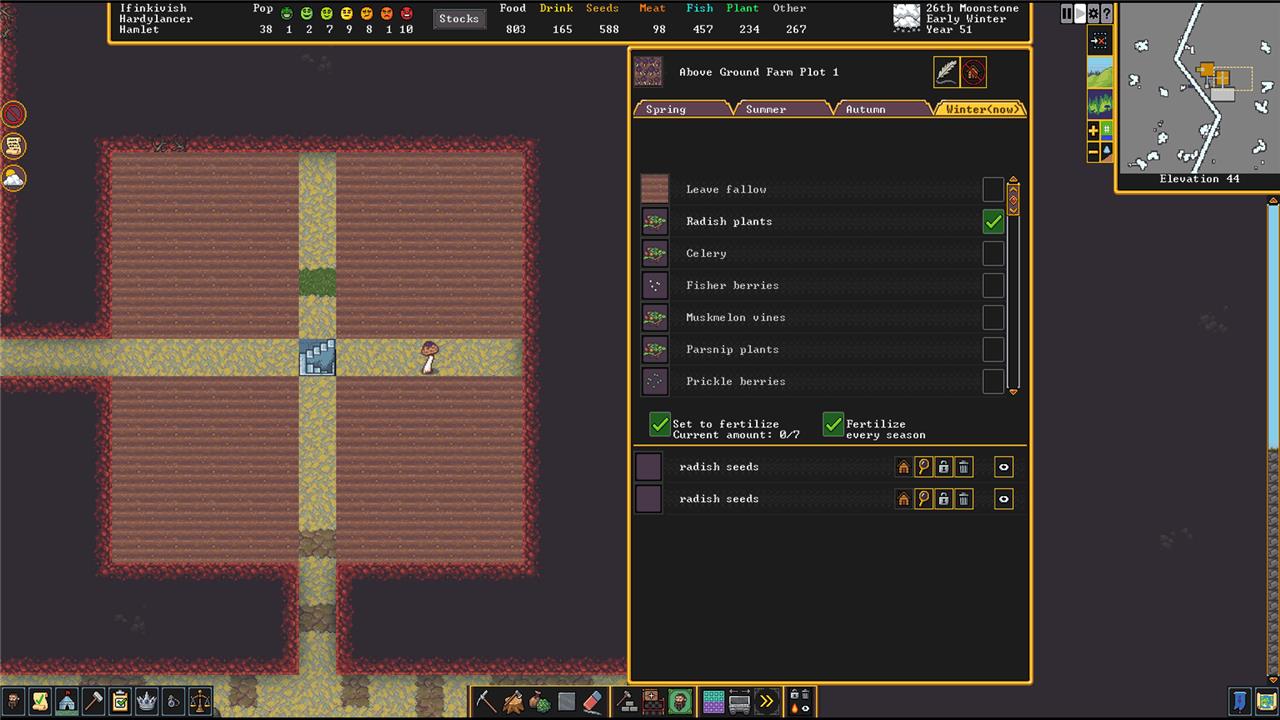
You’ll see a checkbox at the bottom of the Farm Plot window when you click on the plot – the same window where you pick what crops to grow during which season. You’ll also see how much fertilizer you need.
To make potash, you’ll need to start with a Wood Furnace. Order ash from the furnace to turn a wood log into an ash bar. From there, you’ll need an Ashery Workshop where you can order potash – potash also comes as bars.
How to get more seeds
Seeds can be obtained by processing harvested plants, brewing drinks, or buying them from traders. Each processed plant may yield several seeds, allowing steady expansion of your farm plots. Be careful not to cook all your plants, as cooking destroys their seeds. Instead, brew or mill them to produce both usable goods and new seed stock. Dwarves will automatically collect seeds if a seed stockpile is available nearby, keeping your farms supplied through each growing season.
How a plant gets processed determines whether or not you’ll get seeds to replant. Anything cooked into a meal – either plants or seeds – in a Kitchen will not give you seeds. Plants processed at a Still or Quern usually gives you seeds back.
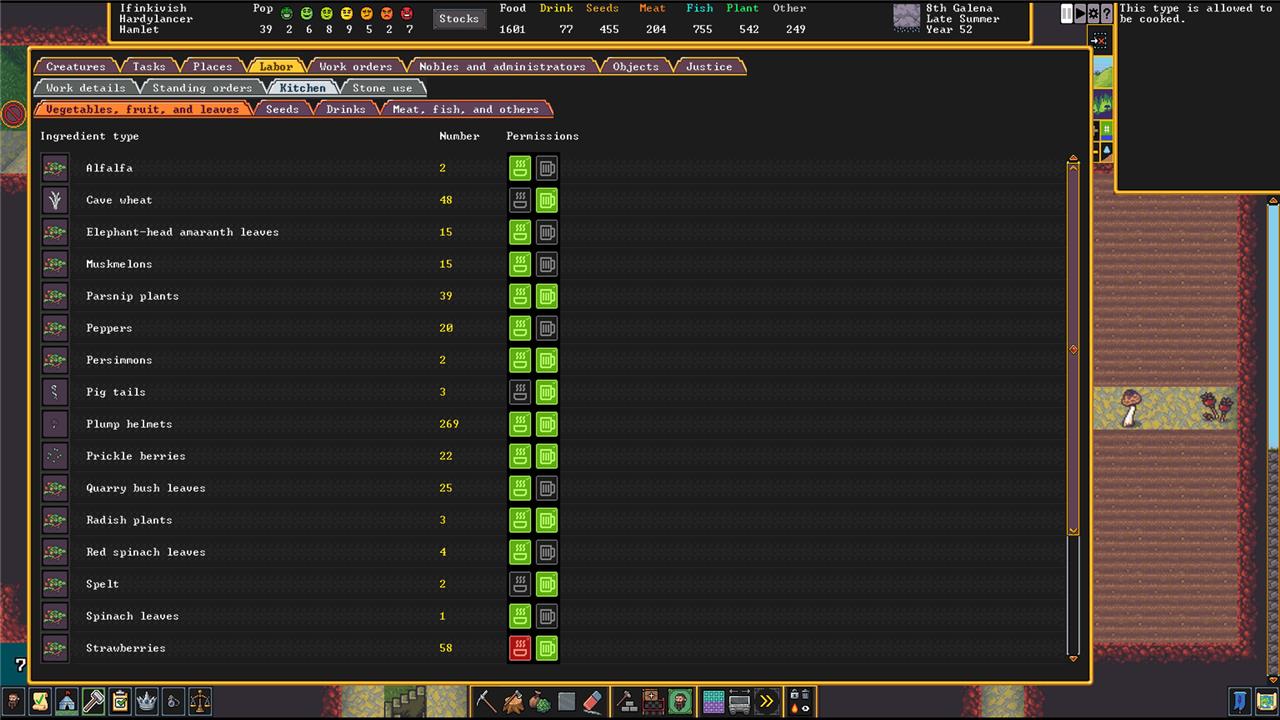
To make sure you keep a supply of seeds, you’ll need control what plants get used for what purpose in the Labor menu under the Kitchen tab. Here you can turn on and off cooking and brewing for each type of plant you have. The other tabs similarly determine how seeds, drinks, and meats are used.
Best crops to plant by season
In Dwarf Fortress, the best crops to plant vary by season to maximize growth success, food output, and brewable plants like plump helmets for alcohol. Choices depend on your fortress biome (e.g., temperate for most options), but prioritize versatile, high-yield options available via foraging or trade.
Spring Crops
Plump helmets are the top choice-they grow quickly underground, provide food and booze, and suit most plots. Pair with cave wheat or pig tails for variety and thread production.
Summer Crops
Dimple cups excel here for dye and bag production alongside food; plump helmets remain reliable if seeds persist. Avoid surface-only plants unless you have outdoor fields.
Autumn Crops
Pig tails or cave wheat shine for food, cloth, and seeds; plump helmets continue as a staple. These yield well with fertilization for plump helmets boosting output.
Winter Crops
Sweet pods are ideal for their food value and plump helmets as backup-they tolerate indoor plots year-round. Stockpile seeds and rotate to prevent shortages.
| Season | Best Crop | Key Benefit |
|---|---|---|
| Spring | Plump Helmets | Fast food/booze |
| Summer | Dimple Cups | Dye and food |
| Autumn | Pig Tails | Cloth and food |
| Winter | Sweet Pods | Reliable yield |
How to prepare soil for seasonal crops
In Dwarf Fortress, soil preparation for seasonal crops focuses on creating or accessing muddied tiles for farm plots, as crops like plump helmets won’t grow on bare stone. Dwarves handle most tasks automatically once plots are set up with fertilization enabled.
Creating Muddy Soil
Flood a stone area with water (1/7 depth via floodgates or channels) then drain it to mud up tiles-ideal for underground farms without natural soil. Use pumps or natural cavern lakes for efficiency; repeat if needed for larger plots.
Fertilization Setup
Toggle “Fertilize Field” on every plot and ensure a stockpile of potash (from wood furnaces or trade) nearby-dwarves apply it automatically per season for up to 50% yield boosts on crops like pig tails or dimple cups.
Seasonal Plot Management
Clear old growth by harvesting first, then reassign seeds (e.g., plump helmets for spring) via plot settings before each season starts. Irrigate lightly if evapora
