
When colossal titans clash and new monstrous allies emerge, the line between myth and reality blurs. In the latest chapter of the Monsterverse, VFX artists have transcended mere spectacle, breathing nuanced life into Godzilla and his new kaiju companions-creatures whose perspectives remain beyond human grasp, yet whose emotions resonate through groundbreaking animation and motion capture. Discover how cutting-edge visual effects have redefined the King of Monsters and introduced a thrilling new roster of giant beasts, each with distinct personalities and awe-inspiring presence.
You might not have known he was napping – the humans gathered on top of him in the desert certainly didn’t. And the show hasn’t been lacking in kaiju in his absence; the Apple TV Plus show, set in the Monsterverse of Godzilla (2014) and Godzilla vs. Kong (and soon Godzilla x Kong: The New Empire), has plenty of big monsters to live up to the name. Already, the human main characters of Monarch have traversed the world and run into everything from Trapdoor Crab on Skull Island to a sick-looking Frost Vark in the Arctic.
Bringing these monsters to life is a crucial part of the job for Sean Konrad, VFX supervisor for the series, who’s worked on Ms. Marvel, For All Mankind, and 2014’s Godzilla. A typical process might involve a few rounds of building a design, modeling it from a 2D illustration, waiting for storyboards to come back, roughly animating it, shooting the scene, then working in post-production to make sure it’s looking as it should. “Then you look at it and you’re like, Well, it doesn’t work yet; it’s not scary enough, [or] the personality isn’t developed,” Konrad says. Then you give that back to the concept team, with some feedback – like ’we really want to get some big scary teeth’ or ’we want to get an expressive face out of it’ – and voila!”
Then again, that’s just for one monster. And the stakes get even higher when you’re dealing with the king. Konrad spoke to AELGAMES (in fairly spoiler-free terms) about how he and his team go about shaping the world of Monarch: Legacy of Monsters.
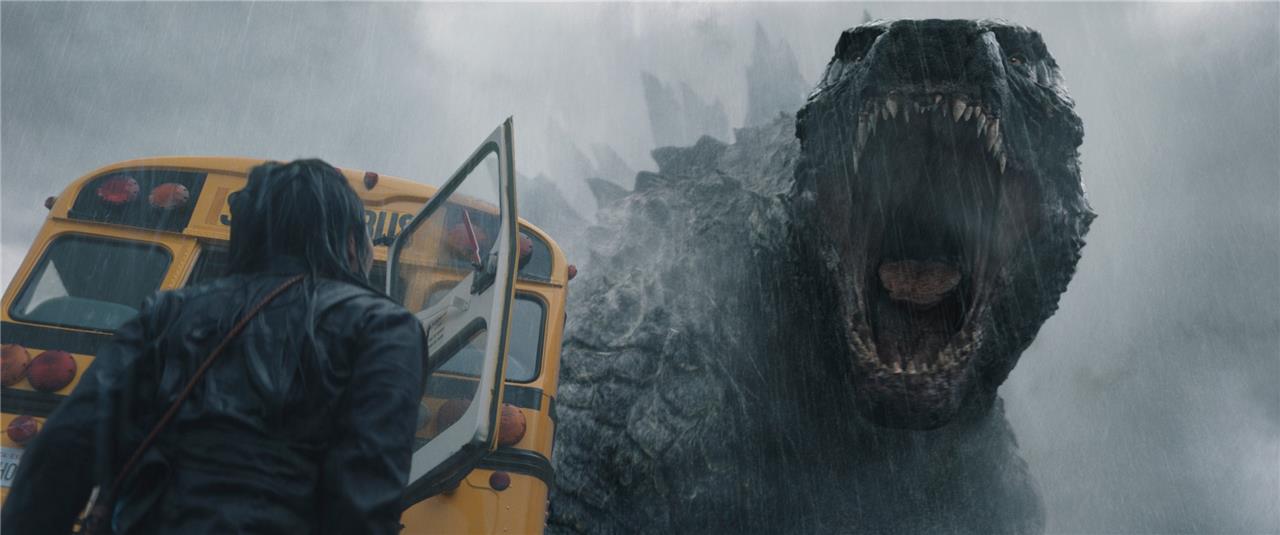
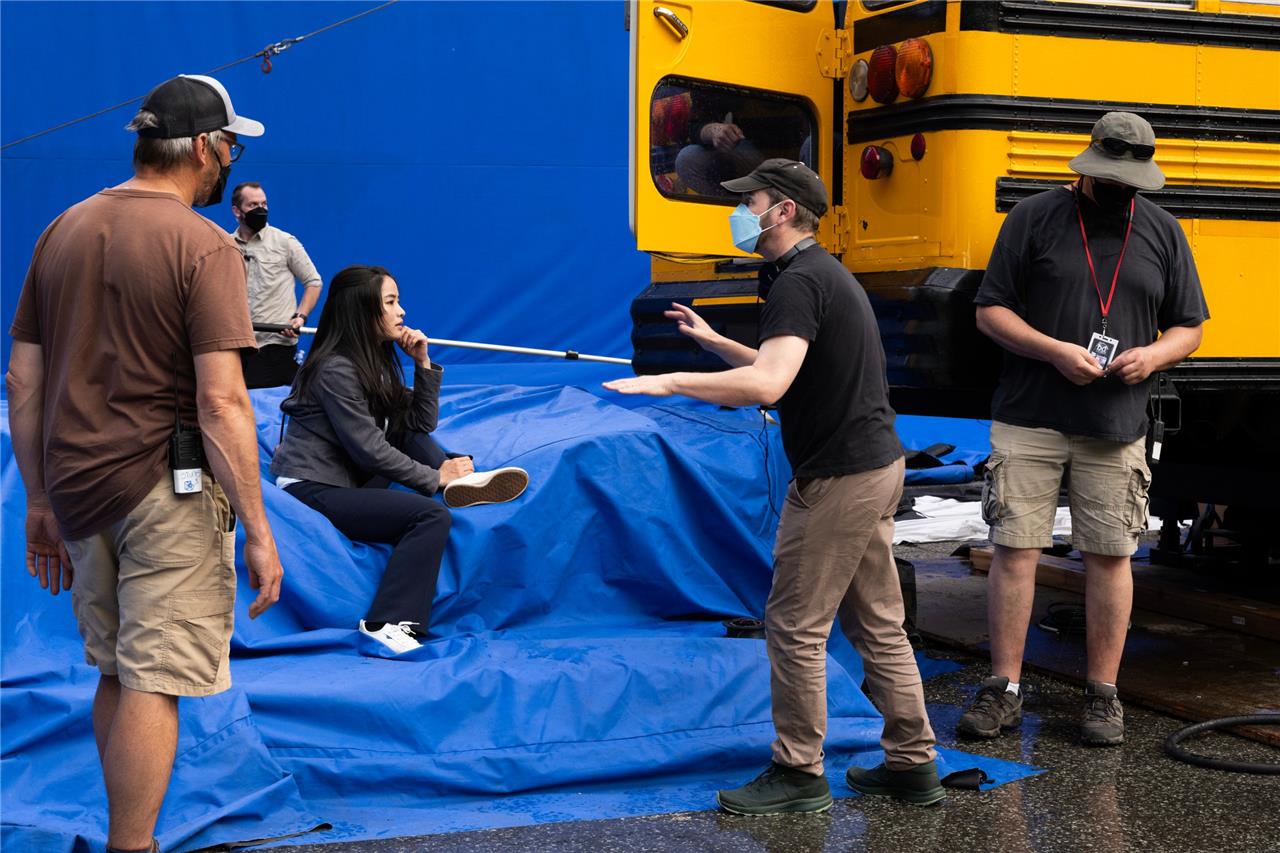
AELGAMES: One of the things we at AELGAMES talk about a lot is how well Monarch balances the human side with the monster side. And I’m curious how your role with all that took shape, and how that contributed to balancing this mammoth monster scale with these, you know, puny humans and their drama?
Sean Konrad: This is a show where our big action monster set-pieces are part of the emotional journey of our main characters. In a lot of big action movies you take your set-pieces, and then you figure out your story and how they fit into that, where this is kind of the opposite. Every sort of big action scene has a thing that relates to the interiority of our characters – their fears, their hopes – and that, to me, was super appealing from a script point of view. And then just figuring out how we do that from a storytelling point of view was such a joy.
How did the monster design happen – for things like the monster in the Arctic, was it a very collaborative process of, I think it’d be cool if its mouth looked like this?
A lot of the design philosophy of the Legendary Monsterverse, for their giant monsters, is like: Look at the natural world, find something weird and wonderful and terrifying. And then expand on that; go maximalist with it, do something ridiculous with it. And then when you’re finishing it off, go back to the natural world, and look at the real-world skin and texture of the things that you’re trying to evoke when you’re looking at it.
So sometimes we would have a really clear direction. And sometimes it’ll be more situational – we know the monster needs to do something, and sometimes we want that to be related to the natural landscape that it’s in. And sometimes we want it to be incongruent, in a way, like in the second episode, with the creature coming out of the ship. That was very intentionally, like, we don’t want it to feel like this belongs.
[With the creature in the Arctic] in the script, it had a very specific direction: We want it to look like a pangolin crossed with a star-nosed mole. So you look up those creatures, and then you get on a Zoom call with Matt Fraction and Chris Black, and you’re like, What the heck are you talking about here?
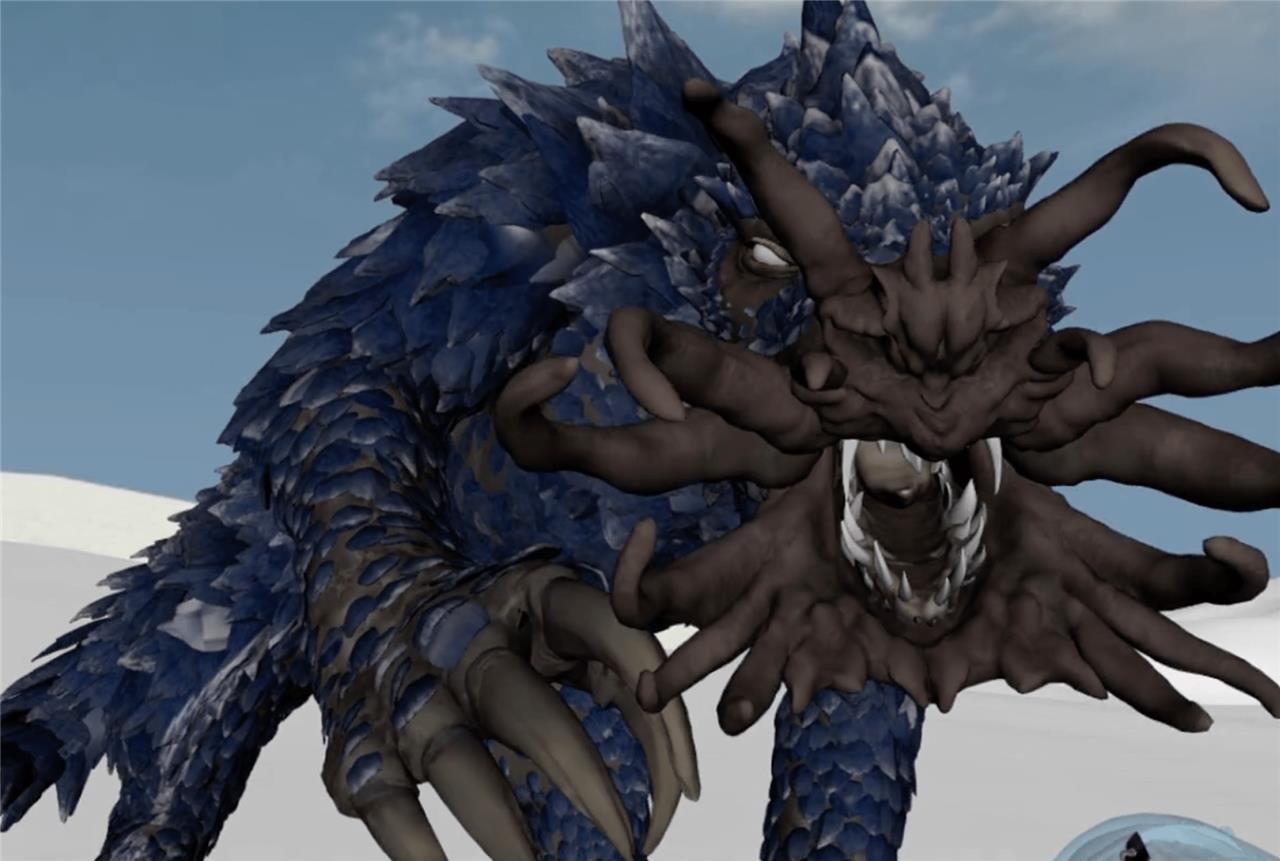
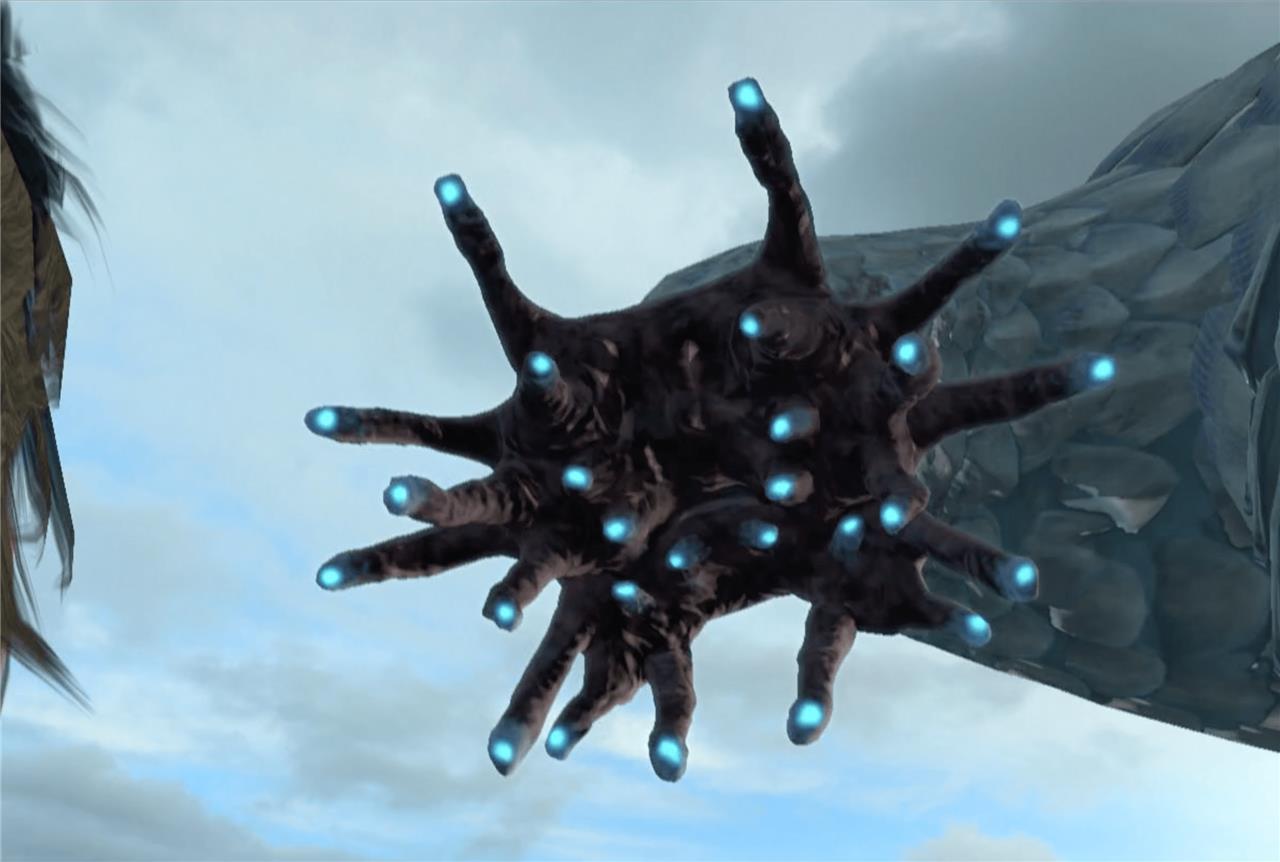
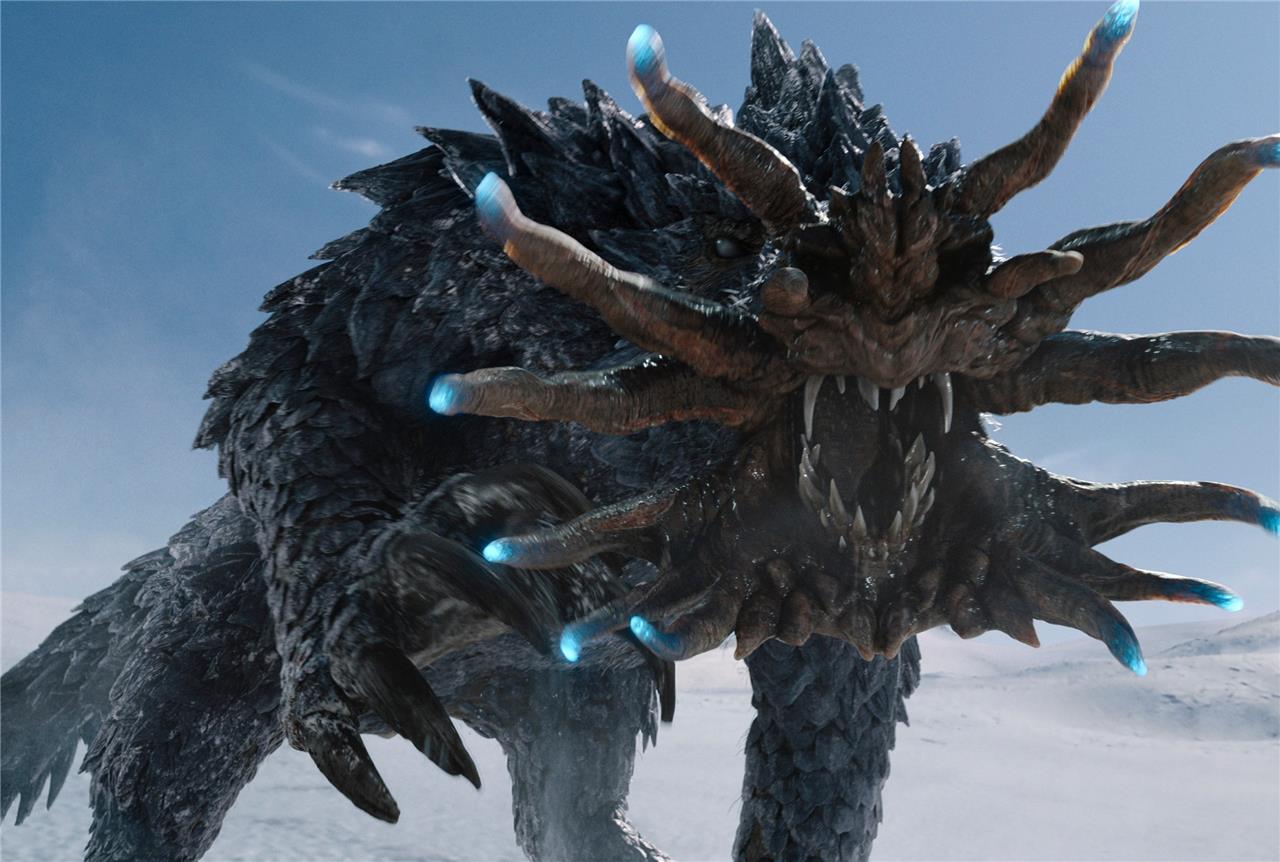
Matt Fraction had been tasking his son with doing research as part of his allowance to find weird, wonderful creatures in the natural world. And one of the things he came across was the star-nosed mole, this creature that lives underground and has these appendages sticking out of its face, that senses where it is when it’s burrowing, and has these big, very creepy claws; it’s kind of cute in a way. And then the pangolin – this amazing, endangered animal with these scales growing out of its back. It’s super weird; it’s a bipedal, four-legged animal that kind of hunches around and walks through anyway. So we give that to our concept team – Wētā FX did a lot of the concept for this show, and specifically to that creature.
There’s so many past scenes with Godzilla that he has to blend with – how did you marry those choices so he felt like the same monster?
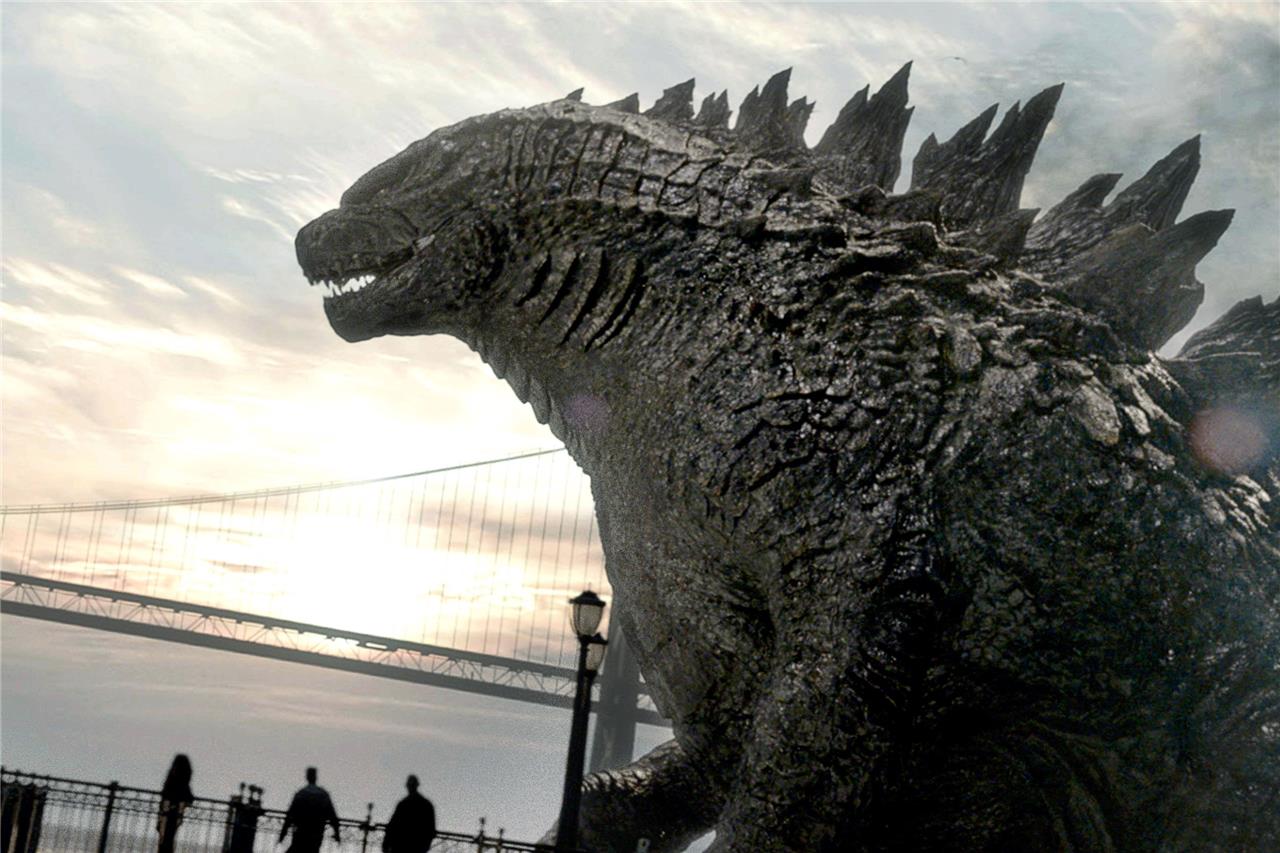
The 2014 version of him is different than the King of the Monsters version of him. So he’s a little taller between the two, and the tail is a little different, and the feet are a little different.
The biggest difference is that the spines are different. And the idea is that after the events of that movie, the spine [has] basically been damaged. And it’s like when a deer’s antler gets cut off – it grows back, but it grows back different. So it has all this curvature to it.
We didn’t want to change that, because the movies have really expressed this really clear canon, and there’s comics that explore that story. So we didn’t want to take that off the table for the fans of the show, and try to do something that was a new variable in that story; we just wanted to be authentic to it. That being said, in one of the shots in the third episode, we’re traveling up the spine of Godzilla going up to his head. And that’s closer to that version of the asset than we ever got in the features. So you’re getting right into the spines and seeing all this detail. You want to add damage to it – little bits of, you know, dirt and rocks and debris, mosses and things that have grown up inside of him and make that feel like it’s got that scale that you’re really looking for in a shot like that.
Tell me a little bit about how you approached those little details, like what’s in his spine, or what sort of personality comes through in this iteration versus the 2014 movie, King of the Monsters, Godzilla vs. Kong, etc.
Godzilla has a really distinct personality in the Legendary Monster movies; he’s pretty fierce and direct about things. But there is an intelligence there. And one of the really interesting things about working with Toho is they have so much insight into what is appropriate for Godzilla to be consistent as a character. And when you’re playing with one of the characters that’s gone through so many iterations through the years, they really understand what works and what doesn’t. And sometimes you have ideas, and you ask them their opinion about it, and they’re like, I’m not sure about that.
<
One of the best examples I have of this is like: We were doing this one scene, and we were trying to tell the story. And we didn’t have the coverage in the filming, and then with the strike, there’s no chance to reshoot or do any of that kind of stuff. So we’re like, OK, how can we tell this? And we wanted to do a point of view from Godzilla. [So we asked Toho]: “Have you ever done that? Is that appropriate? Does he have, like, a Godzilla vision, does he see in a different spectrum of light?” And they were like: “We’ve thought about this several times. But we’ve come to the conclusion that Godzilla’s point of view is unknowable.”
Which is like, Oh, yeah, it’s a god;you can’t show the point of view of a god to the ants below him. That stuff was really, really interesting. And when you hear a piece of feedback like that, it does change how you approach the character in an interesting way. For the most part we want it to be true to what has already been established on screen in this universe.
This version of the Monsterverse goes back to Godzilla (2014), which you also worked on. And Gareth Edwards had a very specific vision of this kind of – almost this incredible-looking thrifty CGI? It just looks really great and has such a specific voice to it, and this is coming straight out of that universe. And I’m curious how that informed the look of the show.
I was an artist when I worked on Godzilla (2014). And so I was, like, locked in a dark room for hours on end doing things like working on the look of the heat ray, and the blue glowing spines, and the city destruction and stuff.
But a lot of Edwards’ ideas were [along the lines of]: The monsters are so big, they can’t fit in the frame, right? You want to tell things from the human point of view. And if you’re standing in front of a 300-foot monster, you’re never going to be able to fully take it in; you’re gonna see a foot, or you’re gonna see it from a distance, filtered through the silhouettes of buildings and other things like that. And so a lot of that philosophy, that subjective point of view, informed how we shot the show, and how we approached our CGI shots. And sometimes you need those objective shots, where you go out wide and you see what’s happening – but we really felt like we need to earn that by constantly placing the action with our people. And I think that works for the philosophy of the show, because we are trying to tell this human drama, from this human point of view. And so if you constantly go out to, like, you know, 300-foot cameras, where monsters are fighting for two or three minutes, then it no longer feels like the same story that you’re trying to tell.
How did VFX artists redefine Godzilla’s perspective to create new kaiju friends
VFX artists redefined Godzilla’s perspective by embracing the idea that his point of view is fundamentally unknowable to humans, which allowed them to focus on expressing the kaiju’s emotions and presence through visual storytelling rather than anthropomorphizing him. They maintained continuity with the iconic Legendary Godzilla design while evolving his look subtly-adding features like translucent dorsal spines and cheek spikes to convey his transformation and emotional state, such as bitterness and aggression after battles. For the new kaiju friends, the artists emphasized empathy and complexity, designing creatures that are not just destructive forces but confused, scared, and lost newborns, which informed their anatomy, movement, and motivations to make them relatable despite their monstrous scale. This approach, combined with meticulous attention to scale, texture, and interaction with environments, helped bring these titans to life as distinct characters with unique personalities within the Monsterverse.
How did VFX artists balance continuity with new design elements for Godzilla
VFX artists balanced continuity with new design elements for Godzilla by carefully preserving the iconic features established in previous MonsterVerse films while introducing subtle but meaningful updates. They retained Godzilla’s recognizable stocky, powerful build and signature atomic breath, but evolved his appearance through changes like pink dorsal spines replacing the traditional blue tint, symbolizing his new radioactive state. Adjustments to proportions-such as enlarging the head and modifying elbow spurs-were made to improve animation range and expressiveness without losing the essence of the character. This approach allowed the new “Godzilla Evolved” form to feel like a natural progression rather than a radical redesign. The teams at Weta FX, Scanline, and DNEG collaborated closely to integrate these changes, ensuring that Godzilla’s movements, muscle and skin interactions, and visual effects honored the established cinematic legacy while enhancing realism and emotional depth. This balance was key to maintaining fan recognition and continuity within the MonsterVerse while also delivering fresh spectacle and narrative impact.
