
Starting your journey as a medieval lord in Manor Lords is no simple feat-this game blends the slow, deliberate pace of authentic city-building with intense, large-scale battles where strategy and resource management are key. Before you raise your first walls or muster your first troops, discover the essential insights that will transform your humble village into a thriving fiefdom and prepare you for the complex dance of economy, warfare, and diplomacy that defines this ambitious medieval strategy experience.
Below, we’ve got nine things to know before you get started playing Manor Lords with advice on things like building your town, how labor works in the game, keeping your town fed, and managing your resources. If you’re looking for more detailed explainers, we’ve got separate guides for growing your town, increasing Regional Wealth, and setting up your first farm.
Expect more construction than combat
Manor Lords emphasizes city building far more than combat, with the majority of gameplay focused on developing your medieval settlement through detailed and organic construction mechanics. While combat is present and can be complex, it typically occurs less frequently and is integrated into the broader strategy of managing your town’s resources and population. Players can even choose to focus primarily on building, with combat serving as an occasional challenge rather than the main activity. Battles impact your city’s growth and priorities, but the core experience revolves around creating and managing a thriving medieval community.
Like the dev said on Steam, Manor Lords is “a citybuilder with battles,” not a grand army simulator. It’s a city and resource management game first. With peaceful settings, it can even be downright cozy.
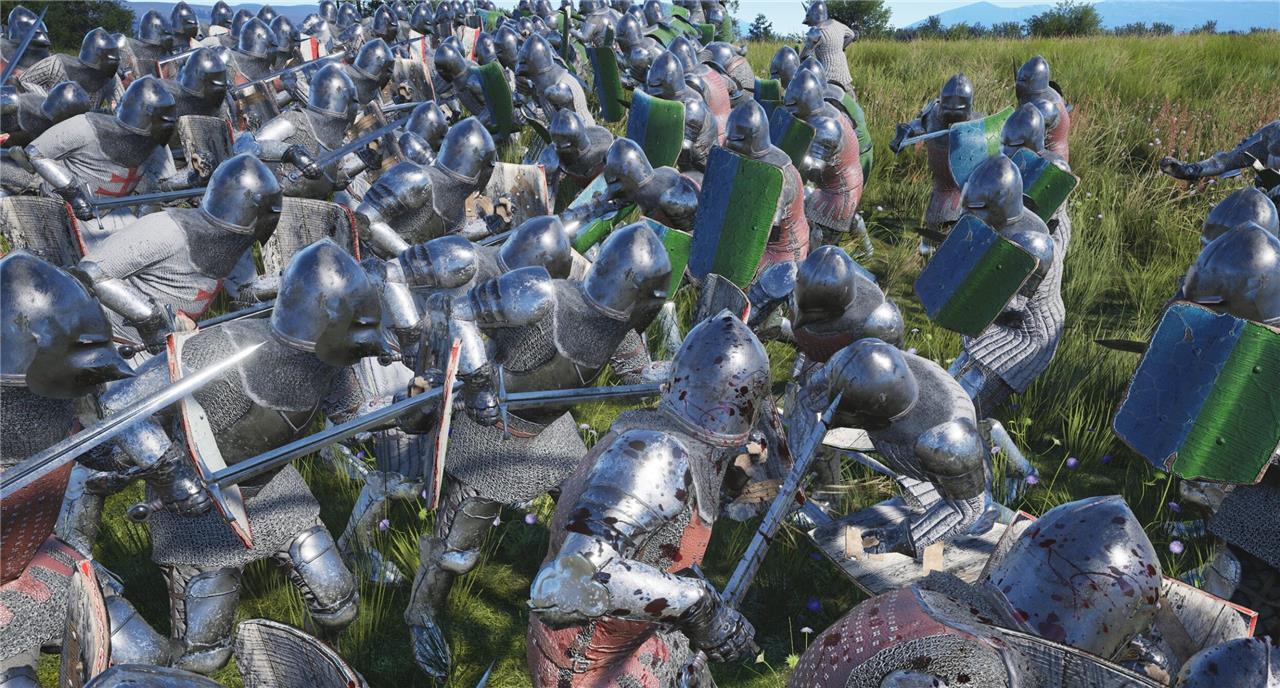
Don’t make combat your focus going in – and, for that matter, don’t expect combat to be a focus at all, really. Even with aggressive opponents – bandits and other lords – battles are pretty rare. Building up an army means building up a lot of infrastructure – mines, bloomeries, blacksmiths, logging camps, joiners, and more – before anyone even picks up a weapon.
Manor Lords is one of the more infrastructure-intensive city builders out there. For example, let’s say you want to start producing yarn – not even clothes, just yarn. You’ll need a livestock trader, a sheep farm, and a weaver’s workshop at a minimum. But each part of that process requires a family to be assigned to the building(s), and families require burgage plots to live on. That’s a bare minimum of four buildings already, and that doesn’t even touch on keeping the town supplied with food and fuel – which increases the number of buildings you’ll need in place before you can get a single sheep much closer to eight or 10.
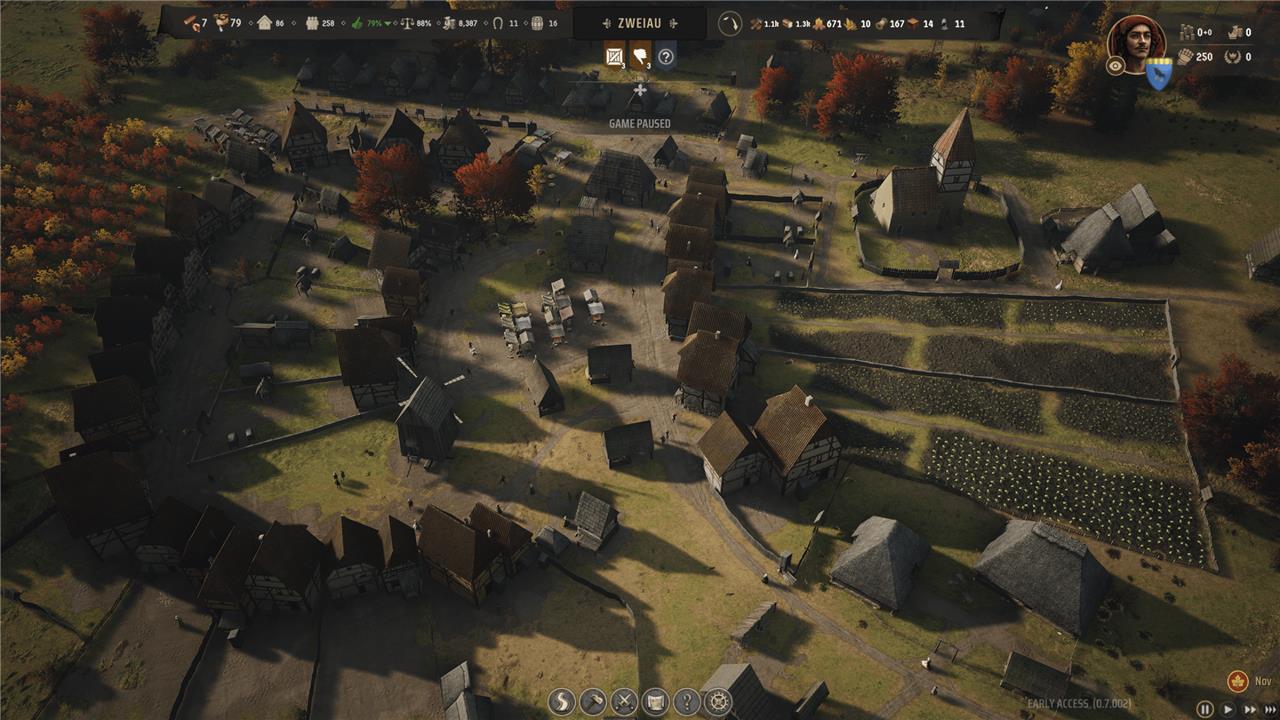
That sort of infrastructure interdependency and complexity holds true throughout Manor Lords. Getting a town humming along smoothly takes a lot of planning (and trial and error) to make sure you’ve got everything you need in place.
All of that planning and infrastructure starts with burgage plots
Burgage plots are the basic unit of your town
Burgage plots are the fundamental building blocks of your town in Manor Lords, serving as the primary homes for your settlers and their families. These plots are flexible in size and can be upgraded through three levels, each increasing their capacity, storage, and contribution to your settlement’s wealth and development. They also support extensions such as vegetable gardens or orchards, which help sustain your population. Proper placement near marketplaces and amenities is essential to meet the needs of your residents and enable plot upgrades, which in turn raise your settlement level. Managing burgage plots effectively is key to growing a thriving town and advancing in the game.
Think of burgage plots as mixed-used zoning where your town’s families will build houses and workshops. Depending on the size and shape of the burgage plot, there might be room for additional housing (adding a house for a second family to the plot) or an extension (for a garden or a workshop).
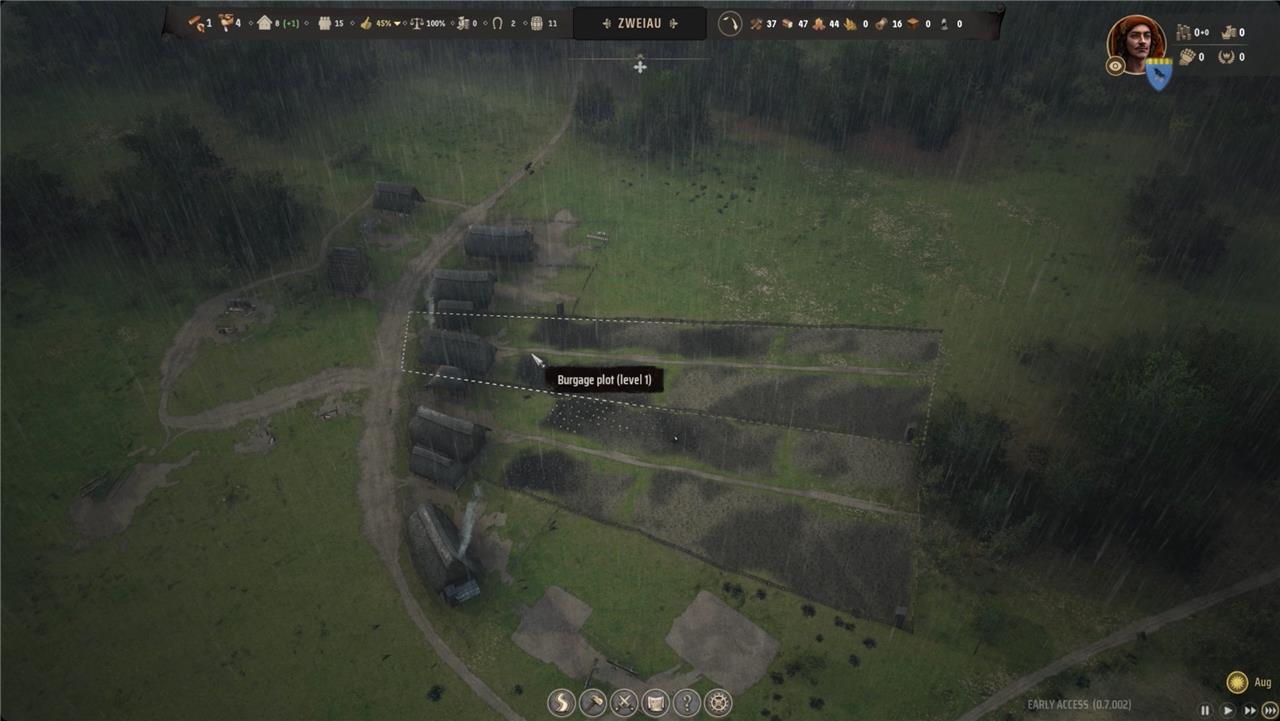
Burgage plot extensions are a weird aspect of Manor Lords because they mix together housing and industry. But that industry is often vital to your town. Early on, burgage plots can grow vegetables and collect eggs from backyard chickens. Later, upgraded and extended burgage plots that you turn into workshops are how you’ll make everything from ale to weapons.
There are still single-use buildings you’ll have to build – things like logging camps and sawpits, sheep farms and weaver’s workshops, barley farms and malthouses – but the final step in the supply chain is usually built at a burgage plot.
Those standalone buildings all have to be run by a family that lives in your town because.
Families are the work units in Manor Lords
In Manor Lords, families serve as the fundamental work units within your settlement. Each family can be assigned to various production buildings such as farms, hunting lodges, or workshops, where they contribute to resource gathering and crafting. Families also operate market stalls to sell goods, making them essential for both the economy and workforce management. The game requires careful assignment and reallocation of families to optimize productivity, as they represent both your labor force and potential militia members. Managing families effectively is key to growing your population and sustaining your manor’s development.
You don’t have any control over individual people in Manor Lords. Instead, you’ll assign families to buildings and, by extension, assign them to jobs. Think of it like the way surnames and bynames evolved in late Medieval western Europe – people working in a bakery took the last name Baker, sheep herders took the last name Shepherd, etc.
By default (while they’re unassigned), families in Manor Lords do, basically, whatever the town needs. Usually, this is construction – any buildings or upgrades you have happening – or escorting the town’s oxen around to haul timber (usually for construction). They also seem to (but don’t quote me on this – those little people are hard to follow around) pitch in by moving goods to the granary, storehouse, and marketplace.
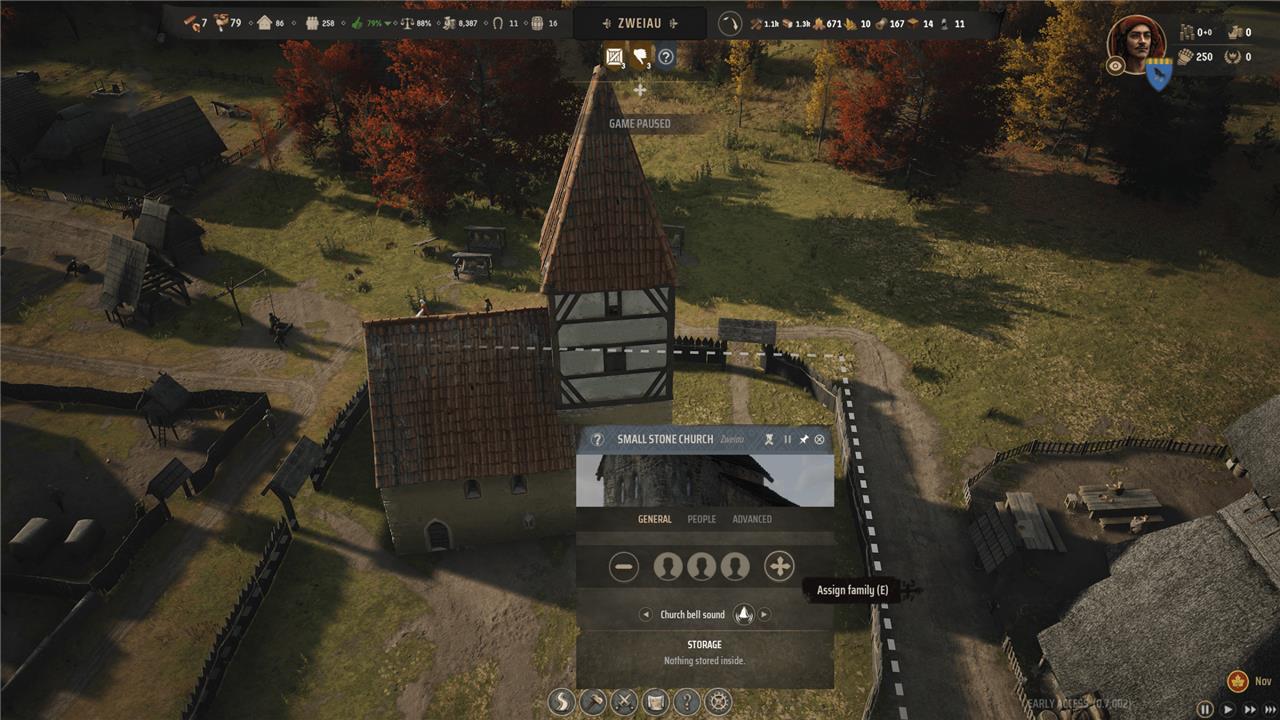
Once you have a building built, you have to hit the plus button to assign a family to work there. This takes one of the unassigned families and makes them dedicated to working at that building. They still tend the garden or livestock on their burgage plots and, more importantly, if you pause or remove the assignment from the building, they’ll go back to the unassigned pool.
Speaking of tending gardens.
Vegetable gardens are more important than farms
In Manor Lords, vegetable gardens prove more important than traditional farms due to their faster production and efficiency. Unlike farms, which require larger fields and multiple families to manage, vegetable gardens are tied to burgage plots with backyards and start producing vegetables much sooner, providing a reliable food source early on. They also enable families to sell surplus vegetables at the marketplace, boosting the settlement’s economy. Because of their compact size and quicker yields, vegetable gardens are essential for sustaining growing populations and managing food demands effectively, making them a strategic priority over farms in the game.
Farms and farmland are a thing you’ll deal with in Manor Lords as your town grows. But, especially starting out, they’re not as important as you might expect. They’re a lot of work for not a lot of reward. And, on top of that, farms require even more infrastructure.
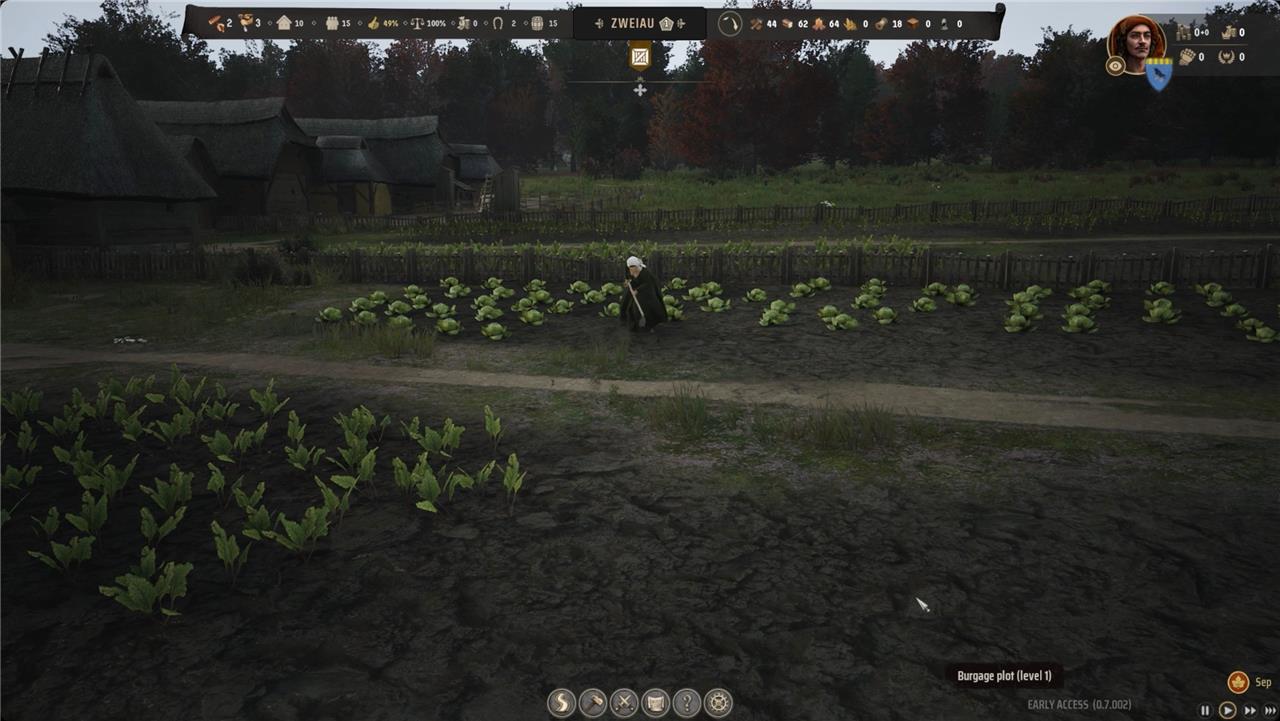
Instead, it’s better to just build the vegetable garden extension onto a burgage plot. For example, if you give your first couple burgage plots huge backyards, you can build two vegetable gardens that will grow enough for an entire game – we have one town with a population of over 200 people that still get their vegetables from those first two vegetable gardens.
Gardens and the other burgage plot extensions cost Regional Wealth to build. And Regional Wealth is a little confusing.
Burgage plots and Regional Wealth are related
Burgage plots and Regional Wealth are closely connected in Manor Lords, as upgrading burgage plots is a primary way to generate Regional Wealth. Level 2 burgage plots produce 1 Regional Wealth per family per month, while Level 3 plots generate 2 Regional Wealth per family per month. Expanding burgage plots to house more families further increases this income, making them essential for town development and economic growth. Therefore, managing and upgrading burgage plots strategically is key to increasing your settlement’s Regional Wealth, which funds important activities like tax payments, importing goods, and unlocking upgrades.
Regional Wealth is basically how much cash your town’s families have on hand. Regional Wealth is where the town’s taxes come from. It’s also what your town will use to import goods. Confusingly, it doesn’t have anything to do with your town’s marketplace. Instead, as the name implies, it’s about wealth instead of just money and that wealth comes from either exporting surplus goods or just from upgrading burgage plots.
Upgrading your burgage plots is also how you’ll advance in the game. But upgrading comes with new requirements, so.
Expanding too fast will make villagers unhappy
Expanding your settlement too quickly in Manor Lords can lead to unhappy villagers, as rapid growth often outpaces the availability of essential goods and services. When new houses are built without ensuring sufficient food, clothing, warmth, and amenities like taverns and churches, villagers’ approval ratings drop. This dissatisfaction can cause families to leave or even lead to increased crime, undermining your settlement’s stability. Maintaining a balanced growth by carefully managing resources and keeping markets well-stocked is crucial to keeping your population content and encouraging steady expansion.
Development points are a reward you’ll get as your town reaches certain milestones – building five burgage plots, upgrading two of those five to Level 2 burgage plots, and so on. Upgrading burgage plots gives you access to more and better extensions (like backyard workshops – see above), but they also increase the requirements for those plots. For example, you’ll need access to two kinds of food to upgrade a plot from Level 1 to Level 2. We’ve got a whole guide to upgrading your town that walks you through the first few settlement levels.
Once you do start upgrading burgage plots, though, the families on that plot will expect two kinds of food to be available from then on. And if your town can’t supply that, they’ll start to get unhappy, which lowers your approval and slows down your town’s growth as well as makes your militias lose morale.
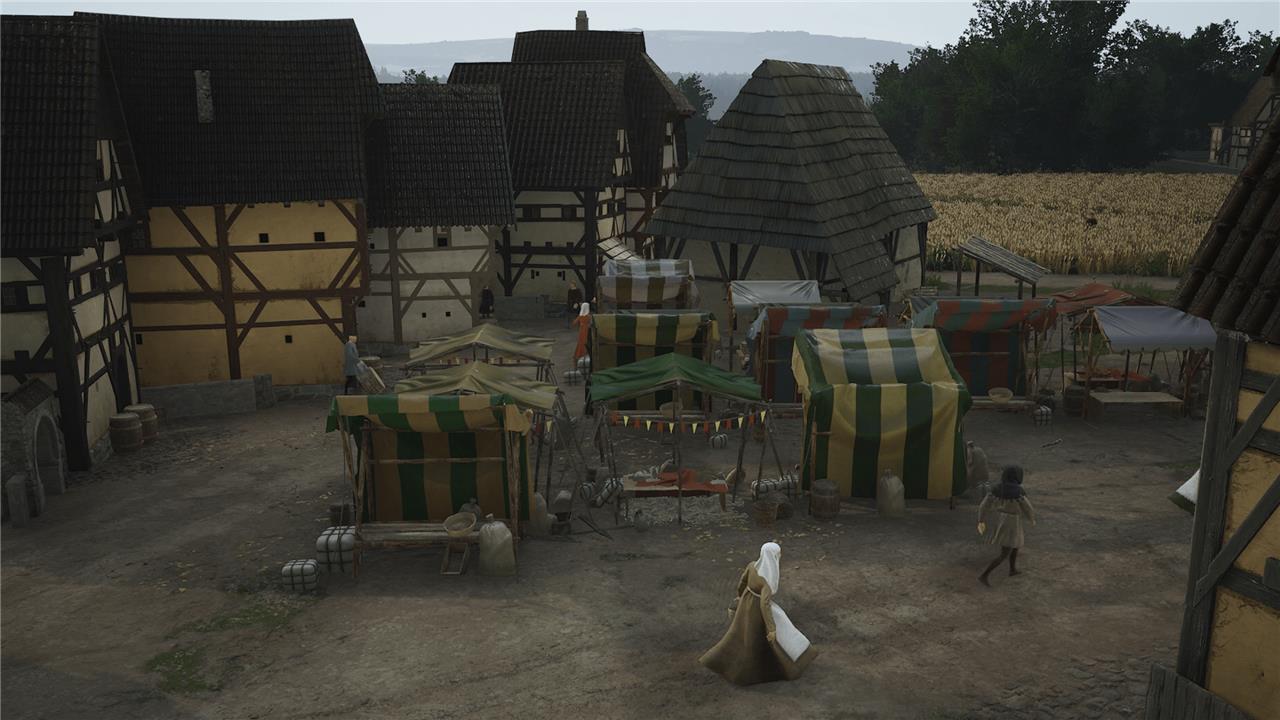
Keeping your town supplied is as much a exercise in building up a surplus as it is in laying out your town carefully – we’ve got a guide to how marketplaces distribute goods here.
Try to limit yourself to only building as many burgage plots as you need for the next upgrade and development point instead of just expanding your town to get more and more families moved in. Sometimes, this will mean assigning and unassigning families over the course of a year. Which is possible because.
Everything is seasonal
In Manor Lords, everything is seasonal, meaning that the changing seasons profoundly impact gameplay and village management. Each season-spring, summer, autumn, and winter-brings its own challenges and opportunities that require players to adapt their strategies. For example, spring is ideal for gathering resources and planting crops but comes with frequent rains that can damage supplies. Summer focuses on crop growth but risks droughts, while autumn is crucial for harvesting and stockpiling resources for the harsh winter ahead. Winter is the most demanding season, with villagers consuming twice the usual amount of firewood and requiring careful resource management to survive the cold. Understanding and synchronizing your workforce and activities with these seasonal cycles is essential to thriving in Manor Lords.
A year in Manor Lords is divided into the typical four seasons – spring (March through May), summer (June through August), autumn (September through November), and winter (December through February). Things happen in the world depending on the season – for example: you can’t gather berries during winter, crops grow during spring and summer and then are harvested (and replanted) in autumn, and your sheep farms don’t produce wool in the winter (the sheep would get cold). The winter’s temperature also means that all of your burgage plots and families consume twice as much fuel to keep warm.
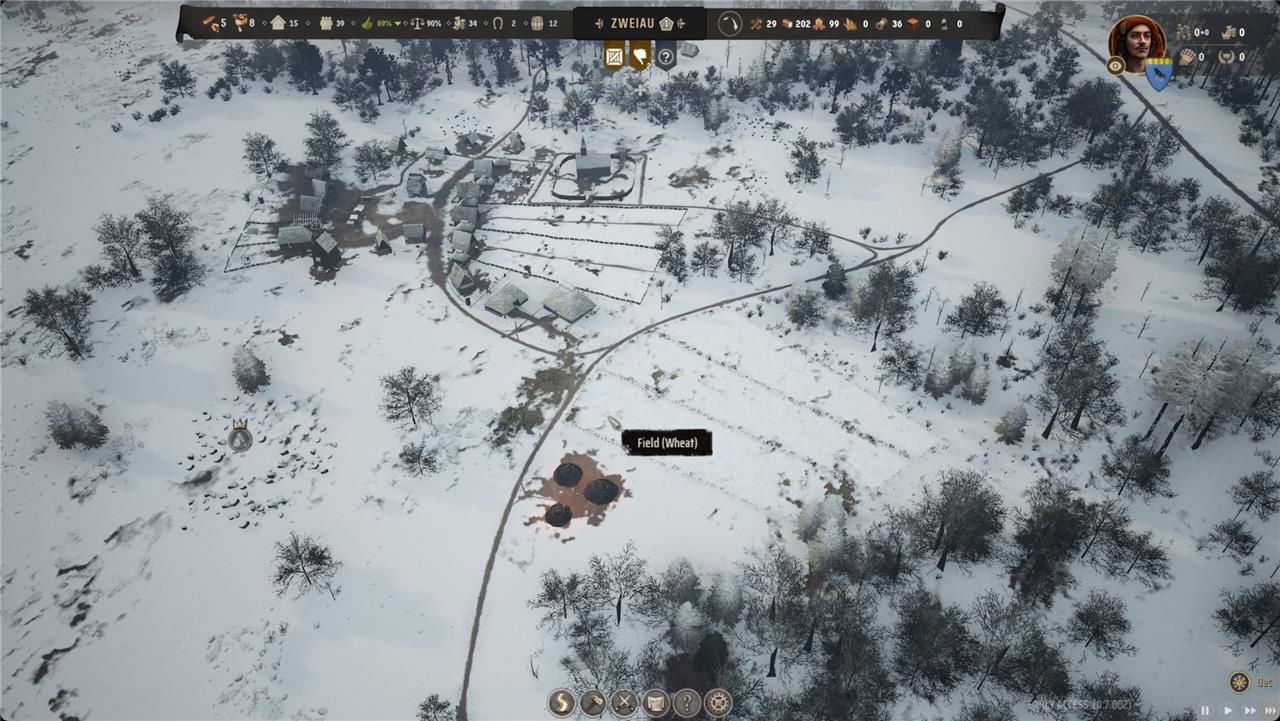
That ebb and flow of resources is how you can get away with having fewer families than available job assignments. You can have a family work on a farm during the autumn, and then swap them to a forager’s hut come spring while the crops grow. Or you can move a family back and forth between a clay mining pit and the clay furnace that turns that clay into rooftiles.
You also have a couple ways to manage renewable resources, like.
Forester’s huts offset logging camps
In Manor Lords, forester’s huts play a vital role in sustaining your timber supply by offsetting the depletion caused by logging camps. While logging camps are essential for cutting down trees and providing timber, they gradually clear nearby forests, risking resource exhaustion. Building forester’s huts near your logging camps allows assigned families to replant trees within a designated area, ensuring a continuous regrowth of forests. This balance between cutting and replanting is crucial since trees take up to two years to mature, and without foresters, your timber resources will eventually run dry. Properly managing forester huts alongside multiple logging camps helps maintain a steady wood supply, preventing shortages that could halt construction and development in your settlement.
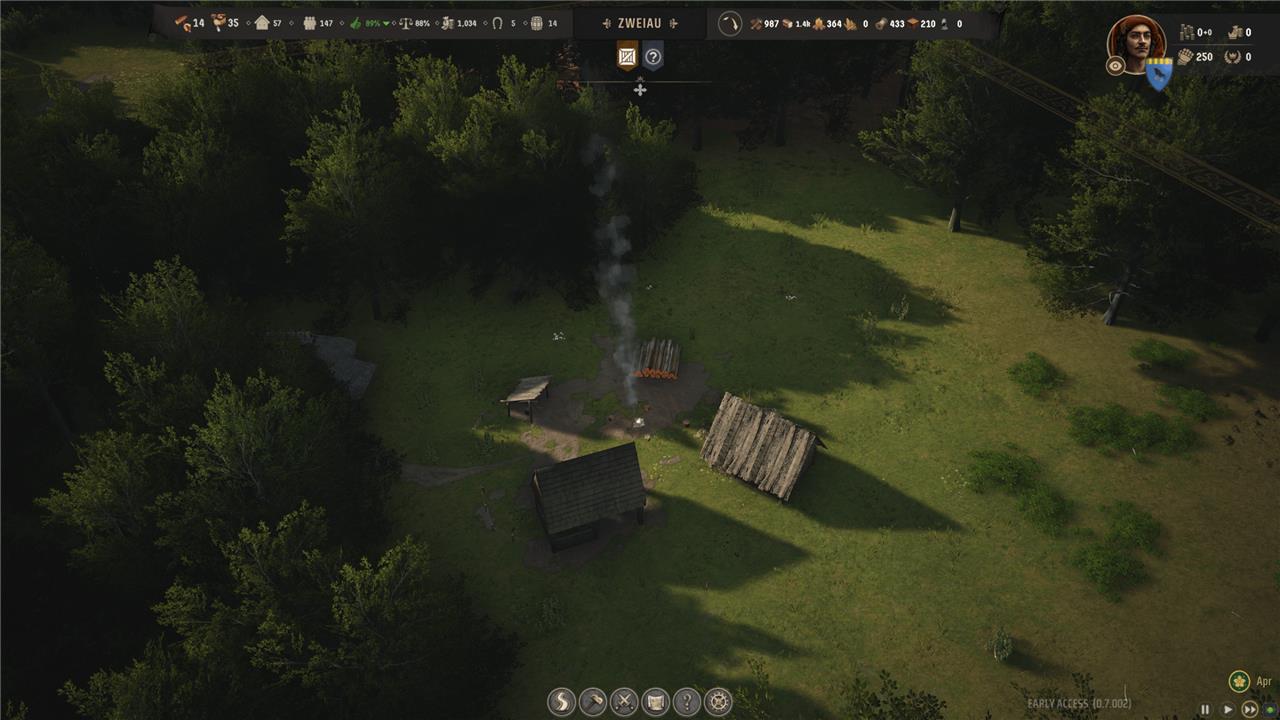
Logging for timber is a pretty destructive process and you’re going to run out of easily accessible trees pretty quickly. You can move a logging camp for free, but even then you’ll still run out of trees eventually. If you build a forester’s hut (2 timber), though, a family assigned there will plant trees. Those trees take a while to grow – they’re trees, after all – but pairing a forester’s hut with a logging camp can actually provide a steady (if slow) and renewable supply of timber.
You can even switch a single family back and forth between the two jobs if you need to – have them grow trees for a couple years, and then spend the next year cutting them down.
You keep your families healthy by upgrading forager huts
Upgrading forager huts in Manor Lords is essential for keeping your families healthy, as it enables the addition of an herb garden where workers can gather herbs alongside berries. These herbs are crucial for preventing and curing illnesses among your settlers, ensuring they remain productive and able to contribute to your settlement’s growth. Even when berries are out of season or depleted, the herb garden upgrade allows continuous herb collection, making forager huts a vital infrastructure for maintaining the wellbeing of your population.
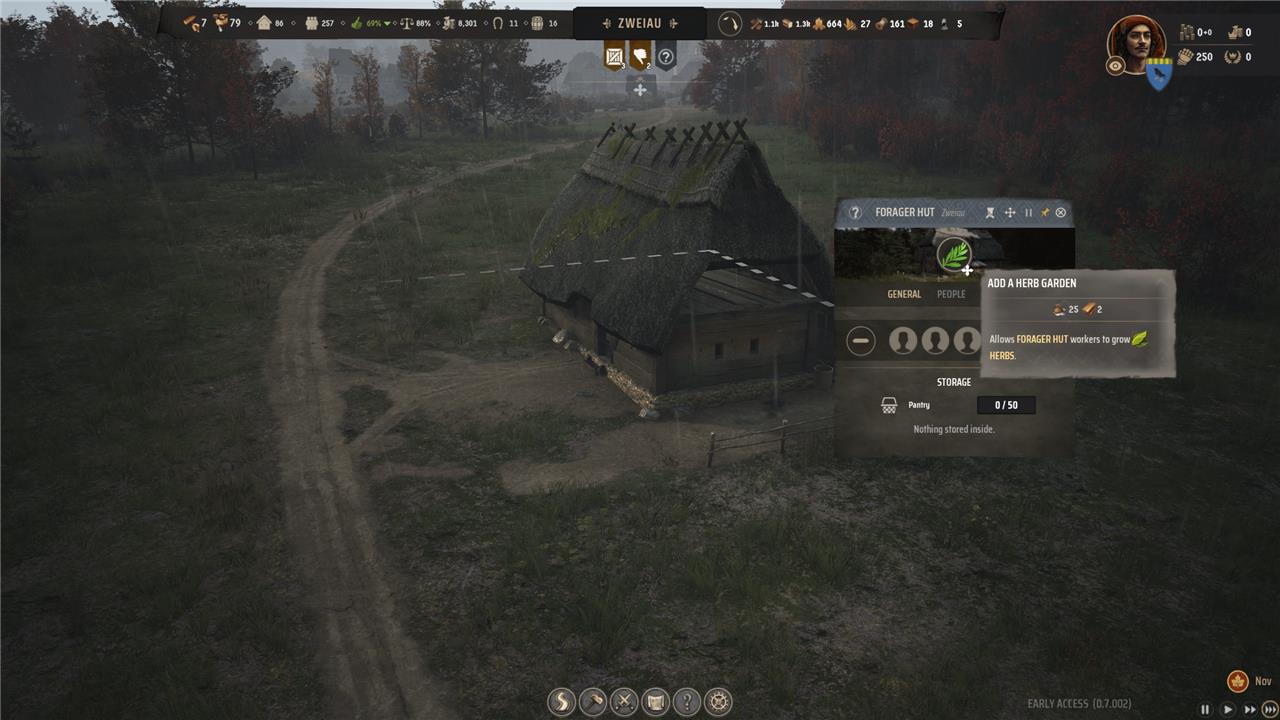
One final upgrade that’s a bit harder to notice is the add a herb garden (25 Regional Wealth, 2 planks) for a forager hut. There’s a mechanic happening in the background where your townsfolk can get sick – all you might see about this is a quick notification. This is probably going to become more obvious and visible as the game continues through its early access.
What are the key strategies to master organic city-building in Manor Lords
To master organic city-building in Manor Lords, focus on these key strategies:
-
Embrace Curved, Natural Roads: Avoid rigid grids by keeping roads curved and following natural terrain features like hills and trees. Roads should mimic natural walking paths and avoid sharp 90° angles, creating a more realistic medieval village layout.
-
Prioritize Logical Placement of Buildings: Place resource-gathering buildings (woodcutters, foragers) near their natural resources, and build roads to connect them efficiently. Position the marketplace centrally around the first well, with burgage plots clustered nearby to maximize productivity and citizen happiness.
-
Respect Medieval Town Hierarchy: Build the church in a prominent, elevated location near the town center, as it was central to medieval life. Place the manor on a scenic elevation overlooking the town and roads, reinforcing its importance.
-
Allow for Organic Growth: Avoid demolishing buildings unnecessarily. Instead, build new structures where space naturally allows, letting the town evolve over time. Connect roads where people naturally walk and build smaller roads branching from main ones to form irregular plots.
-
Use Multiple Marketplaces: To minimize travel time for citizens, create several smaller marketplaces spread throughout the town rather than one large one, boosting overall efficiency and happiness.
-
Plan for Functional Efficiency: Place storehouses and granaries near production areas to reduce transport distances. Connect your settlement to the King’s Road to facilitate trade and expansion.
-
Incorporate Blueprints for Future Planning: Use town mapping or blueprints to reserve plots for future buildings, helping maintain a coherent organic layout as your town grows.
By blending these strategies, you create a city that feels authentic, visually appealing, and functionally efficient, capturing the essence of medieval urban development in Manor Lords.
How can I use natural terrain to create more realistic road layouts in Manor Lords
To create more realistic road layouts in Manor Lords by using the natural terrain, consider these strategies:
-
Follow the Contours: Pay attention to the contour lines to build along stable ground on a slope. Constructing roads parallel to contour lines, rather than perpendicular, will help you find more even terrain.
-
Mimic Natural Paths: Plan roads from a “peasant’s view” to replicate real-life paths and let the layout come together organically. Watch how people take shortcuts and then build roads to follow these shortcuts, as if the roads had been created by people flattening the earth by walking.
-
Incorporate Curves: Keep roads curved to mimic natural walking paths, minimizing intersections and avoiding 90° angles for a more realistic medieval village layout. You can control the curvature of roads by moving the fourth point when placing them.
-
Preserve Nature: Integrate existing natural features like trees and hills into your town. Preserve specific trees and build around them, following the contours of hills or woods to add visual interest and realism.
-
Strategic Placement: Build in ideal locations, considering factors such as elevation for important buildings like churches and manors. Place your manor on a scenic elevation overlooking the town and roads.
-
Use Blueprints: Utilize town mapping or blueprints to reserve plots for future buildings, which helps maintain a coherent organic layout as your town grows.
-
Adjust Terrain: If the terrain is too steep, try building on flatter, adjacent land or use fields and pastures to subtly alter the terrain. You can also rotate buildings to find an angle that allows placement on a tricky slope.
