
In a world dominated by screens and endless online noise, solo board games have emerged as a refreshing refuge-offering immersive storytelling, strategic challenge, and the freedom to play on your own terms. As 2025 ushers in a golden age of well-crafted solo experiences, these games provide a mindful escape where you control the pace, the narrative, and the thrill of competition against clever AI or puzzle-like systems. Whether you have minutes or hours, solo board gaming is redefining how we unplug, engage our minds, and find joy in playing alone.
The year 2020 was an interesting one for our planet, and an incredibly boring one for me personally. By day I was working remotely from my apartment, managing one of the pop-up shelters created by the U.K. government for its unhoused population. By night I was locked away in my bedroom-come-office staring at the same few glowing screens and in desperate need of anything that might take my eyes off the news cycle. That’s when I discovered solo board gaming.
Like many who continued to work remotely through the COVID-19 pandemic, I struggled to extract joy from the same screens that caused me so much anxiety during the day. I’d always enjoyed the more social aspects of traditional board gaming, but without the ability to spend time with other people the entire hobby disappeared practically overnight. It wasn’t until several months into lockdown when hourslong walks in the park were interrupted by the cold that I first tried a solo board game. I sat at my kitchen table, a baffling array of cardboard and dice laid out before me, and found myself entranced.
Solo games have been around in some form or another for hundreds of years. Puzzles and solitaire card games are well known boredom busters, but in recent decades a micro community of passionate designers began to create games that drew from puzzles and traditional board games to make something entirely distinct.
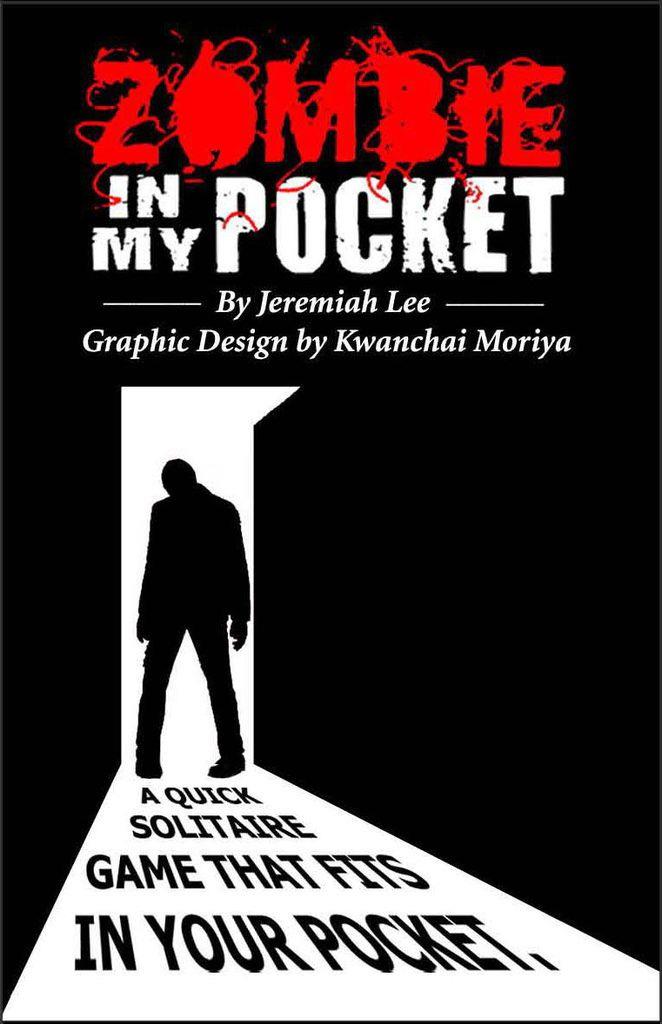
The first solo board games emerged from the wargaming scene of the ’80s and ’90s. Seemingly inaccessible by design, these early one-player games typically centered on micromanaging units across a historically accurate setting, and their legacy lives on in titles by publishers such as Dan Verssen Games and GMT. Later on, in the 2000s, online forums helped give rise to print-and-play games, which became an important pre-Kickstarter launching pad for many successful titles. As homemade games became more accessible, solo games specifically designed for just one player began to find their own niche. In 2007, Zombie in my Pocket became a cult hit in the print-and-play community. ZIMP is simple – players search rooms, grab items, avoid zombies, and try to survive long enough for a cure. The game became one of the first and best examples of a solo game and spawned dozens of imitators and variants.
By the early 2010s, board gaming had grown in popularity and a new wave of modern classics emerged. Ticket to Ride, Settlers of Catan, and Carcassonne each sold hundreds of thousands of copies around the world, becoming new staples of the hobby – “gateway games” that helped bring in new players, in turn fueling the present-day ascent of solo experiences. But none of them were launched with single-player variants in mind.
Automa rulesets, sometimes called “cardboard AIs,” were the next big step for the hobby as demand for solo options grew. These fan-made rules variants were designed to adapt popular titles for single players, and they became hugely popular within a subset of the tabletop community. Hobbyist designers began producing rulesets for many popular modern games. Even Monopoly has its own fan-made solo modes.
AELGAMES Recommends: Solo board games
AELGAMES Recommends: Solo board games offer a refreshing escape from the digital overload of modern life, inviting players to immerse themselves in rich, tactile worlds where strategy, storytelling, and self-reliance take center stage. Whether you’re drawn to the deep campaign narratives of Gloomhaven, the engine-building challenges of Terraforming Mars, or the atmospheric horror of The Night Cage, solo board games provide a unique opportunity to unwind, challenge yourself, and enjoy a fulfilling gaming experience entirely on your own terms-without the need for screens or other players.
Five Parsecs from Home
Definitely the heaviest game on the list, Five Parsecs from Home combines old-school wargaming with some light RPG mechanics in a miniatures game that draws from the best of classic and contemporary solo design.
Hostage Negotiator
With one of the best “cardboard AI” mechanics of any game, Hostage Negotiator sees you playing off against a fickle antagonist in a unique game that often feels genuinely tense.
Under Falling Skies
The multi-award-winning hit Under Falling Skies provides an incredibly engaging experience that enthralls many first-time players. The printed edition also comes with a mini campaign to keep the experience fresh after dozens of plays.
Waypoints
Demonstrating that print-and-play has a place in modern gaming, Postmark Games’ Waypoints creates a picturesque puzzle experience that squeezes a lot of depth into a single sheet of paper.
Zombie in my Pocket
Still one of the best introductions to solo board games, Zombie in my Pocket is available totally free as a print-and-play file. If the original isn’t enough, then you can also check out the dozens of fan-made re-themes and variants published across the internet.
In time, established publishers began to recognize the desire for solo variants, and one-player rulesets started to become commonplace in new designs. Dieselpunk hit Scythe, the bird-lover’s paradise Wingspan, and the hobbyist’s favorite Terraforming Mars were all released with solo variants already in the box. A bullet point listing “1-6 players” became a commonplace selling point beginning in the 2010s, and today solo modes are incredibly common. In fact, four of the top 10 tabletop Kickstarter campaigns in 2022 featured a solo-play mode of some kind.
But it wasn’t until COVID-19 that the hobby within a hobby finally found itself. As tabletops around the world closed, board game lovers like myself turned to solo games for the first time. There we found what fanatics had been saying for years – a new form of play distinct from puzzles, distinct from multiplayer games, something unique and special.
Speaking in an interview with AELGAMES, Twitter described this feeling. “[Games] designed for solo play can create a ’flow state’ where you can really fixate and lose yourself in a game. [.] I would like to try and create an experience where someone can get lost in a game on their lunch break as an alternative to staring at their phone.”
For myself this flow state felt like more than just switching off and passing the time. Solo games at their very best feel meditative and peaceful. The purposeful act of laying out your cards/dice/plastic chits at times seems almost ritualistic.
In traditional board game design this slow-down time between moves would be a downside, but in many solo games it becomes a feature. Rory Muldoon of modern print-and-play studio Postmark described to me why slow and solo works so well:
“I think there’s a reason so many solo games are puzzley in nature. For me solo gaming is a meditative process that allows you to focus on a task entirely without distractions. It’s an indulgent form of gaming”.
When Muldoon and his co-designer set out to make games that would foster that “flow state,” they leaned into design elements that could only ever work in a solo game. “In a multiplayer game, spending 10 minutes working out what to do on your turn is seen as a bad thing. In a solo game spending 10 minutes on your turn is often how the game is designed to be played.”
The uniqueness of solo design has been well understood by its community for years, but it wasn’t until recently that established games companies began seeing solo games as more than just rules variants to the games they had already designed.
In 2020, Czech Games Edition, the company behind Codenames and a handful of other big hitters, put out its first solo-only game. Under Falling Skies is a space invader micro-strategy game in which players fend off an alien threat over several missions.
When he first began designing Under Falling Skies, Tomáš Uhlíř was inexperienced in solo games. In a short interview, he described what it was like stepping into a new field.
“I originally designed Under Falling Skies for the nine-card nanogame print-and-play contest. [.] I was not that much into solo gaming back then, to be honest.” But Uhlíř’s design understood the unique challenges of solo games perfectly. “I wanted to design a game that I would enjoy, one where you would be playing and making interesting decisions all the time instead of managing some kind of artificial opponent.”
Under Falling Skies was both a critical and financial success for CGE, proving that solo games could survive outside of the micro communities that first spawned them. Although indie designers remain the lifeblood of the hobby, CGE showed that larger companies could take a risk on games outside of their usual remit.
The idea of thousands of new fans playing games on their own may seem a lonely prospect, but the fans and designers I spoke with all noted the incredible community that had emerged through lockdown. Subreddits, forums, and blogs all grew in lockdown as a new community sprang out of the same desire for that mindful flow state described by so many.
Uhlíř told me that despite the singular nature of the hobby, a vibrant community unites its fans. “Solo gamers may prefer to play games alone, but otherwise they are usually much more involved. [.] I found these solo communities one of the friendliest and most welcoming around.”
In a world filled with distraction and instant gratification, the rise of solo games proves that offline and analog still hold a place in our world. As the community grows, the hobby within a hobby is beginning to forge its own path. With new designers bringing fresh and innovative ideas, solo games are breaking free from their multiplayer counterparts, forging a path into something unique. Though it took a pandemic to bring solo games to their greatest height, the hobby, and its passionate fan base, are here to stay.
How do solo board games provide a meaningful escape from the online world
Solo board games provide a meaningful escape from the online world by offering players flexibility and control over their gaming experience, allowing them to play at their own pace and on their own schedule without the need for coordination with others. These games often feature immersive storytelling, where players engage with rich narratives and make choices that shape unique, personalized adventures, creating a deep sense of involvement beyond passive screen time. Additionally, solo board games present challenging strategic puzzles and dynamic AI-driven opponents that stimulate mental skills such as problem-solving, memory, and concentration, providing a mindful and engaging alternative to the fast-paced, automated nature of many digital games. This combination of thoughtful gameplay, narrative depth, and personal agency offers a contemplative, relaxing refuge from the constant connectivity and noise of the online world.
How do solo board games help me disconnect from digital distractions
Solo board games help you disconnect from digital distractions by providing a tactile, screen-free activity that slows down the pace and allows your mind to relax and focus in the moment. Unlike digital games or social media, solo board games eliminate constant notifications and automated stimuli, creating a calming environment where you can unwind and give your brain a break from the overload of online content. They engage your attention through hands-on gameplay and strategic challenges, promoting mindfulness and reducing anxiety by shifting focus away from digital demands and daily stresses. This analog experience offers a peaceful, immersive escape that helps reset your mental state without the interruptions common in digital environments.
