
Two small black cats, each navigating vast, perilous worlds, invite viewers into a mesmerizing double feature: The Legend of Hei and Flow. This Chinese animated adventure begins as a charming tale of a cat spirit displaced by human destruction but soon unfolds into a thrilling saga of supernatural battles and environmental reflection. With stunning animation that contrasts minimalist characters against richly detailed backdrops, The Legend of Hei perfectly complements Flow’s silent, contemplative journey-together exploring themes of found family, coexistence, and the fragile balance between nature and humanity.
As the opening scenes of Gints Zilbalodis’ gorgeous, wordless Latvian animated movie Flow started unfolding on the screen, I had a moment of déjà vu. The image of a little black cat with huge wide eyes, frantically navigating a verdant green forest during a shocking disaster – I’d seen it before. The panicked animals, the sense of a nightmare closing in on them all, the contrast between the cat’s cartoony style and its believable feline reactions to danger – they all seemed so familiar. Eventually, I realized why: I was recalling the opening scenes of China’s absorbing 2019 animated fantasy The Legend of Hei.
The Legend of Hei starts in a simple place, with Hei the black cat peacefully (and adorably) at rest in his forest home, communing with the little nature spirits that live there. Once things start going wrong, though, events escalate quickly – so quickly that it’s easy to get left behind if you don’t already know about the world he lives in.
<
The voyage of discovery will be an enjoyable experience for viewers who prefer to see movies completely unspoiled – if that’s you, I’d suggest not reading any further (or watching the trailer below) until you’ve watched the movie, because it’s impossible to discuss even the basic setup without touching on things the movie doesn’t initially reveal. Just know that what initially looks like a cutesy animal story turns into an epic adventure, packed with over-the-top badass supernatural battles and a sense of melancholy about the state of the environment that meshes well with Flow’s gentle elegiac tone.
And while those opening scenes may look visually simple, The Legend of Hei mirrors Flow in putting a visually streamlined, cartoony character in the middle of much richer backdrops, contrasting his stripped-down look with the vastness and richness of the world around him.
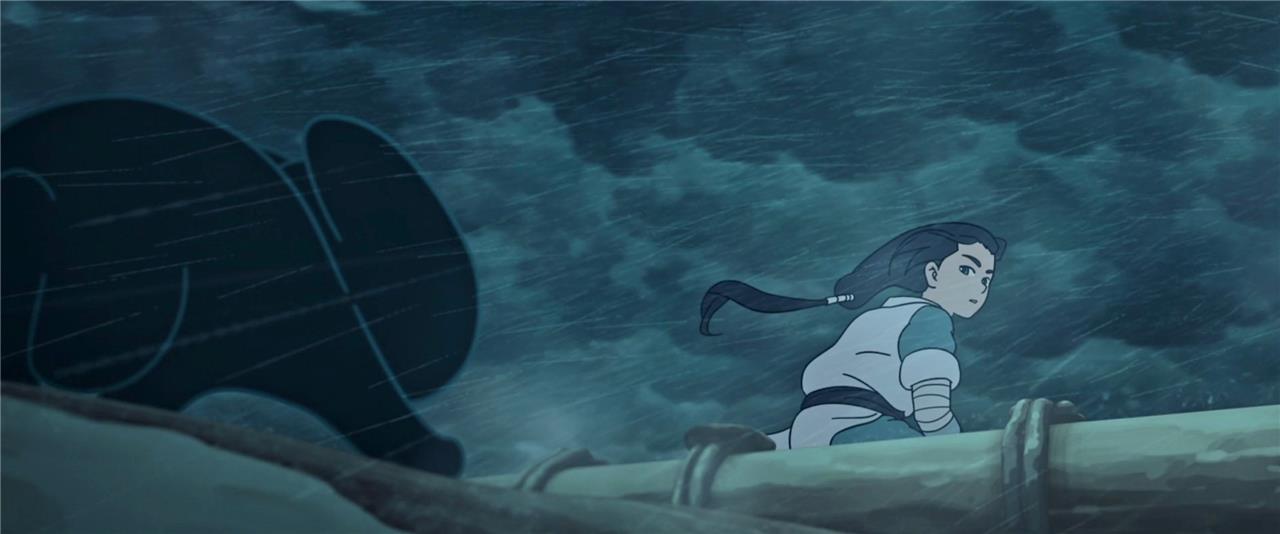
The Legend of Hei has a complicated backstory as a movie. Hei first showed up in a 2011 animated Chinese web series called The Legend of Luo Xiaohei, which expanded into comics in 2015, and eventually became a mobile game called Luo Xiaohei Wars: The Demon Spirit Book. Different sites have transliterated the movie’s title differently or confused it with the series, which makes online searching a little clumsy and confusing – for instance, Prime Video streamed it for a while under the title The Legend of Luoxiaohei.
But the movie itself stands alone reasonably well without a background in the story’s other forms. It’s a prequel to the web series, so viewers aren’t expected to know Hei’s history or background. But a grounding in the world of the film can be helpful, because the little black cat from that opening forest scene is a lot more than he appears to be. (Spoilers about that ahead, though it’s also right there in this trailer.)
Hei, as it turns out, isn’t just a cat – he’s a young cat spirit, displaced by construction in his forest. He’s a capable fighter compared to humans his age, but he isn’t particularly disciplined or experienced, and much like the black cat at the center of Flow, he follows his instincts when he’s in danger, vacillating between fighting and fleeing. But he’s also a belligerent, proud little kid-cat who leans more toward the “fighting” end of that balancing beam. And that gets him in trouble time and time again.
It’s particularly a problem when he runs afoul of an old war going on between spirit factions. Some spirits deeply resent humanity’s encroachment on the wilds and want to take back the lands that spawned them, driving people away and breaking down the cities they’ve built. Other spirits have different agendas. Hei is trapped between them, initially sympathizing with whoever shows him kindness (and feeds him – one of the many particularly catlike things about him is his appetite and how easily but temporarily food can overcome his distrust).
One of the biggest pleasures of The Legend of Hei is that it doesn’t entirely tip its hand in any direction for most of its run time, in terms of which side Hei should pick and which side is best intentioned. This isn’t an easy good-versus-evil story. But it is a story about extremely powerful supernatural forces. When they clash, the movie takes on a thrilling, nervy tone that’s leagues away from the opening forest sequences. It echoes ideas that Studio Ghibli co-founders Hayao Miyazaki and Isao Takahata would certainly identify with.
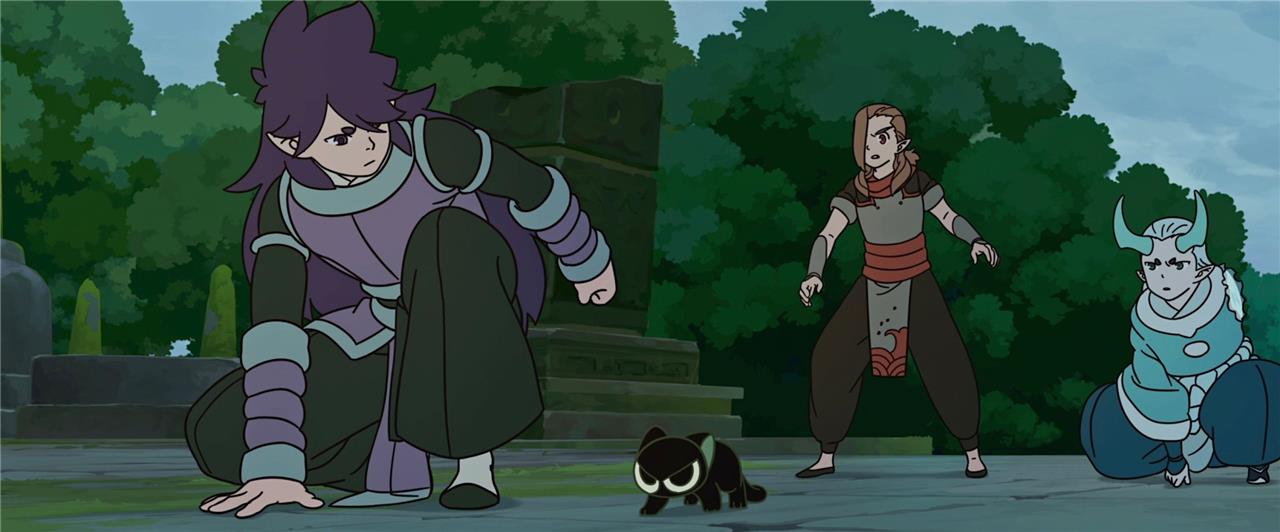
Some of the themes in The Legend of Hei feel familiar from Takahata’s Pom Poko, also about displaced forest spirits figuring out how they want to address humanity’s expansion and despoiling of green spaces. That movie is far more comedic than The Legend of Hei, but they share a sense of righteous anger, and a sense of unpredictability. Still, The Legend of Hei winds up looking more like Suzume by the end, or any other anime or donghua movie where great magical powers clash in a city setting.
Once The Legend of Hei moves into action mode, it has a lot less in common with Flow – the contrast between a wordless movie and a movie where characters start every battle with manifestos (including – maybe especially – the battle for hearts and minds) can be pretty stark. But the core sense of a world out of balance, and a small, vulnerable cat caught up by forces far beyond his control or understanding, holds steady in both. Flow winds up feeling like an alternate path for The Legend of Hei, starting in the same place and exploring some of the same themes, but examining what those ideas would look like if the protagonist really was just a cat.
They’re radically different experiences, delivered in radically different animation styles. But they’re both heartfelt and sweet, alternating frantic action with moments of mournful, quiet emotion. They’re both about unlikely bonds and found family, about the difficulty of dealing with other individuals with their own needs and desires (for people and animals alike). And they’re both visually daring and stylized in ways that set them apart from more familiar Western or Japanese animation. They make the best kind of double feature: two movies approaching similar ideas from radically different directions, but with just enough in common to feel like an intentional conversation between two works of art.
Why is The Legend of Hei considered the perfect animated companion for Flow fans
The Legend of Hei is considered the perfect animated companion for Flow fans because both films share a visually streamlined, cartoony character style set against richly detailed, immersive worlds, creating a complementary viewing experience. Like Flow, The Legend of Hei uses minimalist character designs that allow the animation’s fluidity and emotional storytelling to shine, making it accessible yet deeply engaging. Additionally, The Legend of Hei explores themes of coexistence between spirits and humans, environmental protection, and the journey of self-discovery through a young cat spirit’s adventures, which resonates with Flow’s contemplative and atmospheric narrative style. The film’s sophisticated storytelling, stunning animation, and balance of action with serene moments make it an ideal pairing for viewers who appreciate Flow’s blend of visual elegance and thematic depth.
What aspects of Hei’s character resonate with Flow fans’ aesthetic and themes
Hei’s character in The Legend of Hei resonates with Flow fans’ aesthetic and themes through several key aspects:
-
Visual and Emotional Simplicity with Depth: Hei’s design is minimalist yet expressive, mirroring Flow’s streamlined, cartoony character style set against richly detailed environments. This aesthetic allows viewers to focus on fluid animation and emotional storytelling, a hallmark appreciated by Flow fans.
-
Journey of Self-Discovery and Growth: Hei’s struggles to understand and control his supernatural powers reflect universal themes of growth, acceptance, and identity, which align with Flow’s contemplative and introspective narrative style.
-
Connection to Nature and Coexistence: Hei’s story involves navigating the balance between spirits and humans, echoing Flow’s themes of harmony with the natural world and the spiritual realm. This thematic overlap deepens the resonance for fans who appreciate stories about coexistence and environmental reflection.
-
Cultural and Mythological Depth: The film’s grounding in Chinese mythology and folklore adds a rich cultural layer that complements Flow’s atmospheric storytelling, offering viewers a blend of tradition and modern narrative that enhances thematic complexity.
-
Emotional Warmth and Relatability: Hei’s caring nature, especially his protective bond with family and friends, adds emotional depth and relatability, qualities that Flow fans value in character-driven stories.
Together, these aspects make Hei’s character a perfect match for Flow fans, combining aesthetic elegance with meaningful themes of identity, growth, and harmony.
