
Step into new worlds without leaving your room-2025’s best VR headsets redefine immersion with stunning visuals, cutting-edge mixed reality, and seamless wireless freedom. Whether you’re a hardcore gamer, a creative professional, or just curious about virtual adventures, our guide reveals the top devices that blend power, comfort, and innovation to transform how you play, work, and explore.
There are other comfort, accessibility, and budgetary reasons you might choose one over the other as well. Do you need a headset with swappable straps, one that can be configured with prescription lenses, and one that’s less than $500? Do you eventually want to build your own VR cockpit for flight simulators? These are all things that might influence which one you buy.
For newcomers, deciding on a headset can seem confusing, but don’t lose hope. With our experience testing out all of the most popular models, plus some tips on how to buy the right one for your needs, we aim to make it easier so you can jump into a variety of fantastical worlds.
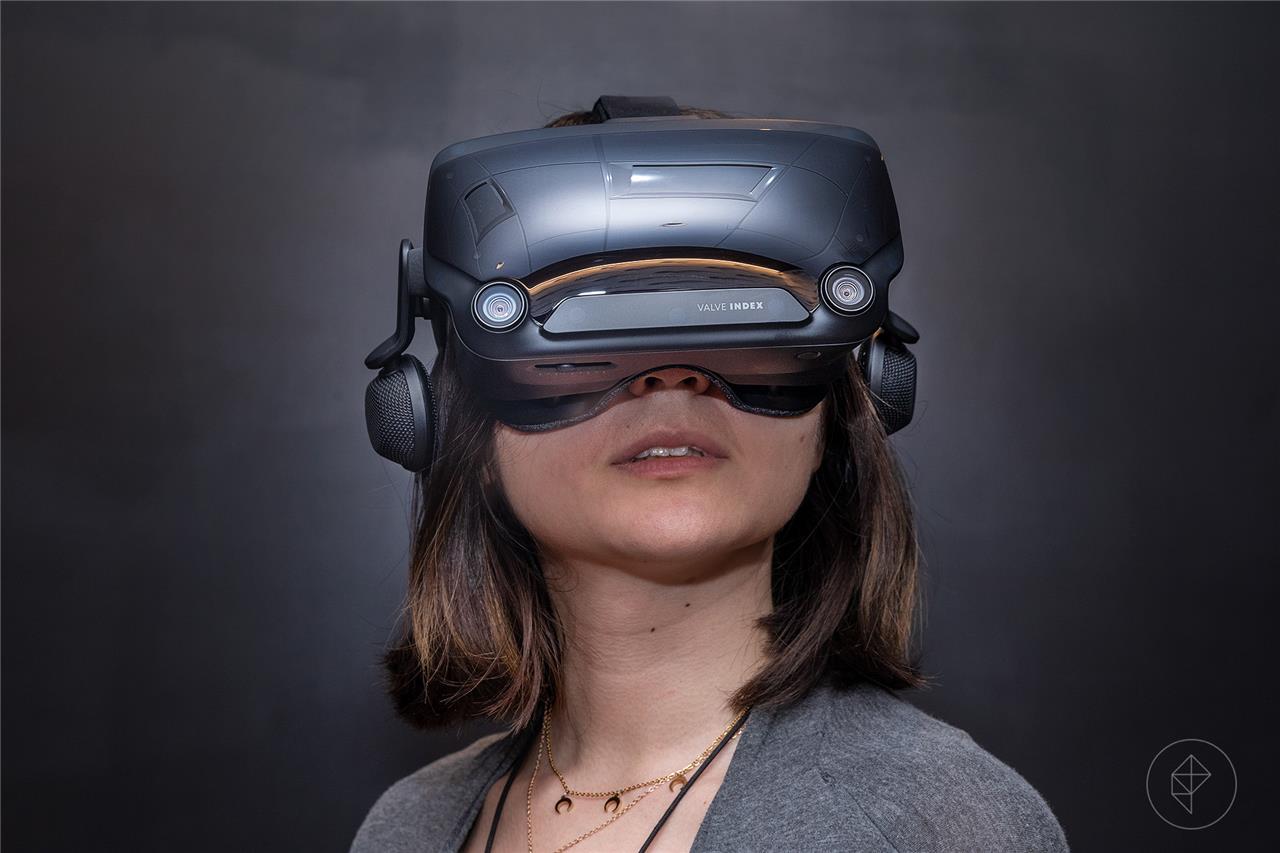
Valve Index
The major VR headset differences to know about
Some virtual reality headsets are wireless and allow what’s commonly referred to as “roomscale” VR experiences without the need for additional accessories. The headsets feature cameras that are useful for multiple reasons. For one, they track the headset’s movement in your space, letting you feel like your body is truly immersed in a virtual world. Plus, these headsets utilize the cameras to act as safeguards while you’re in VR, telling you when you’re close to leaving your play area. The major trade-off with these headsets is performance, which is trumped by wired headsets.
Many wired headsets offer similar tracking features as wireless options, but they keep you tethered to your console or PC by a long wire. What you gain by being physically connected includes vastly better graphics and not having to worry about battery life. Wired headsets that require pricey base stations to track you for roomscale VR games are on the decline, but they’re used by our favorite PC headset, the Valve Index.
The Valve Index is the current flagship virtual reality headset, offering the most comfortable design, the highest specs, and the most interesting controller features of any wired PC VR headset. Getting the entire kit is costly at $999, though Valve (the maker of the Steam Deck and developer of Half-Life, Portal, and more) sells some components piecemeal for less. Most of the components include SteamVR’s killer app, Half-Life: Alyx, for free with your purchase.
The Index’s 1440×1600 resolution lenses offer a refresh rate of up to 120 Hz in normal play. You also have the opportunity to push the limits with an experimental 144 Hz mode, a refresh rate that leads the industry. Some glasses will fit inside of the Valve Index, but alternatively, prescription lenses are available from a variety of companies, including Hons VR, VR Optician, and VR Wave.
Another unique aspect of the Index’s design are its built-in headphones that sit off the ear so that you can maintain a sense of physical presence (they sound surprisingly good, too). You have the ability to flip them up and down at will. Plus, the Index is one of the most comfortable headsets out there. It’s easy to adjust the strap settings, and it fits snug without feeling like all of the weight is pulling down on my head.
The Valve Index includes revolutionary “knuckles” controllers, which, unlike with the other headsets on this list, feature full finger tracking. It’s a small feature that adds more immersion in certain games, like Half-Life: Alyx. Simply put, games can receive input data when you move any finger, not just your index finger and thumb.

Aiding the Index with its excellent tracking are external base stations that map your room to create a stage for your VR escapades. You’ll need permanent (or semi-permanent) spots in your room for the base stations to be mounted, so the Index won’t be for everyone. However, only one of them is required to use the Index at all (two will improve the tracking). Fun fact: The base stations for the HTC Vive can work with the Index, too, if you have those laying around.
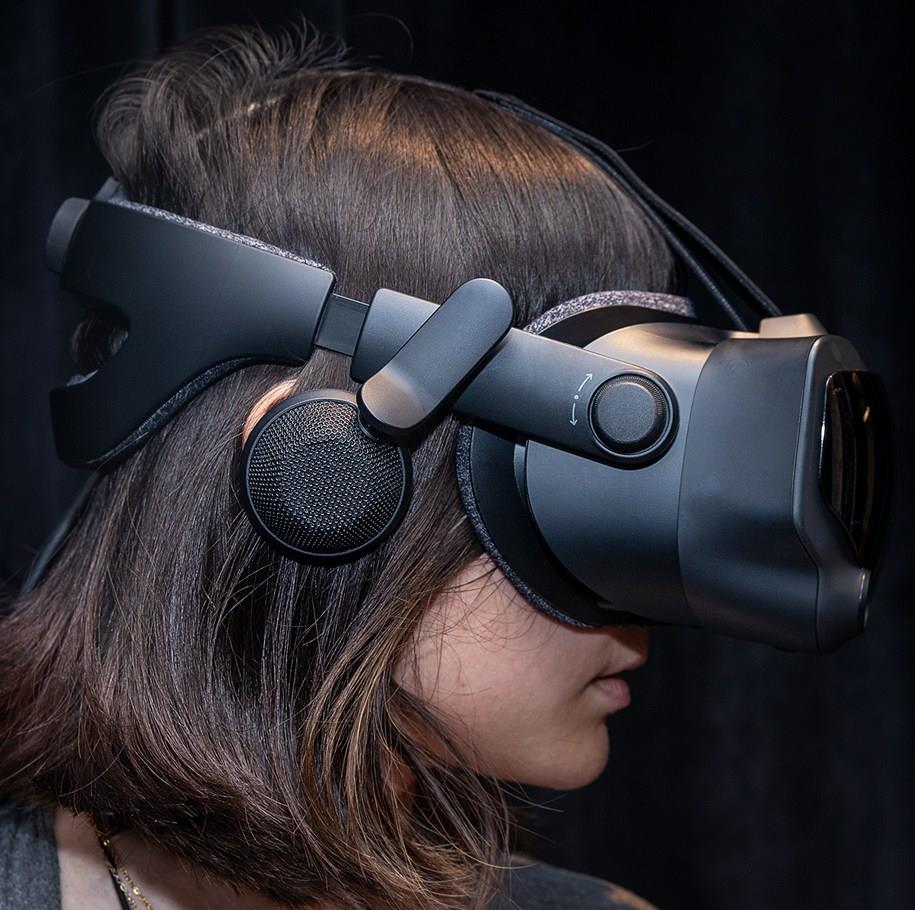
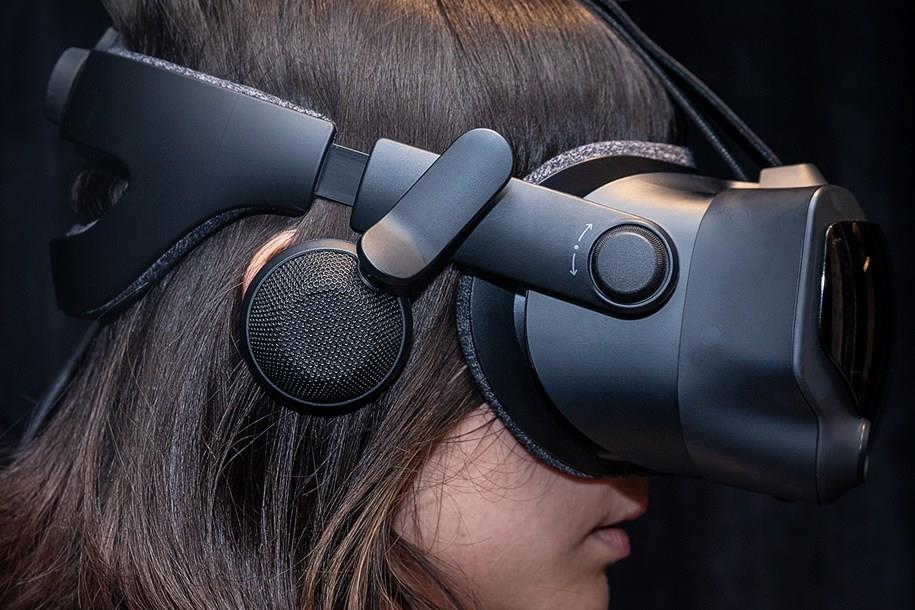
Valve Index VR Kit
$600$100040% off $600
The full Valve Index VR Kit includes the headset, two controllers, two base stations, and a download code for Half-Life: Alyx. Index kits purchased through GameStop do not include a free game.
Read More $999 at Valve$600 at GameStop (pre-owned)
PlayStation VR 2
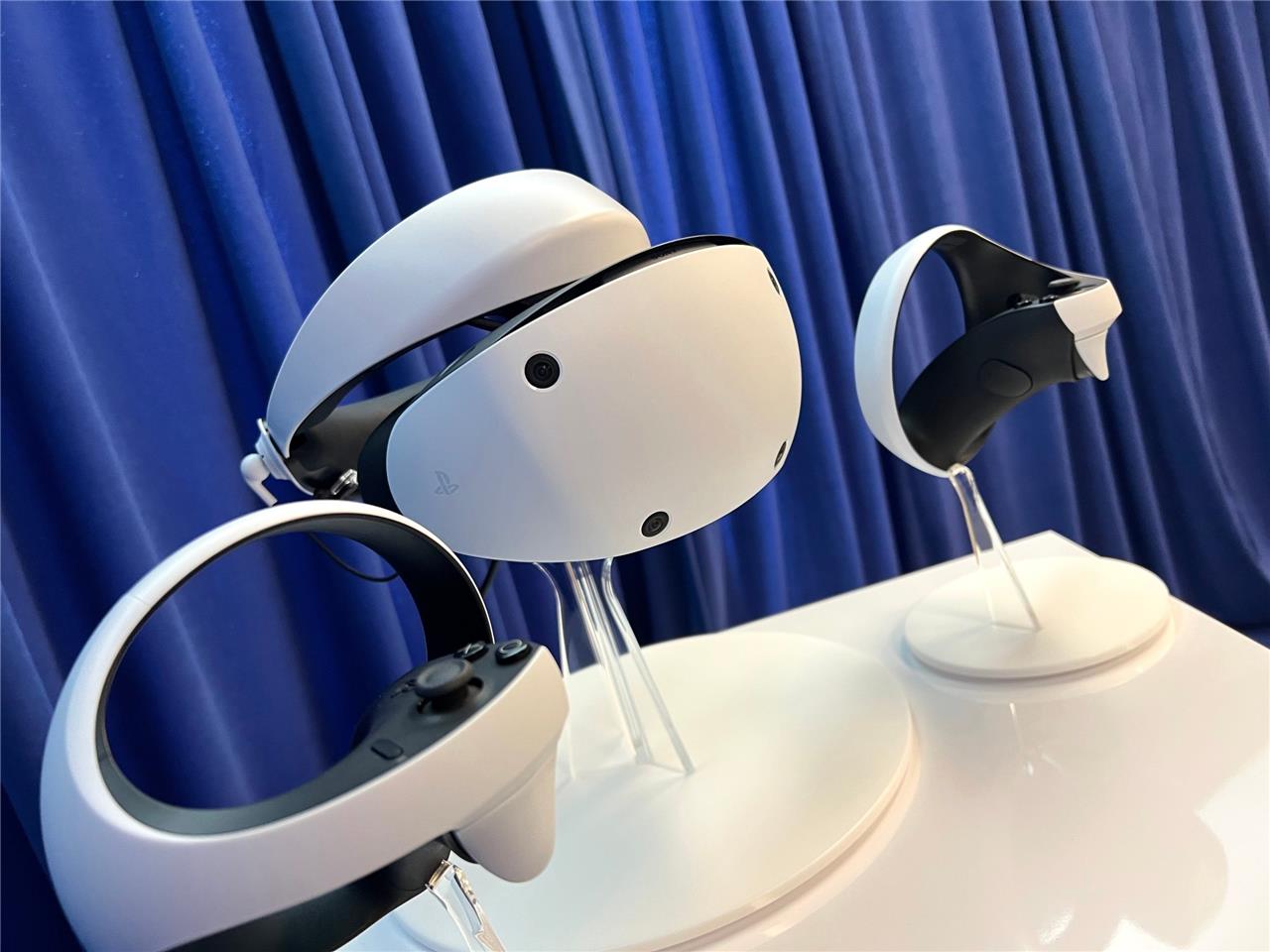
The PSVR 2 is Sony’s latest attempt at a virtual reality setup for its PlayStation consoles. This one feeds off the power of the PlayStation 5. Like the Valve Index, the PSVR 2 is a wired VR headset, though to Sony’s credit, this one doesn’t require any outside tracking stations to use. It costs $549.99, which may seem exorbitant considering you need a PS5 to use it at all.
The headset gives PlayStation gamers a lot for their money. It improves on the already comfortable first iteration of the PSVR, with soft leatherette cushions to help evenly distribute its 560-gram weight on your head. One of the most significant improvements is the internal fan that keeps airflow moving to reduce the buildup of fog and associated heat near your eyes. In case you need corrective lenses, some companies make them for the PSVR 2, including Hons VR, VR Optician, and VR Wave.
One downside when considering the PSVR 2 is undoubtedly its limited library. While there’s a good chance there’ll be a lot more on the horizon (Resident Evil 4’s VR mode is exclusive to PS5, for instance), you may be disappointed if you wanted access to some of VR’s biggest games, like Half-Life: Alyx, or even Sony’s incompatible catalog of original PSVR games. That’s not to say there isn’t anything to play. Our team has rounded up the best games to play on PSVR 2. Even with its limited lineup, there are some awesome experiences are already available, like Gran Turismo 7 in VR or Synapse.
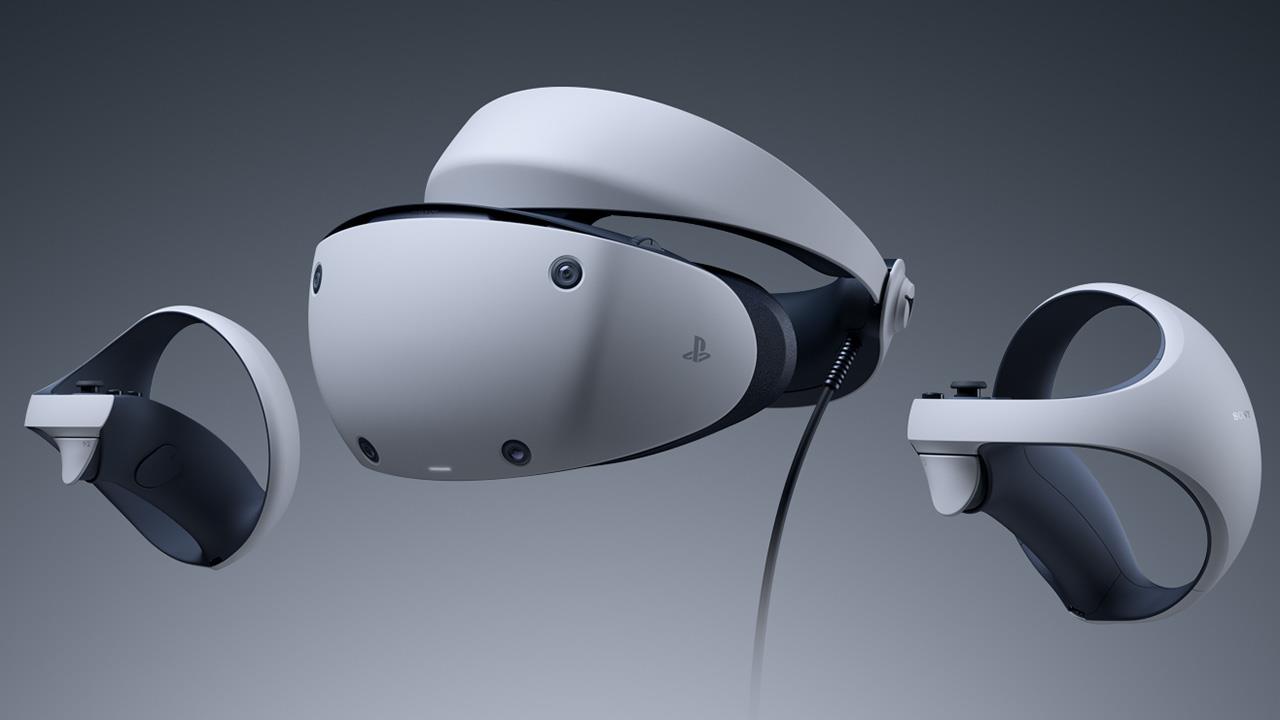
What the headset lacks in games and apps, it makes up for with some of the best specs on the market. Each lens is a 2000×2040 resolution OLED display that’s capable of delivering HDR visuals at 120 Hz. The PSVR 2 has a cool feature called foveated rendering (also known as gaze tracking) that can sharpen the visuals depending on where your eyes are currently looking, slightly blurring the details in your periphery to balance the power output of the PS5. This trick is what helps PSVR 2 exclusives like Horizon Call of the Mountain look particularly stunning.
In case you were curious, the PSVR 2 also supports a feature Sony calls Cinematic Mode, allowing you to use the headset to watch content and play non-VR games in isolation – a nice bonus, but not a killer app. We get it; not everyone wants to watch you play Bloodborne for the 10th time.
The controllers are another highlight, adapting the DualSense’s haptic feedback and adaptive triggers into a new yet familiarly comfortable shape. Adding to the immersion, the headset itself can rumble. Assuming you’ve got a PS5 already, or plan to get one soon, this is a fantastic piece of hardware that’ll likely deliver some amazing games in the future.

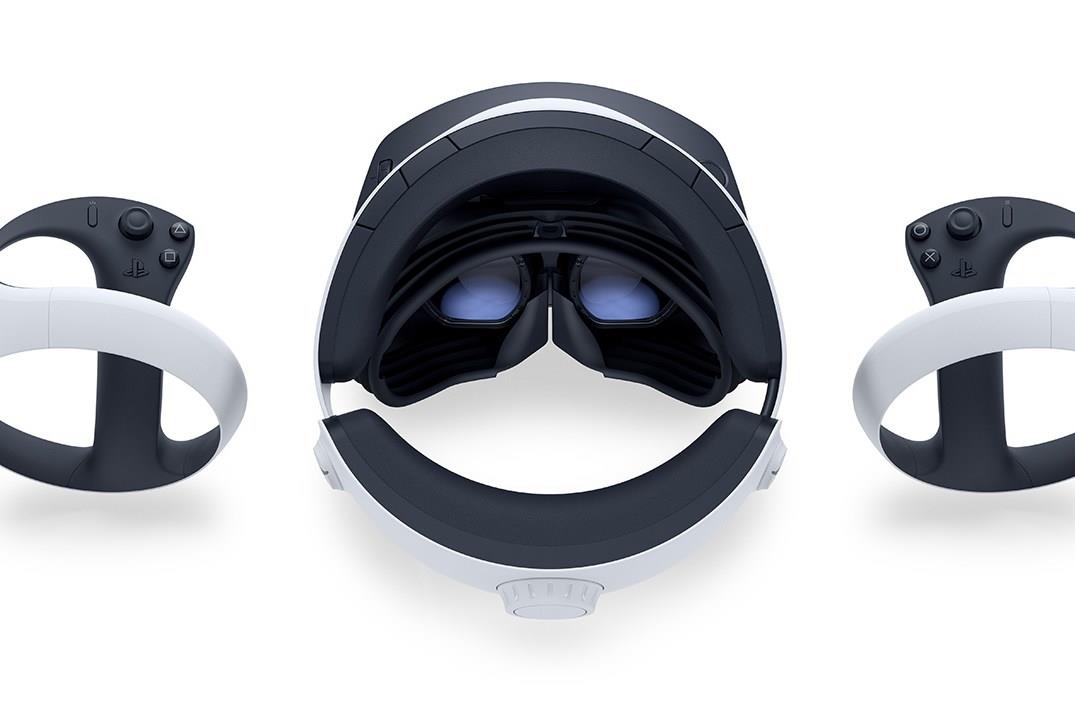
Sony PlayStation VR 2 headset
$549 $549
A great choice for the PS5, even if it’s your only choice. While the game library is currently small, Sony has proven with the original PSVR that it’ll stick with the platform for years to come.
Read More $549 at Amazon$600 at Best Buy (bundle)
Meta Quest 2
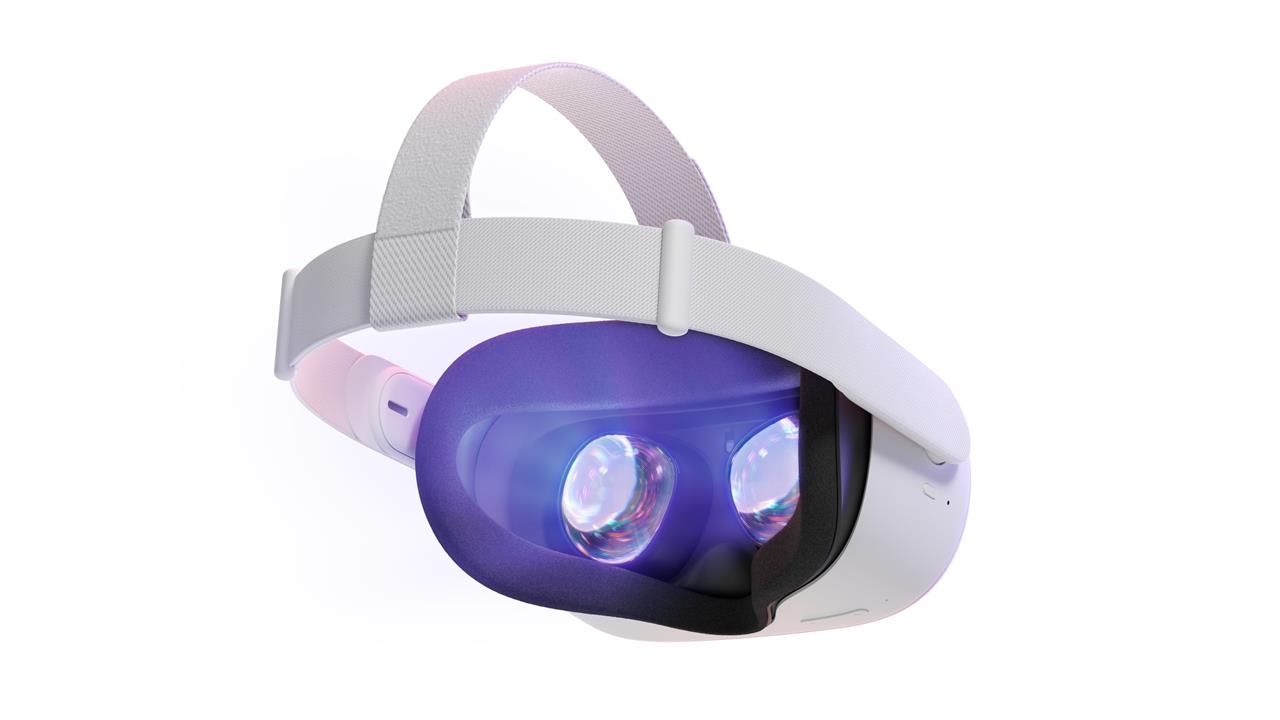
The Meta Quest 2 (it debuted in 2020 as the Oculus Quest 2) is the company’s most affordable VR headset, starting at $249.99 for a 128 GB version (going up to $299.99 for a 256 GB model), and it’s the most affordable, versatile, and approachable option out there. Not only can the Quest 2 work wire-free to run popular games on Meta’s Quest store (including hits like Beat Saber and Resident Evil 4, and fitness apps like Supernatural), but it can also be paired wirelessly or via a wire to a PC to boost its game library and visual fidelity.
If you want to venture outside of Meta’s app ecosystem, the free Air Link feature enables you to wirelessly pair it with your gaming PC (assuming your PC and Wi-Fi are pretty good) or plug the headset directly into the PC with a USB-C cable to expand your library. Plugging in with a wire will give the headset a boost in performance and visual clarity, at the expense of tethering you to a PC.
The Quest 2’s biggest asset is its value. It’s good at almost every aspect of VR, making it a very compelling option for first-time VR users who want to dip their toes in without taking a massive financial leap. That said, its specs don’t fare particularly well against its competitors. Its internals are about as powerful as a midrange Android phone, and its lens resolution isn’t super sharp. At 1832×1920 per eye, text is clear, but visuals in some games lack the sort of clarity that you’ll get in pricier headsets. Still, feature updates for the Quest 2 have improved how it runs since launch. For instance, it’s now a little more powerful thanks to Meta unlocking its GPU power, and it bumped the 72 Hz refresh rate in some games up to 90 Hz.
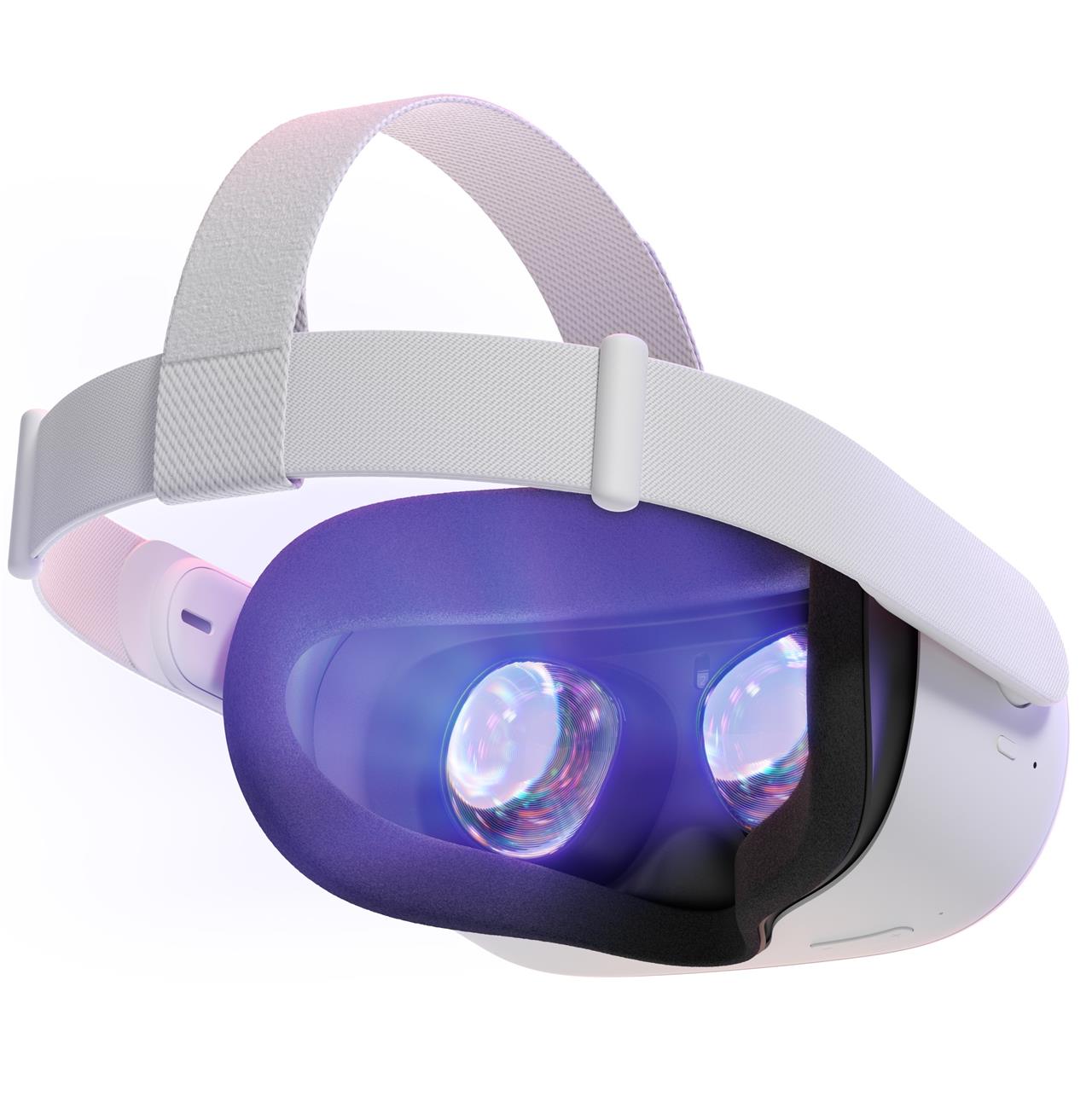

Meta Quest 2 (128 GB)
$200$25020% off $200
Amazon is also offering the headset for $199.99, but it doesn’t have an exciting bundle.
Read More $200 at Amazon
During setup, the Quest 2 can make a virtual map of your room to keep you safe with artificial boundaries. They’re like bumpers in bowling, showing up only when you’re on the verge of stepping outside of them as you explore, play, or dance in VR. This is a necessity given the Quest 2’s wireless capabilities, providing you with the freedom to safely navigate your surroundings without a wire.
The Quest 2’s default head strap isn’t particularly comfortable, so we recommend upgrading to the Elite strap that typically costs about $50. With that, the Quest 2 feels snug, with its weight distributed across your head. Some glasses may fit nicely in this headset, but if you’d rather get prescription lenses for it, some companies make them, including Hons VR, VR Optician, and VR Wave.
The newer Meta Quest 3 provides a similar experience to the Quest 2. However, it’s faster to load apps, it can run many games at a higher resolution, and the field of view is wider. At $499.99, it’s considerably more expensive, and right now, it doesn’t provide a huge benefit over its predecessor to warrant the cost hike.
HP Reverb G2
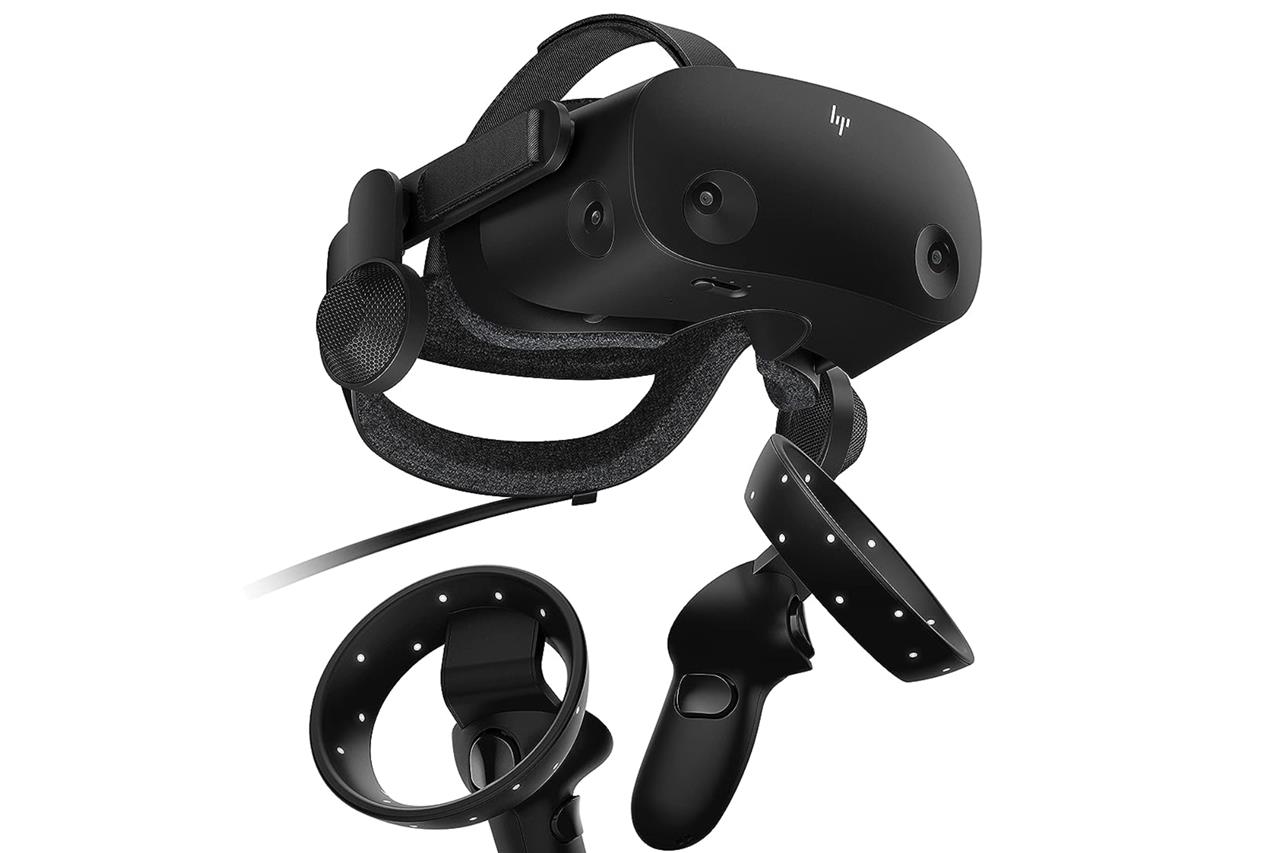
At $599 (and sometimes less), the HP Reverb G2 is relatively affordable for being a premium, wired PC VR headset. Its design echoes the Valve Index, a likeness that is no coincidence, since Valve collaborated with HP to make it. Not everything’s a match with the Valve headset, though. Several of its specs are a notch or two below. For instance, its controllers don’t offer full finger tracking, and its displays aren’t as high-res. On the flip side, unlike with the Index, you don’t need base stations to use this headset.
In terms of displays, it has two 2160×2160 LCD panels that allow for clean visual performance across the board, with up to a 90 Hz refresh rate to provide ample fluidity in games, whether you’re slashing through blocks to the beat in Beat Saber or meditating in Playne VR. Companies including Hons VR, VR Optician, and VR Wave make prescription lenses for this model as well.
The lenses are flanked on both sides by a similar flip-down headphone design seen on the Index. These provide great 3D sound, spatial awareness, and most importantly, comfort. While the HP is a wired headset, the cable included in the box is 19 feet long, so the risk of getting tangled in your office or living room is significantly reduced from the get-go.
Suppose you’re not quite ready to go all in on PC VR and pick up an uncompromising Valve Index kit. The G2 is a cheaper alternative with an easier setup process that’ll give you access to the same great PC experiences.

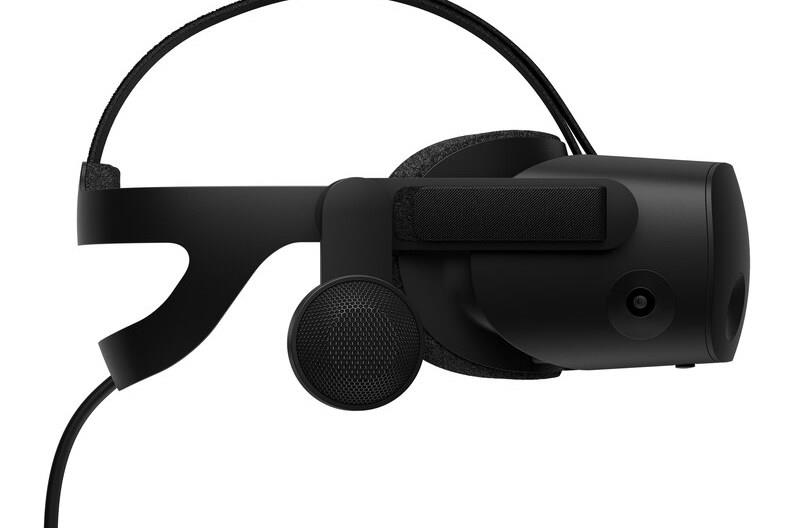
HP Reverb G2 virtual reality headset
$498$60017% off $498
Which VR headset offers the best mix of price and performance in 2025
The Meta Quest 3 stands out in 2025 as the best VR headset offering the optimal mix of price and performance. Priced around $499, it delivers high-resolution 2064×2208-per-eye displays, a powerful Snapdragon XR2 Gen 2 processor, and seamless mixed reality features with color passthrough cameras-all in a lightweight, standalone design that requires no PC or console. It balances crisp visuals, wireless freedom, and a vast game library, making it ideal for both newcomers and experienced users seeking versatility without the high cost of tethered PC VR systems. For those on a tighter budget, the Meta Quest 3S at approximately $299 offers many of the same core features with slightly lower resolution and excellent value.
How does the Meta Quest 3 balance price, performance, and portability in 2025
The Meta Quest 3 expertly balances price, performance, and portability in 2025 by combining a powerful Snapdragon XR2 Gen 2 processor and 8GB RAM with a high-resolution 2064×2208 LCD display and pancake lenses, delivering sharp visuals and a wide 110º horizontal field of view-all in a slim, lightweight design around 515g that’s easy to carry and comfortable for extended use.
Its standalone wireless operation eliminates the need for a PC or cables, enhancing portability and convenience. The headset includes a physical depth sensor for precise mixed reality experiences and a comfortable facial interface, improving immersion without sacrificing comfort. Battery life is around two hours, typical for this performance level, but the device remains easy to set up and use on the go.
While the Meta Quest 3 is priced higher than the more budget-friendly Quest 3S variant, it justifies the cost with better display resolution, wider field of view, more storage options (128GB discontinued, 512GB default), and superior hand tracking, making it the best full-featured VR headset for those seeking premium performance and portability at a reasonable price point.
