
Ready to take your Monster Hunter Wilds gameplay to new heights? Mastering the art of mounting monsters not only turns the tide of battle but lets you literally ride the fiercest beasts to deal devastating damage. Discover how to launch aerial attacks, build mounting momentum, and control your ride to open wounds and deliver powerful finishing blows across PC, PlayStation, and Xbox platforms. Get ready to dominate the hunt like never before!
In short, for those interested in taking advantage of the game’s new wounds feature, you’ll want to understand how to mount in Monster Hunter Wilds, and how to stay on long enough to make the most of each opportunity.
What is mounting in Monster Hunter Wilds?
Mounting in Monster Hunter Wilds is a combat mechanic where players leap onto a monster’s back from an elevated position and attack it from above. This tactic allows hunters to temporarily control the monster, distracting it while dealing focused wound damage. To initiate a mount, players perform aerial attacks-such as jumping off ledges or their Seikret mount-and hit the monster mid-air. Successfully mounting triggers a minigame where the monster tries to shake the player off, requiring stamina management and strategic attacks to open wounds for heavy damage. Mounting not only provides a tactical advantage by interrupting the monster’s attacks but also creates opportunities for significant damage through focused strikes.
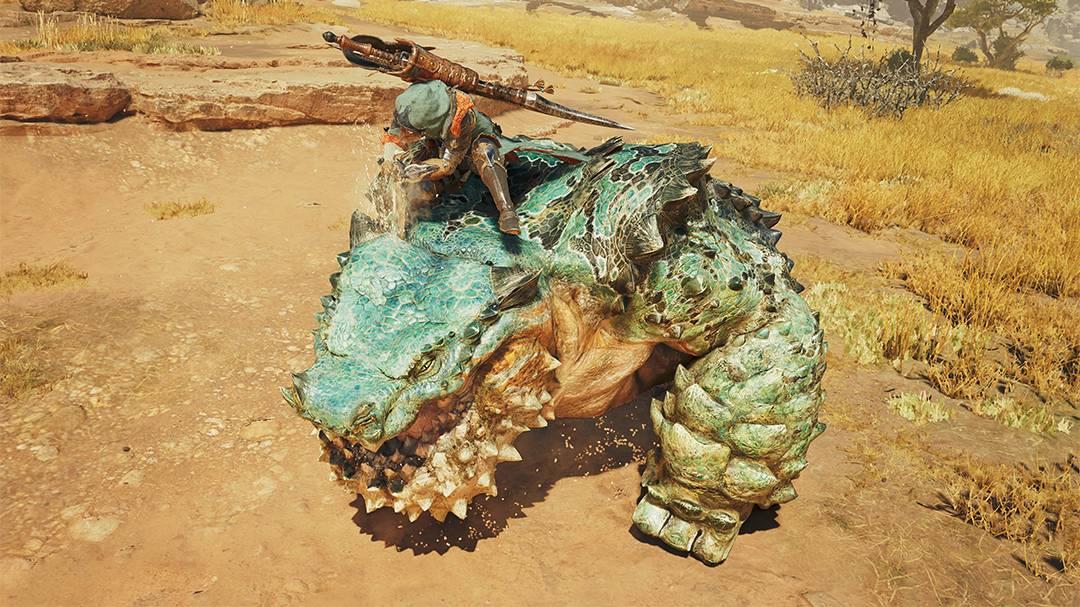
Mounting is the ability to climb on top of a monster and attack it from above for a short period of time.
There are a few benefits to this, such as giving you a way distract the monster from attacking you or your allies as it tries to shake you off, and for Wilds in particular, give you a useful opportunity to create some easy additional wounds.
Though the challenge with mounting is there are hidden mechanics at play – which we go through below – if you can mount at least once in a battle, it gives you both a welcome respite and an easy way to get some wound-based attacks in during your encounter.
How to mount in Monster Hunter Wilds
To mount a monster in Monster Hunter Wilds, you need to perform aerial attacks on the monster, which can be done by jumping off ledges, walls, or your Seikret mount and attacking while in mid-air. Each successful jump attack fills a hidden mounting gauge, and once filled, your next jump attack will allow you to latch onto the monster’s back. While mounted, you can move around the monster, attack with your weapon or knife to open wounds, and brace yourself against the monster’s attempts to shake you off. Mounting not only distracts the monster but also provides an opportunity to inflict significant wound damage, making it a crucial tactic in combat. Keep in mind that subsequent mounts require more effort as the monster builds resistance.
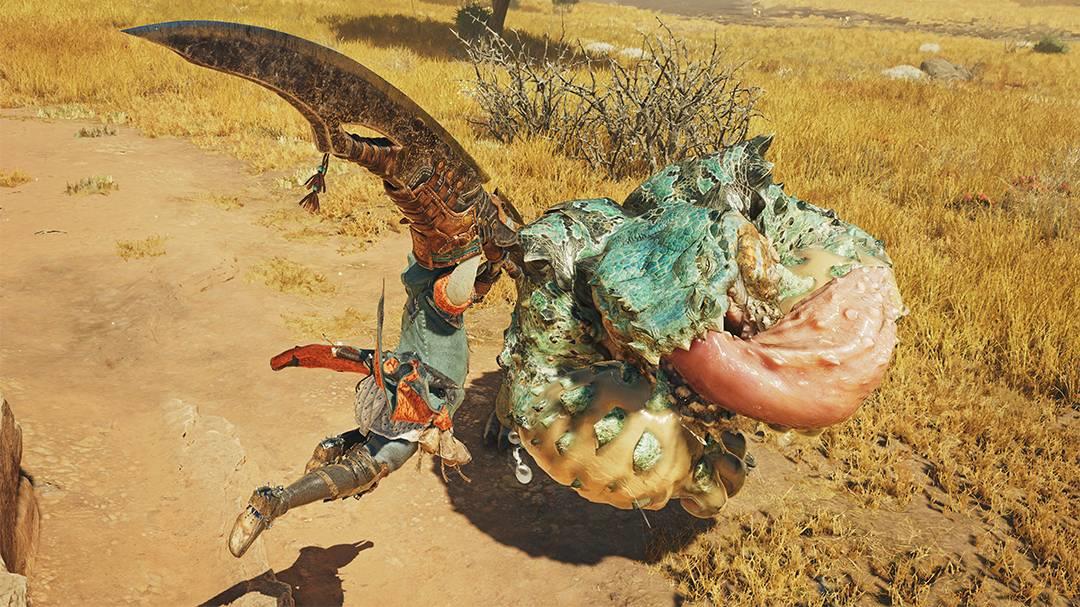
To mount in Monster Hunter Wilds, you need to perform aerial attacks at the monster. You can do this in a variety of ways; the easiest is by doing a dismount attack from riding your Seikret, but you can also leap from nearby ledges or short cliffs, jump from climbable walls, or using weapon-specific attacks which propel you into the air.
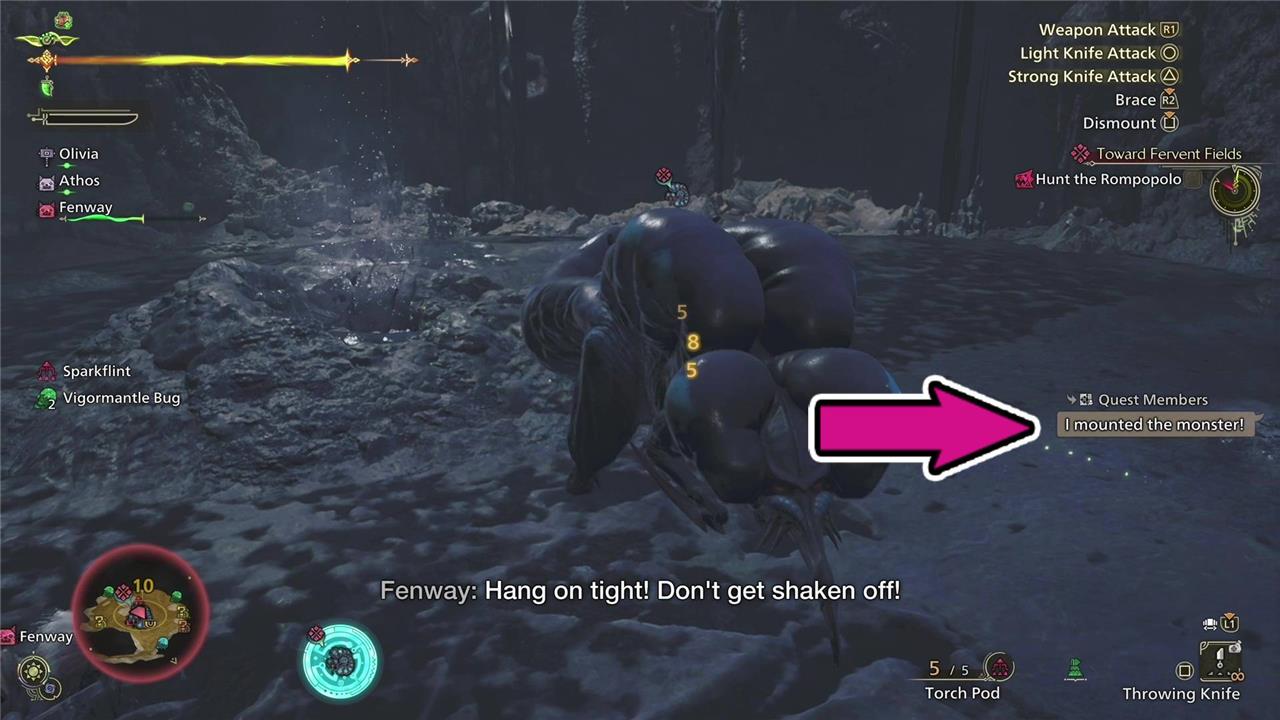
When you have done enough aerial attacks, the mount will take place. You know you’ve successfully performed a mount when you start riding the monster, and you see a prompt appearing on the right side of the screen:
In terms of knowing when you have done “enough” attacks to perform a mount, that’s the difficult part. There is a hidden gauge that needs to be filled before a mount will occur, and each aerial attack will increase said gauge. Based on previous Monster Hunter games, there are likely a variety of other factors at play too; the weapons you use, and the monster’s resistance to mounts, which can all impact the progress of this hidden gauge differently.
How to increase your chances of a mount in Monster Hunter Wilds
To increase your chances of mounting a monster in Monster Hunter Wilds, focus on performing aerial attacks from elevated positions such as ledges, walls, or by dismounting from your Seikret mount to jump onto the monster. Each successful jump attack builds up a hidden “mount gauge,” similar to a status ailment, and once this gauge is filled, your next jump attack will initiate a mount. Using weapons with higher base damage can help fill this gauge faster, but the first mount is generally easier to achieve and subsequent mounts require more effort as the monster builds tolerance. Skills like “Master Mounter” can also boost your mounting success. Coordinating with teammates to apply continuous aerial attacks can help fill the mount gauge more efficiently. While mounted, you can attack the monster’s weak points to open wounds and deal significant damage, making mounting a strategic advantage in combat.
Either way, once a mount has been performed, know subsequent mounts will take longer to make. In our experience, it’s quite quick to perform your first mount, but the second will take much more effort. If you are playing with other hunters, then collectively chipping away at this hidden aerial attack gauge is a good idea, especially as then one of you can distract the monster during the mount while others wade in with ground attacks.
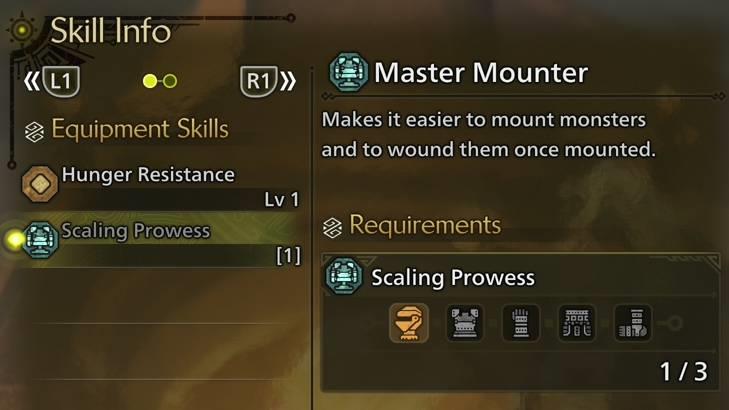
Finally, another way improve your success of a mount occuring is with skills such as “Master Mounter,” which you can unlock by equipping three items with the “Scaling Prowess” group skill, as found on early game monsters such as Balahara and Quematrice.
Mount controls and what to do during a mount
To mount monsters in Monster Hunter Wilds, you need to perform aerial attacks, typically by jumping onto the monster from an elevated position or using special maneuvers like the Seikret mount or grappling with the Slinger. Each successful aerial hit builds up a hidden mount gauge, and once filled, you latch onto the monster’s back. While mounted, you can move around using the analog stick, brace yourself to reduce stamina drain when the monster bucks, and attack with light or heavy knife strikes as well as your equipped weapon to open wounds. Opening wounds allows you to perform powerful Focus Strikes that deal significant damage. It’s crucial to manage your stamina and position carefully, avoiding the monster’s attacks while aiming to weaken specific parts for maximum effect. Cooperative play helps, as teammates can attack the monster while you maintain the mount.
When mounting, there’s a handful of options available to you; you are able to move, brace, use either a knife attack (light or strong), or a weapon attack. You can see the controls for your platform in the top right corner of the screen – here, for instance, are the PlayStation controls:
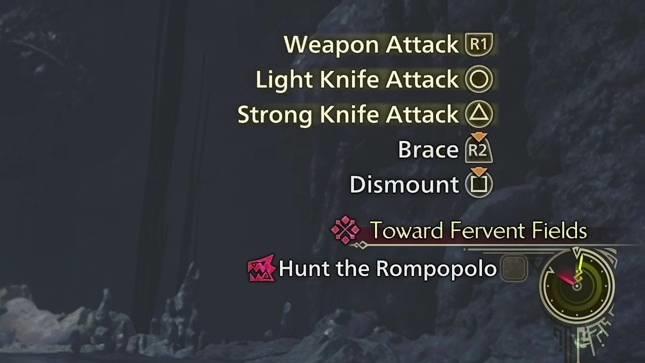
Knife attacks are weak but nimble attacks which can be used quickly between attempts of the monster shaking you off (the screen will flash red when this happens, and you can brace or move to a different part of the body to avoid it) while weapon attacks are slower but stronger, and cause wounds on the monster to occur faster.
Though there is logic to using knife attacks to prolong the mount and distract the monster for longer, it’s best to cause as many wounds as possible (ideally on each area you can climb on) before using a final weapon attack on one of these wounds to end the mount with a damaging finish, all before your stamina depletes or you are shaken off.
What secret aerial attacks can help me mount monsters faster in Wilds
In Monster Hunter Wilds, secret aerial attacks that help you mount monsters faster primarily involve jump attacks performed from the air. You can execute these by dismounting from your Seikret mount to launch a jumping attack, leaping off ledges or climbable walls, or using weapon-specific moves that propel you into the air-such as with the Insect Glaive. Each successful aerial attack contributes to filling a hidden “mount meter,” and once it is full, you initiate the mount sequence.
Some key tips to maximize mounting speed include:
-
Using your Seikret to catapult yourself into the air for jump attacks, which is one of the fastest ways to build mount meter early in the fight.
-
Performing multiple jump or sliding attacks in succession, as these build mount damage like a status ailment on the monster.
-
Employing weapons with strong aerial attacks, as higher base damage weapons tend to fill the mount meter faster, though the difference is not huge initially.
-
Coordinating with teammates to keep the monster distracted on the ground while you focus on aerial attacks to fill the mount meter more efficiently.
Remember, after the first successful mount, the mount meter resets but becomes harder to fill for subsequent mounts, requiring more aerial attacks. Also, managing your stamina while mounted by holding the embrace button and changing position to avoid stamina drain is crucial to maintaining the mount.
In summary, secret aerial attacks in Monster Hunter Wilds that accelerate mounting involve jump attacks from Seikret dismounts, ledges, or weapon skills that launch you into the air, all contributing to a hidden mount meter that triggers the mount once filled.
Which aerial attacks in Wilds fill the mount meter fastest
The aerial attacks that fill the mount meter fastest in Monster Hunter Wilds are generally those with high damage and strong motion values, often delivered as jump attacks from ledges, from your Seikret mount dismount, or weapon-specific aerial moves. For example, charged aerial attacks from heavy-hitting weapons like the Greatsword can initiate mounts much faster, sometimes even with a single hit, while faster but lower-damage weapons like Dual Blades require multiple hits to fill the mount meter.
Key ways to maximize mount meter buildup include:
-
Performing jump attacks off ledges or after sliding down slopes, which provide good momentum and reach to land hits.
-
Using your Seikret to dismount mid-air and strike, as dismount attacks reliably contribute mount buildup and are especially effective early in the hunt.
-
Choosing weapons with strong aerial mobility and high single-hit damage, such as the Insect Glaive or Hammer, which excel at mounting due to their aerial moves and damage output.
-
Coordinating with teammates to perform simultaneous dismount attacks, which can rapidly build mount meter and trigger mounts faster in multiplayer hunts.
Additionally, mounting becomes progressively harder after the first mount, requiring more aerial attacks to fill the meter for subsequent mounts. Skills like “Master Mounter” or equivalents (e.g., Scale Stretching Technique) can help speed up mount buildup.
In summary, the fastest mount meter buildup comes from high-damage, single-hit aerial attacks performed from ledges, Seikret dismounts, or weapon-specific jumps, with charged attacks from heavy weapons being particularly effective.
