
The Rings of Power takes a puzzling detour with the palantíri, transforming these iconic seeing stones from Tolkien’s original communication devices into ominous prophetic tools-without a clear narrative reason. Instead of showcasing their traditional role as instruments of distant sight and telepathic dialogue, the show rushes us into a dark, corrupted vision of the future, stripping the palantíri of their nuanced history and turning them into mere harbingers of doom far earlier than expected. This abrupt shift not only undermines the rich lore but also misses a golden opportunity to illustrate Middle-earth’s gradual fall, leaving fans to wonder why such a fundamental change was made for no good reason.
While fans of the Peter Jackson movies will certainly recognize the specific threat that the palantíri poses in the show, that’s not how the books say the devices should work at this time in the story. Sure, by the time of the Fellowship’s quest to destroy the One Ring, the devices were mostly tools of deception employed by Sauron. But during the time of The Rings of Power, they shouldn’t be evil at all. In fact, they’re basically just walkie-talkies.
The palantíri, like all the best and worst things in Middle-earth, were originally created by the elves and later given to the Númenóreans, with seven of them surviving the island’s destruction and facilitating communication between the realms of Gondor (where Boromir’s from) and its sister country Arnor. They are essentially something along the lines of Facetime walkie-talkies. They could be used to communicate over long distances, usually only two directly with each other, and they could provide visions of their surroundings during these communication sessions. This is why when we see them in the show and movies, characters would touch the palantíri and see visions of various places with little to no context about what they were. In other words, there’s nothing inherently evil about them or the images they show at all.
The problems with the spherical creations didn’t arise until the Third Age (when the main trilogy is set) when, one by one, the seven palantíri were misplaced, falling into rivers or disappearing when cities were sacked. The remaining palantíri were locked away (one in Orthanc, the stronghold of the great and noble Saruman, leader of the wise wizards) for the same reason that you wouldn’t spill sensitive information in a Zoom meeting where the guests were hidden. There was no way to prove that somebody who shouldn’t be listening in (specifically Sauron) was listening in – and in The Lord of the Rings, we saw exactly that happen. While Gandalf says that Sauron couldn’t use his palantír to completely fabricate the images that Denethor and Saruman saw in their own, he could manipulate the visions to fragment them and make sure they only saw the ones he wanted them to. It’s these Sauron-influenced visions that drive Denethor nearly to his state of desperation and denial in the main trilogy, and that frighten Pippin (and reveal his location).
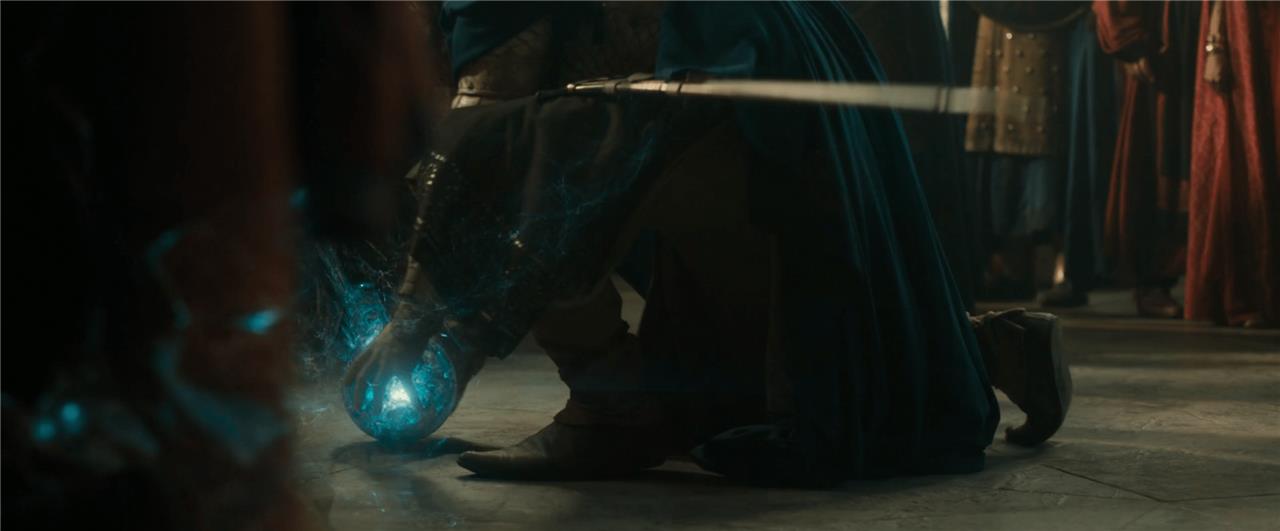
The problem is, this is also a pretty exact description of how The Rings of Power treats the palantíri as well. They seem, based on what we’ve seen of them in the show and their total lack of description, to already be a negative influence on characters.
As with any adaptation, a change isn’t inherently good or bad. But it’s hard not to feel like this one takes away from The Rings of Power’s effectiveness as a prequel. It’s supposed to be a story about the way a golden age of Middle-earth was destroyed by the subtle influences of Sauron and the corruption that his evils inspired. But the show hasn’t done much to prove this age was golden at all, and the palantíri could have played an integral role in that by showing something we recognize as a tool for evil being used innocently and without concern.
Part of the fun of a prequel is that the audience knows things the characters don’t. So, for instance, getting to see good characters freely using the palantíri to communicate could have been an excellent avenue for the show to prove to us how far Middle-earth has fallen by the time Frodo and Sam set out from the Shire. They could become yet another beautiful thing that was ruined by Sauron and his minions. Instead, the one palantír we’ve seen is treated as evil instantly by the people of Númenor, and as a critical object of prophecy by Míriel, suggesting they weren’t used for communication and have a completely different canonical place in the show. The Rings of Power seems so desperate to give us something we might recognize from the original movies that it skips straight to the fallen version of the world, rather than letting us witness that collapse organically.
And the palantíri aren’t the only place the show takes this same shortcut. In episode 5, Durin IV only spends a few minutes of screen time in awe of his father’s use of the Ring of Power before he realizes it’s a token of evil. It seems easy to imagine the version of this plotline that gets space to play out over a couple of episodes, where the rings might initially bring tremendous good fortune to the dwarves, but only Durin can see the ways that a ring is slowly turning his father selfish, greedy, and cruel. With that version, we as an audience might have a chance to see how Sauron’s rings came to trick so much of Middle-earth into falling under his spell. Instead, the characters catch up to our understanding almost instantly.
At their very best, prequels do more than tell us what happened before the stories we love. They tell us how the world got to where it was – and in the case of The Lord of the Rings, that should mean telling the story of how the world fell so far. How Sauron was allowed to rise again and why the realms of men, elves, and dwarves were so ill-prepared to stop him. It should show us all the glory and grandeur that Middle-earth had to offer in the Second Age, and show us how great the cost of letting Sauron rise at that time was. Instead of deepening our understanding of Middle-earth, however, The Rings of Power seems much more interested in rushing us back to something familiar: a warped version of a vision in a corrupted palantír.
Why does “The Rings of Power” alter the traditional powers of palantíri without explanation
The Rings of Power alters the traditional powers of the palantíri primarily to serve its narrative needs, showing them as tools for prophetic visions of the future rather than strictly as devices for seeing distant or past events, as in Tolkien’s original lore. This change allows the show to foreshadow Númenor’s doom and heighten dramatic tension, even though it diverges from the palantíri’s established function of showing only present or past scenes and enabling telepathic communication. The series also introduces ambiguity about the certainty of these visions, suggesting future events seen in the palantír might be avoidable, which adds a layer of narrative flexibility absent in the original texts. This creative liberty reflects a broader trend in adaptations to reshape magical artifacts for storytelling impact rather than strict adherence to Tolkien’s descriptions, though it has drawn criticism for lacking clear in-universe explanation.
Why does “The Rings of Power” choose to modify palantíri’s powers without explanation
The Rings of Power modifies the traditional powers of the palantíri without in-universe explanation mainly to serve its own dramatic and narrative purposes. Unlike Tolkien’s original lore, where palantíri are primarily communication devices showing real, present, or past events and requiring great mental discipline to use, the show portrays them as tools that can reveal ominous prophetic visions of the future, especially the doom of Númenor. This shift allows the series to foreshadow key plot points and heighten tension but departs from the palantíri’s established function as crystal balls for distant sight and telepathic communication. The series also introduces ambiguity about the certainty of these visions, suggesting they might be avoidable, which is not a feature of the original stones. This creative liberty appears aimed at enhancing storytelling rather than adhering strictly to Tolkien’s descriptions, but it has sparked criticism for lacking a clear narrative justification within the show itself.
