
Imagine a reality show where survival skills, strategy, and raw human grit collide in a high-stakes competition inspired by the dystopian world of The Hunger Games-but without the deadly consequences. This could be the next big thing in entertainment, combining the thrill of wilderness survival with the drama and spectacle of reality TV, offering viewers a fresh, interactive experience that redefines the genre.
In 2013, a year after the release of the first Hunger Games movie, The CW debuted Capture, a reality show clearly (but not officially) based on The Hunger Games. Just like the Games in the series, Capture was a combination survival competition and elimination game that included 24 contestants, split up into 12 teams of two. Of course, competitors don’t actually kill each other like they do in the series, but every two days a new team is deemed the Hunt team while everyone else gets to be the Prey. While the Prey sleep in the Village, a meager shelter with just small rations of food to get them by, the Hunt team gets to stay in the Lodge, a more substantial shelter with better food. For four hours each day, the Hunt team is tasked with trying to capture the Prey, who will be placed in a cage once captured and given minimal food.
Obviously the threat of actual violence kept the show from getting too close to The Hunger Games in practice, rather than just premise. Instead, Capture was mostly a very brutal game of tag that mixed in elements of survival from shows like Survivorman and Man vs. Wild. But the pitch of the series being so similar to The Hunger Games is undeniably a little uncomfortable to sit with, considering that the original text frames the Games as synonymous with decadence and societal decline.
Then again, popular entertainment has sought to condemn reality TV and fascination with violent spectacle for decades, in everything from Running Man to Videodrome. What those movies feature that their real-life competition-show counterparts largely lack is violence. Contests of elimination don’t have to be inherently violent, and if they were, maybe the comparisons to dystopian fiction would start to make a whole lot more sense. Instead, maybe the lesson of Capture is simply that people are always looking for new kinds of competition to watch and that we shouldn’t overthink it.
In the spirit of not overthinking it, Netflix is giving us yet another reality show based on a dystopian competition series. While Capture didn’t actually have the official branding of The Hunger Games, Netflix’s new series Squid Game: The Challenge is a direct spinoff of the streaming service’s own popular South Korean thriller series. The Challenge tasks players with completing some of the same games contestants in the original show faced – with much less dire consequences for failure.
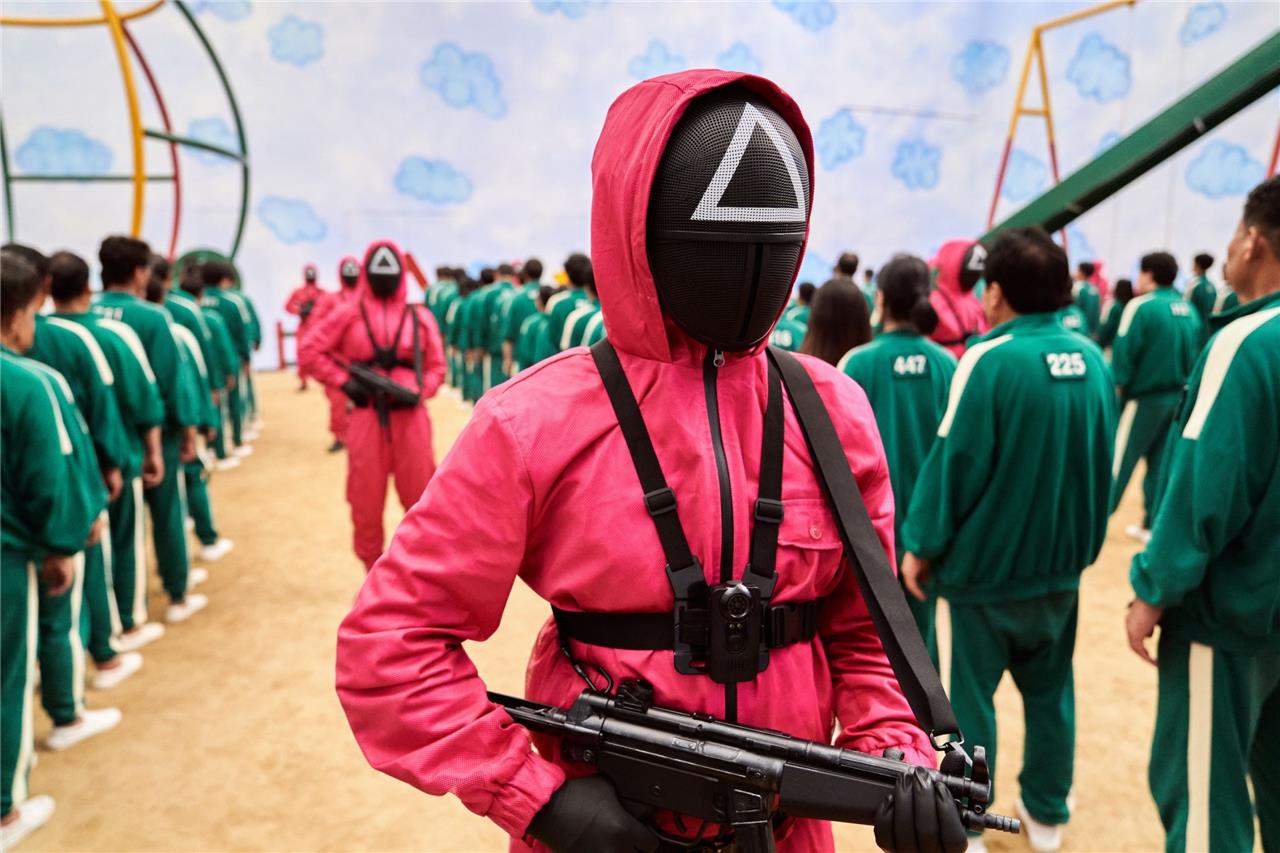
On the one hand, it’s easy to hand-wring and worry about what all these shows say about society, about how each time we soften dystopian fiction into cuddly evening TV we slip closer to Roman citizens in the Colosseum, but that probably isn’t true.
Divorced from the horrific violence that fuels them in fiction, the dystopian death spectacles just become competition shows, and while that may hurt the message of the stories they’re based on, they don’t hurt society much as a whole. Competition shows are, at their most basic, inspiring and entertaining. They’re visions of regular(ish) people succeeding at impressive feats, and until they actually move toward violence (or even match the violence of professional sports), they’re doing comparatively little harm.
The real problem with Capture was just that it wasn’t that exciting, which may explain why it only got one season with fairly low ratings. It remains to be seen how Squid Game: The Challenge will do, since that show doesn’t premiere until Nov. 22, but with a new Hunger Games movie back in theaters, maybe it’s time to try a new Hunger Games reality show?
The truth is, competition shows are inherently exciting – the original Hunger Games books recognize that perfectly. Reality competition shows, at their best, create extremely tense situations that let narratives, personalities, and people triumph, whether the stakes are a cash prize or, in the case of The Hunger Games, certain death. Adapting The Hunger Games is really more like coming full circle, from its reality show inspirations to being a reality show itself, than it is our culture descending to the lowest pits of barbarism.
Could a Hunger Games-style reality show actually become a hit today
A Hunger Games-style reality show could indeed become a hit today, provided it adapts the concept to modern sensibilities and avoids the deadly stakes of the original story. Several attempts and ideas have surfaced over the years to create survival competitions inspired by The Hunger Games, focusing on physical endurance, strategy, and team dynamics without actual violence or death.
For example, The CW developed a reality series called The Hunt, featuring teams competing in a wilderness survival contest with no food, water, or shelter, relying on their skills to outlast and “capture” opponents for a cash prize. This format echoes the competitive and survivalist spirit of The Hunger Games but in a non-lethal, game-oriented way that appeals to younger audiences.
Audience engagement could be heightened by incorporating interactive elements such as fan theories, stylistic innovations, and rotating game makers, making each season unique and immersive-similar to how fans engage with the original franchise’s lore and characters.
However, more extreme real-life attempts, like the Russian reality show Game2: Winter, which allowed almost anything including violence, have faced ethical and legal criticisms, indicating that a successful show must carefully balance excitement with safety and morality.
In summary, a Hunger Games-inspired reality show that emphasizes survival skills, competition, and audience interaction-while eliminating lethal consequences-has strong potential to captivate viewers and become a hit in today’s entertainment landscape.
Could a Hunger Games-style show attract viewers without real danger
Yes, a Hunger Games-style show could attract viewers without real danger by focusing on competition, strategy, and social dynamics rather than actual violence or death. Reality TV shows like Survivor have sustained popularity for decades by combining survival challenges with interpersonal drama, proving that audiences engage deeply with non-lethal contests in challenging environments.
A Hunger Games-inspired reality show could replicate the tension and alliances of the original story through creative game mechanics such as paintball battles, traps, and environmental challenges, avoiding lethal threats while maintaining excitement and unpredictability. The appeal would come from the drama of alliances, betrayals, and survival skills, all within a controlled, safe setting that respects ethical boundaries.
Moreover, the show’s format could include interactive elements like audience voting and changing arenas each season to keep the concept fresh and engaging, much like popular reality competitions that thrive on novelty and viewer participation. This approach would tap into the spectacle and narrative tension of The Hunger Games without crossing legal or moral lines, making it a viable and attractive entertainment option.
