
In the shadowy, post-World War II canals of Venice, retired detective Hercule Poirot is drawn from exile to a chilling séance at a haunted palazzo-where a ghostly murder mystery unfolds amid whispers of restless spirits and dark secrets. Now streaming, A Haunting in Venice delivers the year’s most spellbinding blend of suspense, supernatural thrills, and classic whodunit intrigue.
A Haunting in Venice is adapted from Christie’s novel Hallowe’en Party, but changes quite a bit of the story. Here, Poirot is pulled out of retirement at the behest of a mystery-writer friend in order to investigate the dubious supernatural claims of a medium. Of course, things don’t go as planned and a murder occurs, giving our heroic mustachioed Belgian detective no choice but to investigate.

Three Poirot movies in, Branagh is clearly gaining more confidence as a director in the murder mystery genre. Haunting is full of stylish visual flourishes and nods to some of the greatest directors of the era the movie is set in, from Fritz Lang to Orson Welles. The Venetian villa where most of the movie’s action takes place is shot like a Gothic castle, with massive, looming shadows that stretch all the way across the frame and swallow all the light in the room. Suits of armor lurk menacingly behind characters and at the edges of the frame, as if threatening to come to life. The whole movie is tremendously moody, filled with creeping dread and mystery, but never loses its momentum or sense of fun. Branagh can’t quite match the true masters in their originality of vision, but he’s becoming as adept at adapting and repurposing directing styles and camera movements as he’s always been at adapting stories.
The movie is far and away the scariest of Branagh’s detective movies, so it’s a great fit for a Halloween watch, but it doesn’t quite reach full horror-movie levels of terror. Compelling evidence of specters and dead things walking appears frequently, claims of a haunted orphanage are thrown around, and death generally lurks around every corner, all without ever getting too spooky for most viewers to handle.
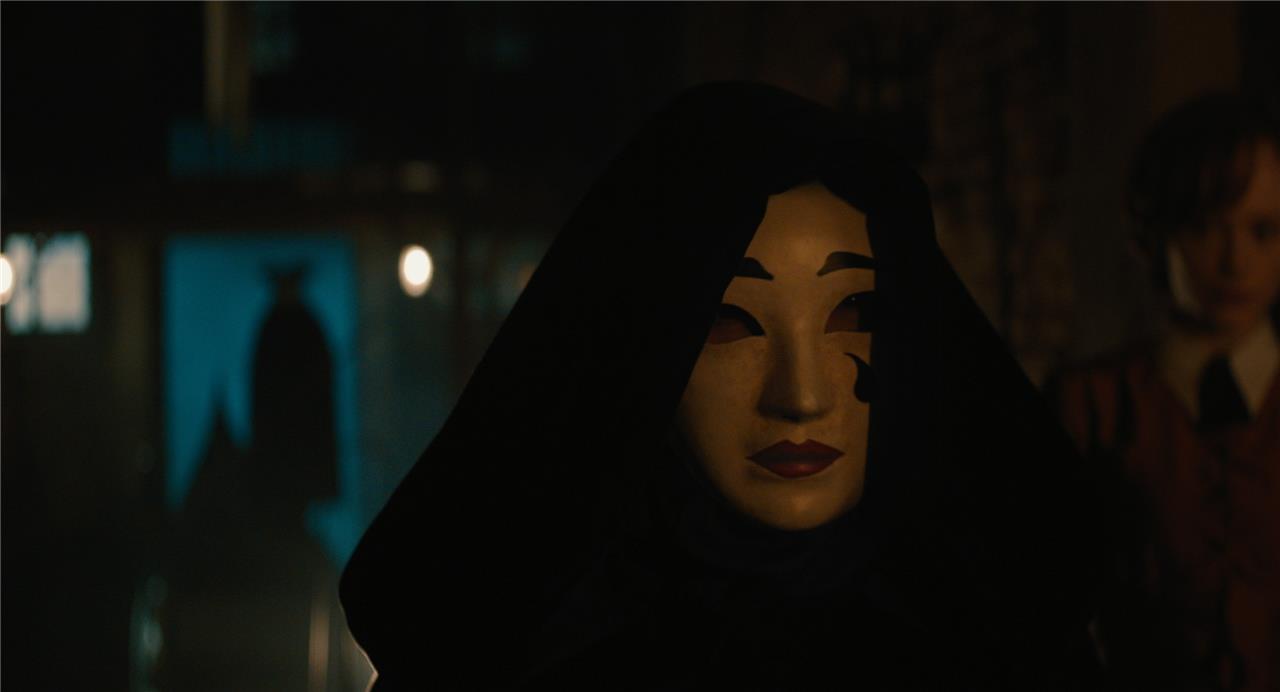
The one real mark against the movie is that not all of its actors are up to the task of matching the script and directing. Branagh is better than he’s ever been as Poirot: arch, knowing, and just the right amount of silly, but with the pain and sorrow of someone who has encountered a tremendous amount of death. Camille Cottin is similarly good as a suspicious housekeeper, and Michelle Yeoh is excellent in her very brief appearance as the medium Poirot is sent to investigate. Unfortunately, none of this can be said for Tina Fey. As Poirot’s author friend, she doesn’t have the charisma to match the rest of the cast, and overplays her intrigue enough to give more of the movie away than she should. But that’s ultimately a pretty minor quibble with an otherwise very fun movie.
The more time Branagh spends on his Poirot movies, the more it becomes clear just how much he loves making them. And that’s great, because they’re Branagh at his most fun, both as an actor and a filmmaker. He gets to do an accent and put on all the silly mannerisms one performance can possibly handle. But Branagh is also at his best as a filmmaker when he has clear references to pull from, whether it’s novels or entire eras of filmmaking, and this series gives him both. And it’s a good thing he enjoys these, because they’re starting to get really good. Here’s to as many more as he wants to make.
What chilling secrets does Venice’s haunted palazzo reveal in this murder mystery
Venice’s haunted palazzo in A Haunting in Venice reveals a dark tapestry of chilling secrets rooted in its tragic past as a former orphanage where children perished during a plague, their restless spirits said to torment any who enter. The palazzo’s eerie atmosphere is thick with supernatural occurrences, including ghostly manifestations and unexplained phenomena during a séance, which mask a sinister human truth: the deaths of several characters-including the opera singer Rowena Drake’s daughter Alicia-are tied to poison, obsession, and betrayal within the house’s shadowy walls. The investigation uncovers that Rowena, desperate to keep her daughter close, orchestrated a series of murders, using the legend of the haunted palazzo to conceal her crimes, while other guests harbor their own traumatic secrets and motives, deepening the mystery and dread that envelop the palazzo. This blend of supernatural menace and human darkness traps the guests in a suffocating web of suspicion and horror, making the palazzo itself a character steeped in secrets and spectral menace.
What dark past of the palazzo is linked to its haunted reputation
The dark past linked to the haunted reputation of Venice’s Palazzo Dario, also known as Ca’ Dario, centers on a series of tragic and mysterious events tied to its owners and inhabitants over centuries. Built in 1479 for Giovanni Dario, the palazzo became infamous after a string of misfortunes: Giovanni’s daughter Marietta and her husband Vincenzo suffered violent deaths-Vincenzo was stabbed, and Marietta died by suicide in the Grand Canal. Their son was later assassinated, setting the stage for what locals believe is a curse. Since then, many owners and residents have faced ruin, financial collapse, scandal, or violent deaths, including suicides and murders, reinforcing the legend that the palazzo brings misfortune or death to those connected with it. Paranormal phenomena such as ghostly apparitions, eerie sounds, and shadowy figures-especially the sorrowful ghost of Marietta-add to the palace’s chilling aura, making it one of Venice’s most haunted and cursed sites, often called “the house that kills”.
