
Armored Core 6: Fires of Rubicon throws you into a battlefield brimming with weaponry and customization options, but mastering the early game starts with the right build. Whether you prefer blasting enemies from medium range, charging in with melee weapons, or dominating with heavy artillery, the best early builds can set you up for success from your very first mission. Dive into our guide to discover powerful setups that balance firepower, mobility, and survivability across PC, PlayStation, and Xbox platforms-giving you the edge to conquer Rubicon’s toughest foes right out of the gate.
As you start the game, there aren’t as many options as you would like to create the mech of your dreams. To do so takes a lot of money, and to earn money, you must thrive as a mercenary.
To speed up the process for you, we have selected the best early builds in Armored Core 6 for you to run and complete the initial missions without too much trouble and while you can’t buy better pieces or weapons. In the meantime, you should consider spending some time farming money.
Best medium-range build
A best medium-range build in Armored Core 6: Fires of Rubicon strikes a balance between firepower, defense, and versatility, making it an excellent choice for early missions and adaptable combat situations. This build typically features a mix of medium-range weapons like plasma rifles and missile launchers, complemented by a powerful melee option such as the Laser Blade for close encounters. Equipped with balanced legs and boosters for decent mobility, and a sturdy core and armor for survivability, this setup allows pilots to engage enemies effectively at various distances. The inclusion of a pulse shield and stun needle launcher adds tactical options for defense and crowd control, making the medium-range build a well-rounded and formidable choice for players who want flexibility without sacrificing offensive capability.
A medium-range build is a solid option to run in the first missions of Armored Core 6. Using it is a win-win situation. You can cause damage consistently from a safe distance, which is a good strategy to employ in most encounters. The downside is that defeating certain enemies, such as the first major boss you face, might take longer than with other builds.
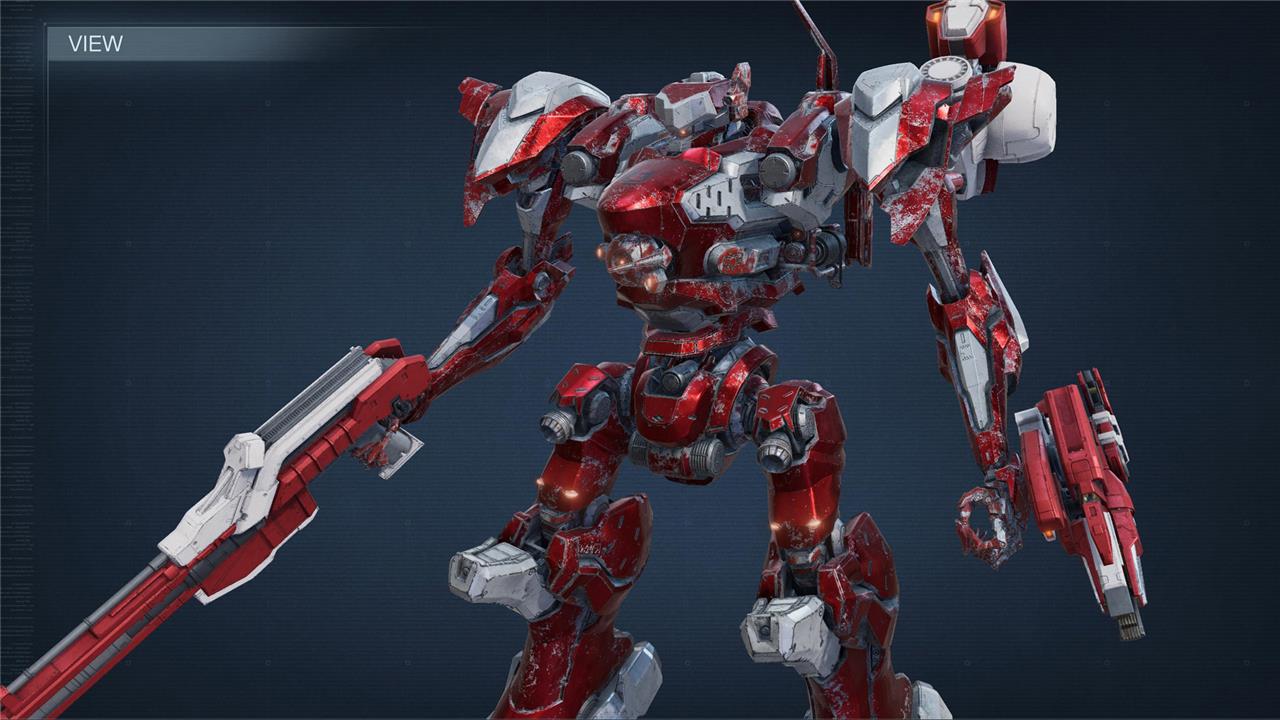
When running this build, you want to pressure enemies to give you openings to use your pulse blade. Try your best to stay a good distance from enemies, since this build is not focused on quickly boosting out of attacks.
At the beginning of the game, tetrapod units are the most challenging enemies you end up facing. This build works pretty well against them because you can keep a good distance to avoid their attacks and still hit them hard with the linear rifle and both missile launchers. Depending on the situation, it’s possible to replace the pulse blade with a bazooka, such as the DF-BA-06 Xuan-GE.
Unit
- R-ARM Unit: LR-036 CURTIS
- L-ARM Unit: HI-32: BU-TT/A
- R-BACK Unit: BML-G1/P20MLT-04
- L-BACK Unit: Vvc-70VPM
Frame
- Head: HD-012 MELANDER C3
- Core: CC-2000 ORBITER
- Armors: NACHTREIHER/46E
- Legs: 2C-2000 CRAWLER
Inner
- Booster: BST-G2/P04
- FCS: FCS-G1/P01
- Generator: DF-GN-02 LING-TAI
Best close-range build
The best close-range build in Armored Core 6: Fires of Rubicon emphasizes high damage output and agility to dominate in melee combat. A popular approach is the “High Damage Combo” build, which uses powerful melee weapons like the Laser Lance and Ashmead Pile Bunker, combined with fast legs and boosters such as the Ephemera legs and Gills booster for quick dodges and aggressive hit-and-run tactics. This build focuses on staggering enemies and maximizing melee damage while maintaining mobility to avoid incoming attacks. Alternatively, a tankier bruiser build prioritizes defense and crowd control with heavy melee weapons and sturdy legs, allowing for sustained close-range combat. Shotguns and pulse blades are also effective choices, with some players favoring dual shotguns or rapid-fire machine guns for close quarters, leveraging mechanics like ricochet to enhance damage. Overall, the key to a successful close-range build is balancing powerful melee weaponry with mobility components to stay agile and lethal in tight encounters.
As you progress through the campaign and gain more money as well as new pieces, this other build becomes a good option. The idea behind this build is to keep enemies pressured by constantly attacking them at close range.
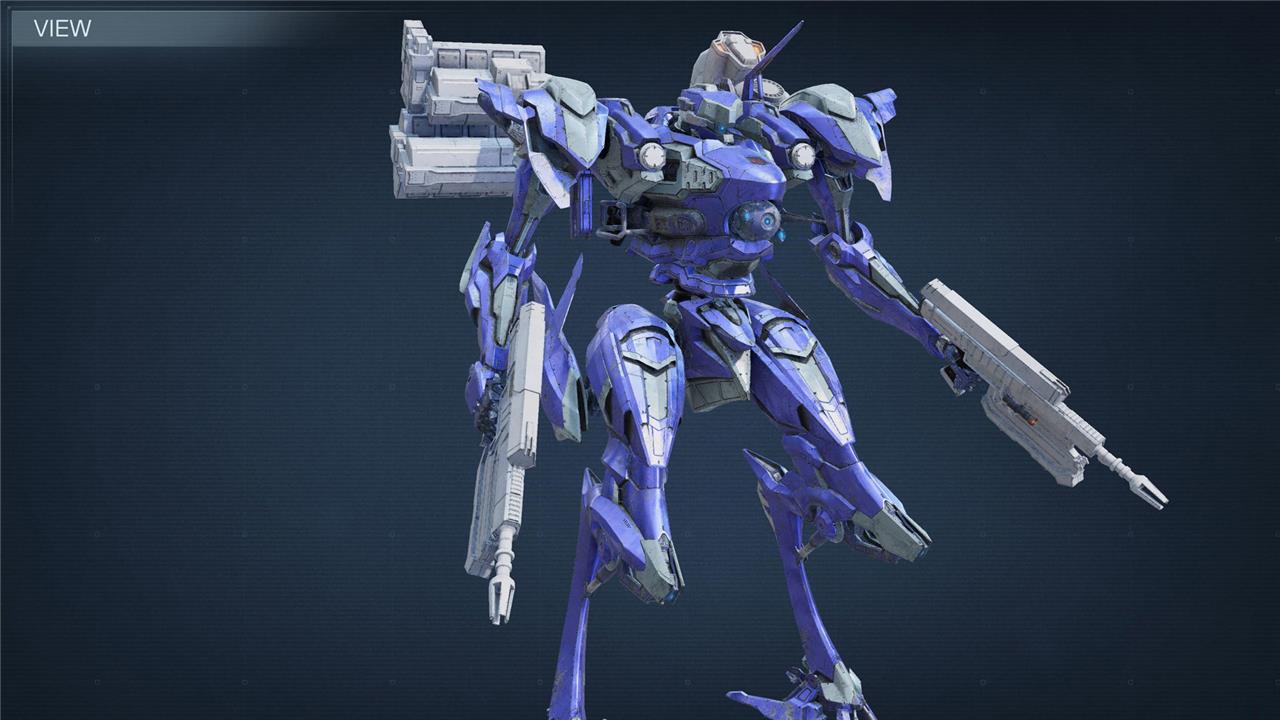
This build is indicated after getting more familiar with controlling your mech. The upside of this build is its capacity to dodge most attacks with ease and aerial maneuvering becomes more constant since this build won’t require too much energy. In addition to that, you also recover energy faster after you spend a brief time on the ground.
On the other hand, there are a few aspects of this build that you should keep in mind. This is a very squishy build, meaning you can’t stand too much damage. This is not necessarily great, because you need to get closer to enemies to hit them with the dual MG-014.
This build is actually of great use in a couple of boss fights and against regular enemies. Enemies such as tetrapod units aren’t impossible to be beaten with this build. However, staying closer to them makes you an easy target fortheir melee attacks.
Unit
- R-ARM unit: MG-014 LUDLOW
- L-ARM unit: MG-014 LUDLOW
- R-BACK unit: BML-G1/PO3VCT-08
- L-BACK unit: Vvc-70VPM
Frame
- Head: HD-012 MELANDER C3
- Core: CC-2000 Orbiter
- Arms: NACHTREIHER/46E
- Legs: NACHTREIHER/42E
Inner
- Booster: ALULA/21E
- FCS: FC-006 ABBOT
- Generator: VP-20S
Best tank build
The best tank build in Armored Core 6: Fires of Rubicon focuses on maximizing durability and firepower while maintaining decent mobility to withstand heavy punishment and deliver powerful attacks. A strong tank setup typically uses tank treads for high impact thresholds and the ability to equip multiple heavy weapons without being over-encumbered. To offset the natural agility and energy recovery penalties of tank legs, players should equip high-capacity Coral generators that enhance energy regeneration, although these are usually unlocked in later New Game+ cycles. A recommended end-game tank build, known as “Fort Knox,” combines heavy armaments like the IA-C01W6 NB-REDSHIFT right arm unit and SG-027 ZIMMERMAN left arm unit with sturdy VE-series frame parts and pulse protection OST expansion, enabling it to take down tough bosses with ease. Early on, dual miniguns paired with twin Songbird grenade launchers on tank treads provide excellent survivability and damage output, making this a versatile and powerful build for both campaign and arena battles. While tank builds sacrifice some mobility, their ability to absorb damage and dish out high DPS makes them a formidable choice for players who prefer a resilient, heavy-hitting playstyle.
This build requires a little bit more investment than the previous ones since some pieces are expensive. Even so, it has the advantage of enduring a lot of damage and it takes longer before getting staggered. Because of its robust structure, this build also allows you to use heavier weapons.
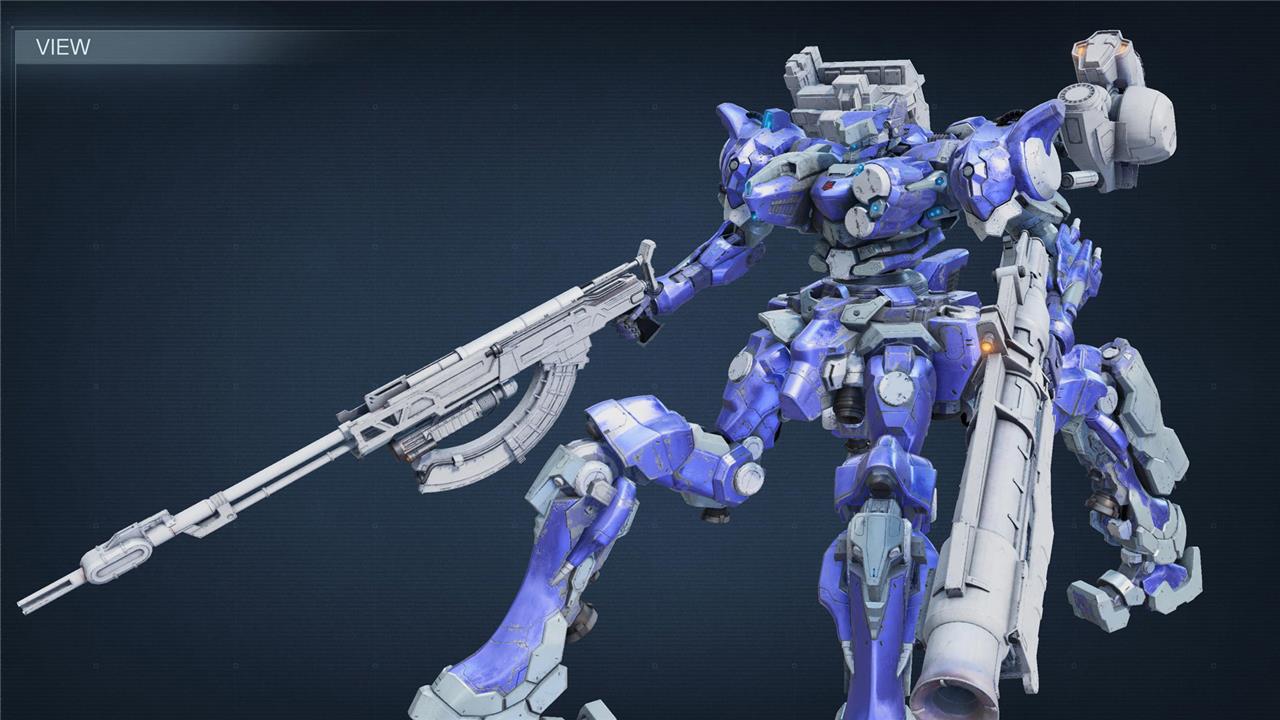
Tetrapod builds are heavier than others but this specific type of legs has the advantage of allowing you to hover around spending less energy than other builds. Hovering gives you a strategic advantage against most regular enemies since only a few can fly. Besides that, it makes your life easier when trying to hit enemies’ weak spots. Use this build in missions where you need to fight your way through several enemies and with stationary targets, such as cannons protecting objectives.
Tetrapod legs work greatly with heavy artillery because it removes their recoil. They also enable you to shoot charged linear rifles as you move around. All these advantages, however, are not enough depending on the enemy you’re fighting. Fast enemy Armored Core units can boost all around you, making it difficult to hit them with heavy guns. Boss fights that demand quick responses are also hard to deal with this build.
Unit
- R-ARM unit: MA-J-200 RANSETSU-RF
- L-ARM unit: DR-BA-06 XUAN-GE
- R-BACK unit: BML-G1/PO3VCT-08
- L-BACK unit: Vvc-70VPM
Frame
- Head: NACHTREIHER/44E
- Core: VP-40S
- Arms: VP-46S
- Legs: VP-424
Inner
- Booster: ALULA/21E
- FCS: FCS-G2/P05
- Generator: DF-GN-06 MING-TANG
What makes the Legion build stand out as the best early game option in Armored Core 6
The Legion build stands out as the best early game option in Armored Core 6: Fires of Rubicon because it is designed to quickly build stagger on enemies, enabling massive damage up close once their ACS is overloaded. It balances speed and sturdiness, making it fast and relatively durable, while utilizing some of the best early-game parts like the ALULA/12E booster, NACHTREIHER core parts, and MING-TANG generator. This build’s core can also be upgraded with better parts later, maintaining its effectiveness throughout the game. Its twin Haldemans and dual missile launchers excel at staggering foes, allowing players to dominate early missions and even handle tougher enemies like BALTEUS.
How does the Legion build quickly build stagger compared to other early options
The Legion build in Armored Core 6 quickly builds stagger primarily through its weapon combination of twin Haldemans and dual missile launchers, which deliver rapid, stagger-inducing hits to enemies. This setup excels at applying consistent stagger damage faster than many other early game builds, allowing players to overload enemy ACS quickly and open them up for massive close-range damage. The fast attack speed and stagger potential of the Haldemans, combined with the missile launchers’ burst damage, make it easier to break enemy poise compared to slower or single-weapon builds. This synergy enables the Legion build to disrupt opponents efficiently, giving it a distinct advantage in early combat scenarios.
