
Get ready to level up your portable gaming experience: the Steam Deck OLED, with its stunning 7.4-inch HDR OLED display and improved battery life, officially launched worldwide on November 16, 2023. But where can you buy this highly anticipated upgrade, and what else should you know before diving in? From pricing tiers to exclusive editions and the latest hardware tweaks, here’s everything you need to know about securing your own Steam Deck OLED and why it’s turning heads in the gaming community.
Valve has introduced the Steam Deck OLED, which offers more than just a better screen. It boasts many other improvements over the original model, including faster Wi-Fi and better battery life. All of that being said, it isn’t advertised as a successor, and it’s no more powerful at running games than any other Steam Deck. It’s simply a premium alternative, like the Nintendo Switch OLED is to the regular Switch. You can check out our full review of the Steam Deck OLED for more.
Whether you’re someone who already has a Steam Deck or someone who hasn’t yet purchased one, we made this guide to answer some questions you might have.
<
Where can I buy the new Steam Deck OLED?
You can buy the new Steam Deck OLED directly from the official Steam store, where it is available in different storage capacities starting at $549 for the 512GB model and $649 for the 1TB version. Additionally, various retailers, including UK-based shops, stock the Steam Deck OLED, and using real-time stock checkers can help you find availability and compare prices to secure one quickly, as the device often sells out due to high demand. Valve limits purchases to one Steam Deck OLED per customer per week to manage supply, but restocks occur regularly, and setting up stock alerts can help you buy as soon as it becomes available again.
Just like before, Valve will be selling the Steam Deck OLED exclusively through Steam. In Korea, Hong Kong, Japan, and Taiwan, it will be available through Komodo.
What’s the price difference between the Steam Deck OLED and the LCD model?
The price difference between the Steam Deck OLED and the LCD model varies depending on the storage options. The base Steam Deck LCD with 256GB storage is priced around $399, while the Steam Deck OLED starts at $549 for the 512GB model and goes up to $649 for the 1TB model. This means the OLED model costs approximately $150 to $250 more than the LCD version, reflecting its superior features such as an OLED HDR display, higher refresh rate (90Hz vs. 60Hz), larger battery, and better wireless connectivity. The OLED model offers a more vibrant screen and longer battery life, making it a premium choice for those prioritizing display quality and portability.

The Steam Deck OLED is coming in at $549, and it includes 512 GB of storage. The original Steam Deck starts again at $349 for a 64 GB configuration. But more exciting is that the 256 GB model now costs just $50 more. The full pricing breakdown looks like this:
- $349 for the 64 GB Steam Deck LCD
- $399 for the 256 GB Steam Deck LCD
- $449 for the 512 GB Steam Deck LCD
- $549 for the 512 GB Steam Deck OLED
- $649 for the 1 TB Steam Deck OLED (includes updated case)
- $679 for the 1 TB Steam Deck OLED limited edition (includes updated case)
Ooh, what’s this about a limited edition Steam Deck OLED?
Valve is releasing a limited edition Steam Deck OLED model called the Steam Deck OLED: Limited Edition White, which will be available worldwide on November 18, 2024, at 3 PM PST. This special edition features a striking white and grey color scheme, distinguishing it from the standard black Steam Deck OLED. It comes with a matching white carrying case and a white microfiber cleaning cloth. The limited edition is priced at $679 USD, about $30 more than the regular 1TB Steam Deck OLED model. Valve has emphasized that this edition is truly limited-once sold out, it will not be restocked, making it a unique opportunity for collectors and fans who want a fresh look for their handheld PC. It will be available in all regions where Steam Deck ships, including the US, UK, Australia, and others.
Yeah, so folks in the U.S. and Canada will be able to purchase a $679 limited edition version of the Steam Deck OLED. It comes with 1 TB of storage, and it’s clad in a smoky gray translucent shell, with red detailing around the sticks and some of the buttons. It also includes an updated zip-up case with an exclusive design printed on the inside.

Whoa, the original Steam Deck is now the same price as the Nintendo Switch OLED!
The original Steam Deck has now dropped to a price point comparable to the Nintendo Switch OLED, making it an intriguing option for gamers weighing their handheld choices. While the Steam Deck OLED launched at a premium around $549, the original Steam Deck’s price has come down to match the Switch OLED’s $349-$350 range, leveling the playing field financially. This price parity highlights the Steam Deck’s appeal as a more powerful, PC-style gaming device with robust specs, including a stronger CPU, GPU, and more RAM, compared to the Switch OLED’s focus on Nintendo’s exclusive games and OLED display quality. For those who prioritize raw performance and access to a vast Steam library, the original Steam Deck at this price point offers compelling value against the Switch OLED’s polished, family-friendly experience.
I’m sure that was intentional!
Is the Steam Deck OLED faster than the original model?
The Steam Deck OLED is slightly faster than the original model, thanks to an updated AMD APU and improved memory, which provide a modest performance boost. In some games, the OLED version shows about 10-15 more frames per second and offers more consistent frame rates, pushing games like Elden Ring to run above 30 fps more steadily compared to the original. Additionally, the OLED model supports a 90Hz refresh rate versus the original’s 60Hz, allowing smoother gameplay in less demanding titles by displaying higher frame rates without being capped. However, this increase is not a major leap but rather a noticeable refinement that complements the improved battery life, cooler operation, and better display quality of the Steam Deck OLED.
No. According to Valve, optimizations have been made to the Steam Deck OLED’s memory and AMD APU that improve power efficiency and boost the speed at which it can resume suspended games. However, it has the same performance target as the original model.
<
Is OLED really that cool?
The OLED screen on the new Steam Deck truly stands out with its vibrant colors, deep blacks, and superior contrast, offering a far more immersive visual experience compared to the original LCD model. Its 7.4-inch display not only delivers richer, more controlled HDR effects but also supports a faster 90Hz refresh rate, which enhances smoothness in gameplay, especially for titles running above 60fps. Additionally, the OLED model benefits from a more efficient cooling system, keeping the device cooler during intensive gaming sessions. These improvements make the OLED Steam Deck a significant upgrade for gamers who value display quality and performance.
Yes, it is. Assuming you haven’t seen an OLED screen before (most high-end phones have them these days), using one can make a huge difference in the enjoyment of games. For one, OLEDs can show off environments with pixel-perfect accuracy, with shadows that are blacker than ever, and colors that almost pop off the screen. Viewing angles are greatly improved over LCD, too, with a wider sweet spot for seeing the best color reproduction on the screen.
OLED isn’t just for looks; it has big power efficiency benefits, too. Alongside the Steam Deck OLED’s slightly larger battery, the OLED screen plays a central role in boosting this model’s longevity by up to 50% in some games.

But is the OLED worth the money if I already have a Steam Deck?
If you already own a Steam Deck, deciding whether to upgrade to the OLED model depends largely on how much you value the improved display and other enhancements. The Steam Deck OLED offers a noticeably better 7.4-inch OLED screen with HDR support, richer colors, deeper blacks, and a higher refresh rate of up to 90Hz compared to the original’s 7-inch LCD at 60Hz. It also features a larger battery for longer playtime, faster Wi-Fi, and increased storage options (up to 1TB), while being slightly lighter. However, performance gains are minimal, and the core hardware remains largely the same. If you prioritize a superior visual experience and future-proofing your handheld, the OLED is worth the investment. But if you are satisfied with your current Steam Deck’s performance and screen, sticking with it is a reasonable choice given the premium price for the OLED upgrade.
That’s for you to decide, ultimately. For many people, keeping the hardware you have is the most economical move. Perhaps my colleague Chris Plante’s review will help you decide where you’ll land.
Do I need new accessories?
When considering whether you need new accessories for the Steam Deck OLED, it largely depends on your personal use and preferences. The Steam Deck OLED comes as a self-contained unit with everything necessary for gaming right out of the box, so accessories are not strictly required. However, many users find certain add-ons enhance their experience, such as a quality screen protector to guard the vibrant OLED display, a protective case for added durability, and a USB-C hub or docking station to expand connectivity options for peripherals and external displays. Power banks can also be useful for extending playtime on the go, and some gamers prefer external controllers or thumbstick upgrades for improved ergonomics and control. Ultimately, while accessories are optional, they can provide convenience, protection, and expanded functionality depending on how you use your Steam Deck OLED.
Nope! The Steam Deck OLED has the same physical dimensions as the original Steam Deck, but weighs 30 grams less. In other words, every accessory that we recommend in our guide to the best Steam Deck accessories will suit you well.
Is Valve discontinuing the original Steam Deck or planning to end support?
Valve is not discontinuing the original Steam Deck nor planning to end its support. Both the original LCD model and the newer OLED versions continue to receive software updates and improvements, ensuring ongoing functionality and performance. Valve’s business model focuses on selling Steam games through the device rather than profiting heavily from hardware sales, so maintaining support for existing Steam Decks aligns with their interests. While Valve is developing a Steam Deck 2, it is not expected to launch soon as they are waiting for a significant generational leap in CPU and GPU technology before releasing a new version. In the meantime, Valve remains committed to improving the current Steam Deck lineup, including limited edition variants like the recent white Steam Deck OLED.
Nope. Valve shared with AELGAMES that the updates that it makes to SteamOS and Steam will benefit both versions of the console.
Does the Steam Deck OLED have a faster microSD card slot?
The Steam Deck OLED does not have a faster microSD card slot compared to the original Steam Deck. Both models use a UHS-I interface for their microSD slots, which limits the maximum read and write speeds to around 104 MB/s. This means that even if you use a faster UHS-II or UHS-III microSD card, the Steam Deck OLED will still throttle the speeds to UHS-I levels, so there is no real speed advantage in the microSD card slot itself between the two models. For most gaming purposes on the Steam Deck OLED, a high-quality UHS-I microSD card with A2 performance class is recommended, but investing in cards with speeds beyond UHS-I offers diminishing returns due to this hardware limitation.
Nope. This model has a UHS-I slot, so no changes there. Its USB-C port is the same as well.
What else is different about this model?
The Steam Deck OLED distinguishes itself with several key upgrades beyond just the OLED screen. It features a slightly larger 7.4-inch HDR OLED display that offers brighter colors, deeper blacks, and a higher refresh rate of 90Hz compared to the original’s 60Hz LCD screen. This results in more vivid and smoother visuals. The OLED model is also lighter by about 30 grams and runs cooler thanks to improved thermals and a bigger fan. Battery life is significantly improved, with a larger 50Wh battery providing 30-50% longer playtime. Additionally, it includes faster Wi-Fi 6E for quicker downloads and more stable online play. Storage options are expanded, with 512GB and 1TB SSD variants available, doubling or quadrupling the original’s 256GB capacity. Some premium features, such as an anti-glare etched glass and a special carrying case, are exclusive to the 1TB model. Overall, these enhancements make the Steam Deck OLED a more refined and capable handheld gaming device.
A lot, actually. Its Wi-Fi and Bluetooth chips are better. In terms of Wi-Fi, it supports Wi-Fi 6E, which can boost game download speeds by up to three times, assuming you have a Wi-Fi 6- or 6E-compatible router. One Bluetooth upgrade I’m excited about is the ability to wake the Steam Deck OLED with a wireless Bluetooth controller.
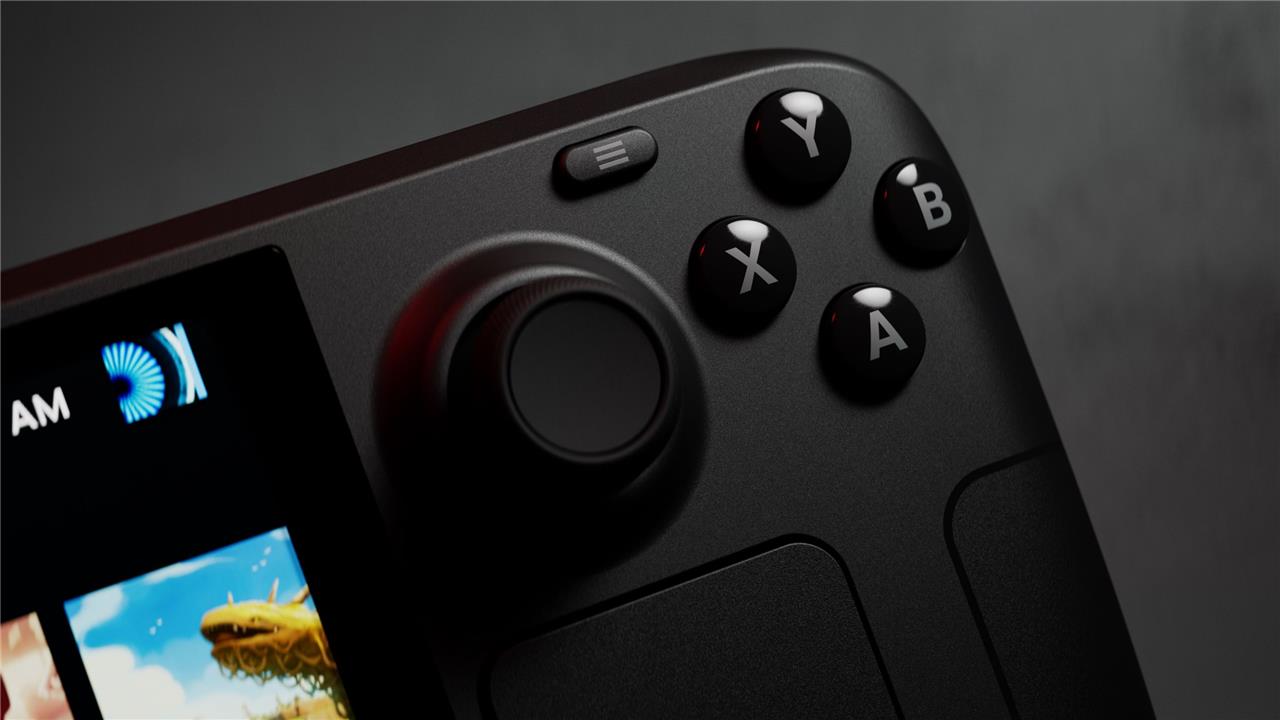
The haptics feel joltier, closer to the haptics that I come to expect from high-end smartphones. Valve’s redesigned thumbsticks have a much grippier center than before. Unlike with the original model, my thumbs don’t slide around on the new sticks during use.

Tell me about the updated zip-up case
The updated zip-up case for the Steam Deck OLED, exclusive to the 1TB model, offers enhanced practicality with a dual-closure system featuring both a zipper and an added Velcro strap to prevent accidental openings. Inside, it includes a removable smaller case that provides firm protection while being compact enough for travel without the bulk of the full hard case. This design allows users to carry the Steam Deck safely in a backpack with room for accessories, making it a significant improvement over previous cases that lacked accessory storage. The case is well-regarded for its sturdy build and thoughtful features, contributing to the device’s durability and user convenience.
Gladly. Most of us agree that the hard zip-up case that was included with the original Steam Deck was good, but hefty, right? Valve’s new version of the case that comes with the 1 TB model includes both a hard zip-up case and one with a slimmer profile within it. All you have to do is detach the inner layer’s Velcro, and you’re left with something that’ll be much easier to carry on trips.
<
Is this model going to support user-serviceable parts, too?
Yes, the Steam Deck OLED continues Valve’s commitment to user-serviceable hardware. The new model features several design improvements specifically aimed at making repairs and modifications easier. All rear case screws now use Torx™ heads that thread into metal inserts, which allows for repeated disassembly and reassembly without compromising the device’s structural integrity. Internal components are more accessible, and some repairs-like display replacement-no longer require removing the rear cover. Valve has also made certain parts, such as the bumper switches and joystick boards, easier to replace or repair.
Official replacement parts for the Steam Deck OLED are available through iFixit, including thumbsticks, batteries, displays, buttons, and more, with comprehensive repair guides to assist users in performing their own fixes. This means owners can expect continued access to genuine parts and DIY resources, reinforcing Valve’s user-friendly approach to hardware maintenance. However, Valve does caution that repairs should be performed by trained professionals to avoid accidental damage.
Yep! But that’s far from the biggest news in terms of repairability. Valve streamlined the process of repairing the Steam Deck OLED in some meaningful ways. On the rear cover, it switched to Torx machine screws with metal bosses to reduce head stripping. Throughout the system, it reduced the number of screw types, and it requires fewer steps for common repairs. The switches for the shoulder bumpers are now on the joystick board for easier repair. We’ll let you know once these new components hit iFixit.
Where can I find the best deals on the Steam Deck OLED after launch
The best deals on the Steam Deck OLED after launch are currently found through Valve’s official refurbished models, which offer savings up to $130 off the new price with the same one-year warranty, making them a reliable and cost-effective option. Besides Valve’s store, major retailers like Amazon and Best Buy occasionally have discounts, with Amazon recently offering the 512GB OLED model at about 15-17% off its retail price. However, significant sales on new Steam Deck OLED units are rare, with Valve historically only discounting the original Steam Deck about a year after release and unlikely to heavily discount the OLED model anytime soon, except possibly during major sales events like Black Friday or Cyber Monday. Checking large electronics retailers and Valve’s refurbished listings regularly is your best bet for finding the Steam Deck OLED at a reduced price.
When will the Steam Deck OLED likely go on sale again
The Steam Deck OLED is most likely to go on sale again during major seasonal events, with the strongest expectation being Black Friday 2025 in late November. Valve has historically offered discounts on Steam Deck models around anniversaries and major sales, but significant price drops on the OLED version have been rare so far. Previous discounts on the original Steam Deck appeared about a year after release, and discussions suggest that Valve might follow a similar pattern with the OLED, potentially offering deals during the Summer Sale or Black Friday, though nothing is guaranteed. For now, the best chance to catch a sale on the Steam Deck OLED would be to wait for Black Friday 2025 or possibly the summer sales period, keeping an eye on Valve’s announcements and major retailers.
