
The Halo TV show’s decision to cast humanity as the villains not only distorts the franchise’s core themes but also reduces the complex moral landscape of the original games to a simplistic, generic sci-fi trope. By turning the UNSC into a cartoonish dictatorship and sidelining the galaxy-threatening Covenant, the show misses the nuanced desperation and gray areas that define humanity’s struggle in the Halo universe. This shift undermines the essence of what made Halo compelling-a story about survival, sacrifice, and the blurred lines between heroism and villainy.
I could talk about how Halo’s centering of humans as the bad guys behind every plot cheapens one of the few fascinating moral complexities of the Halo games and books – that the Spartans were built for fundamentally inhumane treatment of rebel fighters and then accidentally found justification in a surprise alien invasion. But it’s more fair and even more damning to talk about all of this on the Halo TV show’s own terms. And on those terms, I simply have no fucking idea why there are even aliens in this show to begin with.
In an effort to underline the badness of humanity, Halo has completely sidelined the Covenant, throwing the entire show off course and spinning wildly into space. Even the Covenant’s grand invasion of Reach in the show is just another human plot, one of a thousand ways the TV show wants to prove that the human bureaucrats are evil, something we’ve known since the earliest moments of the show’s first season.
But all this emphasis on humanity’s sins begs a critical question: Almost two full seasons into Halo, what point is it trying to make, exactly? Season 2’s seventh episode, “Thermopylae,” seems to offer some attempt at answering that question, when Makee (Charlie Murphy) pleads with Chief to stop helping humanity so that the two of them can settle Halo on their own and make it a paradise, rather than letting either side use it as a civilization-destroying weapon. Setting aside the silliness that is this version of Halo being so constantly tempted to recast Master Chief (Pablo Schreiber) as the lead of a domestic drama, Makee’s statement still leaves a gap in our understanding of what this show is doing. If the point is “war makes monsters of us all,” then shouldn’t we see that equally in both the human and Covenant factions? And even more pressingly, why won’t anyone acknowledge that the Covenant are the ones who threatened extinction first and based their whole galactic conquest on the Prophets’ lie about a Great Journey that would take them from the galaxy?
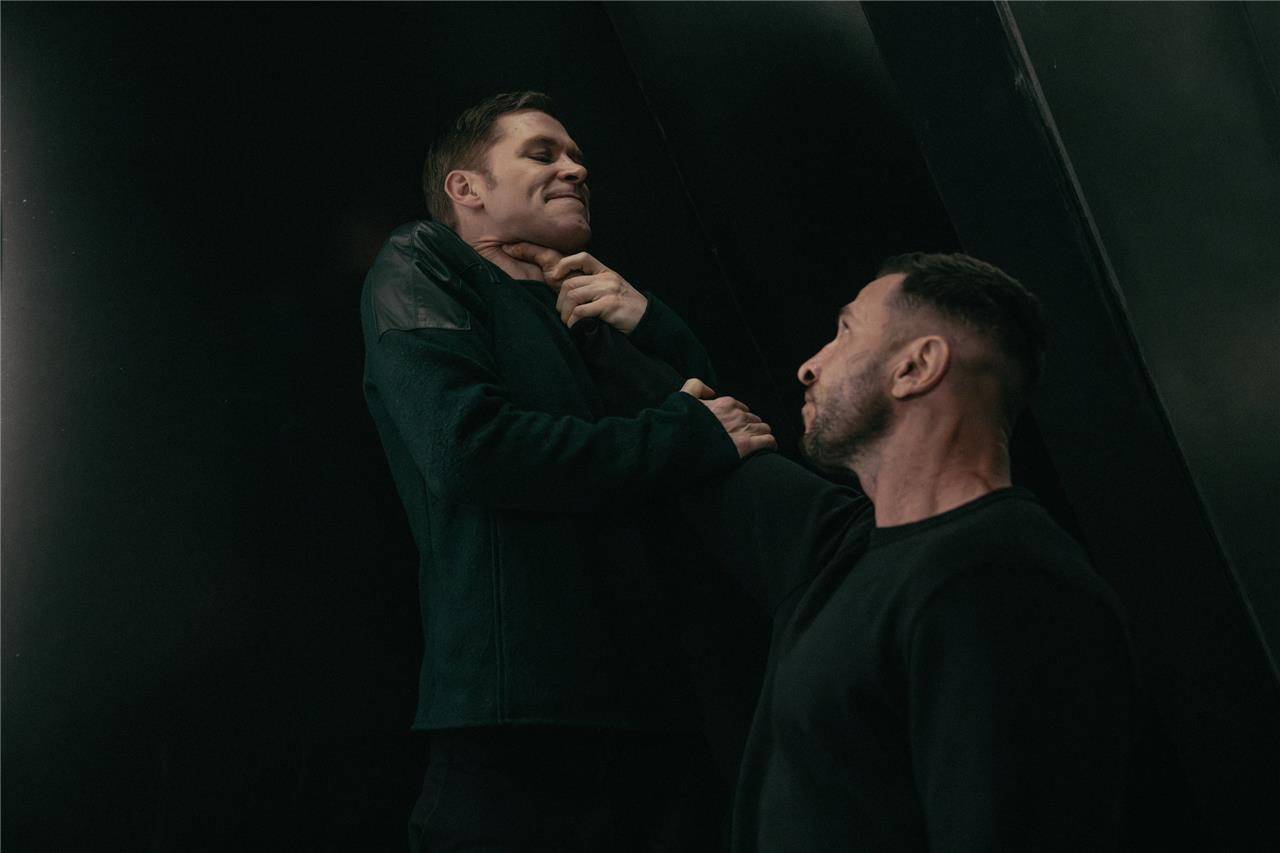
We’re subjected to half a dozen scenes each episode of humanity’s reckless and evil leaders making civilization-shaping choices – particularly the ongoing machinations of Admiral Margaret Parangosky (Shabana Azmi), one of the worst and least compelling characters in recent TV memory, thanks to her consistently baffling decisions and seemingly lack of strategy and communication. (Put simply: She’s here to antagonize every other character, with no real character of her own.) Meanwhile we only get to see the Covenant’s side from the point of view of Makee and the criminally underdeveloped Arbiter. Sure, we hear them say that the Prophets might be full of shit and that the Great Journey might be a lie, but it remains a complete mystery why the alien’s genuinely compelling similarity to Earth’s own corrupt and lying authorities is drawn with such a faint line. Perhaps drawing those connections more clearly would help us make sense of why Master Chief has fought more humans in Halo season 2 than he has Covenant.
Despite the moment-to-moment conflict rarely making sense, or seeming to lead anywhere, it hasn’t stopped the show from introducing more plot threads or drip-feeding longtime series fans with new bits of recognizable lore. For instance, this latest episode gave us our most meaningful look yet at the Forerunners, though they haven’t been named quite yet. It also hinted at yet another alien faction that could soon arrive, but we’ll have to wait and see if that thread goes anywhere.
All these new introductions do little to lessen the feeling of narrative cheapness that surrounds Halo, however. As more ideas and plots get introduced, it only serves to underline how little sense any of this really makes. Sure, we know the Covenant are knocking on humanity’s front door, but the sudden diversion of every character in the show now converging on a need to capture “the Halo,” as they keep calling it, feels like it came out of nowhere. Which is a pretty astounding feat of messy storytelling considering it’s the object the entire franchise is named after.
Why does the show portray humans as villains instead of focusing on the aliens
The Halo TV show portrays humans as villains instead of focusing on the alien Covenant primarily because it is easier for writers to create human antagonists who are cartoonishly evil and relatable to the audience, rather than crafting complex alien villains. This approach also seems influenced by popular sci-fi franchises like Star Wars and The Expanse, which often feature human antagonists, possibly because alien antagonists might be perceived as too outlandish or difficult for a wider audience to take seriously. However, this choice significantly diverges from the original Halo narrative, where the existential threat posed by the genocidal Covenant was central, and the human side was portrayed with moral complexity rather than outright villainy. The show’s heavy-handed depiction of the UNSC as a fascist regime and the sidelining of the Covenant threat has been criticized as cartoonish and a misrepresentation of the franchise’s core themes.
How does portraying humans as villains affect my connection to Halo’s story
Portraying humans as villains in the Halo TV show significantly weakens your connection to the original story by undermining the franchise’s core themes of human resilience and survival against a genocidal alien threat. Instead of a complex, existential war where humanity fights for survival against the Covenant, the show reduces humans to cartoonishly evil antagonists, which can feel jarring and alienating for longtime fans. This shift erodes the pride and emotional investment that came from rooting for humanity’s tenacity and moral complexity, replacing it with a sour, bleak narrative where humans are depicted as oppressive and villainous, while the Covenant threat is downplayed or sidelined. As a result, the story loses much of its original tension and meaning, making it harder to engage with the characters and their struggles in a meaningful way.
