
Before you draw your blade in Like a Dragon: Ishin!, there are a few things worth knowing-how the Trooper Cards twist combat strategy, which skills pay off early, and why chasing side stories can change the outcome of your samurai journey. Here are 11 insights that could save you hours-and make every duel count.
If you’re wondering whether you can play Like a Dragon: Ishin! without using the Trooper Cards mechanic, or want to know how best to optimize your time as you go from point A to B, our tips below shall provide the guidance you seek. Also, in case you’re wondering: Unlike Kiryu, yes, Sakamoto Ryoma openly kills people.
You play Like a Dragon: Ishin! without Trooper Cards
You can play Like a Dragon: Ishin! without using Trooper Cards if you prefer a more grounded experience. Trooper Cards add special abilities and temporary boosts during combat, but they aren’t required to finish the story or enjoy the gameplay. Disabling them creates a more traditional brawler feel, similar to older Yakuza titles, where fights rely purely on your skill with weapon styles and timing. This approach appeals to players who want to focus on technique rather than supernatural power-ups.
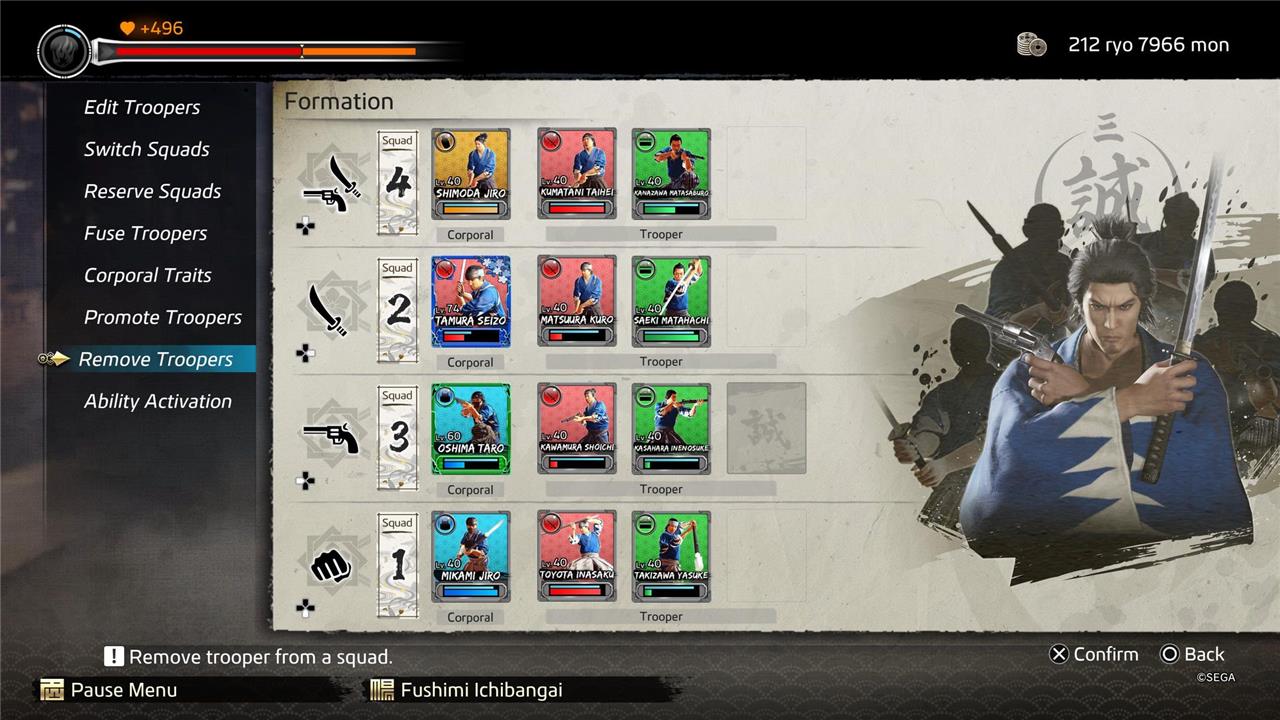
You can play Like a Dragon: Ishin! without using Trooper Cards – active and passive skills that you can carry with you. The mechanic is unlocked automatically as you follow the main story, and you’ll gain more as you play. They’re neat, but can be distracting.
Once you have access to the Trooper Cards system, press the pause button, head over to Troopers, and then Remove Squads to get rid of them.
I found them to be quite useful, allowing me to deal with big enemy groups, activate health regeneration, and more. But, again, it’s up to you whether you want to use them or not. Just keep in mind that some bosses will use similar skills during their encounters, so, the game kind of expects you to make use of them. But hey, your sword will do the trick just fine.
Stop for pot whenever you can
Pot spots are scattered across Kyo, and stopping at them often pays off. Cooking and using pot dishes restores your health and gives helpful combat buffs, which can make tougher battles more manageable. Each stop also lets you experiment with ingredients you’ve gathered, so you can create stronger recipes and save money on healing items. Think of these pots as reliable pit stops that keep Ryoma in peak shape throughout his adventures.
As you walk around, you’ll spot plenty of pots on the street. They hold random items, and over time, those item pools refresh. Simply put, you can come across the same pot multiple times and find something new in each. This takes time, of course – precious seconds, in fact. But it’s worth the monotonous hassle. You might end up obtaining an item you’ll need later, a handy crafty resource, or even a Vitamin Pill to patch you up.
Try to keep your pockets empty
Carrying too many items slows you down and can prevent you from picking up valuable loot in battles or side quests. Sell or store what you don’t need at the nearest merchant or warehouse to keep your inventory light. Weapons, healing items, and crafting materials you actually use should stay with you, but everything else can be safely stashed. This also helps manage your currency since selling unneeded goods early on ensures you always have enough cash for upgrades and equipment.
In Like a Dragon: Ishin!, especially at first, you’re bound to run out of inventory space fast. The game handles this in a neat way, though, by giving you the option to send something to your storage in order to make room. If you select the item that you want to buy, for example, the game will send that item directly to the storage, and keep whatever else you have in your pockets in place.
Over time, this can become a bit of a drag. During the main story’s long combat sequences, for example, you’ll stumble upon healing items as loot on the ground. If your inventory is full, you’ll see an error message displaying so. Sure, you can just use or discard a random item to make room, but it’s not practical. Always try to keep your pockets empty.
Also, remember that you can increase your inventory space by spending Virtue on altars. That said.
You should hold onto your Virtue until Chapter 4
Your Virtue points are a valuable resource early in the game, but spending them too soon can slow your progress. It’s better to save them until Chapter 4, when more systems and upgrades become available. At that point, you’ll gain access to features that make Virtue spending far more rewarding, helping you strengthen your character and improve key facilities. Holding off a little ensures your investment pays off later.
Except for inventory space or running speed upgrades, of which you should get at least one of each, try and save up your Virtue until you reach chapter four. That’s the point in the main story where you’ll access Ishin‘s Another Life component – essentially a life-sim minigame – and with it, the list of upgrades and items you can purchase using that currency grows immensely. If you want to make the most out of Another Life, some upgrades will be mandatory, such as increasing your farm size and speed. Being able to just purchase them right away will help with this.
Here’s what Ryo means, by the way
Ryo is the game’s currency, used for everything from upgrading weapons and armor to buying food, equipment, and gifts for allies. You’ll earn it through fights, side quests, and various mini-games scattered across Kyo. Managing your funds wisely can make a big difference-some powerful gear and rare items cost a small fortune, so deciding when to spend or save can shape how smoothly your adventure progresses.
If you’re wondering what “ryo” means in Like a Dragon: Ishin!, here’s the answer. In the game, money is divided into two currencies: mon equals anything from 1 to 9,999, while ryo indicates 10,000. (If you’re familiar with World of Warcraft, this is similar to how Bronze, Silver, and Gold work.)
If you have 5 ryo and 2,664 mon in your inventory, for example, it means you’re carrying 52,664 mon total. You can always see your current amount in the top right corner of the pause menu.

Bring your guns to a sword fight
Gunplay gives you a serious edge in Like a Dragon: Ishin!-especially against sword-wielding foes who can’t match your range. Mixing bullets with sword strikes in the Gunman or Wild Dancer styles lets you pressure enemies from afar and finish them up close. Experiment with weapon upgrades and ammo types to handle different enemy resistances. Some Trooper Cards also boost your firearm power, making each shot hit harder during boss fights or tight encounters.
This will be dependent on your preferences during enemy encounters, but honestly, you should really make use of your pistols. Several enemies rely on swords only, and you can get a huge advantage by just standing afar and shooting them. Sure, it’s not really a fair way to do it, but who cares? It’s often the most practical, especially during some boss encounters. As soon as they start performing a fury of attacks, step aside and shoot them. This will ensure you’re always causing damage without exposing yourself to danger too often.
There’s an easy shortcut into Mukurogai
You don’t have to wait long to reach Mukurogai once the story opens up. After advancing through a few early chapters, a side path lets you access the area without progressing the main plot any further. This shortcut is through a small alley near the river that connects directly to the district, saving you a lot of backtracking. Use it to visit shops, test combat skills, and accept sub-stories early on before the main story forces you back there.
If you give booze to the guy who is guarding the Rakugai entrance, either from outside or inside of Mukurogai itself, he’ll let you pass through the door. From that moment on, just talk to him to get through. You won’t need to head over to Fushimi and pay for the ferry each time ever again. Unless you want to.

Keep an eye out for Golden Sneak Enemies
Golden Sneak enemies appear randomly and drop rare materials or large sums of money when defeated, making them a valuable find during your playthrough. They tend to flee quickly, so reacting fast and using area attacks or ranged weapons can help secure the win before they escape. Keep some strong abilities ready, as defeating one not only rewards you with quality loot but also boosts your experience gains significantly.
When you’re rushing from point A to B, you might be enticed to try and avoid enemy encounters as much as possible. That said, if you see a single enemy wearing a mask and gold-tinted robes, I recommend standing your ground and fighting them. They can be tough, but they also carry some of the most rare items in the game, especially for crafting.
You need specific abilities to equip special weapons
Certain powerful weapons in Like a Dragon: Ishin! require Ryoma to meet specific ability thresholds before use. Each weapon type-sword, gun, or brawler-ties to a particular combat style and stat category, meaning you’ll need to raise those skills through training and combat experience. If a weapon’s stats are too high for your current level, Ryoma won’t be able to equip it until you improve his corresponding abilities. This makes focusing on balanced stat development an advantage early on, especially if you plan to experiment with different weapon types later in the game.
If you’re wondering why you can’t equip special weapons in Like a Dragon: Ishin!, there’s a reason for it. You need to purchase the related ability in the skill trees to use special weapon types. Moreover, some are locked, and you’ll need to find an NPC who can grant you the skill – in this case, a permission of sorts – to use that weapon.
Then, while you’re using the Brawler fighting style, press Down on the D-Pad to select the special weapon you have equipped.
Check-in on Another Life remotely
You can manage your progress in the Another Life side activity without being near the house itself. Through the Trooper Cards menu, you can remotely check on Haruka’s tasks, harvest crops, or prepare meals. This feature saves time and lets you keep your farm running smoothly while continuing your adventures in Kyoto. It’s a convenient way to balance side activities with the main story.
In the pause screen, you can select the Another Life menu to check on the progress of Haruka’s trust, for example. But, at the same time, this can be quite useful when you’re somewhere else and need to double-check something quickly. This includes the farm aspect, so you can see if your vegetables are ready for harvest, or even peruse the list of meal recipes, in case you’re out shopping and need a quick reminder of the ingredients you’re missing.
Palanquin rides are the taxi equivalent
Palanquin rides act as quick travel points across Kyo, letting you move between districts without wasting time on foot. After paying a small fee, you can hop between major areas you’ve discovered, making exploration and questing far more convenient. It’s the period-appropriate version of a taxi, complete with attendants carrying you through the busy streets so you can get straight to your next objective.
Best Trooper Cards for each fighting style
Like a Dragon: Ishin! features four fighting styles-Brawler, Swordsman, Gunman, and Wild Dancer-each benefiting from tailored Trooper Card squads for buffs and abilities.
Brawler Style
Brawler excels in close-range brawling, so prioritize explosive crowd control and offensive cards. Top picks include Sumi Bozo (Epic Offensive), Ryudo Rikiya (Legendary with Essence of Explosive Impact for area blasts), and Toyota Inasaku (Common Street Fighter).
Swordsman Style
Swordsman needs balanced offense for katana sweeps; equip chain-lightning and heat boosters. Recommendations: Tamura Seizo (Rare Essence of Lightning’s Spear), Hasabe Kanemitsu (Elite Boiling Point), and Ryudo Rikiya again for synergy.
Gunman Style
Gunman focuses on ranged precision, favoring beam attacks and defense. Best: Tendo Yokiro (Epic Essence of the Unyielding Wave for sweeping beams), plus Legendary Offensive/Defensive unnamed cards per style guides.
Wild Dancer Style
Wild Dancer thrives on dual-wield speed with sustain and offense. Use Ryudo Rikiya (Legendary Explosive Impact), Tsuruta Shuzo (Rare Emergency Care for heals), and Kawano Kamematsu (Rare Try and Hit Me for evasion).
Squad Building Tips
Equip four cards per style squad, setting one as Corporal for passive traits like health boosts. Legendary cards (gold portraits) max at level 99 for top power; level them in Battle Dungeons and fuse extras.
How to obtain Epic and Legendary Trooper Cards
Epic and Legendary Trooper Cards in Like a Dragon: Ishin! are the highest rarities (purple Epic up to level 90, gold Legendary to 99), offering top stats, charge speeds, and abilities. They mainly drop late-game through targeted grinding, post-story roaming fights, and gacha-style recruitment.
Enlistment at HQ
Visit the Shinsengumi Barracks Mission Receptionist after Chapter 5; select “Battle” then “Enlistment.” Pay escalating fees-10 ryo yields the best odds for Epic/Legendary pulls from a shared pool (higher tiers unlock around Chapter 11). Farm money via sub-stories or chickens first.
Battle Dungeons
Run missions via the Receptionist; complete waves and beat post-dungeon mini-bosses for random recruitment requests from hooded foes (gold hoods signal top rarity). Higher-difficulty dungeons (unlocked progressively) boost Epic/Legendary chances-equip strong squads and repeat.
Roaming Street Fights
Post-main story, defeat roaming enemy packs across Kyoto for Legendary drops, especially notable series characters. Hooded enemies (bronze/silver/gold) join more reliably; Wanted Man sub-stories guarantee unique Epics/Legendaries.
Substories and DLC
Complete key sub-stories like Wanted Men series for specific Epic cards. DLC (free pre-order or paid) provides exclusives; check in-game shop or bonuses.
