
Manhunt’s greatest strength lies in its refreshing portrayal of Abraham Lincoln-not as a distant historical icon, but as a relatable, down-to-earth “bro” who balances the weight of the presidency with genuine warmth and wit. Hamish Linklater’s Lincoln is a man who can deliver the Gettysburg Address with gravitas and then share a dirty joke, making the 16th president feel strikingly human amid the gripping manhunt for his assassin.
There is a moment that looms large over everything else in the pilot of Apple TV’s post-Civil War drama, Manhunt, a conversation that will haunt Edwin Stanton (Tobias Menzies) for the rest of his life. He’s hard at work in his office, putting together the plans for Reconstruction, when Abraham Lincoln (Midnight Mass’ Hamish Linklater) comes in tossing a baseball and invites him to the theater tonight (Ulysses S. Grant flaked to hang with his wife). Stanton is intrigued, drawn in by his friend’s easy charm, but ultimately backs out – he also owes his wife a night together. And so Lincoln strolls out, bemoaning that he’ll just be hanging out with Mary’s friends as he sees Our American Cousin.
The rest is history: That night, Lincoln would be assassinated at the theater. Andrew Johnson would take the oath of office the following day. And Stanton – as Manhunt depicts – would spend the next 12 days hunting down Lincoln’s killer, John Wilkes Booth, and the rest of his life wondering what would’ve happened if he said yes to an evening at the theater.
It’s no surprise that Stanton might forever ponder the road not taken, even though he made sure someone was guarding Lincoln that night. It’s a thought that’s incredibly compelling as Manhunt turns Stanton’s survivor’s guilt over and over. His connection to Lincoln makes it all the more provocative: Losing a friend like this is a tragedy. But when you’re also secretary of war to one of the most important presidents in United States history, trusted with his security and that of the nation, your actions have larger consequences. Every choice Johnson makes (or doesn’t make) in the postwar panic, every new vector point for the country, hangs on Stanton’s soul, a constant reminder of his failures and what we could’ve had.
As a period drama, Manhunt is tasked with reading viewers in on a lot of vernacular and specific historical context. Too often its script cuts corners, making things as simple as possible, eschewing ambiguity in favor of a tidy narrative. The show grinds to a halt every time someone is forced to underline the point of the scene you just saw. It can be clumsy about working in exposition, or tackling Lincoln as a Great Man™, and big moments often come with the desire to be seen as big moments, rather than feeling like them. It’s hard for there to be enough scenery to chew on when most everyone in Manhunt feels like they have to stop and tell you how it tastes.
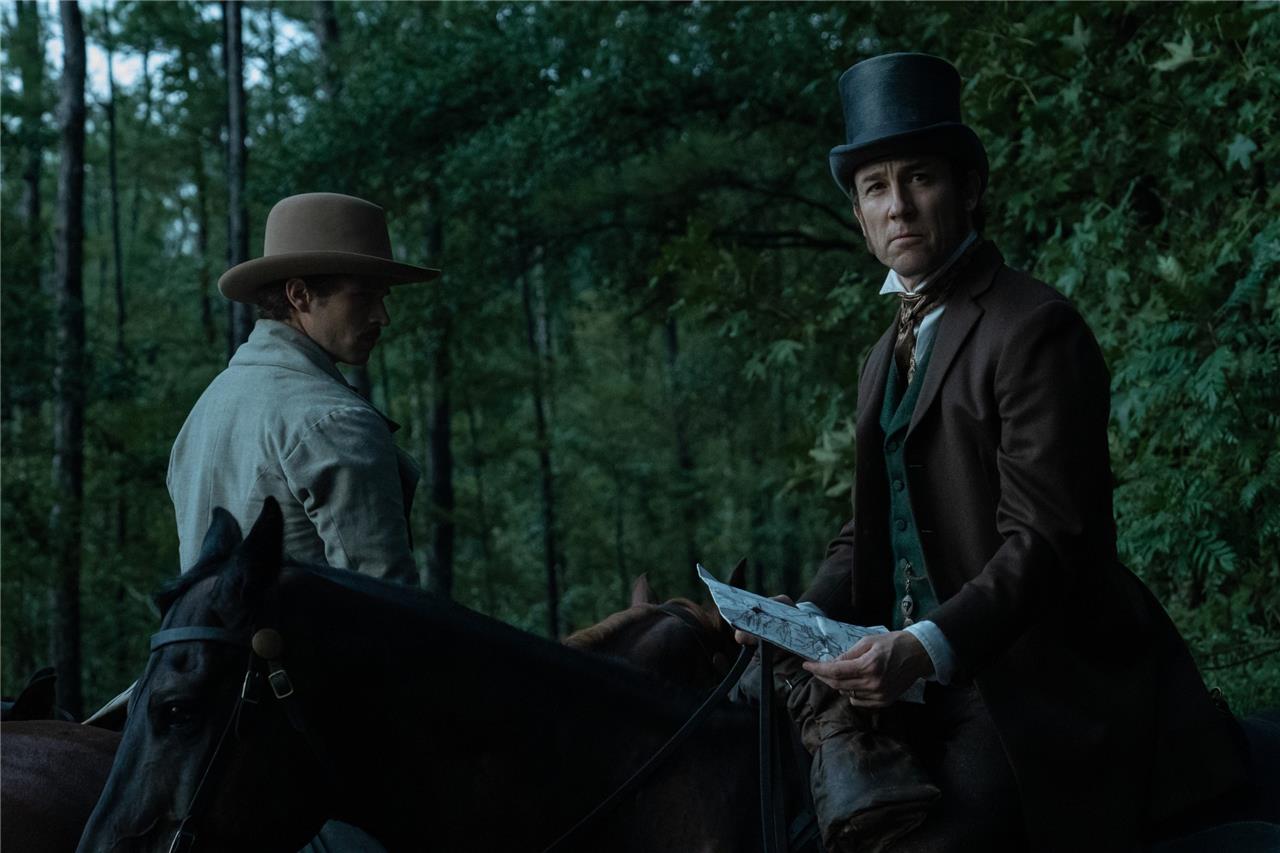
But it’s Menzies’ performance that grounds the show even when its dialogue can’t fully connect those dots. Every scene post-assassination has a heaviness to it, even when Stanton is energized on the hunt for Booth. Menzies brings in a sort of lightly manic energy, a ferocity of offense to mask the deeply rooted guilt already taking hold in his soul. It’s his performance that best ensures Lincoln’s loss is felt even when it’s unspoken, or when the show gets too busy. It’s this angle that gives Manhunt its juice, a reminder that Lincoln the myth was Lincoln the man first and foremost, and that he was mourned as not just a compatriot but also a companion.
So it’s no surprise that the moment in Stanton’s office looms large in Manhunt’s narrative. It’s the first scene we get to see Lincoln as just a dude. He comes into his friend’s office, plops his feet up on his desk, jokes around, and bemoans his bud’s need to put in the time. It’s a distinctly casual feel, Abraham Lincoln: The Legend, only in the accurate (if distracting) makeup and costuming the show layers Linklater behind. This is more than a man who could rouse a room and change how we see ourselves as a nation; he was also a pal you could look up to. That’s the loss that Manhunt makes us feel, and what makes the stakes for Stanton’s mission feel so incredibly high.
How does letting Abraham Lincoln be a “bro” enhance the show’s storytelling
Letting Abraham Lincoln be a “bro” enhances the show’s storytelling by making the historical figure feel accessible, relatable, and deeply human. This approach strips away the distant, mythic aura often surrounding Lincoln, instead presenting him as someone who shares jokes, reminisces about good times, and navigates everyday relationships and vulnerabilities. By allowing Lincoln to embody warmth, camaraderie, and even flaws, the show invites viewers to connect with him on a personal level, which adds emotional depth and immediacy to the narrative.
This “bro” characterization also injects moments of levity and authenticity, balancing the gravity of the historical events with genuine human connection. It allows for a more nuanced portrayal, where Lincoln’s legendary status coexists with his ability to be just another guy among friends or family, making the stakes of his story feel more real and immediate. Ultimately, this storytelling choice grounds the drama, making Lincoln’s struggles and triumphs resonate more powerfully with modern audiences.
How does portraying Lincoln as a “bro” add humor and relatability to the story
Portraying Abraham Lincoln as a “bro” adds humor and relatability to the story by recasting the iconic president in a more down-to-earth, approachable light. This depiction taps into the idea of Lincoln as someone you could imagine sharing a joke with or hanging out at a party, rather than just a distant historical figure. The “bro” persona allows for comedic moments that play on Lincoln’s wit, storytelling ability, and affable nature-traits that those who knew him often recalled.
By demystifying Lincoln and highlighting his more playful, human side, the story becomes more accessible and engaging for modern audiences. It invites viewers to see Lincoln not just as a revered leader, but as someone with quirks and a sense of humor, making his character more multidimensional and easier to connect with on a personal level. This approach also creates opportunities for lighthearted scenes and relatable interactions, balancing the gravity of historical events with moments of levity.
