
Looking to enrich your medieval village in Manor Lords with a woolly boost? Getting sheep isn’t as simple as building a farm – it’s a strategic process involving trading posts, pastures, and careful resource management. Dive into our guide to discover how to bring sheep into your settlement, turn their wool into valuable yarn, and fertilize your fields for a thriving economy. Your villagers will thank you when winter comes!
How to add sheep to your town in Manor Lords
To add sheep to your town in Manor Lords, start by building a Livestock Trading Post, which is essential for purchasing sheep from traveling merchants at a cost of 30 Regional Wealth each. Next, construct a Sheep Farm to house your shepherds and accommodate up to five sheep, and create a Pasture adjacent to it for additional grazing space. Assign families to both the trading post and sheep farm to manage livestock and wool production. Once set up, import sheep through the trading post’s menu by setting your desired number of animals; traders will then bring sheep to your pasture automatically. This infrastructure enables you to produce wool, which can be processed into yarn and clothing, key resources for your town’s development.
Sheep require a surprising amount of infrastructure be in place before you can add them to your town. First, you have to buy them from a livestock trading post, so you’ll need plenty of Regional Wealth (30 each). Then, you’ll need someplace to keep them – a sheep farm, a pasture, or an upgrade to your farm fields. And you’ll need a sheep farm anyway to shear the sheep.
After that, you’ll need a weaver’s workshop to make yarn from the wool that the sheep farm produces. If you want to turn that yarn into something usable, you’ll also need a burgage plot (level 2) with a tailor extension and a dyer’s workshop.
It’s a lot of buildings and jobs just to produce your first ball of yarn. Let’s go through each step in detail.
A word of caution about sheepbreeding
Sheepbreeding in Manor Lords can be tricky and sometimes buggy, so a word of caution is warranted. Although unlocking the sheepbreeding perk and setting up the proper infrastructure like a Livestock Trading Post, Sheep Farm, and Pasture are necessary steps, many players have reported issues where sheep fail to multiply or lambs do not grow into adult sheep even after extended gameplay. Some have found that demolishing and rebuilding the Livestock Trading Post can trigger breeding, but others have simply given up due to persistent bugs. Additionally, overcrowded pastures can cause sheep to escape, so ample space is crucial. Until these bugs are fully resolved, it may be practical to sell lambs that get stuck rather than waiting for them to mature.
Before we get into the weeds on sheep farming, a quick word of caution: Do not take the sheepbreeding development. Sure, it sounds nice to have a steady supply of lambs that turn into sheep for free, but you have to remember that the game is in early access. Lambs don’t ever become sheep.
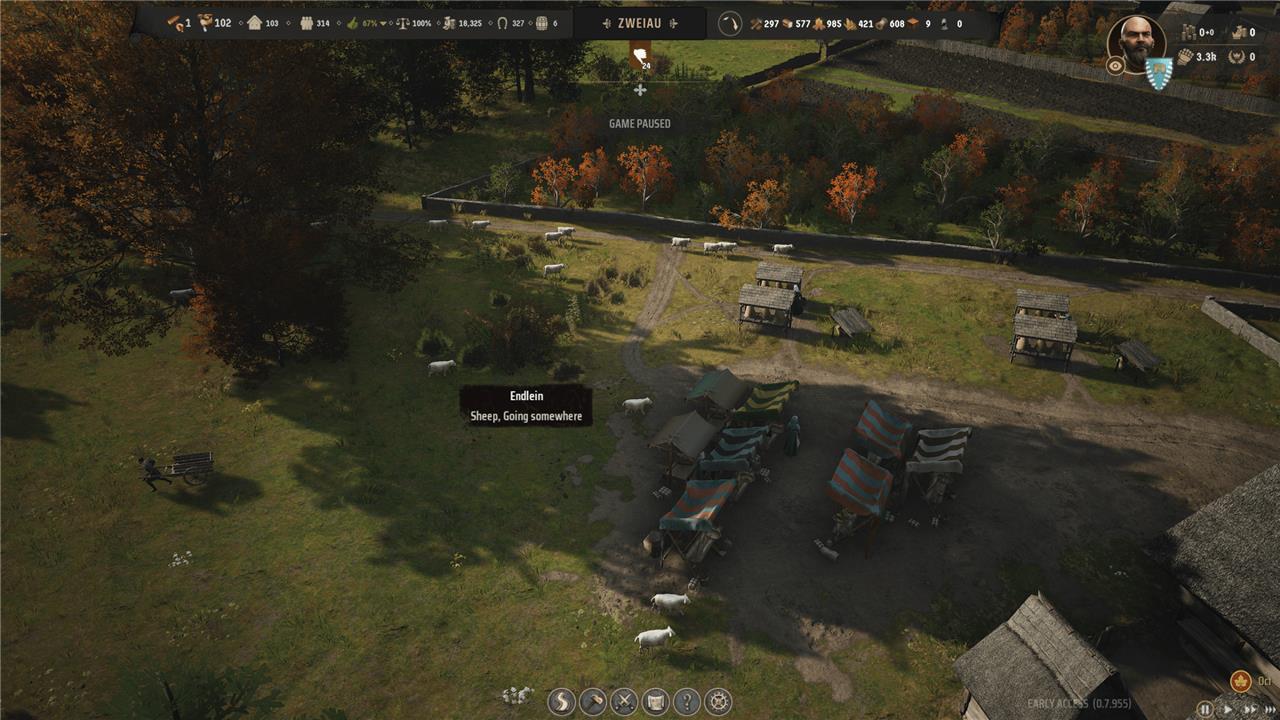
At this point in the game’s development, lambs just stay lambs forever, taking up space and multiplying until there’s no room left, and then they start running away. Or just wandering around your town.
Now, this isn’t a game-breaking problem. Loose sheep aren’t destructive and you don’t even have to worry about feeding them. But just don’t go into it expecting that your town will thrive on its sheep-based economy.
Build a livestock trading post
To build a livestock trading post in Manor Lords, you need to construct the Livestock Trading Post building using 2 timber. This specialized building is essential for acquiring sheep, as it allows you to import livestock from traveling merchants, which regular trading posts cannot do. After building the trading post, assign a family to manage it and set your desired number of sheep to maintain. Keep in mind that livestock traders bring in only one animal per month, so patience is required. The trading post works in conjunction with a sheep farm and pasture to establish a functioning sheep farming operation, which provides wool for clothing production and other economic benefits in your settlement.
Early on in Manor Lords, you’ll just add livestock one at a time by clicking the order another ox or order a new horse button at a hitching post (or small stable), adding horses at a trading post, or ordering a mule at a pack station.
To add sheep, though, you’ll need a livestock trading post (2 timber) – a dedicated building just for managing the livestock in your town. All livestock is brought to your town by a livestock trader, who acts kind of like a traveling merchant by physically walking animals to your town. A livestock trading post just moves that person’s job to a family in your town.
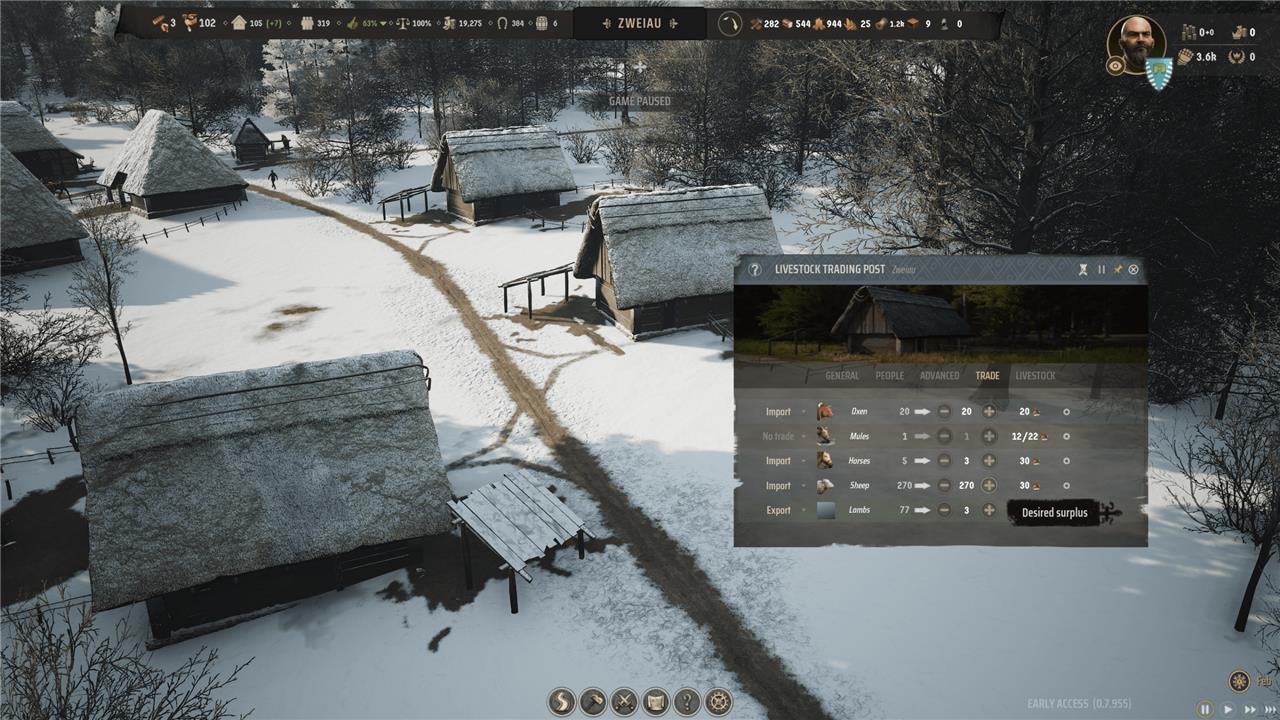
At a livestock trading post, you’ll assign families and then set your desired number of each type of livestock, along with the import, export, and full trade rules – all similar to a trading post. When that’s set, the families assigned to that building will set to work trying to get the number of each type of livestock in your town to match your desired surplus.
Just like when you order ox (or horses) from a hitching post, though, livestock traders only bring in one animal per month. That means building up a whole herd of sheep willl take some time.
Build a sheep farm and pasture
To build a sheep farm and pasture in Manor Lords, start by constructing a Sheep Farm from the Farming tab, which costs 1 Timber. Place it near your Pastures and Livestock Trading Post to minimize travel time for villagers. The Sheep Farm serves as the workplace for shepherds to shear sheep and produce wool, and it includes some pasture space for a small number of sheep. However, for larger herds, build additional Pastures adjacent to the farm to provide enough room for the animals to roam freely. Before importing sheep, make sure you have a Livestock Trading Post built to purchase sheep from traveling merchants. Assign families to work on the Sheep Farm, but remember that shearing is not possible during winter. This setup allows you to efficiently raise sheep, harvest wool, and support your settlement’s wool production needs.
A sheep farm (1 timber) is where your shepherds will work to shear the sheep and produce wool. It’s also your first pasture space – there’s room for five sheep in its yard.
If you want more than five sheep, you’ll need more space for them. That’s where a pasture (no cost) comes in. This is a flexible plot where your sheep can roam. It doesn’t have to be very large – remember that the front yard of the sheep farm already has space for five.
Build a weaver’s workshop, a dyer’s workshop, and a tailor’s workshop
To build a weaver’s workshop, a dyer’s workshop, and a tailor’s workshop in Manor Lords, start by constructing the Weaver’s Workshop from the Industry tab, which costs 4 Timber and is best placed near a Sheep Farm, Storehouse, and Marketplace to efficiently process wool into yarn and flax into linen. Next, build the Dyer’s Workshop, also found in the Industry tab, costing 2 Timber and ideally located near a Storehouse and Tailor’s Workshop to convert berries into dyes needed for clothing production. Finally, to establish a Tailor’s Workshop, select a Level 2 Burgage Plot and upgrade it with 5 Regional Wealth and 5 Planks, ensuring it has access to linen, yarn, and dyes by placing it close to a Storehouse. These workshops collectively enable the production of refined textiles and clothing for your villagers, enhancing your settlement’s economy and satisfaction.
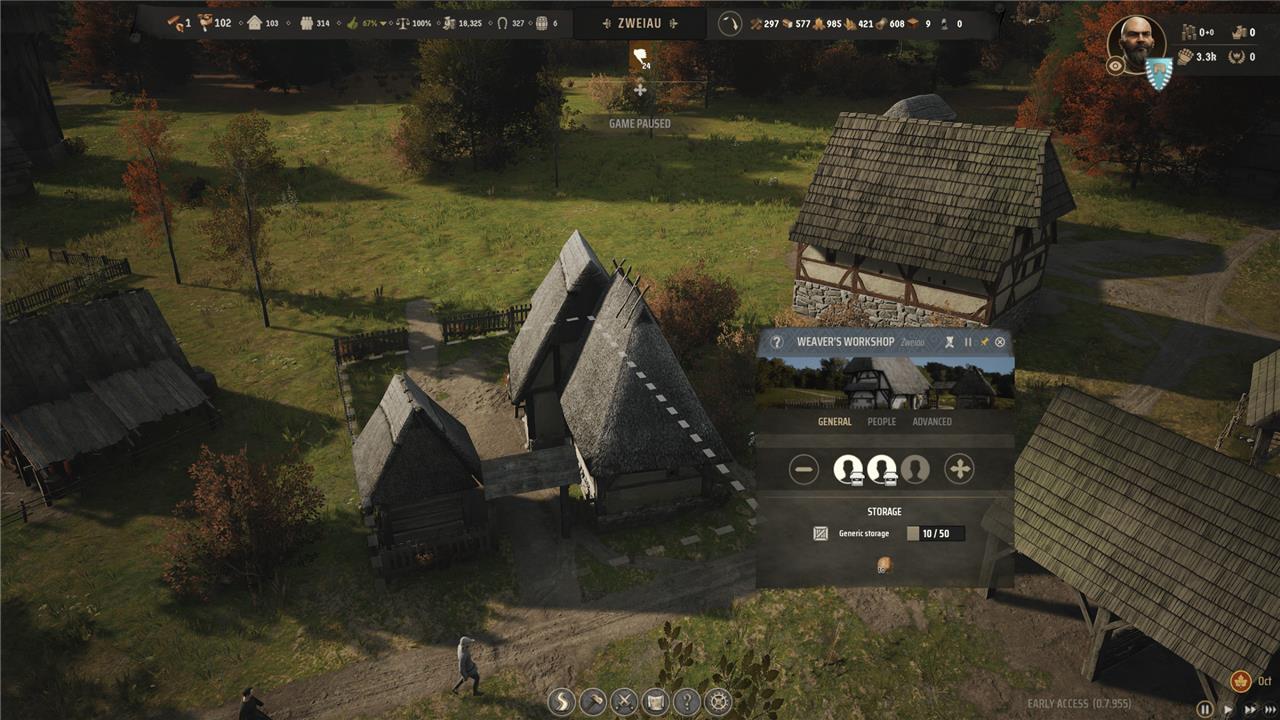
Sheep farms produce wool (except during the winter – sheep get cold too). To process the wool, you’ll need a weaver’s workshop (4 timber). That turns wool into yarn. Yarn isn’t super useful on its own – but it does supply one of your burgage plots’ requirements for clothes. If you want to turn it into something else, that takes more work.
First, you’ll also need a dyer’s workshop (2 timber). This building takes berries and turns them into dyes.
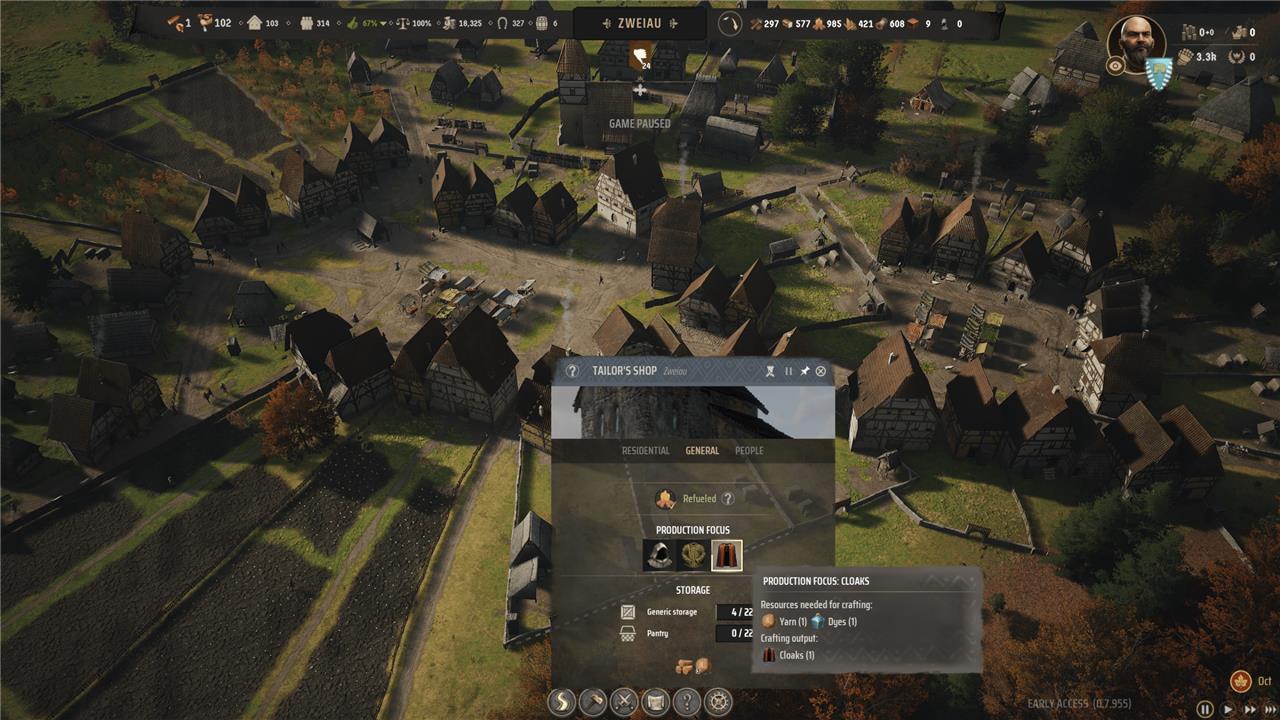
Next, you’ll need to turn a burgage plot (level 2) into a tailor’s workshop (5 Regional Wealth, 5 planks). Once that’s built, click on its General tab and you can select cloaks as their production focus – these require 1 yarn and 1 dye to produce.
Unlock fertilization
To unlock fertilization and enable sheep breeding in Manor Lords, you first need to import sheep from the Livestock Trading Post and build a Pasture for them. Then, unlock the Sheepbreeding development node from the Farming section of the Development Skill Tree. With at least one sheep in your pasture and the perk unlocked, your sheep will start producing lambs, although lambs take about one year to mature. Make sure your pasture is spacious enough to prevent overcrowding, which can cause sheep to run off. Note that some players have reported bugs with lamb growth, so selling stuck lambs might be necessary until fixes are implemented. Breeding sheep allows you to passively increase your livestock without repeatedly purchasing from traders.
The most useful thing your sheep can do for you is fertilize your fallow farm plots. You’ll need to spend at least two development points to get there – one on a heavy plow for farming, and then one on fertilization.
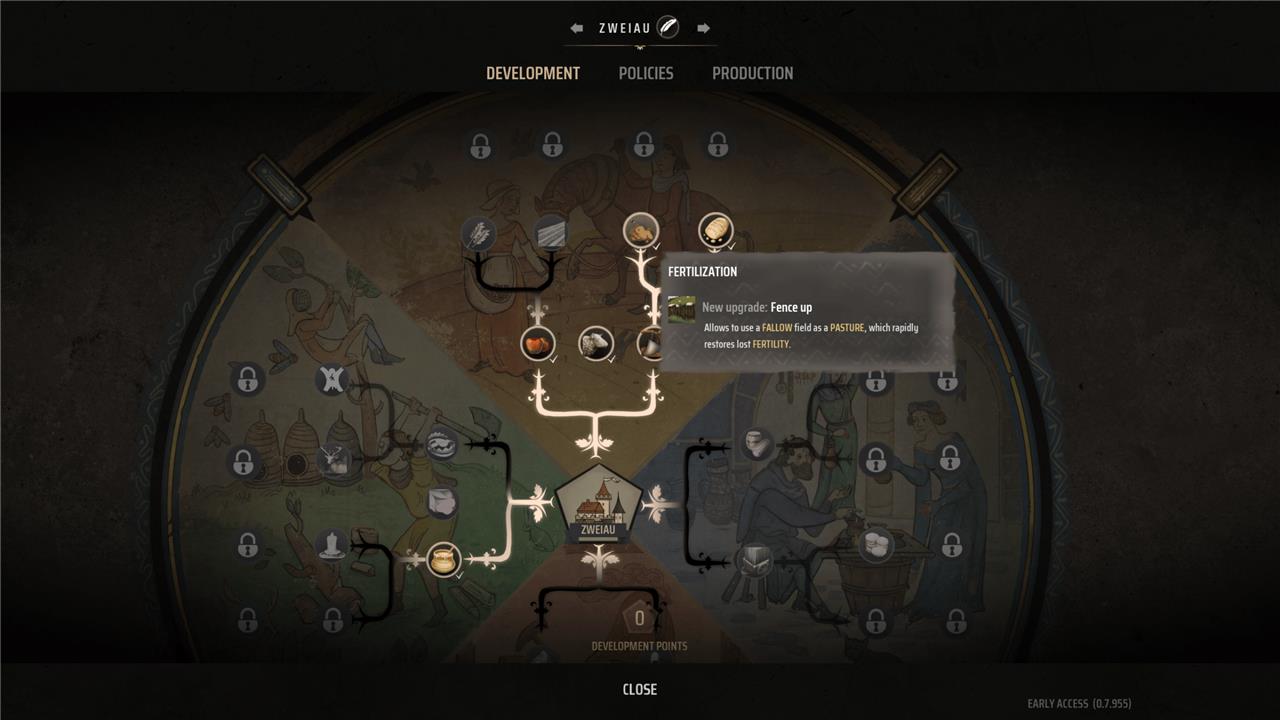
With fertilization, you can add a fence to your farm fields by clicking the fence up button and spending 5 planks. Now, whenever that field is set to fallow, it becomes a pasture (just like if you built a pasture directly).
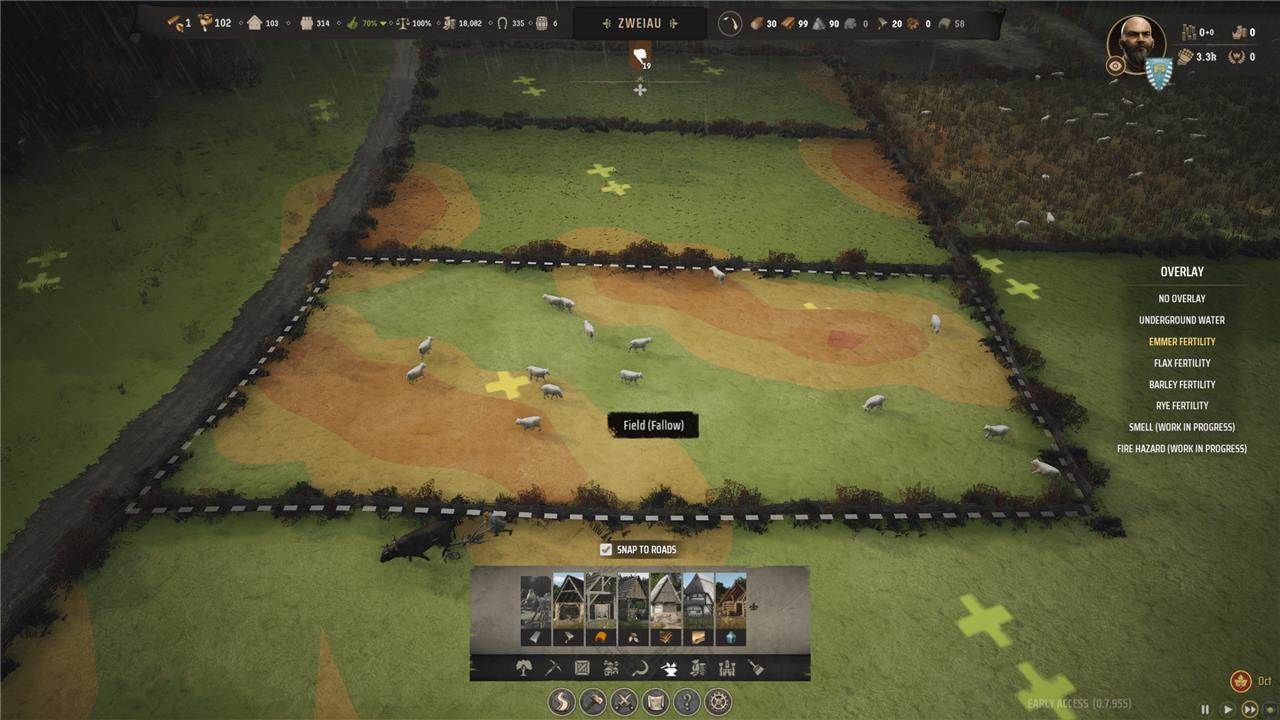
While the sheep are in that fallow field, they’ll restore that field’s fertility faster and more reliably than just leaving it fallow. This doesn’t make it more fertile than it’s default value, though.
Sheepbreeding is a mixed benefit
Sheepbreeding in Manor Lords offers a mixed benefit to players. On the positive side, once you unlock the Sheepbreeding development node and have at least one sheep in your pasture, you can passively generate lambs without additional cost, which can help sustain your livestock population over time. However, there are drawbacks: lambs take a full year to mature, and currently, some lambs may get stuck and fail to grow into adult sheep due to a game bug, making breeding less reliable. Additionally, a small pasture can become overcrowded, causing sheep to run off, so ample space is needed for effective breeding. Because of these factors, many players prefer to initially acquire sheep through the Livestock Trading Post for faster results despite the higher cost, while using breeding as a longer-term, slower method to maintain their flock.
The other development you can get is sheepbreeding. We warned about this above, but it’s still an option. Unlocking sheepbreeding just means that sheep in pastures will periodically produce lambs.
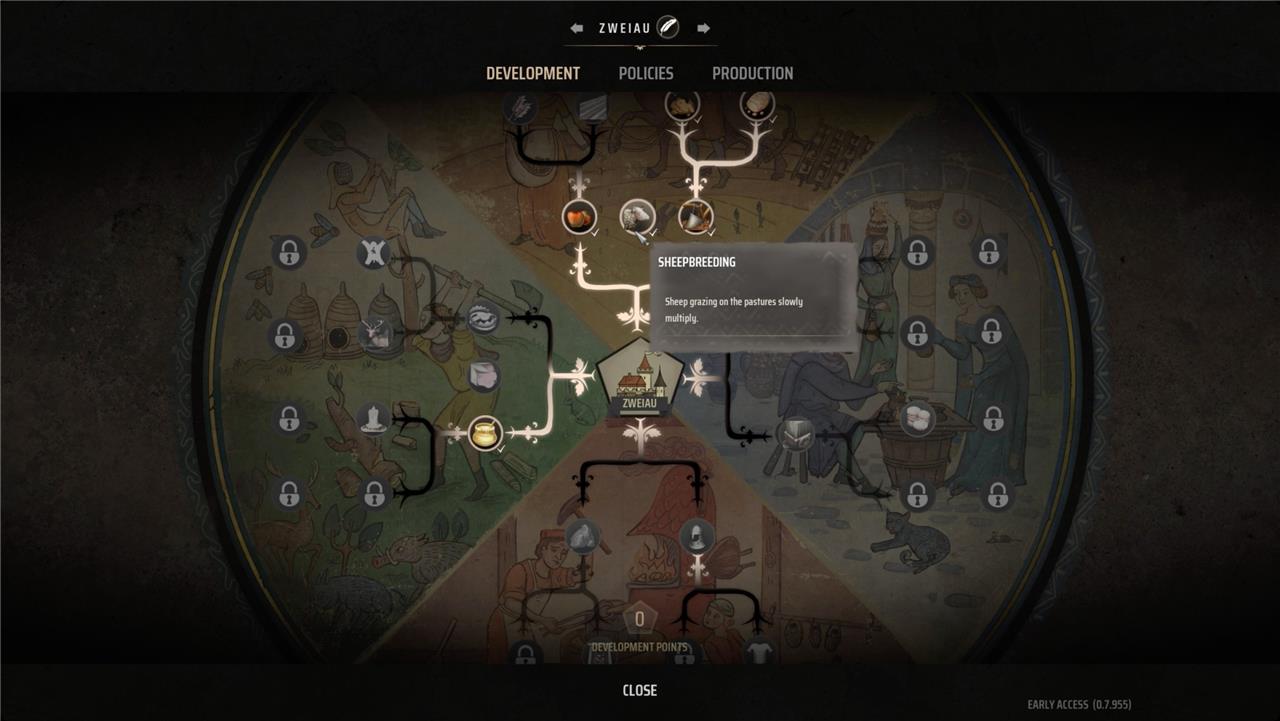
Like we mentioned above, lambs don’t ever become sheep (currently). As cute as an eternal lamb is, they kind of just take up space since they seem to produce less wool (if any?).
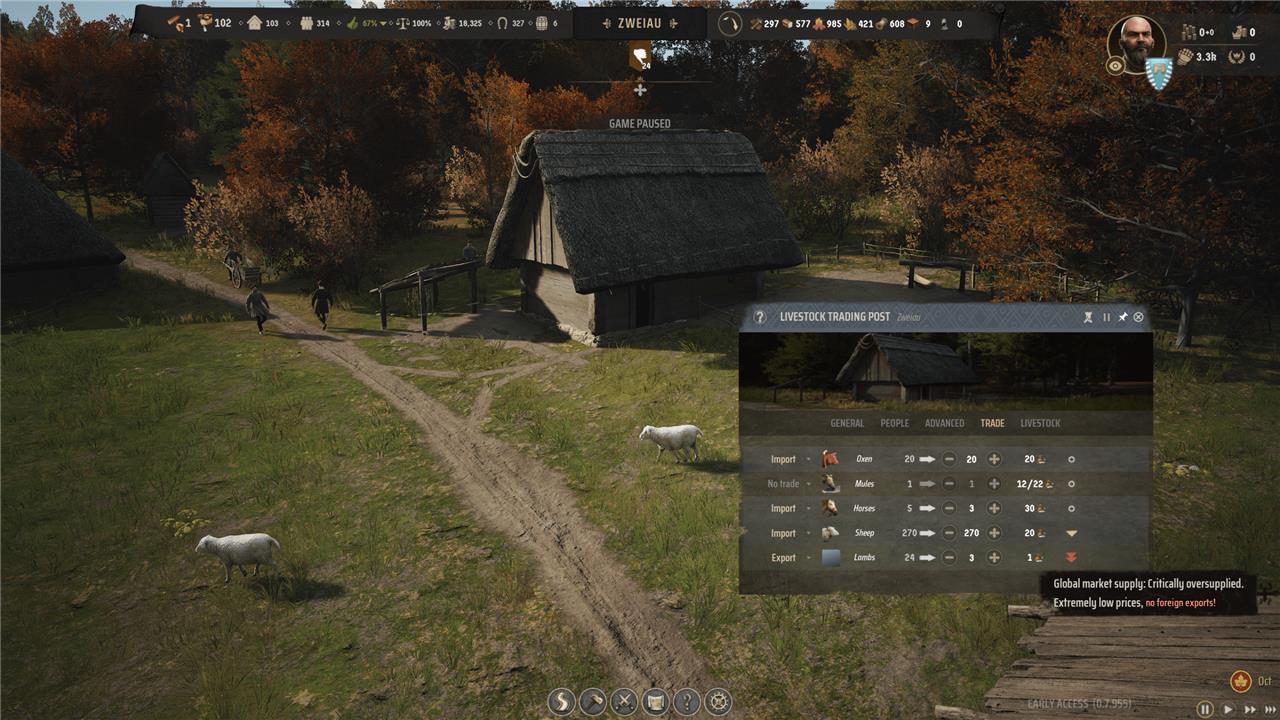
Your livestock trader can be set to (try to) export those lambs, but you have to keep an eye on the global market supply – you’ll flood the market with lambs until you can’t export them any more.
What hidden steps are involved in successfully acquiring sheep in Manor Lords
Successfully acquiring sheep in Manor Lords involves several hidden and strategic steps beyond simply building a sheep farm:
-
Construct a Livestock Trading Post: This specialized building, made from 2 Timber, is essential because sheep cannot be imported through a regular Trading Post. Only the Livestock Trading Post allows you to purchase sheep from traveling merchants.
-
Accumulate Regional Wealth: Each sheep costs 30 Regional Wealth, so you need a substantial amount of wealth before you can buy them. Planning your economy to afford multiple sheep at once (recommended 4-8 initially) is crucial.
-
Build a Sheep Farm and Pasture: Before purchasing sheep, you must have a Sheep Farm (costing 1 Timber) and an adjacent Pasture to house the animals. The Pasture size determines how many sheep you can keep without escapes, so expanding it as your flock grows is important.
-
Assign Families to Work: Sheep farming requires assigning a family to the Sheep Farm to manage the animals and produce wool. Without labor assigned, you won’t gain wool from your sheep.
-
Wait for the Import Process: After ordering sheep at the Livestock Trading Post, a trader must physically travel to another town and bring the sheep back. This process takes time, and you can monitor it via the people tab in the trading post interface.
-
Seasonal Considerations: Note that shearing sheep is forbidden during winter, so plan your wool production accordingly to avoid downtime.
-
Utilize Wool Production: Once you have wool, you can build a Weaver Workshop to convert it into yarn, which is essential for making clothing and cloaks that help your population survive winter and advance your settlement’s development.
-
Optional Sheepbreeding Perk: Investing development points into sheep breeding can increase your flock naturally, reducing the need for continuous imports.
These hidden steps emphasize careful preparation, resource management, and patience to successfully integrate sheep into your Manor Lords settlement and benefit from their wool production.
What are the key buildings needed before importing sheep in Manor Lords
The key buildings you need to construct before importing sheep in Manor Lords are:
-
Livestock Trading Post: This is the essential building where you can order and import sheep from other regions. It requires 2 Timber to build and must have one family assigned to manage livestock trade. Sheep cannot be imported through a regular Trading Post, only via this dedicated Livestock Trading Post.
-
Sheep Farm: This building is where shepherd families work to manage the sheep and collect wool. It provides initial pasture space for up to five sheep and requires 1 Timber to construct. Assigning workers here is necessary for wool production.
-
Pasture: A fenced grazing area adjacent to the Sheep Farm that provides space for your sheep to roam and produce wool. Without a pasture, sheep will wander off and disappear. The pasture size determines how many sheep you can keep.
These three buildings form the foundation for successfully acquiring and managing sheep in Manor Lords, enabling you to import livestock, house them properly, and harvest wool for your settlement’s needs.
