
Eight travelers, countless choices, and a continent brimming with secrets-Octopath Traveler 2 rewards those who prepare. Before you set out, here are sixteen things that will shape how you fight, explore, and survive Solistia’s trials.
Below, I list out 16 (yes, that’s eight times two on purpose) tips to help you navigate the gigantic world in Octopath Traveler 2. There’s a lot to do in the game, so let’s get started.
Your first character choice is permanent until you beat their story
Your starting traveler stays with you until their story concludes, so take time choosing the one that suits your playstyle and interests. This character cannot be swapped out during their tale, though you can recruit others to join your party along the way. Each protagonist has a distinct path action and combat role, which strongly influences your first hours. Once their story is finished, you’ll gain the freedom to reorganize your party however you like.
When it comes to selecting your first character, choose wisely. You will have to keep them in your party until you finish their storyline. Picking the “wrong” character won’t put you at a big disadvantage, as you can collect the remaining seven characters pretty quickly and easily.
Since you’ll be forced to keep your first-pick around for a while, you should make sure to make an educated decision on who to pick.
Pay attention to the color of enemy names
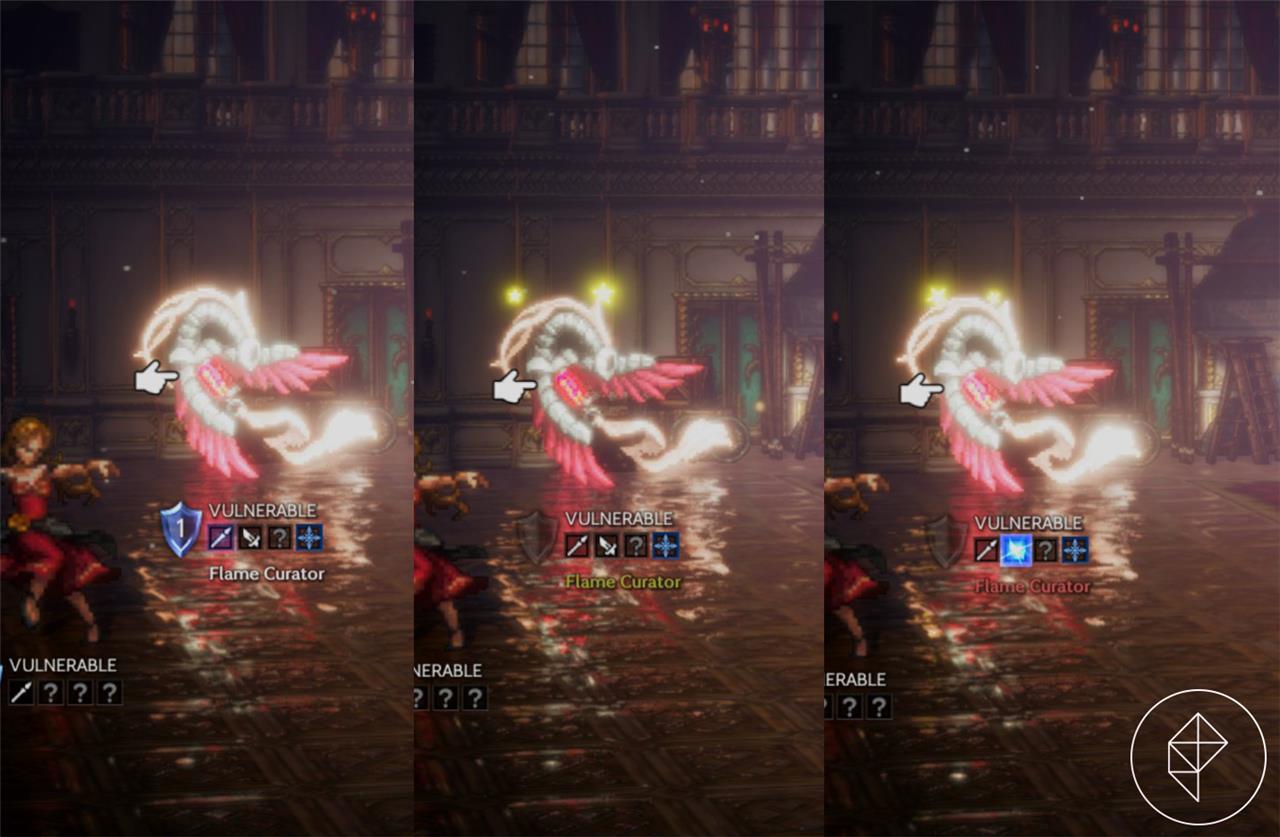
Enemy name colors indicate their difficulty level and current health status during battles. A white name means the enemy is at full strength, while yellow and red show that they’re getting weaker. Paying attention to these colors helps you plan attacks, knowing when to go all out or conserve resources for tougher foes. It’s an easy visual cue that can save your party from unnecessary damage and wasted turns.
Unless you use a Scholar’s “Analyze” ability, you can’t see how much HP an enemy has, but you can estimate it by reading the color of the enemy’s name. When you select who to attack, the name of the enemy will be displayed at the bottom of the UI. If the name is white, it’s still very healthy. If the name is yellow, it’s about halfway to death. If the name is red, it’ll die soon.
Focus on one enemy at a time
Octopath Traveler 2 throws multiple foes at you in every skirmish. Spreading attacks across the pack prolongs fights and wastes turns. Pick a single target and hammer it with your strongest moves until it drops. This breaks the enemy lineup faster, letting you mop up survivors with less resistance. Boosters amplify the damage to speed things up even more.
This tip is a bit situational, but since broken enemies – enemies with no shield up – take more damage, it’s better to focus on one enemy at a time, breaking their shields and then unleashing tons of damage. I struggled more against bosses when splitting the damage on the additional enemies the boss would summon, but succeeded easily when I focused on one at a time.
If you have the ability to burst down multiple opponents at once with skills that hit multiple enemies, you should use them, especially against small fry.
Break bosses while they’re charged up
Bosses gain powerful boosts while charging big attacks, making that moment perfect to hit them with a well-timed Break. Save your strongest skills or multi-hit abilities for when their shields are nearly gone-breaking them mid-charge can completely cancel devastating moves and give your party a chance to recover or go on the offensive. Paying attention to these charge cues often makes tough battles much more manageable.
You know when you play a JRPG and the enemy charges up and you normally defend the next turn to avoid taking massive damage? You can do that in Octopath Traveler 2, but you can also break their shield to cancel the attack entirely.
Take a look at the turn order at the top of the screen and do the math. If you can break the boss before its next turn, you should definitely do so. If not, you should heal up and defend.
Pay attention to the danger levels
Danger levels shown on the map indicate how strong the enemies are in a given region. Ignoring them can lead to tough battles that your party may not survive early on. Always compare your current character levels to the area’s danger level before entering. If an area seems too high, explore nearby zones to gain experience and better equipment first. This way, you’ll progress safely without losing valuable time to repeated defeats.
This might seem obvious, but the recommended levels for specific areas are recommended for a reason. While you can likely cheese through a boss if you’re a bit underleveled, you should try to have your entire party at that level. If you’re taking a lower-level character through a boss fight just to leech some EXP, be careful – if that character ends the fight with 0 HP, they won’t gain any EXP anyway.
Prioritize equipment over character levels
Strong weapons and armor make a far bigger difference than a few extra levels early on. Focus on upgrading your gear whenever you reach a new town instead of grinding for experience. Better equipment boosts your stats more dramatically, helping battles go faster and safer. Accessories that add speed, boost defenses, or reduce damage from certain attacks can also shift the tide of a fight far more than a single level-up.
Even if your Hikari is at level 50, he won’t deal much damage if he doesn’t have appropriate gear. This game mainly uses the stats attached to weapons more so than stats gained from leveling, so make sure that your gang is geared up before taking on a tough boss.
<
Use your latent abilities wisely
Latent Powers add depth to every battle, offering powerful moves that can shift momentum when used at the right time. Each character’s ability charges as fights progress, so timing their activation can make the difference between victory and defeat. Avoid using them on weaker foes; save these bursts of strength for bosses or challenging encounters where tactical use brings out their full potential.
Latent abilities are a new feature in Octopath Traveler 2. They’re special skills that you need to fill a gauge to use. (Think of a Limit Break from Final Fantasy.)
Some latent abilities should be used immediately, like Agnea’s (the dancer). Her latent ability allows you to turn a single-target attack or buff into a multi-target one, so you should definitely use hers to spread buffs to your party to deal lots of damage to multiple enemies. On the flip side, Temenos’ (the priest) ability allows you to break a shield regardless of if your attack hits a weakness, so you should save that for when the enemy has a shield up.
Memorize the order of weaknesses
Knowing the sequence of weaknesses for each enemy can save you a lot of time in battle. Once you break an enemy’s defense, attacks deal more damage, so memorize which weapons and elements each foe is vulnerable to. You can track this information as you fight, since the game gradually reveals weaknesses as you exploit them. Keeping a mental or written note of these patterns ensures you’ll strike first and finish fights faster, especially against tougher bosses.
The bar below enemies that display weaknesses are in a static order every time. This means you can use the known weaknesses to figure out what the others are. The order is: Sword, Spear, Dagger, Axe, Bow, Staff, Fire, Ice, Lightning, Wind, Holy, Dark.
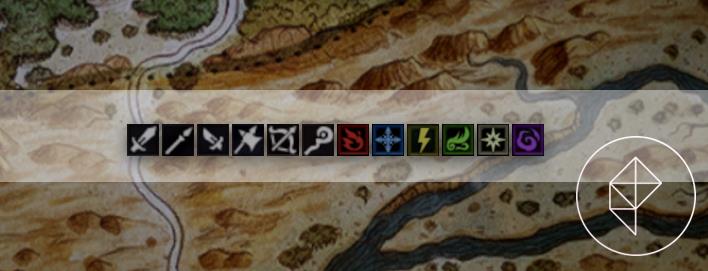
For example, if you know the enemy is weak to Spear and Fire and there’s an unknown weakness between those two, you know that it’s either Dagger, Axe, Bow, or Staff. If you notice that they’re weak to Spear and have an unknown weakness to the left, then it’s also definitely weak against Sword.
Use day and night to your advantage
Each town in Octopath Traveler 2 changes between day and night, and both times offer different opportunities. NPCs move, side quests may update, and Path Actions shift with the time of day. Use this to plan your routes and party skills-some characters excel in daylight interactions, while others thrive in the dark. Switching between day and night often reveals hidden chests, rare items, and new dialogue that deepen the world’s texture and rewards careful timing.
Not only can your party members use different abilities on NPCs depending on the time of day, but some members have party buffs that activate at specific times.
For example, Throné (the thief) buffs up the party at the start of battle when it’s nighttime. That said, if you’re running with Throné in your party, you can swap to nighttime before you take on a boss to give yourself a little extra help.
The trade-off is that stronger monsters come out at night, so you’ll definitely need the boost when running around in the wilds.
Running attracts more enemies
Running increases the frequency of random encounters, making enemies appear more often during exploration. While this can help you gain experience faster, it can also drain your resources if you’re not prepared for constant battles. Use walking to reduce encounter rates when low on health or traveling through dangerous areas, and save running for moments when you feel confident in your party’s condition.
If you’re looking to avoid enemies, don’t run. If you want to attract them to grind, sprint around. Running around the maps with enemies attracts more. Combine that with the above tip to create a good combo for grinding levels: run around at night.
Osvald, the scholar, also has an equippable ability that lowers the encounter rate, so make sure to toggle it on and off as you want to avoid or attract enemies.
Take all the items you can from NPCs
NPCs across Solistia carry valuable items that can make your travels much smoother, and each character’s field actions offer different ways to obtain them. Some heroes can steal or purchase items outright, while others can barter or charm townsfolk into handing them over. Make a habit of checking every settlement for opportunities-you might find powerful equipment, rare ingredients, or quest items hidden in plain sight. The more you interact with locals, the easier it becomes to strengthen your party early on.
Using Throné’s Steal or Agnea’s Entreat abilities, you can take items from townspeople. Both skills rely on your level in comparison to the respective townsperson’s. Agnea can’t take items if the person is higher level than her, and Throné’s chance to steal is lower if the person is too many levels above her.
All that said, you should be taking everything you can from NPCs, as they have valuable equipment, healing items, and other useful tools. You especially want to look out for items designated by a star-shaped icon. These items are used in side quests and it’s nice to have those items on-hand right away when starting a side quest.
Read the skill tooltips when using BP to power up
When spending BP to boost skills in Octopath Traveler 2, always check the tooltips first. They reveal exact effects like stat changes, added damage types, or bonus actions that vary by skill and job. This helps you pick the right ones for tough fights instead of wasting BP on weak options.
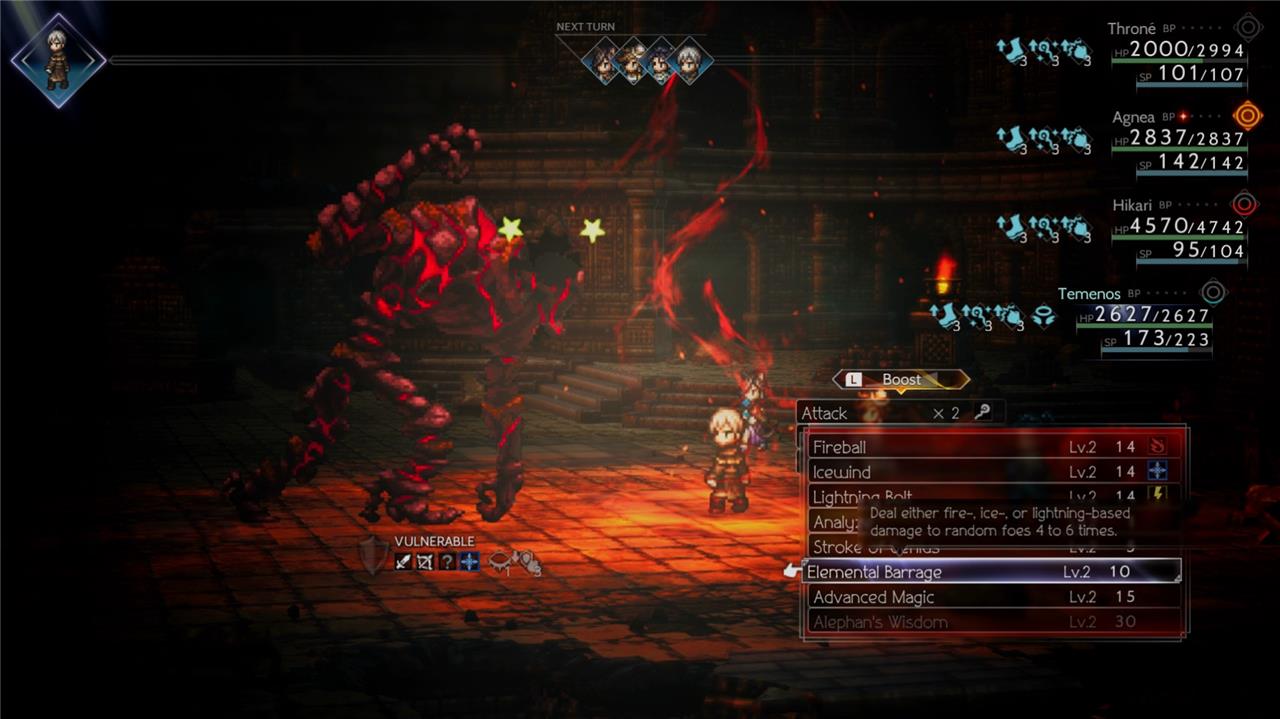
As a rule of thumb, don’t expect BP-charged skills to land extra hits. Powering up your normal attacks when BP allows you to multi-hit, but this isn’t the case with every skill. For example, most magic spells will hit harder when charged up, but they don’t hit multiple times.
However, some skills, like the hunter’s Precise Shot will fire off extra shots when charged up, which is extremely useful when facing a boss with a chunky shield. The tooltips will tell you how many hits the move will do when you use BP, so make sure to read them.
Do the math when you’re facing hard bosses
Strong enemies in Octopath Traveler 2 can hit hard, so doing the math before a battle saves you trouble. Check enemy weaknesses and calculate break points to plan turns around stagger moments. Balancing buffs, debuffs, and SP use keeps your party steady through long fights. Spending a moment to estimate damage output means you can decide whether to go all-out or play defensively. A little strategy upfront often decides whether the fight ends in triumph or a quick reset.
Yes, in Octopath Traveler 2, math will often save you. If you’re facing a boss and you have turns for three characters before the boss has three, don’t give up hope. Carefully parse through your skills and use your boosts wisely and you might be able to break that big shield before the boss has a chance to decimate your party. Take advantage of skills that slow the enemy or bump up your characters’ turns as well to help you get an edge.
Don’t forget about buffs and debuffs
Buffs and debuffs can completely swing the flow of a battle in your favor. Spend time learning which skills increase attack, defense, and speed, and don’t neglect abilities that weaken foes. Using party members who can stack multiple status boosts or debuffs can shorten tough fights and save valuable resources. Timing is key – apply buffs before major boss attacks and strip enemies of their strengths whenever possible.
If you were the type to never use “moves that don’t do damage” in Pokémon, you need to grow out of that, especially in Octopath Traveler 2. I know that in the above tip, I said that you might be able to break that big shield when things look rough, but the keyword there is “might.” If you can’t, you want to be prepared. Debuff the enemy with attack-reducing moves and beef up your party’s defense just in case. This way, you won’t even have to worry if that boss hits your party 12 times in a row, as they’ll all be standing by the end of the attack flurry.
Consider focusing on three or four characters at once rather than all eight
Focusing on a smaller group of characters helps the game feel less overwhelming and keeps progression smoother. Balancing eight storylines at once can slow your party growth and scatter your resources. By concentrating on three or four travelers, you can reach stronger abilities faster, explore their relationships in more depth, and maintain a steady rhythm in battles and story events. Once they’re well developed, you can rotate in others without disrupting your momentum.
The game is a bit harder (and significantly slower) if you’re actively trying to juggle leveling eight characters at once. You should unlock all eight (if you want), and then focus on a few at a time. Then you can swap in some of your lower-leveled characters and level them up quickly in higher-leveled areas.
Gearing up eight characters at once is also expensive, so limiting your focus will help give your wallet – and your poor merchant – a breather.
<
Magic never misses its targets
Magic attacks always hit their target, making them perfect against enemies with high evasion. This means even the slipperiest foes can’t dodge spells, giving casters a reliable edge in battle. Physical moves may miss under certain conditions, but offensive magic guarantees damage – a key detail for planning strategies against agile opponents or those who rely on dodging attacks.
Best starting character for beginners
Throne is widely recommended as the best starting character for beginners in Octopath Traveler 2. Her Thief skills let you steal valuable items and gear from NPCs early, easing resource shortages, while her mobility aids exploration.
Why Throne?
She accesses purple-locked chests without needing another Thief later, and her Ambush ability cuts random encounters by 50%, reducing grind frustration.
Her kit teaches core mechanics like Path Actions and breaking shields effectively from chapter 1.
Pair her quickly with Osvald (nearby mage) for weakness scanning to breeze through early bosses.
Strong Alternatives
Osvald ranks high for beginners too-fire spells melt foes, and Scrutinize reveals quest info without spoilers.
Ochette works if you prefer summons and pets for passive damage, but she’s slightly tougher solo.
Any starter is viable since you recruit others soon, but avoid story-locked regrets by picking based on playstyle preference.
Why does Cyrus reveal enemy weaknesses
Cyrus reveals enemy weaknesses in Octopath Traveler through his unique Scholar talent, Study Foe.
This passive ability automatically uncovers one weakness per enemy at battle start, aiding strategic planning without wasting turns on trial-and-error breaks.
As a lore-friendly trait for the scholarly professor, it fits his pursuit of knowledge and pairs with his Analyze skill for full weakness intel.
