
Tired of endless grinding for the perfect gear in Path of Exile 2? Mastering the art of trading is your shortcut to building unstoppable characters and stacking valuable currency. Whether you’re on PC, PlayStation, or Xbox, this guide breaks down everything from using the official trade site to negotiating deals in-game, ensuring you never miss out on the best items and market trends in Wraeclast’s revamped economy.
Path of Exile 2 features gold (something not present in the original Path of Exile), and while you may reasonably expect that it would be used to trade for items with other players, it’s only used for buying and selling to vendors. Trading with other players in Path of Exile 2 will follow Path of Exile, where you’ll trade other currency items such as exalted orbs.
For newer players to the Path of Exile franchise, valuing your items with currency other than gold can be extremely difficult, so allow us to give you some tips on how to trade.
How to trade in Path of Exile 2
Trading in Path of Exile 2 is straightforward and can be done either in-game or through the official PoE 2 trade website. To trade in-game, you need to be in the same instance as the other player; simply right-click their avatar and select “Trade” to initiate the exchange. Alternatively, you can use the trade website to search for specific items using filters and directly message sellers to arrange trades. Listing items for sale requires a Premium Stash Tab and a character level of 25, allowing you to set prices and receive whispers from interested buyers. Note that gold is used only for vendor purchases and cannot be traded between players; instead, other currencies like exalted orbs are used for player-to-player trading. Always verify items carefully before accepting trades to avoid scams.
There are two methods to trade in Path of Exile 2: in-game or using the official trading board. Let’s break them both down.
In-game trading
Trading with other players in-game can be done inside one of the safe encampment areas in Path of Exile 2. Interact with another player to open up the menu and select the “Trade” button to send them a trade request. If they accept, you can place your items into the bottom box, while items the other player is offering will appear in the top box. Before the trade can be accepted, both players must make sure they have enough inventory space to receive the items and they must hover over each of the offered items in the trade.
Official trading board
There is an official trading board where players can search for their desired items (like spirit items) and filter their search by category, rarity, level, quality, modifiers, and more. Once you’ve completed a search, a list of items that meet your requirements will appear with an image of the item on the left, their stats and modifiers in the middle, and the price and seller on the right.
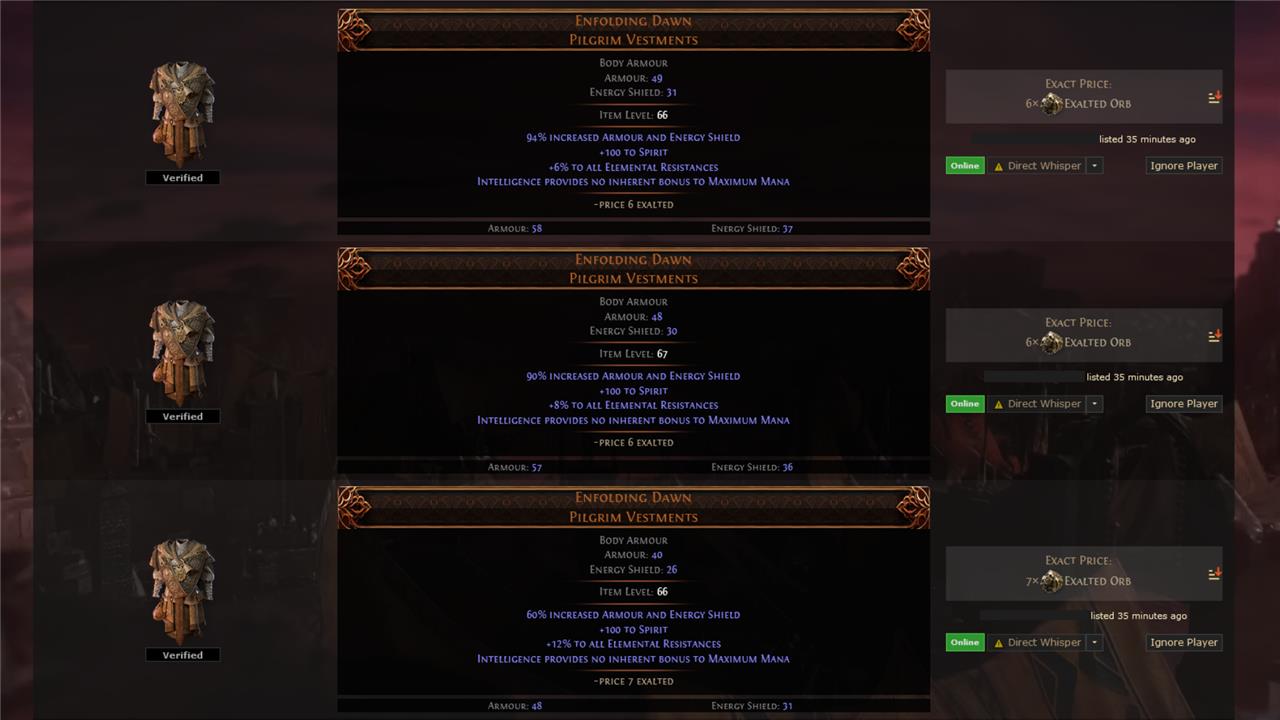
To complete a trade, you must send the seller a whisper in-game, which can be done by pressing the “Direct Whisper” button if you have Path of Exile 2 open, or by copying their user ID and sending them a whisper. You’ll then need to meet each other in-game and trade the said items, but make sure to verify that the item you’re trading for matches the item on the trading board!
How to sell your items in Path of Exile 2
To sell your items in Path of Exile 2, you first need to acquire a Premium Stash Tab from the in-game Microtransaction shop, which allows you to list items for sale publicly. After purchasing or upgrading to a Premium Stash Tab, set it to public and place the items you want to sell inside it. You can then set individual prices on each item, typically using popular currencies like exalted orbs. Once listed, your items will appear on the official Path of Exile 2 trading website, where other players can find and contact you. When a buyer sends you a whisper, invite them to your party, meet in the same instance, and complete the trade by exchanging items and currency directly in-game.
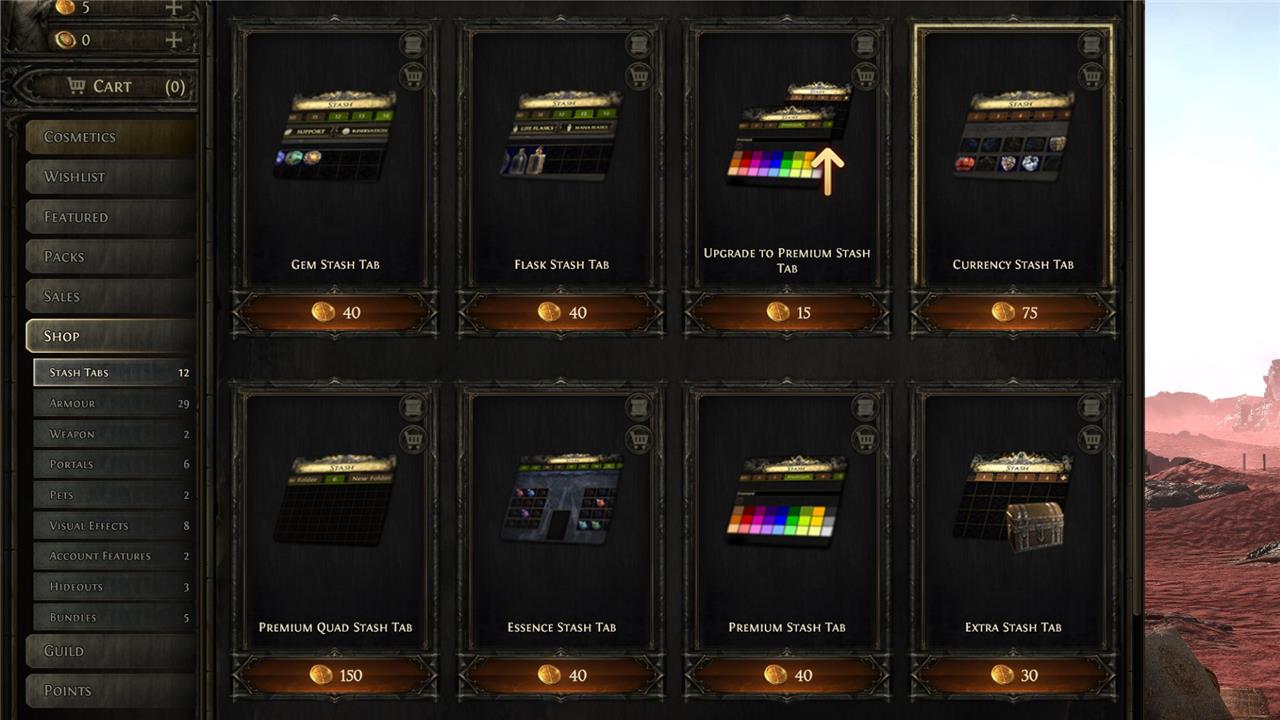
For those looking to sell their items on the trade market, you’ll need a premium stash tab, which can be purchased from the microtransaction shop. Luckily for early access supporters, you received enough points to purchase any of the premium stash tabs by purchasing the early access. There are three premium stash options:
- Upgrade to premium stash tab (15 points) – Change one of your regular stash tabs to a premium stash tab
- Premium stash tab (40 points) – Add a premium stash tab to your stash
- Premium quad stash tab (150 points) – Add a premium quad stash tab that has four times the space of a regular stash tab
Once you have your premium stash tabs, right click the tab’s name and set it to public. You can price every item in the tab as one price or price each item individually by selecting the option in the tab menu. Now you’re free to place your items into the premium stash tab and make a ton of exalted orbs!
How to value your items in Path of Exile 2
To value your items in Path of Exile 2, start by using the official trade website to compare your item with similar ones listed by other players. Focus on key attributes such as item type, affixes, and modifiers that impact desirability and relevance to popular builds. Adjust your search filters to match your item’s stats closely, but avoid being overly specific to find a realistic price range. Pay attention to how long comparable items have been listed, as items that sell quickly indicate a good market value. For unique or rare items without direct comparisons, consider listing them without a fixed price to receive offers from buyers. Properly pricing your items helps avoid underselling or overpricing, ensuring quicker sales and maximizing your profit for upgrading your character.
Path of Exile 2’s currency system can be a little daunting, as it’s not as simple as gold or money. Since the currency items have functions it can be hard to place a price figure on them and then translate that to the item you’re selling, but there are few methods to hone in on a price point. Here are a couple tips on how to value your items:
- Search for similar items on the official trading board. Looking at the already established market and seeing what other players are selling their items for is a great way to find a price.
- Compare modifiers. Each item has modifiers that adds on more stats, buffs, or even skills to the item. Some items have more desirable modifiers such as defensive armors providing at least some combination of life and elemental resistances. If your defensive item doesn’t have a combination of these, they may be priced lower than the norm.
- Compare stats. Each stat modifier has a range that their value can fall between. The price point of your item will fluctuate depending on if your stat modifier’s value is on the higher end or lower end.
What are the key strategies to maximize profits in PoE 2 trading
Key strategies to maximize profits in Path of Exile 2 trading include:
-
Crafting for Profit: Use your crafting skills to create high-value rare items by understanding valuable mods and crafting mechanics, then sell these items for a premium.
-
Spread Trading: Buy items, especially high-demand currencies like catalysts, at lower prices and sell them at higher prices as market demand fluctuates. Timing your buys and sales based on supply and demand is crucial.
-
Arbitrage Trading: Exploit price differences between different markets, vendors, or player groups by buying items cheaply in one place and selling them for more elsewhere. This is a low-risk, consistent profit method.
-
Catalyst Trading: Focus on catalysts whose prices fluctuate often. Buy when supply is high and prices are low, then sell when demand spikes. Reforging cheap catalysts into more valuable types can increase profits without extra cost.
-
Market Monitoring and Patience: Keep track of market trends using tools or community insights, avoid panic selling during temporary price drops, and be patient to sell at optimal times.
-
Building Relationships and Communication: Engage with other players, use in-game chat effectively to advertise, and learn trading etiquette to improve deal success and efficiency.
-
Start Small and Scale Up: Test strategies with small investments to minimize risk, then reinvest profits to increase trading volume and earnings over time.
By combining these approaches-crafting, spread and arbitrage trading, market awareness, and community engagement-you can create a low-risk, scalable, and profitable trading strategy in PoE 2.
How can I identify the best times to buy and sell catalysts in PoE 2
To identify the best times to buy and sell catalysts in Path of Exile 2, follow these key strategies:
-
Monitor Market Trends: Use spreadsheets or community-driven tools to track catalyst prices over time. This helps spot when certain catalysts are undervalued or overvalued, guiding your buying and selling decisions.
-
Buy When Supply Is High and Prices Drop: Catalysts’ prices fluctuate with supply and demand. Purchase catalysts during periods of high supply when prices are at their lowest to maximize profit potential.
-
Sell When Demand Spikes and Prices Rise: Hold catalysts until demand increases, causing prices to rise, then sell for a profit. Timing sales to coincide with market surges is crucial for maximizing returns.
-
Use Currency Exchange and Market Listings: Check the currency exchange and player listings regularly to identify catalysts with the best price spreads (difference between buy and sell prices). Start with small purchases to test market movement before scaling up.
-
Leverage Reforge Arbitrage: Consider reforging low-value catalysts into higher-demand types (e.g., from Flash Catalysts to Attack or Mana Catalysts) when market values favor such transformations. Always verify current market prices to avoid losses.
-
Understand Catalyst Types and Their Demand: Some catalysts, like defense or caster catalysts, tend to yield better gold or exalted currency returns. Focus trading efforts on these high-demand types based on market data.
-
Use Third-Party Tools for Modifier Tags: Before applying catalysts, use resources like poe2db to check which modifiers a catalyst enhances, ensuring you invest in catalysts that will increase item value effectively.
By combining diligent market monitoring, strategic buying during low-price periods, timely selling during demand spikes, and smart reforging, you can optimize profits in catalyst trading within PoE 2.
