
Step into the twisted world of the Saw franchise, where survival hinges on escaping some of the most grotesquely inventive and merciless traps ever conceived on film. From razor-sharp wire saws forcing self-amputation to the iconic Reverse Beartrap tearing flesh with unrelenting cruelty, these deadly contraptions test not only the body but the very will to live. Brace yourself as we countdown the 10 most outrageous traps that have left audiences horrified, horrified, and utterly captivated by Jigsaw’s sadistic games.
This is especially true for the Saw series, which began as James Wan’s low-budget introduction to the film industry (he’d go on to direct The Conjuring, Furious 7, and Aquaman) and turned into the most famous slasher franchise of the modern era. And with each new sequel came another chance to upgrade the “traps” the series became famous for.
So, to celebrate Saw X, the 10th installment in the series, here’s a countdown of the 10 most ludicrous traps Jigsaw and his many, many copycats and proteges were able to devise – one from each movie before Saw X, and a bonus one from the world of video games. As the plotlines became more and more convoluted, and the seeming immortality of Jigsaw’s legacy became increasingly baffling, the intricacy of the traps would race to keep up.
[Ed. note: There is a considerable amount of gore to follow.]
Saw – The Reverse Bear Trap
The Reverse Bear Trap is arguably the most iconic and gruesome trap in the Saw franchise, first introduced in the original 2004 film. This mechanical device is locked around the victim’s head, secured with a padlock and attached to a timer. When the timer runs out, instead of snapping shut like a traditional bear trap, it violently snaps open, forcibly ripping the victim’s jaws apart. The victim must find a key, often hidden in a horrifying manner, to unlock the trap and survive. Its terrifying design, combined with its repeated appearances throughout the series, has cemented the Reverse Bear Trap as a signature symbol of Jigsaw’s brutal games.

The traps in the early Saw films are admirably low-rent, and thus have also never been more relatably visceral. Many of them center around things like “barbed wire everywhere” or “glass on the floor” or “a lot of shotguns.” These are all things that don’t necessarily scream “criminal genius” as much as “weird guy with a lot of time on his hands.”
So the reverse bear trap, which attaches to the victim’s face and is set to rip their skull apart, mouth first, stands out and would become the perverse mascot of the nascent series. Combine that with the fact that, in order to unlock it, Amanda has to dig the key out of someone else’s stomach, and you have the gory Rube Goldberg machine that set the standard for what was to come.
Saw II – The Razor Box
The Razor Box trap from Saw II is a cruel and intricate device designed to test its victim’s resolve and pain tolerance. When the victim reaches inside to grab a syringe containing an antidote, two clamps snap shut on their wrists and begin to heat up, forcing them to endure intense pain. To escape, the victim must press their face against a third hot iron positioned in front of them, which triggers a mechanism releasing the clamps so they can retrieve the syringe. This trap is infamous for its brutal combination of physical agony and psychological torment, as failure means being trapped and left to die from the razor-sharp clamps cutting into the wrists.

One major beat that appears in a few Saw entries is the part where a bunch of people find themselves in a room or situation together and have to figure out why they’re there and what connection they have. It allows for a more Friday the 13th-esque plot development, with people being offed one by one, rather than the more Seven-inspired detective work of the first film.
In Saw II, many of the traps are just as simple as the first film’s, but this time, people have to actively fall into them (like the gun behind the door or the pit full of needles). What takes the cake here, though, is a box with arm holes lined with razors that you’d have to be curious enough to literally stick yourself in. Trapping the victim with the sharp edges cutting into their wrists, it provided yet another image to build the brand around.
Saw III – The Classroom Trap
The Classroom Trap in Saw III is a brutal and harrowing test where the victim, Troy, is stripped nearly naked and chained to a chair in an elementary school classroom. Eleven chains with large metal rings pierce various parts of his body, causing immense pain and blood loss as he struggles to free himself. The trap is designed to push Troy to his limits, forcing him to endure excruciating torment while racing against time to survive. This trap exemplifies the gruesome and psychologically torturous nature of Jigsaw’s games, highlighting the physical and mental endurance required to escape.

There’s a lot of chains in Saw III! The first film had a bunch of helpless people trying to bust out of various rooms and the second had folks being lured into traps, but most of the third film revolves around victims chained up in elaborate ways.
Of course this might just be due to the preferences of Amanda, Jigsaw’s apprentice, who ends up chastised by her master for creating traps that victims can’t actually escape from, like the opening classroom trap. In a look reminiscent of the “Jesus wept” scene in Hellraiser, a man is hooked by the flesh to various chains and has to free himself before a bomb goes off. He doesn’t, though, leaving a bunch of charred body parts around the room. Like Amanda’s own aims, it’s little more than an excuse to see someone bleeding, and an indication of where most of this was heading.
Saw IV – Drawn and Quartered and Blinded Trap
In Saw IV, the “Drawn and Quartered and Blinded Trap” is a gruesome and complex contraption set inside a mausoleum, where two victims are chained and subjected to a horrifying ordeal. They are first blinded by sharp devices near their heads and then slowly pulled toward a large metal mechanism that threatens to tear them apart limb by limb. This trap combines physical torment with psychological terror, forcing the victims to confront their fate under extreme duress, embodying the brutal ingenuity characteristic of the Saw franchise’s most outrageous traps.

If you can get past the film’s obnoxious nu-metal-music-video editing sensibilities, Saw IV is clearly an attempt to return to what made the first Saw stand out so much. The traps serve as a kind of obvious punishment/lesson, rather than a flimsy vehicle for more violence.
However, by 2007, Saw was in an arms race with series like Hostel and the extreme Asian and French cinema that was becoming more present on home video, so going back all the way wasn’t an option. In Saw IV, a murderer is first strapped down, then blinded by little stabby contraptions alongside his head, and then drawn and quartered, his limbs coming off in an explosion of blood. It’s a very elongated process, a stark contrast to the iconic trap of the first film, which promised to end with just a quick exploded head.
Saw V – 10 Pints of Blood
The “10 Pints of Blood” trap from Saw V is one of the franchise’s most gruesome and harrowing challenges. In this trap, two victims, Brit and Mallick, are forced to insert their hands into buzz saws that slowly saw through their flesh, draining a total of ten pints of blood into a container. The catch is that they must sacrifice this massive amount of their own blood within a limited time to survive, with the added pressure that if they fail, deadly nail bombs will detonate. This trap not only tests their physical endurance but also highlights the brutal consequences of their failure to cooperate with the other victims earlier in the game, culminating in a horrifying and unforgettable moment as Mallick lifts his severed, two-pronged hand in disgust. Though they survive, the cost is severe and visceral, making it one of the most outrageous and disturbing traps in the Saw series.
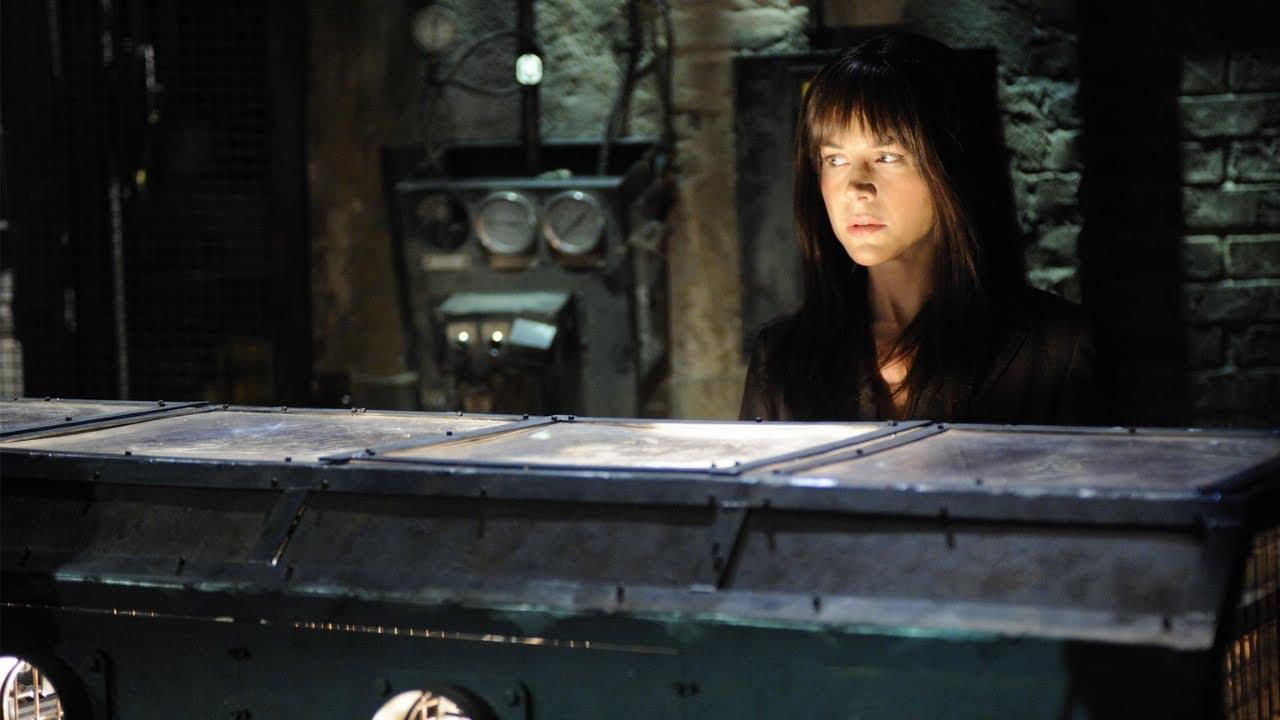
If Saw IV was a haphazard attempt to get back to the simplicity of the first Saw, Saw V is a redux of Saw II, with another group squabbling and then inevitably being murdered by a sequence of bizarre workshop projects.
For Jigsaw, though, it’s pretty much the equivalent of a summer camp team-building exercise, and the pinnacle here is a door that won’t open unless two people stick their hands into some saw blades and collect 10 pints of their own blood. It’s the most cartoonishly brutal thing in the franchise so far – two people screaming their heads off as they cut through their hands and then collapsing in relief. It’s also a situation that only Saw V could conjure as a victory; it’s a series so ridiculously dedicated to bloodletting that gathering a bucket of it is seen as a proper climax.
Saw VI – Shotgun Carousel
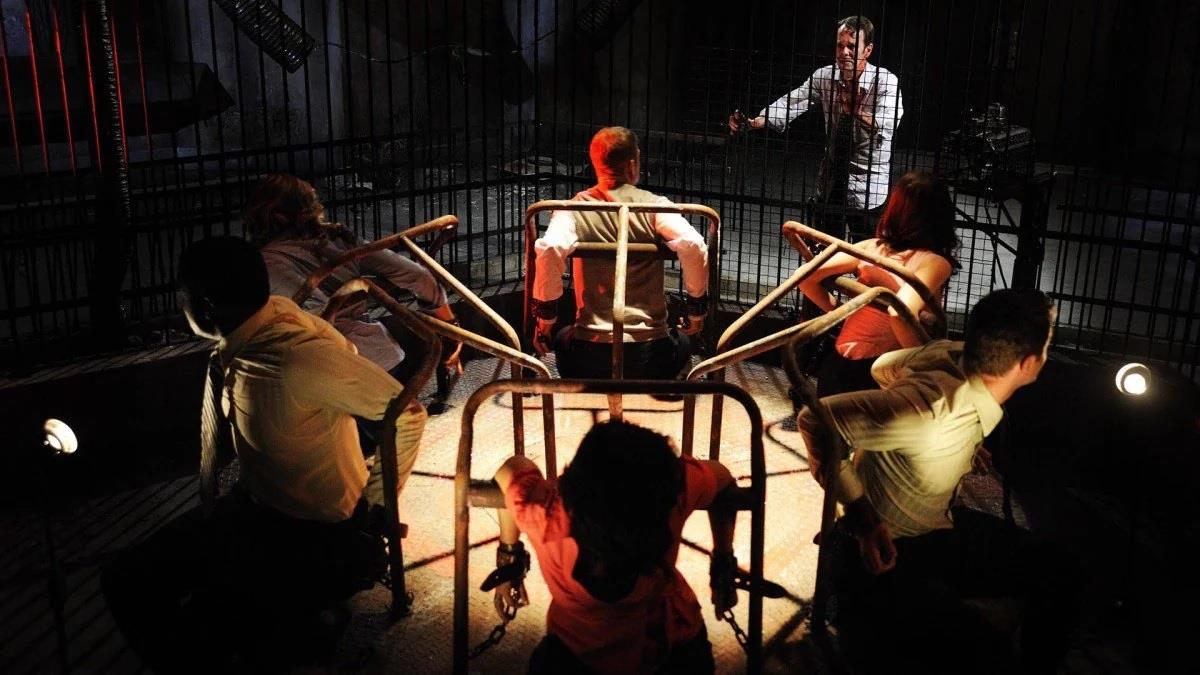
The Shotgun Carousel from Saw VI is a harrowing and symbolic trap set in an abandoned zoo, where six of William Easton’s associates are chained to a rotating playground carousel inside a large metal enclosure. As the carousel spins, it periodically stops, positioning one victim directly in front of a mounted shotgun aimed at them. William, standing outside the cage, must decide who to save by pressing two buttons simultaneously, which causes a spike to impale his hand and lifts the shotgun barrel away from the chosen victim. However, he can only save two of the six, condemning the others to be shot. This trap is a cruel metaphor for William’s ruthless health insurance policies that deny coverage to many, forcing him to bear the blood on his hands literally and figuratively.
By primarily focusing on the choices of a single character and letting sequences breathe rather than editing them into incomprehensibility, Saw VI can actually be rather effective. Its traps, though, remain as outlandish as possible, whether characters have to cut off their own flesh or make their way through a maze filled with hot steam (the latter looking less like a Saw trap and more like a Riddler puzzle from Batman: Arkham City).
The most memorable is the shotgun carousel, which sees six people strapped to a playground carousel with a shotgun pointed at them. In a game of musical chairs, disgraced health insurance higher-up Will Easton has to decide who lives, mostly by listening to them inanely scream at him about their own selfish value. But, because this is the sixth iteration of Saw, stopping the wheel also means getting your hand stabbed by a drill bit. The trap (and the associated yelling) goes on for, no kidding, over seven straight minutes.
Saw 3D – Love Triangle Trap
Saw 3D’s Love Triangle Trap is a brutal and public spectacle, where two men-Brad and Ryan-find themselves chained to a device with spinning saws, each facing the woman they both dated, Dina, who is positioned above a lethal blade. The trap forces the men to push the saws toward each other, potentially killing one another, in order to save Dina from being sliced in half. As the clock ticks down, Dina’s manipulative actions come to the surface, ultimately leading the men to refuse to play Jigsaw’s game and allow her to face the consequences of her betrayal-making this trap not only physically gruesome, but also a psychological nightmare that plays out in full view of a shocked public.

Saw 3D is the wildest film in the series. It follows a similar formula to the previous one, mostly featuring a single man in a Jigsaw funhouse trying to save people (he doesn’t succeed once, turning the film into a montage of a guy who’s just very terrible at being a hero). It also includes giant traps that have been apparently picked out of a Saw hat, like the white supremacist who has to tear his own glued skin away from a car seat in order to avoid mangling all three of his pals at once.
The most ridiculous, though, is the opening trap, in which two guys have to pull each other toward saw blades in order to save a woman dangling over yet another saw blade. However, both men soon realize she’s cheating on each one with the other, so they decide to give up and let her drop. Oh, and it’s also done as a public spectacle, something that looks kinda like performance art to the bystanders. until the intestines start flying.
Jigsaw – Laser Collar Trap
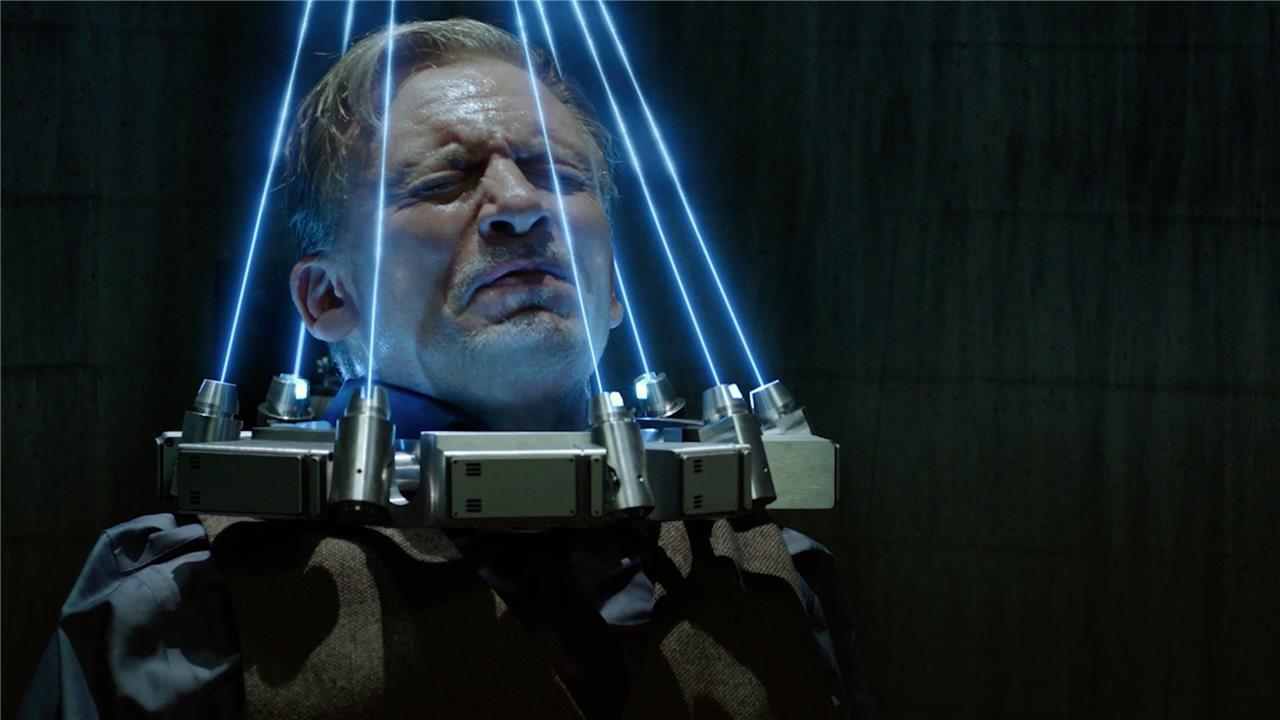
The Laser Collar Trap from Jigsaw is one of the franchise’s most chilling and inescapable devices. The victim, Detective Halloran, is fitted with a large metal collar that emits lasers at eight equidistant points, designed to slice his head into eight pieces if he fails to escape. This trap introduces a sci-fi element to the series, using lasers as a deadly mechanism, although realistically such lasers wouldn’t be powerful enough to cause this damage. Created by Jigsaw’s vengeful apprentice, the trap underscores the franchise’s signature blend of brutal creativity and psychological torment, making it a memorable and terrifying highlight of the film.
After Saw 3D, Jigsaw is remarkably subdued, or at least as subdued as a series about increasingly extravagant torture methods can be. Luckily, much of the action takes place in a barn on a farm somewhere, meaning audiences can delight in constant dull browns rather than dull grays.
Unfortunately, the traps are nothing special. Until the end, that is, when the villain finds himself trapped in a collar that slowly aims a few lasers at his head. Unlike the rusty traps of the franchise’s origin, this laser collar is shiny and new, and when it cuts into the bad guy’s head, instead of typical, practical blood spatter, we get a big CGI rendition of a skull splitting open multiple ways like a watermelon. We’ve come so far.
Spiral – Finger Trap. Trap
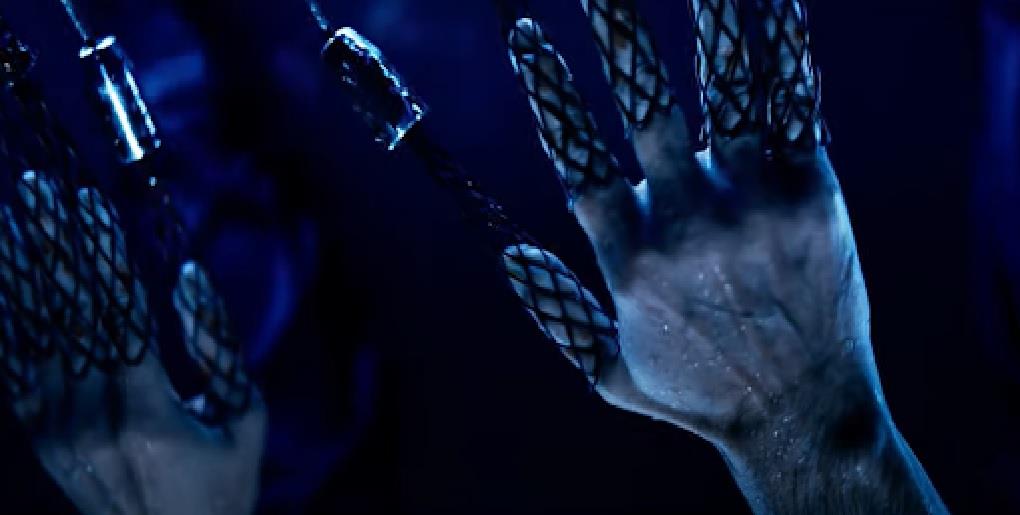
The Finger Trap from Spiral is one of the most gruesome and psychologically torturous traps in the Saw franchise. Detective Fitch is forced to bite down on two small bars in his mouth to activate a motor that slowly rips off all ten of his fingers. This horrific sacrifice is the only way to escape before rising water reaches exposed electrical cords, causing electrocution. The trap’s design leaves the victim with an agonizing choice between self-mutilation and a deadly watery death, underscoring the brutal nature of Jigsaw’s games in Spiral.
Much like Jigsaw, Spiral is oddly restrained. Once again an attempt to redo the first Saw without actually rebooting the entire thing (meaning we get another police procedural with a store-brand Jigsaw), its death scenes lack the delirious abandon of what we were seeing in the franchise’s middle entries.
However, we do get a trap that’s a rendition of the finger trap toy, the thing kids get when they earn a few tickets at the arcade. This time, it pulls your fingers off instead of just annoying your younger siblings. The makeup and prosthetic work is pretty effective – a testament to leaving a camera pointed at something for long enough for the viewer to actually get a chance to inhale all the pain and gory details. But most of the joy comes from seeing an ubiquitous children’s toy turned into a death trap.
Saw II: Flesh & Blood – Elevator Trap
The Elevator Trap in Saw II: Flesh & Blood is a chilling and intricate death device located inside an elevator shaft. The victim’s arms are shackled to a metal contraption suspended from the ceiling by chains, forcing them into a deadly predicament. The trap is part of a larger sequence where the protagonist, Michael Tapp, must navigate through brutal puzzles and traps set by Jigsaw, including clearing a conveyor belt path to safely retrieve a lever needed to operate the elevator without triggering explosives. This trap exemplifies the franchise’s signature blend of mechanical ingenuity and psychological torment, requiring both physical endurance and mental acuity to survive.
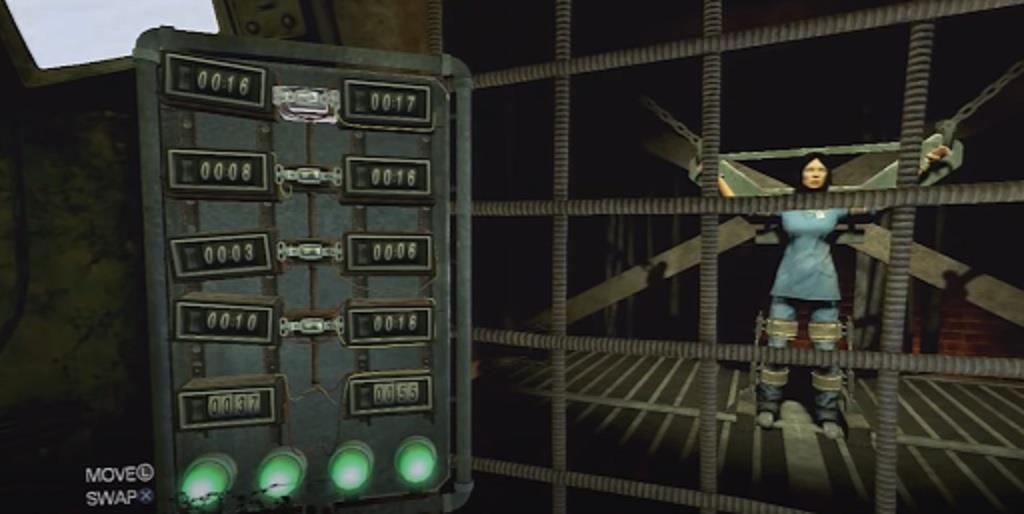
2010’s Saw II: Flesh & Blood managed to pull out all the gory stops, especially as the films began to steer toward a tamer, softer side of torture set-pieces.
The most bizarre trap involves a woman, shackled in an elevator shaft, who risks being torn in half by the descending elevator. Like all of the traps in this series, you try to save her, minigame style. It’s like Mario Party if you constantly hear shouts of “I DON’T WANNA DIE!” in the background, and failing to provide the right series of combinations here will see the woman bisected at the waist. Your treat for losing? The Jigsaw puppet laughs at you.
Which of the Saw traps is the most shocking in its brutality
Among the many brutal traps in the Saw franchise, several stand out for their sheer savagery and psychological torment. The “Reverse Beartrap” is often cited as the most iconic and brutal, designed to rip open a victim’s jaw unless they retrieve a key from another person’s stomach, forcing them to commit violence under extreme duress.
Another contender is “The Rack” from Saw III, which slowly twists and breaks the victim’s limbs before ultimately killing them-a method that is both excruciatingly painful and visually shocking. The “Angel Trap” from Saw III is also notorious for its brutality, as it dooms the victim to a grisly death by ripping open their ribcage, regardless of their efforts to escape.
Ultimately, the Reverse Beartrap is frequently highlighted as the most shocking in its brutality due to its visceral, face-destroying mechanism and the psychological horror of what the victim must do to survive.
Which Saw trap’s brutality shocked me the most in its design and execution
The Saw trap that shocked you the most in its design and execution might well be “The Rack” from Saw III. This device methodically twists and breaks each of the victim’s limbs, culminating in a slow, agonizing death as bones snap and protrude from the skin-a spectacle that is both viscerally brutal and emotionally harrowing to witness. The psychological torment is heightened by the victim’s helplessness and the desperate pleas for forgiveness, making it one of the hardest scenes to watch in the entire franchise.
Other contenders for most shocking brutality include the “Reverse Bear Trap,” which threatens to tear open the victim’s jaw unless they commit violence to escape, and the “Bone Marrow Trap” from Saw X, which forces the victim to amputate her own leg and extract bone marrow, only to be beheaded when she fails to meet the impossible time constraint. Each of these traps stands out not just for their gore, but for the cruel ingenuity behind their design and the psychological horror inflicted on their victims.
