
Harness the dragon’s ember and craft a base that thrums with heat, strategy, and the quiet roar of victory.
Our Wild Hearts camp guide will explain everything you need to know about Dragon Pits, Dragon Karakuri, what you can build and where, and what every Dragon Karakuri does.
How camps work in Wild Hearts
Camps in Wild Hearts serve as personal bases where players can rest, craft gear, and prepare between hunts. Each one is built near a Dragon Pit, which powers the Karakuri structures you place, such as tents, forges, and food tables. Setting up camps strategically across the regions reduces travel time and keeps you supplied with resources. Expanding them with upgraded Dragon Karakuri turns each camp into a strong support hub suited to your style of play.
There aren’t really camps in Wild Hearts, per se – at least not the way you’d expect camps (and sub-camps) to work if you’re a fan of Monster Hunter games. Instead, there are Dragon Pits where you can construct Dragon Karakuri that serve all the same functions as a “camp” – they allow you to do things like fast travel, cook food, and forge weapons.
But you can’t build every Dragon Karakuri at every Dragon Pit, so your camps are going to have different functions depending on the characteristics of each Dragon Pit.
The difference between Basic Karakuri and Dragon Karakuri
Basic Karakuri are simple tools that hunters build on the spot, such as springs or crates, to aid in movement and combat. They rely only on personal thread and can be crafted anytime during a fight. Dragon Karakuri, however, are permanent structures powered by Dragon Pits, enabling larger features like tents, forges, and zip lines at camps. These require managing elemental energy from the pits, adding a layer of strategy to where and how players expand their base.
Karakuri is the magic you’ll use to conjure devices and structures. There are two kinds of Karakuri: temporary Basic Karakuri you throw together while exploring or hunting (like crates and springs) and Dragon Karakuri that are permanent fixtures (like tents and campfires).
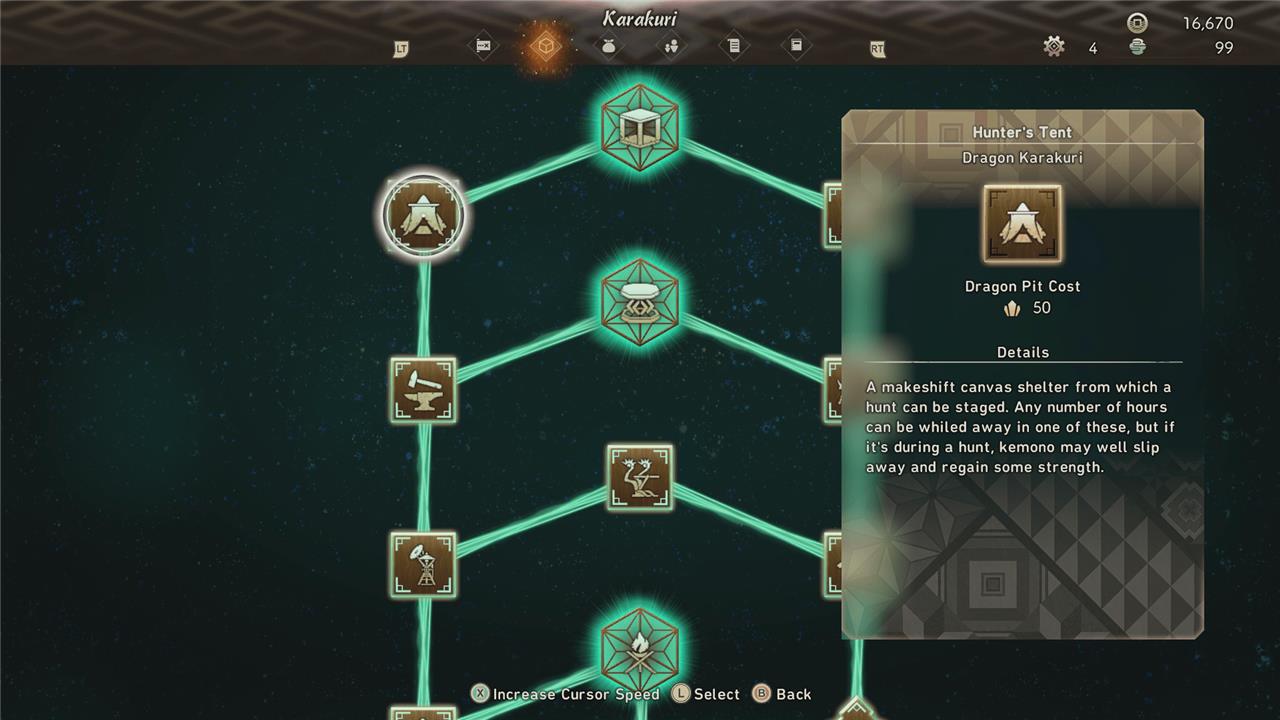
You’ll learn new Karakuri of both kinds as you play through Wild Hearts‘ story. You’ll also upgrade and unlock additional Karakuri through the Karakuri menu tab. There, you’ll spend Kemono Orbs that you get from hunting and killing Kemono to unlock nodes along the Karakuri tree.
Basic Karakuri use the thread you collect from trees and rocks. Dragon Karakuri draw energy from Dragon Pits.
Where Dragon Pits are on Wild Hearts’ map
Dragon Pits are scattered across each region of Wild Hearts, often positioned near major hunting areas or travel routes. You can spot them on the map by their circular icons, which mark where you can tap into elemental energy. As you explore, activate these sites to expand your building range and access more Dragon Karakuri. Some are hidden behind progression locks or specific elemental requirements, so revisit older regions after upgrades to claim missed pits and strengthen your network of camps.
Each area you visit in Wild Hearts will have Dragon Pits scattered around. These are underground fonts of energy you’ll use to build Dragon Karakuri constructions (the permanent ones).
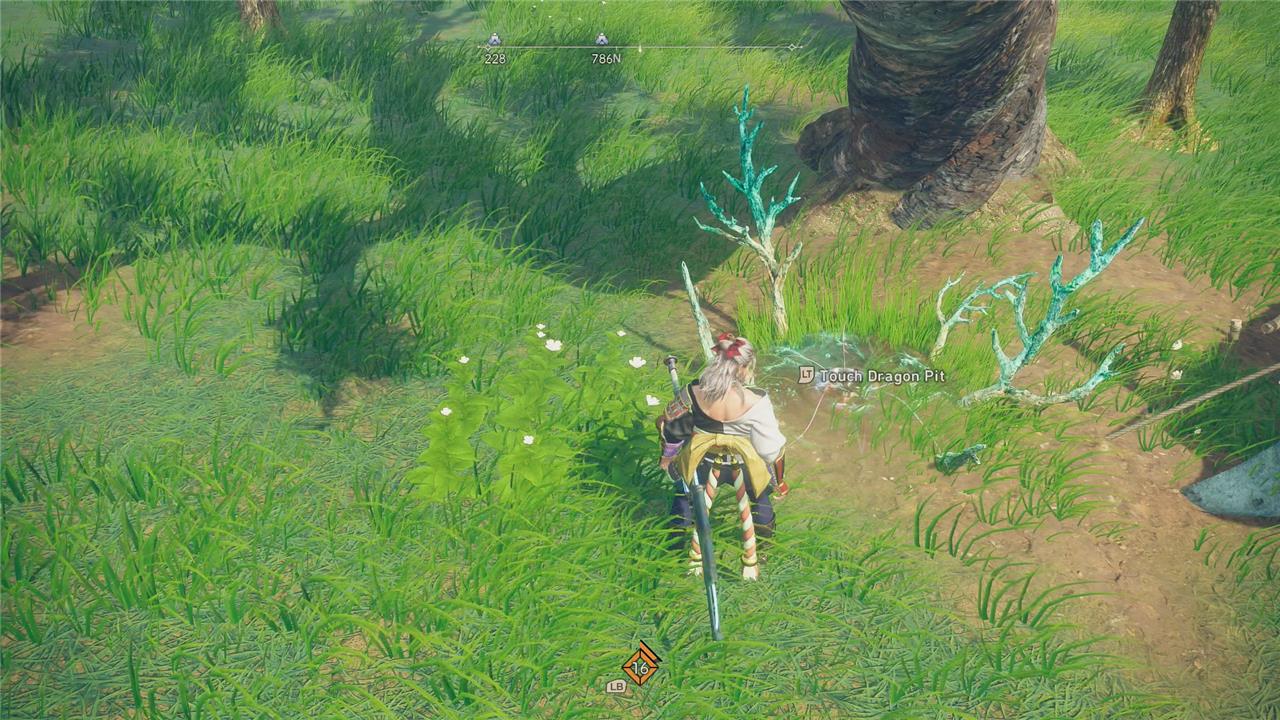
You’ll need to unblock a Dragon Pit once you discover it – which requires a few local resources to do. Continuing to upgrade (unblock) a Dragon Pit costs increasingly rare items like Large Mist Crystals and Giant Spring Dust Crystals, but unlocks even more energy from the Dragon Pit (more on this in a second).
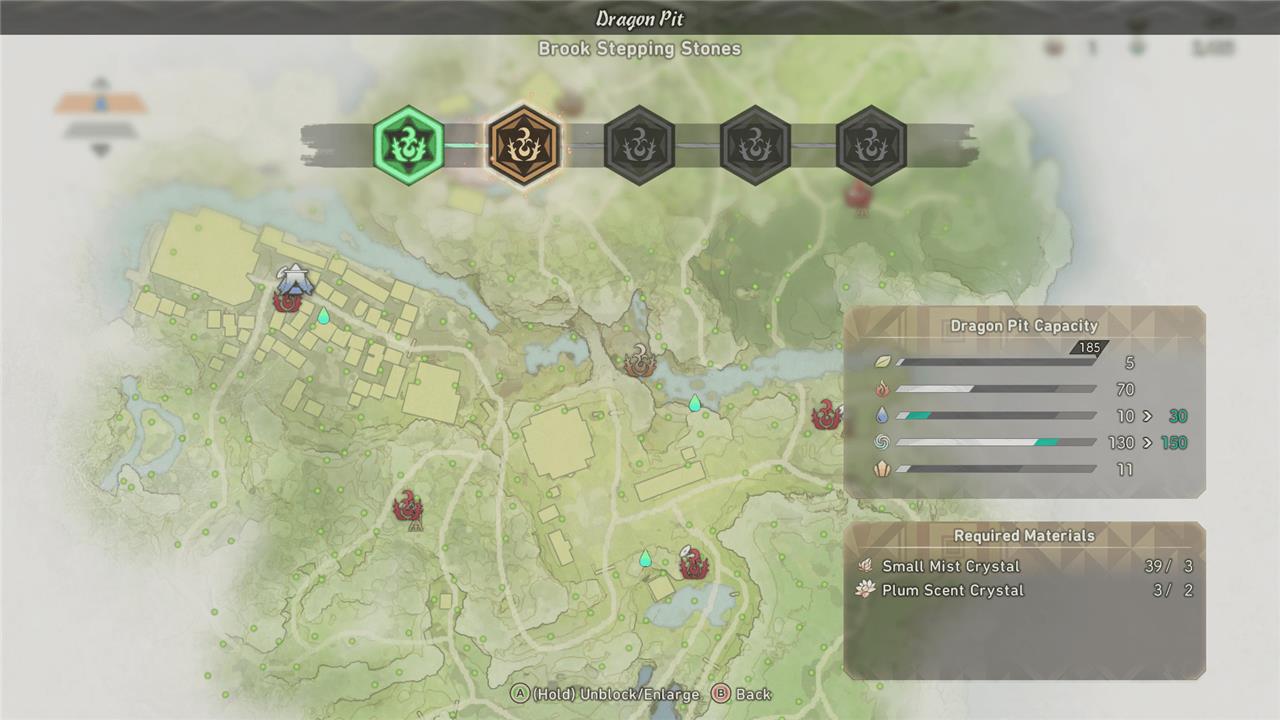
Once you’ve visited a Dragon Pit, its map icon will go from gray to red or yellow. Yellow means you have the material to unblock that pit further, while red means you don’t. You don’t have to travel to those locations, though. You can unblock and upgrade Dragon Pits directly from the map – like in the image above.
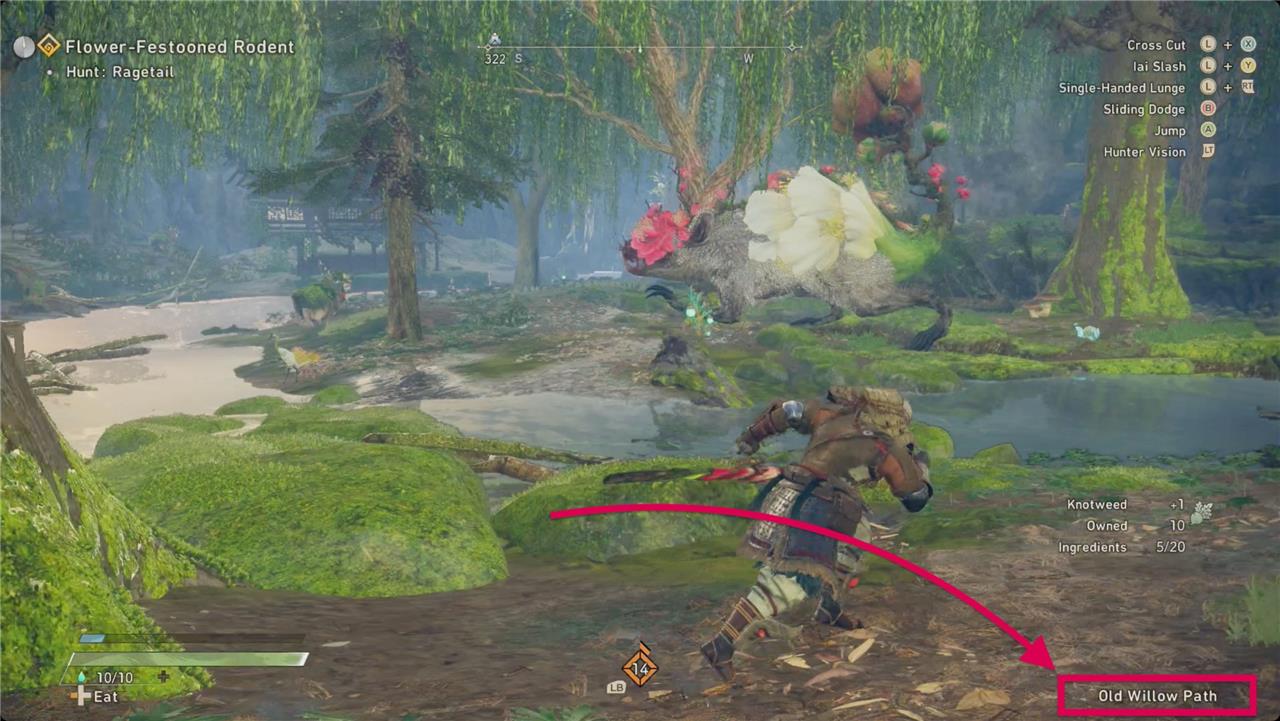
Each Dragon Pit has a unique name and a range with borders, but you can’t see those borders on the map. The only indication you have for which Dragon Pit is closest to you is the name in the lower right corner of the HUD.
What and how many Dragon Karakuri you can build in a Dragon Pit’s region of the map depends on that pit’s energy resources, so let’s talk about those.
How Dragon Pit energies work
Dragon Pit energies act as the foundation for everything you build in Wild Hearts. Each pit supplies specific elemental resources-water, fire, earth, wind, or wood-that power Dragon Karakuri structures in the area. Expanding or purifying a pit increases its energy capacity, giving you more freedom to place useful constructions such as forges, tents, or zip lines. Balancing these energies across regions ensures your camps remain functional and strategically strong as you progress through new territories.
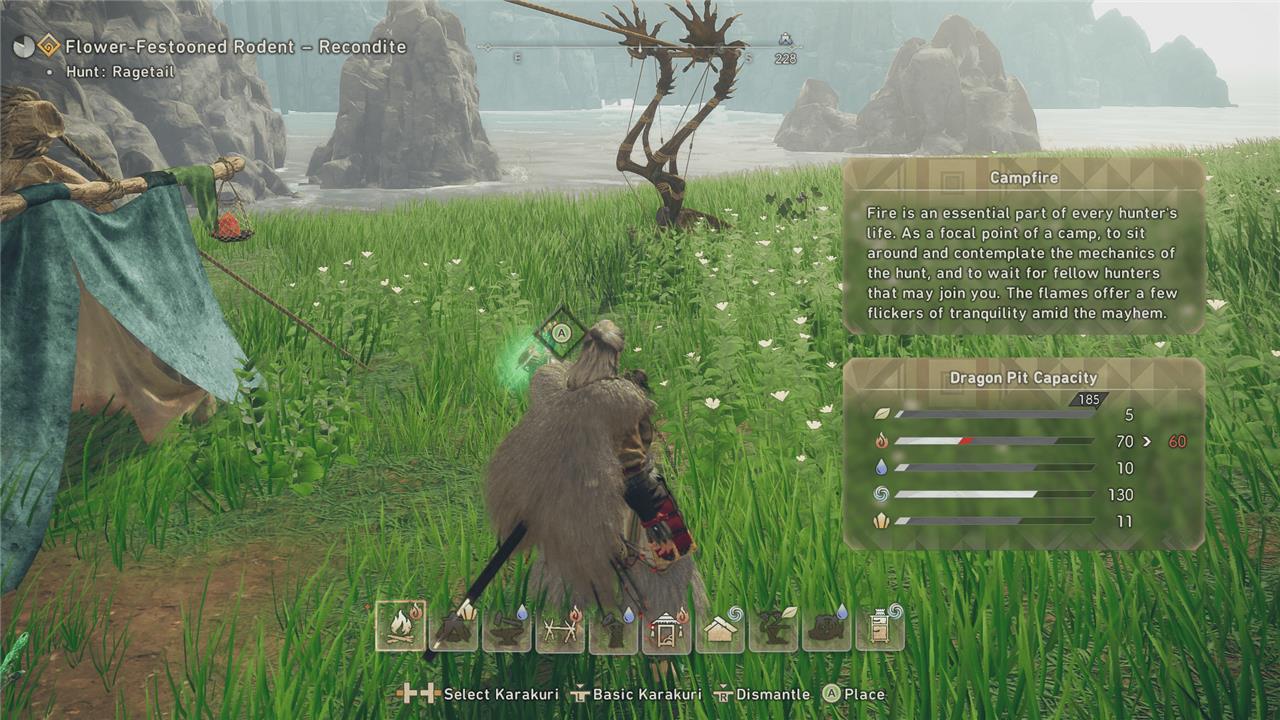
Every Dragon Pit has a set of stats that represent its reserves of earth, fire, water, wind, and wood energy. Each Dragon Kurakuri you build has an associated type that matches those stats – represented by the little crystal, flame, droplet, swirl, and leaf (respectively to the elements) symbols in the upper right of the Karakuri icons.
Each level you unblock at a Dragon Pit unlocks more energy, but it’s not evenly distributed. This means that not every Dragon Pit will have the energy for every kind of Dragon Karakuri. For example, very few Dragon Pits (in our experience) have enough earth energy to build a tent for fast travel, but almost all of them have the juice to build a hunting tower to track Kemono.
All Dragon Pit locations by region
Wild Hearts features Dragon Pits across four main regions, totaling around 48 locations marked by gray icons on the detailed map. Activating them provides Dragon Karakuri energy for camp structures like Hunter’s Tents.
Harugasumi Way (13 Pits)
-
Giant Tree Trunk Camp
-
Windswept Plain
-
Nanohana Hill
-
Forgotten Burial Ground
-
Tavern Ruins
-
Southern Obsidian Cave (Underground)
-
Shrine Approach Marsh
-
Crystal-Clear River
-
Brook Stepping Stones
-
Rustling Bamboo Grove
-
Great Sakura Clearing
-
Shrine Forest
-
Cedar Path
Natsukodachi Isle (13 Pits)
-
Seashore Camp
-
Shipwreck Inlet
-
Sal Tree Hollow
-
Ironsand Beach
-
Lava Cavern (Underground)
-
Caldera Dolmen
-
Stargazing Ridge
-
Dragon Altar (Underground)
-
Underground Ruins Entrance
-
Sleeping Stones Chamber
-
Breezy Cape
-
Coral Salt Swamp
-
Dripstone Shore
Akikure Canyon (12 Pits)
-
Stone Buddha Camp
-
Derelict Shrine Approach
-
Kintōdō Tower
-
Mushroom Hollow Entrance (Underground)
-
Buddha Cave (Underground)
-
Gingko Forest
-
Silvergrass Plains
-
Dawn Camp
-
Last Bastion Ruins
-
Higan Falls
-
Six Paths Lagoon
-
Winter Solstice Cavern (Underground)
Fuyufusagi Fort (13 Pits)
-
Cavern Camp
-
Snowy Ōtsuki Path
-
Sturdy Bridge
-
Icy Castle Town
-
Icicle Forest
-
Mournful Ruined Fort
-
Lifeless Palace
-
Cold Castle Compound
-
Chilling Lane (Underground)
-
Permafrost Lake
-
Lonely Lower Keep
-
Derelict Castle Keep
-
Gloomy Tower
How to upgrade Dragon Pits in Wild Hearts
Upgrading Dragon Pits in Wild Hearts expands their energy capacity (Earth, Fire, Water, Wind, Plant) for more Dragon Karakuri like tents and campfires.
Initial Activation
Approach a gray Dragon Pit icon on the map and interact to unblock it with local materials, such as 3 Small Mist Crystals and 1 Small Plum Scent Crystal at Giant Tree Trunk Camp. This adds base energy pools specific to the pit’s region and type.
Remote Upgrading Process
Open the detailed map (M key), hover over an activated red/orange Dragon Pit icon, and select Enlarge to upgrade without traveling there. Each level (up to 5 total) requires rarer crystals like Large Mist Crystals or Giant Dust Crystals, gathered from Kemono corpses, map nodes, or objectives-costs increase per level.
Optimization Tips
Yellow icons mean you have materials ready; red means you’re short-prioritize Earth-heavy pits for Hunter’s Tents. Destroy unused Karakuri to free energy if slots fill up during upgrades.
