
Looking to dominate recruiting in EA Sports College Football 25? The secret lies in mastering the pipelines-the regional recruiting hotspots that give your program a powerful edge in landing top talent. Whether you’re on PlayStation or Xbox, understanding how to pick the best pipelines tailored to your team’s strategy can transform your Dynasty Mode experience from average to unstoppable. Dive in as we break down the top pipelines, reveal hidden gems, and show you how to build a recruiting network that keeps your roster stacked year after year.
The pipelines system, available in Dynasty Mode, helps the game better replicate real college football recruiting. You might be wondering what pipelines are and how to pick the best pipelines in EA Sports College Football 25. You’ve come to the right place.
What are pipelines?
Pipelines in College Football 25 are specific geographic regions or recruiting territories where a coach or school has established influence, making it easier to recruit players from those areas. When creating a coach in Dynasty Mode, selecting a pipeline gives your coach more recruiting power in that region, reflecting real-life tendencies of athletes preferring to stay close to home. There are about 50 different pipelines, each with varying strengths and player types, and choosing the right one can significantly impact your recruiting success and team building strategy. While you can recruit nationwide, having a strong local or talent-rich pipeline boosts your chances of signing top recruits and building a competitive program.
Pipelines are states or regions that a school or coach has extra familiarity with. Mechanically, this means recruits from your school or coaches’ pipeline regions are more likely to be interested in your school.
This is meant to mimic IRL recruiting, where high school athletes are often (but not always!) more likely to be interested in schools in or near their home state than moving far away from home. Even this is included in the game – for some recruits, proximity to home is a high priority (or even a dealbreaker); for others, it barely matters. But the pipeline will help get you in the door.
Some states are split into multiple pipelines, and some states are combined into a single pipeline. For example, the extremely talent-loaded states of California, Georgia, Florida and Texas are all split into multiple pipelines (e.g. “Central Florida,” “South Georgia,”), while less talent-dense states are combined into multiple state regions like “Big Sky” and “Pacific Northwest.”
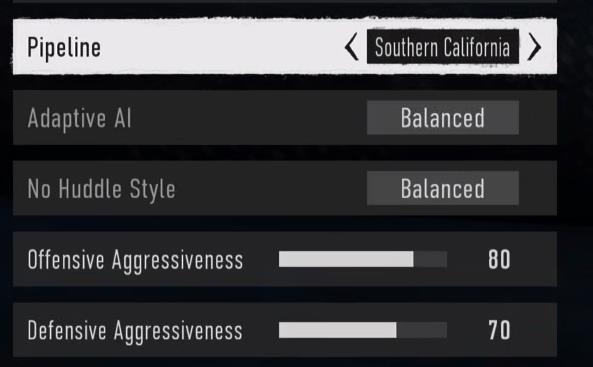
Schools operate on a tiered ranking system for their pipelines, from one (weakest) to five (strongest). Each school has a pipeline level based on how well they have historically recruited that region. These pipeline levels for schools are locked in and will not change over the course of your save file, but you can change your coach’s pipeline through the “Edit Coach” menu.
What’s the best pipeline for my team?
Choosing the best pipeline for your team in College Football 25 depends on your school’s location, recruiting strategy, and long-term goals. Pipelines represent recruiting territories where your coach has established connections, giving you an advantage in signing top talent from those regions. To maximize success, align your pipeline choice with your team’s strengths and the type of players you want to recruit. For example, selecting pipelines in talent-rich states like Florida, Texas, or California can provide access to a deep pool of recruits, while matching your school’s natural recruiting area makes it easier to attract players. Ultimately, understanding your team’s needs and leveraging the pipeline system strategically is key to building a dominant dynasty in the game.
When you create a coach in Dynasty Mode, you will choose a pipeline for the coach. Narratively, this represents your coach’s professional background – where did they cut their teeth before getting this position? Where do they have the most connections with high school coaches? Mechanically, this is a way to choose which region you want a leg up in recruiting.
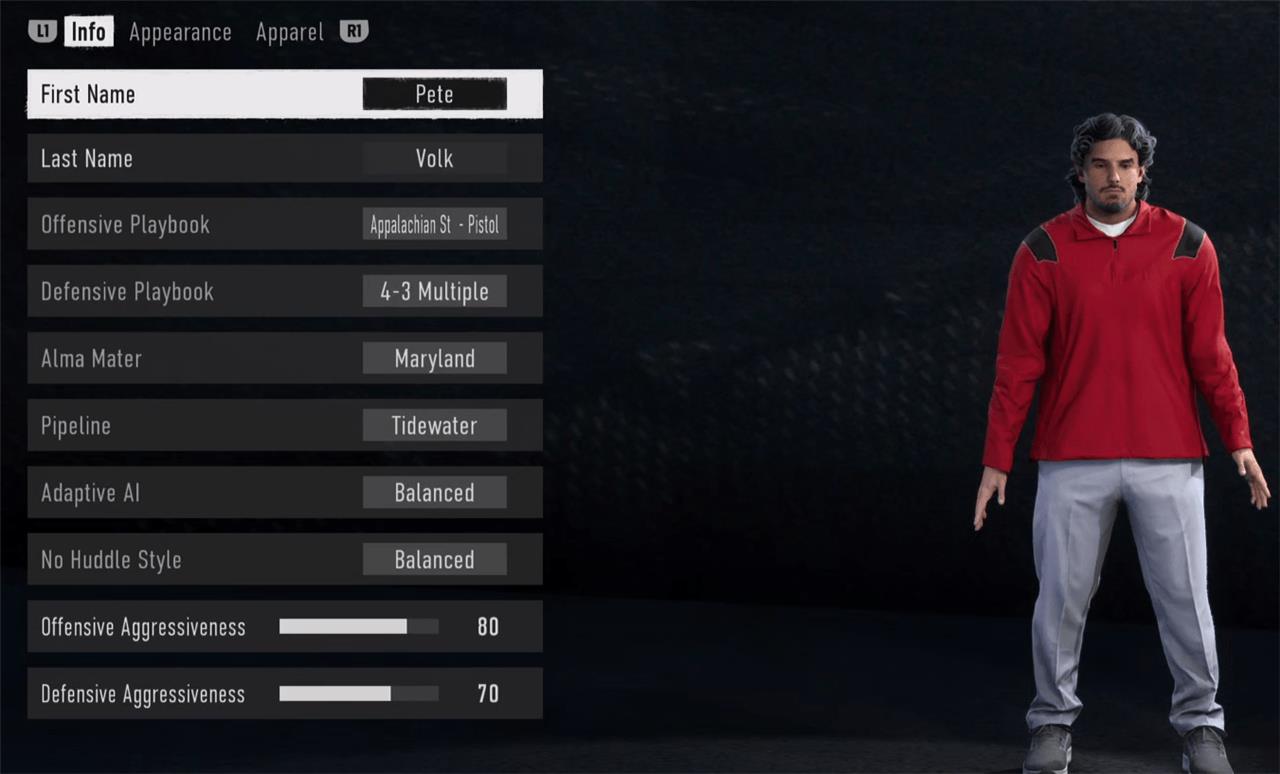
For example, I have a Dynasty Mode file with Maryland, where I went to school. For my coach there, I chose the Tidewater pipeline, because it covers the region Maryland is in and generally likes to recruit from (there’s no official explanation of what “Tidewater” covers, but because Maryland, DC, Virginia, and Delaware aren’t pipeline options, I think it’s safe to assume that’s what Tidewater means here). My goal in this save is to eventually dominate the Tidewater region with Maryland and get the best recruits there year after year.
But for a dynasty with New Mexico, a school I don’t plan on staying at forever, choosing a pipeline in Texas or California might make more sense than the New Mexico pipeline. Both of those states are close enough to New Mexico that I’d still be fine on the Proximity to Home rating, and hopefully it’d allow me to snap up a few overlooked recruits from those jam-packed regions.
Schools also prefer coaches who have pipelines that synergize with theirs, so if you’re starting a dynasty at a one-star school but eventually want to land a job at Alabama, it might be wise to pick Alabama as your pipeline.
What are the best pipelines generally?
The best pipelines in College Football 25 generally come from talent-rich regions that consistently produce top-tier recruits, making them highly valuable for building a strong team. Pipelines from Texas, Florida, California, and Georgia stand out as the most powerful due to their depth and quality of players. For instance, East Texas, Central Florida, and Southern California pipelines are known for producing highly sought-after recruits, with Texas pipelines offering some of the strongest recruiting advantages. Schools with access to multiple top-tier pipelines, such as Alabama, Florida State, Oklahoma, and Georgia, tend to dominate recruiting due to their extensive reach and influence in these key regions. Choosing a pipeline from these areas can significantly enhance your recruiting success, providing a steady influx of high-caliber players that align with your team’s strategic needs.
Again, it’s best to think of this within the context of your school and your goals for the save file. This is a subjective choice, not an objective one, and it’s generally better to choose an area that makes sense for your school and your save file rather than just picking the most jam-packed region.
But maybe you’re coaching at a school that can get just about any recruit it wants, like Alabama or Georgia. With a gluttony of choices, which should you prioritize?
The various Florida, Texas, Georgia, and California pipelines are strong starting points – each will have a bevy of talent available in each class. Beyond those, Louisiana and Metro Atlanta are other talent-rich options worth considering.
Each pipeline region not only has a level of quality talent associated with it, but a type of quality talent tied to the region. We don’t know each of these, but here are a few examples from EA’s deep dive on Dynasty Mode:
For example, Southern California is known for producing great quarterback talent, while East Texas consistently produces some of the best wide receivers in the country. However, we didn’t stop there. We wanted to go deeper to ensure we were capturing the authenticity of high school talent. Yes, East Texas is known for producing great receivers, but more specifically, they are known for how big and physical their receivers are. As a result, you are going to see bigger and more physical receivers coming out of East Texas, whereas South Florida is going to produce incredibly fast deep threat receivers who have a smaller size.
So in short, the answer is “it depends on what you want.” Are you looking for QBs above all else? Southern California is the way to go. Are you looking to dominate your school’s region? Pick that.
How can I identify the most effective pipelines for my team in College Football 25
To identify the most effective pipelines for your team in College Football 25, start by prioritizing recruiting regions close to your school’s location, as players tend to commit to schools near home, making nearby states more fruitful targets-for example, East Coast teams should focus on Georgia, North Carolina, and Virginia. Evaluate your current roster and recruiting needs to see which types of players you require, then target pipelines known for producing those player profiles. Consider the strength and quality of pipelines, as some regions like Texas, Florida, and California consistently rank as top pipelines due to their rich talent pools and recruiting advantages. Use available pipeline rankings and team-specific pipeline ratings to understand which pipelines offer the highest recruiting influence and success rates, factoring in upgrades or program-building features that can enhance your pipelines over time. Combining geographic proximity, pipeline strength, and your team’s strategic needs will help you select pipelines that maximize your recruiting impact and build a stronger program in Dynasty Mode.
How do pipeline strengths impact my team’s recruiting success in College Football 25
Pipeline strengths significantly impact your team’s recruiting success in College Football 25 by acting as multipliers that enhance your influence over recruits from specific geographic regions. Each pipeline has a rank from 1 to 5, color-coded from Bronze (lowest) to Pink (highest), indicating its strength and the likelihood of successfully recruiting top-tier players from that region.
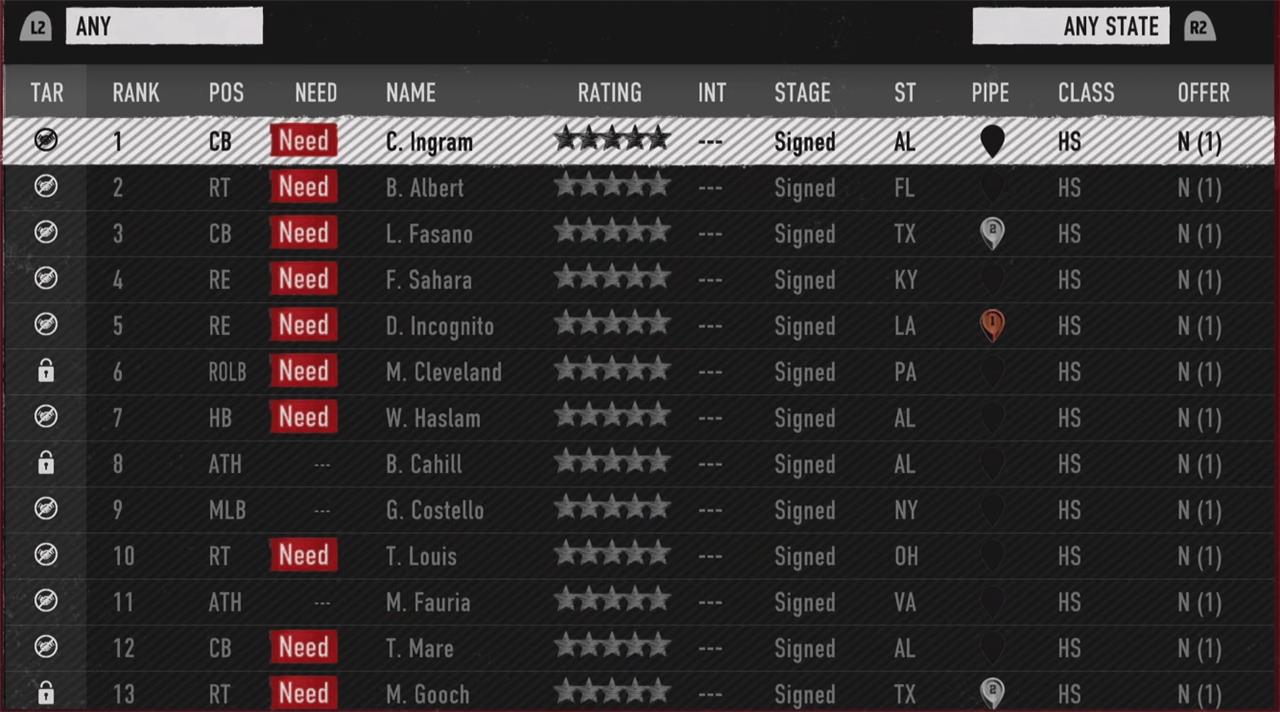
Stronger pipelines (Tier 4 Blue and Tier 5 Pink) provide a substantial boost to your recruiting efforts, making it easier to sign elite prospects compared to lower-tier pipelines. For example, schools with high-tier pipelines in regions like East Texas, Central Florida, and Southern California often have an easier time landing top recruits because their recruiting actions carry more weight with players from those areas. This advantage is visible in the game’s recruitment menu, where a colored marker next to a recruit’s location shows your pipeline connection strength, directly correlating to your chances of success.
Therefore, focusing your recruiting efforts on players within your strongest pipelines maximizes your recruiting efficiency and helps build a more competitive roster. Prioritizing 4-star and 5-star recruits from these high-tier pipelines early in the recruiting season is a recommended strategy to capitalize on this advantage. Conversely, weaker pipelines offer less influence, making it harder to compete for top talent unless you compensate with other recruiting strategies or program prestige.
In summary, pipeline strength acts as a critical multiplier in recruiting, and aligning your recruiting focus with strong pipelines is key to building a successful program in College Football 25.
