
Before the bombs fell, Vault Boy was just a smiling face in Vault-Tec’s marketing-but Amazon Prime’s Fallout TV show transforms him into Cooper Howard, a fallen Western star turned tragic ghoul whose story reveals the dark irony behind the cheerful mascot’s origins. This fresh origin story adds unexpected depth to the iconic figure, turning him from a mere symbol of corporate propaganda into a haunting emblem of the Fallout universe’s grim realities.
Vault Boy is the smiling cartoon character featured on Vault-Tec posters, the Pip Boy computer interface, and other fictional products in the Fallout world. In the Fallout games, he’s a mascot used to illustrate players’ perks and abilities, and to reinforce the cheery, can-do attitude of Vault Dwellers. Vault Boy was originally inspired by Milburn Pennybags (aka Mr. Monopoly), the mascot of the board game Monopoly, and cartoon characters from the 1950s. Vault Boy has been in Fallout from the beginning.
[Ed. note: The rest of this post contains spoilers for Fallout season 1.]
The Fallout TV series reveals that the Vault Boy icon is based on one of the show’s protagonists, Cooper Howard (Walton Goggins), who later transforms into The Ghoul. Before that tragic turn, Howard is a Hollywood actor who stars in Westerns, and he takes a gig promoting Vault-Tec’s vaults. In episode 3 of the Fallout show, Howard is shown suiting up in Vault Boy’s familiar blue-and-yellow jumpsuit, then posing for a Vault-Tec advertisement. He flashes a big smile and a thumbs-up, establishing the character’s look and go-to pose.
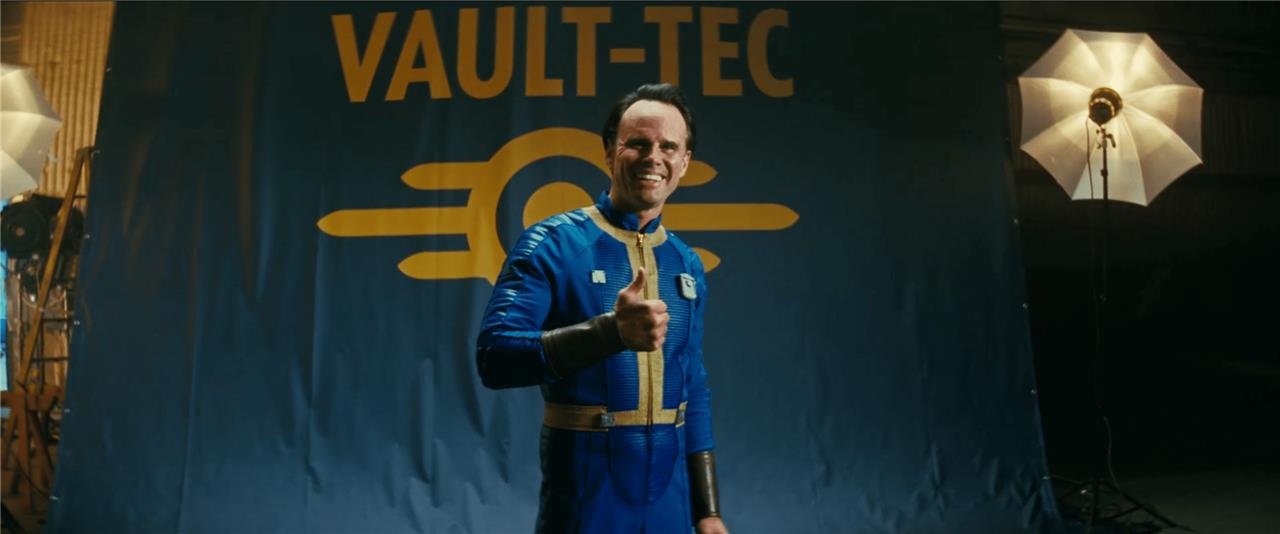
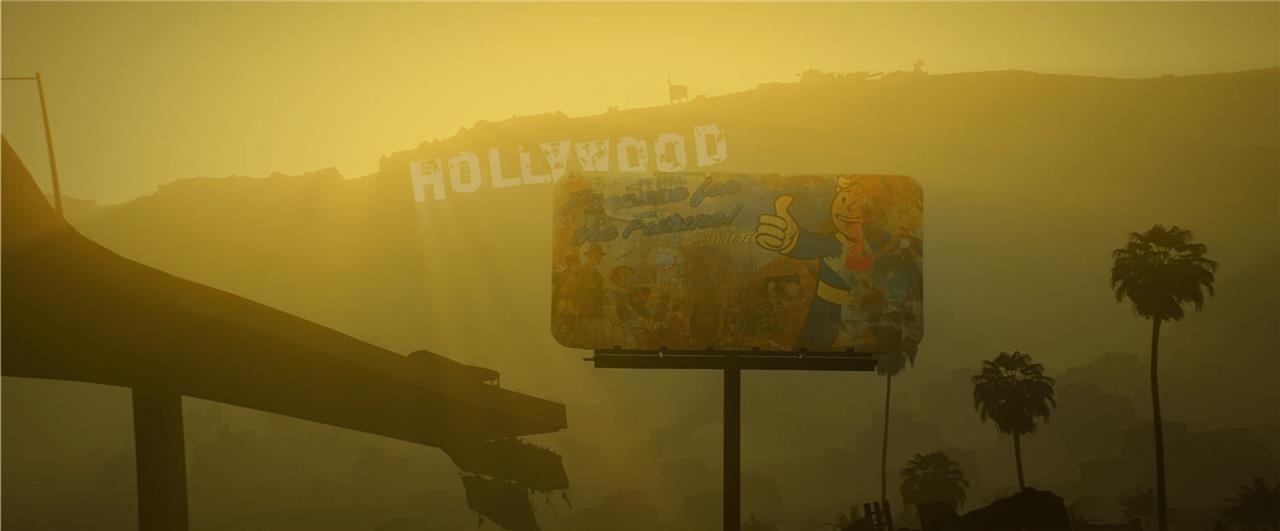
Howard’s star power in Hollywood begins to lose its luster shortly thereafter. His peers shun him for working as a “pitchman for the end of the world,” and studios start cutting him from projects. In the credits of episode 3, we see what ultimately becomes of the actor’s role as Vault-Tec spokesman: A billboard promoting vaults that once featured a photo of Howard from that shoot has been partially stickered over, with the cartoon Vault Boy replacing Howard’s likeness. It remains a familiar image, but it’s now distinctive, with blond hair and a younger look.
Flash back to the first episode of Fallout, and we realize why Howard is reduced to working at kids’ birthday parties, and why he declines to deliver his signature thumbs-up when posing for photos at an event. “Given the state of everything,” Howard says to the birthday boy’s dad, amid growing fears of a nuclear war and personal strife, “I’d prefer not to.”
Moments later in that episode, Fallout’s writers nod to another piece of (unofficial) Vault Boy backstory. Just before the bombs drop, Howard explains to his daughter Janey that when he was in the Marines, he was told, “If they ever drop a really big bomb, they told us to hold up your thumb just like this. And if the cloud is smaller than your thumb, you run for the hills.” This is a reference to an enduring Fallout fan theory that Vault Boy is performing a similar check with his pose – thumbs up, one eye closed, smiling from a safe distance.
Brian Fargo, former executive producer of the Fallout games, debunked this particular fan theory about Vault Boy in Twitter, saying Vault Boy “simply has a positive attitude.” But the TV show’s producers appear to lean into the “rule of thumb” hypothesis, one of many smartly crafted Easter eggs aimed directly at the hardcore Fallout audience. It’s an example of letting longtime fans craft part of the canon themselves.
How does the Fallout TV show change our understanding of Vault Boy’s origin
The Fallout TV show fundamentally changes our understanding of Vault Boy’s origin by revealing that the iconic mascot is based on Cooper Howard, a pre-Great War Hollywood actor and Vault-Tec spokesman. Rather than being a generic corporate symbol, Vault Boy is a stylized version of Howard, who posed with a thumbs-up during a Vault-Tec advertising campaign. This origin story adds a tragic dimension: Howard initially believed in Vault-Tec’s mission but later discovered the company’s sinister plan to profit from nuclear devastation. After falling out with Vault-Tec and being erased from the public eye, his image was transformed into the enduring Vault Boy mascot, whose cheerful thumbs-up now carries a haunting irony. This narrative deepens the lore by connecting Vault Boy’s cheerful facade to the dark realities behind the Fallout universe’s nuclear apocalypse.
How does Vault Boy’s origin story deepen the franchise’s lore
The Fallout TV show deepens the franchise’s lore by providing a concrete and tragic origin story for Vault Boy, transforming him from a simple corporate mascot into a complex character rooted in the world’s history. The show reveals that Vault Boy is based on Cooper Howard, a pre-Great War Western movie star and Vault-Tec spokesman who embodied the optimistic face of nuclear survival before becoming a ghoul in the post-apocalyptic wasteland. This backstory adds emotional weight and realism to Vault Boy’s cheerful image, highlighting the dark irony behind Vault-Tec’s propaganda and the human cost of the nuclear apocalypse. By linking the mascot to a real person with a personal story of loss and betrayal, the show enriches the Fallout universe with new layers of meaning and connects the symbol to the franchise’s themes of corporate greed, survival, and tragedy.
