
Embark on the epic journey of Prince of Persia: The Lost Crown fully prepared with these 11 essential beginner’s tips. Whether you’re playing on Nintendo, PC, PlayStation, or Xbox, mastering the art of parrying, exploring with purpose, and wisely managing your Time Crystals will transform your adventure through the mysterious world of Mount Qaf from daunting to exhilarating. Unlock hidden secrets, solve intricate puzzles, and conquer formidable foes with confidence by knowing these key strategies before you dive in.
Yes, Prince of Persia: The Lost Crown is a true-to-form Metroidvania, with all the backtracking and neatly parceled-out upgrades the genre entails. That’s on top of a nuanced and often difficult combat system. Here are 11 beginner’s tips for Prince of Persia: The Lost Crown.
Play on Guided Mode
Guided Mode in Prince of Persia: The Lost Crown is designed to help players navigate the game’s expansive world more efficiently by highlighting the main quest objectives and showing which paths are accessible or blocked. This mode provides a structured experience, making it easier to understand where to go next without constantly consulting the map. It is especially useful for beginners or those who prefer a less challenging exploration, as it reduces the chances of getting lost while still allowing the freedom to explore at your own pace. Players can switch between Guided and Exploration modes anytime in the settings, so you can start with guidance and later opt for more freedom as you become familiar with the game.
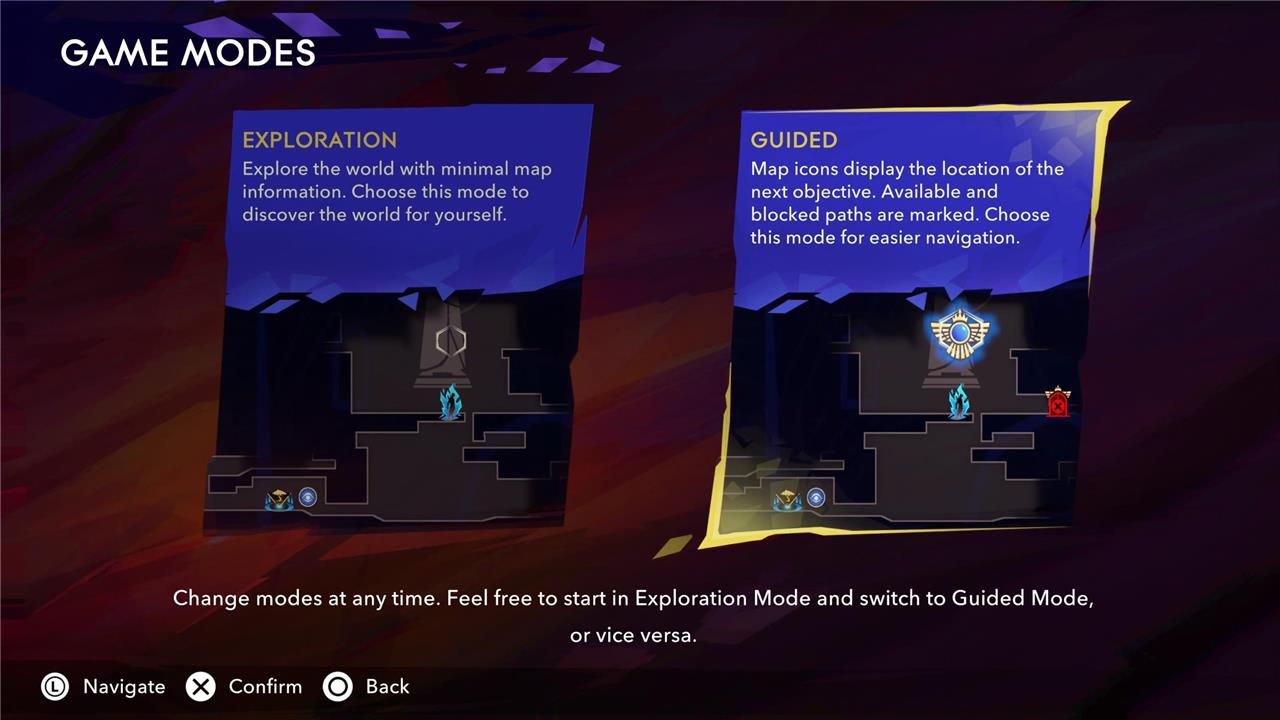
When you start Prince of Persia: The Lost Crown, you’re given the choice between two game modes:
- Exploration Mode is exactly what it sounds like, giving you minimal direction as to where you need to go for story missions and side quests.
- Guided Mode offers a bit more structure, highlighting objectives on your map. Guided Mode also indicates whether or not you can or cannot access certain passageways based on which upgrades you’ve unlocked.
If you’re up for more of a challenge and don’t mind getting periodically lost, opt for Exploration Mode. But for our money, Guided Mode is the way to go. The icons are for the most part unobtrusive (they only show up when you open the map). Having immediate knowledge that you can’t take a certain route saves you wasting time trying to hammer out a solution where there is none. Plus, don’t worry – you’ll still likely get lost from time to time.
And if you ever want to take the training wheels off, you can always change modes in the game’s settings.
Fariba will give you hints
Fariba is a helpful young character you will encounter throughout Prince of Persia: The Lost Crown who provides valuable hints and assistance. She can be found in various biomes, often near colorful flags or rugs, and offers maps of the surrounding regions for 50 crystals each. These maps reveal all rooms and areas in the zone, greatly aiding navigation and uncovering side routes you might otherwise miss. Buying missing map pieces from Fariba early on is a smart strategy to unlock the full map of Mount Qaf and make exploration much easier.
If you’re ever stuck, head to the Haven – your hub area, located in the Lower City – and talk to Fariba (sitting next to the Mage shop). For 30 time crystals (the standard in-game currency of The Lost Crown), she’ll give you a vague hint as to where to go next. The hints are never so explicit as “Go here and do this.” But she may tell you that a winged statue can help you ascend to a new area, which implies that you should seek out a statue fitting that description. Her advice is especially helpful when playing on Exploration Mode.
Additionally, Fariba doesn’t just stay in the Haven. While you’re exploring, you may also run into her – and for 50 time crystals, she’ll fill in your map with an outline of the region you’re in.
Don’t miss the bonus tutorials
Don’t miss the bonus tutorials in Prince of Persia: The Lost Crown, as they go beyond the initial instructional level and provide valuable lessons that enhance your skills and gameplay experience. By speaking with Artaban near the northeast corner of the Haven, you can access a series of lectures that build on your basic abilities, teaching advanced techniques like parrying projectiles and executing bow combos that you might not discover otherwise. Completing these tutorials also rewards you with 50 Time Crystals each time, which are essential for upgrades. New tutorials become available as you progress and gain talents, so be sure to return regularly to maximize your mastery of the game.
There’s even more tutorial beyond the initial tutorial stage, and it’s all genuinely helpful – in that you learn new tricks and earn free money.
In the Haven, talk to Artaban (in the northeast corner). He’ll offer a series of lessons that expand on moves you learned in the initial tutorial, imparting knowledge you may have otherwise missed, like the fact that you can parry projectiles or string combos together with your bow. You’ll also earn 50 time crystals for every tutorial you complete.
New tutorials become periodically available as you unlock more skills throughout The Lost Crown. Check back often to avail yourself of them.
Don’t try to parry everything
In Prince of Persia: The Lost Crown, while parrying is a crucial combat skill to master, you shouldn’t try to parry every attack. Many enemy strikes can be blocked or deflected with well-timed parries, which stagger foes and open up counterattack opportunities. However, some attacks are unblockable, indicated by a red glow, and attempting to parry these will only leave you vulnerable to heavy damage. Additionally, special attacks with a yellow glow can be parried for a powerful counter, but mistiming these can be costly. Therefore, learning when to parry and when to dodge or block is essential-don’t try to parry everything, as timing and enemy attack cues are key to surviving and succeeding in combat.
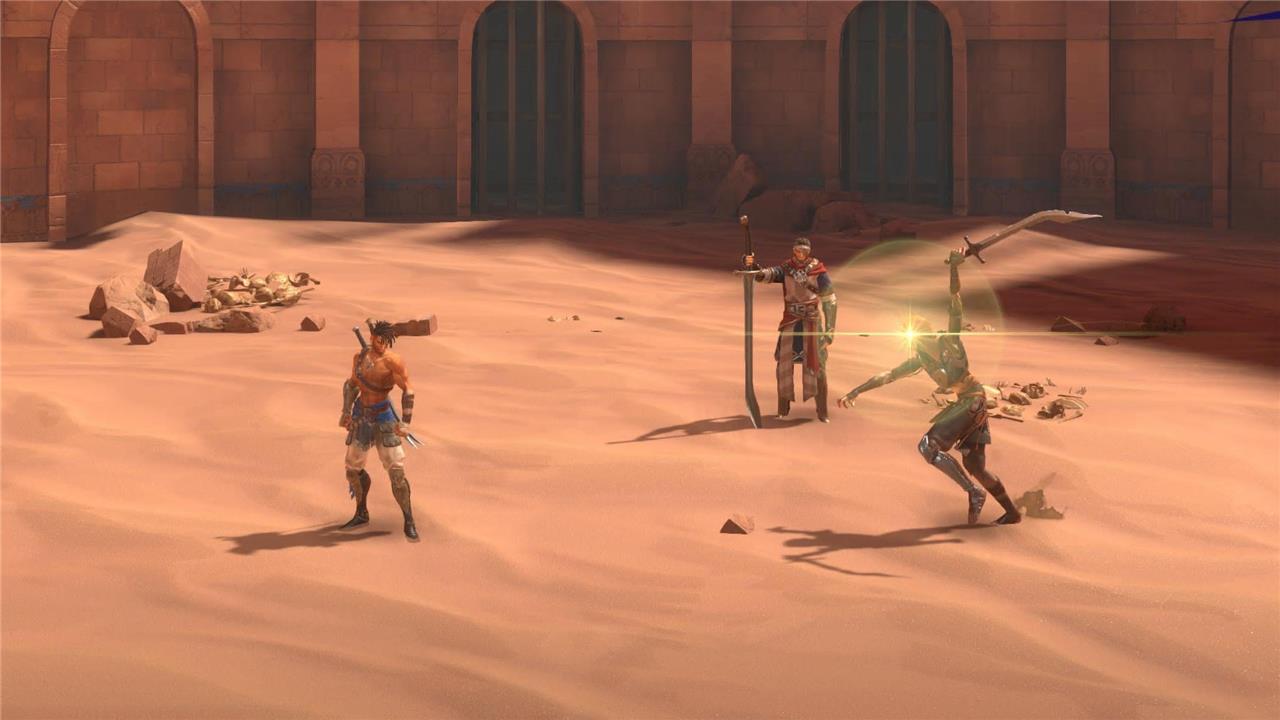
If you skip the optional tutorials, at least take the time to master your parry – easily the most valuable move at your disposal. To know when to parry or not, watch your enemy’s attack, and see if it emits a glint of a certain color:
- White attacks can be parried.
- Yellow attacks can be parried. Successfully parrying a yellow attack instantly kills cannon fodder enemies, and deals a ton of extra damage to bosses.
- Red attacks can’t be parried. Practice your dodge!
Follow the golden leaves
In Prince of Persia: The Lost Crown, following the golden leaves is a crucial navigation tip for beginners. These shimmering golden leaves appear in certain rooms and indicate the direction of the nearest Wak-Wak Tree, which serves as a vital waypoint. Interacting with a Wak-Wak Tree allows you to fully replenish your health and potion flasks, change equipped amulets, and manage your Athra Surges (skills). Additionally, these trees act as respawn points, making them essential for survival and progression. To find them easily, simply follow the golden wind and petals, which guide you directly to these important landmarks, accompanied by a distinctive bell-ringing sound nearby.
Wak-Wak trees are essentially the checkpoints of Prince of Persia: The Lost Crown. Interacting with them restores your health and arrows, and gives you a chance to change your equipped amulets (perk-granting accessories) or Athra surges (special moves). When you die, you’ll respawn at whichever Wak-Wak tree you touched most recently, indicated by a blue circle on your map, like so:
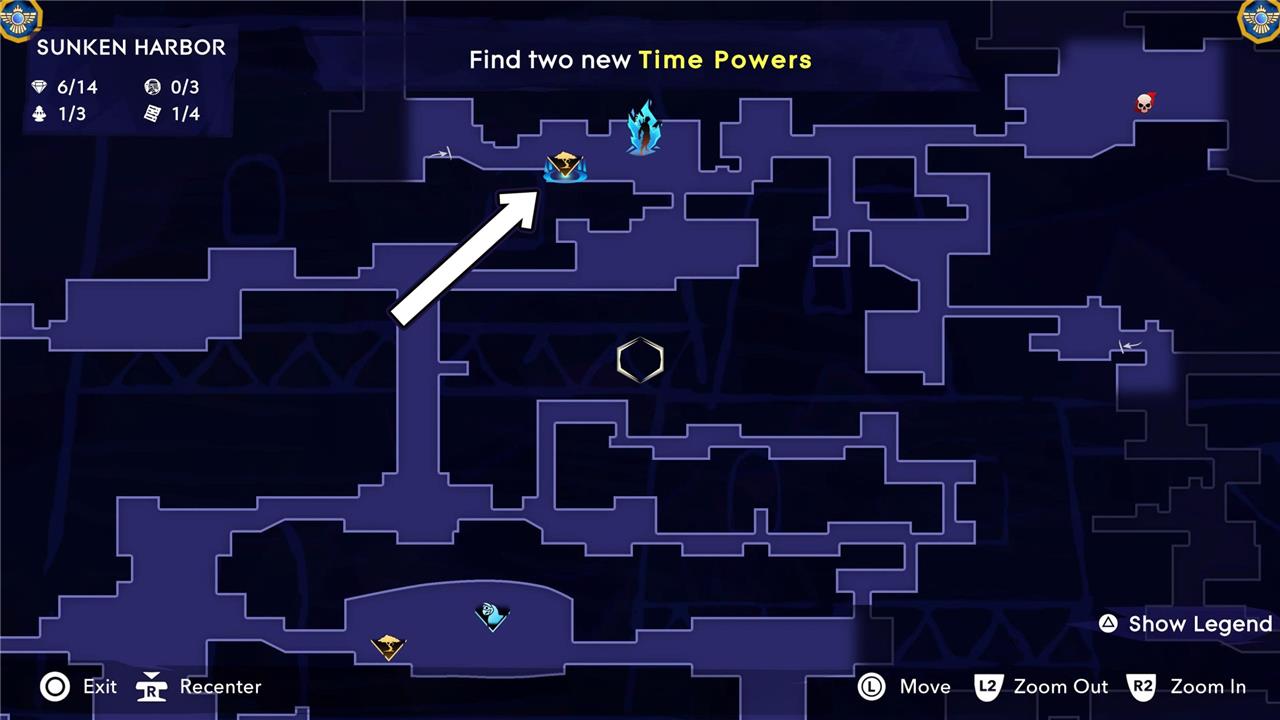
If you’re looking for the nearest Wak-Wak tree, keep an eye out for golden leaves floating through the wind:

Following the direction of the wind will lead you to a Wak-Wak tree. Be ware, however, that interacting with a tree causes all enemies to respawn.
Check for hidden walls
To uncover hidden walls in Prince of Persia: The Lost Crown, keep an eye out for suspiciously blank or near-identical sections of walls, especially those above empty platforms. Use your sword or shoot at these areas; if the wall starts to shimmer with a white sheen, it signals a secret path. Some hidden walls require explosives to break, which you can store and throw using the Dimensional Claw Time Power obtained later in the game. Exploring these walls often reveals secret rooms, challenge areas, and valuable treasures like Time Crystals and Xerxes Coins, enhancing your progression and rewards.
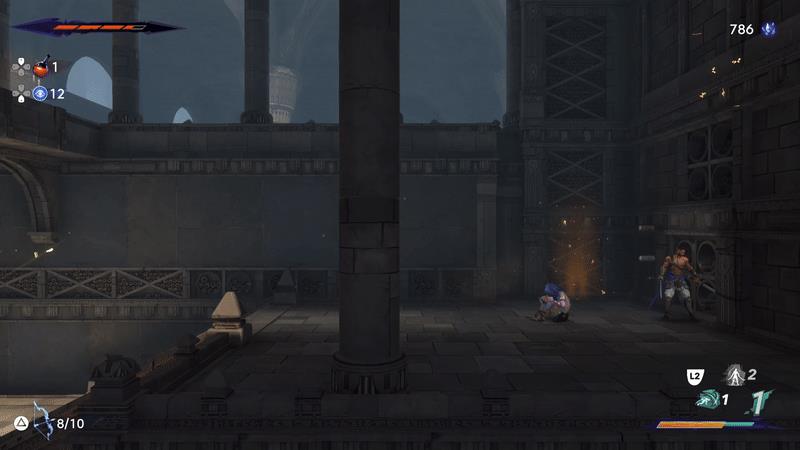
In The Lost Crown, most walls are simply walls, but some are hidden doors. It’ll look like a normal wall. Your map won’t give any indication there’s anything on the other side. But if you hit the wall, it’ll start to glow; a few more hits will cause it to collapse, revealing either a new passageway or a chamber containing some treasure.
Basically, if you ever find yourself at a dead end, smack all of the walls in the room to make sure you’re not missing a hidden door.
Don’t worry about dying
Don’t worry about dying in Prince of Persia: The Lost Crown-the game is designed to be forgiving and encourages learning through trial and error. If you fall in boss fights, you can easily respawn right at the fight without losing significant progress, although you will lose some Time Crystals each time. This means it’s okay to attempt a boss multiple times to memorize attack patterns and perfect your parry timing. If you find yourself stuck, it’s wise to explore other areas to upgrade your weapons and health before retrying challenging fights. The game also features fast travel points near bosses, making retries less frustrating. Embrace the learning curve and use each defeat as a step toward mastering the combat and puzzles.
Dying in Prince of Persia: The Lost Crown isn’t as big a deal as it is in other genre mainstays – a good thing, seeing as how tough the combat is. You’ll lose a few time crystals every time you die, but you won’t have to trek all the back to the spot you died to reclaim the rest. Hollow Knight, this is not.
During major boss fights, respawning is even more forgiving. You won’t even get sent back to a Wak-Wak tree, and will even have the option to simply restart from the beginning of the fight. (If you want to change your amulets and Athra surges, however, you’ll have to return to the nearest Wak-Wak tree.)
There’s no fall damage
Prince of Persia: The Lost Crown features a forgiving mechanic where there is no fall damage, allowing players to jump and drop from heights without worrying about losing health. The only exception to this is if you land on spikes, which will cause damage. This design choice encourages exploration and daring platforming without the usual penalty of fall damage, making traversal more fluid and less punishing for beginners.
Mount Qaf is littered with handholds and platforms, all meticulously positioned to help you climb to various heights. When descending, you don’t have to worry about navigating any of that stuff – just jump! There’s no fall damage in The Lost Crown. Unless you land on some spikes.
Memory shards can help you backtrack
Memory Shards are a valuable tool in Prince of Persia: The Lost Crown that help you backtrack and navigate the vast world of Mount Qaf. Early in the game, you receive the Eye of Wanderer, which reveals the map, but Memory Shards allow you to mark specific locations by capturing a screenshot of the environment. This feature is especially useful for remembering spots with treasures or obstacles you cannot yet overcome. Each Memory Shard lets you save a limited number of these “memories,” and collecting more shards increases your capacity to store them. By using Memory Shards, you can easily revisit important areas later when you have the necessary abilities, making exploration and progression much smoother.
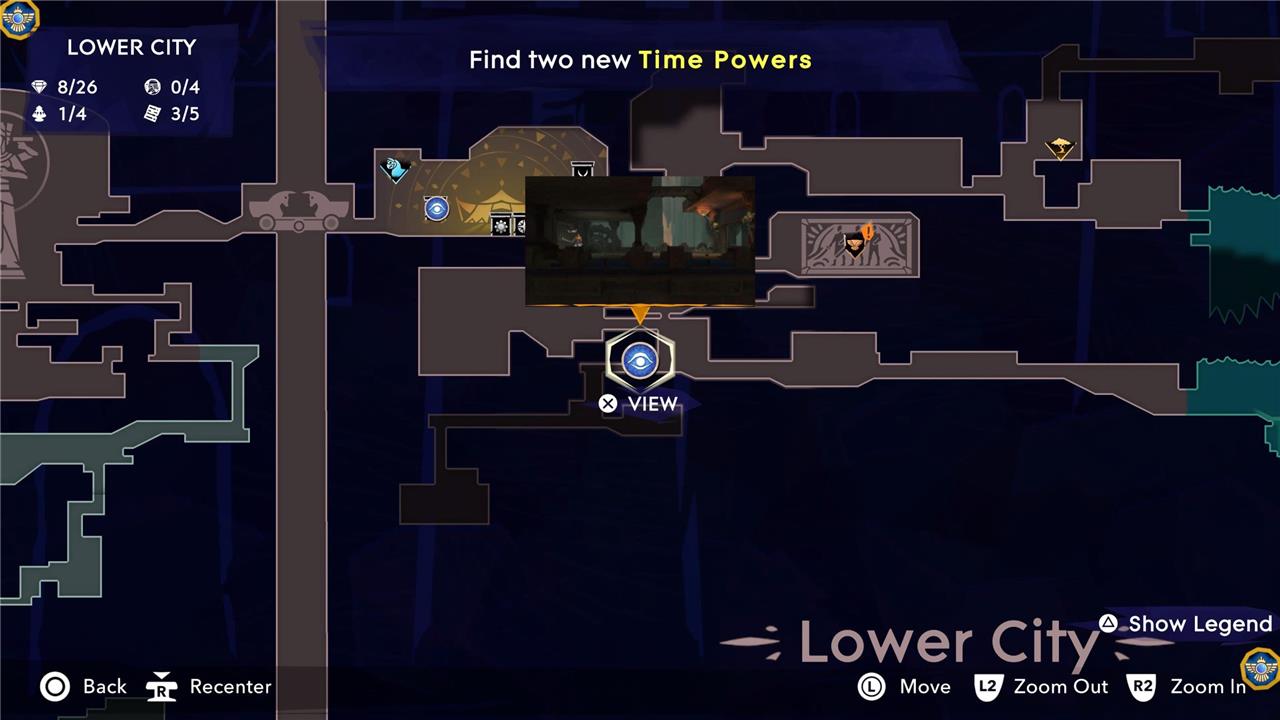
It’s the golden rule of the genre: If you can’t do X, come back when you have Y. Maybe you stumble upon an unbreakable cracked wall emanating golden light, or a gap that you clearly can’t jump across. In Prince of Persia: The Lost Crown, you needn’t memorize these obstacles.
Pressing down on the D-pad expends a resource called a “memory shard,” which marks the location on your map and snaps a screenshot of it. You can view those screenshots from your map at any time, allowing you to check out the room before hoofing it all the way back there and realizing, nope, you don’t actually have the necessary upgrade yet after all.
Bear in mind, though, that memory shards are a limited resource, and you don’t get them back after clearing them from your map.
Upgrade your potion capacity first
Upgrading your potion capacity early in Prince of Persia: The Lost Crown is crucial for survival, as you start the game with only one healing potion. By visiting the Mage in the Haven area, you can purchase upgrades to increase the number of potions you can carry, eventually holding up to four, or even five if you complete the Moon Gatherer side quest. These upgrades require Time Crystals and Xerxes Coins, so collecting these currencies is essential. Increasing your potion capacity allows you to heal multiple times during tough battles and exploration, reducing the risk of losing progress due to death. Prioritizing potion capacity upgrades before enhancing potion effectiveness ensures you have enough healing opportunities as your health bar gradually increases throughout the game.
At merchants in the Haven, you can upgrade the strength of your swords and bow, in addition to increasing how many potions you can carry, and how strong those potions are. Before investing in anything else, buy an additional potion. Early on, when you’re low on health, you’ll want to be able to heal yourself more than once – especially when navigating long stretches between checkpoints and going up against early game bosses.
Your potions restock every time you reach a Wak-Wak tree.
Get the Shield of Mithra amulet ASAP
To get the Shield of Mithra amulet as soon as possible in Prince of Persia: The Lost Crown, you need to complete Kaheva’s Side Quest called “Ancient Power Unearthed.” First, ensure you have the Chakram by progressing through the main quest to find Menolias in the Hyrcanian Forest and returning to The Haven with Menolias’ Bow. Then, accept Kaheva’s quest and use the Chakram to navigate a blocked path near a grate, collect the Raw Ore from a chest while avoiding traps, and return it to Kaheva. The Shield of Mithra is a powerful amulet that creates a time-slowing bubble around you after a successful parry, giving you a significant advantage in combat, especially against bosses. Upgrading it increases the size and duration of the time bubble, making it an essential early-game amulet for defensive and offensive strategies.
Amulets are crucial accessories in Prince of Persia: The Lost Crown. Get the Shield of Mithra amulet as soon as you’re able to. When equipped, it causes your parries to generate a small bubble, inside which all enemies move in slow motion. (You can upgrade the amulet to increase the size of this bubble.)
Shortly after your first visit to the Hyrcanian Forest, make your way to the Haven. Talk to Kaheva, who operates a forge behind the glowing door that opens upon your return. She’ll give you the “Ancient Powered Unearthed” side quest. It’s a fairly straightforward platforming challenge: You’re direct to a corner of the Lower City region, tasked with finding a piece of ore, and have to leap over some spiky logs to get it. When you do, bring the ore back to Kaheva to complete “Ancient Power Unearthed” and earn the Shield of Mithra amulet.
If you’re looking for more amulets, consult our guide for every amulet in The Lost Crown (that we’ve found so far).
What hidden secrets can I uncover early in Prince of Persia The Lost Crown
Early in Prince of Persia: The Lost Crown, you can uncover several intriguing hidden secrets that enrich your adventure:
-
Hidden Breakable Walls: Attack lighter-colored or suspicious walls in areas like the Lower City and Sacred Archives to reveal secret rooms containing valuable Time Crystal chunks, treasure chests, and challenge rooms with rare rewards such as Xerxes Coins.
-
Secret Vaults in Upper City: Explore the Day and Night sections of the Upper City to find two vaults initially blocked by unbreakable gates. Use the teleportation ability of your Chakram, obtained after defeating the boss Menolias, to bypass these gates and access chests with great rewards.
-
Mystery Chest Puzzle: Stand between archers and fire an arrow straight up to reveal a secret chest housing the Zurvan’s Voice Amulet, a powerful item early in the game.
-
Hidden Floor Location: Near the Haven, a long elevator conceals a secret area called the Hidden Floor, accessible by spotting a small path on the elevator shaft. This area is easy to miss but contains rare treasures and lore.
-
Memory Shards and Altars: Throughout the game, you will find empty black altars that require specific moves to spawn chests with new outfits, amulets, and diamonds. Dropping memory shards at these altars can help you return later if you are not ready to solve them immediately.
These secrets reward exploration, careful observation, and mastering new abilities, making your early journey through Mount Qaf more rewarding and immersive.
How can I identify the most effective breakable walls early on
To identify the most effective breakable walls early on, focus on these key indicators:
-
Material and Visual Cues: Breakable walls are typically wooden or lighter-colored compared to solid stone or brick walls. They often have visible cracks or a different texture that suggests fragility.
-
Contextual Clues: Walls that block access to chest rooms, secret areas, or rooms that don’t lead anywhere else are good candidates for breakable walls. If a wall is in a chest room with no obvious exit, it’s likely breakable to reveal hidden treasures.
-
Weapon Use and Testing: Use a weapon other than your starter weapon to test suspicious walls. Attacking these walls can reveal if they are breakable. Some games require specific weapon types or charged attacks to break walls effectively.
-
Enemy and Map Strategy: In multiplayer or chase scenarios, breakable walls that open up shortcuts or escape routes are strategically important. Prioritize breaking walls that give you or your opponents better positioning or access.
-
In-Game Markers or Effects: Some breakable walls may have icons, cracks, or visual effects like glowing or explosion marks indicating they can be destroyed with special attacks or abilities.
By combining these visual, contextual, and gameplay clues, you can efficiently identify and prioritize the most effective breakable walls early in your adventure.
