
Gamora’s death in Avengers: Infinity War seemed final, yet she resurfaces in Guardians of the Galaxy Vol. 3 – not as the same person, but as a stranger to everything she once loved. Her presence raises a haunting question: can someone who shares your face but not your memories ever truly return?
Yes, she did. And then some other things happened, and now she’s back. Sort of. It’s complicated. Let’s refresh.
[Ed. note: This piece contains spoilers for Marvel Cinematic Universe movies up through Thor: Love and Thunder, but not for Guardians of the Galaxy Vol. 3.]
Who is Gamora (in the MCU)?
Gamora is a skilled assassin and warrior introduced in the Marvel Cinematic Universe as one of Thanos’s adopted daughters. Once a member of his elite force, she rebelled against his brutal ways and joined the Guardians of the Galaxy, seeking redemption for her past. Known for her deadly combat skills, sharp intelligence, and strong moral code, she became a central figure in the team’s fight to protect the galaxy. Her story takes a dramatic turn after the events of Avengers: Endgame, where a version of Gamora from another timeline appears, struggling to find her place among the team that once called her family.
If you’re a die-hard Marvel fan, some of this is foundational, but let’s go over a few basic cornerstones of Gamora lore (Ga-lore-a).
Introduced in 2014’s Guardians of the Galaxy, and played by Zoe Saldaña, Gamora is an assassin with the sobriquet “the deadliest woman in the galaxy.” When Gamora was young, the intergalactic warlord Thanos conquered her planet, killed 50% of its population, adopted her as his own daughter, and brought her into a life of space murder. But in Guardians of the Galaxy, she was on the run from her adoptive father, after defecting from his forces. She teamed up with the Guardians to keep the Kree general Ronan the Accuser from obtaining the Power Stone, and over time she encouraged her sister Nebula to defect from Thanos as well.
Where is Gamora (in the main MCU timeline)?
After the events of Avengers: Endgame, the Gamora existing in the main MCU timeline is not the one who traveled with the Guardians before Infinity War. That original version died on Vormir when Thanos sacrificed her for the Soul Stone. The Gamora now alive is her 2014 counterpart, brought to the present during Endgame’s time heist. She never shared the same history or relationships with the Guardians, which explains her distance and confusion in Guardians of the Galaxy Vol. 3.
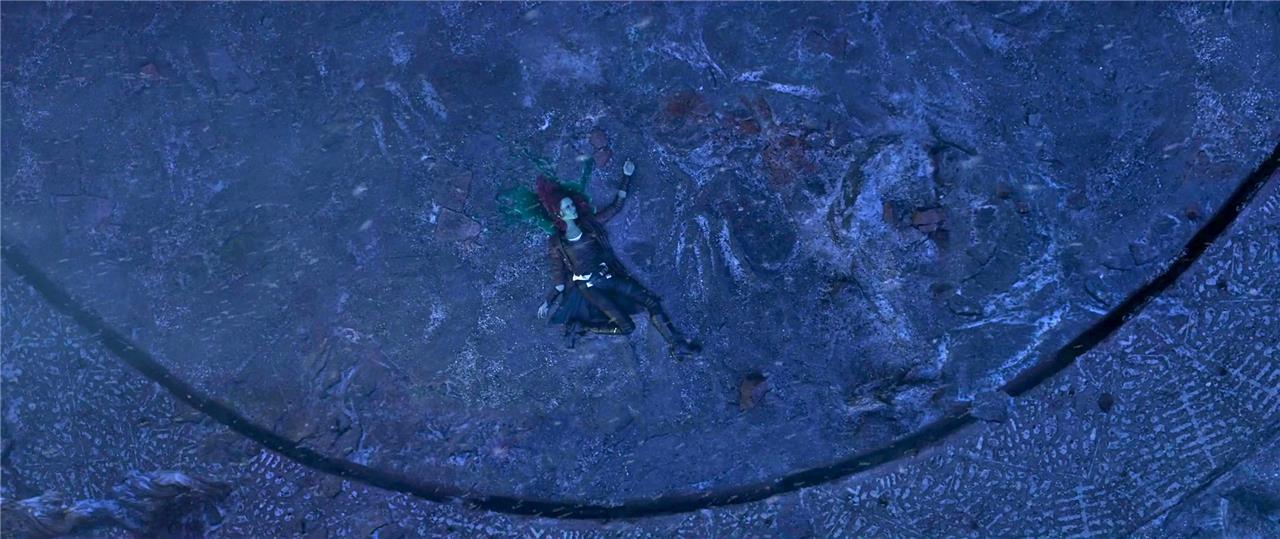
Technically, Gamora is dead. During the events of Avengers: Infinity War, Thanos abducted her and took her to the planet of Vormir, home of the hidden Soul Stone, which demanded the sacrifice of a loved one in order to wield it – and apparently, the possessive affection of an abusive father explicitly willing to kill his own daughter to gain power counts as love.
He threw Gamora to her death, and not even the Infinity Stones can turn back a Soul Stone sacrifice, so she did not return to life with the rest of the people who had been killed by Thanos’ snap.
Why is Gamora (alive again)?
Gamora’s return in Guardians of the Galaxy Vol. 3 is the result of the time-travel events from Avengers: Endgame. The original Gamora was killed by Thanos in Infinity War, but a past version of her from 2014 was brought into the present during the Avengers’ mission to collect the Infinity Stones. This version never shared the same experiences or bonds with the Guardians, which explains her distance from the team and her new path as a Ravager rather than Peter Quill’s teammate and love interest.
The real-world answer is that Zoe Saldaña is under contract to star as Gamora; she’s a main character of the Guardians of the Galaxy subfranchise; and passing up an opportunity for Saldaña to play Gamora is leaving star power, money, and negotiating power on the table.
The in-universe answer involves the nonintuitive way in which Avengers: Endgame built the rules of time travel in the Marvel Cinematic Universe.
How is Gamora (alive in Guardians of the Galaxy Vol. 3)?
Gamora dies in Avengers: Infinity War when Thanos sacrifices her for the Soul Stone on Vormir. A past version of her from 2014 arrives in the present via the Avengers’ time heist, pulled through the Quantum Realm during the battle against 2014 Thanos. This variant joins Nebula and takes her to the Guardians of the Galaxy after capturing her future self’s memories. She fights alongside them in the final holiday special and Vol. 3’s climactic battle against the High Evolutionary, though she lacks the original’s bonds with the team.
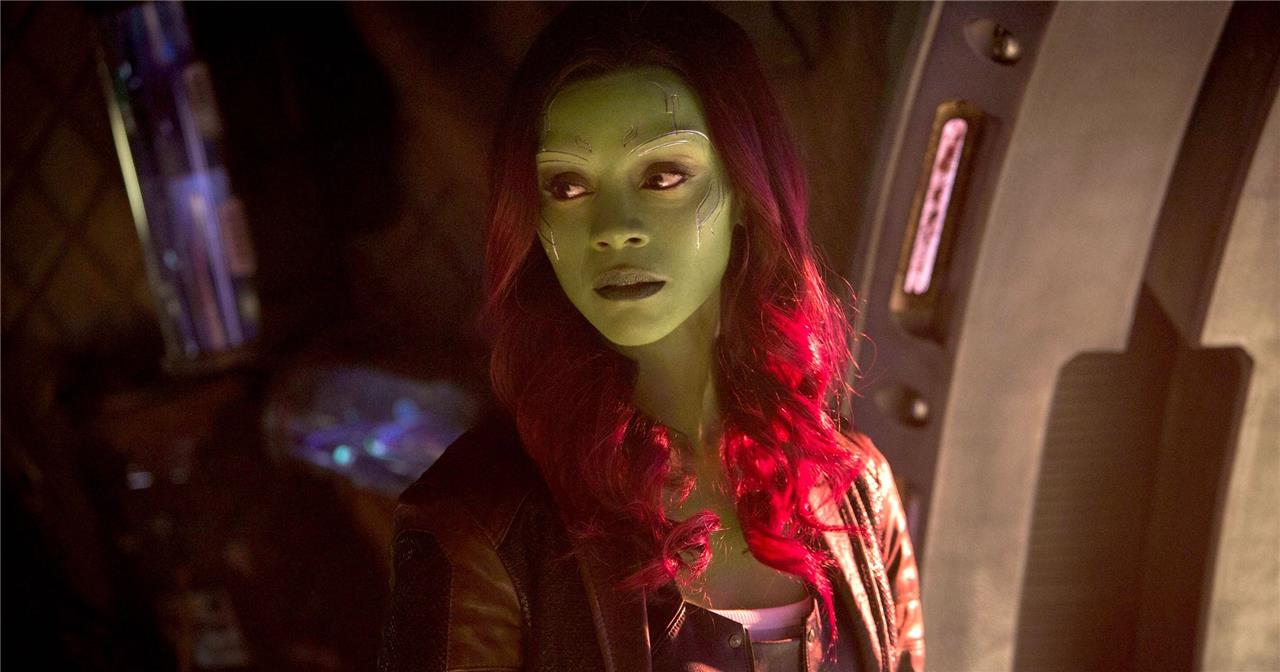
As one of the interlocking parts of the Avengers’ attempt to gather a full set of Infinity Stones from the past, Nebula and War Machine traveled back in time to intercept the Power Stone before the Guardians, Kree, or Thanos obtained it.
Now, logistically, the way all this Gamora stuff works is a lot more like visiting an alternate universe than traveling back on one’s own timeline – as Bruce Banner explains in Endgame, it’s nothing like Back to the Future rules. When the Avengers went back in time to grab the Power Stone and were discovered by a past version of Thanos, the time heist created an alternate universe where, years before it happened, Thanos became aware that there was a timeline in which he gathered all the Infinity Stones and snapped half the universe dead, which caused the Avengers to time-travel to collect the Infinity Stones in an attempt to do their own snap in their own present.
So, after kidnapping the Main Timeline Nebula, Alternate Thanos of the parallel universe stole the Avengers’ time travel technology and followed them back to their own “present” (i.e., to their own universe) to steal the Infinity Stones back. His plan – given evidence that snapping half of all life had inspired so much resistance – was to do an even worse snap, destroying all life in the universe so he could remake it as he saw fit. And he brought his still loyal assassin daughters, Alternate Gamora and Alternate Nebula, with him.
<
During the final battle of the Avengers against Alternate Thanos’ Chitauri armies (which, let’s never forget, took place in upstate New York’s Hudson Valley), Main Timeline Nebula killed her alternate self and convinced Alternate Gamora to fight for the good guys. After all, Alternate Gamora was already quite close to defecting from Alternate Thanos on her own, just like Main Gamora had been at the same time in her life.
And so, at the end of Infinity War, when Iron Man sacrificed himself to snap away all of “Thanos’ forces,” Alternate Gamora remained in the main MCU timeline. The hitch for her friends in the Guardians of the Galaxy was that this Gamora had never met them, never shared their adventures, and never fallen in love with Star-Lord. She declined to join up with the group and went her own way in the galaxy. And as we saw from their introductory appearance in Thor: Love & Thunder, it has kind of left a hole in the group, and certainly a hole in Peter’s heart.
How does Gamora interact with Peter Quill in Guardians Vol 3
In Guardians of the Galaxy Vol. 3, Gamora (the 2014 variant) interacts with Peter Quill in a distant, strained, and often hostile way that underscores her lack of shared history with him, forcing Quill to confront his grief over the original Gamora’s death.
Initial Rejection
Gamora repeatedly rebuffs Quill’s romantic overtures, treating him like a stranger or annoyance. She gets his name wrong (calling him “Quinn”), dismisses his declarations of missing her, and shows no emotional connection from their past adventures together.
Conflict During Missions
Their teamwork on missions, like infiltrating the High Evolutionary’s lab, is tense and argumentative. Quill clings to nostalgia and denial, comparing her to the Gamora he loved, while she snaps back, frustrated by his inability to see her as a separate person with her own loyalties to the Ravagers.
Path to Acceptance
By the film’s end, after Quill works through stages of grief (denial, anger), their dynamic softens to mutual respect without romance. Gamora acknowledges Quill’s good qualities, and they part amicably-she returns to the Ravagers, thriving independently, while he begins healing and moves on.
Why does Gamora call Peter Quill Quinn
Gamora calls Peter Quill “Quinn” in Guardians of the Galaxy Vol. 3 to emphasize that she is the 2014 variant with no personal history or emotional bond with him.
