
From tense tactical showdowns to clever party favorites, the 2022 American Tabletop Award winners reveal how creativity and smart design kept board gaming fresh and fiercely competitive that year.
The American Tabletop Awards, an annual celebration of the very best new board games, returns Tuesday for its fifth consecutive year. The United States’ alternative to Germany’s Spiel des Jahres, the event sorts entries into several novel categories to be judged by an independent panel of industry experts. Together, these 20 titles represent some of the best art and design work around. The winners are extraordinary examples of their type and would make excellent additions to anyone’s collection.
This year’s categories are the same as last years, and include titles best for Early Gamers, an assortment of Casual Games, more traditional Strategy Games, as well as Complex Games for experienced players.
We’ve indicated what the recommended winning and runner-up titles are for each category below. Most are available for sale online – or at your friendly local game store.
Boop
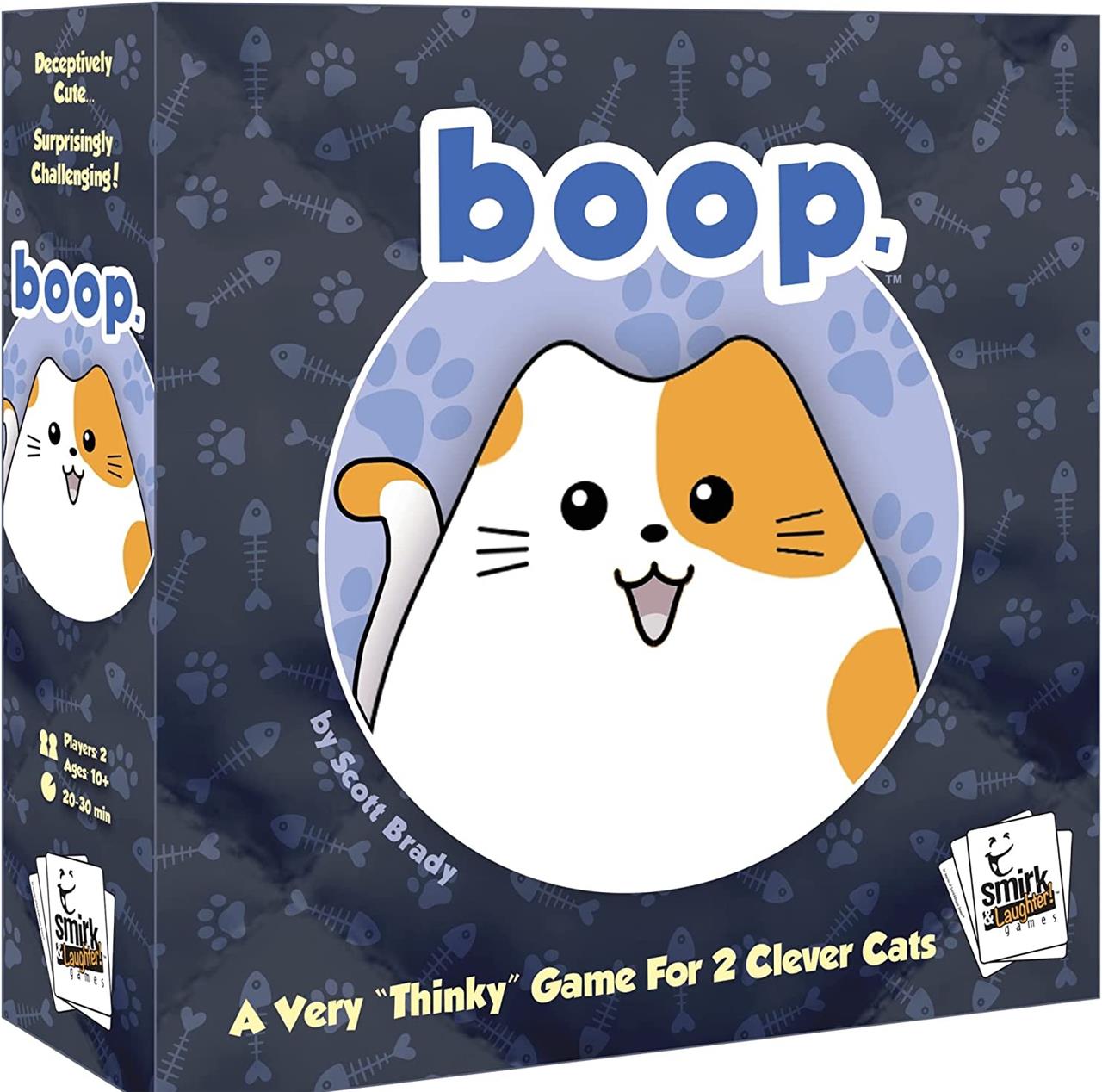
Boop is a charming strategy game where players place and “boop” adorable kitten tokens across a soft quilted board, each move gently pushing others away. The goal is to line up three adult cats, but every turn brings new ripples of motion as the board shifts with each placed piece. Its simple mechanics blend with satisfying depth, making it both approachable for newcomers and engaging for experienced players alike.
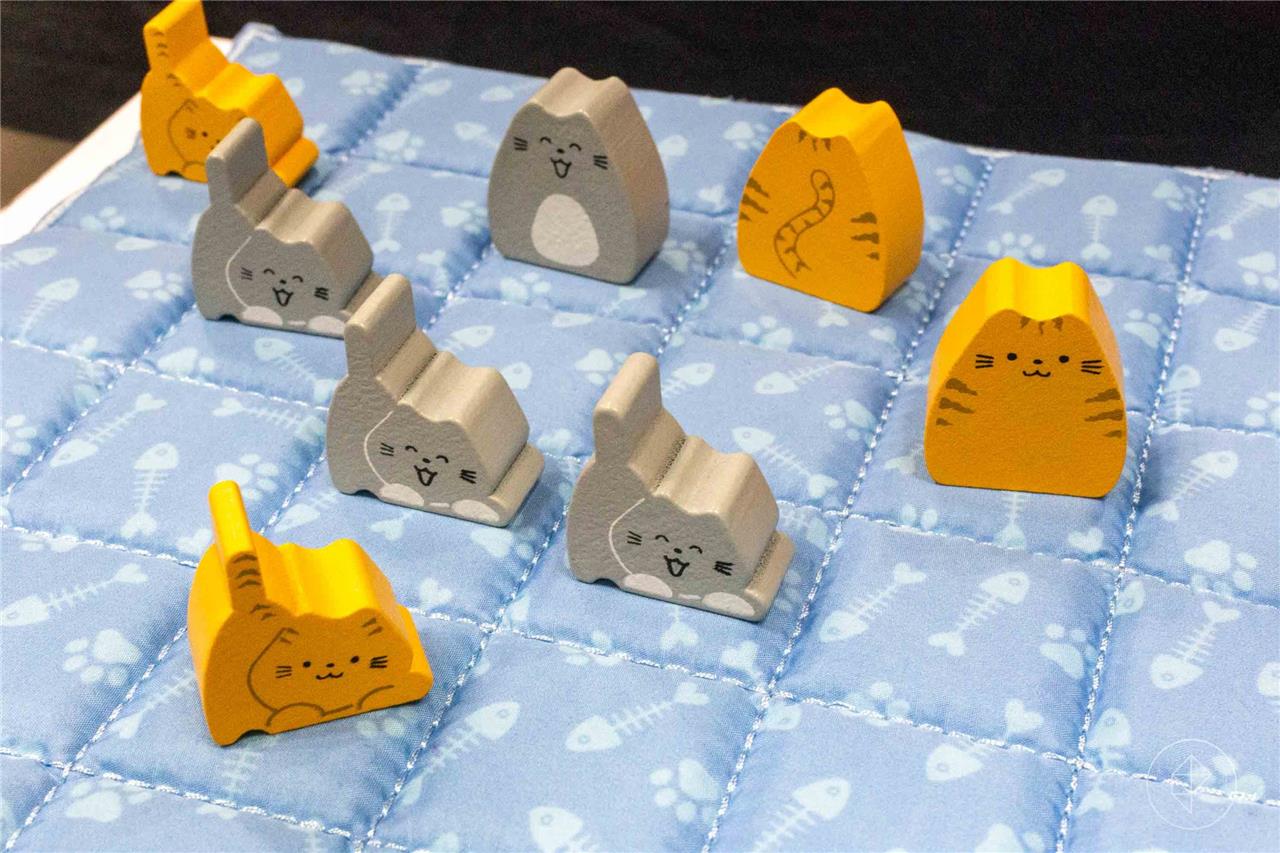
Boop is the grand prize winner in the Early Gamers category, narrowly beating out Kites and Mantis. Designed by Scott Brady with illustrations by Curt Covert, it charmed us mightily even as a prototype at last year’s Gen Con. Published by Smirk and Dagger, the final product is now widely available. The surprisingly strategic little match-three game has you corralling cats and kittens on a tiny, plush bedspread. Most rounds play in just 20-30 minutes, making it the perfect warm-up game for a long night at the table with friends.

Boop
$35 $35
• 2 players, age 10
• Playtime: 20-30 minutes
• Similar games: Shōbu
Read More $35 at Amazon$35 at Smirk & Dagger
Turing Machine
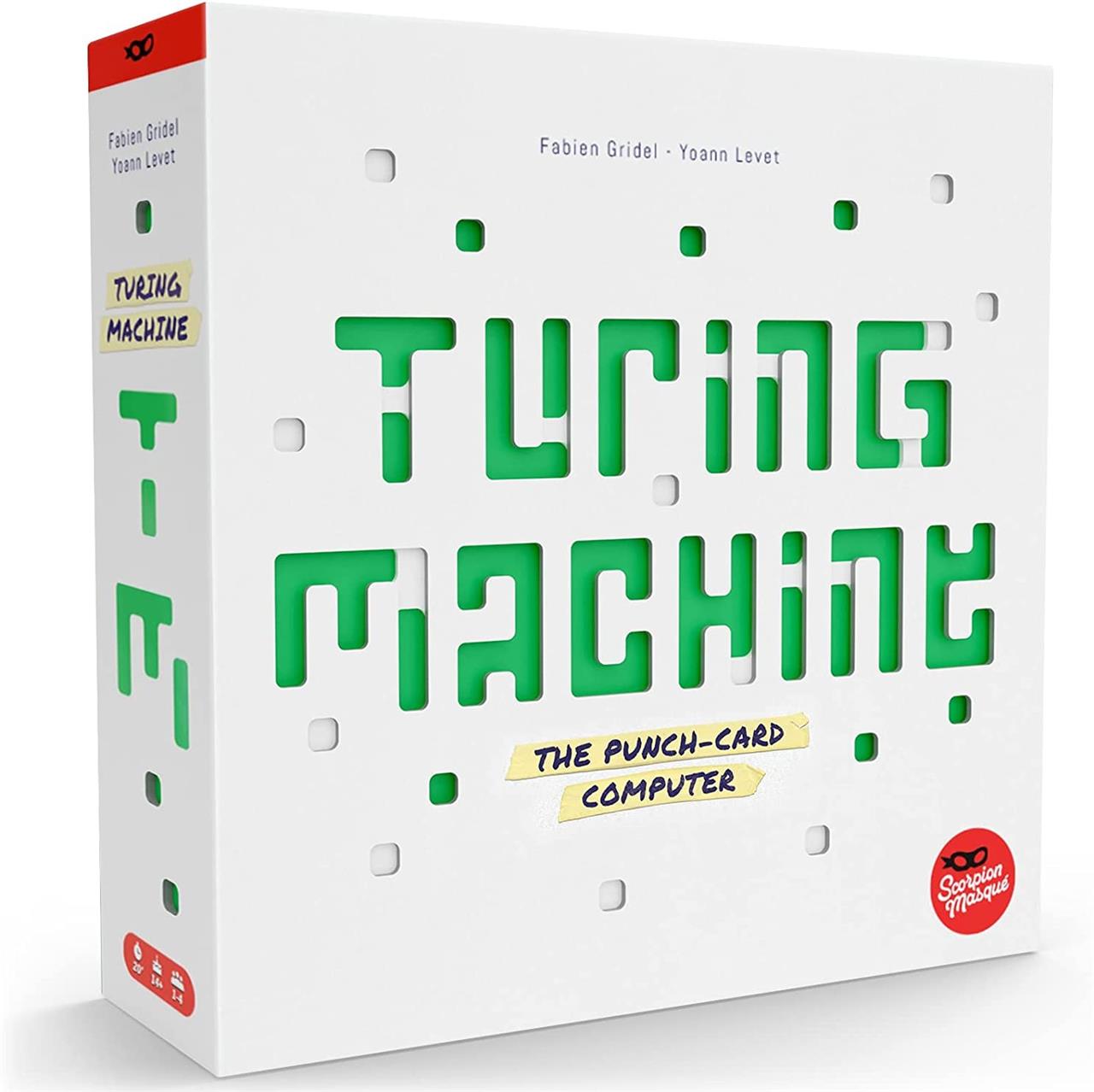
Turing Machine blends logic and deduction into a clever puzzle experience. Players use a stack of punch cards to test theories, each verifying part of a secret code set by the game. No app or electronics are needed-the mechanical verification system handles it all, echoing early computing principles. Its fast rounds and satisfying problem-solving made it one of the standout titles recognized by The American Tabletop Awards in 2022.
Turing Machine (pictured above) wins this year in the Casual Games category, edging out Next Station: London and Cat in the Box. Designed by Fabien Gridel and Yoann Levet, with art by Sébastien Bizos, the game is literally an analog computer made out of cardboard – not unlike the original computational engine invented in 1936 by mathematician turned cryptanalyst Alan Turing.
The computer itself is the focus of a competitive deduction game, where players query a proto-computer for clues. The game boasts more than seven million problems to solve, all facilitated by a handy online app.
Turing Machine
$40 $40
• 1-4 players, age 14
• Playtime: 20 minutes
• Similar games: Decrypto
Read More $40 at Amazon
Planet Unknown
In Planet Unknown, players compete to develop the most advanced planet by placing polyomino-shaped terrain tiles on their boards. Each action expands a unique world with new biomes, resources, and technologies, all managed through a clever rotating “Lazy Susan” mechanism that keeps everyone engaged simultaneously. The game blends strategic planning with satisfying spatial puzzles, offering a fresh twist on tile placement for players who enjoy optimizing every move.
Ryan Lambert and Adam Rehberg’s Planet Unknown is the surprise winner in the Strategy Games category. Featuring a rotating game board with art by Yoma, Planet Unknown is a spacefaring game about the exploitation of habitable worlds outside our solar system. Players take turn developing their own personal exoplanet, dodging stellar phenomenon as they build out their engine to sustain future colonists. Runners-up include the highly regarded Return to Dark Tower and The Guild of Merchant Explorers.
Planet Unknown is currently out of stock, but you can sign up to learn when more copies may be available using a Google form.
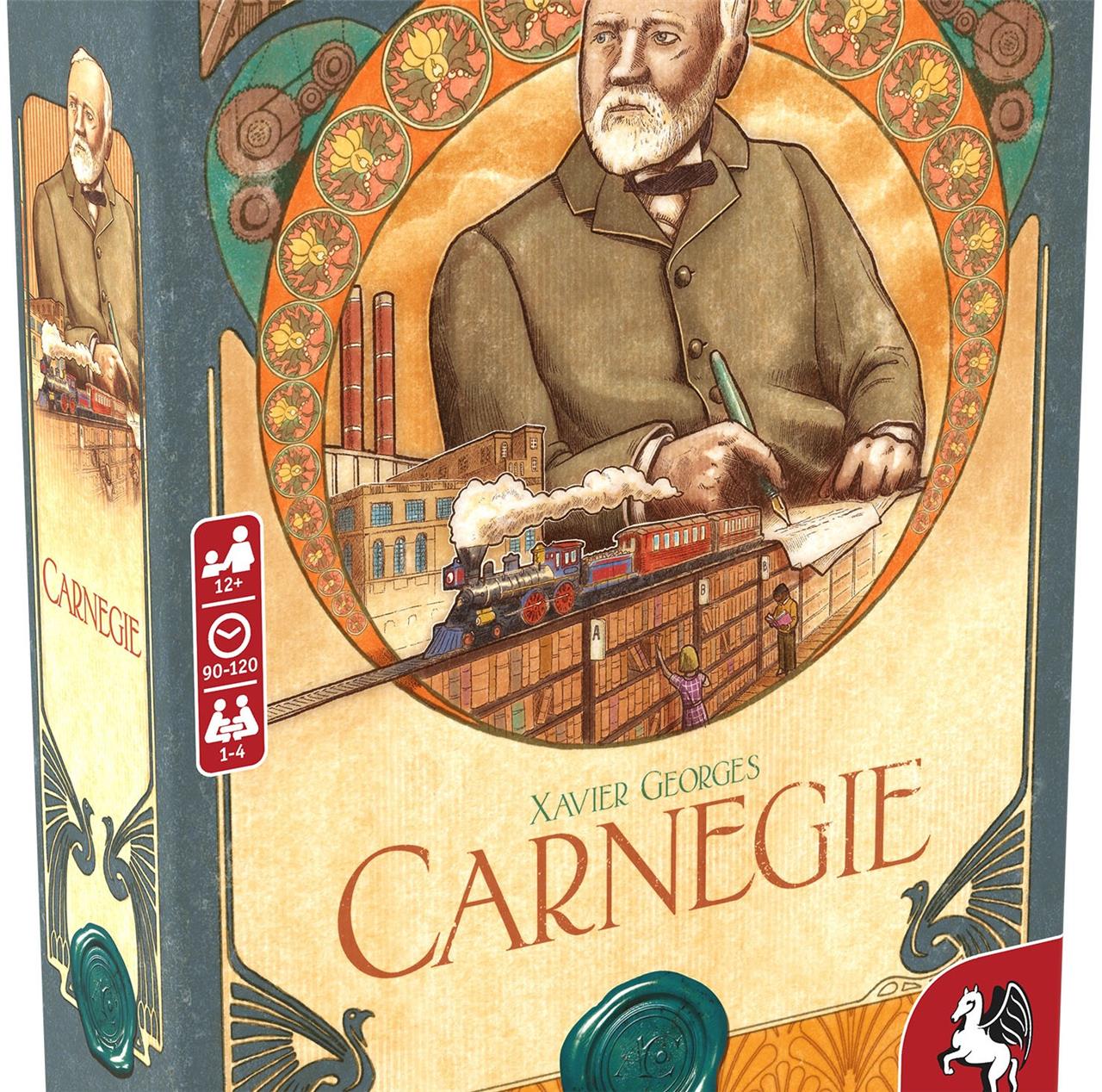
Carnegie
Carnegie invites players to build a thriving industrial empire inspired by the life and legacy of Andrew Carnegie. Each player manages staff, invests in projects across the United States, and contributes to charitable causes, balancing profit with philanthropy. Combining strategic planning and resource management, the game rewards foresight and timing as players expand their influence through careful development and cooperation.
Xavier Georges’ Carnegie, featuring art by Ian O’Toole, takes home the coveted Complex Games grand prize this year. The historical economic simulation asks players to “recruit and manage employees, expand your business, invest in real estate, produce and sell goods, and create transport chains across the United States.” It also sprinkles in some historical figures that the corrupt monopolist-turned-philanthropist Andrew Carnegie would have likely encountered on his way to becoming the richest man in the Gilded Age. Players are also able to spend their wealth to curry favor – just like the notorious robber barons of old.
Runners-up in this hotly contested category include Frosthaven and My Father’s Work.
Carnegie
$54$6010% off $54
• 1-4 players, age 12
• Playtime: 90-120 minutes
• Similar games: Brass: Birmingham
Read More $54 at Amazon
Reviews and gameplay of Cascadia
Cascadia is a light, puzzly tile-laying game with very accessible rules and broadly positive reviews, often praised as relaxing but thinky, with low player interaction.
How Cascadia plays
-
On your turn, you draft one pair from a shared market: a hex habitat tile and an animal token.
-
You add the habitat tile to your personal map, trying to grow contiguous regions (forests, mountains, wetlands, prairies, rivers) for end-game points.
-
You place the animal token on a legal habitat and aim to match patterns shown on that game’s animal scoring cards (e.g., salmon in runs, bears in pairs or groups).
-
Turns are quick, with only four tile-and-animal pairs to choose from, which keeps rules simple but still gives you meaningful choices.
-
There is an official solo mode that uses an “Achievement System” of scenarios and goals instead of just a high-score table, giving solo play a lot of structure and replayability.
What reviews like
-
Many reviewers describe Cascadia as a “zen” or “cosy” puzzle: low conflict, relaxing, and satisfying to build your own landscape.
-
The teach is considered very easy; several reviewers say they can teach it in about five minutes and finish a game in 20-30 minutes.
-
People praise its replayability, mainly from the mix-and-match animal scoring cards and, for solo players, the Achievement System.
-
Components are generally regarded as good quality, with clear iconography and pleasant, if not flashy, nature art.
Common criticisms
-
Interaction is very low: most of what you do affects only your own tableau, apart from occasionally taking a tile or token someone else wanted.
-
Some reviewers find it more “just a puzzle” than a dramatic board game, and a few feel it does not fully live up to its hype despite acknowledging it is solid and smooth.
-
A couple of reviews mention that the game is not the most visually striking compared with flashier productions, and that the box insert and punchboards could be better.
Who Cascadia is best for
-
Players who enjoy calm, low-conflict games with spatial and pattern puzzles.
-
Groups needing an easy-to-teach “gateway plus” game that works well at different player counts and also has a strong solo mode.
-
Less ideal for people who want high interaction, take-that elements, or heavy long-term planning, since turns are tactical and other players rarely affect your plans.
Cascadia solo mode rules and review
Cascadia’s solo mode uses almost the same rules as multiplayer, but with a simple “automated” market refresh and an achievement-style campaign that gives it long-term goals.
Solo mode rules (core flow)
-
Setup is basically a two-player setup: you set aside a fixed number of habitat tiles (20 turns’ worth plus a few extras), create a row of four habitat tiles, and pair each with a random wildlife token.
-
On your turn you draft one tile-token pair, place the tile adjacent to your existing map, then place the token on a legal habitat (or another eligible tile in your map).
-
After your placement, you remove (discard from the game) the tile-token pair farthest from the draw stacks, slide the remaining two pairs along, then refill the two empty spots with new tiles and tokens.
-
Nature tokens work the same as in multiplayer: you can spend one to take any one tile and any one token (instead of a paired set), or to wipe and refill some/all wildlife tokens in the market.
-
Overpopulation still applies: if the display has too many of the same animal, they are cleared and replaced, which also matters in solo since it changes your upcoming options.
-
The game ends after you have placed 20 habitat tiles; you then score habitat corridors (largest group of each terrain, with a small bonus for groups of at least seven) and animals according to the chosen scoring cards, just like multiplayer, with only a small tweak to corridor bonus thresholds in solo.
Cascadia Achievement / challenge system
-
Instead of a pure “beat your own score,” the rulebook includes a solo-friendly achievement and scenario system, specifying which animal goal cards to use and what target score or conditions you must reach to “win” that challenge.
-
These scenarios and achievements can be chained into a kind of mini-campaign, gradually ramping difficulty and nudging you to try different strategies and scoring card combinations.
-
Some reviewers also add the general achievements and rule-restriction ideas from the multiplayer challenge section into solo for extra crunch, even though they were not formally written only for solo play.
How it feels to play solo
-
Several solo reviewers describe it as a calm, “pure puzzle” experience with minimal upkeep: each turn is just draft, place, discard one pair, refill.
-
Because you always know exactly which tile-token pair will be discarded at the end of your turn, you can plan a bit ahead and even “bank” a tile you know is leaving the market, which gives solo a slightly more controlled, tactical feel than multiplayer.
-
The tension comes from limited turns (only 20), competing scoring demands (animal patterns vs. big habitats vs. nature tokens), and the randomness of what tiles/tokens appear, which can force you to pivot plans mid-game.
Solo reviews: pros
-
Many players and reviewers praise solo Cascadia as quick to set up, easy to run, and highly replayable thanks to the mix of animal goals and the achievement system.
-
It is often called relaxing yet thinky; people like that it’s mostly about optimizing your own map without AI bots, complex scripts, or heavy bookkeeping.
-
The achievement/challenge structure is frequently highlighted as better than a simple score table, giving you concrete milestones and a feeling of progression.
Solo reviews: common criticisms
-
Some solo players find it too much like a “beat your own puzzle” with limited drama or tension compared to games with a more aggressive AI opponent.
-
Because you control market refreshes predictably and no one else is competing for tiles, it can feel a bit solvable or low-interaction, which may not appeal if you want strong opposition.
-
A few note that, despite the achievement system, it can become samey if you play many games in a row, since the
