
In 1979, Ridley Scott summoned a creature that redefined cinematic fear-sleek, silent, and unstoppable. Alien didn’t just birth a monster; it forged the blueprint for the perfect sci-fi villain, one that thrives in the dark corners of both space and the human mind.
By the time the Xenomorph officially shows up in Ridley Scott’s 1979 classic Alien, the audience has already watched it evolve from foreboding egg to suffocating face-hugger to a tiny, pale critter that’s ripped its way out of John Hurt’s bloody torso. That last scene, destined to show up on Scariest Horror Movie Moments lists until the end of time, cements many of the big conceptual horror movie fears that made Alien famous – the terror of the unknown, the danger lurking both outside and within us, and the anxiety around intercourse, pregnancy, and forced birth.
With such an accomplished first half, the appearance of the full-grown alien toward the end of the film seems destined to disappoint the audience. Scott builds so much tension around these little nightmares and traumas that it’s a shame to have to boil them down into the purely external threat of a stuntman in a costume.

In space, no one can hear you scream – but that doesn’t stop an evil-doer from trying. This week, AELGAMES celebrates all forms of sci-fi villainy because someone has to (or else).
The reveal of the mysterious monster has doomed an awful lot of horror and science fiction. The cinematic history of both genres is full of clunky creature outfits that chuck any ounce of atmosphere in a film out the door. But the Xenomorph, conceptualized by Scott, artist H.R. Giger, and special effects technician Carlo Rambaldi, is an exception to the rule. Through all the Alien franchise’s sequels and multimedia mutations, the Xenomorph has remained singularly potent. Its design and its grisly introduction have made it eternally malleable and ripe for horror.
Roger Ebert maintained that a chunk of the original power of the Xenomorph lay in the fact that “we never know quite what it looks like or what it can do.” Alien is a far cry from previous sci-fi films, ones that often revealed extraterrestrials that looked humanoid primarily so they could be played by a man in a suit (something Scott took pains to hide by hiring Nigerian performer Bolaji Badejo – a 6-foot-10, unusually thin and long-legged actor – to play the alien). But even after its evolution is complete and the adult creature begins chasing people around the spooky spaceship, the Xenomorph retains its mystique, thanks to its eerie details: the multiple jaws, curved head, horned spine, webbed fingers, bony appendages, and muscular tail.
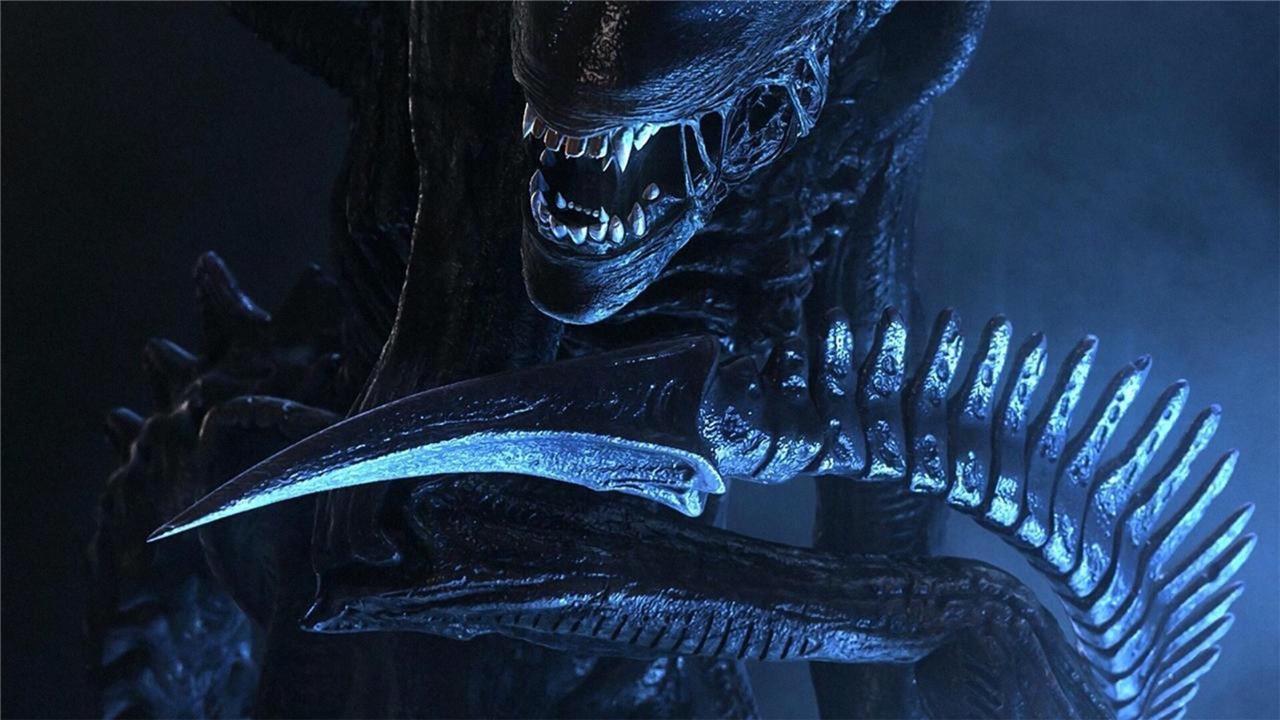
The Xenomorph can’t be reduced to a simple outline, which perhaps makes it the inverse of Michael Myers from the previous year’s Halloween. That was another film praised for providing a haunting lead villain who’s too alien for empathy. But Michael, with his dark coveralls and plain white mask, is the ultimate in bare-bones visual simplicity. The Xenomorph, by contrast, is all about complex detail, seen in glimpses that make it hard to take in all at once. Between its chitinous, insectile surface and its multitude of forms, it’s a biology lesson viewers are left to work through on their own after watching the movie.
Even as the design became iconographic and was repackaged into a series brand, the creature’s basic shape remained macabre and curious. How does something with acid blood, nested jaws, and a head as long as its body live? How does it sleep? How does it eat? Does it do any of that stuff in the first place? Alien offers few answers, and never lets viewers become comfortable with the creature, or able to treat it as a known quantity. By the time Sigourney Weaver manages to send it hurtling through space, we still don’t know much about it, other than the hints of its merciless nature offered by a deceitful android. The Xenomorph hatches, latches on, grows up, and kills.
That straightforward biological rule makes the creature into a perfect opportunity for all manner of extrapolation and reinterpretation. Heralded as one of the greatest sequels of all time, James Cameron’s Aliens multiplies the amount of monsters without losing what made the single one so horrific. Cameron builds to Ripley’s showdown with the Alien Queen, a tremendous monster that doubles down on the dread of child-rearing from the initial film.
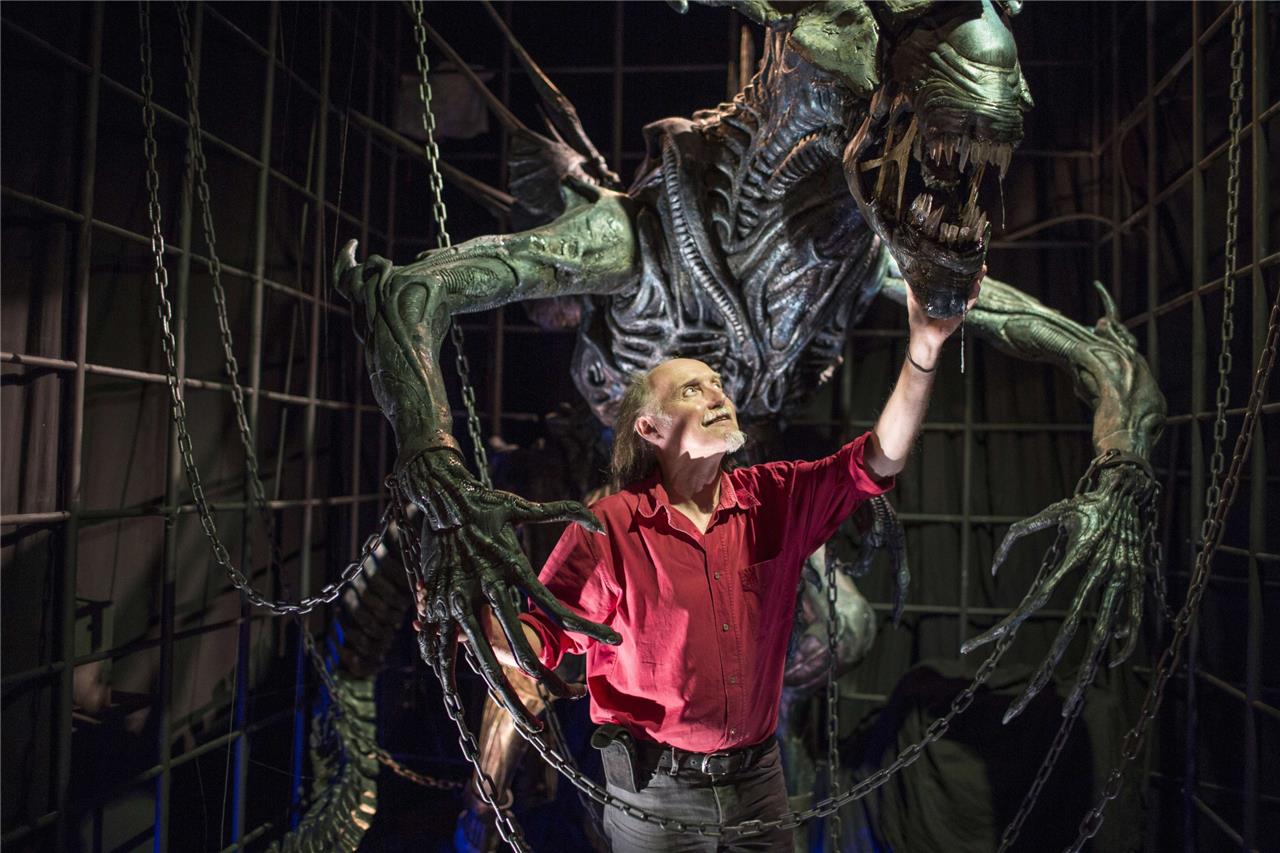
Part of this quality is due to Cameron’s skill at advancing ideas in adventure sequels without stripping them of their efficacy. (Who else could’ve handled the transition from the murderous T-800 in The Terminator to the reprogrammed cyborg do-gooder in Terminator 2: Judgment Day?) But much credit is also owed to the Xenomorph form. Even when blown up to borderline kaiju size and given a royal crest that defines its matriarchal role in the most literal sense, its malice feels personal and unknowable.
The creature continues to reveal new forms through Alien 3, Alien Resurrection, and into the Alien vs. Predator series. They’re all similar applications – in 3, we see what happens when a Xenomorph latches onto a dog and mimics its form. In Resurrection, we see a human/Xenomorph hybrid. In Alien vs. Predator: Requiem, we get the “Predalien,” the clumsily named blend between Xenomorph and Predator. The creative results are mixed, but the template of the Xenomorph, a monster beyond reason, stays strong. Ebert’s idea of not knowing what to expect plays out throughout the franchise. Its inherent enigma and foundation in disquieting evolution lets it grow through whatever new story twists are thrown at it. The way it changes from film to film is part of a natural process – or at least as natural as Hollywood’s constant demand for sequels allows.
When Scott returned to the series with the prequel Prometheus, turning what could’ve been a simple origin story into a pseudo-biblical sci-fi epic, his subtext about evolution and biological creation transitioned to outright text. The pregnant main character is forced to give herself an impromptu abortion to remove a squidlike monster from her body, only to have that monster overtake a proto-human and subsequently sprout into an adolescent being akin to the Xenomorph. This final scene, basking in the now-familiar look of the creature, is the closest thing to a resolution that Prometheus has. It’s an acknowledgement that Scott achieved perfection in his first round, and that the most satisfying conclusion is letting the film get back to Alien basics.
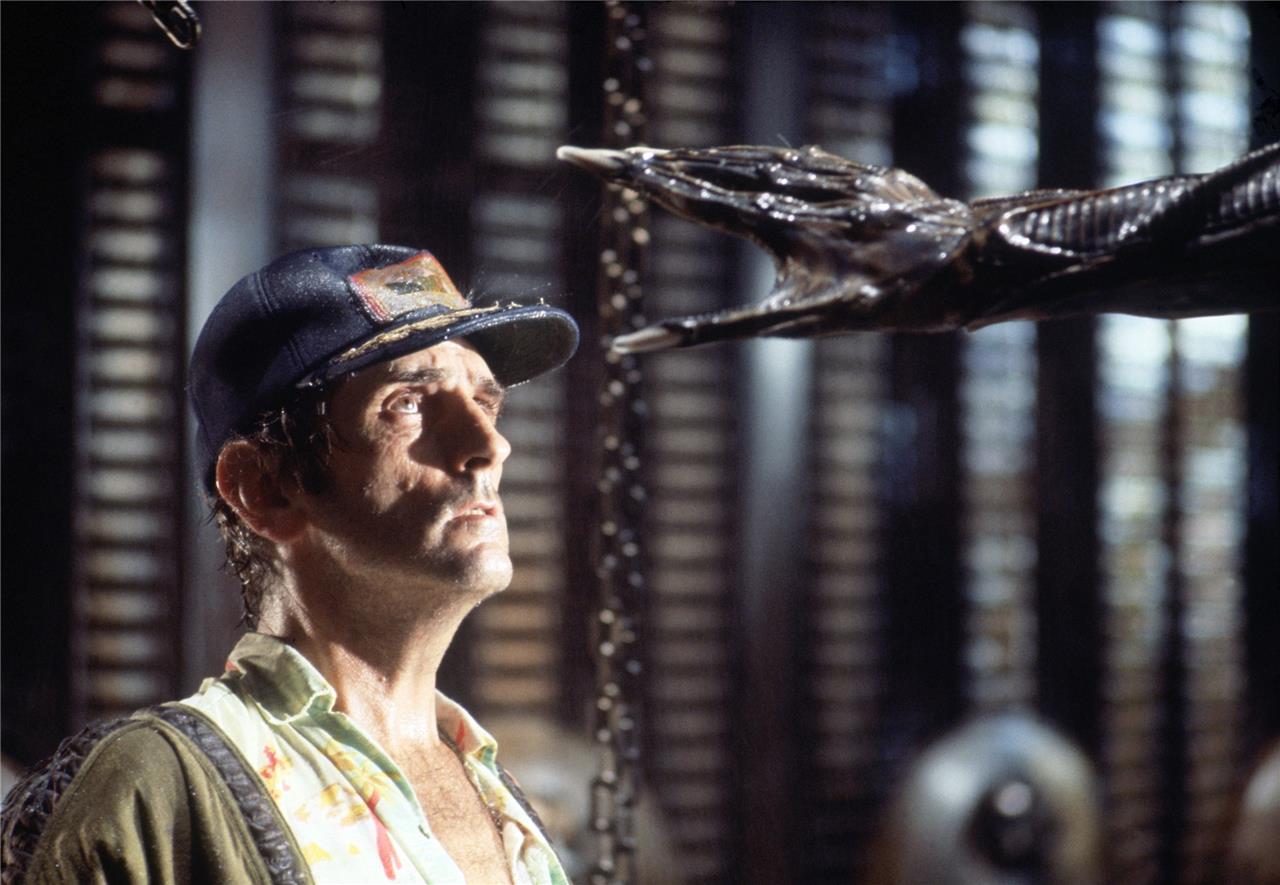
The animalistic beasts in Scott’s follow-up, Alien: Covenant, get even closer to the look of the original creature. By that time, the series had effectively turned the classic Xenomorph into the romantic ideal of a sci-fi monstrosity. Almost 40 years after the original Alien, cinematic and in-universe progress both led back to that seminal Xenomorph. Special effects have changed significantly – the model work, puppetry, and stuntman hidden behind the too-long limbs and Velociraptor-esque articulation of the Xenomorph have been replaced by CGI. The lore of the Alien mythology has also been compounded, thanks to copious films, video games, comic books, and novels.
But the core allure of the creature from 1979’s Alien remains. It’s an unfeeling, ruthless predator, and whatever knowledge it does have is hidden behind a visage that’s totally removed from mankind. Over time, filmmakers have portrayed it as fitting into humanity’s past, present, and future, letting it adapt and conquer across many time periods. It translates equally into action-movie-ready shoot-’em-ups and explorations of birth and death. The first movie dubs it the “perfect organism,” and the franchise never really contradicts that claim. At this point, both Ridley Scott and Don’t Breathe director Fede Alvarez are planning new entries in the series, but that’s no surprise. To quote Yaphet Kotto in Alien, when you have a sci-fi monster like that, “you don’t dare kill it.”
What is the Xenomorph’s full life cycle in Alien
In Ridley Scott’s Alien (1979), the Xenomorph’s life cycle is a parasitic process with four core stages, emphasizing its horror through host dependency and rapid maturation.
Stage 1: Ovomorph (Egg)
Eggs are leathery, oval pods laid by a Queen (or, in the original film’s deleted “eggmorphing” concept, created by adults from hosts). They sense nearby lifeforms via movement or scent, parting petals to release the next stage.
Stage 2: Facehugger
A spider-like creature leaps onto a host’s face, sealing its mouth with a tail grip. It implants an embryo via a throat proboscis while supplying oxygen, then detaches and dies-its acidic blood prevents removal.
Stage 3: Chestburster
Gestation lasts hours to days inside the host, influenced by host health and Xenomorph strain. The larval form erupts violently from the chest, killing the host, then flees to molt in hiding.
Stage 4: Adult Drone
Shedding skin multiple times, it grows into a tall, biomechanical adult with acid blood, inner jaws, and adaptive traits from the host (via DNA Reflex). Further evolution into Warriors or Queens occurs in hives.
How does host species affect Xenomorph adult form
Host species influence Xenomorph morphology through the DNA Reflex, a process where the embryo incorporates host DNA during gestation, adapting the adult form for survival.
Key Mechanism
The chestburster draws host genetic material, blending it with Xenomorph traits to create variations like bipedal forms from humans or quadrupedal speed from dogs (Alien 3). This horizontal gene transfer helps the creature evade immune detection and match environmental needs, such as breathing local air or mimicking host agility.
Specific Examples
| Host Species | Resulting Xenomorph Traits |
|---|---|
| Human (bipedal) | Tall, upright drone with plantigrade legs; standard in Alien. |
| Dog (quadrupedal) | Runner form: low-slung, fast on all fours, horizontal head. |
| Yautja (Predator) | Predalien: mandibles, dreadlocks, heightened strength and intelligence. |
| Goat (Alien: Bloodlines) | Smaller, animalistic build with hooves or horns integrated. |
Limitations and Hive Role
Not all host traits transfer-core features like acid blood and inner jaws persist-but extremes like quadrupedalism dominate movement. In hives, Queens standardize Drones unless host scarcity triggers new castes; this adaptability makes Xenomorphs “perfect organisms.”
