
Your wand isn’t just a tool-it’s a reflection of your magic itself. In Hogwarts Legacy, every choice in wand wood, core, and length shapes how spells feel in your hands and how your wizarding identity comes to life.
You can keep the wand that chose you, or you can customize your wand’s style, wood, flexibility, length, and core. Keep reading to see all of the options you can choose from – including how much your wand selection matters, and if there’s such a thing as the best wand in Hogwarts Legacy.
Wand selection in Hogwarts Legacy explained
Wand selection in Hogwarts Legacy begins with a guided process where players choose from different wand styles, woods, cores, and lengths to match their preferences. Each choice influences the wand’s appearance but does not affect gameplay mechanics or spell performance. The customization system is mainly cosmetic, allowing players to create a wand that feels personal and fits their character’s story. Players can also link their Warner Bros. account to import wand data from the Wizarding World website, bringing their pre-chosen wand into the game.
After arriving at Ollivanders in Hogwarts Legacy, you’ll go through a series of wands only to find yourself incompatible with them. Ollivander will find one last wand that is perfect for you.
If you’ve linked your Harry Potter Fan Club and WB Games accounts, as well as your house choice, you’ll be presented with the wand associated with your Harry Potter Fan Club account. If not, you’ll be given a wand with random characteristics.
From here, you can either purchase the wand that chose you, or change the wand’s characteristics before proceeding.
Can you change the wand in Hogwarts Legacy?
Once your wand is chosen during the introduction sequence, you cannot permanently swap it for another through normal gameplay. However, you can adjust its appearance later using cosmetic options at Hogsmeade or through the in-game menu, changing aspects like the handle style and color. These modifications are purely visual and do not affect the wand’s magical performance or the spells you cast.
Once you have selected and purchased your wand at Ollivanders, you cannot change your wand. You’ll have to create a new character to receive a new wand, so double-check that the one you have is the perfect wand for you.
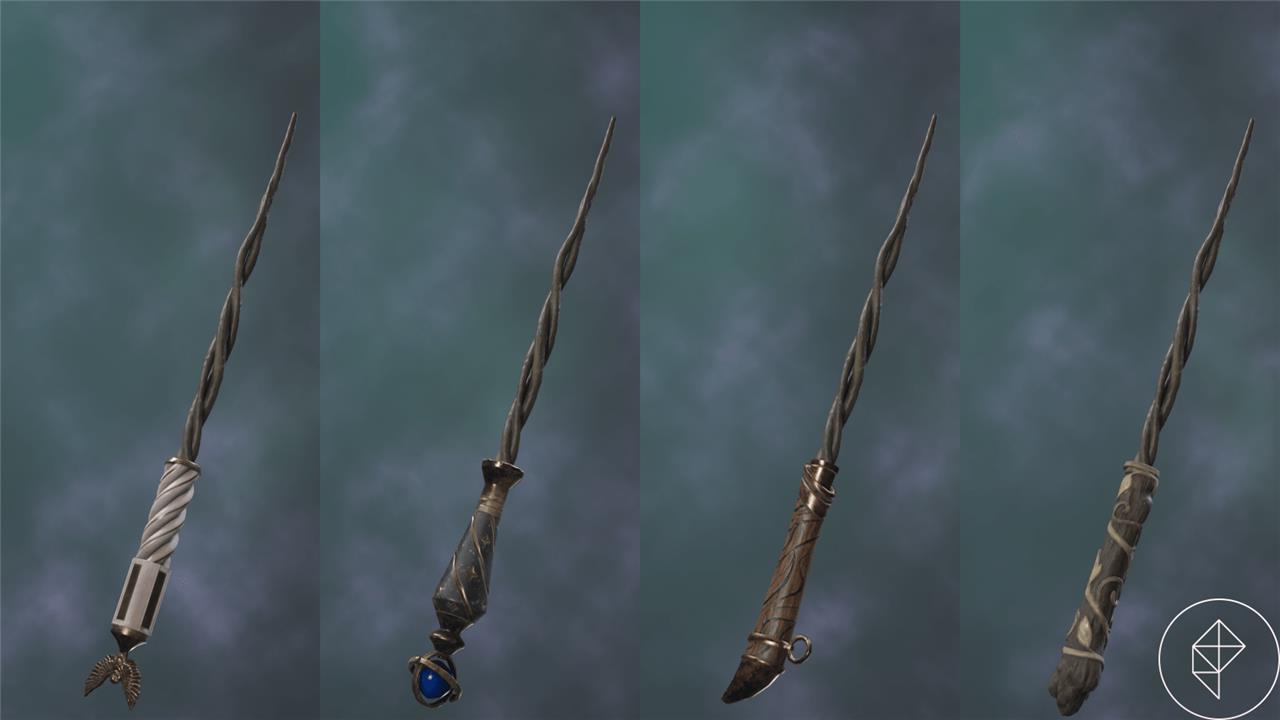
However, you’ll find wand handles as you play Hogwarts Legacy, which can be used to further customize the appearance of your wand.
How much does your wand matter, and is there a best wand in Hogwarts Legacy?
Your wand in Hogwarts Legacy shapes your character’s magical style through its core, wood, and length, each influencing spell performance in subtle ways during combat and exploration. No single best wand exists-choices reflect personal playstyles, like favoring agility with a vine wood wand or power with dragon heartstring cores. Experimenting with combinations lets you tailor power, speed, or versatility, so pick what matches your preferred spells rather than chasing one ideal option.
Your wand doesn’t have any effect on how strong your character can be in Hogwarts Legacy. It’s purely cosmetic, so create a wand that you’re happy with!
Hogwarts Legacy Wand types and differences
Wands in Hogwarts Legacy vary by wood type, core, length, and flexibility, each detail influencing a wand’s appearance rather than its power. Players choose elements like phoenix feather, dragon heartstring, or unicorn hair cores, which affect aesthetic and connection rather than spell strength. The wood type and flexibility reflect a witch or wizard’s personality, providing a sense of identity in combat and exploration. While customization mirrors the lore of the Harry Potter universe, all wands function equally in gameplay, keeping the choice personal rather than performance-based.
Before purchasing your wand, you can change the wand’s style, wood type, length, flexibility, and core.
As mentioned above, these have no impact on the wand’s strength – but there are several lore reasons to choose some styles over others.
Style
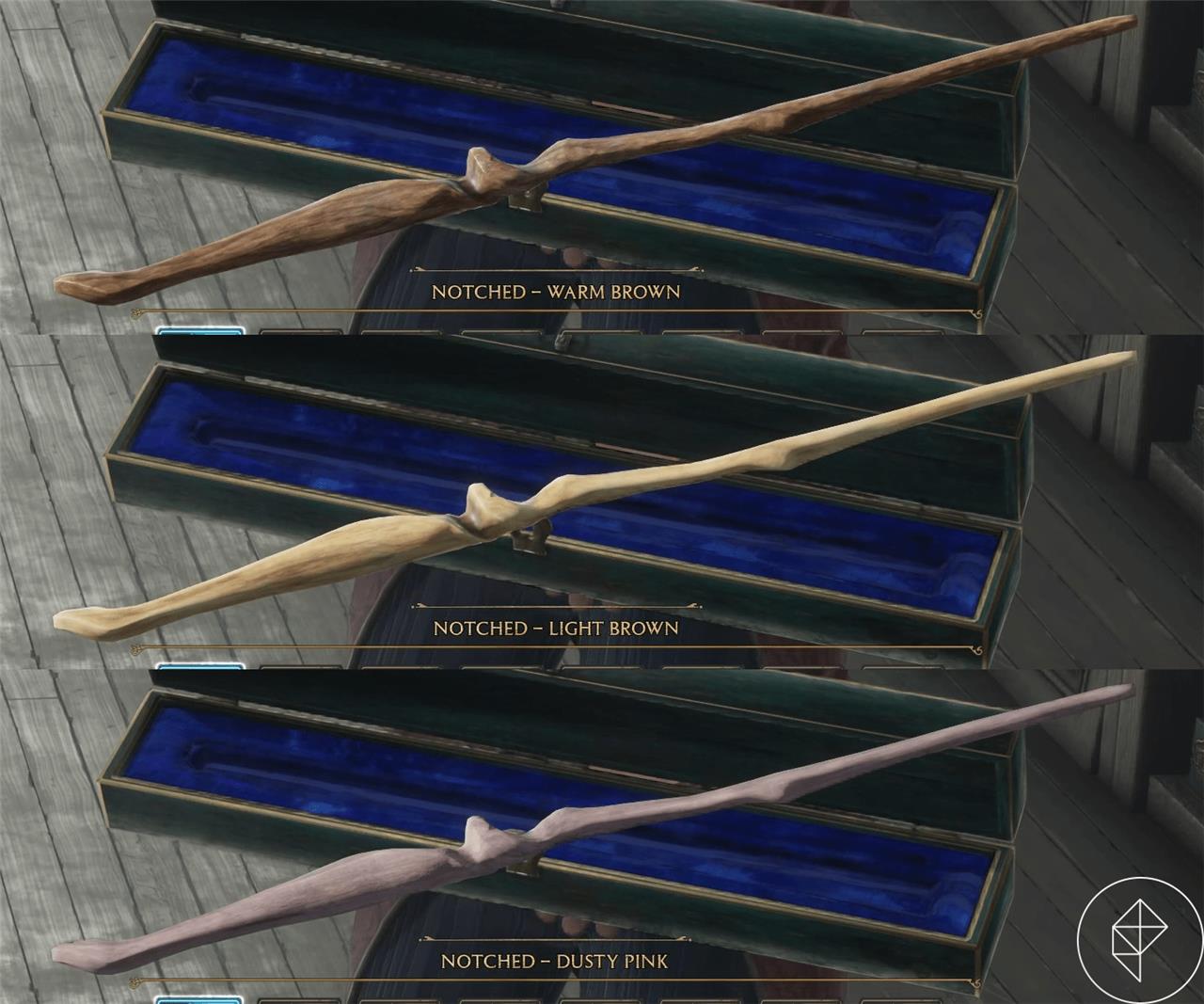
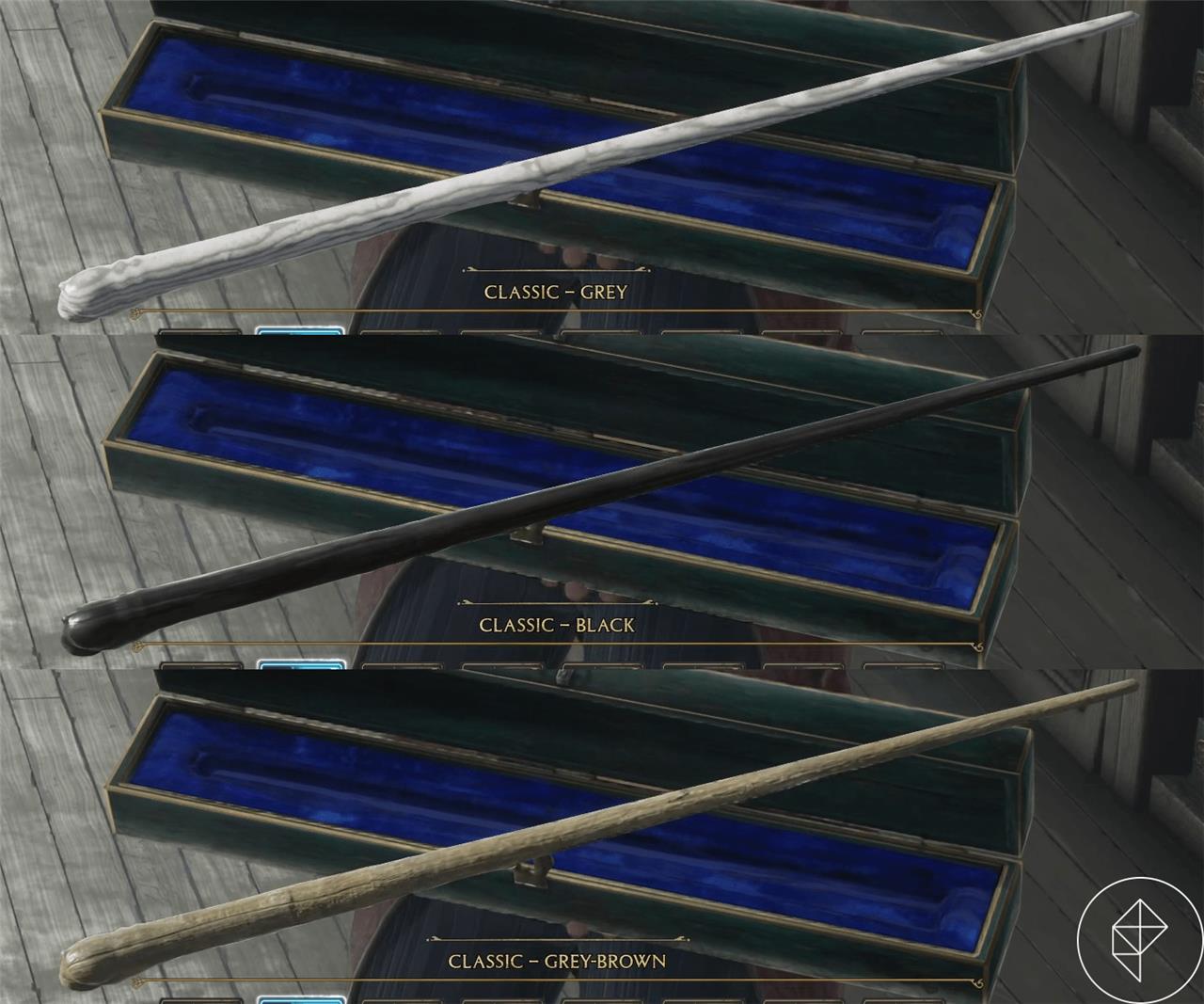
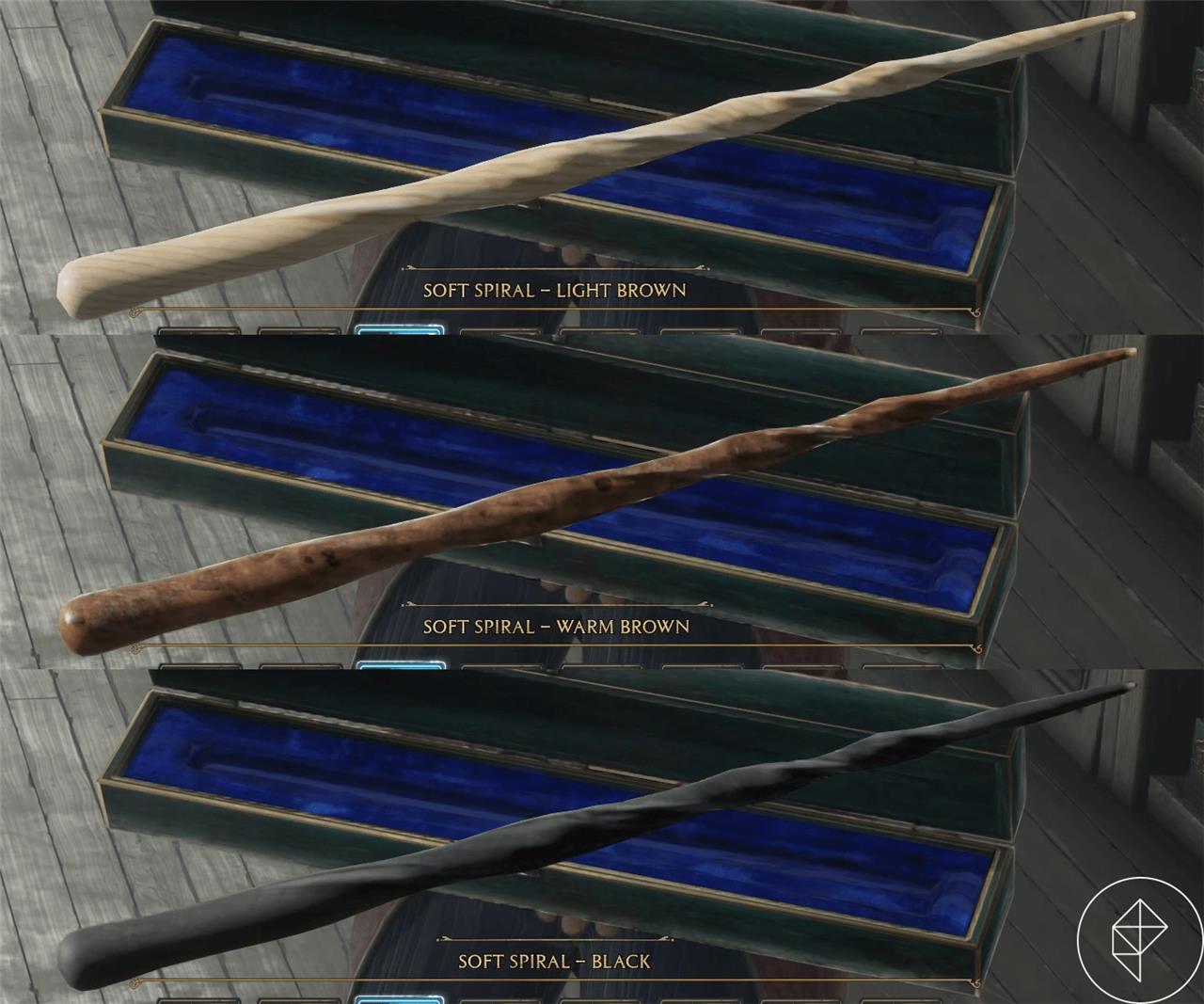
There’s a total of eight wand styles in Hogwarts Legacy, with each style having three different variations – resulting in a total of 24 different wand styles. To see all of the wand variations, look through the gallery below.
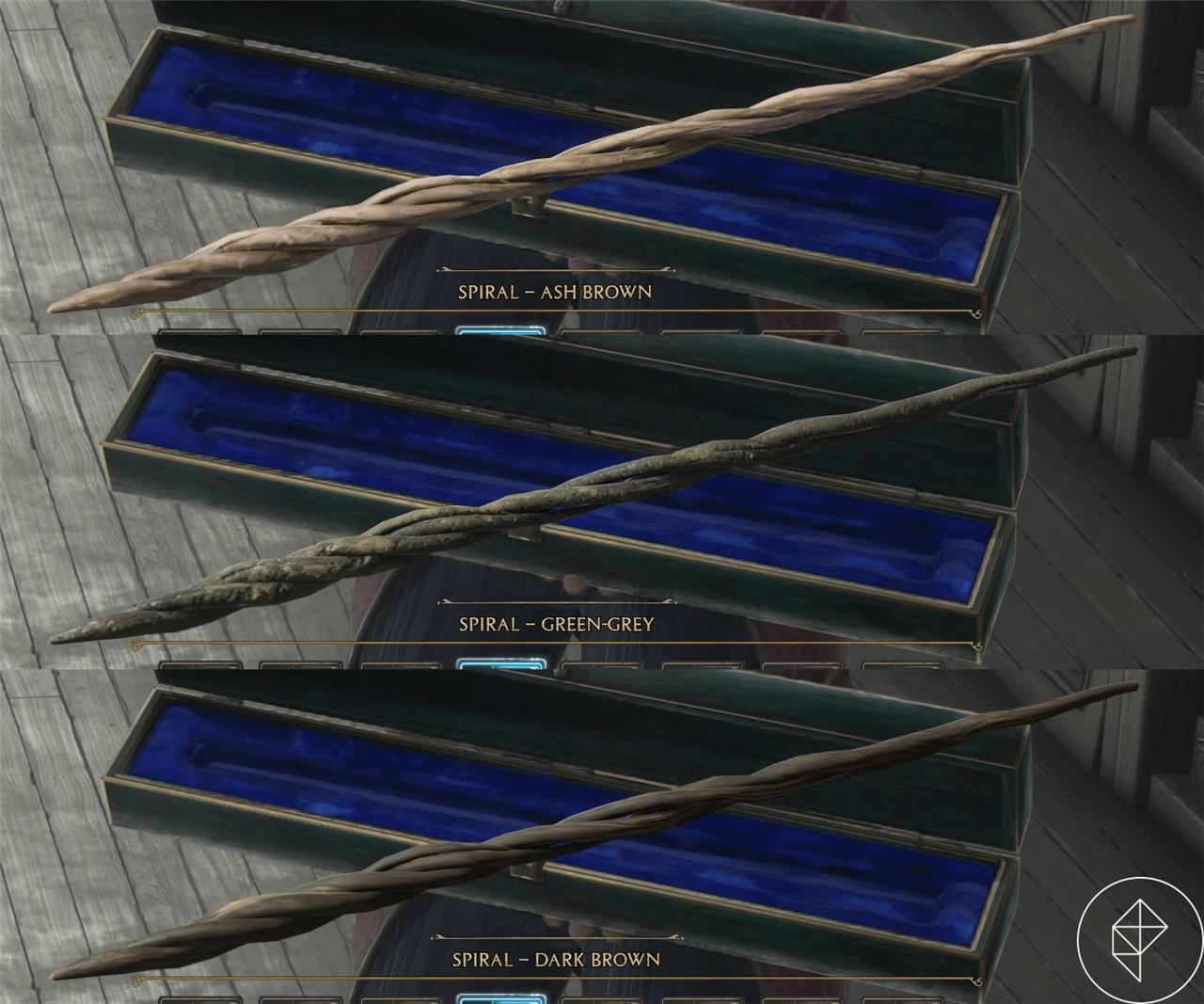
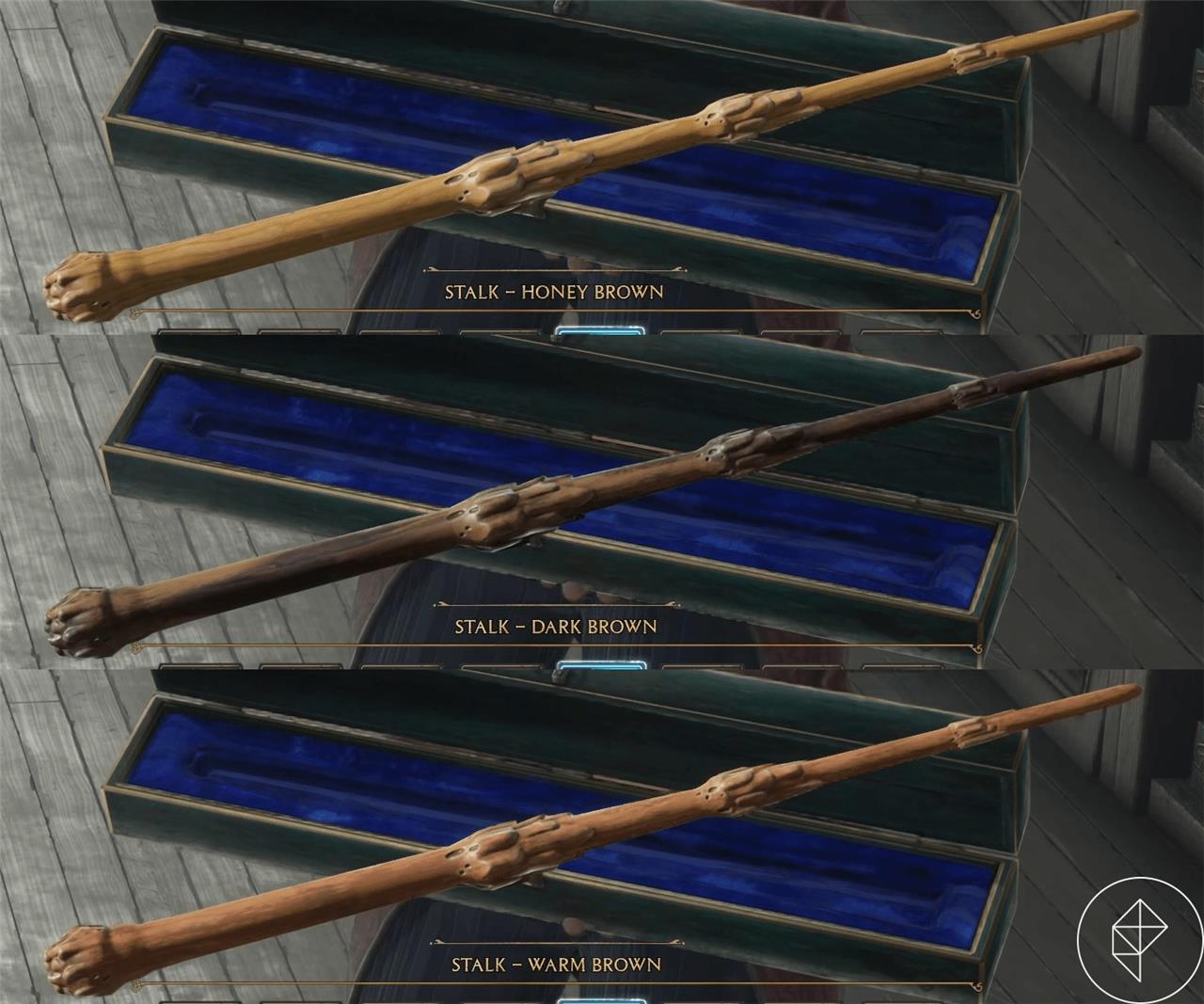
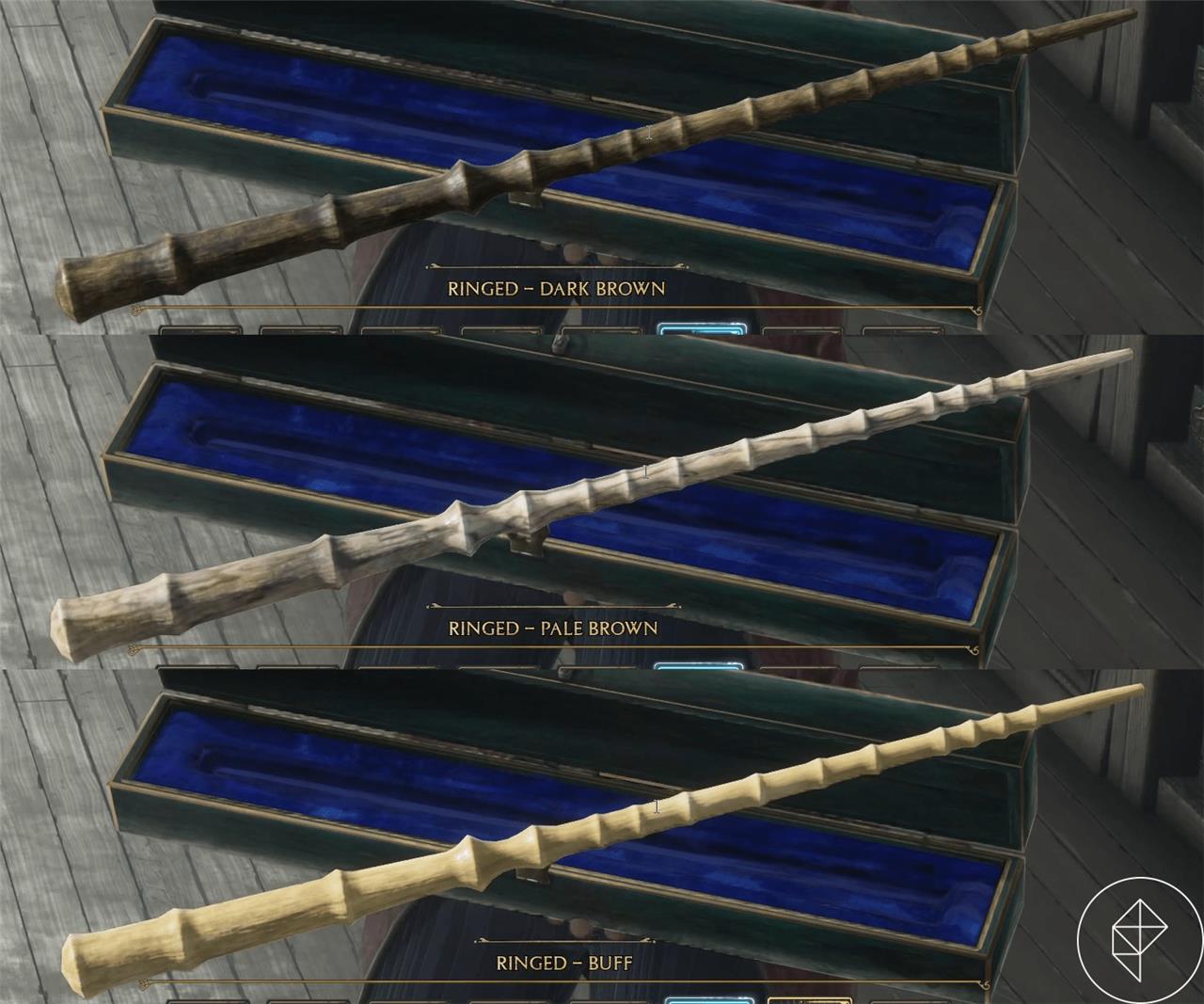
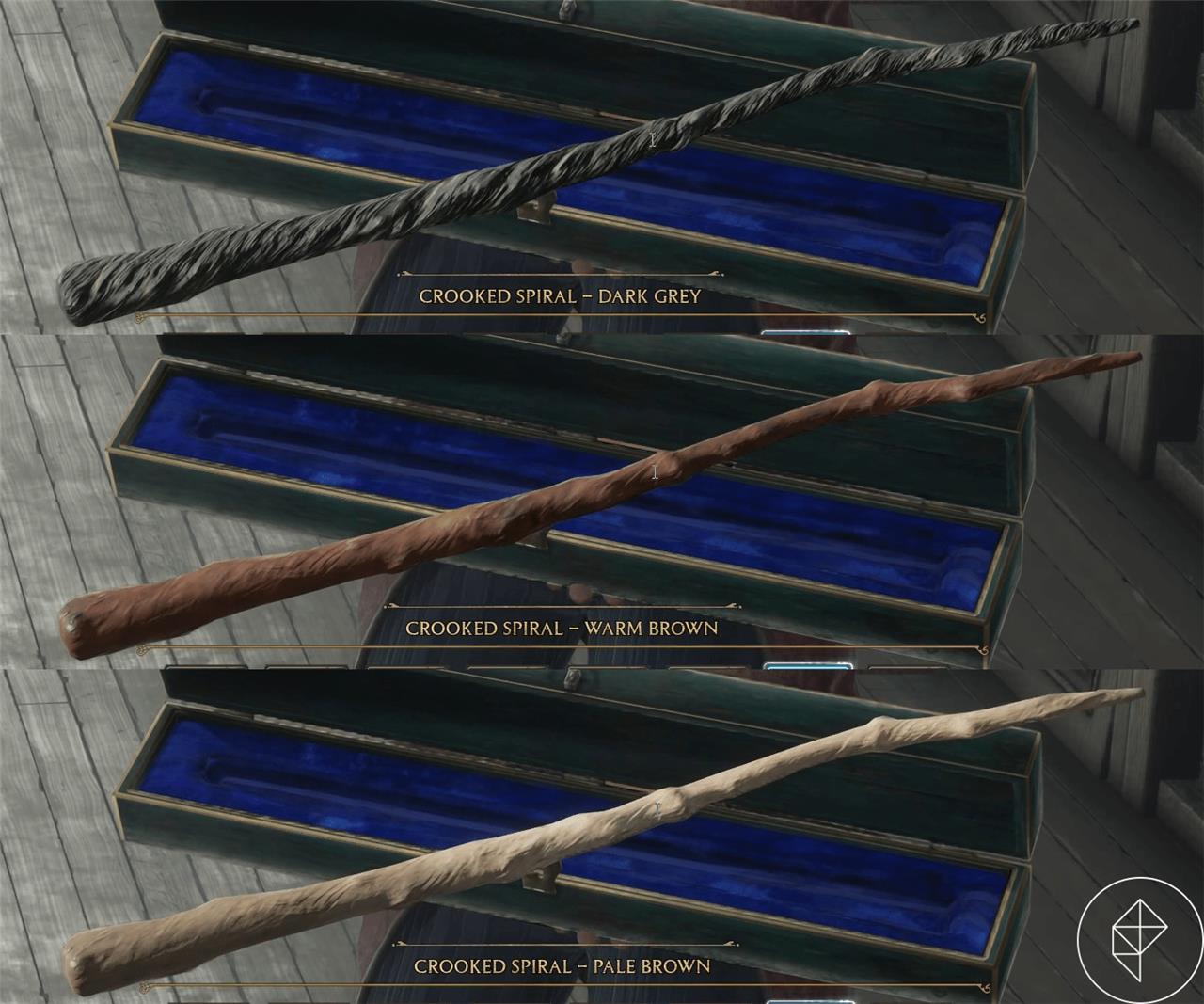
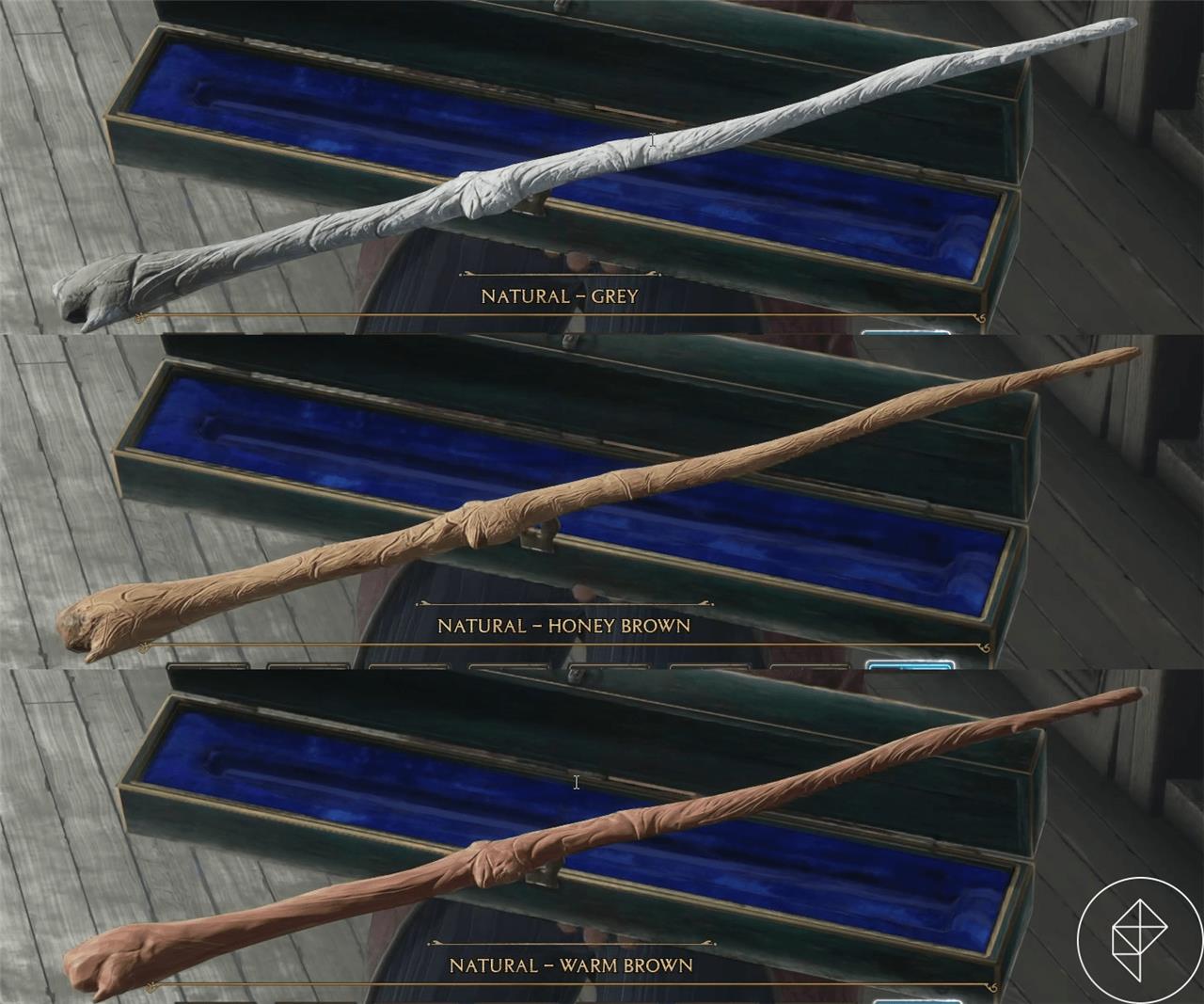
Wood types
There are 38 different wood types you can choose for your wand in Hogwarts Legacy. Check out this Wizarding World article on wand woods if you’d like to know more about the different wood types and what they show about the user.
Here’s a full list of all of the wand woods in Hogwarts Legacy: Acacia, Alder, Apple, Ash, Aspen, Beech, Blackthorn, Black Walnut, Cedar, Cherry, Chestnut, Cypress, Dogwood, Ebony, Elder, Elm, English Oak, Fir, Hawthorn, Hazel, Holly, Hornbeam, Larch, Laurel, Maple, Pear, Pine, Poplar, Red Oak, Redwood, Rowan, Silver Lime, Spruce, Sycamore, Vine, Walnut, Willow, and Yew.
Wand length
Your wand can be anywhere from 9 1⁄2 inches to 14 1⁄2 inches long, with increments every quarter inch. To know more about what the length of your wand says about you, check out the Wizarding World article on wand length.
Flexibility
There are 19 different flexibility options to choose from in Hogwarts Legacy. Your wand can be anywhere from quite bendy to unyielding. To learn more about your wand’s flexibility, check out the Wizarding World article on wand flexibility.
Core
Ollivanders wand shop uses three different cores – dragon heartstring, unicorn hair, and phoenix feather. From a lore standpoint, your wand core can affect the strength and range of your magic. See which core best suits your needs in this Wizarding World article on wand cores.
On numerous occasions in recent years, billionaire and Harry Potter creator J.K. Rowling has taken public stances against inclusive transgender laws and trans rights, and has written fiction that has been condemned by LGBTQ organizations for its use of harmful anti-trans tropes. Hate crimes, as well as legislation that denies the rights of trans people, have become more prevalent in the U.K. since 2019, and, more recently, in the United States as well.
According to an FAQ from Hogwarts Legacy publisher Warner Bros. Interactive – the parent company of Avalanche Software, the game’s developer – Rowling is “not directly involved” with the creation of Hogwarts Legacy. Regardless, the sales and widespread attention generated by a AAA video game will benefit Rowling, and that has led some fans to decide not to buy the game. For a more in-depth explainer of the yearslong controversy leading up to Hogwarts Legacy‘s release, read AELGAMES’s breakdown.
best wand wood type for each playstyle
Wand choices in Hogwarts Legacy are purely cosmetic with no gameplay impact, but lore from the Wizarding World ties wood types to personality traits and playstyles.
Combat Playstyle
Aspen suits duelists for its martial magic strength. Blackthorn excels for warriors, including Aurors.
Defensive Playstyle
Rowan offers top protection and strong defensive charms. Holly aids those overcoming anger in risky quests.
Subtle/Advanced Playstyle
Acacia delivers power for subtle, gifted casters. Beech enables artistry in advanced spells. Elm produces elegant, error-free magic.
Versatile Playstyle
Spruce thrives with bold casters for dramatic effects. Chestnut fits beast tamers or natural fliers. Red Oak matches quick-reaction duelists.
Character-Inspired Builds
Harry (Holly) for protective seekers; Hermione (Vine) for clever precision; Voldemort (Yew) for dark power.
best wand cores for each playstyle
Wand cores in Hogwarts Legacy are cosmetic only, with no mechanical impact on gameplay like spell power or cooldowns, but lore from the Wizarding World suggests matches to playstyles based on their traits.
Aggressive/Combat Playstyle
Dragon Heartstring delivers powerful magic, ideal for bold, high-damage duelists; it’s easiest to turn to Dark Arts but adapts quickly.
Defensive/Reliable Playstyle
Unicorn Hair produces consistent, dependable magic with few mishaps, suiting cautious protectors; it’s the most loyal and resists Dark Arts.
Versatile/Exploration Playstyle
Phoenix Feather offers a wide range of magic, fitting adaptable casters who mix spells; it’s the rarest and hardest to tame.
Lore Examples
Harry’s Phoenix Feather aided his versatile heroism; Voldemort’s suited his cunning range; pure-blood traditionalists often pick Unicorn for stability.
