
Magic is wild, parkour is your lifeline, and Athia won’t forgive a slow learner. Before you leap across rooftops and face corrupted beasts, here are nine things that could mean the difference between survival and a swift defeat.
But in spite of its weirdness, Forspoken has undeniable charm – one of those oddball action RPGs that seems destined for cult classic status in five years. If you’re hopping on the train early (Forspoken is currently out for PlayStation 5 and PC), here are nine things you should know before starting.
Cuff will automatically block enemy attacks
Cuff automatically parries light enemy attacks, saving Frey from taking unnecessary damage. This feature triggers without player input when blocking weaker strikes, allowing you to focus on countering stronger moves or casting spells. However, Cuff can’t deflect every hit-heavy or magical attacks still require manual dodging, making awareness and timing key to survival.
Bucking decades of game design trends takes a while to get used to, and Cuff’s defensive prowess isn’t impenetrable: You’ll occasionally still lose some health. That said, when you’re out of stamina (indicated by the diamond-shaped nodes above your health bar), Cuff. That’s when you should run and hide for a few seconds.
Yes, there’s fall damage – kind of
Fall damage in Forspoken isn’t as punishing as in most action RPGs, but it’s not entirely absent either. Frey can survive surprisingly long drops thanks to her magical parkour abilities, reducing what would normally be fatal falls to mere scrapes. However, dropping from extreme heights or landing without proper use of her powers can still chip away at her health. Timing your jumps and using traversal spells like Flow or Float can make the difference between a seamless landing and a painful stumble.
Similarly, Cuff can protect you from certain falls. If you have a full stamina bar, falling from a great height will deplete your stamina with no impact to your health. If you’re out of stamina, though, you’ll take damage when you hit the ground. In other words, be careful when you’re fighting on a bridge!
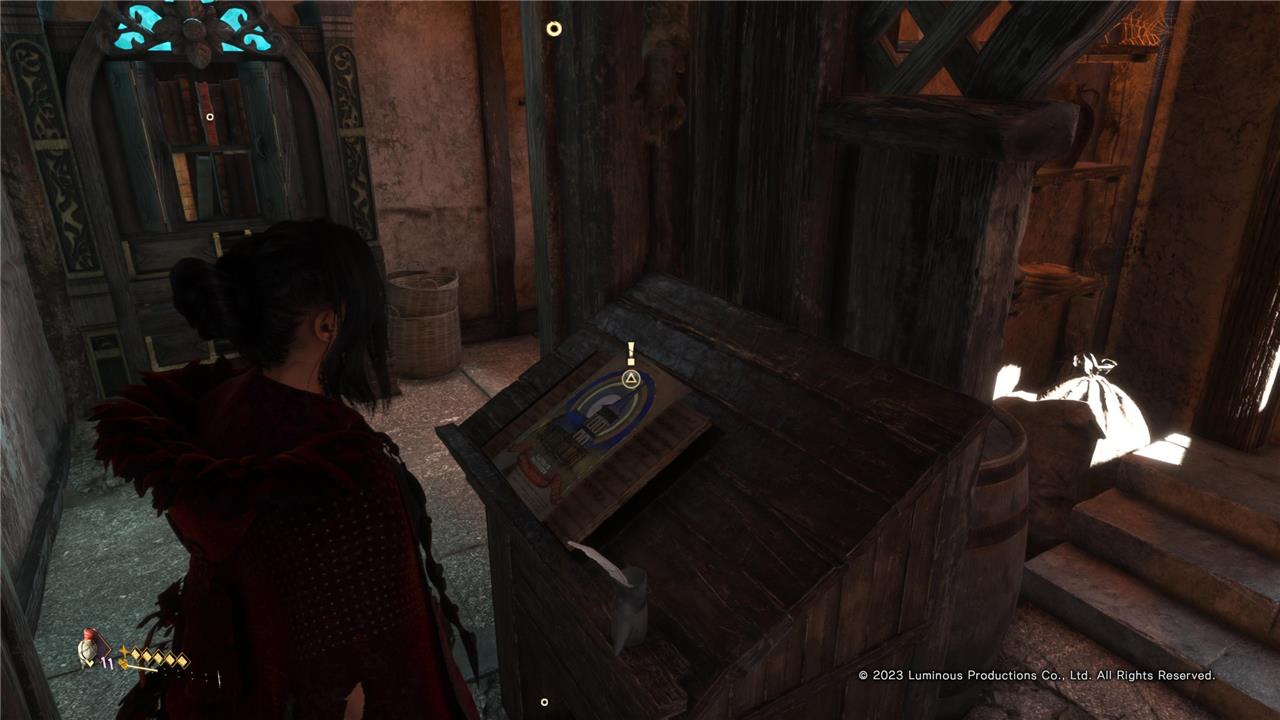
Visit every single pilgrim’s refuge
Pilgrim’s Refuges serve as safe points scattered across Athia where Frey can rest, craft gear, and upgrade her magic. Visiting all of them makes exploration easier, since each refuge offers fast travel access and unique lore entries. They’re also ideal for experimenting with new spell combinations or preparing for tougher bosses. Taking the time to find every refuge ensures smoother progression and a stronger connection to the world’s history.
Pilgrim’s refuges are Forspoken‘s way stations, small chapels that serve as places you can fast travel to and heal yourself at. There, you can also craft items and upgrade existing gear. And if you interact with the pulpit (located in the threshold of each refuge), you’ll reveal undiscovered locations in other parts of the map. But most crucially, about a quarter of the way through the game, you’ll be able to access the spellcraft library, which allows you to select challenges that can improve your abilities.
Make sure you always have three active spellcraft challenges
Keeping three spellcraft challenges active ensures that you’re always earning experience and upgrading your magic while exploring Athia. These tasks run quietly in the background, rewarding you for natural gameplay actions like defeating enemies or performing certain movement tricks. Rotate new challenges in as you complete them to keep your abilities progressing smoothly and build a stronger, more versatile spell set early on.
Spellcraft challenges are relatively straightforward, requiring you to complete a set number of actions (i.e., “kill three flying enemies”) with a specific spell. Every time you complete a challenge, you’ll gain a permanent increase to your magic stat, plus increase the power of the associated spell. You can juggle three at any given time, and since it only takes 1.68 seconds to fast travel to a refuge, so there’s no reason to not have three going at all times.
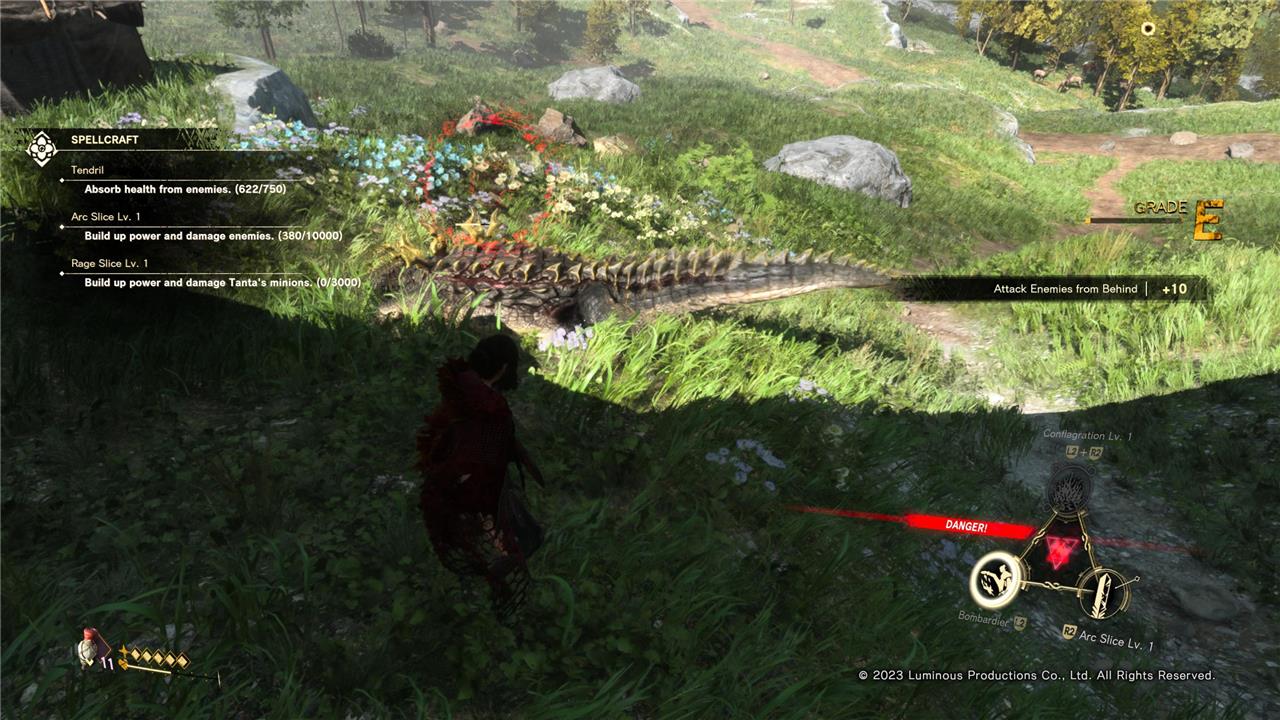
Disable the spellcraft menu (and other settings)
If you want a cleaner interface while exploring Athia, consider turning off the spellcraft menu notifications and adjusting other display options. These settings can clutter the screen, especially during combat or parkour. Disabling unnecessary prompts keeps your view focused on the action and lets you manage abilities at your own pace through the main menu instead.
While you’re at it, go to the accessibility settings and turn off the spellcraft challenge display. When you have active spellcraft challenges, every time you make progress toward one, Forspoken will show you a pop-up detailing your progress toward all three challenges. There’s no tangible benefit to this visual clutter: Once you complete a spellcraft challenge, you’ll get a notification anyway, and you can always check your progress toward any current challenges in the magic menu.
Beyond that, Forspoken features an impressive array of settings, allowing you to adjust everything from the visual mode to the challenge factor to even the frequency of Cuff’s grating dialogue. Here’s a list of all the settings we’d recommend you tweak from the start.
Unlock support magic first
Support magic can transform Frey from a decent fighter into a powerful survivor. These spells handle crowd control, healing, and mobility, letting you turn battles in your favor. Experiment with different combinations early to learn which ones complement your playstyle best. Whether you rely on slowing enemies, boosting defense, or setting traps, this magic category quickly becomes the backbone of smart combat strategy.
As you play, you’ll earn mana, essentially Forspoken‘s take on skill points. It’s tempting to spend mana upgrading your existing base combat spells, but you’re better off unlocking new support spells (on the left side of the skill tree). All of the support spells – from the health-stealing tendril to the disperse mini-turret – are enormously helpful for early-game battles. The sooner you unlock them, the easier life will be.
Also, support magic is limited by cooldowns. Unlocking all eight spells means you’ll pretty much always at least one ready to go at any given time.
Some tricks for the map…
Keep an eye on the map-it’s more useful than it first appears. You can place multiple markers to track points of interest or resources, and using fast travel wisely saves a lot of time. Zooming in reveals hidden paths or chests, while toggling filters helps you focus on what matters most, whether that’s side activities or collectibles. Spending a few minutes planning your route before setting out can make exploration smoother and more rewarding.
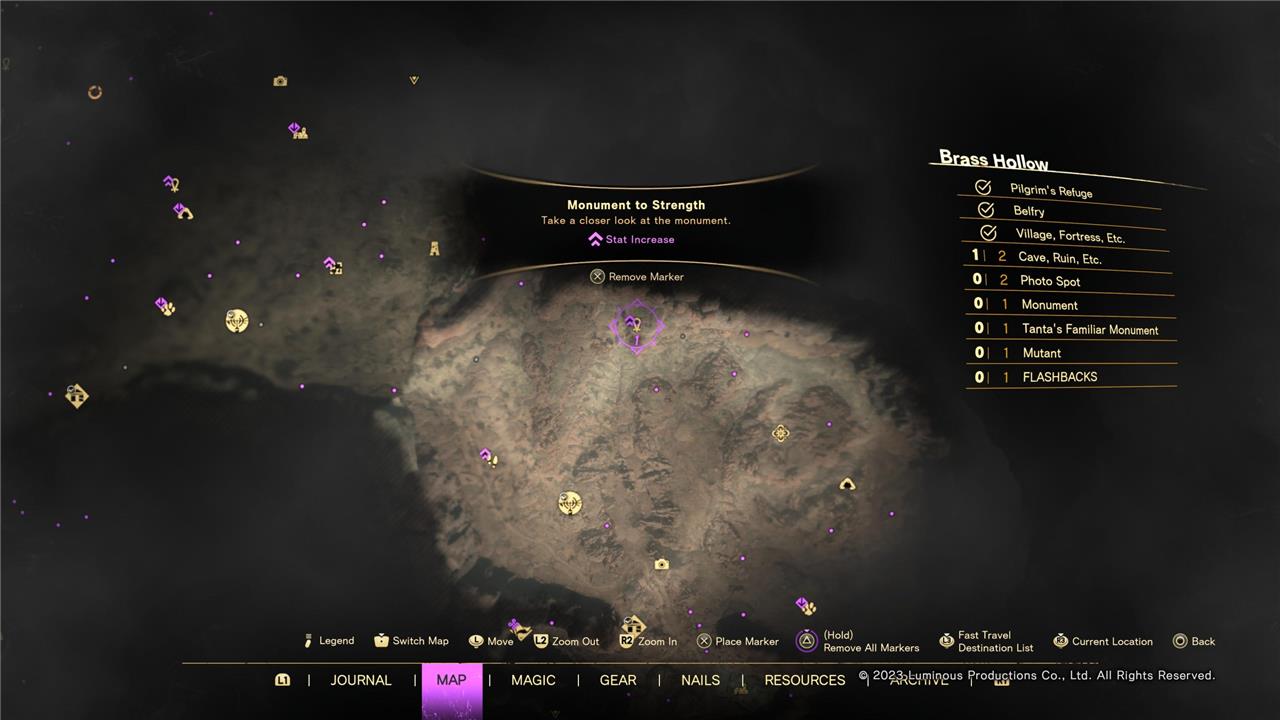
By clicking in the left thumbstick, you can pull up a list of any fast travel locations you’ve unlocked. You can also mark various points, which then show up as waypoints in your view. If you want to remove them all of your markers at once, just hold triangle. Frustratingly, you can’t rotate the map in its default view. But if you zoom all the way in (with the right trigger) you’ll be able to rotate the region you’re in.
Not everything in the open world is worth your time
Not every chest, side quest, or creature in Athia deserves your attention. Some activities yield little reward for the effort, and it’s easy to waste hours chasing low-value loot or repetitive encounters. Focus on tasks that strengthen Frey’s abilities or offer meaningful story context. Prioritizing major detours and high-tier challenges keeps your progress steady without draining your time on filler content.
Forspoken is post-apocalyptic, meaning its open world is for the most part conveniently devoid of characters (i.e., anything actually interesting and worth interacting with). You won’t get anything special for 100%-ing a particular region, either, so unless you’re a true completionist to the bone, it’s not worth ticking off every ticky box. Still, some general points of interest should be on your radar:
- Monuments: These structures will give you a permanent boost to a single stat, and are generally easy to reach.
- Locked Labyrinths: At the end of these dungeons, which culminate in a boss fight, you’ll get a new necklace or cloak. Throughout Forspoken, it’s worth accruing as much equipment as possible, even if you don’t plan on using it. Every cloak and necklace comes with a unique perk; once unlocked, you can then apply that perk to other cloaks or necklaces at crafting stations. Since every piece of equipment comes with three perk slots, you can eventually make some ridiculously powerful combos.
- Rosewood Founts: Each fount will give you a new spell you’d otherwise not be able to unlock through standard level-ups.
- Certain caves, towns, and forts: Some are worth checking out, some not. You can tell by the associated symbol on your map. Anything with a plus sign will give you experience, key if you find yourself getting your ass kicked in the current region. Upward arrows reward a stat boost – similarly helpful, though you could just get the same bonus from a monument for half the effort. The most important symbols to look for are the cloak, necklace, or nail icons. Any time you clear one of those areas, you’ll get equipment.
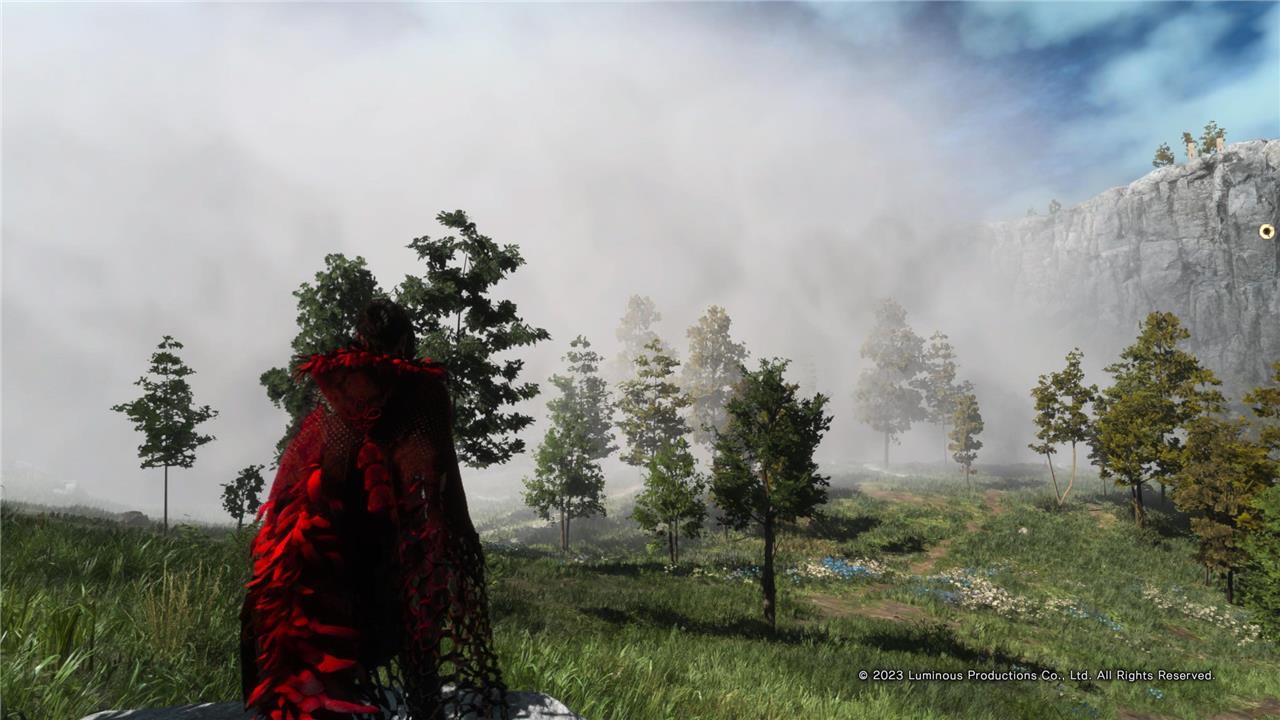
If you see clouds, tread carefully
Thick clouds in Forspoken often signal that danger is near. They can alter visibility, hide enemies, and hint at sudden weather shifts that affect both movement and combat. Keep an eye on the sky before exploring new areas-storms can change how spells behave and make traversal much harder. Watching the weather can save you from being caught in difficult fights or wasting stamina.
As you explore Athia, you’ll come across cloudy regions. Inside these zones, you’ll have seriously reduced visibility, what with everything clouded by a blue miasma. Enemies, whom you can locate by pinpointing purple dots floating in the fog, are also significantly more powerful. In exchange, though, you’ll generally earn a ton of XP, plus rare gear. Make sure to save before going in!
Best early spells to unlock from Founts of Blessing
Frey unlocks powerful spells from Founts of Blessing in Forspoken, which are scattered magical wells across Athia’s open world-prioritize these early for combat edges and parkour upgrades.
Top Purple Spells
Disperse creates an auto-turret flower for ongoing damage, ideal against groups and flyers; Tendril delivers AoE attacks that heal based on damage dealt, with a quick cooldown for sustain; Implant plants a damaging seed in single targets like bosses.
Key Red Spells
Crucible summons a fiery dome boosting your attack power inside, perfect for amping combos; Firetrap erupts geysers under foes for high single-target DPS with minor splash.
Essential Blue Spells
Oubliette traps enemies in a water orb for crowd control and explosive AoE on hit; Up and Away launches you airborne for evasion while swapping to Blue magic and refilling projectiles.
Useful Green Spells
Sublimation auto-drains life from nearby enemies for top-tier healing, outshining Tendril later; Projection fires lightning spears with chain AoE for reliable mid-range damage.
Mobility Boosters
Hunt Founts granting parkour like speed bursts on landing or shimmy dashes while sprinting-these enhance traversal as much as combat utility. Hover spells in menus or use the PS5 touchpad to preview Fount spots.
Where are Founts of Blessing for Disperse Tendril and Implant
In Forspoken, Founts of Blessing unlock unique spells like Disperse, Tendril, and Implant-early Purple magic staples-through parkour-heavy exploration in specific Athia regions. Prioritize unlocking traversal upgrades first to reach them efficiently.
Disperse Location
Found in Brass Hollow (Praenost region, east section), near Dianthus Wood Refuge-head northeast from Guardians’ Way past aqueduct ruins to a tall rocky hill; climb or circle around to drop into the structure for this Mulberry Fount auto-turret spell. Use Citadel refuges for fast travel prep.
Tendril Location
Located in The Mustering Ground (southern Praenost, southwest of Praenost Castle)-scale the garrison wall (Soar helps) to access this Rosewood Fount for the healing AoE tendrils; it’s near Mustering Ground Belfry amid tougher foes, so scan with Cuff. Boosts sustain early-game.
Implant Location
In The Water Garden (Avoalet region, early post-Praenost)-from Water Garden: Central Refuge/Belfry, cross Merveil Bridge and spot the glowing tree/fount to the right in the distance for this Mulberry Fount seed-planting spell. Visible from afar; grab after nearby refuges unlock.
