
Before Tunic charmed players with its cryptic puzzles and fierce combat, Bloodborne had already written the handbook on how to make discovery and danger feel inseparable. The echoes of Yharnam’s design philosophy pulse through Tunic’s fox-sized adventure-every hidden passage, every hard-won fight bearing traces of FromSoftware’s haunting genius.
2022 was a strange time for video games. I’ve already taken to calling it “the chaotic-good year” of releases. (It has yet to catch on.) With just a handful of blockbuster tentpoles, the door was open for several ongoing games to finally capture our attention; for seemingly redundant sequels to easily win our hearts; and for indie games of all shapes and sizes to make themselves known. And few exemplify that last camp like Tunic, an adventure game about a lonesome fox in a strange, vibrant, dangerous world.
Tunic wears its Legend of Zelda influences on its green sleeves. As in the 1986 game that kicked off one of the medium’s most recognizable franchises, Tunic drops its protagonist into a world awash with puzzles and secrets, with a procession of tools to help the adventurer get by. There’s a shield covered in primary colors. There’s a grappling tool that pulls you to distant locations. There’s even an in-game manual, styled in the same vein as those that came in game boxes in the ’80s, ’90s, and early aughts.
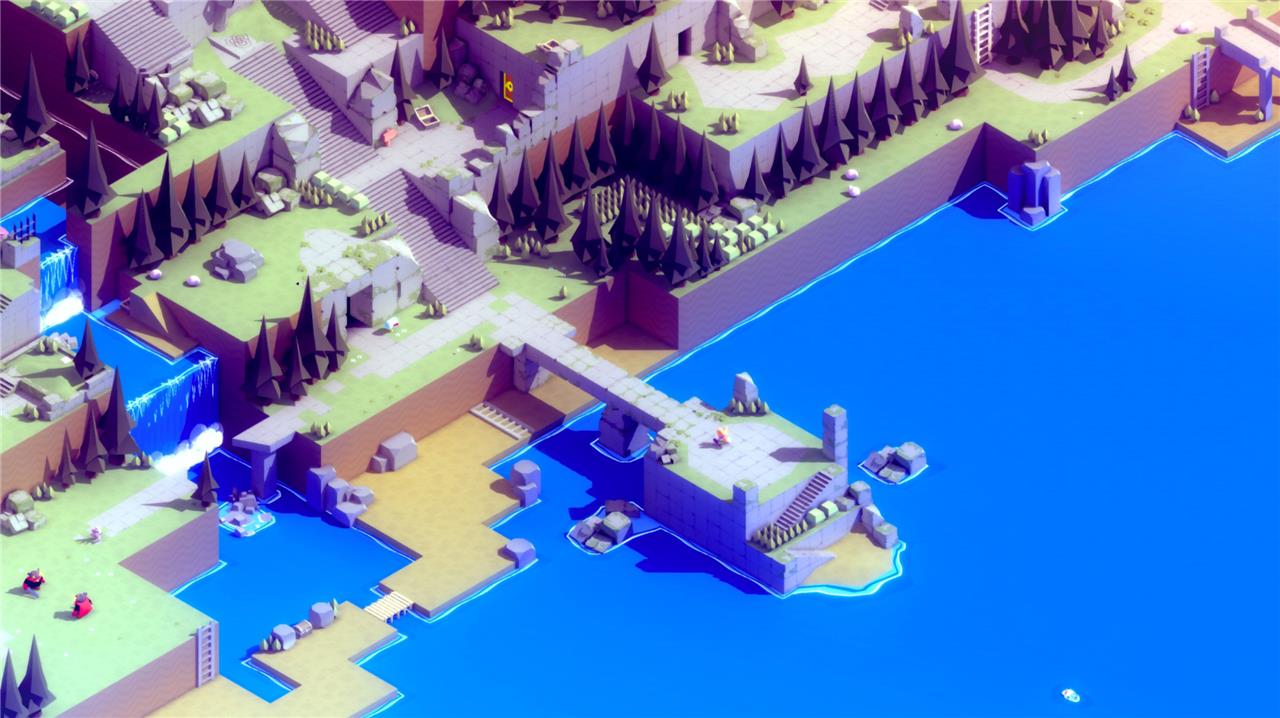
But, under its endearing trappings, the adventure game owes its mechanical conceits to a far more foreboding catalog: the work of developer FromSoftware. And although Tunic‘s fantasy-wilderness setting recalls the worlds of Dark Souls and Demon’s Souls, the breakout hit actually pulls far more from Bloodborne, From’s 2015 Gothic-horror masterpiece.
“I really love the sword and sorcery of the Souls games – a real classic adventure vibe,” Andrew Shouldice, Tunic‘s creator, tells AELGAMES. “I didn’t play Demon’s Souls, but Dark Souls hit me right in the heart with the Dungeons & Dragons-like ‘let’s go on an impossible fantasy quest’ thing. I think that same kind of adventuresome questiness is what makes the first Zelda sing – here’s a big world, you’re gonna die, bet you can’t find the sacred treasure, etc.
“However, the combat design of Tunic was developing to be a lot snappier than Souls combat. I love me a zweihander (I’ve got mine up to 16 in Elden Ring), but that kind of combat pacing wouldn’t click with a game where you’re supposed to feel like a nimble little fox. It just felt so much better when attacks came out fast.”
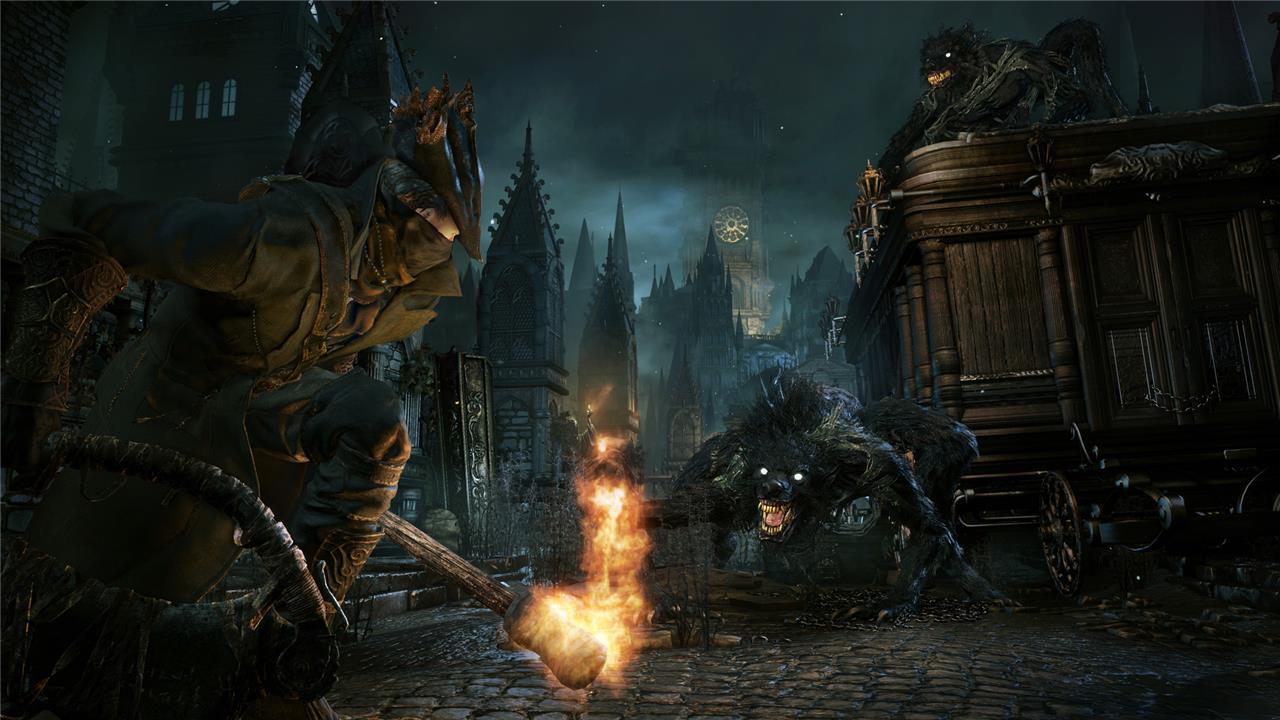
Enter: Bloodborne, a propulsive game about getting your shots in before backing off to evade an enemy’s counterattack. It also requires you to continually adapt your strategy as you level up your character and find new tools strewn throughout its Bram Stoker-esque world.
Tunic‘s combat is also quick, responsive, and malleable. What begins as a process of swiping a wooden stick at enemies becomes a deft balancing act of sword strikes, shield blocks, and dodge rolls. The more tools the fox recovers, the more options there are when things get heated.
“Zelda meets Dark Souls is the tritest, most ‘white guy making an indie game’ sort of thing,” Shouldice says. “But that’s sort of what happened. I was trying to crib the combat of a Soulslike. I started working on it, and then I played Bloodborne. I was like, ‘That’s the ticket. That’s where the inspiration should come from.’ It showed me that it was possible to have technical, challenging, Souls-y combat with the speed turned up a bit.”
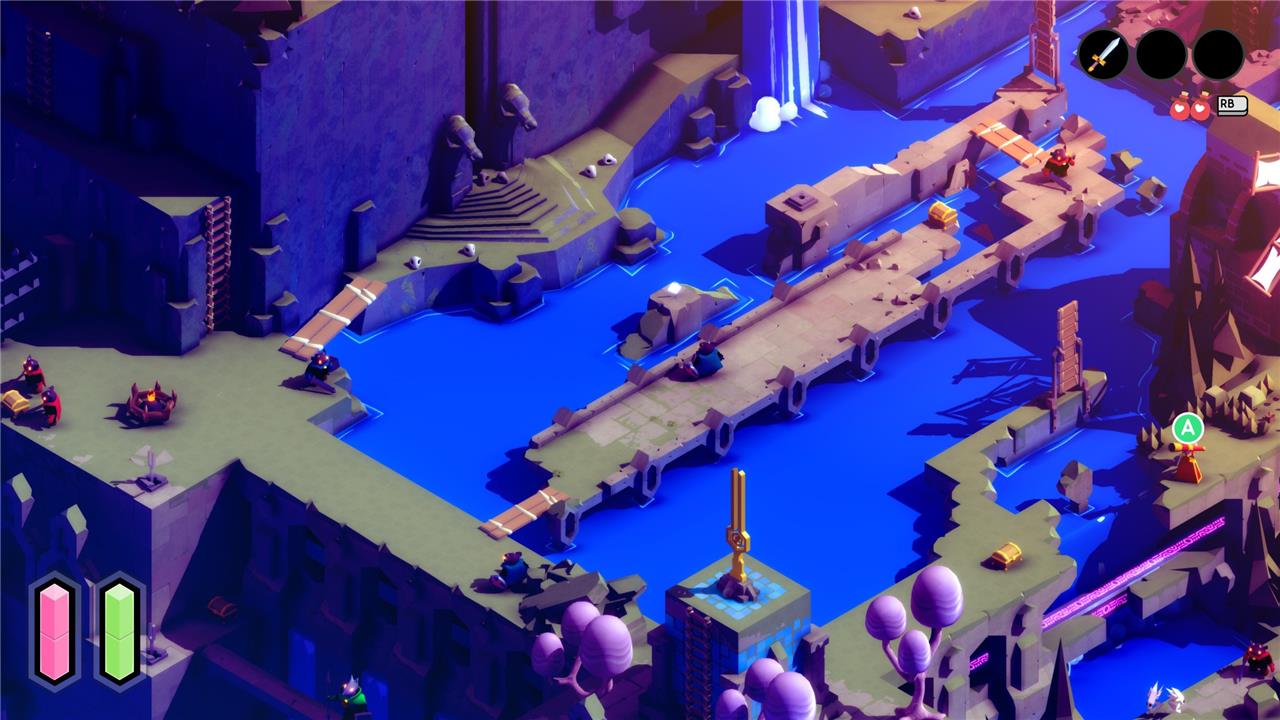
Tunic doesn’t lift wholesale from Bloodborne‘s combat, however. As Shouldice tells it, an earlier incarnation of the indie game prohibited attacking when the player’s stamina bar was empty. In its final release, Tunic allows the player to keep attacking when their stamina is gone, and the bar only drains when performing defensive maneuvers like shield blocks or dodge rolls. Like an animal backed into a corner, Tunic‘s fox can still lash out, even when it’s exhausted.
Similarly, an earlier version of Tunic mimicked FromSoftware’s brutal habit of dropping all of the player’s resources when they died. In Bloodborne, players could return to the spot where they died to collect the blood echoes they lost, provided they didn’t die again before recovering them. Dark Souls did the same with its eponymous souls, and last year’s Elden Ring followed suit with its runes.
But much like Bloodborne‘s stamina system, this sort of economy just didn’t make sense in Tunic, which – without spoiling anything – wraps its upgrade mechanic in its own layer of mystery. To add FromSoft’s risk/reward dynamic to an already compelling progression system would muddy one of Tunic‘s signature conceits.
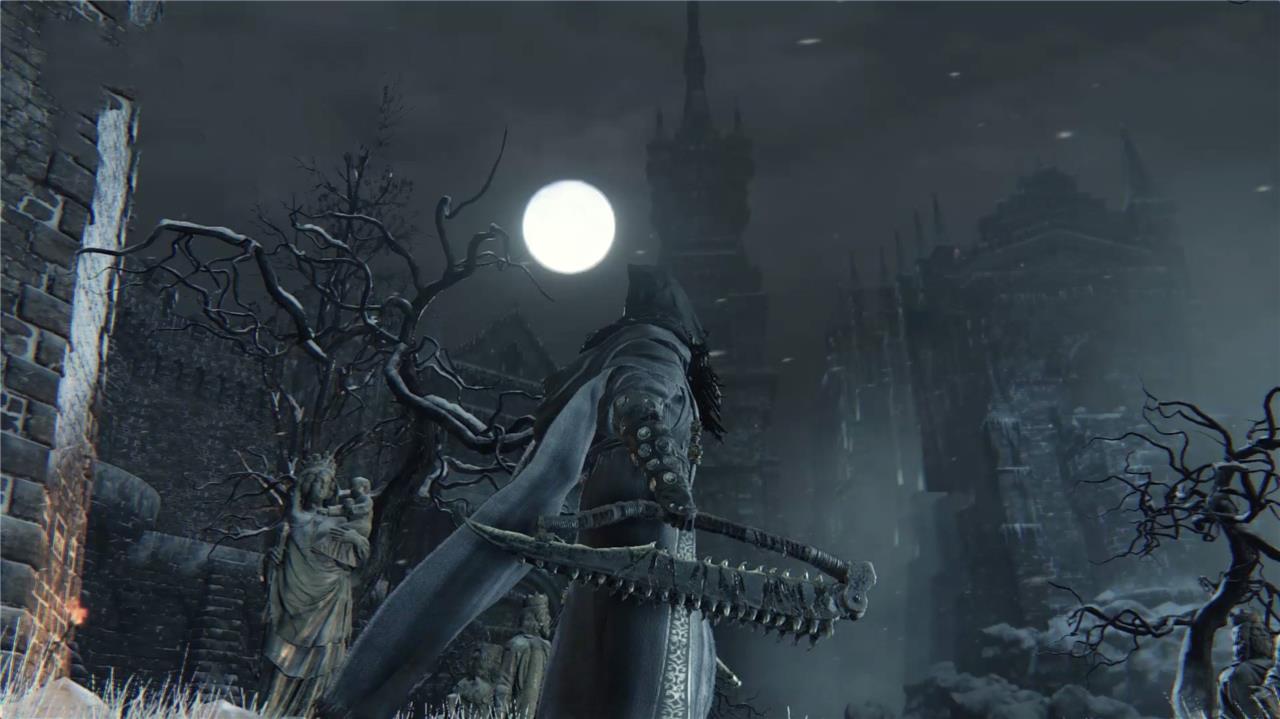
Still, though, Shouldice found it hard not to be impressed by Bloodborne‘s overall approach to world-building. Like many of From’s games, it doesn’t direct the player down each critical path, and it doesn’t highlight every point of interest. Most players’ first foray into Yharnam’s alleyways is an act of tense exploration and timid wandering. But as they get their lay of the land, players stumble upon a vast swath of shortcuts, crannies, and secrets. The same rings true in Tunic, which houses one of the most baffling meta puzzles in recent memory.
“I really like Bloodborne‘s slow introduction of otherworldly horror,” Shouldice said via a separate email. “I think that probably contributed a fair bit to the story of Tunic, actually: Ancient scholars discovering some unknowable power deep beneath the Earth, leveraging it for their own gains, building a religion around it, introducing horrible corruption from planes beyond comprehension. There’s a fair amount of overlap, honestly.
“But the things that I still cherish about FromSoftware’s games – and I hope this has persisted in Tunic – is that you are exploring this player-ambivalent artifact. You’re an archaeologist moving through a space. And the game is doing its very best to not care about you. You are tiny and insignificant and you’re just plopped into this world and told to explore.
Despite these influences, Tunic uses From’s strengths without transmuting them wholesale. Bloodborne is less a foundation, and more the “design scaffolding” that once wrapped around the project, Shouldice says. By reexamining Tunic throughout the development process, and reevaluating the ways Bloodborne had seeped into its design, Shouldice came away with something wholly unique. And as with many buildings that have been covered in scaffolding for years, it’s a joy to see the structure beneath the facade once it falls away.
What specific Bloodborne combat mechanics inspired Tunic
Bloodborne’s fast-paced combat directly shaped Tunic’s action system. Creator Andrew Shouldice cited it as proving challenging fights could feel nimble for a small fox hero, unlike slower Souls games.
Pace and Rhythm
Bloodborne’s quick attack-dodge rhythm inspired Tunic’s core loop of rapid strikes, blocks, and evades. Early prototypes locked attacks on zero stamina, mimicking Souls restrictions, but the final version allows endless offense when stamina-depleted-draining only on defense like Bloodborne’s aggressive bias.
Risk-Reward Tweaks
Tunic borrowed Bloodborne’s resource recovery on death return (like blood echoes), but simplified it to fit its puzzle progression and avoid overcomplicating upgrades. This echoes Bloodborne’s rally-like push for immediate counterattacks after hits, fostering nimble, adaptive play over shielding.
How does Tunic’s stamina system differ from Bloodborne’s
Tunic’s stamina system adapts Bloodborne’s aggressive framework but prioritizes accessibility over strict resource limits. While both games emphasize quick recovery to encourage constant action, Tunic allows free attacks at zero stamina, shifting the penalty solely to defense.
Core Differences
Bloodborne’s stamina halts all attacks when depleted, forcing players to wait for regeneration (which can dip negative on overcommitment) before resuming offense. Tunic lets you swing endlessly even at 0 SP, but dodges, blocks, and parries drain it, creating vulnerability only on defensive plays-ideal for its nimble fox protagonist.
Regen and Upgrades
Both recover stamina rapidly post-action, but Tunic ties upgrades to sparse collectibles (max 3 SP wheels), while Bloodborne scales via Endurance/Vitality with hidden equip load tiers affecting regen speed. Tunic’s system echoes Bloodborne’s rally ethos but avoids punishing light attacks, blending Soulslike tension with Zelda fluidity.
