
Alan Wake 2 plunges players into a relentless nightmare where jump scares lurk around every corner, assaulting your senses with sudden, shrieking faces that jolt you out of your seat. While these scares are so frequent they risk feeling cheap, they perfectly embody the game’s dark psychological horror, making it scarier and more intense than its predecessor. If you thought you could ease into this survival horror with a calm mind, think again-Alan Wake 2’s jump scares are mean, merciless, and impossible to ignore.
[Ed. note: This article contains minor spoilers for Alan Wake 2.]
First things first: Horror is subjective, what scares me might not scare you, blah blah blah. You’re here because you want to know about the jump scares, so let’s get to it.
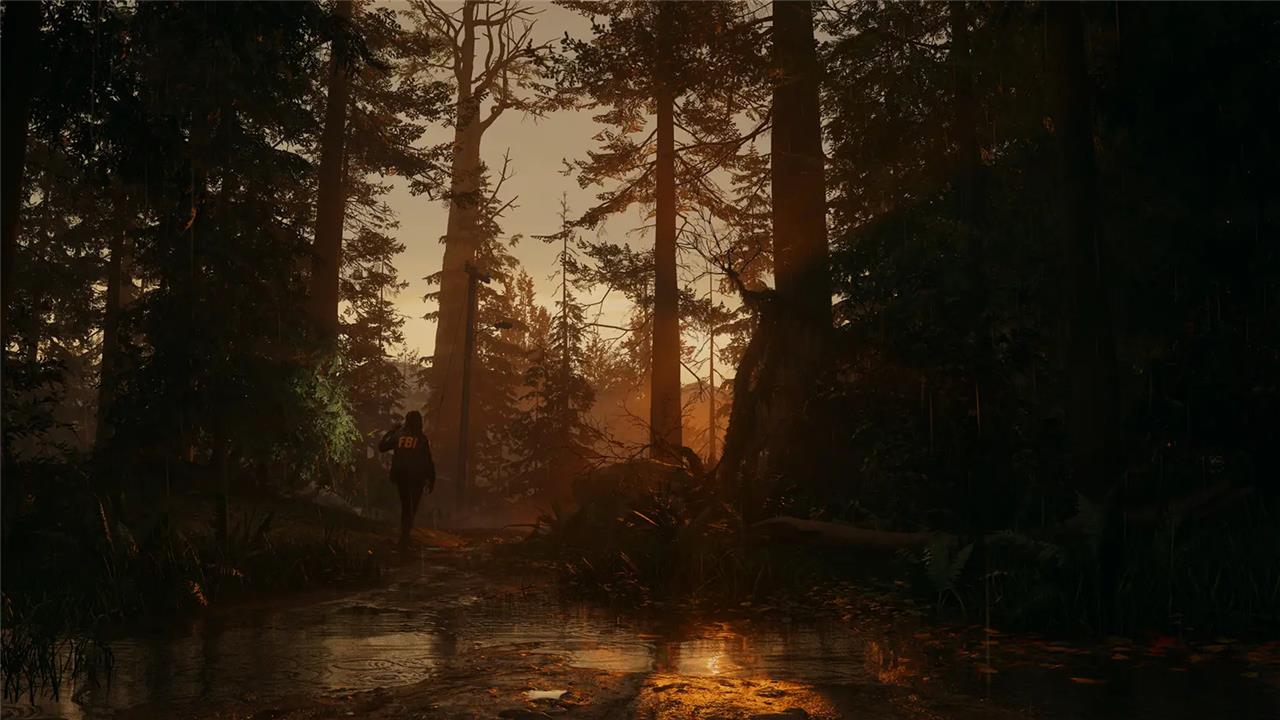
Alan Wake 2 kicks off with a very creepy scene, not least because you have absolutely no clue what’s going on. You start playing as a heavyset older white man who doesn’t look anything like Alan Wake and looks even less like Saga Anderson, the Black female FBI agent who’s the co-protagonist of Alan Wake 2. I guess I left out the most important part, which is that this guy is naked. And he is trudging – and later, running – through a gloomy, foggy forest.
Perhaps the creepiest part to me was that Alan Wake 2 wouldn’t let me look at this guy’s face. I kept trying to turn the camera around to see him, but he kept turning away from me, like the guy in the corner at the end of The Blair Witch Project. Turns out, that’s how the Alan Wake 2 camera works with almost every playable character – but in this opening scene, it’s even more restrictive against showing you the character’s face, probably to delay the reveal of this man’s identity. He turns out to be Robert Nightingale, the FBI agent who had it out for Alan Wake in the first game.
While poor naked Nightingale runs through the woods, you’ll get your first of several jump scares. Complete with flashing lights (the game does open with a seizure warning) and super-loud music stings, you’ll see a flash of Alan Wake’s face, lit up like he’s holding a flashlight next to it for dramatic effect or something. Alan’s face is not scary in a vacuum, obviously, but the loud noise and flashing lights are jump-inducing. Those moments of surprise will keep happening as Nightingale continues meandering through the woods, his journey culminating in his gruesome death at the hands of a death cult.
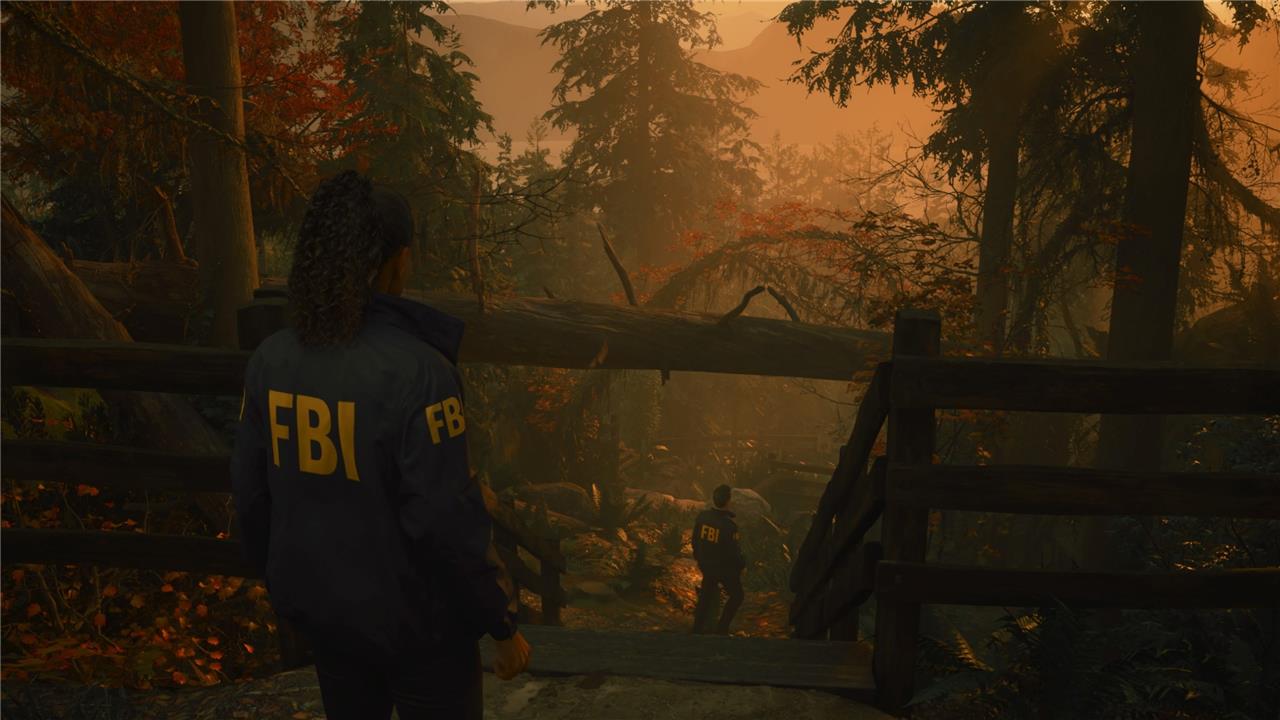
That death cult – and the murder of Nightingale – is what you’ll be investigating once you take on the role of Saga Anderson, whose story is where the game jumps to next. Saga’s sections involve exploring the exact same creepy woods, but unlike with Nightingale, there aren’t jump scares for Saga. Of course, that didn’t stop me from thinking there would be.
You won’t get another big scare until you get to the morgue in the town of Bright Falls. This is when the game introduces the central mechanic for its supernatural enemies: If you’re standing in a lit area, they can’t see you. But if you tread into the darkness – as you must do, periodically, to escape or strafe around these opponents – they’ll be able to see you, grab you, and kill you instantly.
Personally, I find the fight scenes to be less scary than wandering around the woods in the dark between the altercations. The world of Alan Wake 2 is so bizarre that you just never know what to expect. But once I can actually see an enemy, even if they look scary or unusual, I’m fine – I just need a pistol in my hand, because apparently bullets still work on supernatural entities (thank goodness?).
My usual tips for making a video game less scary might not be very effective in Alan Wake 2. There isn’t much you can do about a basic jump scare of a big face suddenly filling your screen, accompanied by a loud noise. But there are still some options if you want to play this (amazing, thrilling) game and not be quite as stressed out by it. I recommend turning off the orchestral score, while leaving the dialogue and sound effects on; the score is beautiful, but it also does a lot to heighten the game’s tense moments. Do remember to turn the music back on when you feel calm again so that you don’t miss out on the many original songs in the game, though.
My other big tip? Just take your headphones off entirely, as needed. I turned on the subtitle option that includes character names, since Alan Wake 2 involves a lot of unnerving voice-over from unpictured characters. If you’re feeling overstimulated, you can always just read the game for a little bit, using the subtitles and character markers as a guide. I usually would only do this for a few seconds before recovering, resetting, and wanting to head back into the full audio immersion of the world.
How intense are Alan Wake 2’s jump scares compared to other horror games
Alan Wake 2’s jump scares are notably intense compared to many other horror games, delivering some of the “meanest” and most relentless jump scares players have encountered. These scares frequently assault the player with sudden, close-up faces of twisted characters accompanied by loud, unsettling sounds, creating a highly tense atmosphere that rarely lets players feel safe. Unlike typical jump scares that might feel cheap or overused, Alan Wake 2 integrates them deeply into its psychological horror narrative, making them feel thematically justified and more impactful.
While some players find the sheer volume of jump scares can lessen their effectiveness over time, the game still manages to maintain a high level of terror through these sudden shocks, arguably surpassing the scariness of its predecessor and even fitting well within the survival horror genre alongside titles like Dead Space 2, whose jump scares are considered similarly brutal. However, compared to classic horror games like Silent Hill 2, Alan Wake 2 offers a more cinematic and story-driven horror experience with intermittent but very sharp jump scares rather than a constant oppressive dread.
In summary, Alan Wake 2’s jump scares stand out for their intensity and thematic integration, making them some of the most effective and frightening in modern horror gaming, though their frequency can be polarizing among players.
How do Alan Wake 2’s jump scares compare in intensity to classic horror titles like Silent Hill 2
Alan Wake 2’s jump scares are more overt and aggressive compared to classic horror titles like Silent Hill 2. While Silent Hill 2 offers a relentless, oppressive atmosphere with psychological horror that builds tension through mood and environment, Alan Wake 2 delivers a more cinematic experience punctuated by frequent, sudden jump scares featuring distorted faces and loud shrieks. These jump scares in Alan Wake 2 are designed to be “mean” and jarring, often assaulting the player’s senses in quick succession, which can sometimes dilute their impact due to sheer volume. In contrast, Silent Hill 2’s scares are more atmospheric and sustained, relying less on sudden shocks and more on a pervasive sense of dread.
Moreover, Alan Wake 2’s jump scares serve a narrative purpose, symbolizing psychological attacks on the characters, whereas Silent Hill 2’s horror is deeply rooted in its story and environment without relying heavily on jump scares. This makes Alan Wake 2’s scares feel more like sudden bursts of terror amid a cinematic story, while Silent Hill 2 maintains a continuous, unsettling tone throughout.
In summary, Alan Wake 2’s jump scares are more intense and frequent but less subtle than the classic, atmospheric horror of Silent Hill 2, offering a different but equally effective approach to frightening players.
