
Discovering the “Distant Lands” in Civilization 7 is like unlocking a new chapter of exploration and conquest. These are the remote, previously unreachable territories across the ocean that become accessible only after advancing to the Exploration Age and researching key technologies like Cartography and Shipbuilding. Far from just new landmasses, Distant Lands harbor unique resources such as chocolate, tea, and spices, spawn Treasure Fleets vital for economic victory paths, and host independent powers and rival civilizations ripe for trade or conflict. Venturing into these far-flung territories not only expands your empire’s reach but also shapes your strategy across economic, military, and cultural legacy paths, making the quest for Distant Lands a pivotal and thrilling element of Civilization 7 gameplay.
How to reach distant lands in Civilization 7
To reach distant lands in Civilization 7, players must advance to the Exploration Age and research key technologies such as Cartography and Shipbuilding. Cartography enables civilian units like settlers and scouts to cross deep ocean tiles beyond the coastal waters, while Shipbuilding allows these units to navigate the rough seas without taking damage. Once you send a Settler across the ocean and establish a settlement on these distant lands, it becomes a Distant Land settlement. These lands are rich in unique resources like chocolate, tea, and spices, which are crucial for spawning Treasure Fleets that contribute to economic advancement. Expanding to distant lands also involves strategic considerations, including managing conflicts with other civilizations and leveraging trade routes.
You might find another continent as your scouts explore during the Antiquity Age. But distant lands are more than just lands on another continent. You’ll have to reach the Exploration Age before they really come into play.
Before you get too deep into your search, though, you’ll have to research several nodes in the Tech tree. Some (in bold) are required and others (not bold) are the ones you’ll have to unlock on your way. You’ll need:
- Astronomy
- Cartography
- Machinery
- Heraldry
- Feudalism
- Shipbuilding.
Cartography allows civilian units – like scouts and settlers – to cross ocean terrain. Shipbuilding means they can cross the terrain without (possibly) taking damage from rough seas.
What qualifies as a distant land in Civilization 7?
In Civilization 7, a “distant land” is defined as any landmass that is inaccessible during the Antiquity Age and can only be reached after researching the Cartography technology in the Exploration Age. These lands are typically islands in the open ocean or entire continents separated from the player’s starting homeland by a vast ocean biome. Crossing smaller bodies of water like rivers or lakes, or moving across mountain ranges does not qualify as reaching distant lands. Accessing these distant lands allows players to discover unique treasure resources such as chocolate, tea, and spices, which are crucial for spawning Treasure Fleets and advancing through certain Legacy Paths, particularly the Economic path. Settlements established on these lands are considered distant land settlements, and exploring them is key to expanding your civilization’s reach and unlocking new gameplay opportunities in Civilization 7.
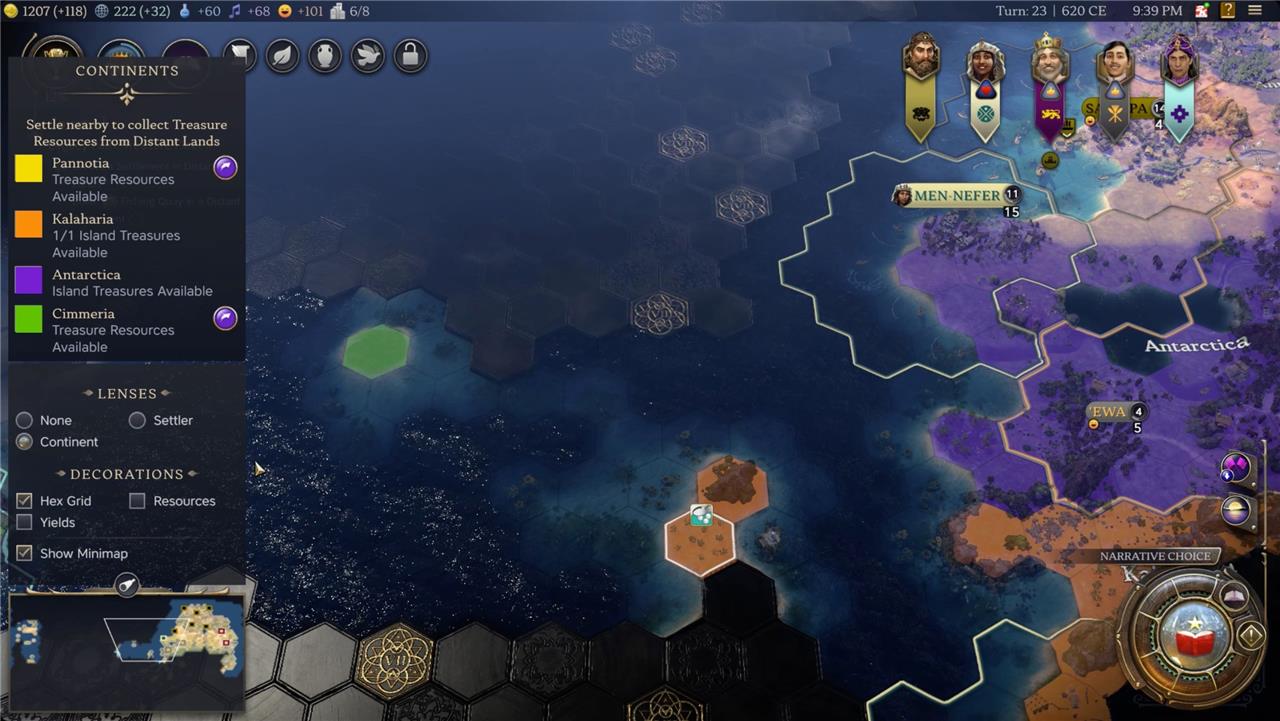
Even once you can reach them, the definition of distant lands is a bit nebulous.
Crossing a small river or lake does not count as a distant land. Even a mountain range (with a different continent on the other side) doesn’t count.
Distant lands are basically any region (usually, but not always) on a different continent that is separated from your homeland by a deep ocean biome and has access to new resources. The Continent Lens in your minimap will show you a color-coded map of continents and can show you if that continent has access to Treasure Resources – resources that come from distant lands.
What hidden resources can I find in Civilization 7’s Distant Lands
In Civilization 7’s Distant Lands, you can find a special set of hidden resources that only spawn in these remote territories. These include chocolate, tea, spices, gold, sugar, and silver-resources uniquely tied to the Distant Lands system and essential for establishing Treasure Fleets. Connecting these resources to your settlements via coastal trade routes allows you to generate Treasure Fleet Points, crucial for advancing along the Exploration Age’s Economic Legacy Path. These valuable resources not only fuel your economy but also spark conflicts with rival civilizations and independent powers vying for control over these far-flung riches.
Which rare resources in Distant Lands can boost my cultural victory chances
In Civilization 7’s Distant Lands, rare resources like silk play a key role in boosting your cultural victory chances. Settling on or trading for silk and similar luxury resources enhances your cities’ culture output, which is vital for progressing through the Culture Legacy Path. Additionally, religious expansion in Distant Lands, supported by certain beliefs, can significantly accelerate cultural progress by rewarding relic acquisition through converting settlements there. These strategies combined help you build a strong cultural foundation necessary for victory.
