
Born from thunder and jealousy, Maestro Forte traded his human form for metal pipes and doomed melodies-haunting Beast’s castle not with claws or curses, but with music that refused to die.
But it’s tough out here for Disney Villain fans. Recent Disney animated movies have lacked true villains, opting for more metaphorical and thematic antagonists at the expense of snazzy character designs and showstopping musical numbers. And many live-action remakes have put sympathetic spins on even the cruelest villains (don’t blame Cruella de Vil for wanting to skin dogs – her mom was killed by a pack of Dalmatians).
A Century of Disney
For more than a hundred years, Disney has shaped imagination through characters that charm, frighten, and fascinate audiences of every generation. From hand-drawn shorts to sweeping animated features, its villains often reveal the studio’s boldest creativity. Among them stands Maestro Forte, a forgotten figure from the 1990s who turned a pipe organ into a vessel of jealousy and despair-an unusual experiment that showed Disney could find menace in even the most inanimate forms.
We’re deconstructing the monolith all year long
Read more
The well of Disney Villains has run so dry that it might leave one pining for the good bad good old days, with nothing to amuse other than bad guys you’ve already watched a million times before. Today, the only real way to truly experience that beloved macabre theatricality anew is to dive into an era mostly forgotten and latch onto the weirdest, strangest Disney villain of all: Maestro Forte, the sentient pipe organ tormenting Belle in Beauty and the Beast: The Enchanted Christmas.
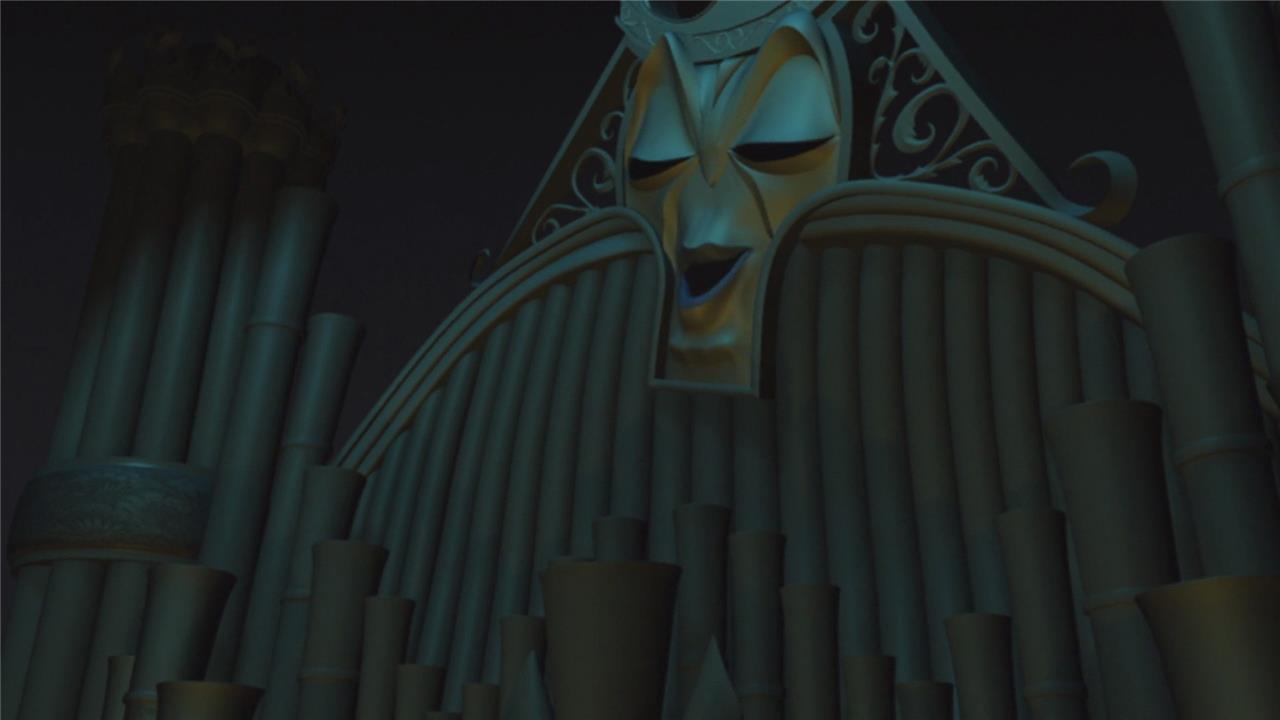
Beauty and the Beast: The Enchanted Christmas is a product of Disney’s direct-to-video era, where the House of Mouse pumped out cheaply made sequels, prequels, and midquels from 1994 to 2008. Obviously, I’ve watched every single one of them. Enchanted Christmas is a midquel, taking place sometime in the events of Beauty and the Beast, so the Beast is still a beast and the rest of the castle staff is still furniture. The movie asks a burning question everyone watching the original Beauty and the Beast definitely had on their mind: Will Belle successfully throw a big Christmas celebration for the whole castle and defy the Beast (who, of course, hates the holiday)?
What does this have to do with a pipe organ? Well, with Gaston presumably off on a Christmas hunt in some fancy lodge, the movie needs a villain. And that villain is Maestro Forte (as voiced by Tim Curry), a gloomy pipe organ who is perhaps the only piece of furniture in the entire castle who absolutely loves being an object.
The organ’s whole deal is that he actually doesn’t want Belle to break the curse on the Beast. Why? As Prince Adam’s personal musician, Forte was never appreciated for his dark and dreary rearrangements of popular songs. However, because the Beast is so angsty and grumpy, he enjoys somber music! Forte finally feels like he’s getting the recognition he deserves. Forget Jack Skellington, emo kids and goths – this pipe organ should be your new idol.
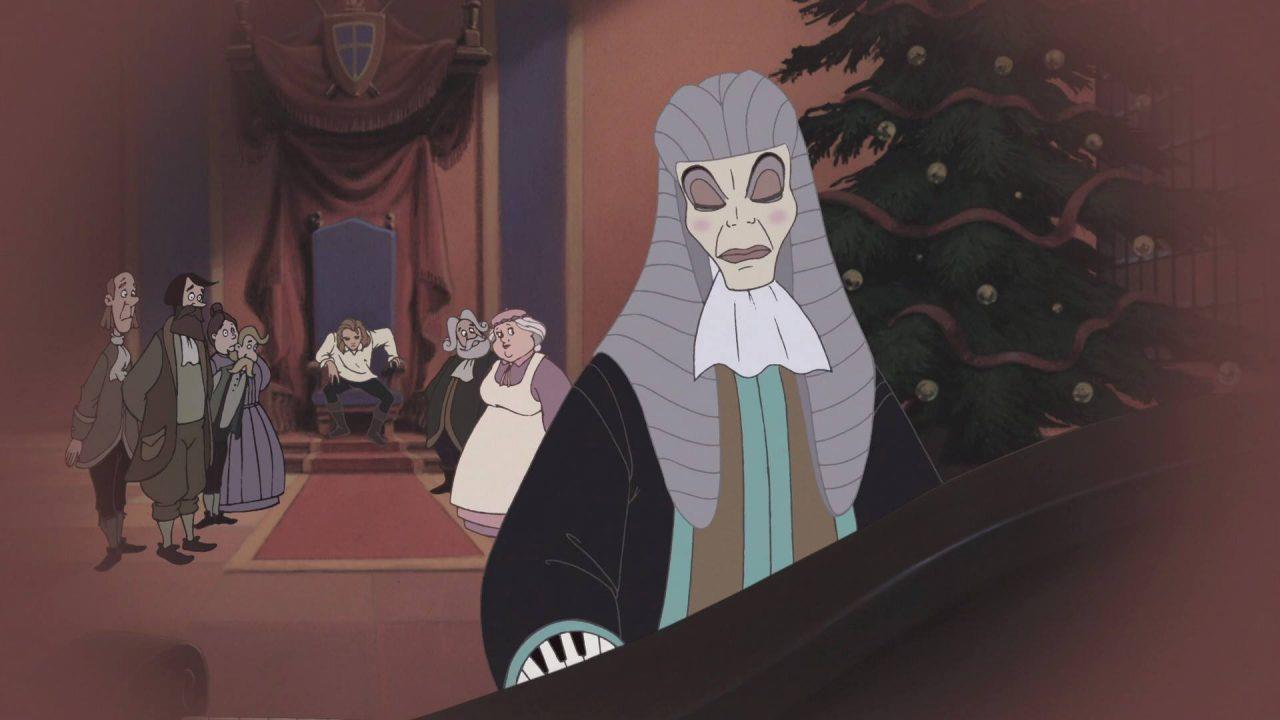
So, while the rest of the Beast’s loyal servants just want to be human again, Forte thinks being a pipe organ is the coolest shit that’s ever happened to him. Not only is all his music inherently dark and dreary, it is also very loud and can literally bring the house down (not to spoil the movie). He is thriving. He wants nothing more than to be a pipe organ for the rest of time. (Sidebar: Can the servants die of old age in furniture form? Or is it a case of when your object is worn beyond repair, your consciousness goes along with it? What if Chip the cup had siblings that got smashed?!)
All of these direct-to-video movies had significantly lower budgets than their theatrical counterparts. In Beauty and the Beast: The Enchanted Christmas, it seems that 80% of the money was put into rendering Forte in CG. He is the only character done this way, which makes his well-sculpted luscious lips and heavily hooded yet totally empty eyes all the more disconcertingly terrifying.
With Tim Curry bringing his A-game to the role, Forte is the most memorable part of this whole movie – and perhaps the most memorable villain of the direct-to-video era. Many of the villains in this time were simple offshoots of the bad guys in the main movies – or the bad guys themselves came back to be. kinda disappointing and lame. Ursula’s sister swears revenge on Ariel in the Little Mermaid sequel, while Scar’s most loyal devotee comes for Simba in the second Lion King. Jafar returns in The Return of Jafar (shocking!) and thanks to quasi-historical accuracy, Ratcliffe is back in Pocahontas 2. But The Enchanted Christmas has its own batshit villain, separate from Gaston, with his own unhinged mission, design, and motives. The bar is low, but sometimes, in a world where Cruella is now a girlboss and Maleficent is an antihero, you just need a very emo pipe organ.
How did Maestro Forte’s character design evolve
Maestro Forte’s design originated from early concepts for the original Beauty and the Beast sequel, where a human antagonist named Avenant-Gaston’s brother-was planned but scrapped for the midquel The Enchanted Christmas. This shift incorporated Avenant’s manipulative traits into Forte, transforming him from a human composer into a sentient pipe organ bolted to the castle wall. His final form features a grotesque face carved into the pipes, with expressive black-hole eyes, jagged teeth, and extendable pipes for attacks, emphasizing immobility and sonic menace.
Human Appearance
As a human, Forte appears briefly in flashbacks with pale skin, a oversized chin, large lips, and a floor-length gray wig over a black coat mimicking keyboard keys. The ascot, sea-green flaps, and pointy shoes evoke an 18th-century maestro, but his lugubrious demeanor foreshadows his cursed arrogance. This design contrasts sharply with his enchanted state, highlighting his preference for the organ form over humanity.
Enchanted Organ Evolution
Production evolved Forte into a massive, gothic organ with Tim Curry’s voice adding sarcasm through growls and musical cues, like distorted Beethoven riffs. Animators focused on non-facial expressions via pipe movements and shadows for scariness, ahead of its time with dark lighting and fluid bellows animation. No major redesigns occurred post-1997, but fan analyses note influences from baroque organs, solidifying his “weirdest villain” status.
What were Forte’s earliest concept sketches like
Maestro Forte’s earliest concepts began as a human villain named Avenant, Gaston’s brother, planned for a Beauty and the Beast sequel before shifting to the 1997 midquel. Sketches likely depicted him as a lugubrious composer with pale skin, oversized chin, large lips, and a floor-length gray wig over a black keyboard-patterned coat, evoking an arrogant 18th-century maestro. These designs emphasized his megalomaniacal traits through sharp canine teeth and a vampire-like sneer, contrasting his later organ form.
Transition to Organ Form
Early organ sketches transformed Avenant’s face into gothic pipework, with black-hole eyes, jagged teeth, and expressive bellows for a sentient, bolted-down menace. Production art focused on immobility, using extendable pipes and shadows to convey emotion without traditional facial animation. This evolution merged human arrogance with object permanence, making Forte Disney’s first fully CGI-animated villain in object form.
Development Insights
No public early sketch galleries exist, but Disney Wiki details show hand-drawn human flashbacks preceding computer-animated organ tests for fluid, dissonant movements. Influences drew from baroque organs and Beethoven motifs, refining his “weirdest villain” silhouette through iterative menace. Fan discussions highlight these as ahead-of-time for dark, non-mobile designs.
