
Before Mickey became the face of Disney, he had whiskers, a tail, and a habit of raiding Walt Disney’s wastebasket. The cartoon icon’s earliest inspiration wasn’t drawn from imagination-it scurried right across Walt’s studio floor.
First, some background. Before incorporating The Walt Disney Company, Walt and his friend Ub Iwerks founded Laugh-O-Gram Studio. Their first project was a series of short films loosely inspired by Alice in Wonderland, which were an innovative mix of animation and live action. (Child actor Virginia Davis played Alice, interacting with animated characters.) The “Alice Comedies” series was a hit, and Laugh-O-Gram was asked to animate some work-for-hire shorts for Universal Pictures.
A Century of Disney
For more than a hundred years, Disney has shaped animation and popular culture through imagination and storytelling. What began with a mischievous mouse sketch on Walt Disney’s drawing board grew into a global symbol of creativity. Throughout the decades, Disney’s animators expanded the art form, blending humor, emotion, and innovation to create characters and stories that defined generations. The company’s legacy continues to evolve, balancing nostalgia for its classic creations with new artistic visions that keep its magic alive for audiences of all ages.
We’re deconstructing the monolith all year long
Read more
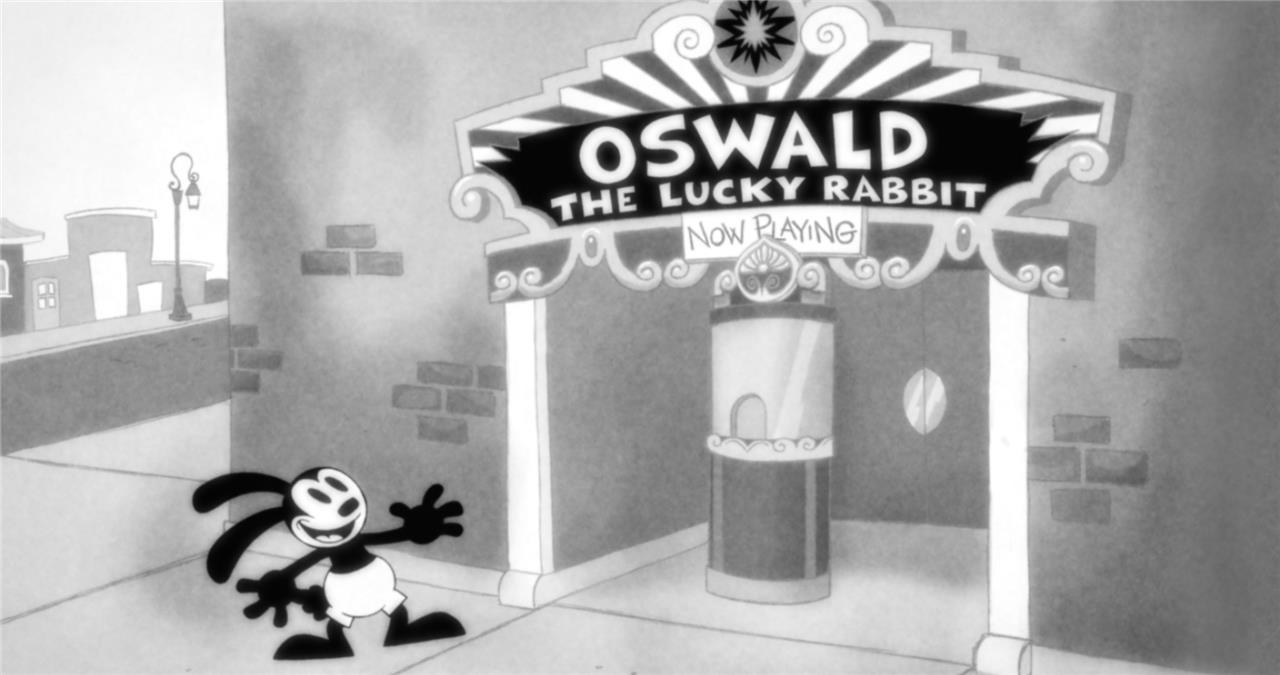
Disney and Iwerks created the character Oswald the Lucky Rabbit, making more than two dozen fully animated films with the character. But Walt had a falling out with Universal, which held the rights to the character and threatened to box Walt out and make Oswald movies without him. Instead, Disney and Iwerks left the distributor, starting fresh and looking for a new character to make a splash.
In the brainstorming phase, Iwerks drew a bunch of different animals, but none of them did it for ol’ Walt. (Future Disney legacy characters like Clarabelle Cow, Horace Horsecollar, and Flip the Frog were spawned in this brainstorming session.)
But it was a real mouse (or a bunch of them) who ended up sparking the idea for Mickey. At Laugh-O-Gram Studio’s less-than-pristine office in Kansas City, there were apparently many mice. Apparently (and perhaps apocryphally), one of them was especially tame, and a favorite of Walt’s. (Some sources say Disney adopted the mouse, but that part is also up for debate.) What we do know for sure is an artist named Hugh Harman who worked with Walt and Iwerks sketched mice around a photo of Walt, and Iwerks and Disney took that illustration and ran with it as an idea. That original sketch is unfortunately lost to time, as far as we can tell, but you can find some old concept art of Mickey circa 1928 from the Walt Disney Family Museum.
According to Neal Gabler’s Walt Disney biography, Harman’s doodling spawned “Mortimer Mouse,” a great mouse with a not-so-great name. Walt’s wife Lillian correctly told him “Mortimer” was terrible (she reportedly said it sounded “pompous”) and suggested “Mickey” instead. The rest, dear readers, from the firstshorts in 1928 to the modern House of Mouse Empire, is history.
So next time you see Mickey Mouse – as part of a logo, in a movie, in a new series of contemporary shorts or a revived lost short, in a video game, in real life at a park, or in any of the millions of other possible scenarios in which you might encounter Mickey Mouse iconography in the 21st century, remember: It all started with actual furry little rodents.
Was there a real mouse that inspired Walt Disney’s Mickey design
No, there was no confirmed real mouse that directly inspired Walt Disney’s Mickey Mouse design; stories claiming otherwise are largely myths.
Persistent Myths
Tales persist of a tame mouse (or pair) at Disney’s Laugh-O-Gram Studio in Kansas City befriending him and posing as a model, or mice on his train ride from New York to Los Angeles sparking the idea. Walt Disney shared versions of these in interviews, like mice scampering across his drawing board, but modern research labels them as ghostwritten legends or embellished anecdotes without evidence. Ub Iwerks, who actually drew Mickey, credited influences like cartoonist Clifton Meek’s mice sketches and Hugh Harman’s drawings around Walt’s photo, not live animals.
Actual Origins
Mickey evolved from Oswald the Lucky Rabbit after Disney lost rights to it; Iwerks adapted the design with mouse ears, a simple circular form for easy animation, and Chaplin-like charm. Brainstorming involved team input on appealing, unused animals, settling on a mouse as cute and marketable. A pre-existing “Micky Mouse” wooden toy from 1925 adds coincidence but no proven link.
Who was Ub Iwerks and his role in creating Mickey Mouse
Ub Iwerks was a pioneering American animator, cartoonist, and inventor who co-founded early Disney ventures with Walt Disney.
Early Collaboration
Born Ubbe Ert Iwwerks in 1901 in Kansas City, Missouri, he met Walt Disney in 1919 at an art studio, where they honed animation skills together. After Disney’s Laugh-O-Gram bankruptcy, Iwerks joined him in Hollywood in 1923, becoming chief animator on Alice Comedies and Oswald the Lucky Rabbit series. His speed-up to 700 drawings daily-accelerated production.
Mickey Mouse Role
After losing Oswald rights in 1928, Iwerks refined Disney’s rough mouse sketch into Mickey’s iconic circular design (head, body, ears) for easy animation, inspired partly by cartoonist Clifton Meek’s mice. He single-handedly animated the first Mickey short, Plane Crazy, plus early hits like Steamboat Willie, and designed details like Mickey’s gloves and shirt, plus Minnie Mouse. Disney voiced the character while Iwerks handled visuals.
Later Career
Resentful of credit imbalances, Iwerks left Disney in 1930 for his own studio, creating Flip the Frog and inventing the multiplane camera (later used in Snow White). He returned in 1940 as head of special effects, innovating for Mary Poppins, theme parks, and more, until his 1971 death.
