
Columbo isn’t just a detective show-it’s a masterclass in subtle brilliance, where a seemingly bumbling lieutenant outsmarts the most cunning killers with quiet persistence and razor-sharp wit. Dive into five of the greatest episodes that showcase the genius of Peter Falk’s iconic character, from mesmerizing magicians to cold, calculating masterminds, each case a thrilling dance of intellect and intrigue that keeps viewers hooked till the final reveal.
And then, the moment comes, as it always does: the humble revelation. Garbed slovenly in rumpled beige, with a stub of a cigar and eyes agleam, the loquacious, polite guy apologizes to the killer for his intrusions. He even makes the variations of his catchphrase – “Just one more thing” (give or take a “just”) – genial as he explains the crime, tells us about the vital clue that everyone else missed, watches the cops cuff that week’s guest star, and goes home to eat dinner with Mrs. Columbo. This odd little man always bests the upper-crust killers. Ah, murder in the home, as Hitchcock said it should be with his Columbo precursor Alfred Hitchcock Presents.
The character Columbo, inspired by Porfiry in Fyodor Dostoevsky’s Crime and Punishment, was created by Richard Levinson and William Link. Columbo first appeared in a 1960 episode of The Chevy Mystery Hour, played by Bert Freed. But it would be Peter Falk who would make the shaggy and sapiential sleuth a pop culture icon.
Columbo aired on Sunday nights as part of The NBC Mystery Movie umbrella program that ran from 1971 to 1977. In that glorious run, Columbo only grows irate once. That would be in “A Stitch in Crime,” opposite Leonard Nimoy, a man known for playing the stoical, logical Spock, who never yells and never wavers from his incorruptible morals. Otherwise, Columbo remains calm and careful. He catches you with kindness.
In honor of Kino Lorber’s monumental Blu-ray release of the first seven seasons, which have never looked or sounded better, here are five excellent episodes of Columbo (though by no means the best episodes; there are too many great ones). In addition to the physical release, all the episodes are available to watch on Peacock or for free with ads on Tubi and Freevee.
’Murder by the Book’ (S1E1)
“Murder by the Book,” the first episode of Columbo’s first season, sets a high standard for the series with its clever plot and intense character dynamics. The story revolves around Ken Franklin, one half of a successful mystery-writing duo, who murders his partner James Ferris after the latter decides to go solo, threatening Ken’s financial stability. The episode showcases a masterful cat-and-mouse game as Columbo unravels Ken’s seemingly perfect alibi and exposes his guilt, aided by a blackmailing witness whom Ken also kills in a desperate attempt to cover his tracks. Directed by Steven Spielberg and featuring a compelling performance by Jack Cassidy as Ken, this episode is praised for its sharp writing, suspenseful narrative, and the iconic interplay between Columbo and the murderer, making it a quintessential introduction to the series’ brilliance.
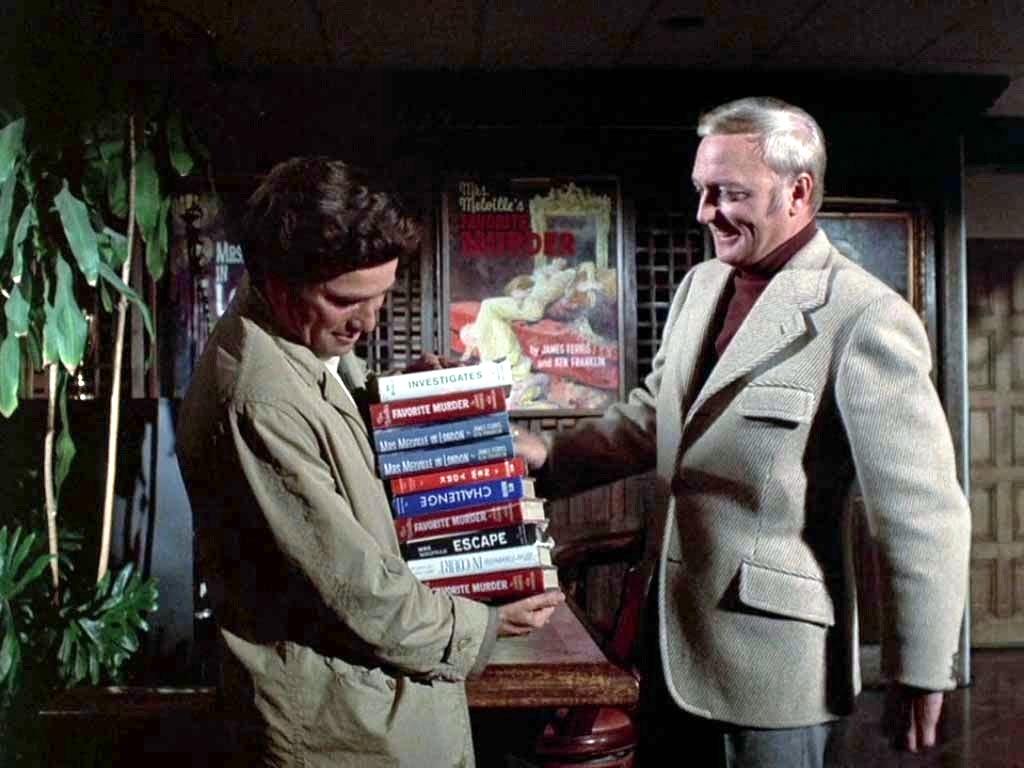
From the first shot of the Steven Spielberg-directed season 1 premiere, “Murder by the Book” – a virtuosic pull, zoom, pan, focus-changing shot from an office gazing attentively at a car through the glinting lucidity of the squeaky-clean window – Columbo was obviously unlike anything else on television, a serious work that deserves to be taken as seriously as any film from the New Hollywood age.
Spielberg, the boy raised by television, gives us the amiable detective as a frumpy, unassuming genius. He is the slattern sleuth, a man who is neither Clint Eastwood manly or an abrasive Archie Bunker reactionary. He is aesthetically unmemorable, yet he has unexpected, unfailing sapience, and is, unlike Spielberg’s dad, a good husband. It’s amusing how the TV boy, about to ascend to the upper echelon of cinema and make a lot of people a lot of money, directs the heck out of a story about a writer who kills for success. And not just success, but, harkeninging to Hitchcock’s Rope, for the ontological rush of committing the perfect crime, the dastardly desire of a man with an engorged ego. From this episode, Columbo was one of the first shows fluent in cinematic language.
’Étude in Black’ (S2E1)
In “Étude in Black” (Season 2, Episode 1), Lieutenant Columbo investigates the calculated murder of a gifted pianist by her ruthless lover, Alex Benedict, a celebrated orchestra conductor. The episode masterfully showcases Columbo’s dogged determination and sharp intellect as he unravels Benedict’s elaborate scheme to disguise the murder as a suicide. Featuring standout performances from John Cassavetes as the villain and Blythe Danner as his icy wife, the story is enriched by Columbo’s subtle humor and the debut of his beloved basset hound. The cat-and-mouse interplay between Columbo and Benedict, combined with a razor-sharp script, makes this episode a quintessential example of the series’ brilliance.
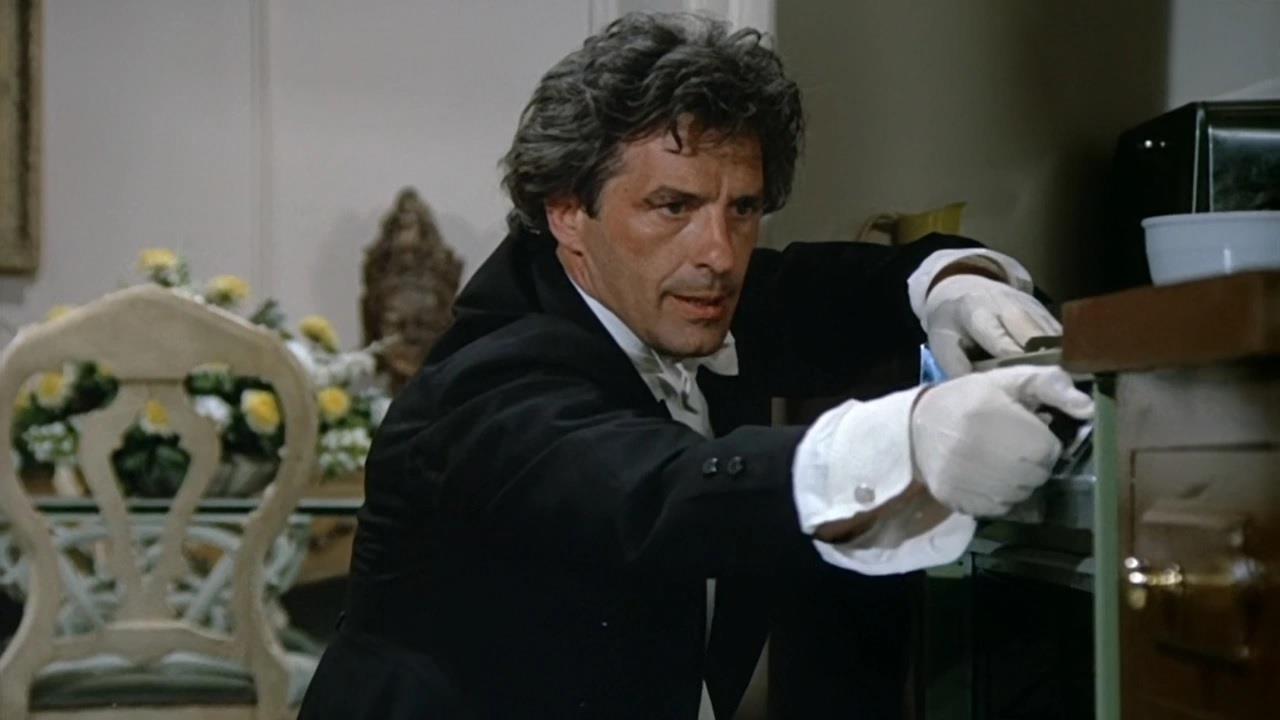
In the end (and it must inevitably end), it all comes down to a flower – a vibrant, pristine little carnation, unsullied yet integral to a case most foul – that falls from the lapel of the murderous maestro. It’s a minute, seemingly insignificant detail that would go unnoticed by any normal person. Just a flower on the floor. The 1972 season 2 premiere of Columbo, “Ètude in Black,” starring John Cassavetes as the killer, is the apogee of made-for-television filmmaking. It’s a riveting work of not whodunit but, at once, a dual character study (our frumpy detective and erudite killer) and a mystery as to how our beloved detective will get his guy, which we know he will do. Minutiae and murder.
“Étude in Black,” penned by series creators Richard Levinson and William Link, with dialogue by Steven Bochco (who would fundamentally change the course of mature, intelligent television with Hill Street Blues and NYPD Blue), is the work of a television director. It does not come from an auteur or Hollywood filmmaker, like Tobe Hooper making Salem’s Lot, probably the other best TV movie of the decade. It was directed by Nicholas Colasanto, best known as the affable airhead Coach from Cheers, one of television’s most pure-hearted, lovable characters. “Étude in Black’ is something like the spiritual ilk of Mikey and Nicky, in which Falk plays a mendacious friend of Cassavetes’ frazzled low-life who pissed off the wrong mobster. In that movie, Falk turns him in, gets him killed, and at the end it is Cassavetes’ agonized yowls for help, his hopeless begging, with which they end their friendship. “Étude in Black” ends with Falk again “victorious” over Cassavetes, but instead of futilely desperate bellows, instead of crushing malaise, it’s a simple handshake, an exchange of smiles.
’Any Old Port in a Storm’ (S3E2)
In “Any Old Port in a Storm” (S3E2), Columbo faces a sophisticated winemaker, Adrian Carsini, who kills his half-brother in a fit of rage to prevent the sale of their family winery. The episode stands out for its intricate plot, where Carsini’s passion for wine and his refined palate become central to the investigation. Donald Pleasence delivers a masterful performance as Carsini, portraying a complex character driven by love for his craft rather than mere malice. The subtle cat-and-mouse dynamic between Columbo and Carsini evolves into mutual respect, highlighted by Columbo’s newfound knowledge of wine. This episode is praised for its calm, controlled pacing, clever clues, and memorable scenes, making it a favorite among fans and a great introduction to the series.
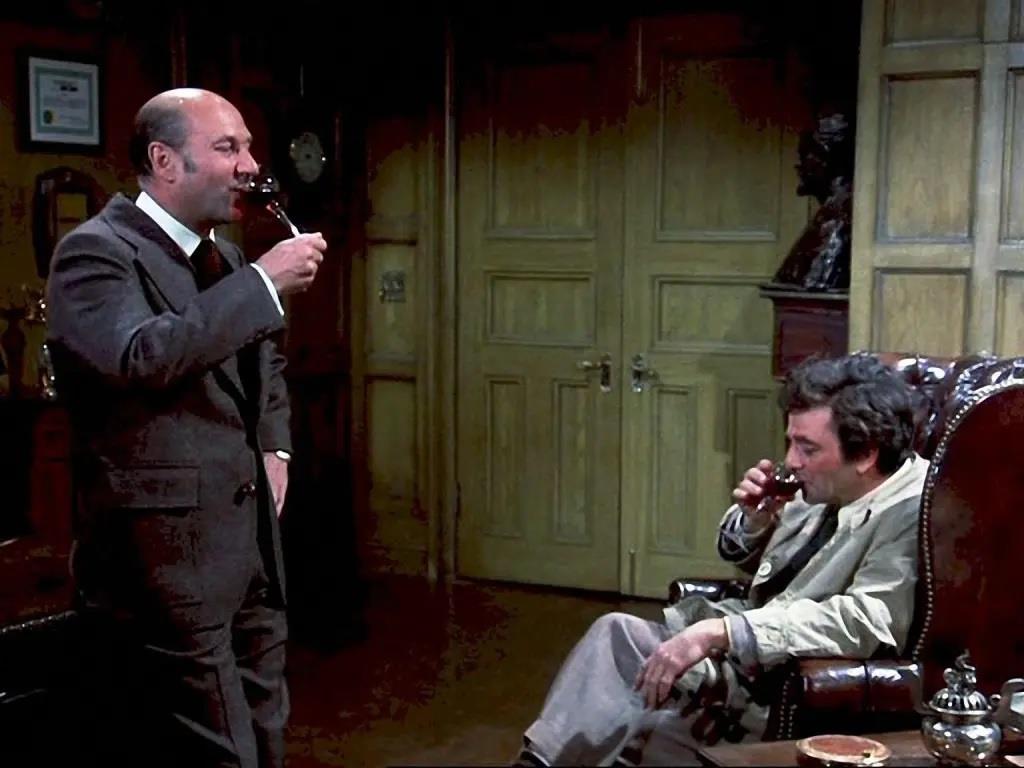
Before Halloween, Donald Pleasance played a murderer thwarted by Columbo. An oenophile with financial problems, he grows desperate and ends up with a body in his wine cellar. Compared to other killers on Columbo, Pleasance is kind of pathetic, not an evil creature but a man mired in dolorous desperation, a man watching his dream dissipate.
Whereas most Columbo creeps are seeking financial gain, selfish men and women who will pry money from the cold dead hands of whoever or otherwise trying to cover up a crime of passion, Pleasance’s piteous killer seems upset over his diabolical deed, and lacks the calmness of the more committed killers trying to get away with it. You see, he is a wine expert seeking acceptance among the upper-class connoisseurs, hoping to bottle his own wine to their satisfaction. The first two shots are the winery and the fine red stuff glistening with sanguine beauty through the spotless glasses, catching the light cinematically, a romantic, filmic presentation of wine and the men who worship it – and an unexceptional man pained with hope to be accepted by them. He kills to be upper class.
’A Friend in Deed’ (S3E8)
‘A Friend in Deed’ (S3E8)
In one of Columbo’s most ingenious and suspenseful episodes, the stakes are raised when the lieutenant faces off against a killer from within the police department itself. Deputy Police Commissioner Mark Halperin (Richard Kiley) helps his desperate neighbor Hugh Caldwell cover up the murder of Caldwell’s wife, only to use the favor as leverage to orchestrate and disguise the murder of his own wife as part of a string of burglaries. The power dynamic is electric, with Halperin’s authority making Columbo’s investigation perilous and personal. The episode is a masterclass in plotting, with clever clues-like a nightgown out of place and a telltale autopsy report-leading Columbo to unravel the deadly pact. Kiley’s chilling performance as the sociopathic Halperin, combined with Columbo’s dogged persistence, delivers a tense, twist-filled battle of wits that stands as one of the series’ very best.
The most stygian of Columbo’s ’70s run, the season 3 finale was directed by Falk’s buddy and fellow Cassavetes consort Ben Gazzara. Gazzara excelled at complicated characters spanning the spectrum of villainy – a man trying to reclaim the vigor of youth with his buddies in Husbands, a loser aspiring for something else who finds himself alone against it all in The Killing of a Chinese Bookie, menacing in Dogville. Here, he directs with the astuteness of one who understands acting, getting a downright nasty performance out of Michael McGuire as the corrupt deputy commissioner, a man who lives in perpetual sin and sleaze. The episode is dark, mostly (but not to its detriment) devoid of levity and humor, nothing breezy to make the depravity more palatable. The writing has a John Milius quality but flipped; instead of stoical stud and tough guy Clint Eastwood standing against his unscrupulous seniors, we get kindly little Columbo.
’Negative Reaction’ (S4E2)
’Negative Reaction’ (S4E2)
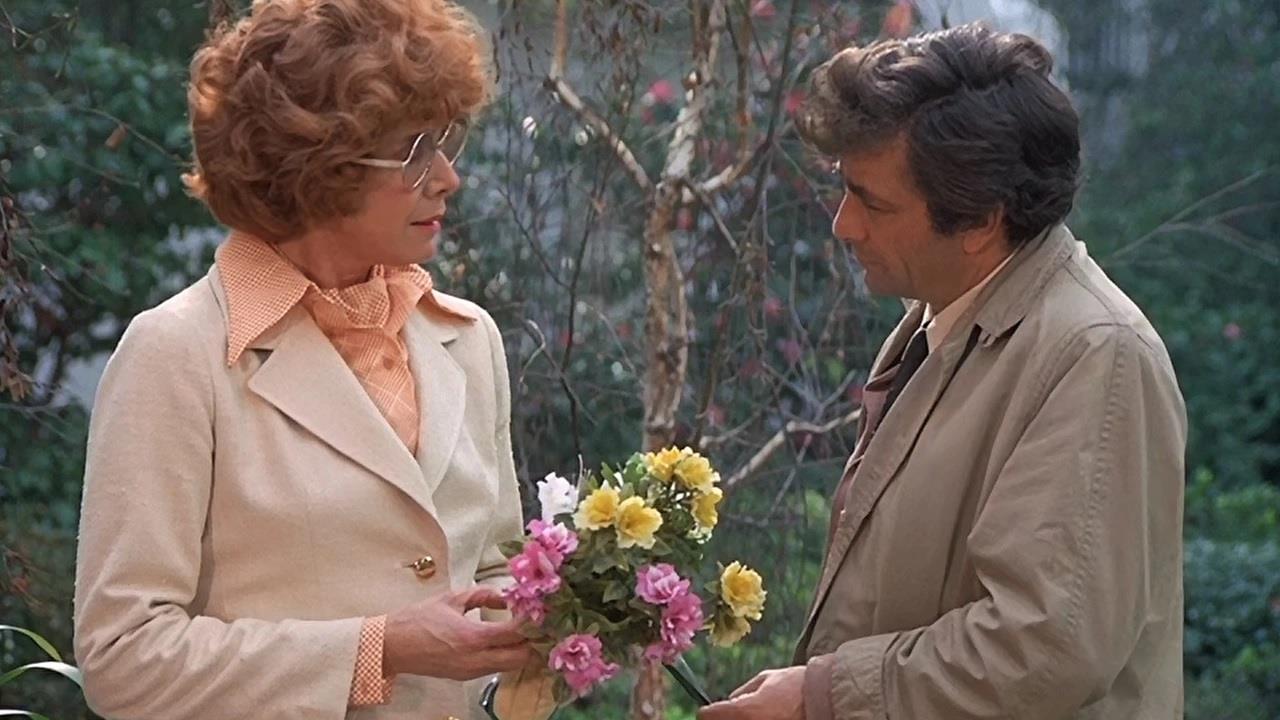
In “Negative Reaction,” Columbo faces off against Paul Galesko, a celebrated photographer played by Dick Van Dyke, who concocts an elaborate scheme to murder his wife and disguise it as a botched kidnapping. The episode is a masterclass in Columbo’s investigative style: after Galesko’s intricate plot begins to unravel, the lieutenant zeroes in on photographic evidence, using a blown-up image of the supposed ransom photo to expose a crucial timeline lie. The final confrontation is classic Columbo-he baits Galesko into revealing his guilt by identifying the very camera used in the incriminating photo, something only the killer could know. The episode ends on a somber note, with Columbo visibly burdened by the moral cost of his victory, slumping at his desk in a rare moment of introspection, making “Negative Reaction” not just a showcase of the detective’s brilliance but also his humanity.
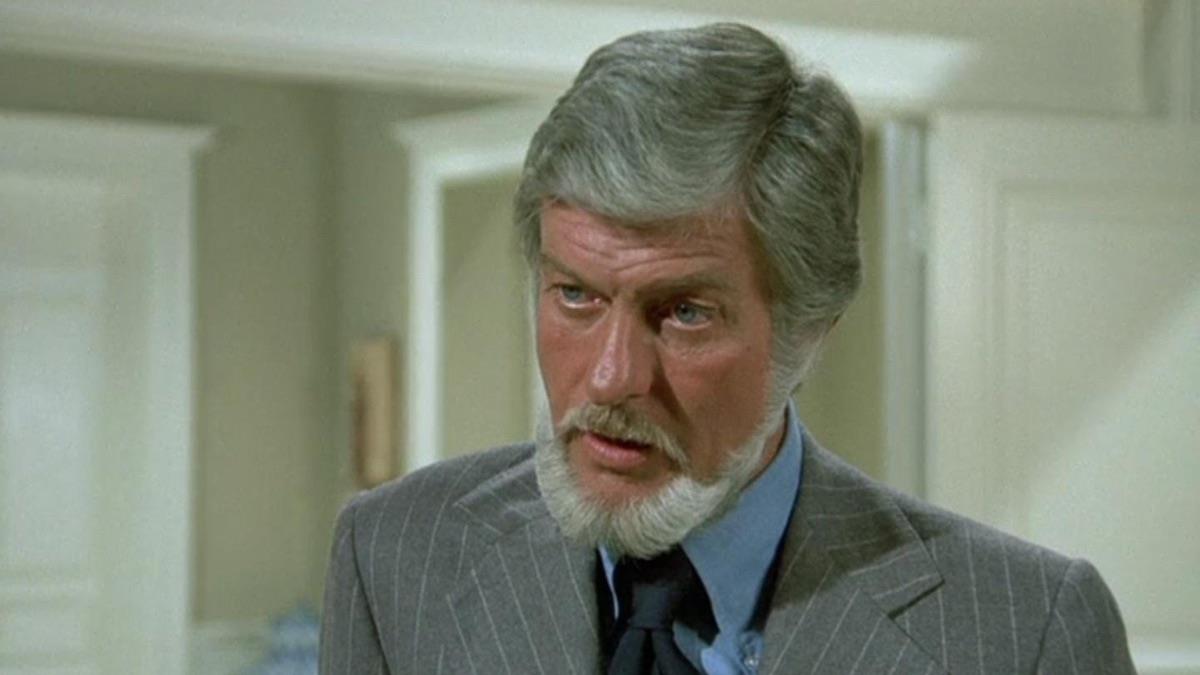
1968’s Prescription: Murder, starring Dick Van Dyke in a rare nefarious role as a desperate, white-haired man in fine suits who kills a man who doesn’t deserve it, should not be confused with the ’90s Van Dyke show Diagnosis: Murder, in which the fabled funnyman plays a doctor who catches criminals with such affability it makes Columbo look cranky. Here, he plays a Pulitzer-winning photographer who, anticipating Fargo, plans a sham kidnapping of his daughter. “I have this dream, Frances,” the bearded Van Dyke says to his beloved strapped to a chair with rope. “I’m working and there’s a phone call and he says, ’Terribly sorry, Mr Galesko, but your wife’s dead. Unfortunate accident. ’” He never raises his voice as he calls her “a domineering, nagging, suffocating woman who took all the joy out of my life.”
An ex-con of calm composition and great gullibility has been running errands and performing odd jobs for Van Dyke, but for his trouble he will be rewarded with a bullet. If Van Dyke’s diabolical lensman initially seems like a hen-pecked victim of a shrill scold, we now see his scheme unspooling and recognize his true self. The pacing of the episode is careful and controlled, never boring, never hasty – even the incidental scenes are fun, with more comedy than most of the other episodes. Van Dyke is unsettling and enchanting, the dark foil to his chimney sweep clan leader with the bad British accent.
What makes these five Columbo episodes stand out as the series’ greatest moments
The five greatest Columbo episodes stand out for several reasons that highlight the series’ unique brilliance:
-
Masterful Villains and Performances: These episodes feature some of the most memorable and complex villains, portrayed by outstanding actors such as Jack Cassidy, Leonard Nimoy, and Patrick McGoohan. Their characters are often arrogant, intelligent, and ruthless, providing a compelling adversary for Columbo’s unassuming but relentless detective work.
-
Innovative Storytelling and Direction: Episodes like “Murder by the Book,” directed by a young Steven Spielberg, showcase cinematic quality and storytelling that elevate the show beyond typical TV mysteries. The clever plotting and suspenseful “gotcha” moments are signature elements that make these episodes gripping and satisfying.
-
Columbo’s Character Depth and Charm: These episodes reveal different facets of Columbo’s personality-from his dogged persistence to his subtle wit and occasional displays of genuine anger-making him more than just a detective but a richly drawn character viewers root for.
-
Unique Settings and Atmosphere: The series often places Columbo in distinctive environments, such as a military academy or a magician’s club, enriching the narrative with authentic ambiance and intriguing social dynamics that add layers to the mystery.
-
Blend of Humor and Drama: The episodes balance suspense with humor, often through Columbo’s seemingly bumbling demeanor that disarms suspects and viewers alike, creating a unique tone that blends comedy with crime-solving.
Together, these elements create episodes that are not only entertaining mysteries but also showcase the enduring appeal and brilliance of Columbo as a character and series.
What specific moments in these episodes highlight Columbo’s clever detective techniques
Several specific moments in these standout Columbo episodes highlight the detective’s clever techniques through psychological mastery and subtle investigative tactics:
-
Feigning Cluelessness to Lower Defenses: Columbo deliberately adopts a bumbling, harmless demeanor to make suspects underestimate him. This “antipotency” façade lulls villains into a false sense of security, encouraging them to reveal clues or slip up, as seen repeatedly across episodes.
-
Psychological Mind Games: Columbo excels at engaging suspects in casual, seemingly off-topic conversations that gradually unsettle them. For example, in Prescription: Murder, his hypothetical murder chat with Dr. Flemming reveals how Columbo uses empathy and respect to avoid confrontation early on, making suspects more open and less defensive.
-
Subtle Requests for Evidence: He often asks for trivial items-like a pencil, match, or autograph-which seem innocuous but help him gather key evidence or test alibis. This deferential approach also reinforces the suspect’s illusion of control.
-
Strategic Interrogation: Columbo invites suspects to share their theories, then gently but firmly dismantles them, provoking frustration and panic that lead to revealing mistakes or rash actions. This slow-burn psychological pressure is a hallmark of his style.
-
Use of Traditional Detective Methods: Beyond psychology, Columbo employs classic techniques such as fingerprinting with pencil graphite to uncover physical evidence, demonstrating his thoroughness and old-school detective skills.
-
“Gotcha” Moments: Iconic reveals, like showing he wore gloves to avoid leaving fingerprints while exposing the killer’s fingerprints in Suitable for Framing, showcase his meticulous planning and attention to detail that catch suspects off guard.
Together, these moments illustrate Columbo’s brilliance: a blend of understated charm, psychological insight, and meticulous detective work that outwits even the most cunning criminals.
