
Wield the universe in your hands-Destiny 2: The Final Shape introduces Microcosm, the game’s first Kinetic Heavy trace rifle that obliterates enemy shields and supercharges your abilities. But to claim this Exotic powerhouse, you’ll need to conquer the most challenging co-op missions in the Pale Heart and master teamwork like never before. Ready to reshape your arsenal? Here’s how to unlock Microcosm and unleash its full potential.
In this Destiny 2 guide, I’ll walk you through how to get Microcosm, including how to complete the Cooperative Focus missions in the “Convalescence: Budding” quest, where you’ll earn the Exotic trace.
If you’re after other The Final Shape Exotics, then we have an explainer on how to get Ergo Sum and Still Hunt.
How to get Microcosm in Destiny 2
To get Microcosm in Destiny 2: The Final Shape, you must complete a series of post-campaign quests. First, finish The Final Shape campaign, then progress through the Destined Heroes questline up to “Queens, Part 1.” Afterward, you’ll unlock access to Micah-10’s Convalescence questline, which consists of four quests: Rootbound, Underbrush, Greenery, and finally Budding. The last quest, “Convalescence: Budding,” requires you to complete three special Cooperative Focus missions-Ascent, Dissent, and Iconoclasm-on the Pale Heart destination. These missions are designed for fireteams and introduce unique mechanics that encourage teamwork, so it’s best to play with at least one or two other Guardians. Once you finish these missions, return to Micah-10 at the Arbor of Light to claim your Exotic Heavy Trace Rifle, Microcosm.
You’ll get Microcosm from the final quest in the Convalescence questline, “Convalescence: Budding.”
Reaching “Convalescence: Budding” is fairly straightforward in Destiny 2: The Final Shape. Here’s a quick glance at everything you’ll need to do:
- Complete The Final Shape campaign
- Complete “Destined Heroes” (the Ergo Sum quest) step “Queens, part 1”
- Complete “Convalescence: Rootbound”
- Complete “Convalescence: Underbrush”
- Complete “Convalescence: Greenery”
- Complete “Convalescence: Budding”
How to complete ’Convalescence: Budding’
To complete “Convalescence: Budding” in Destiny 2: The Final Shape, you must finish three campaign missions-Ascent, Dissent, and Iconoclasm-in Cooperative Focus mode. These missions are replayed versions with added mechanics and require a fireteam; solo play is not possible. You’ll encounter three main challenges: Glyphtouched (where one player cannot see symbols and must rely on teammates for guidance), Berserkers (enemies with shielded weak points that must be shot simultaneously by the team), and the Fracture debuff (which builds up on a random player and must be passed to others before reaching ten stacks, or it will kill the afflicted Guardian). Teamwork and communication are crucial for overcoming these mechanics. Once all three missions are completed in this mode, return to Micah-10’s Conduit in the Lost City to claim your Microcosm Exotic trace rifle.
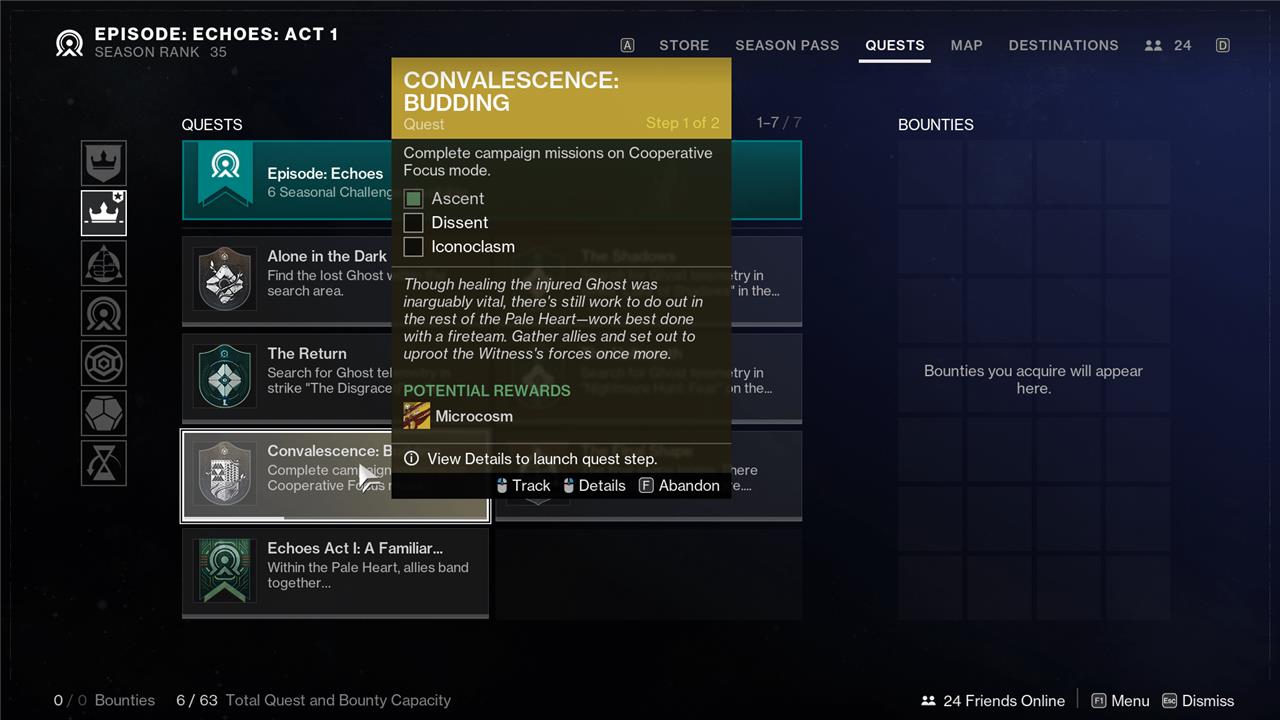
You’ll pick up the first quest in the Convalescence chain – “Rootbound” – while working your way through “Destined Heroes,” which you’ll start immediately after the campaign. Starting with “Rootbound,” you’ll then need to complete each of the Convalescence quests in order to reach “Budding” and Microcosm.
Thankfully, this entire questline is relatively straightforward, as it’s designed to teach you about The Pale Heart destination and all of its activities. But once you learn about lost Ghosts in “Rootbound,” Pale Heart mods in “Underbrush,” and Cyst activities in “Greenery,” you’ll need to learn about Cooperative Focus missions in “Budding.”
To complete “Convalescence: Budding,” you’ll need to complete the Cooperative Focus mode versions of three campaign missions:
- Ascent
- Dissent
- Iconoclasm
For these missions, you’ll need at least one other Guardian – although you’ll ideally want a full Fireteam of thee, since the missions don’t scale. But no matter what, these Cooperative Focus mode missions are not ones you can tackle solo, so you need to pair up with friends or other players via Fireteam Finder.
When you’re ready, locate the Campaign replay nodes on The Pale Heart. You’ll find the three icons for these Cooperative Focus quests under them. The missions say they’re 2005 Power, but the enemies are actually less powerful than the Legendary campaign baddies.
When you complete these missions and return to Micah-10 in The Lost City, they’ll give you Microcosm.
You can play these missions in any order, but they all share three tricky mechanics: Glyphtouched, Berserkers, and Witness Fracturing. Here’s how they work.
Glyphtouched
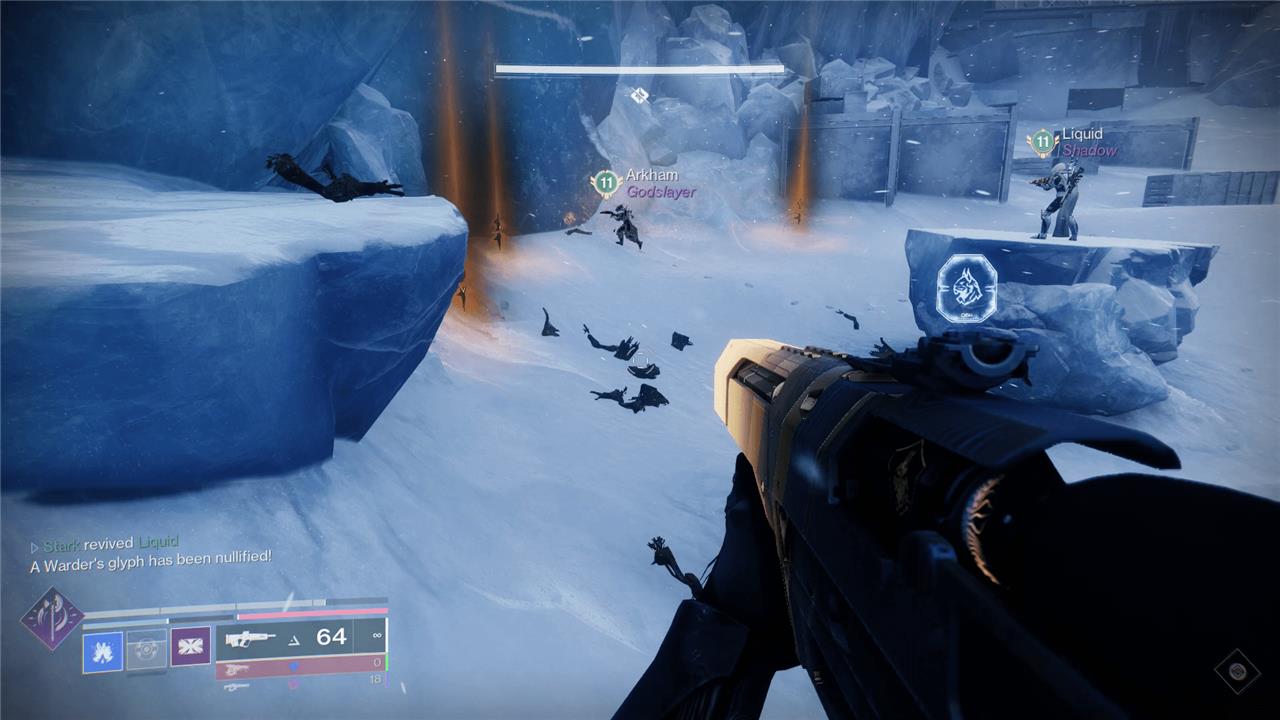
The first is a change to the Glyphtouched buff, which normally allows you to see symbols and walk into the correct ones. In the Cooperative Focus versions of the missions, only one player will be Glyphtouched, and they won’t be able to see what the symbols are. So you’ll need to communicate as a Fireteam, with the non-Glyphtouched Guardian instructing the Glyphtouched player what symbols to do.
Berserkers
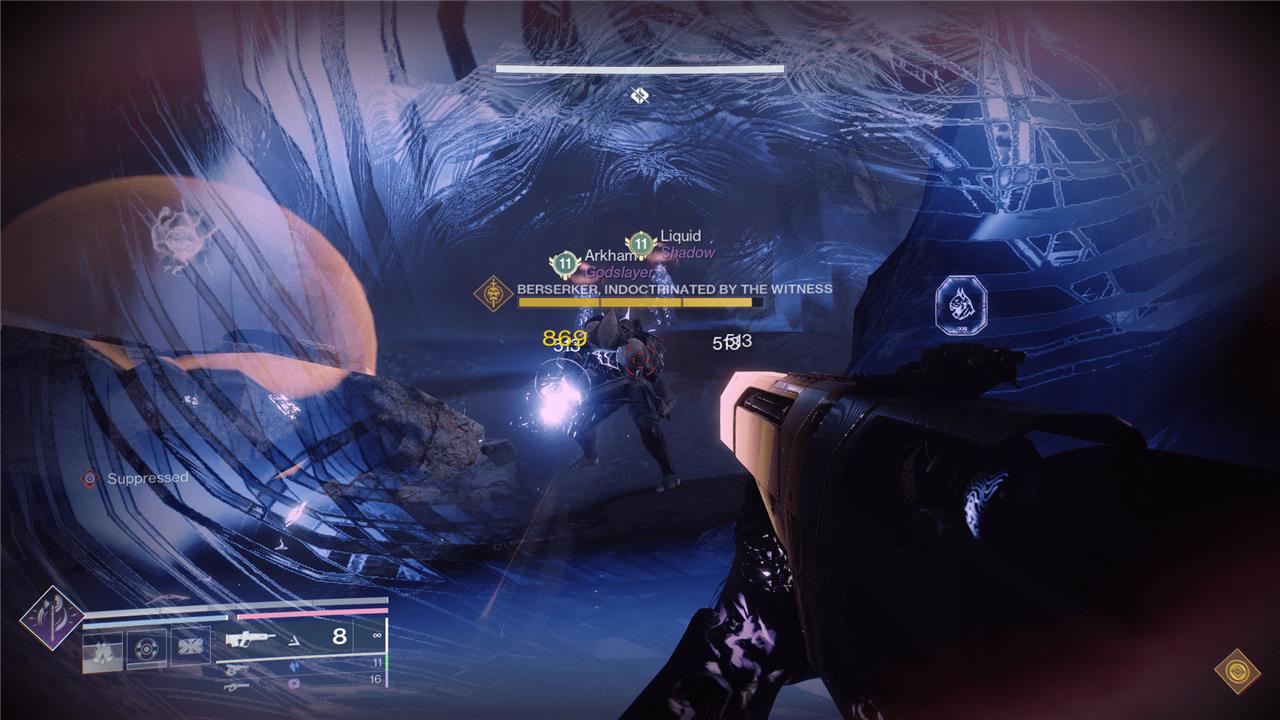
Second, the Cooperative Focus missions reintroduce Berserkers from the Scourge of the Past raid. When you get close to these enemies, they’ll unleash a slowing field and expose weak points. The catch is you need to destroy a weak point on their front and back simultaneously – something you’ll need to do as a group.
Once you kill the Berserker, two Darkness Cruxs in the area will have their immunity shields disappear. You and your Fireteam members will need to each shoot a Crux at the same time as the other player. If you fail to do this for long enough, you’ll wipe and have to start over.
Witness Fracturing
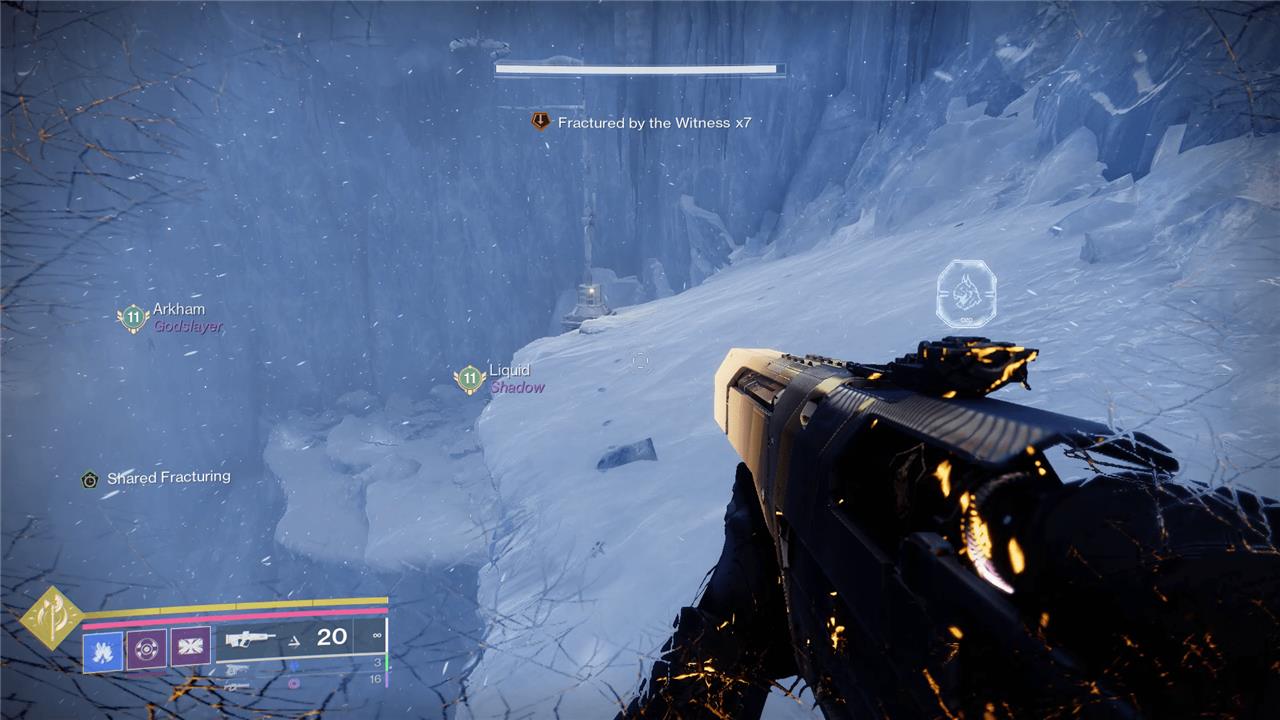
Finally, in certain sections of each mission, The Witness will begin to afflict the Fracture debuff one member of your Fireteam at random. This stacking debuff increases every few seconds on the Fractured character. Once the debuff hits x7, the afflicted player won’t be able to use movement abilities anymore. But, at x7, you can interact with the Fractured player to take the debuff for yourself.
You’ll essentially need to juggle this between your Fireteam while the Fracture debuff is present. You cannot make it go away until you progress the objective, and it’ll kill your Fireteam membersif they ever reach x10 stacks. Just coordinate together and play hot potato with the debuff until it goes away.
What does Microcosm do?
Microcosm is a unique Exotic Heavy trace rifle introduced in Destiny 2: The Final Shape, notable for being the first Kinetic power weapon in the game. Its primary function is to fire a continuous beam that deals significant bonus damage to enemy shields, thanks to its Exotic perk, Paracausal Beam. Another key feature is the Paracausal Imbuement perk, which grants Super energy on final blows and temporarily increases Microcosm’s damage after your Super ability expires. This makes Microcosm especially effective for quickly breaking shields in both PvE and PvP, while also synergizing with builds focused on frequent Super usage and Transcendence. Its versatility and unique mechanics allow it to excel in endgame content, boss fights, and activities where shielded enemies are prevalent.
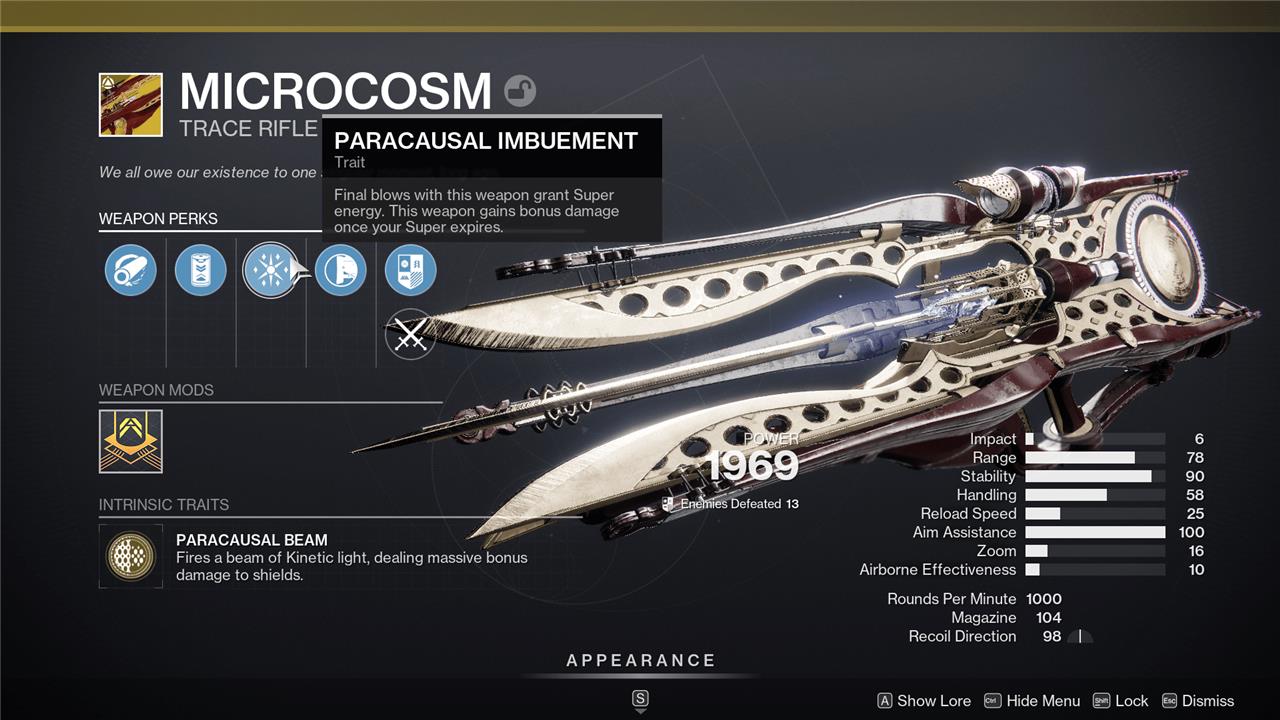
Before even getting into Microcosm’s perks, the weapon is already unique for two reasons: it’s a Heavy trace rifle and it’s a Heavy weapon that doesn’t deal elemental damage (Kinetic). It also does pretty decent damage, so it’s a great pickup for any Prismatic builds where you’re trying to get Transcendence as often as possible.
Microcosm has two Exotic perks. The first is Paracausal Beam, which causes the gun to fire Kinetic light, dealing massive bonus damage to shields. The second is Paracausal Imbuement, which causes kills with Microcosm to grant you Super energy. Additionally, Microcosm does additional damage for a short time after your Super expires.
What secret strategies will help me conquer the Cooperative Focus missions for Microcosm
Secret Strategies for Conquering Cooperative Focus Missions for Microcosm
Mastering Cooperative Focus missions for Microcosm requires more than just firepower-success hinges on communication, coordination, and smart preparation. Here are the most effective secret strategies:
-
Always Run with a Full Fireteam: Cooperative Focus missions do not scale enemy difficulty based on team size, so bringing three players makes encounters significantly easier. Solo or duo runs are possible but much more challenging.
-
Communicate Constantly: Many mechanics, such as passing debuffs and calling out glyph symbols, require real-time coordination. Assign clear roles before starting: designate who will handle glyphs, who will manage debuffs, and who will focus on add control.
-
Debuff Passing Technique: The “Fractured by the Witness” debuff must be passed between teammates before it reaches ten stacks to avoid instant death. Set a timer or call out when someone reaches seven stacks, and have another player ready to take the debuff by melee interaction.
-
Glyph Management: Only one Guardian (Glyph-touched) can see certain symbols in the room, while others see glyphs dropped by enemies. Communicate what you see and cross-reference quickly to solve symbol puzzles efficiently.
-
Berserker Synchronization: Berserkers must be killed by shooting weak spots on both the front and back simultaneously. Assign two players to coordinate their shots, while the third handles crowd control or mechanics.
-
Power Level Matters: Aim for at least 1970 Power or higher. Legendary campaign completion will get you close, but extra grinding for a higher Power level gives your team a crucial survivability edge.
-
Loadout Optimization: Equip a variety of weapons for shield-breaking and add-clear. Warlocks with Empowering Rift can boost team damage, while Titans and Hunters can provide defensive and offensive support.
-
Mission Selection: If you want the easiest route, many players find Iconoclasm the most straightforward Cooperative Focus mission, as it has fewer mechanics to juggle compared to others.
-
Weekly Challenge Bonus: Completing the weekly Cooperative Focus challenge grants extra rewards, including a Pinnacle Deepsight weapon and Ascendant Shard, so plan your runs to maximize loot.
Summary Table of Key Mechanics and Strategies
| Mechanic | Strategy |
|---|---|
| Debuff Passing | Pass at 7 stacks, communicate timing |
| Glyph Puzzles | Assign roles, call out symbols |
| Berserker Bosses | Coordinate simultaneous weak spot shots |
| Power Level | Target 1970+ for smoother runs |
| Team Size | Always run with three players |
By following these strategies, you’ll dramatically increase your odds of conquering Cooperative Focus missions and securing the coveted Microcosm Exotic trace rifle.
What team communication tips are essential for Iconoclasm success
Essential Team Communication Tips for Iconoclasm Success
Clear, consistent, and open communication is key to conquering Iconoclasm’s complex mechanics and high-pressure moments. Here are the most effective team communication tips:
-
Set Clear Expectations: Before launching into the mission, clarify each team member’s roles and responsibilities. Define who will handle specific mechanics (like glyph calls or debuff passing) and establish expectations for callouts and response times.
-
Encourage Open Feedback: Foster an environment where every team member feels comfortable voicing concerns, asking questions, or suggesting changes to strategy. This openness helps quickly resolve misunderstandings and adapt to challenges mid-mission.
-
Practice Active Listening: Listen attentively to callouts and feedback, confirming you’ve understood instructions or information before acting. This reduces mistakes and ensures everyone is on the same page.
-
Utilize Technology Effectively: Use in-game chat, voice comms, or third-party apps to maintain real-time communication. Organize information and keep channels clear of unnecessary chatter during critical moments.
-
Conduct Regular Check-ins: Between encounters or after wipes, take a moment to regroup, discuss what went well, and quickly address any confusion. These brief check-ins keep morale high and strategies aligned.
-
Respect All Perspectives: Value input from every team member, regardless of experience level. Respectful communication builds trust and helps the team adapt to unexpected situations.
-
Be Transparent: Share relevant information promptly-whether it’s about mechanics, personal cooldowns, or mistakes made. Transparency prevents small issues from snowballing into bigger problems.
-
Prepare and Be Concise: Plan your callouts ahead of time and keep them short and clear, especially during high-stress moments. Avoid over-explaining in the heat of battle.
By prioritizing these communication strategies, your fireteam will be better equipped to handle Iconoclasm’s toughest moments and secure victory.
