
Defying gravity is no longer just a dream-discover how game developers bend the laws of physics to create thrilling, gravity-defying experiences that keep players hooked. From the subtle tweaks in acceleration to the wild leaps that defy real-world physics, dive into the secrets behind gaming gravity and learn how to master it in your favorite titles.
In games like Fortnite, Apex Legends, and The Legend of Zelda: Tears of the Kingdom, plummeting from the open skies to the hard ground below is an experience. Simulated gravity pulls players downward, and game mechanics let them float, spin, and flourish as they fall. Simulated air friction may slow their descent, while visual effects like motion lines and field-of-view trickery help convey a sense of speed. Rocketing back upward to the skies, whether by jump pads or simply the strength of a game character’s two legs, is defined by a separate force that needs to feel fun, too.
Gravity is part of the physics engine of every video game, says Chris Winder, leading gameplay engineer at Apex Legends developer Respawn Entertainment. “The gravity in Apex is about twice that of normal Earth gravity,” Winder said in an email to AELGAMES. “This, combined with similarly increased jump velocities, is one trick games use that can help to make the game feel faster while still feeling within the bounds of realism.”
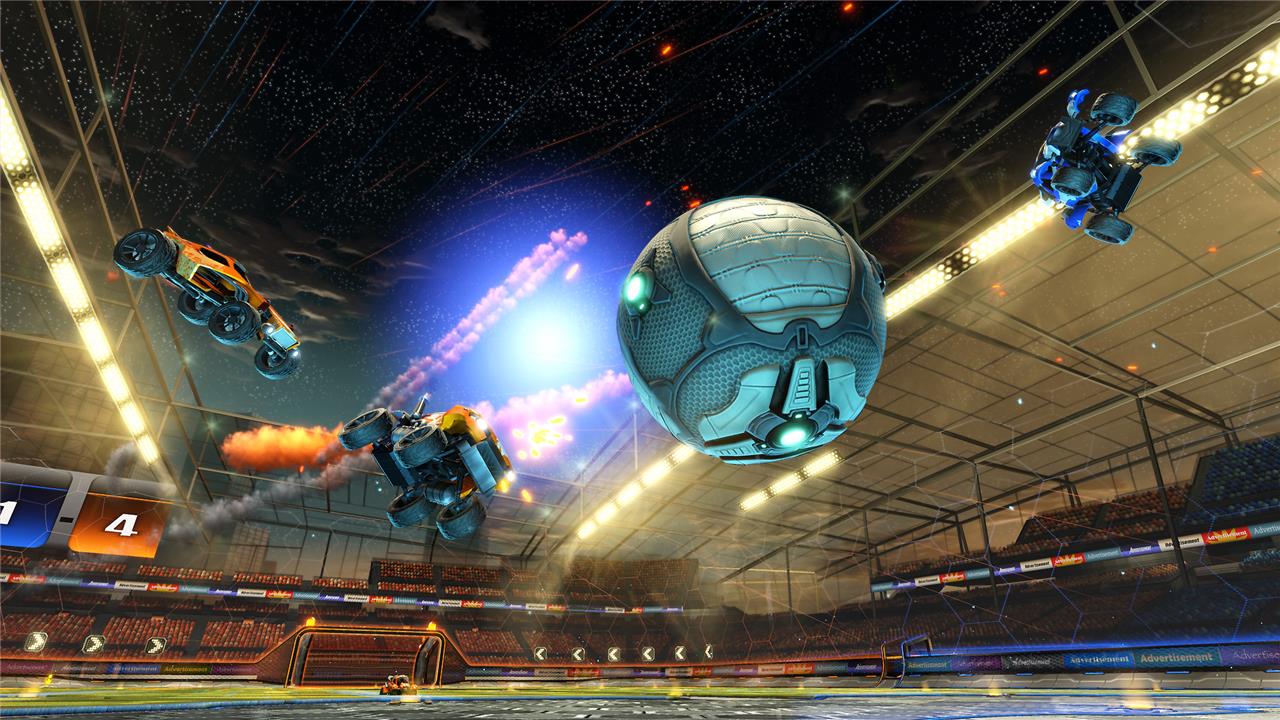
Physics simulation is generally thought of as a function of simulation games like the Gran Turismo series or Kerbal Space Program, but Winder points out that “it’s present to some degree in nearly every game we play, from Super Mario Bros. to Rocket League to Apex Legends.”
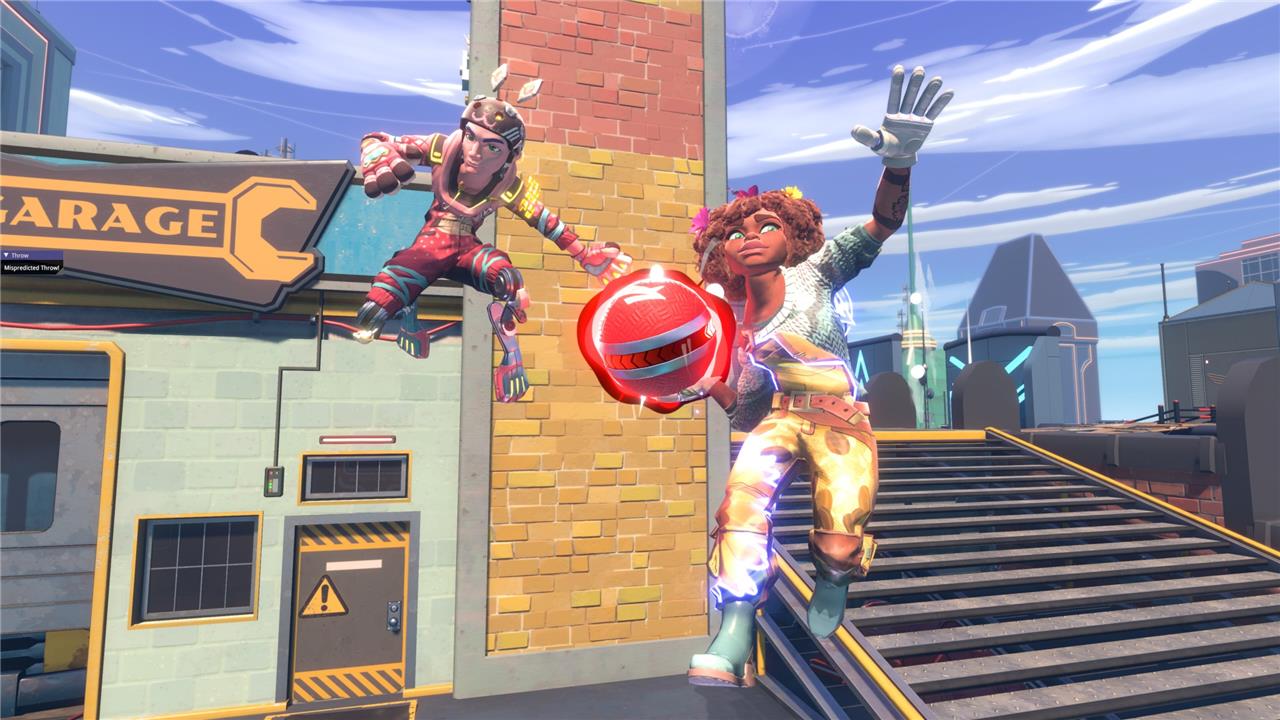
Video games can not only manipulate the strength of gravity to meet their needs, they can simply ignore it when they want to – all in service of making it feel good, said Jeremy Russo, game director at Velan Studios. His studio’s sports title Knockout City uses a gravity effect inspired by fighting games to help the game feel better. (Interestingly, Knockout City’s gravitational constant takes a different approach to Apex; it’s about half of Earth’s gravity.)
“Something we do both for gameplay reasons and for improved game-feel is briefly override normal gravity and character velocity for certain abilities,” Russo explained. In Knockout City, the developer makes your character hover briefly while throwing the ball mid-jump. “The gameplay reason for this is because the throw animation takes a few frames before the ball is released, so if we continued the player’s full velocity up or down then the ball was often thrown into geometry. It also just felt wrong, so we took a cue from some brawler and fighting games that briefly hover players in the air when they melee attack.”
Russo says “the extra level of polish to make this feel right involved resetting the player’s velocity if they were on their way down, or setting a new slower velocity if they were on their way up, because actually hovering at a specific height for multiple frames also felt wrong.” His team applied this same methodology, with varying degrees of special-case adjustment, to lots of abilities, like catching, dashing, and balling up.
“Gravity is a force that pulls stuff ’down’ every single frame of the game,” said Chris Mercado, technical designer at Velan. “The fun comes from deciding where ’down’ is! [We] can mess around with both magnitude and direction as much as we want. Some games work with a constant universal down (Super Mario 64), others have custom spherical gravity (Super Mario Galaxy); at the end of the day, gravity works the way the devs need to make the game they want to make.”
Those forces go beyond the expected up and down of jumping and falling, Winder said. In Apex Legends, players can use jump pads and gravity lifts to push themselves upward (then fall). The same physics-based approach also applies to things like grappling hooks.
“There’s a lot that goes into how these elements move players around to make each of them feel fun and useful,” Winder said. “This can mean accurately simulating the real physics of a player launching through the air or being pulled by a grappling cable while also enabling some less-than-realistic inputs to this simulation to give players the control they expect.”
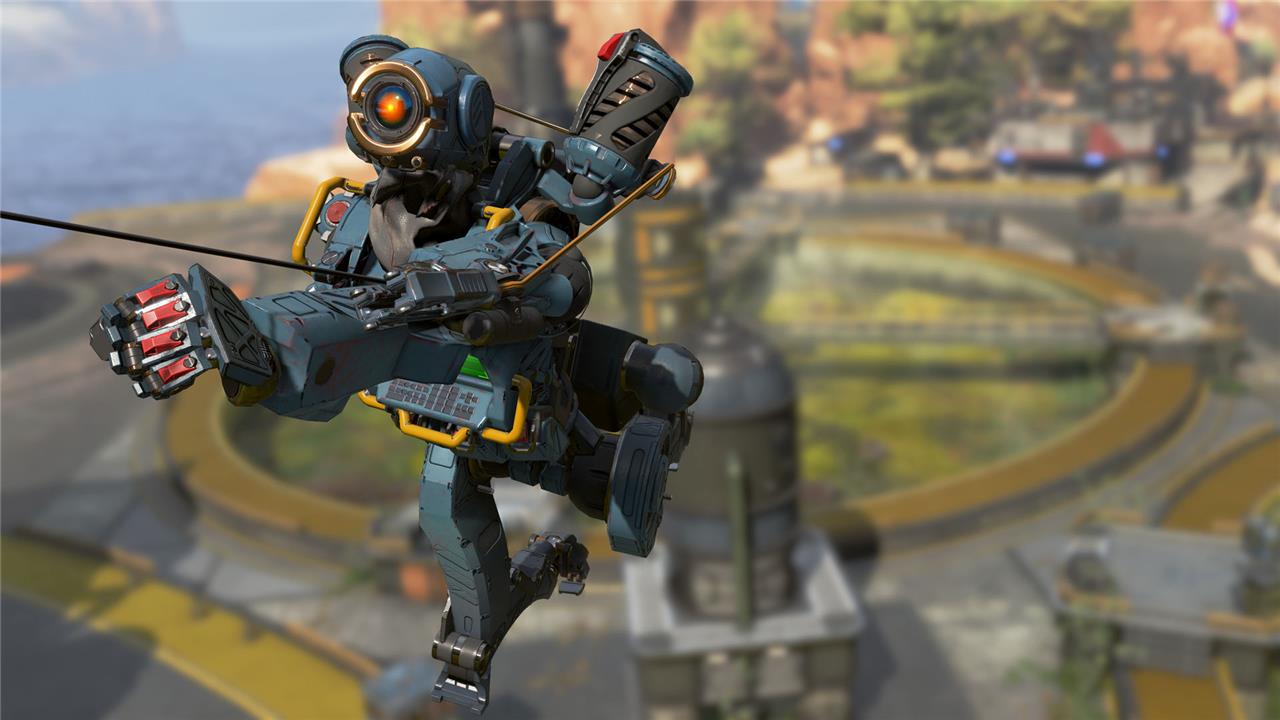
Apex’s Legend Pathfinder has a grappling hook that pulls the player toward a grapple point, “but looking in a particular direction to the sides applies a small force so that players can ’curl’ the grapple,” Winder explained.
Respawn similarly fudges another Legend’s ability. “Horizon’s gravity lift applies an upward force to players but also allows for directional input to move around in the lift and exit it,” Winder said. “There’s also a hidden force that sometimes acts to keep people in the lift so they don’t accidentally fall out.”
That kind of air control is innately familiar to players of many games. In Super Mario Bros. and Sonic the Hedgehog games, you can exert a force on a character who’s jumped to achieve better control of their jumps.
“As a developer, some of the things I find incredibly interesting are things that are invisible to most players that make platforming significantly more usable,” said Velan’s Jeremy Russo. “The most obvious one is air control. you can’t change your lateral direction mid-air after jumping in real life, but most games give you some amount of control.” Developers apply similar tricks for jumps, Russo said, by letting players jump a few frames after they’ve walked off a ledge.
“The amount of control the player has while they’re in the middle of a jump is one of the most fun aspects to mess with,” said Doug Applewhite, a programmer and designer. “It’s a surprisingly difficult situation to feel good and ’right’, and there’s lots of options you have to play with.”
“I think it’s important to realize that the jump is often a player’s first connection to the physics of a game world,” said Hunter Bridges, game director at Penny’s Big Breakaway developer Evening Star. “The jump intuitively tells the player a lot about how the game works, often within the first few seconds of gameplay.”
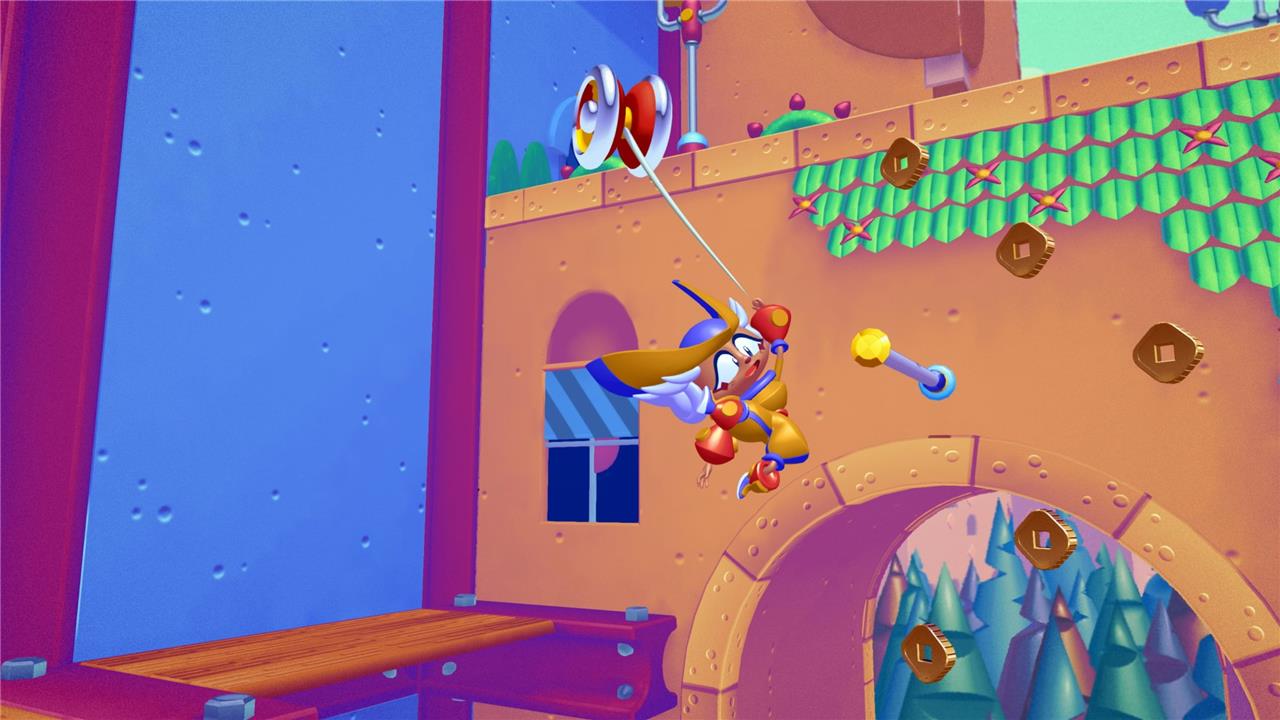
Bridges explained his studio’s approach to jumping in its 3D platformer, explaining that Evening Star wanted to make sure its titular character’s “jump happened with no startup delay.”
“Penny leaves the ground on the first frame the jump input is detected,” he said. “Some other games may wish to have a few frames of startup delay to illustrate anticipation, or otherwise better match the jump animation.”
Bridges, who also worked on 2D platformer Sonic Mania, said that crafting jumping in Penny’s Big Breakaway’s 3D space presents a very different challenge from that of old-school side-scrolling Sonic the Hedgehog platforming.
“In 3D games, you are always wrestling with the fact that your 3D scene is projected onto a 2D screen,” Bridges said. When a game’s 3D camera pitches or rotates, “it becomes difficult to perceive distance along the camera direction due to foreshortening.” That’s something 2D platformers don’t have to worry about.
Developers work around that foreshortening problem, Bridges explained, by making enemies larger, making players’ jumps higher, and being more tolerant of near misses in 3D games by fudging collision detection and giving players recovery abilities. (“This is where Penny’s Ledge Pull move came from,” Bridges said.)
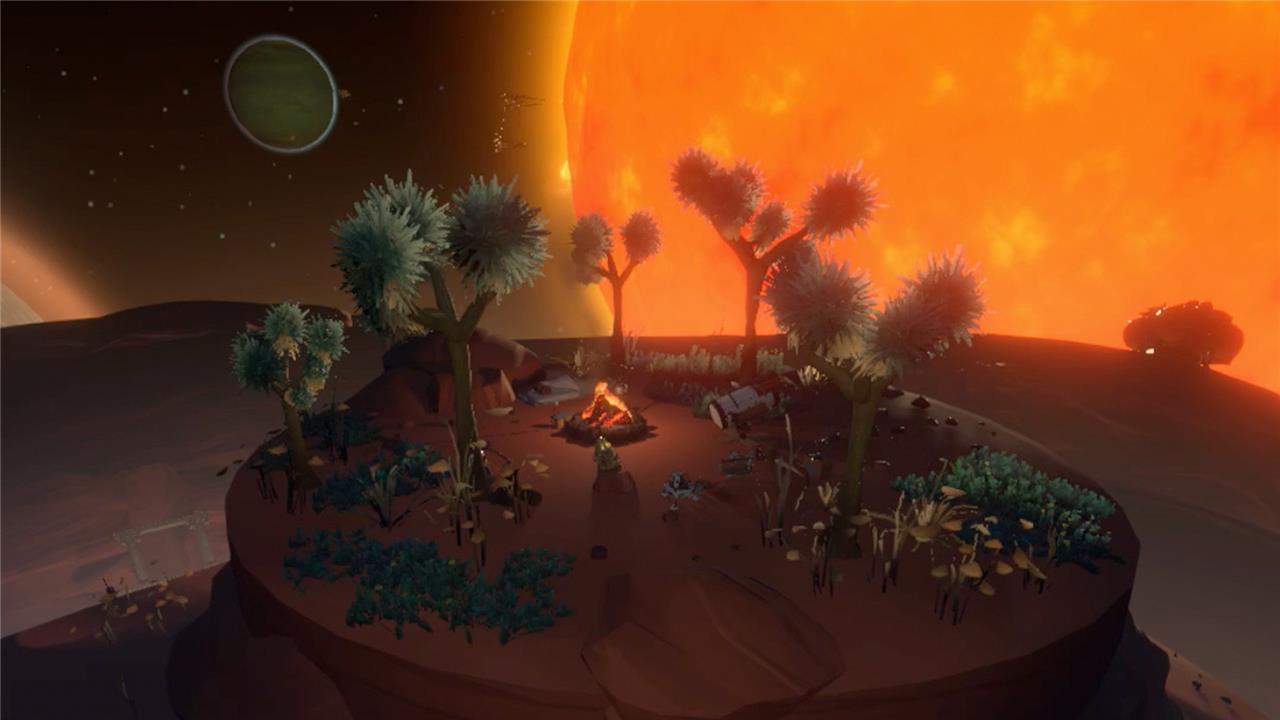
One of the most fascinating implementations of physics as it relates to jumping and gravity is how Mobius Digital’s space exploration game Outer Wilds handles the simple act of leaping. It has to consider more than just the player’s movement, but also the physics of a small solar system.
“With video games, you [have] to keep the camera near the center of the world’s coordinate space, or [.] everything starts kind of jittering,” explained Outer Wilds co-creator Alex Beachum in a 2020 documentary about the creation of the game. “So we have to keep the player near the mathematical origin of the world. [.] But because [in] ours, everything’s moving relative to each other, what I ended up doing is: Every time we apply a force to the player, we just apply an opposite force to every physics object in the world that’s currently simulating.
“So when you jump in Outer Wilds, technically every planet’s jumping out from under you, and you’re more or less not moving. It works,” Beachum said, “and we haven’t changed it.”
Beachum’s solution to solving a complicated math problem by simulating jumping in Outer Wilds was implemented out of necessity, but it also serves the higher purpose: finding the fun.
How do game developers manipulate gravity to create more exciting gameplay experiences
Game developers manipulate gravity to create more exciting gameplay by using techniques such as gravity scripting and dynamic physics simulations that allow precise control over the intensity, direction, and real-time adjustment of gravitational forces within the game world. This enables designers to craft diverse environments-from low-gravity zones that enable high jumps and slow movement to intense gravity fields that restrict mobility-challenging players to adapt their strategies and movements accordingly.
Additionally, developers often tweak gravity’s magnitude and direction to enhance the feel and responsiveness of character movement, making actions like jumping, falling, and floating feel fun and intuitive rather than strictly realistic. For example, games like Apex Legends increase gravity while boosting jump velocity to create a faster-paced experience, whereas others like Knockout City reduce gravity to allow unique mid-air maneuvers.
Gravity also interacts with other gameplay elements such as projectile trajectories, environmental hazards, and physics-based puzzles, adding depth and unpredictability that enrich player engagement. Some games incorporate gravity-based abilities or weapons, adding strategic layers to combat and exploration. Beyond mechanics, artificial gravity can be used to enhance storytelling and immersion by creating believable, dynamic worlds that respond to player actions and narrative developments.
In summary, by scripting gravity effects, dynamically simulating physics, and creatively adjusting gravitational parameters, developers craft immersive, challenging, and enjoyable gameplay experiences that go beyond real-world physics to maximize player fun and engagement.
How does gravity scripting allow designers to craft dynamic environments
Gravity scripting allows designers to craft dynamic environments by enabling real-time control and modification of gravitational forces within the game world. Through scripting, developers can adjust the magnitude, direction, and behavior of gravity on the fly, creating areas where gravity might pull objects sideways, weaken or strengthen, or even reverse, thus shaping how players and objects interact with the environment. This flexibility lets designers build levels with varied gravitational effects that change gameplay dynamics, such as puzzles requiring altered gravity to solve, or combat arenas where gravity shifts to challenge player movement and tactics. By integrating gravity scripting with physics engines, designers can create immersive, context-sensitive experiences where gravity responds dynamically to player actions or environmental triggers, making the game world feel alive and unpredictable.
