
Genshin Impact’s new trading card mode, Genius Invokation TCG, turns familiar heroes into strategic power plays. Whether you’re a veteran Traveler or new to Teyvat’s battles, understanding its elemental combos, deck mechanics, and hidden tactics can make the difference between victory and defeat.
As a deck-building card game, you can think of it as Gwent: Teyvat Edition. But Genius Invocation is a little different than the Continent’s favorite barroom past time: It also features elements, dice, and a duel with Little Timmie. If all the rules sound head-spinning, the following Genshin Impact Genius Invokation TCG guide should help you get up to speed.
How to Unlock Genshin Impact TCG
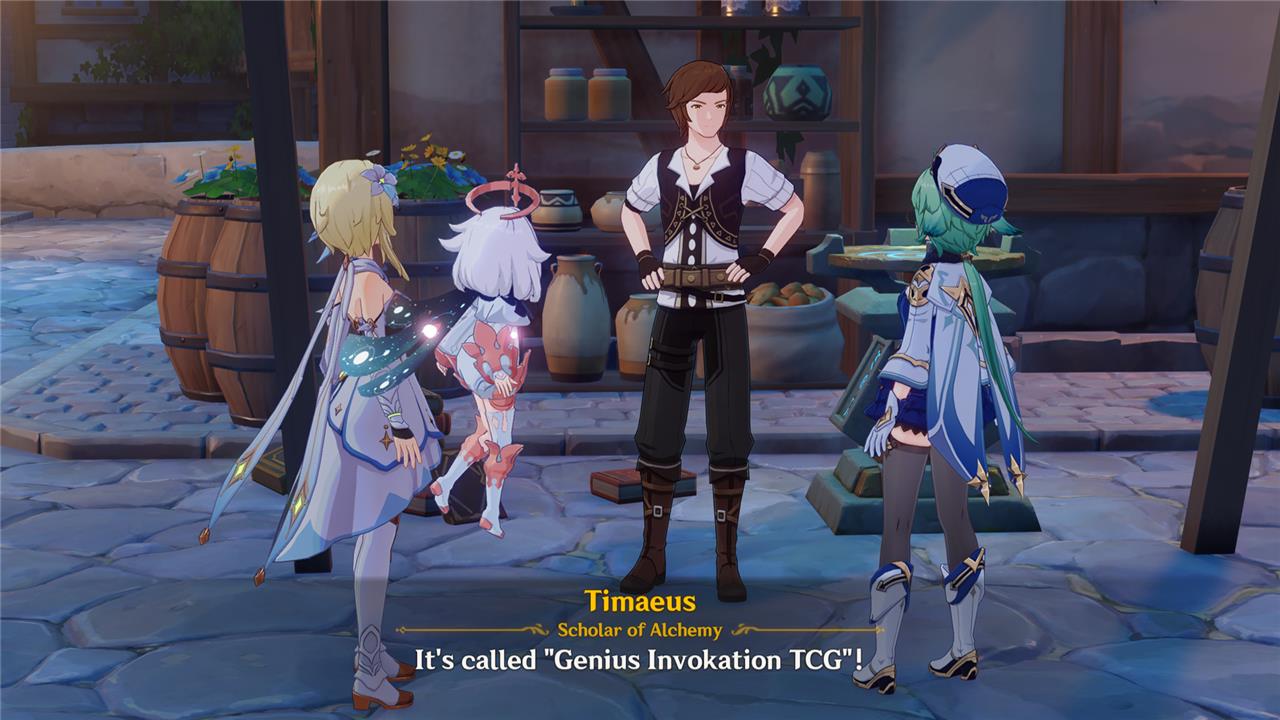
To access the Genius Invokation TCG, you must reach Adventure Rank 32 and complete the Archon Quest “Prologue: Act III – Song of the Dragon and Freedom.” After this, speak with Sucrose and Diona in Mondstadt to trigger the tutorial quest “Battlefield of Dice, Cats, and Cards.” Finishing this quest introduces the game’s mechanics, rewards you with the starter deck, and allows you to challenge NPCs and friends across Teyvat through the Cat’s Tail tavern.
As with most new gameplay features, the Genshin Impact card game has a minimum adventure rank requirement and introduction quest. The quest, called “Come Try Genius Invokation TCG!,” automatically pops up in your journal if you meet the following requirements:
- You have an adventure rank of 32 or higher.
- You’ve completed the Archon Quest Prologue, Act III, Song of the Dragon and Freedom.
How to Play Genshin Impact Genius Invokation TCG
Genius Invokation TCG in Genshin Impact plays like a turn-based card battle where strategy and resource management are key. Each player assembles a deck featuring character and action cards, aiming to defeat the opponent’s characters using elemental reactions and tactical plays. Dice rolls at the start of each round determine the available elemental energy, which you must spend wisely to perform attacks or use skills. Success depends on timing your actions, predicting your opponent’s moves, and making the most of your deck’s synergies.
Every Genius Invokation TCG deck consists of three character cards and 30 action cards. The character cards are placed openly on the table. They’re used to attack opponents, but they also take damage. If all three of your opponent’s character cards are destroyed, you’ve won the game. The action cards, on the other hand, are kept in hand. They consist of equipment cards that enhance character abilities, event cards offering a variety of immediate effects, and long-lasting support cards.
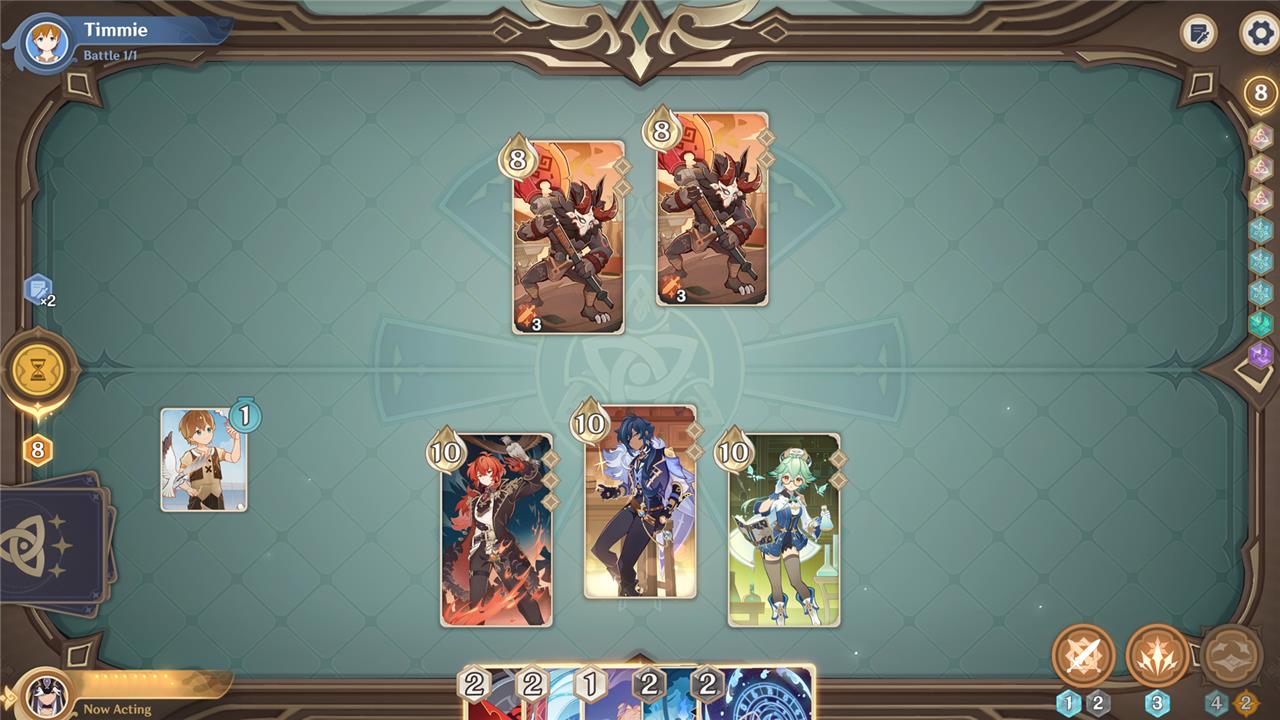
A character card has a certain amount of HP (displayed in the top left) and three different abilities: a normal attack, an elemental skill, and an elemental burst. These abilities come with a cost that can be paid for with dice. More on that below, but let’s take a look at ability cost first:
- Normal attack: costs one die of a matching element and two dice of an unaligned element.
- Elemental Skill: cost three dice of a matching element.
- Elemental Burst: cost varies, but usually three or four dice of a matching element, plus a certain amount of energy. One point of energy is gained by landing one normal- or elemental skill attack.
Now, what about those dice? Every round of Genius Invokation TCG starts by rolling eight dice that display the game’s elements instead of numbers. One side has an omni element, which may represent any other element. Once you’ve got your dice, exchange them for character abilities. If you want to use Kaeya’s elemental skill, for example, you need three cryo dice (or additional omni dice).
Note that some action cards also cost dice. If the number on the card is white, the dice must be of the same element (omni dice still counts!). If it’s black, you may use any dice. Also good to know: you may discard any action card in your hand in return for elemental tuning, allowing you to change one of the dice to an element of your choosing.
What a game of Genius Invokation TCG looks like
A match of Genius Invokation TCG unfolds as a strategic duel between two players, each with a deck of character and action cards drawn from Genshin Impact’s roster and items. Players take turns rolling dice infused with elemental energy, using them to perform attacks, trigger skills, or switch active characters. The goal is to defeat the opponent’s team by managing resources and timing abilities wisely. Matches balance luck from dice rolls with tactical decision-making, rewarding those who plan several moves ahead while adapting to changing conditions on the board.
The best way to learn a new game is by playing it. Now that you know the basics, here’s a step-by-step Genius Invokation walkthrough:
- Step one: Each player draws five random action cards from their deck. Click on them to see what they do, then decide which ones you’d like to redraw (up to five, with only one redraw opportunity).
- Step two: Set an active character. This character is the only one capable of initiating attacks, but is also the one to suffer all incoming damage (apart from special effects). You can switch the active character at the cost of one die.
- Step three: Roll the dice, then select every die that doesn’t match with your character card elements for a reroll. For example, if you get a dendro die but none of your three characters is a dendro, it needs to be rerolled.
- Step four: Choose an action, such as an attack. If your active character is unable to do so, you may switch to a different character whose element matches with your dice. Don’t forget about the five action cards in your hand either; you can use them, or exchange them for elemental tuning.
- Step five: You and your opponent will continue to play turns (one action per turn) until you’ve both run out of dice to use. When that happens, click “end round” to go to the next phase, which starts with a fresh dice roll.
Tips for playing Genshin Impact Genius Invokation TCG
Pay attention to the balance between character cards, equipment, and event cards to maintain flexibility during battles. Learn the elemental reactions and use them strategically to chain powerful attacks while conserving dice. Adjust your deck based on your preferred playstyle-some decks focus on quick offense, while others rely on defense and energy buildup. Practice managing dice rolls wisely, as thoughtful planning often matters more than pure luck. Watching replays or experimenting with friendly matches can help refine your tactics and timing.
Before we send you off to fight Timmie, here are a few more Genius Invokation tips:
- If you’ve forgotten your characters’ elements or weapon types during the reroll/redraw phases, click the little eye icon in the top right of the screen.
- Don’t hesitate to switch characters. Creating elemental reactions, building energy, and distributing damage is very much worth the cost.
- Elemental reactions still exist in Genius Invokation. For example, you can use a cryo attack followed by a pyro attack to trigger a melt reaction, resulting in two extra damage points.
How to find Genius Invokation TCG matches and build decks
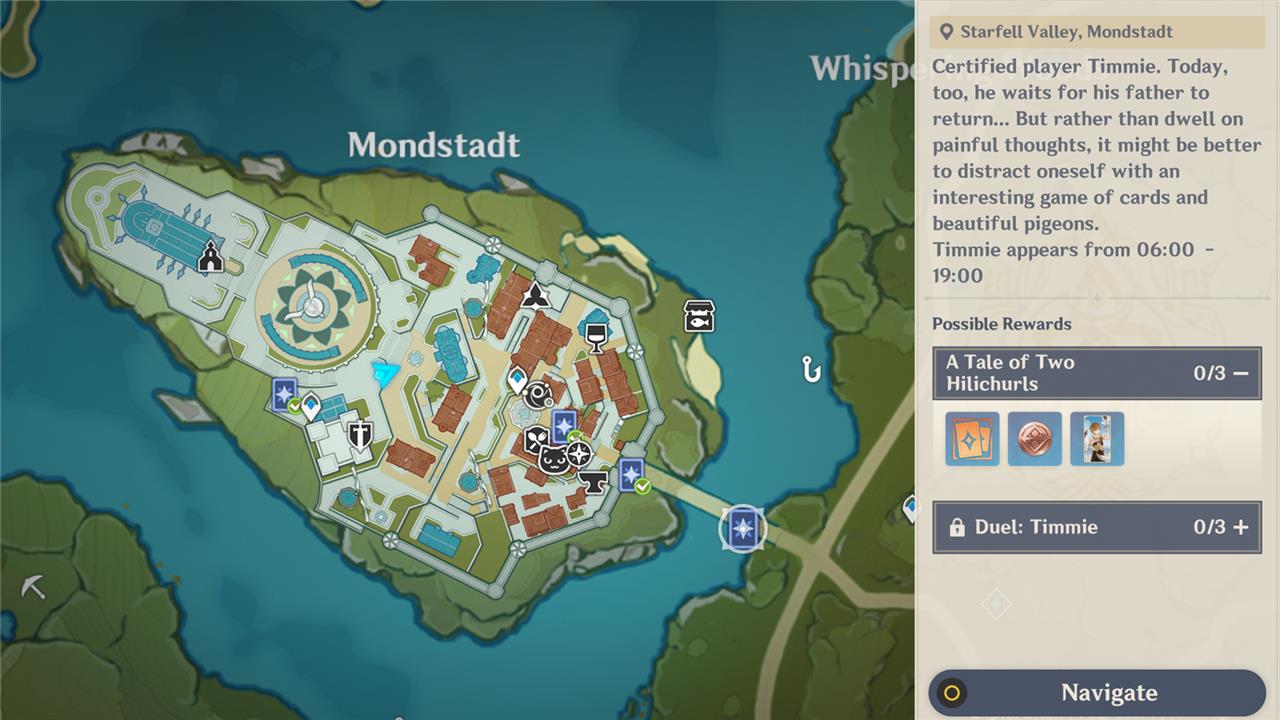
You can find Genius Invokation TCG matches by visiting the Cat’s Tail tavern in Mondstadt, where most duels take place. NPC challengers become available as you progress, and you can also play against friends once you’ve completed the tutorial. To build a strong deck, collect Character and Action Cards through matches and weekly challenges, then experiment with combinations that suit your preferred play style. Balancing elemental reactions and energy management makes a big difference in achieving consistent wins.
As you set out to become Teyvat’s top Genius Invokation TCG player, there are three more things you need: better cards, a deck-building tool, and opponents. To obtain additional cards of your choosing, speak to Prince (yes, the talking cat) in the Cat’s Tail Tavern. He doesn’t accept Mora though, only lucky coins obtained from Genius Invokation TCG victories.
Best beginner decks for Genius Invokation TCG
Genius Invokation TCG beginner decks emphasize accessible characters, reliable reactions, and staple action cards for easy wins against NPCs. Free or early-unlockable characters like Fischl, Sucrose, Diluc, and Collei form strong starters.
Electro Swirl Deck
Fischl, Sucrose, Diluc excel for quick Overload/Swirl reactions. Start with Fischl’s Skill for Electro application, swap to Sucrose for Swirl spread, then Diluc for Pyro damage bursts. Include cards like Leave It to Me! (free swaps), Chang the Ninth (draw after reactions), and food heals (Sweet Madame).
Quicken Deck
Collei, Fischl (or Keqing), and a flexible third like Nahida ramp Dendro/Electro for Aggravate. Collei’s low-cost Burst applies Dendro easily; pair with Fischl summons for consistent triggers. Add ramp like Paimon/Liben, resonance cards, and 4-8 foods for sustain.
Action Cards for All
-
Staples: Liu Su (draw), Strategize (draw), Ellin/Rana (dice cheat), Gambler’s/Tenacity artifacts.
-
Avoid early talents except Bennett/Sucrose; focus ramp over locations.
| Deck | Key Strength |
|---|---|
| Electro Swirl | Fast reactions, beginner-friendly |
| Quicken | Consistent Dendro uptime, easy Bursts |
| Melt/Vaporize (e.g., Klee/Mona) | High burst damage with summons |
How to build Diluc Sucrose Fischl deck step by step
Diluc, Sucrose, and Fischl form a strong beginner Electro Swirl deck in Genius Invokation TCG, leveraging Fischl’s summons for Electro application, Sucrose for spreading via Swirl, and Diluc for Pyro damage amplified by Overload reactions.
Step 1: Select Characters
Choose these three as your fixed team (order them Fischl > Sucrose > Diluc for optimal sequencing with cards like When the Crane Returned). All are free or early unlocks: Fischl (Electro summoner), Sucrose (Anemo grouper), Diluc (Pyro carry).
Step 2: Gather Core Action Cards
Build to exactly 30 cards, focusing F2P-friendly staples (2 copies max per card unless noted). Prioritize from your collection via NPC invites/duels:
-
Draw/Ramp (8-10 cards): 2 Strategize, 2 Liu Su, 2 Paimon, 2 Liben, 1 When the Crane Returned!
-
Swaps/Cheats (6-8): 2 Leave It to Me!, 2 Changing Shifts, 2 Ellin, 1 Dawn Winery.
-
Equipment (6): 2 Wine-Stained Tricorne (Diluc), 2 Thunder Summoner’s Crown (Fischl), 2 Viridescent Venerer’s Diadem (Sucrose).
-
Heals/Summons (4-6): 2 Sweet Madame, 2 Minty Meat Rolls; add 1 The Bestest Travel Companion!
Step 3: Fill Remaining Slots
Round out with versatile picks: 2 Gambler’s Earrings, 1-2 Calx’s Arts, foods like I Haven’t Lost Yet!, and locations (Favonius Cathedral). Avoid heavy talents early; test in Deck Building screen.
Step 4: Playstyle and Tuning
Start Fischl Skill (Oz Electro), swap Sucrose to Swirl (hits all foes), then Diluc Burst/Skill for Overload bursts (+2 DMG, forced swaps). Reroll dice for Electro/Anemo/Pyro; end rounds first for initiative. Practice vs. easy NPCs like Ellin.
| Card Type | Examples |
|---|---|
| Must-Haves | Leave It to Me!, Strategize, Tricorne |
| Nice-to-Haves | Liben, Sweet Madame, Crane Returned |
| Avoid | Complex talents, Geo/Hydro mismatch |
