
Hidden beyond tall blades and tangled roots, the Garden in Grounded 2 is a place few players reach without getting lost first. With shifting paths, clever entry points, and dangers lurking in the undergrowth, finding your way there takes equal parts caution and curiosity. Here’s how to trace the right routes and finally step onto that mysterious patch of green.
How to get into the Garden
Access the Garden through the main burrow entrance near the overgrown oak roots in the backyard zone. Glide down using a crafted lilypad glider from the upper branches to avoid fall damage, or build a rope ladder from spider silk for a stable climb. From the ant hill shortcut, burrow upward with a black ant mount to emerge directly inside the vine-choked gates. Watch for mantis patrols along the eastern ledge path; cloak with chameleon mutagen before crossing. Once inside, follow the central flowerbed trail to the core greenhouse hub.
We’ve found two ways to enter the Garden, both of which take you to a new sliver of the map in the northeastern Grass Games region, near the back door of the Flower Bed Ranger Station. The Toxic Tangle update added a little bit extra here, including a new Ranger Station location, several more bugs, and a wall that separates the park from the new region. You may want to have your gas mask handy, since there are several stinkbugs wandering around here.
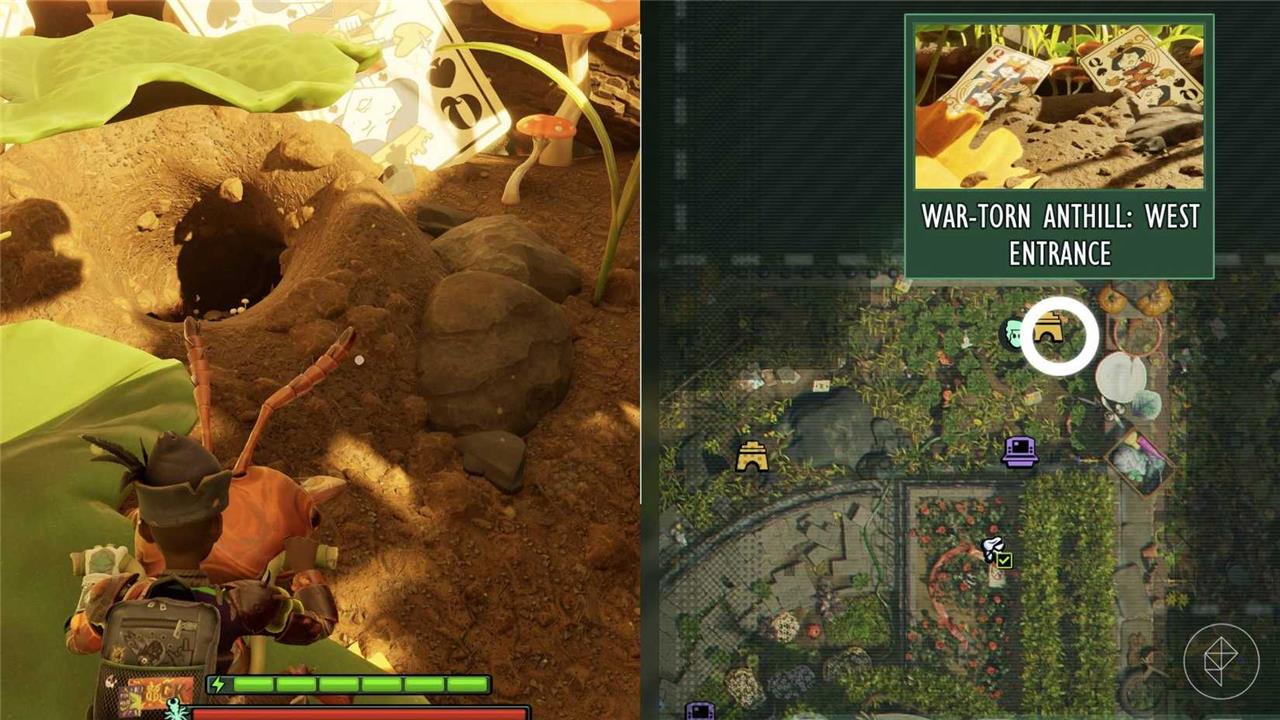
Head east toward the wall. Near the puddle before the ranger station, you may find two stinkbugs. Defeat them or run past them as you see fit. Once you reach the eastern corner, you’ll see a notification pop up that says you have discovered the western entrance of the War-Torn Anthill. This is one entrance into the Garden and the easiest to just speed through without having to worry about climbing.
If you take this route, we recommend using your red ant buggy. The first half of the tunnel is home to several red ant soldiers and workers, but if you’re on the buggy, they won’t fight you. Turn left at the first forked path, and follow the tunnel until it spits you out in a large room. There’s a giant blob in the center, and several ants are fighting each other – which means, as long as you stay on your ant buggy, they won’t have time for you. Exit the chamber at the other end.
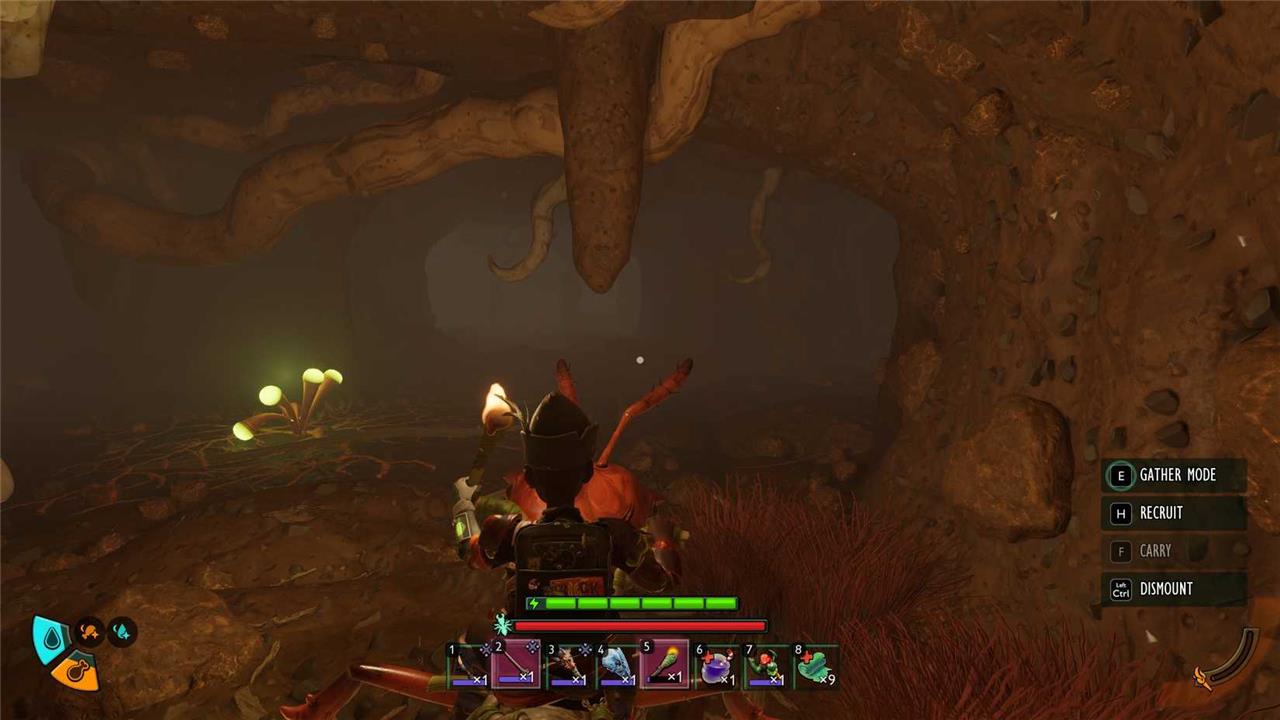
Now you’re in the black ant half of the hill, and these ants will attack, even if you’re on the buggy. Despite being a new enemy, they’re no more of a threat than red ant soldiers. You can also just ignore them, as the path out is another straight shot through a long carrot-lined tunnel. (Later, once you upgrade your hatchet, you can come back and chop these carrots, but that’s not doable when you first enter the garden.)
The tunnel opens out onto the northwestern corner of the garden, and you’re free to explore as you see fit. The immediate area is mostly free from dangers, though there are challenging bugs not far off. And at night, you’ll find a cricket a little ways to the south.
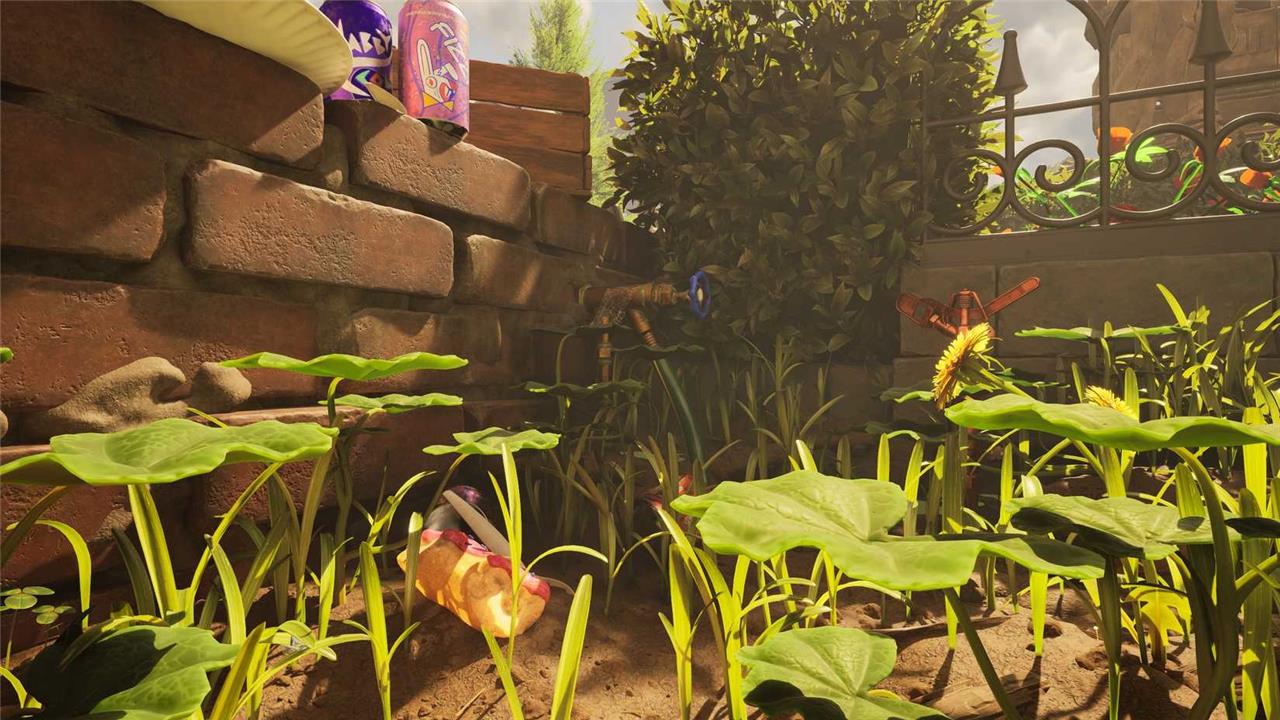
There’s also a faster way into the garden that skips having to mess around with anthills, though you’ll need the orb weaver mount. You’ll see a faucet up against the wall. Climb the stick, and walk along the brick wall. Hop across the leaves to reach the spiderweb below the faucet, then, while mounted on your orb weaver, climb the web to the faucet. From here, you can hop onto the leaves of the hedge and over the wall.
It’s a good idea to go through the War-Torn Anthill at least once, though, as there’s a lot of brittle quartzite and sturdy quartzite you can use for weapon upgrades. You’ll just need to either harvest it when no ants are around or defeat them first, since they become aggressive when you hop off your ant buggy.
And you can also just build stairs up the wall and cross it that way, if you have the materials and want to make a shortcut. Some players reported during the public test period that there are some gaps in the hedge that let you through to the Garden as well, though we weren’t able to track those down. It’s possible they’re either not present in the update’s full release, or they’re just really easy to overlook.
What enemies and hazards are in the Garden
In the Garden area of Grounded 2 you’re dealing with late-mid to end-game level threats: stronger variants of yard bugs, high-damage environmental zones, and vertical-navigation dangers. I’ll group them so you know what to prep for.
Hostile insects and creatures
You won’t see early-yard gnats and lawn mites as the main problem here; the Garden features tougher, more aggressive types.
-
Strong spider variants: Expect upgraded orb weavers and wolf/hedge spiders with higher health and poison damage, often in tighter spaces or on vertical surfaces.
-
Advanced ants and beetles: Black-ant style enemies, larger beetles, and other “armored” bugs show up more often, with harder hits and thicker armor.
-
Flying threats: Bees, wasps, and other flying insects can harass you while you’re on narrow ledges or climbing, making knock-back and falls a real risk.
-
Burrowers and ambushers: Creatures that pop out of the ground or from foliage can quickly surround you if you’re not listening for audio cues.
Environmental hazards
The Garden adds more punishing terrain and status effects than the starter yard, so movement and armor matter a lot.
-
Height and fall damage: Lots of raised beds, walls, and trellis-like structures mean you can fall from lethal heights if you’re knocked back or mis-jump.
-
Tight tunnels and chokepoints: Entry areas and some inner paths force you into narrow spaces where AoE gas or multiple enemies can easily trap you.
-
Damage surfaces: Thorns, sharp stems, and certain man-made debris can chip health when you slip or get shoved into them.
Status and damage types
Going in without the right resist gear and mutations makes the Garden feel much harder than it has to.
-
Poison: Spider and some insect attacks inflict stacking poison, so poison resistance, healing on hand, and blocking practice are crucial.
-
Stun and knock-back: Beetles, some flyers, and charge attacks can stagger or throw you off ledges, turning minor hits into lethal falls.
-
Swarm pressure: Individually manageable enemies become deadly when several attack at once in cramped beds or tunnels.
Navigation and visibility hazards
Just moving around the Garden safely is its own challenge.
-
Dense foliage and line-of-sight: Plants and decorations block vision, hiding predators and making ranged combat tricky.
-
Maze-like layout: Raised beds, fences, and interior paths can be confusing until you learn the landmarks, increasing the chance of wandering into high-tier enemy zones under-geared.
-
Limited safe perches: There are fewer “absolutely safe” rest spots; some elevated places still get hit by ranged spit, flyers, or climbing enemies.
If you tell me what weapons/armor you’re using and which entrance you’re coming from, I can list a recomme
How to defeat aphids and spiders in the Garden
You deal with aphids and spiders in very different ways in the Garden: aphids are easy farming targets, while spiders are serious threats that need blocking, positioning, and the right damage type.
Aphids (easy targets and farm mobs)
Aphids in Grounded 2 are low-threat and mostly useful for farming meat and resources.
-
Use any fast weapon: a basic dagger, spear, or light one-handed weapon will one- or two-shot them.
-
Sneak or sprint: walk slowly or sprint directly at them, then swing as soon as you’re in range; they die before they can flee far.
-
Use ranged for runners: a simple bow or pebblet turret shot will pick off those that get stuck on leaves or edges.
-
Farm smart: clear nearby predators first, then do a quick loop through areas where you hear lots of squeaks; build a lean-to or small base nearby if you’re using them as a regular food source.
Spiders: general rules
Think of spiders as “learn the pattern, then punish” fights.
-
Always block: learn the spider’s attack rhythm and perfect block when possible; this cuts damage and often opens them up.
-
Stay at the legs: circle-strafe around a leg instead of standing directly in front of the face to avoid lunges and bites.
-
Use poison/hazard resist: bring armor or trinkets that reduce poison and boost defense so a single combo doesn’t delete you.
-
Heal between hits: keep at least one quick-use heal (fiber bandage or better) ready; don’t try to “greed” extra hits when low.
Fighting orb weavers in the Garden
Orb weavers are usually your first regular spider opponents here.
-
Best weapons: fast weapons (spear, dagger, or light sword) work better than slow two-handers because you can hit between their swings and back off.
-
Open with a stun or status: a couple of charged or heavy hits can stagger them, then you unload quick attacks into the stagger window.
-
Watch for the lunge: when it rears back, either perfect block or dodge sideways; don’t roll straight back or you can still be clipped.
-
Clear the webs: if you’re fighting near their webs, try to pull the spider a few steps away first so you don’t get stuck mid-fight.
Fighting wolf/hedge-type spiders in the Garden
These hit harder, move faster, and punish mistakes more.
-
Go in with full health and buffs: eat a good meal and have healing ready; these fights often come down to surviving one bad combo.
-
Learn the three-hit st
