
Nintendo’s original Switch controllers became infamous for “stick drift,” a frustrating flaw that sent countless Joy-Cons in for repair. Hall-effect joysticks-using magnets instead of physical contact to track movement-promise a drift-free future and longer-lasting precision, making them a hot topic for the Switch 2’s hardware wish list. But despite fan hopes, Nintendo has confirmed the Switch 2 Joy-Cons won’t use this technology, leaving gamers to wonder if the next generation will finally break free from the drift curse, or if history is doomed to repeat itself.
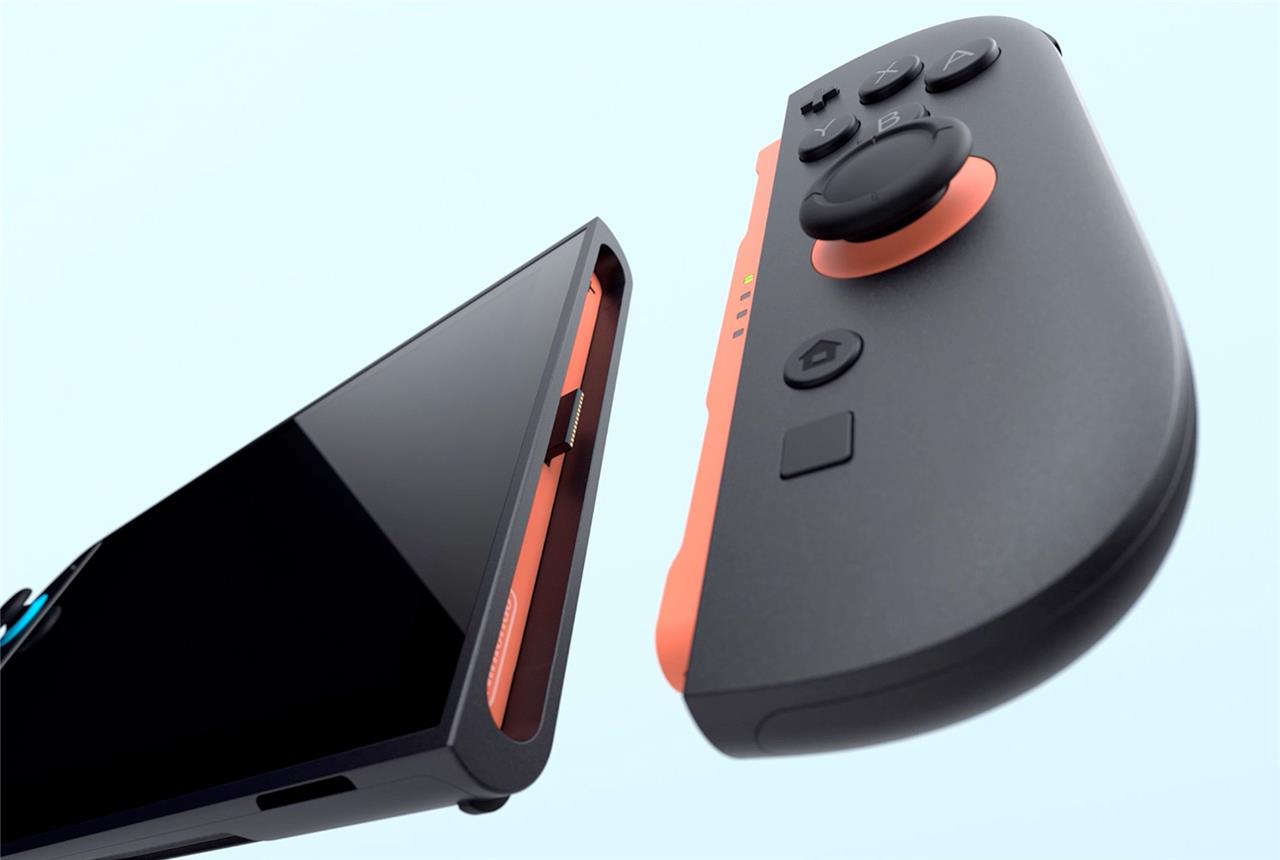
Of the many upgrades coming with the Nintendo Switch 2, including a bigger screen and more powerful hardware, there’s one upgrade that you’ll hopefully never notice: the system’s new Hall-effect joysticks packed into each Joy-Con. Switch 2’s updated joystick technology will address a major and expensive design flaw with the original Switch, which many owners experienced in the form of “stick drift.”
Stick drift made Joy-Con controls unreliable. Over time, Switch owners would start to experience unresponsive or inaccurate joystick movements, and ultimately Joy-Cons would need to be repaired or replaced. Stick drift was such a big problem for the original Switch that it led to Nintendo being suedmultiple times and Nintendo’s president apologizing for defects. Nintendo wound up fixing Joy-Cons afflicted with stick drift for free.
Switch 2 hopefully won’t have the same problem. The system will reportedly utilize Hall-effect sticks, a technology rarely used in first-party video game console controllers – largely because the alternative is so inexpensive. Not only are Hall-effect sticks more reliable over time, they can provide more precise inputs.
Many traditional analog sticks, like those in modern controllers from Nintendo, Sony, and Microsoft, use a pair of potentiometers to determine players’ movements left, right, up, and down. The problem with this stick technology, according to iFixit teardown engineer Shahram Mokhtari, is that a part of the potentiometer called the wiper “physically contacts with a [resistive contact] material and wears it away over time.”
Additionally, “if there’s debris, or if there’s any kind of humidity – anything to weaken that material – it accelerates that deterioration and that causes stick drift, because once the material’s properties change, the voltage it sends back to the controller also changes,” Mokhtari told AELGAMES. That change in voltage results in the controller reading inputs incorrectly.
Switch controllers were particularly susceptible to drift, because debris could easily get into the controllers, wearing down a thin film meant to protect the contact material.
Hall-effect sticks address the problem of drift by removing the wiper from the equation; there is no physical, mechanical contact that could degrade. In Hall-effect sticks, the wiper is replaced by a magnet, and the resistive contact strip is replaced by a flat conductor, called a Hall element, that is sensitive to magnetic fields. A sensor reads the effect of those magnetic fields on the conductor and translates them into in-game movements, without contact.
“A contactless joystick input method [.] can drastically increase the lifetime of your controller and is far less prone to drift,” iFixit data analyst Austin Blakely wrote in a wiki entry. “Whereas a potentiometer joystick is nearly guaranteed to fail eventually, a Hall-Effect joystick could hypothetically last the entire lifetime of the controller.”
Hall-effect sensors can still experience drift, Mokhtari said, but they’re much more resistant to the issue than potentiometer-based controllers because of their contactless nature. Hall-effect sensors can also be susceptible to magnetic interference, Mokhtari added, if they’re not properly shielded from magnets – which, by the way, Switch 2 Joy-Cons apparently use.
So if Hall-effect sticks seem superior to their potentiometer-powered peers, why don’t all controllers use them? Some of it comes down to price, Mokhtari said, as potentiometers are produced at a scale that makes them more cost effective to use. Potentiometers are a time-tested, inexpensive option. Plus, if your controller fails, as it ultimately will with use, a company like Nintendo or PlayStation would certainly be happy to sell you a new one at full retail price.
But with Joy-Con stick drift being an albatross around the neck of the otherwise highly successful Switch – and the Nintendo footing the cost of repairing Joy-Cons with stick drift – Nintendo seems ready to move on to longer-lasting, slightly more expensive Hall-effect stick technology. We’ll surely be putting those new Hall-effect Joy-Cons through their paces in the coming years, as we jostle each other in the next Mario Kart and Super Smash Bros., seeing just how durable the tech really is at mass market scale.
How do Hall-effect joysticks prevent stick drift in gaming controllers
Hall-effect joysticks prevent stick drift by eliminating the physical contact points found in traditional potentiometer-based joysticks. Instead of using resistive pads and wipers that wear down over time-leading to inaccurate voltage readings and drift-Hall-effect joysticks use magnets and sensors to detect movement via changes in a magnetic field. This contactless design means there is no friction or wear on the sensor itself, drastically reducing the risk of drift caused by component degradation.
While Hall-effect joysticks are not entirely immune to all forms of drift (mechanical wear on springs or centering mechanisms can still occur), they are far less prone to the electrical and friction-based failures that cause stick drift in traditional controllers. This results in a much longer lifespan and more consistent performance for gaming controllers equipped with Hall-effect technology.
How do Hall-effect joysticks eliminate the wear and tear causing drift
Hall-effect joysticks eliminate the wear and tear that causes drift by using a contactless sensing method. Instead of relying on physical contact between a wiper and a resistive strip (as in traditional potentiometer-based joysticks), Hall-effect joysticks use magnets and sensors to detect movement through changes in a magnetic field. This means there is no friction or abrasion between moving parts and the sensor, so the components that typically degrade and cause drift in conventional joysticks are simply not present.
With no physical contact, there’s no material to wear down, no carbon tracks to degrade, and no debris buildup that interferes with sensor accuracy. As a result, Hall-effect joysticks are far less susceptible to the mechanical failures that lead to drift, offering significantly improved durability and long-term reliability compared to traditional designs.
