
Overwatch 2’s Mauga storms into battle wielding not one, but two massive chainguns-each with its own unique firepower and purpose. Yet, perfecting the balance between these twin weapons took Blizzard’s team over four years, as they wrestled with gameplay mechanics and visual coherence to bring this Samoan tank hero to life just right.
“Mauga is a damaged-based tank, and how he sustains himself and his team is through damage,” said lead hero designer Alec Dawson. He was designed based on his weapons, with his abilities centered around doing as much damage as possible. The designers hope this focus on damage will make him more appealing to new players.
<
The team wanted to ensure his abilities felt good when using both chain guns, but they also wanted to make sure players couldn’t “wipe people out immediately.” To combat that, Mauga has a big spread on both of his guns. At the same time, this makes him a threat in close quarters. “You don’t want to play with Mauga up close unless you know you’re going to take him out,” said Dawson.
Mauga’s Overrun charging ability makes him virtually unstoppable, even against sleep darts. “He uses it to get where he wants to go,” said Dawson. For a nice cherry on top, whenever Mauga directly hits an opponent while using Overrun, he’ll slam them to the ground, stunning them while other nearby opponents will be sent flying.
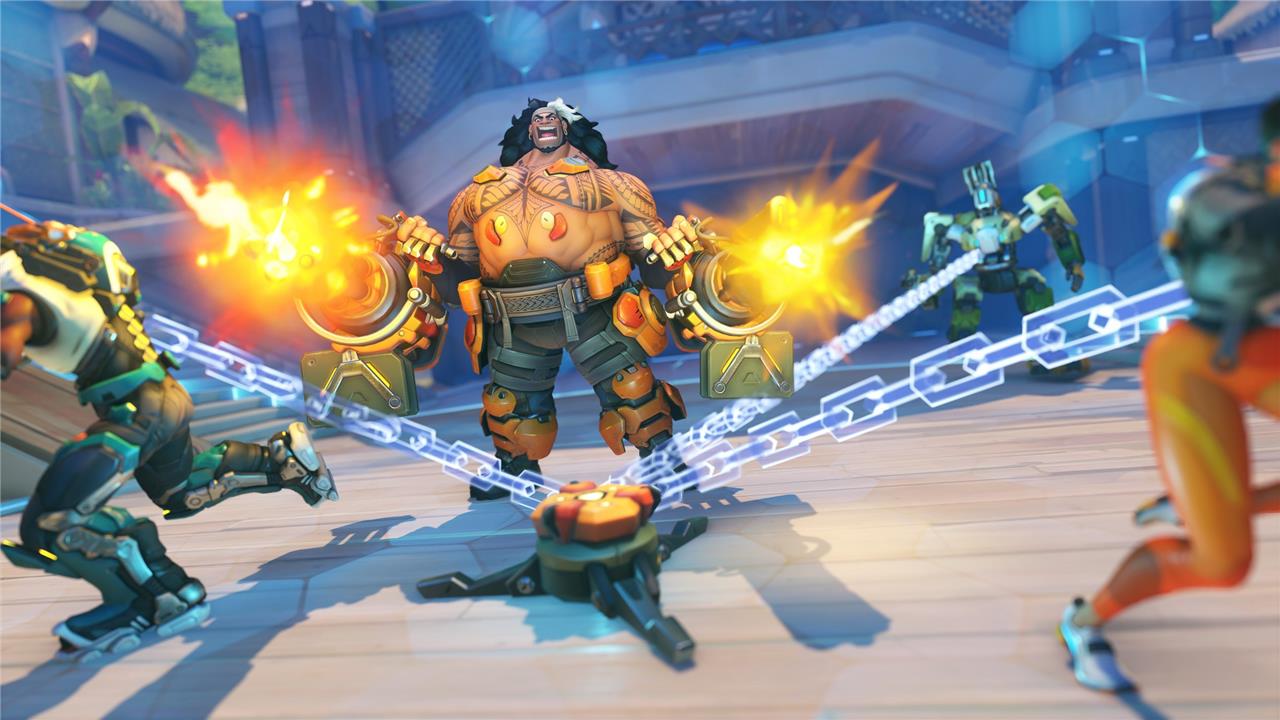
Mauga’s ultimate, Cage Fight, creates a zone that traps opponents and blocks healing from the outside of it. What makes his ultimate even more dangerous is that Cage Fight stays active even if Mauga dies. Support hero Lifeweaver can pull Mauga out of the ultimate, but the enemy players will still be trapped inside until the ability runs out.
“We always kinda knew that he was going to be a tank with two big main guns”
Even though he’s a tank, Mauga can do more damage than some DPS heroes, said Dawson. To counter that, opposing teams can attack Mauga while he’s reloading or has burned through his abilities. “He’s such a big body that he really needs support. He needs a high healing output to keep him up at times.”
When it came to creating Mauga, the dev team worked closely with a culture consultant team to ensure the studio displayed him in a way that would be respectful to the Samoan community. “We worked with a traditional tattoo artist from the Samoan culture to guide us. We tried to get as authentic as possible and as close to real as our engines could handle. And it turned out great,” said hero design producer Kenny Hudson.
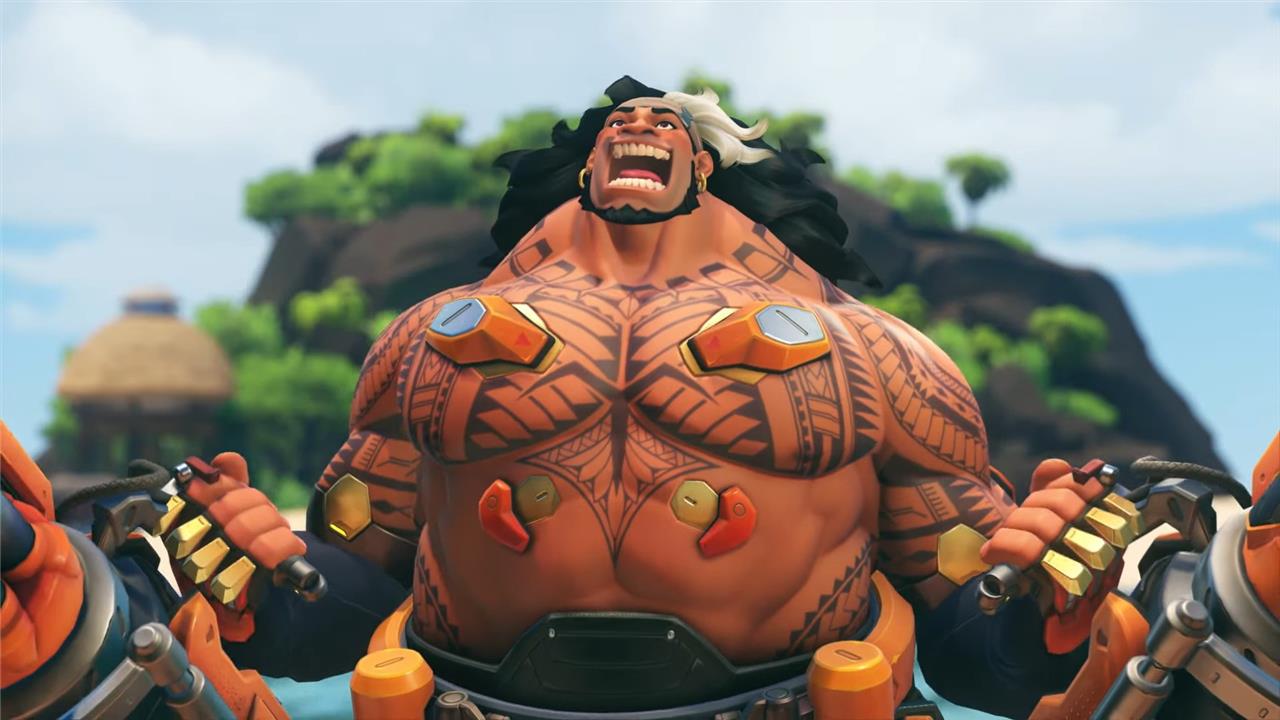
When Mauga was first being tested, the team originally had one iteration where his right gun only dealt critical damage to enemies in the air to help tanks fight flying-based heroes. As time went on, the team scrapped that, and now the right gun deals critical damage whenever an enemy is set on fire first with his left gun. But the idea to have him use two big guns was something the dev team always intended to do. “We always kinda knew that he was going to be a tank with two big main guns, and we wanted to make them just as important and just as useful to players as the other one. We didn’t want one to outshine the other,” said Hudson.
“The team really wanted to take some more time to get the kit just right”
One of the challenges the dev team faced was making the visual cues noticeable to players when Mauga uses his Cardiac Overdrive ability, which allows Mauga and his team members to heal whenever they damage an opponent. So the dev team revisited an old idea where Roadhog’s ability would heal everyone around him. This helped them find the “sweet spot” of not overwhelming the player with too much going on screen. “We don’t like throwing things away. Even if it doesn’t work out for a certain hero, it can come back later on for another one,” said senior test analyst Foster Elmendorf. To help further prove their point, Elmendorf explained how Mauga’s ultimate was originally D.va’s, which involved her making “a dome of lasers.”
How did Blizzard finally perfect Mauga’s dual guns after years of development
Blizzard perfected Mauga’s dual chainguns after years of iterative development by carefully balancing their design, visuals, and gameplay mechanics. Initially, the team experimented with different weapon types, including a mix of hitscan and projectile weapons, but found it challenging to make firing both simultaneously feel smooth and satisfying. They ultimately focused on two similar miniguns to ensure a cohesive and powerful close-quarters combat style that fit Mauga’s aggressive personality.
The production team also worked extensively on tuning the visual effects to make each gun’s firing mode unique yet visually harmonious, while ensuring the large weapons didn’t obstruct the player’s view or gameplay. Additionally, they refined Mauga’s ultimate ability by adding an unlimited ammo bonus, which complemented his dual guns and enhanced his threat in cage fights. This iterative process, combined with cultural authenticity in his design and continuous playtesting for balance, allowed Blizzard to bring Mauga’s dual guns “just right” for Overwatch 2.
What specific design changes improved Mauga’s dual guns over time
Blizzard improved Mauga’s dual guns over time through several specific design changes focused on balancing power, usability, and uniqueness:
-
Both guns share ammo and reload together, simplifying management while maintaining distinct firing properties.
-
When firing both guns simultaneously, movement speed penalties stack, and the spread of bullets increases significantly, encouraging strategic use rather than constant dual firing.
-
The firing rate decreases when using both guns at once, balancing their combined damage output and preventing overpowering spam.
-
Damage and ignition mechanics were tuned: the incendiary chaingun’s damage was slightly reduced, but the number of shots needed to ignite enemies was lowered, enhancing its utility.
-
Accuracy improvements were made by slightly decreasing the spread of solo chaingun fire, making Mauga more effective at range when using one gun.
-
Visual and gameplay synergy was emphasized by focusing on two similar miniguns rather than mixing different weapon types, ensuring a coherent and satisfying dual-wield experience.
-
Reloading both guns simultaneously and stacking movement penalties when firing both encourage players to alternate between guns for tactical advantage rather than constant dual firing.
These changes collectively refined Mauga’s dual-gun mechanics, balancing his aggressive close-range power with strategic depth and survivability.
