
Leon Kennedy’s return isn’t just a facelift-it’s a reimagining. From reworked encounters and sharper AI to fresh story beats and revamped controls, the Resident Evil 4 remake twists the familiar into something tense and unpredictable.
The original, especially in later ports such as the Nintendo Switch version, plays fairly well to this day. But if you’ve always wondered what a modern take on Leon S. Kennedy’s trip would be like, the Resident Evil 4 remake is here to answer that question. There are plenty of changes in varying scales, though, so if you’re wondering whether your favorite aspect made the cut or everything new that the remake offers, this list will dispel all doubts.
Breakable objects and points of interest are now yellow
Objects that can be broken or examined now glow yellow, making them stand out clearly against the darker environments. This visual change helps players notice crates, barrels, or other interactive elements without excessive searching. The brighter cues speed up exploration and reduce wasted time scanning every corner for items or treasures, offering a smoother and more readable experience during tense moments.
In the original, breakable objects – from crates to barrels – were all signalized by a higher contrast. It was easy to know what you could destroy using your knife to obtain money and items. The remake builds upon this by replacing the contrast difference with yellow markers, which look like paint covering the object. This is also applied to points of interest, such as structures you need to destroy to drop down a bridge or ledges to use to advance through a section.
The reasoning behind it is clear, though. The fidelity is much higher in everything that surrounds you in-game, so having a bright and distinct color to highlight objects in the backgrounds is quite useful. There is an exception, however, related to the vases that replace crates and barrels in the castle area. They don’t have a yellow mark on them, but they’re still fairly recognizable all the same.
Horror elements have a prominent presence
The remake intensifies its horror atmosphere with darker lighting, denser fog, and more realistic sound design that amplifies tension in every encounter. Environments feel more oppressive, with narrow corridors and unpredictable enemy behavior adding a constant sense of unease. The redesigned character models, coupled with detailed gore effects and unsettling audio cues, make the experience far more disturbing than the original while staying true to its survival horror roots.
The Resident Evil 4 remake is pretty much an action game through and through. But in general, the tone leans toward darker environments, with Leon having to use his flashlight often, as well as grittier sequences around familiar enemies and story moments.
One scene in particular, which I won’t spoil, represents this new horror influence heavily. If you’re not used to the genre, well, there is no way of avoiding it as it’s part of the main story. Prepare yourself accordingly. This guide about how to withstand the scariness of the Dead Space remake can definitely provide some guidance here as well.
Auto-save is a thing now
Auto-save replaces the rigid typewriter save system from the original, letting players worry less about losing progress after long stretches of combat or lengthy cutscenes. The remake still includes manual saves for those who enjoy that old-school tension, but the constant background saving feels much more forgiving. It reflects modern game design sensibilities while keeping the survival horror pace intact.
Great news! You’ll no longer be sent back to the last typewriter you’ve used each time. While the original had a fairly limited save feature when entering certain areas, there is a proper auto-save slot now. It’s definitely a welcomed addition, especially in places with large enemy groups or even boss encounters. That said, some difficulty options, such as Professional mode, get rid of the option completely – in case you want an experience more akin to the original in this regard.
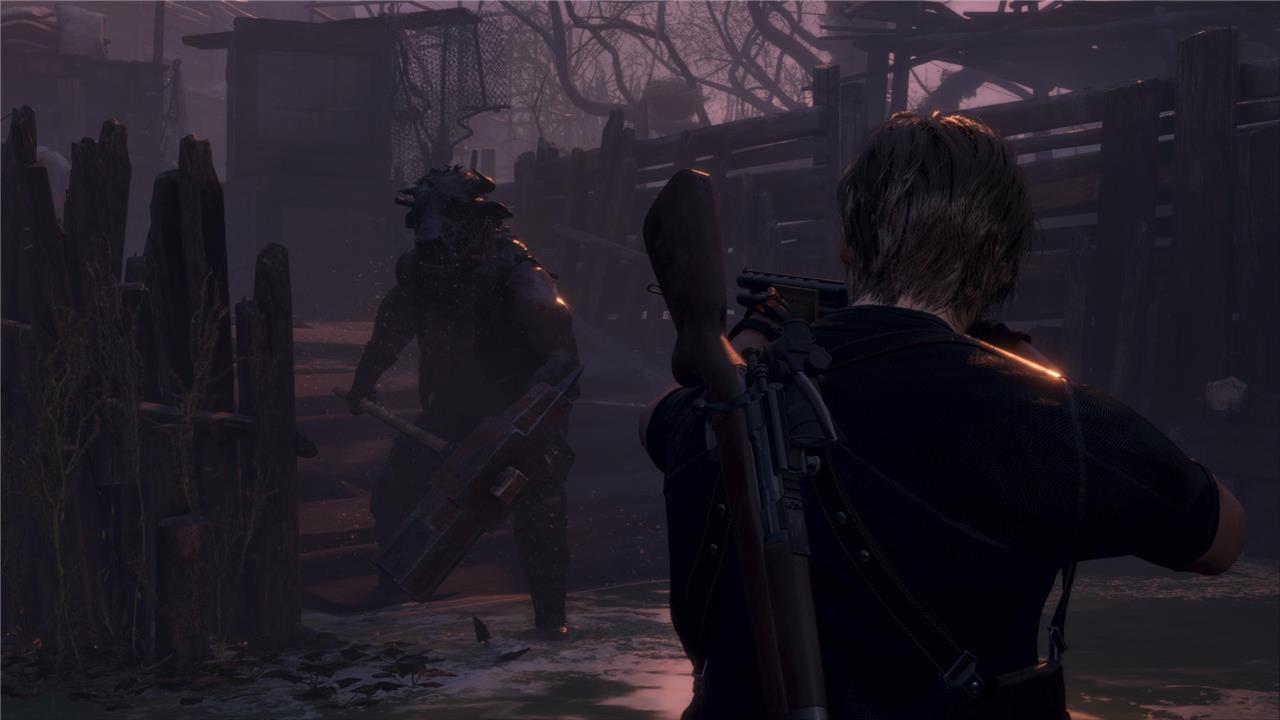
Expect to face new enemies
The remake introduces several new enemy types that weren’t present in the 2005 release. Some familiar foes have been redesigned with updated attack patterns and smarter behavior, making encounters less predictable. Players can expect fresh threats that use different tactics, forcing new strategies and quicker reactions. These changes keep the tension high and make each area feel more dangerous than before.
If you already have all classic enemies’ patterns memorized, I have some good news. There are a handful of new foes to face in the RE4 remake, including a bulky man who looks like a minotaur carrying a sledgehammer.
There are others who I won’t spoil for you, but in case you’re hesitant about the idea, it’s worth mentioning that they all feel quite grounded with the rest of the enemies. None look like they belong to a completely different game, and they’re consistently fun to fight against.
The merchant is more chatty
The merchant in the remake has a livelier personality than in the original. He comments more often on Leon’s progress, offers tips about weapons, and reacts differently depending on what the player does. His expanded dialogue and occasional humor make him feel more like a character than just a vendor, adding color to each encounter and making his presence more memorable.
The merchant is quite talkative in the Resident Evil 4 remake, and he will often comment on your purchases with either mockery, gratitude, or a bit of both. His voice is quite different, too, which may or may not be a shame if you’re an avid fan of the original. Yet, most of his iconic lines remain present, and the new ones are a good fit with his attitude – taking into consideration that we don’t really know much about the character, that is.
There’s a gacha-style rewards system in the shooting range
The remake adds a collectible twist to the shooting range through a gacha-style rewards system. Instead of just testing your aim, you can earn tokens that are spent to get random charms, each offering small gameplay bonuses like better healing or more ammo drops. This feature gives the shooting range more replay value and ties directly into weapon customization, making it more engaging than the straightforward target practice from the original game.
Remember the shooting range minigame in the original Resident Evil 4? Well, it’s back in full swing with quite a few changes behind it. You’re now taking down pirate cardboards and avoiding sailors as opposed to villagers, there are specific challenges to tackle, and the rewards vary quite a bit.
Instead of cashing in rewards for cash, you’ll now receive different token types based on your performance in each challenge. After you’ve gotten at least three of them, you can interact with a dispenser machine that drops charms for your attache case. In essence, these are buffs that become active once you’ve equipped the charm (you can have up to three). Some include receiving more healing from green herbs or having a 15% chance of obtaining extra ammo when crafting a specific weapon ammo type, for example.
As redundant as it may sound, no, there are no in-game purchases whatsoever. This is pretty much an optional mode altogether, but it makes for a fun diversion. As a few extra tips, I recommend you pay the shooting range a visit while you’re accompanied by either Ashley or Luis. And also, if you have Spinels laying around, you can trade them for tokens in the merchant’s shop.
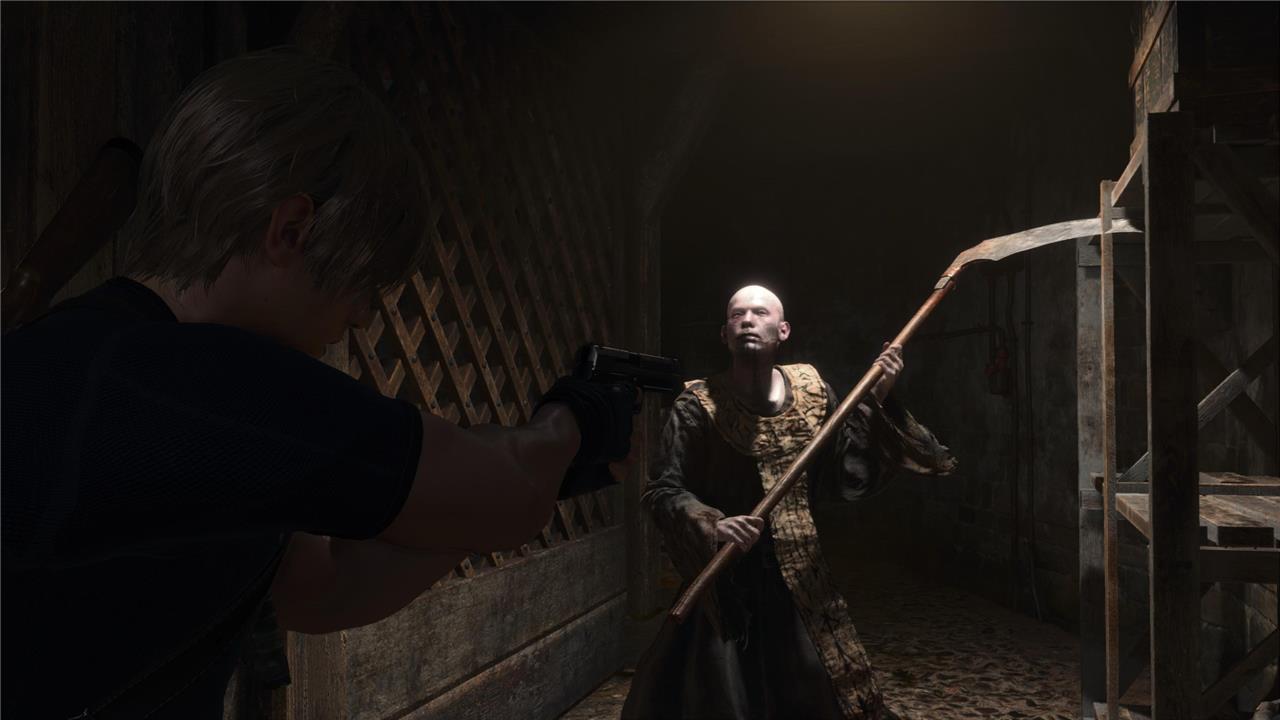
Leon can parry now, and it rules
Leon’s new ability to parry changes the feel of every encounter. Instead of always dodging or shooting to escape danger, players can now deflect attacks with precise timing, using his knife to send axes or even chainsaw blows flying back. It adds a thrilling rhythm to fights, rewarding quick reflexes and giving tense melee moments a real sense of satisfaction. The parry mechanic takes the remake’s combat from survival to stylish defense.
A substantial and interesting change in the use of Leon’s knife is that he can now parry attacks with it. The action is useful for many things, and it can be quite satisfying to pull in the heat of battle. Parrying can save you from a number of fatal attacks, including the chainsaw, but it can also repel crossbow bolts, dynamite, and more.
Keep an eye on the bottom right corner of the screen, where you’ll see a knife icon appear whenever the action is possible. It may take a bit of time and practice to learn exactly in which instances you can use it, but there are plenty of them.
You can find Clockwork Castellan figures
Clockwork Castellan figures are small collectible robots hidden throughout the remake, replacing the original game’s hidden Salazar statuettes. Each one produces a ticking sound that helps players locate it among the game’s detailed environments. Destroying all of them rewards players with a special bonus, encouraging exploration across every chapter and area of the campaign.
In case you ever wondered how a Ramón Salazar figurine would look, it is now a collectible present in the remake. There are 16 of them scattered throughout the game’s chapters, and finding them all will reward you with a new knife. In essence, they’re akin to the Mr. Racoon collectibles in the Resident Evil 2 remake.
The Water Hall isn’t as bad now
The Water Hall section in the remake is far less frustrating than before. Enemies attack in more manageable waves, and Ashley’s AI no longer causes constant interruptions. Improved aiming and smoother movement make defending her much easier, while the updated layout gives players better sightlines and fairer combat spaces. What used to feel chaotic and punishing now feels challenging but balanced, keeping the tension alive without the old sense of annoyance.
If you weren’t a fan of the Water Hall section in the castle, you’re not alone. Unfortunately, the remake does not replace it with a different sequence, but at least the whole thing is much more friendly. The corridors Ashley needs to traverse on her own while you provide cover at a distance are much closer to Leon, and you won’t need to rely almost solely on your sniper rifle to keep her free from harm.
There are no more QTEs… kind of
Quick-time events are mostly gone in the remake, replaced by more interactive and organic moments. Instead of mashing buttons during cutscenes, players now control Leon directly in near-identical situations, keeping tension high without breaking immersion. Some prompts still appear-like dodging a deadly swing or escaping a grapple-but they’re brief and better integrated into real gameplay rather than feeling like scripted interruptions.
Capcom made a big fuss about removing quick time events in the Resident Evil 4 remake, and made true on its word. To some degree. You still need to parry in certain sequences to prevent a fatal attack, and there are sections where mashing or holding down a button is still the only option available. But at the very least, you won’t have to worry about trying to guess which QTE combinations you’d get before a cutscene played out.

Thankfully, there are fewer sexist comments
The remake significantly tones down the outdated humor and gendered remarks that appeared in the 2005 version. Characters like Ashley are written with more respect and agency, moving away from the damsel-in-distress stereotype. Her dialogue feels sharper and more human, while Leon treats her as a capable partner rather than comic relief. This shift reflects a broader awareness in game writing, making the story feel more mature and balanced for modern audiences.
Ashley Graham was the subject of fairly awful and sexist comments in the original, and thankfully, those are mostly gone in the remake. Luis tends to keep such jokes to himself, and Leon is less flirty, even with Ingrid Hunnigan. In return, Ashley has a stronger personality overall; I had become quite fond of her company by the time I hit the end credits. If you were disappointed in the way she was treated in the original, the remake may provide a pleasant surprise.
There is stealth, but it’s easy to ignore
Stealth plays a small role in the remake, offering players the option to sneak behind enemies for silent takedowns or avoid alerting groups too early. However, it rarely feels necessary, since the game’s action-heavy pacing still rewards direct combat more than subtle approaches. Most encounters are designed around open fights, making stealth a feature that’s nice to have but easy to forget once the bullets start flying.
Don’t worry, there are no stealth-exclusive sections where you’ll get a game over for being detected or anything like that. While the game encourages you to use the new crouch mechanic and execute enemies from behind at some points during the story, you can ignore this altogether and just start blasting.
Did anyone ask for side missions?
The remake adds optional side missions that weren’t in the 2005 release, giving players extra objectives beyond the main story. You’ll find blue request notes scattered across areas, requesting tasks such as destroying blue medallions, defeating certain enemies, or fetching rare items. Completing these missions rewards players with spinels, which can be traded for useful gear or weapon upgrades. This addition adds more variety to each playthrough and encourages exploring every corner of the map.
Introduced as Requests, the merchant has a few additional tasks for Leon. While in the original you could shoot Blue Medallions in exchange for rewards, which is present in the remake as well, there are now a few additional objectives alongside it. They’re implemented in a way that you can either know what to do before entering an area, or you’ll be encouraged to backtrack to certain points of a region to tackle them. Sometimes you’ll need to fetch an item, or fight a tougher version of an enemy you’ve come across in the past.
Requests are by far the best way to get your hands on Spinels, which you can then trade in the merchant’s shop for items that aren’t part of the regular list.
Ashleyhas different action commands
Ashley now has a wider range of direct commands that give players more control during tense encounters. Instead of staying close or waiting passively, she can be instructed to keep her distance, move to specific spots, or follow more strategically during combat. These changes make her behavior more responsive and remove the frustration from earlier versions where her limited actions often led to unnecessary danger. The added flexibility improves coordination with Leon and creates smoother pacing through escort segments.
You can no longer ask Ashley to hide in dumpsters (though lockers are still a thing). Instead, there are two main commands to use now. One of them has her stick right behind Leon’s back at all times, which is useful for quick escapes, while the other has Ashley seek cover to stay away from enemies.
As you might expect, neither is exactly flawless, and it will always depend on the situation you’re in, as well as the enemies you’re about to confront. That said, it’s quite practical after you’ve spent some time with Ashley.

You can move while you shoot
In the remake, players can finally move while aiming and firing their weapons-a major shift from the original’s fixed aiming system. This change makes combat smoother and more reactive, allowing players to dodge attacks or reposition themselves without lowering their weapon. It also adds tension to every encounter, as mobility becomes part of the survival strategy rather than a separate action.
The original Resident Evil 4 can be played just fine on modern consoles, but if there’s one aspect that may feel dated, it’s the way Leon aims his weapons. While aiming, you can only move the camera, not Leon himself. This takes some time to get used to, as it hasn’t been the norm in third-person shooters for years now. The remake, however, lets you move freely.
There’s a weapons wheel, too
The remake introduces a modern weapons wheel that lets players swap between guns, grenades, and healing items without pausing the action. This addition streamlines combat flow and feels familiar to anyone who has played other recent action titles. It replaces the need to open the inventory every time Leon needs a different weapon, keeping the momentum intact during intense encounters.
You don’t have to open your inventory all the time (unless you really want to!), thanks to the newly added weapons wheel. It has eight slots in total, corresponding to the D-Pad, and an extra slot in each direction. Along with weapons, you can have grenades here, too, but health items are excluded.
Leon loots a lot faster now
Leon can scoop up items much faster in the remake compared to the original. The delay between opening inventory or picking up objects is shorter, which makes moving through areas and collecting supplies smoother. This small change keeps the pace of combat and exploration steady, letting players stay focused on action rather than pausing every few seconds to manage gear.
Should I play the original Resident Evil 4 before the remake
No, you don’t need to play the original Resident Evil 4 before the remake. The remake is a self-contained experience with modern controls, graphics, and quality-of-life improvements that make it far more accessible for newcomers.
For New Players
Jump straight into the remake if you prioritize fluid gameplay like moving while aiming or refined combat. It recaps Leon’s backstory briefly, so prior Resident Evil titles aren’t essential either, though RE2 Remake adds helpful context.
Potential Benefits of Original First
Playing the 2005 version builds appreciation for the remake’s changes, like redesigned levels and smarter enemies, without spoiling the story since both share the same core plot. Its tank controls and campy tone offer unique charm, and it’s cheap on sales.
Drawbacks of Original First
Dated controls might frustrate modern gamers, and knowing every beat could make the remake feel less fresh, as some players report hyper-focusing on differences over enjoying the upgrades.
Recommendation by Experience
| Player Type | Suggested Order | Reason |
|---|---|---|
| Complete Newbie | Remake only | Superior controls, no spoilers |
| RE Fan/Curious | Original, then Remake | Spot enhancements, historical value |
| Time-Strapped | Remake only | Best standalone experience |
What are the key gameplay improvements in RE4 remake over original
The Resident Evil 4 Remake introduces several key gameplay upgrades over the 2005 original, focusing on fluid modern controls and smarter survival mechanics.
Movement and Aiming
You can now move freely while aiming and shooting, ditching the original’s restrictive tank-style controls for tighter, RE2 Remake-inspired responsiveness-accuracy drops while strafing to keep tension high. Camera manipulation is independent of movement, letting you look behind while running.
Knife and Stealth
The knife gains durability (repairable at campsites), parry/block mechanics for attacks/arrows/tentacles, and stealth takedowns from crouching behind foes-optional but rewarding for ammo conservation. This replaces some QTE-heavy sequences, like the Krauser knife fight, with interactive combat.
Quality-of-Life Features
Auto-save prevents typewriter setbacks (disabled on Professional mode), looting shows instant top-right notifications instead of interruptions, and yellow markers highlight destructibles/interactables. New side requests from the merchant, customizable attache cases, and a bolt thrower weapon add depth.
Enemy and Combat Balance
Enemies are more aggressive with blind-spot grabs to counter mobility, while commands for Ashley (e.g., wait/hide) make escorting smoother without her separate health bar.
Key Improvements Table
| Feature | Original (2005) | Remake (2023) |
|---|---|---|
| Aiming/Movement | Locked in place | Full mobility, reduced accuracy |
| Knife Use | Basic melee, unbreakable | Parry, stealth, durability |
| Saving | Typewriters only | Auto-save added |
| Looting | Full-screen pauses | Instant notifications |
| Stealth | Minimal | Crouch/takedowns optional |
