
A routine job in the dusty bars of Cydonia quickly turns into a cosmic challenge in Starfield’s “Top of the List” quest: can you find and fully survey a truly habitable world? With no mission marker to guide you, you’ll need sharp eyes and sharper instincts to scan every creature, plant, and resource on a distant planet-proving you have what it takes to help humanity reach for new horizons.
This Top of the List (or L.I.S.T.) guide explains how to get everything you need in your planet scan and where to look for a habitable planet.
Getting started with the “Top of the List” quest
To begin the “Top of the List” quest in Starfield, head to Cydonia, the mining city on Mars. Once inside Cydonia, make your way to the Broken Spear bar-it’s the first door on your right after entering. Inside, look for Phil Hill, a recruiter for the League of Independent Settlers (L.I.S.T.), who will be seated at a table in a white shirt. Speak with Phil to hear about the mission and accept his request, which involves two main objectives: recruiting a new settler and surveying a habitable planet. The quest will guide you through identifying a potential recruit in the bar and then set you on the path to explore and fully survey a suitable planet for colonization.
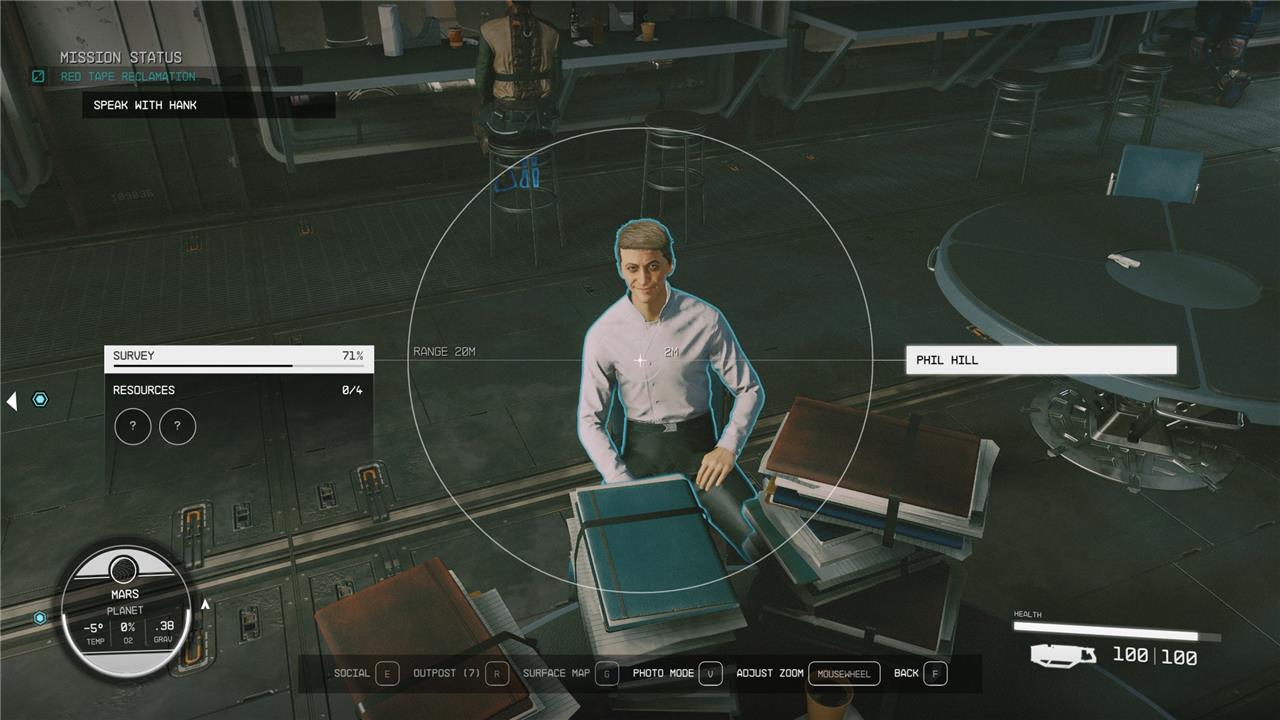
You might have heard several people talking about L.I.S.T. in your travels, but there’s only one potential settler you can try to recruit for this quest. Follow the quest marker over to the very unenthusiastic man at the back of the Broken Spear, and try to recruit him. You may need to purchase pamphlets from Phil to carry on, depending on how well your conversation goes.
If you fail the persuasion check, you can still convince the man to go along with your scheme, so there’s no need to reload and try again.
Speak with Phil to get your next task: surveying a habitable planet.
How to survey a habitable planet in Starfield
To survey a habitable planet in Starfield for the “Top of the List” quest, start by identifying a planet with key habitable traits: look for one with water, an O2-rich atmosphere, moderate temperatures, and both flora and fauna present. Once you’ve found a suitable planet-Procyon III in the Procyon A system is a reliable choice-land in different biomes to scan all plant life, wildlife, and resources using your hand scanner, ensuring you reach 100% survey completion. Some creatures may only be found in specific biomes or in the ocean, so explore thoroughly, including caves and coastal areas, to find any missing species. After fully surveying the planet, return to orbit and perform a final scan from your ship to complete the survey, then deliver the data to Phil Hill to finish the quest.
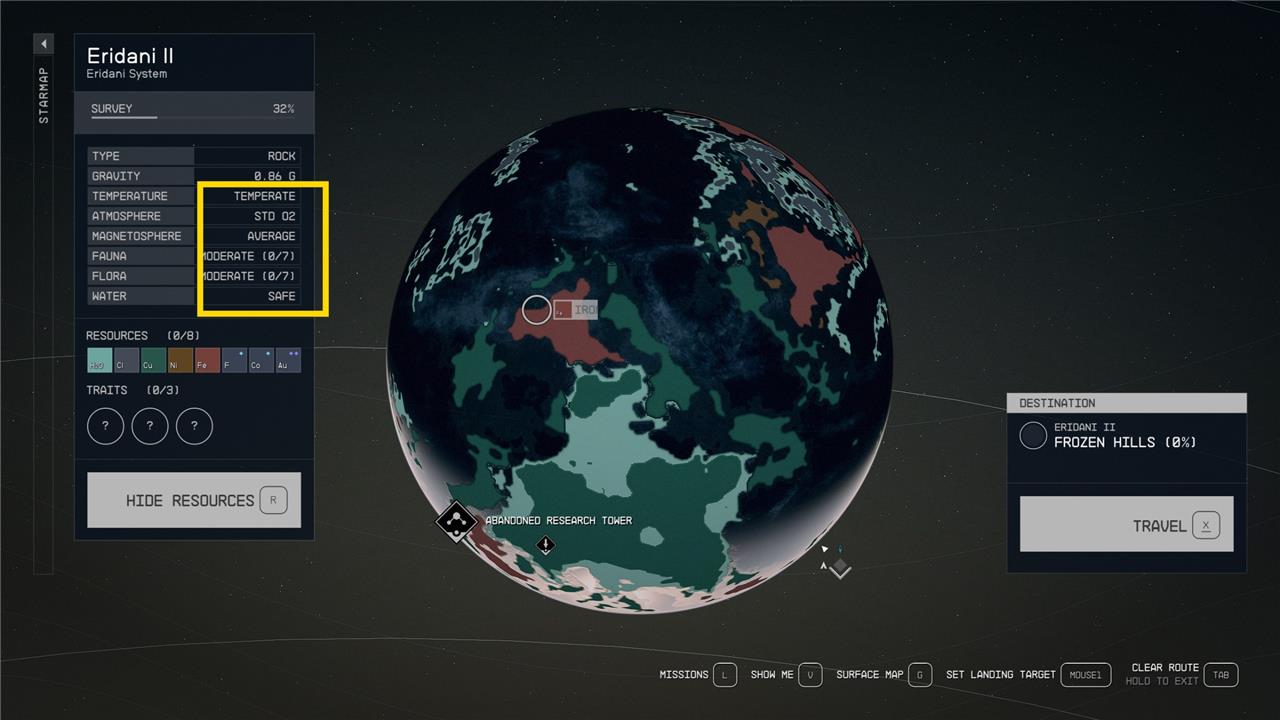
Phil skims over the criteria for what makes a habitable planet, and the quest notes don’t actually mention it. I also encountered a bizarre quirk where quest markers and scanner paths would show up on planets that were definitely not habitable and point me toward resources, so you might want to just ignore quest markers for this step.
What you need for a habitable planet
- An atmosphere with strong oxygen (O2) levels
- Moderate flora
- Moderate fauna
- Natural, Safe, or Biological water
- Temperate temperature
- At least “moderate” magnetosphere
A few planets meet the criteria, including Arcturus II and Leviathan IV, the latter of which is a good source of XP and even an achievement, since it takes a lot of grav jumping and route plotting to reach.
However, the easiest to tackle isEridani II in the Eridani System. It’s sunny, with science outposts and even a few quests to tackle, so you can use this as a base for experimenting with outpost building if you wanted to.
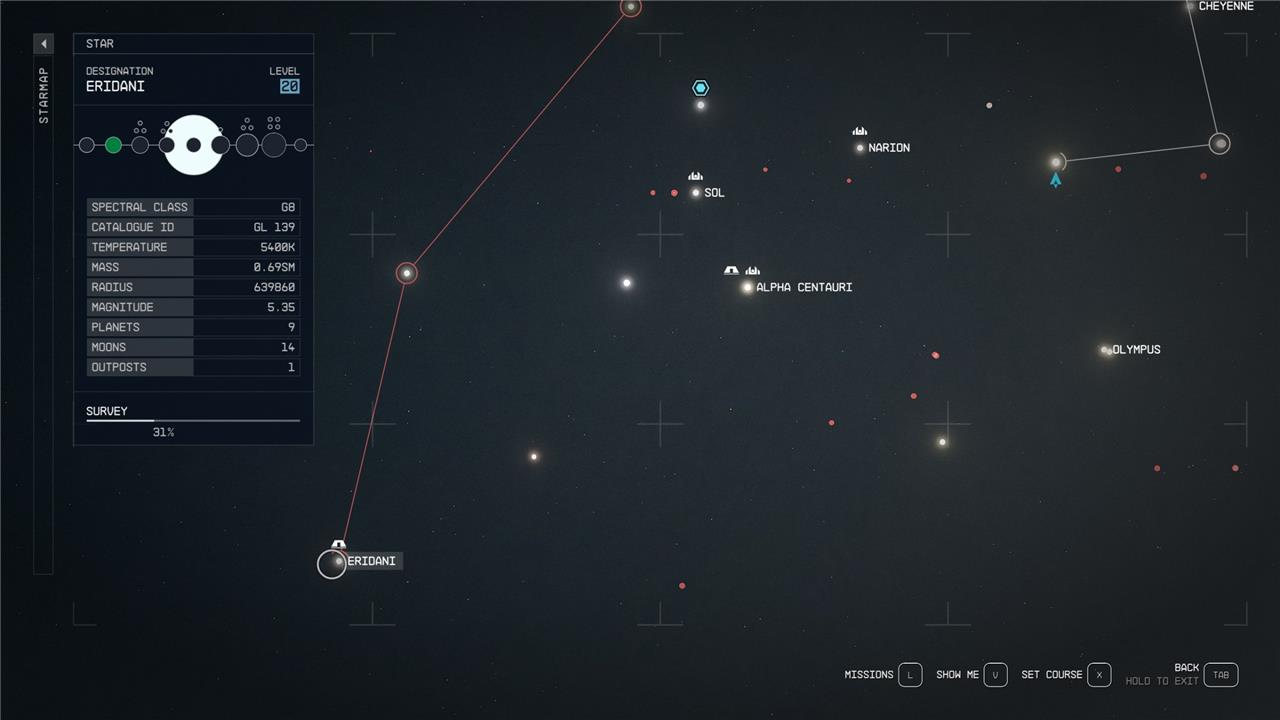
If you’re early in the game, the Eridani System is at the bottom left of your star map, beyond Alpha Centauri. Eridani II has a pretty common spread of resources and biological life – seven mineral resources and eight each for flora and fauna.
You need to fully survey the planet, which means scanning multiple types of each flora and fauna sample – five Leafhunters, for example, and five Pinecone Scavengers. Once you have enough, the scannable resources show up as green on your scanner, so you can ignore them and move on to the rest.
Eridani II has several biomes, like most habitable planets in Starfield, and you’ll need to visit them to scan every resource. Open the planet map, select a spot on the planet to see what biome it’s in, and then land and use your scanner to see what resources are nearby.
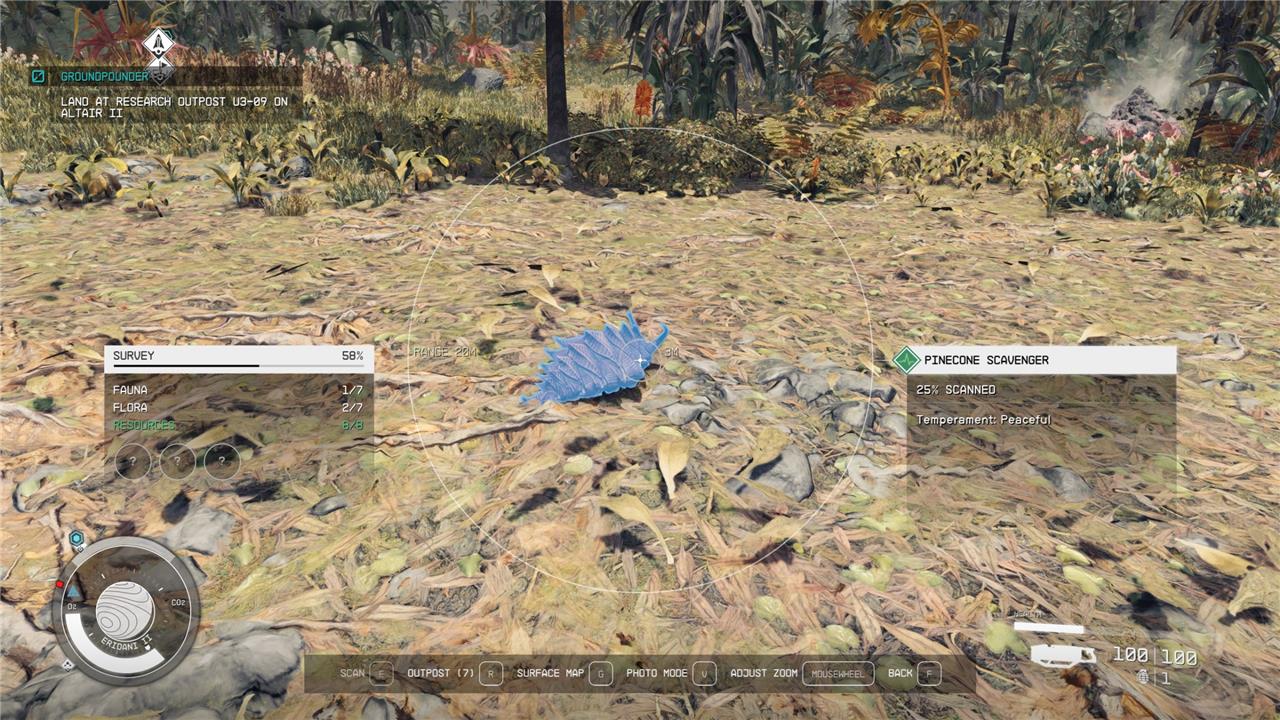
A prompt may appear that tells you to build an outpost scanner to improve your scanning range. I did that, and it had no apparent effect on my ship or hand scanner. You’re probably free to ignore this if you aren’t ready to build an outpost just yet.
Once you sort all your scans out, open the planet map again, and perform one final planet scan. It’ll show up as a complete survey, and you can send Philip the results. You get a few thousand credits in return.
How does surveying a planet reveal its true habitability in Starfield
How Surveying a Planet Reveals Its True Habitability in Starfield
How does fully surveying flora and fauna determine a planet’s habitability in Starfield
Surveying a planet in Starfield is a comprehensive process that goes far beyond a simple scan from orbit. To determine if a planet is truly habitable, you must:
-
Scan from Orbit: Begin by scanning the planet from your ship. This reveals basic information about available resources and biomes but does not provide a full picture of habitability.
-
Land and Explore: You must physically land on the planet and use your hand scanner to identify and catalog all types of flora, fauna, and resources across its various biomes. Some species and resources are biome-specific, so thorough exploration is essential.
-
Scan Flora and Fauna: Each species of plant and animal must be scanned multiple times (for example, eight times for fauna) to complete their entries. This ensures you understand the planet’s ecosystem and whether it can support life similar to that on Earth.
-
Survey Resources: All inorganic resources (like metals and minerals) must also be scanned. These are crucial for determining if the planet can support outposts or human habitation.
-
Identify Planetary Traits: Some planets have unique traits-special features or hazards-that must be discovered and scanned. These can include evidence of past oceans, microbial life, or other geological phenomena, which are vital clues to a planet’s long-term habitability.
-
Biome Completion: If you see “Biome Completed,” it means you have scanned all discoverable elements in that area. To finish the survey, you must visit and complete scans in all biomes, as some life forms only exist in specific regions.
Once you have achieved 100% survey completion by thoroughly cataloging all life, resources, and traits, you will have a detailed understanding of the planet’s environment, hazards, and potential for supporting human life. Only then can you confirm its true habitability, making your survey a critical step in Starfield’s planetary exploration and settlement gameplay.
