
HBO’s The Last of Us promised to break the curse of video game adaptations, yet it stumbles over the same hurdle as so many before it-translating player-driven emotion into passive television storytelling.
The Last of Us has been widely celebrated not only as the “best video game adaptation of all time,” but also as the ostensibly simplest to jump from pixel to picture. And in many ways, HBO’s The Last of Us earned that reputation. Showrunners Craig Mazin and Neil Druckmann have a keen sense of what to expand, and each version wields impressive technical control over locale and light that makes the post-apocalyptic vision feel real. There’s the strong cast, led by Pedro Pascal and Bella Ramsey, giving two career-best performances that have the emotional stopping power of a sawed-off shotgun. Yet, for all Mazin and Druckmann nailed (and it’s a lot), it’s ironic the thing HBO’s The Last of Us struggled with most wasn’t the visuals, story, or characters, it was what’s most inherent in video games: the gameplay.
Sometimes derisively accused of being an “interactive movie,” the magic of Naughty Dog’s The Last of Us was the way it broke down the divide between the cutscenes and gameplay; it made the cinematic playable. Starting with the dialogue, this design ethos is felt all over the game. As Joel and Ellie traverse the post-apocalyptic cities and landscapes, conversations happen organically (with a bit of help from Triangle), creating the persuasive illusion that’s emergent and real. Elsewhere, key moments of character growth are routinely seen outside cutscenes, whether it’s Ellie geeking out at a hotel’s tropical photo op or Joel realizing he cared for her as a father only while you’re fighting through goons to save her from cannibals (in the show, Joel gets to this emotional point earlier, as he reveals when talking to Tommy in episode 6).
But in adapting his own game with Mazin for HBO, Druckmann largely avoids adapting most of the “gameplay” sections of The Last of Us, shrinking them to slivers of screentime. I admire the drive for narrative economy, but as good as HBO’s The Last of Us is, it can feel like it was adapted from a YouTube compilation of the game’s incredible cutscenes, sidestepping the game’s many stealthy crawls, shootouts, or the thing you do most: walking around. Perhaps unsurprisingly, the Druckmann-directed episode 2, “Infected,” is the notable exception, capturing the spirit of the gameplay in a way most episodes didn’t. Ellie, Joel, and Tess explore an overgrown Boston, sharing natural, character-building dialogue as they explore, eventually colliding with a series of riveting set pieces that recalls the sensation of learning about these people as you first played the game.
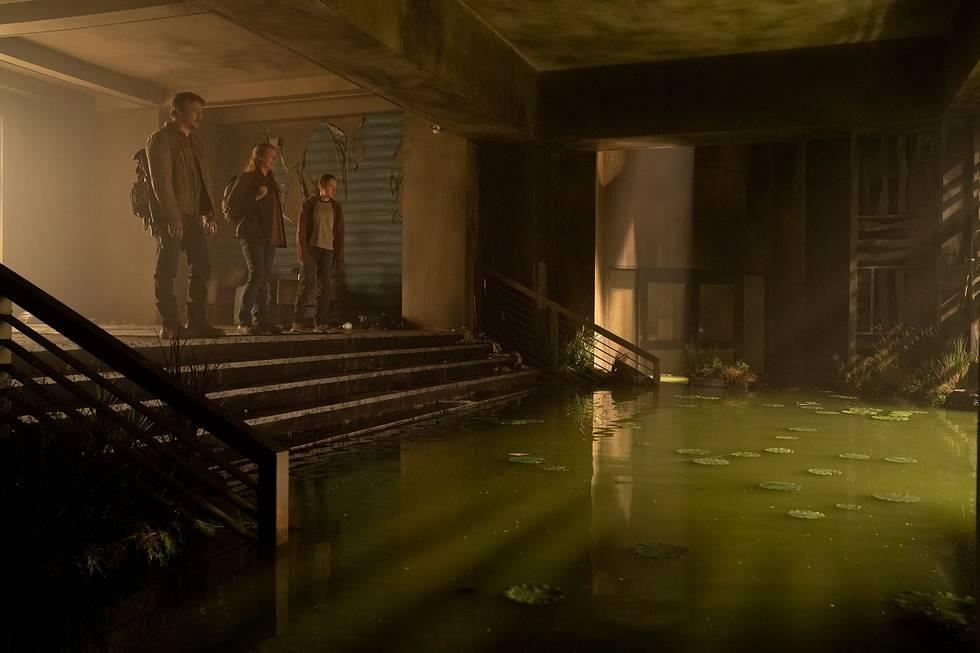
Most of The Last of Us doesn’t quite strike that balance, and comparing the game’s earliest sections exposes certain absences in adaptation. In the game, the prologue transitions from the heartbreaking loss of Joel’s daughter Sarah into a post-apocalyptic reality where Joel’s packing heat, firing off grisly headshots, and choking out thugs who ripped him off; the contrast from paternal figure to casual killer is visceral and provocative. Over minutes of game time, the player experiences Joel’s downfall from a loving, hardworking dad into a cold-blooded killing machine. It’s not only him pulling the trigger – you are too. In HBO’s series, this section is entirely skipped over. I get it; we need Joel to meet Ellie as quickly as possible. But when you, the player, are guiding Joel to make perfect kill shots and navigating the map like Solid Snake, you’re learning about Joel through your own hands on the controller, inferring the harrowing history between past and present that brought Joel to this place.
HBO’s series mostly handles the gameplay’s bloodshed by avoiding it. This not only blunts The Last of Us as a story about violence and where it can come from, but it also changes Joel. His jaded lethality is only occasionally glimpsed, often in a “nerfed” and more vulnerable form, relying on dialogue to paint a picture of the man instead of creating something we can see and feel for ourselves. By avoiding important moments of Ellie and Joel’s bonding and trauma shown in the gameplay, their dynamic shifts; instead of a nearly game-long thaw for Joel’s frozen heart to warm up, Joel abruptly shifts from self-interested mercenary in episodes 2 and 3 to laughing at Ellie’s poop jokes in episode 4; rather than Ellie witnessing Joel’s repeated carnage, enemies often get the drop on him and he can’t defend himself. And crucially for where season 2 will take us, in softening Joel in spirit and action, the showrunners risk undercutting what legacy Joel might pass to Ellie.
Likewise, HBO’s The Last of Us exposes one of the classic problems of adapting games to film or television – game mechanics are stubbornly challenging to turn into cinema. Just look at death. Games are structurally designed to create stakes around endless cycles of reincarnation, a pattern of live, die, and respawn to repeatedly go at an obstacle and win. So each time we die firing rounds at rushing infected, although progress is reset and nothing has really been lost, we still feel the sting of failure and the thirst for victory. The genius of The Last of Us is that the more we care about Joel and Ellie’s survival, the more affecting each of our deaths becomes, emphasized by the brutal game over screens of Joel or Ellie getting killed. What’s at stake was never meant to be engineered through the A-B-C plot beats alone, but rather how we experience them through the gameplay loop.
I was disappointed that Druckmann and Mazin sometimes seem more interested in what they’ve added rather than what’s already there – from the new cold opens or the two episodes that shift focus, one acclaimed (“Long, Long Time”) and one with a more muted reception (the DLC-inspired flashback “Left Behind”). These episodes both could have worked on their own merits, especially “Long, Long Time,” a stunning piece of television. But would a few more character-building episodes have been such a bad thing?
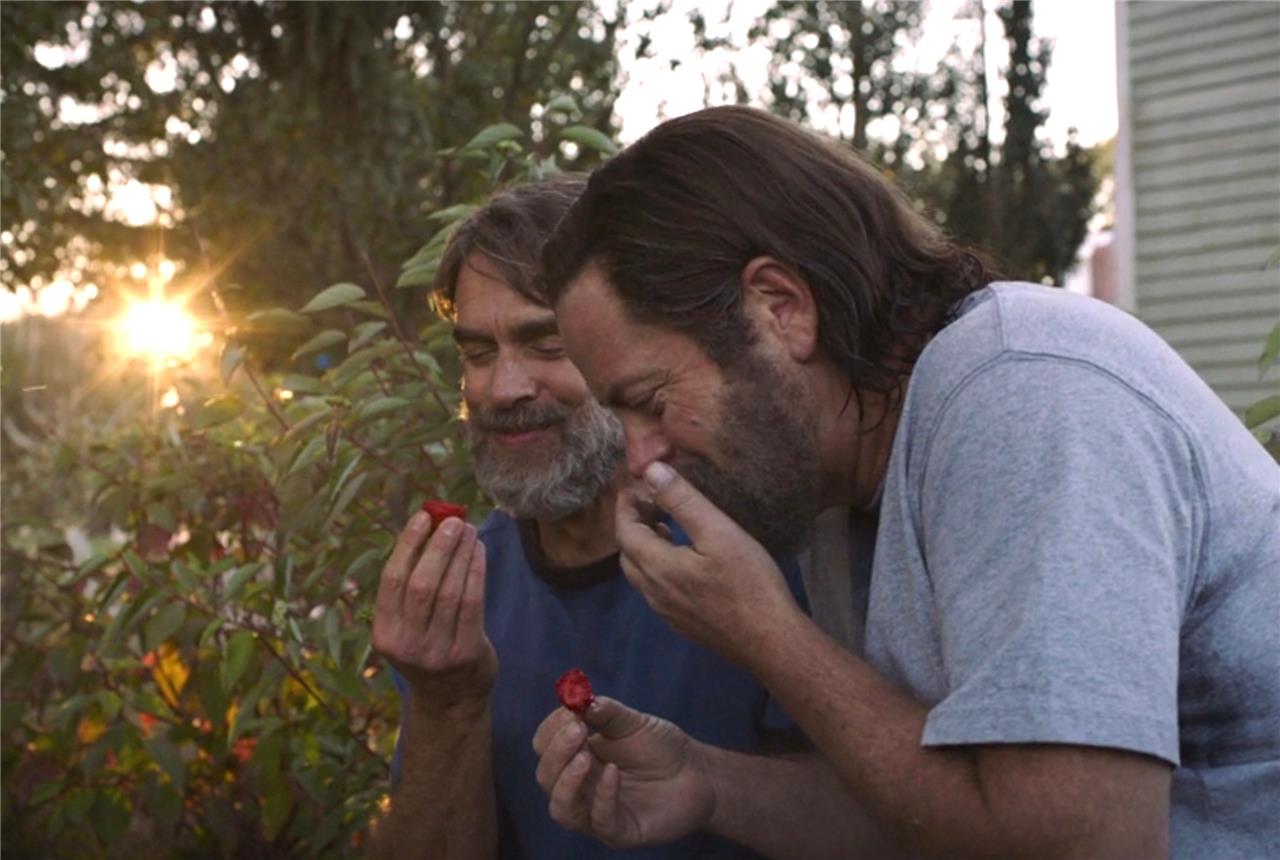

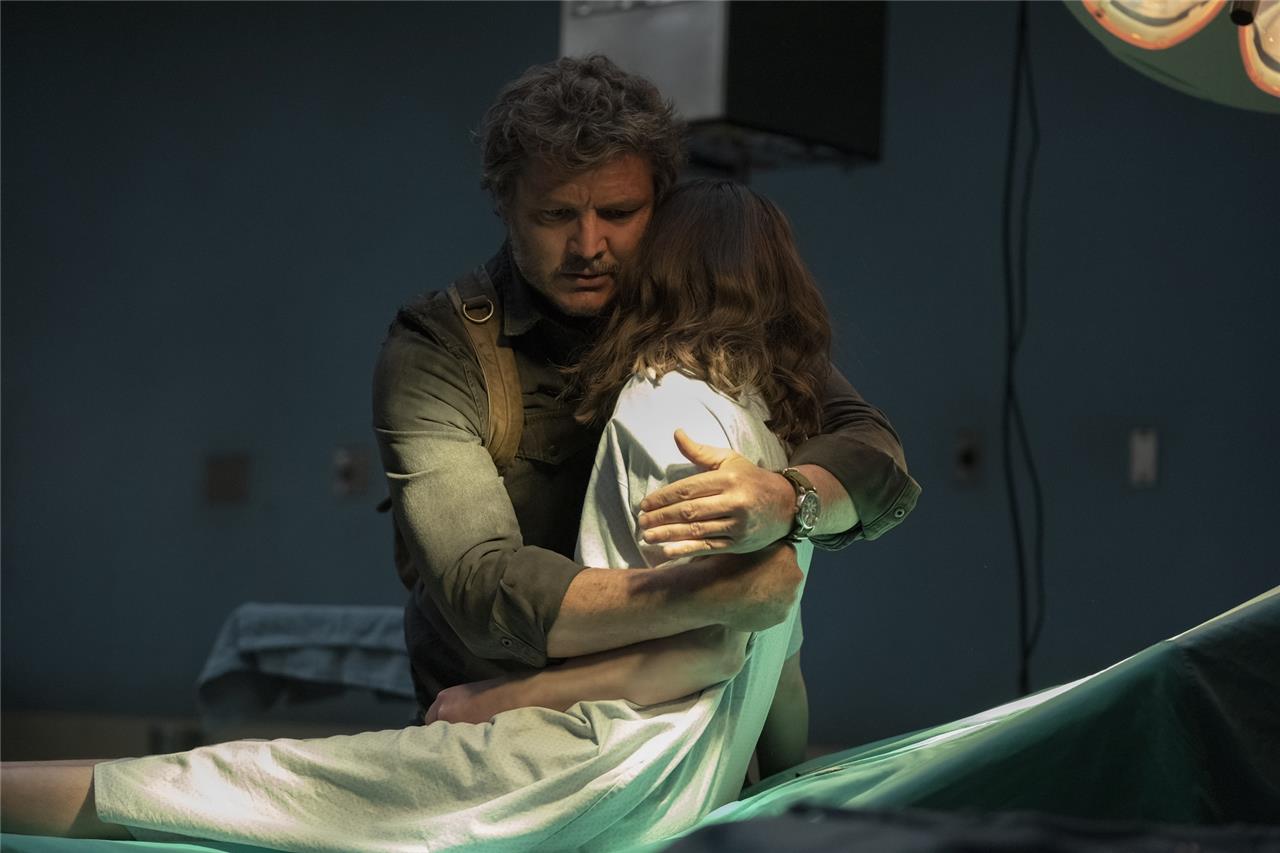
And finally, the ending. It is among the most famous and important in games since 2013, creating a chasm between the kind of game that thrives on player choice and the kind that forces you into a character whose choices might not be your own. Joel is not a moral man, and through him, neither are you. In a Brechtian way, The Last of Us thrived on the friction between the “you” playing the game and the subjective “you” inhabiting a character, closer to Cormac McCarthy VR than a game with role-playing required. And when Joel – when you – massacres a hospital of doctors and scientists to save a child who now feels like a daughter, you are both an innocent bystander and an accomplice, tangling up player agency in a moral knot unique to the video game medium.
All season long, I’ve wondered if Mazin and Druckmann had a silver bullet, a miracle cure to make the climax work as TV. To a point, they did. Pascal and Ramsey are sensational, and Ali Abbasi’s dexterous direction supports the high emotion. Especially effective is the choice to score Joel’s rampage with notes of sorrow and not rage, transforming a hospital assault into a montage of tragic pathos. Yet, I still felt the pangs of what could’ve been, an accumulation of absences and missed opportunities to expand on The Last of Us as a game rather than just a beautiful story. With season 2 confirmed, an adaptation of The Last of Us Part 2 poses an even bigger challenge. As a sequel it’s prickly, demanding, and brilliant, with Druckmann and co. exploiting the tension between player and character further, bidding you to act out the ugliest deeds of characters you love toward devastating ends. Despite these growing pains between mediums, HBO’s The Last of Us was still a noble success. If they remember to adapt gameplay and not just plot, season 2 and beyond might just be a triumph.
What specific game mechanics does the HBO show omit
The HBO adaptation of The Last of Us skips several core interactive mechanics from the games to suit a linear TV narrative. These omissions highlight the challenge of shifting from player-driven gameplay to scripted drama.
Resource Crafting
Players scavenge and craft items like health kits, Molotovs, shivs, and bombs from scraps, managing scarcity for survival. The show rarely shows this hands-on process, condensing it into quick cuts or implying it off-screen.
Stealth and Combat Loops
Games emphasize prone sneaking, listening for enemies (via audio cues), throwing bricks/bottles for distractions, and repeated retries after detection or death. TV condenses these into montages, losing tension from player trial-and-error.
Gas Mask/Spore Navigation
In unventilated areas, players equip gas masks to avoid airborne Cordyceps spores, creating isolated threats (with Ellie’s immunity as a narrative hook). The series replaces spores with tendrils, eliminating masks entirely.
Companion AI Behaviors
Ellie (or Dina) follows the player, boosts climbing, shoots/stuns foes, but can hinder (e.g., blocking throws or failing to swim). These quirks add realism and frustration absent in the show’s controlled scenes.
Dual Playstyles
Part II contrasts Ellie’s agile, nimble combat with Abby’s brute-force strength (e.g., manhandling foes like Joel). Season 2 tones down Abby’s bulk and power to prioritize drama over mechanical distinction.
Why did the show remove the spore and gas mask mechanics
The HBO show The Last of Us removed spores and gas masks primarily for narrative realism, visual practicality, and production efficiency. This change prioritizes emotional storytelling over gameplay visuals.
Realism Concerns
Co-creator Craig Mazin explained that airborne spores would logically spread uncontrollably, forcing constant mask-wearing and rapid global infection, which undermines the story’s post-apocalyptic journey. Neil Druckmann added that a “realistic” world with pervasive spores would obscure character faces and internal drama, shifting focus from human experiences.
Visual and Acting Needs
Masks would block actors’ faces (e.g., Pedro Pascal’s expressions as Joel), limiting emotional conveyance-unlike The Mandalorian, this isn’t mask-centric. Spores mainly served as atmospheric cues in games, auto-equipped by developers, not player-controlled mechanics.
Production Simplicity
CGI spores are costly and complex to render convincingly; the show replaces them with underground fungi tendrils, heightening tension via connected infected hordes instead. This maintains threat without masks or visual clutter.
