
Mastering resource slotting in Civilization 7 can make or break your empire’s growth – but with limited slots and complex rules, it’s easy to get stuck. Discover how to strategically assign resources, expand your slots with camels, wonders, and policies, and connect distant settlements to unlock your civilization’s full potential on PC, PlayStation, and Xbox. Ready to turn your resource management into a winning strategy? Here’s everything you need to know to slot resources like a pro.
Below, we’ve broken down everything you need to know about resources in Civilization 7, including tips on how they work, how to get them, the circumstances under which they work correctly, and how to fix issues where the game won’t let you slot items to towns and cities.
How to get resources in Civilization 7
To get resources in Civilization 7, you primarily need to acquire them before you can assign or slot them to your settlements. There are three main ways to obtain resources: founding settlements near resource nodes so they fall within your city’s area of influence, establishing trade routes via merchant units to access resources from other civilizations’ cities for a gold fee, and capturing enemy settlements that hold resources. Once acquired, resources can be allocated to cities or towns depending on their type, with some resources providing empire-wide benefits without needing assignment. Expanding your network with roads and railways helps connect settlements and unlocks more resource opportunities. Additionally, increasing city population and utilizing specific resources like camels can increase the number of resource slots available for allocation.
You have to actually obtain resources before you can slot them, and Civilization 7 gives you a few methods to get them:
- Establish a settlement in the best location
- Create trade routes
- Conquer other settlements
Let’s break those down a bit.
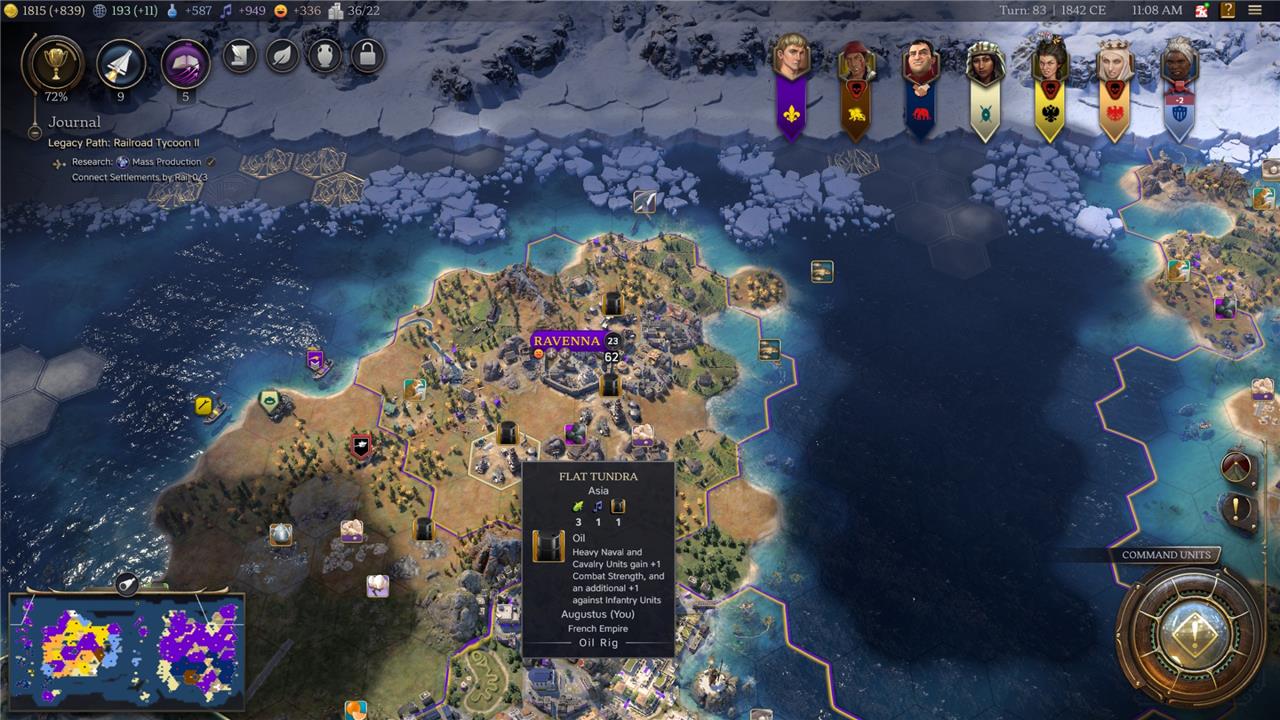
The first way is establishing a settlement near enough to a resource node so that the town or city limits encompass it. Doing so automatically adds the resources to your network, and as your settlement grows, any additional resources that get caught up in your settlement’s area of influence will also become available.
The other method involves creating trade routes with the merchant unit. Each merchant can establish one route to another civilization’s city, and you get any resources that city has nearby for a small sum of Gold each turn – but only nearby resources. Anything that city imports for itself is out of your reach. The amount of gold you pay depends on how many resources the target city has, but you can expect between eight and 12 Gold per route, per turn in most cases. Civilization 7 doesn’t let you cancel trade routes, so these transactions are permanent.
Building a strong and varied supply of your own resources attracts merchants from other civilizations as well and helps balance the flow of gold leaving and entering your coffers.
The final way is conquering other settlements, which adds their goods to your pool of available city and bonus resources. If you keep the city, it’s a good idea to leave any happiness resources where they are until unrest dies down and you can construct happiness buildings there. Otherwise, the level of unhappiness might cause the settlement to defect or drag your surplus happiness down across the empire.
All types of resources in Civilization 7
Civilization 7 features a diverse range of resources categorized into several types, each with unique roles and allocation rules. Bonus Resources can be slotted into any Town or City, providing flexible benefits such as food, production, or happiness. City Resources are restricted to cities and often offer specialized bonuses that vary by era. Empire Resources apply their advantages globally across your civilization without needing to be assigned to specific settlements. Treasure Fleet Resources, available during the Exploration Age, support naval endeavors and do not require settlement allocation. Factory Resources become relevant in the Modern Age and must be assigned to settlements with factories. Managing these resources effectively is crucial for growth, as they enhance food production, military strength, happiness, and economic output, with some like Camels even increasing the number of resource slots available in a city.
Resources are items that offer bonuses, either for specific yields in the settlement where you allocate them or for your civilization more broadly. Civilization 7 uses little pictures of the source to show which tile they’re on, like a little horse picture or a jar of spices, and you can hover over it to see what benefits it offers.
Some increase Food production, which helps settlements grow more quickly. Others increase Production or add a small Gold multiplier to a settlement’s output, and a few provide bonus Happiness, which is an excellent way to offset unrest in newly acquired settlements or if things just go sour unexpectedly.
[civilization-7-resources-3]
Civilization 7 divides its resources into three types – city, bonus, and empire – with a fourth, factory, that emerges during the Modern Age. As the name suggests, city resources are only for cities, so you can’t slot them into towns. You can allocate bonus resources to any city or town connected to your trade network, though. That’s vague Civilization 7-speak for a settlement on a continent where you have at least one trade route or a coastal settlement with a port.
Empire resources are things such as marble, gold, or tea. Their benefits apply across your civilization, perks such as additional damage for cavalry troops or extra gold, and you don’t have to allocate them.
Most bonus resources from the exploration age turn into factory resources in the modern age, including chocolate, fruit, and cotton. You can only allocate factory resources in a city that has a factory, which is a process in itself. Civilization 7 lets you build factories only in settlements with a rail station that are also connected to your capital. Most towns and cities in your civilization automatically have roads connecting them after you have a trade route established, but if your network has gaps, create a merchant unit and use their “build road” command to lay a rail line between two settlements with a rail station.
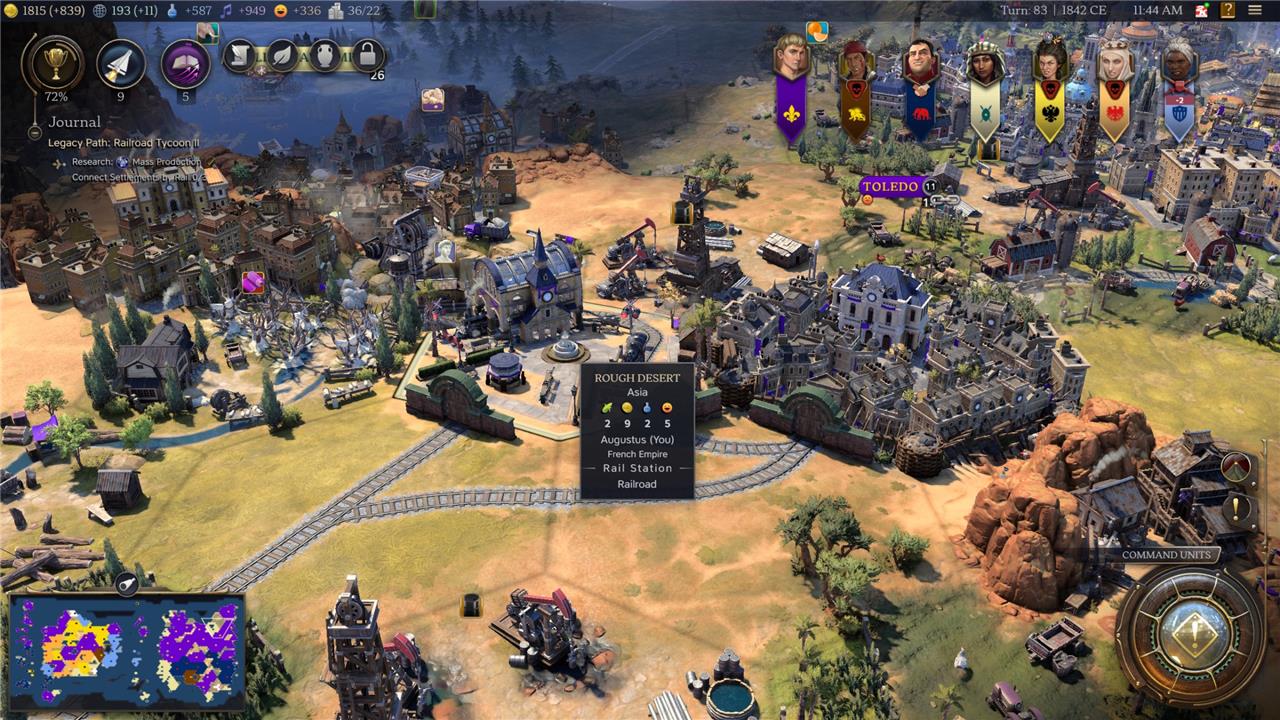
You can only slot one factory resource into a city with a factory, regardless of where it is or how big the city is. Factory resources are helpful to have, whether you’re pursuing an Economic victory or not, since they provide more specialized bonuses – citrus contributes to naval production, for example – or perks that resources didn’t offer in earlier ages, including increased science yields.
For more, see our full list of all resources in Civilization 7.
How to slot resources on a city in Civilization 7
To slot resources on a city in Civilization 7, first open the resource menu by selecting the leaf icon. From there, choose the resource you want to assign and select the city or settlement where you want to slot it. Note that city resources can only be assigned to cities, not towns, while bonus resources can be allocated to any connected settlement. The number of resource slots available depends largely on the population size of the city, with larger cities having more slots. Additionally, assigning certain resources like camels can increase the number of slots in a city. If you cannot assign a resource, ensure the settlement is connected to your trade network, as isolated or unconnected settlements cannot receive resources. Managing resource allocation effectively boosts yields such as Food, Production, Gold, or Happiness, enhancing your civilization’s growth and stability.
Select the icon with the leaf symbol to open the resource menu. There, pick which resource you want, and decide which settlement you think should have it. The resource screen shows each settlement’s current yield outputs, so use those numbers to inform your decision. If your capital already has 80 production but you’re struggling to make gold, for example, it might be worth slotting bonus production resources into a town with the growth specialization instead, since production converts to gold in those settlements.
Civilization 7 always throws up a leaf icon notification in the bottom right when you obtain a new resource, so there’s no chance of accidentally missing it.
How to increase resource slots in Civilization 7
To increase resource slots in Civilization 7, the primary method is to grow the population of your settlements, as resource slots generally scale with population size-cities have more slots than towns due to their larger populations. Additionally, slotting camels as a resource in a city grants two extra resource slots, though camels occupy one slot themselves and this benefit is only available before the modern age. Beyond population growth and camels, players can expand resource slots by building certain Wonders (like the Colossus or Monk’s Mound), constructing specific buildings (such as Markets or Lighthouses), adopting policies that boost slots, and unlocking civics that provide slot increases. Trade routes and connections between settlements also play a role in resource access but do not directly increase slot numbers.
Civilization 7 is a bit murky about which settlements get how many slots and what you can do to boost their number of available resource slots. The only surefire way to do it is to add camels as a resource, which increases the number of slots by two in the settlement where the camel is – or one, technically, since the camel takes up a slot. Camels are a city resource, so this method won’t work for towns. It’s also not available in the modern age, when camels stop existing as a resource.
Aside from your capital city, which ends up with multiple resource slots as the game progresses, most towns will have between one and three slots, while cities get three to five. Growth capacity seems to be how Civilization 7 determines the number of slots, rather than trade routes or available resources. For example, in several games, our cities with populations over 40 that generated food over 80 had four or five resource slots, while those with populations of 30 or so had fewer.
Why won’t it let me slot resources?
If Civilization 7 won’t let you slot resources, the most common reason is that the settlement lacks a connection to an existing trade route, which is necessary for resource allocation unless the resource is directly within the settlement’s area. Additionally, city resources can only be assigned to cities, not towns, and empire resources do not require slotted placement as they automatically benefit your civilization. For factory resources, you must have a factory built in the city and a proper rail network connecting it; sometimes, you may need to remove existing resources to free up slots before assigning new factory resources. Also, resource allocation can only be changed when you acquire a new resource or open a new trade route, so if you see a message saying “YOU MUST WAIT UNTIL A NEW RESOURCE IS ACQUIRED,” you need to obtain new resources before reallocating. Ensuring these conditions are met usually resolves the issue of not being able to slot resources.
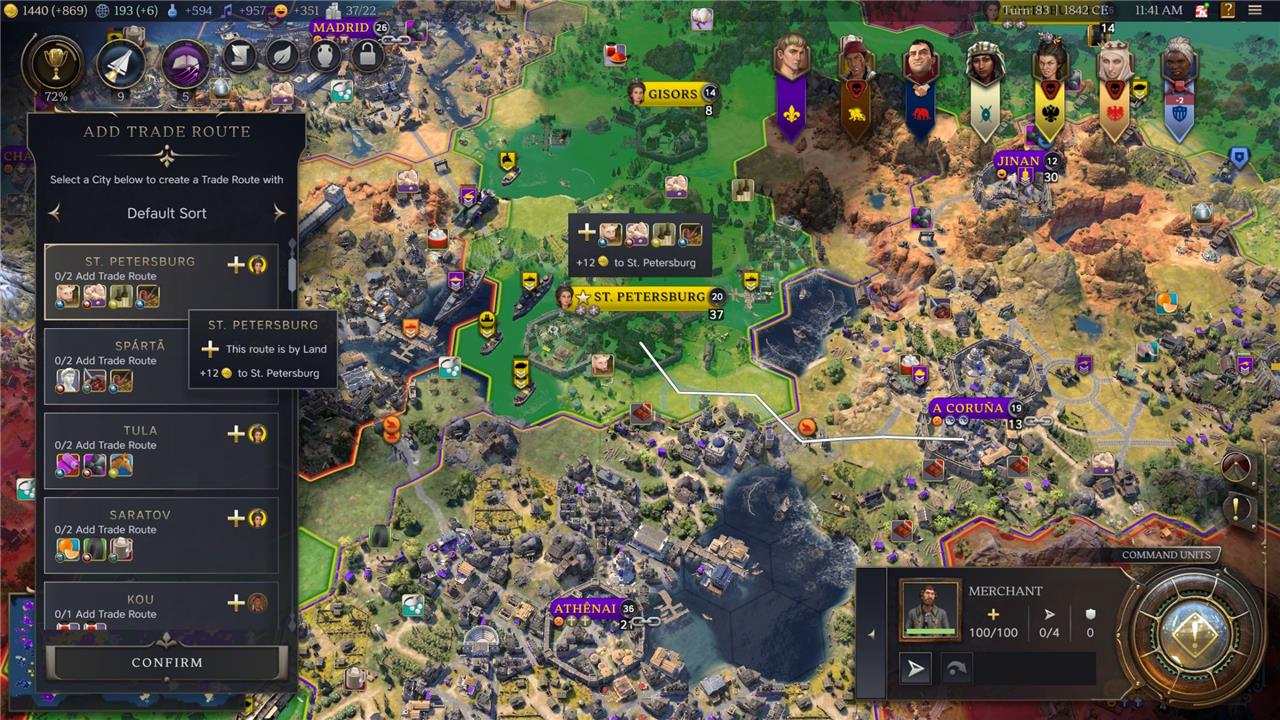
If Civilization 7 won’t let you slot a city or bonus resource to a settlement, and you’re not trying to stuff a city resource into a town, the issue is almost always the result of that settlement having no connection to an existing trade route. It might be on an island, surrounded by rival civilizations, or just further out than where your merchants currently travel.
The easiest way to fix that is to purchase or create a merchant unit and establish a trade route to the settlement closest to the town or city where you’re having the trouble. If the settlement has access to navigable water, you should be able to bypass the merchant solution by just building a port.
Empire resources show up as resource nodes on the map like any other, but they apply to your entire civilization and require no management. You can hover over them at the top of the resource screen to see what they do, but you can’t move them around. Factory resources are only for settlements with a factory, but if you can’t slot those in a city with a factory, check your rail network. There’s a good chance a settlement between the factory city and your capital doesn’t have a rail station, or the game forgot to build a road between it and your capital.
How can I optimize resource slots to boost my civilization’s growth
To optimize resource slots and boost your civilization’s growth in Civilization 7, focus on the following strategies:
-
Settle near resource nodes: Found settlements close enough to resource nodes so the city limits automatically include them, granting immediate access to those resources and their bonuses.
-
Establish trade routes: Use merchant units to create trade routes with other cities, allowing you to access their nearby resources for a Gold fee. This expands your resource network beyond your immediate territory.
-
Conquer settlements: Capturing cities adds their resources to your pool, which can be assigned to boost growth and happiness, especially important to stabilize newly acquired cities.
-
Increase resource slots: Larger cities with higher population and food yields tend to have more resource slots. Introducing camels as a city resource adds two additional slots, though this is not available in the modern age.
-
Connect your empire: Ensure cities and towns are linked by trade routes or rail networks to enable resource assignment, especially for factory resources that require rail connections.
-
Assign resources strategically: Use the resource menu to allocate resources where they maximize benefits-such as assigning production-boosting resources to cities focused on growth or gold generation.
-
Leverage new factory resources: With recent updates, factory resources like tin boost growth rates and require proper rail connections, so maintaining infrastructure is key.
By combining settlement placement, trade, conquest, infrastructure, and smart resource assignment, you can maximize resource slot utilization to significantly enhance your civilization’s growth and overall performance.
How does establishing trade routes affect resource slot availability in Civ 7
Establishing trade routes in Civilization 7 significantly expands your resource slot availability by allowing you to access resources from other civilizations’ nearby settlements. When you send a merchant unit to create a trade route with another civilization’s city, you gain a copy of the resources that city has in its vicinity for a Gold cost each turn. This effectively adds those resources to your empire’s pool, which you can then assign to your cities to boost growth, production, or other yields.
However, trade routes only grant access to resources physically near the target city, not those the city imports for itself. The trade route is permanent once established and cannot be canceled, so choosing your trading partners carefully is important. Additionally, trade routes require your merchant to physically travel to the destination settlement to set up the route, after which a caravan or trade ship is created to maintain the connection.
Overall, trade routes are a critical method for increasing your resource slots beyond what your own settlements can provide, especially when you have reached settlement limits or want to diversify resource access without expanding your territory.
