
Embarking on your journey in Dragon’s Dogma 2? Prepare to dive into a sprawling world teeming with colossal beasts, intricate quests, and a dynamic ecosystem that reacts to your every move. Before you take up arms as the Arisen, these 14 essential beginner’s tips will help you master your pawns, manage stamina, and navigate the mysteries of this expansive action RPG with confidence and strategy.
The upshot is that patience rewards you with knowledge here. We’ve collectively sunk dozens of hours into Dragon’s Dogma 2, and thus have plenty of wisdom to impart. What follows are 14 tips for beginners, consisting of everything we wished we knew before starting.
Be extremely, extremely careful with your save files
Be extremely, extremely careful with your save files in Dragon’s Dogma 2 because the game uses a unique save system where you have only one save slot that is constantly overwritten by manual saves, autosaves, and inn saves. This means if you make a mistake or want to try different choices, you might lose hours of progress if you haven’t rested at an inn recently, which creates a separate save point. To avoid losing valuable progress, it’s highly recommended to frequently rest at inns and manually back up your save files by copying them to a safe location outside the game folder. Disabling Steam Cloud sync is also advised if you want to manage multiple save files or backups manually, as Steam Cloud can overwrite your local saves unexpectedly. Using backup software or manually copying the save folder can save you from losing your hard-earned progress and allow you to experiment without fear.
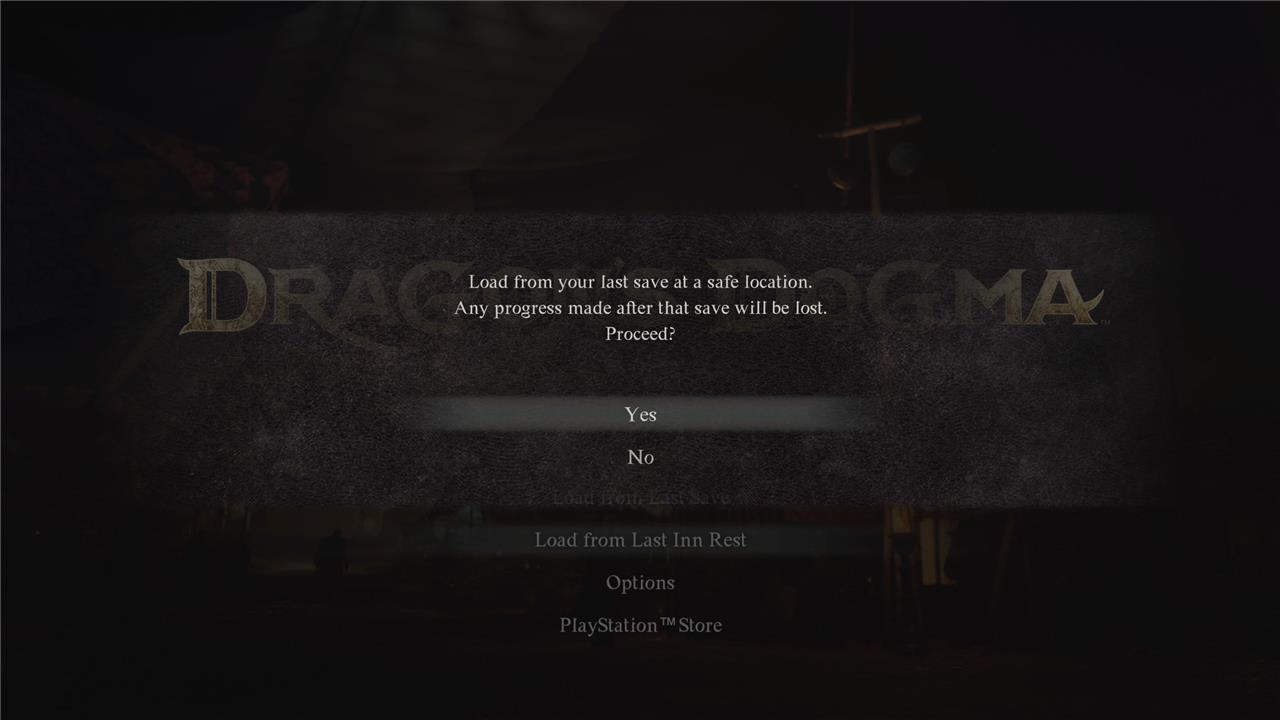
Dragon’s Dogma 2 only has one save file, and there’s no (official) way to start a new save. It autosaves often and you can save from the menu whenever you want. That’s all normal enough. Where it gets weird is when you die – like when you fall off a slightly too-high roof.
When your character dies, you’ve got two options: “load from last save” or “load from last inn rest.” Loading from the last save just backs you up a few minutes at most. Loading from the last inn rest, though, reverts you all the way back to the last time you paid to stay in an inn.
And then immediately autosaves over your file.
Treat “load from last inn rest” as a nuclear option when something goes horribly wrong or when you just need to back up a lot. Once you know how it works, though, you can treat inn saves as restore points for important decisions.
Make sure you actually like your character before committing
Before committing to your character in Dragon’s Dogma 2, make sure you genuinely like how they look and feel, as your initial choices will have lasting impacts. The character creation system offers extensive customization options-from race and gender to detailed body and facial adjustments-allowing you to craft a unique Arisen that suits your style. Keep in mind that some choices, like race, cannot be changed later, so take your time to explore all options and experiment with different appearances and sizes. Since height and weight affect gameplay elements such as movement speed, stamina, and hitbox size, selecting a character you enjoy visually and functionally will enhance your overall experience.
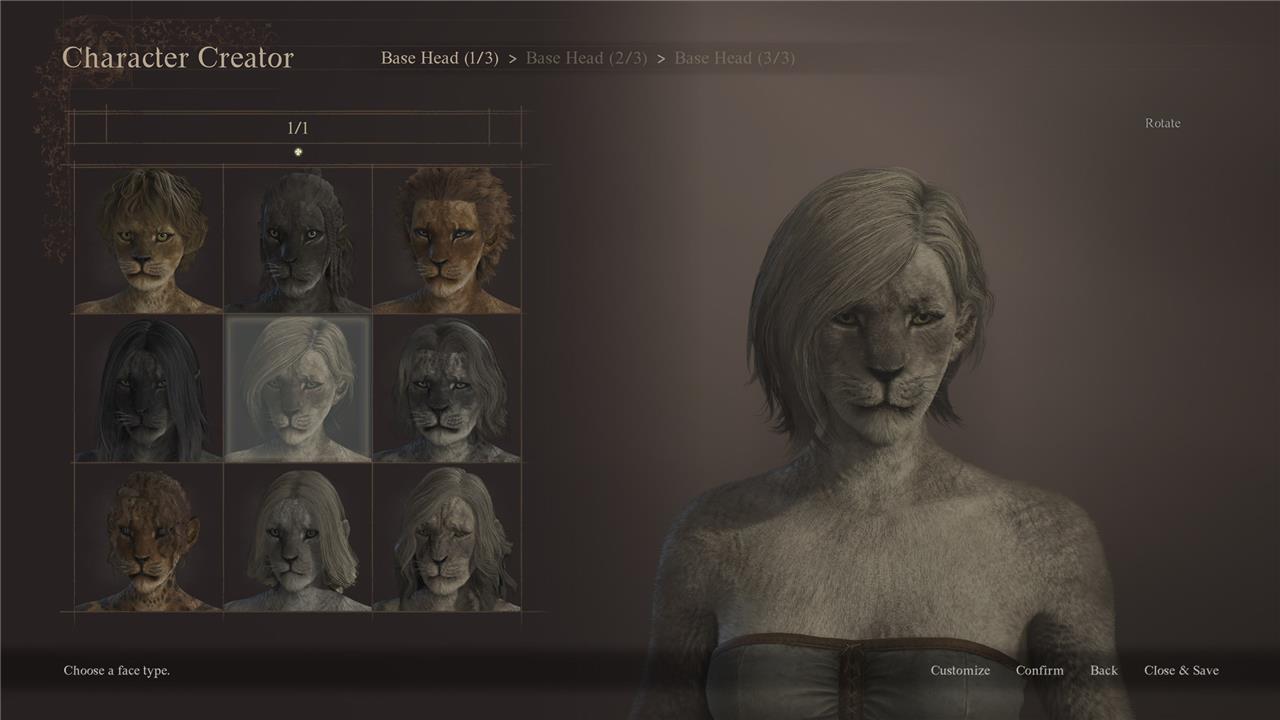
Since Dragon’s Dogma 2 only lets you maintain one save file, you’re locked into the character you create (or the one you import from the Dragon’s Dogma 2 Character Creator app). While you can change vocations or your appearance down the line – both for yourself and for you main pawn – doing either comes at a cost. And you cannot change between human and beastren after you make your selection.
Augments can apply to all vocations
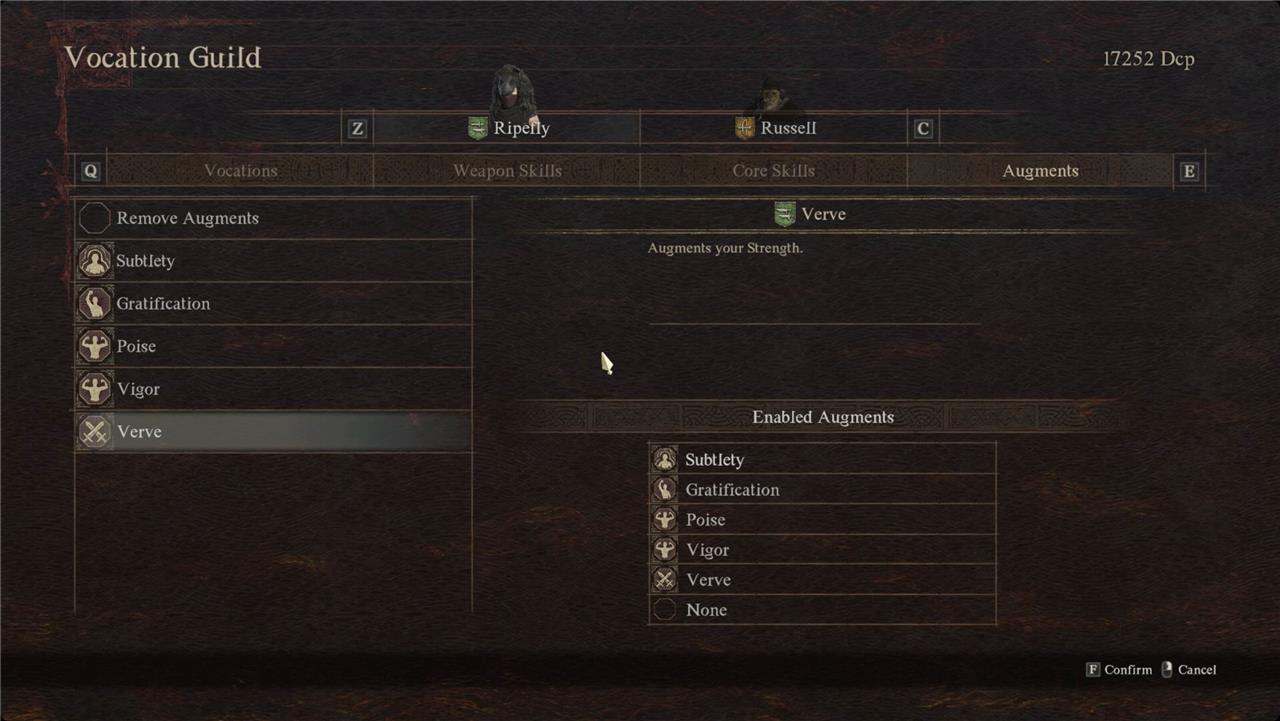
Augments in Dragon’s Dogma 2 are versatile passive abilities that can be unlocked by ranking up in any Vocation and then equipped across all Vocations, allowing players to customize their playstyle freely. Once an Augment is acquired, it can be enabled regardless of the current Vocation, meaning you can mix and match Augments from different classes to enhance your character’s stats or abilities as you see fit. This system provides great flexibility, enabling players to tailor their Arisen and Pawns with a combination of boosts that suit their preferred combat roles or strategies.
At the start of Dragon’s Dogma 2, you’re prompted to select from one of four vocations: Fighter, Archer, Mage, and Thief. Your vocation is your character class, and determines a lot about what you can do – what weapons you can wield, what armor you can wear, and what combat skills you can use.
As you level up a vocation, you’ll earn augments for it. Once an augment is unlocked, you can then apply that augment to any vocation. Bear that in mind when choosing which vocation you’ll want to focus on leveling up first. (The Fighter, we’ll gently note, comes with augments to boost health and carrying capacity.)
Prepare to walk – a lot
In Dragon’s Dogma 2, be prepared to do a lot of walking, as the game world is expansive and fast travel options are limited and sometimes risky. While you can use Oxcarts for long-distance travel, they can be attacked and destroyed, and Ferrystones, which allow teleportation, are scarce and costly early on. This means you’ll often find yourself exploring on foot for extended periods to complete quests and discover events. Planning your trips carefully and making the most of available fast travel methods can save time, but expect to spend significant time traversing the world by walking.
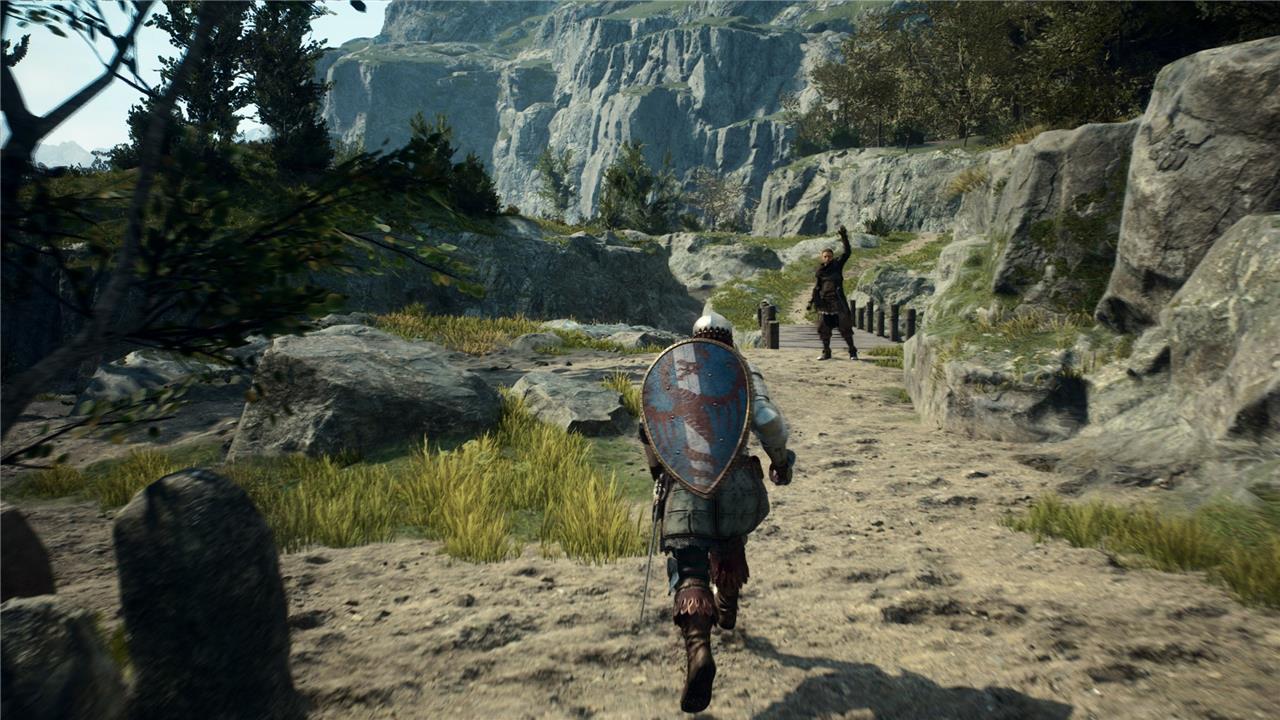
Your journeys over the course of Dragon’s Dogma 2 will take you all across the map. And you’re going to walk for almost all of it. Yes, there are some fast travel options, but they’re pretty limited – ferrystones are expensive and only deliver you to a few portcrystals, and the few oxcarts that exist only travel during the day along set routes.
Walking isn’t the worst, though, and there’s plenty to do while you’re traveling like collecting resources, fighting monsters, or just exploring the map. That said.
Remember to stick to the road while exploring
When exploring the vast world of Dragon’s Dogma 2, it’s crucial to stick to the roads rather than venturing off into the wilderness. The game does not allow climbing or swimming, making shortcuts through rough terrain risky and often fatal due to falls or unexpected hazards. Staying on the roads ensures safer travel, offers regular combat encounters, and provides opportunities to gather resources. This approach helps beginners avoid unnecessary dangers and makes exploration more manageable as you get accustomed to the game’s mechanics.
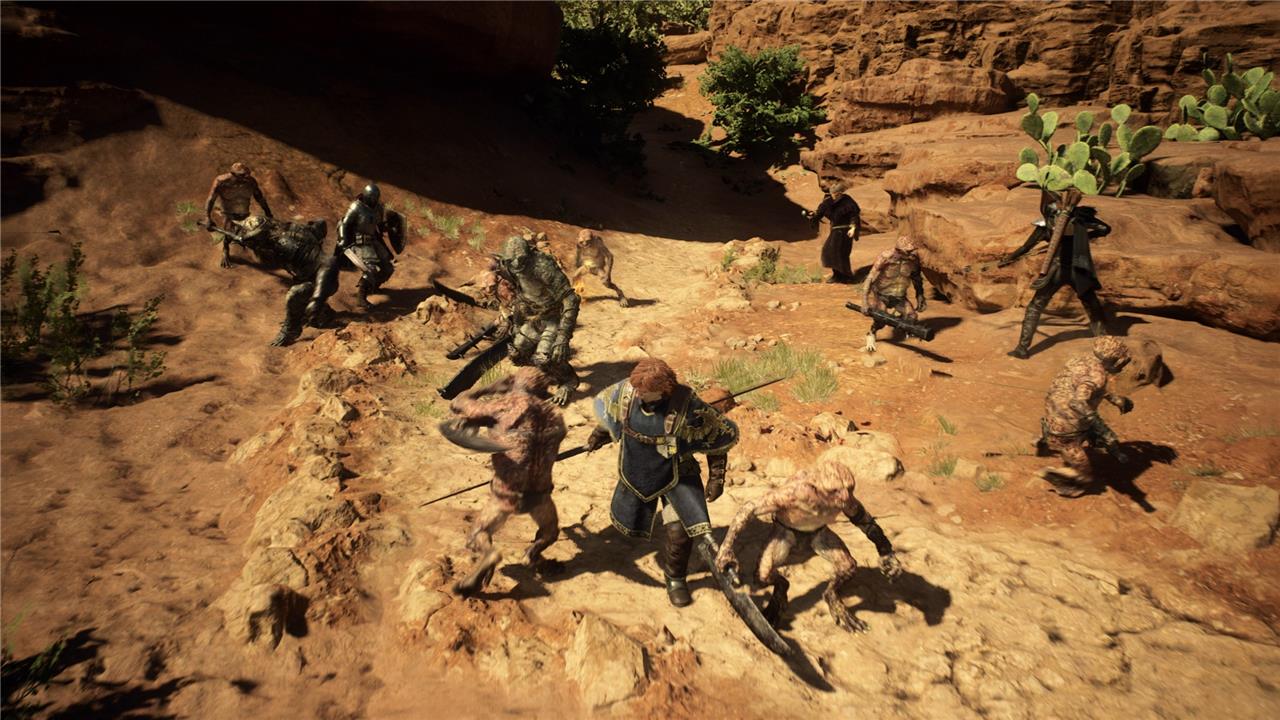
Since you’re walking so much, it’s tempting to try to find a shortcut – or to just march in a straight line. That will get frustrating fast. You can’t climb or swim in Dragon’s Dogma 2 and it doesn’t take much for you to fall to your death, so cutting through the wilderness is a sure way to get dead.
Basically, the vast open world of Dragon’s Dogma 2 isn’t that vast and isn’t really that open. There’s plenty of opportunity to explore and you’ll do a lot of wandering, but you’re much better off (and safer) exploring along the roads. You’ll still encounter lots of monsters to slay and resources to collect, so you’re not really missing anything.
Don’t be afraid to run from a fight
In Dragon’s Dogma 2, it’s perfectly okay to run from a fight when the odds are against you. The game can be challenging, especially early on, so knowing when to retreat can save you from unnecessary deaths and stamina depletion. Use this strategy to regroup, heal, or rethink your approach, especially if your party isn’t well-prepared or if you’re facing overwhelming enemies. Remember, combat consumes stamina, and running out leaves you vulnerable, so sometimes discretion is the better part of valor. Don’t hesitate to use fast travel or reposition your party to avoid fights you’re not ready for yet.

Some of the biggest enemies in Dragon’s Dogma 2 stand directly between you and where you’re trying to go. The good news is, most of the time, you don’t have to fight them. Big enemies will ignore you eventually if you simply. run past them. And if your pawns decide to engage, you can issue the “To me!” command to get them to follow you instead.
If you want to kill the giant enemy later on (for XP, for loot, or just for your pride), mark it on your map and come back later.
Combine your items early and often
Combining your items early and often in Dragon’s Dogma 2 is a smart way to manage your inventory and conserve carry weight. When you combine two base materials, the resulting item usually weighs less than the sum of the individual components, helping you save space and reduce encumbrance. This is especially useful for crafting healing items or other useful supplies on the go. You can combine items directly from your inventory or by using the combine option at inns or storage chests, where your items are also preserved from spoiling. Regularly combining items not only lightens your load but also streamlines your resources, making your adventure smoother and more efficient.
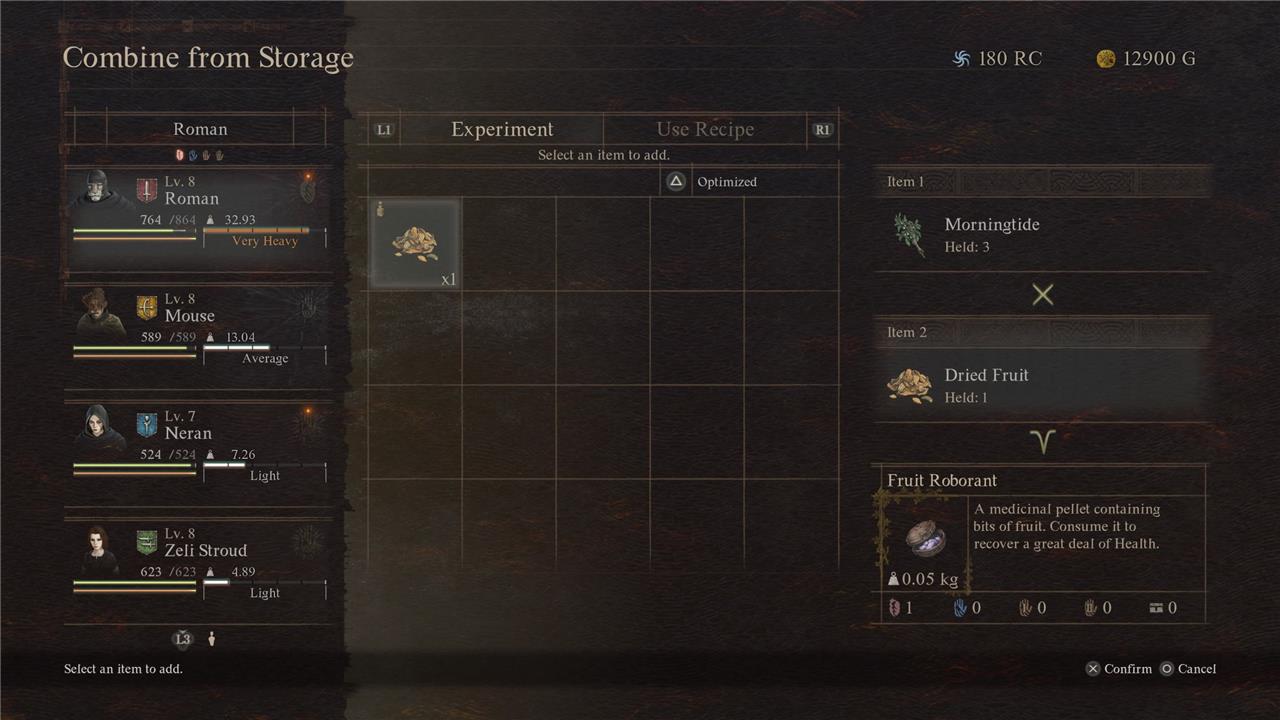
There are tons of items to pick up in Dragon’s Dogma 2, from monster teeth to apples. Most of these items are usable on their own with middling effects, but if you combine them with other items, you can create something even more useful.
For example, you can use a normal apple to heal you if you’re hurt. But if you combine that apple with a Greenwarish plant, you can make a Salubrious Draught (a much more powerful healing potion). Even better, you can combine two ripened apples into dried fruit, and then combine that dried fruit with that a Greenwarish to make a Fruit Roborant (an even more powerful healing item).
All you need to do to combine anything in Dragon’s Dogma 2 is pop into your item menu and hit the button that says “combine.” Start doing this early on and make a habit of combining things together for healing draughts and stamina potions every time you rest at an inn.
Your items will age
In Dragon’s Dogma 2, your items will age and can spoil over time, especially consumables like food. This adds a layer of realism and strategy, as you need to manage your inventory carefully to avoid wasting valuable resources. To prevent items from spoiling, you can combine materials to create more durable goods, store items in the Item Storage which halts spoilage, or use the Stasis Augment to slow down the aging process. Managing item aging effectively will help you maintain a strong supply of useful materials throughout your adventure.
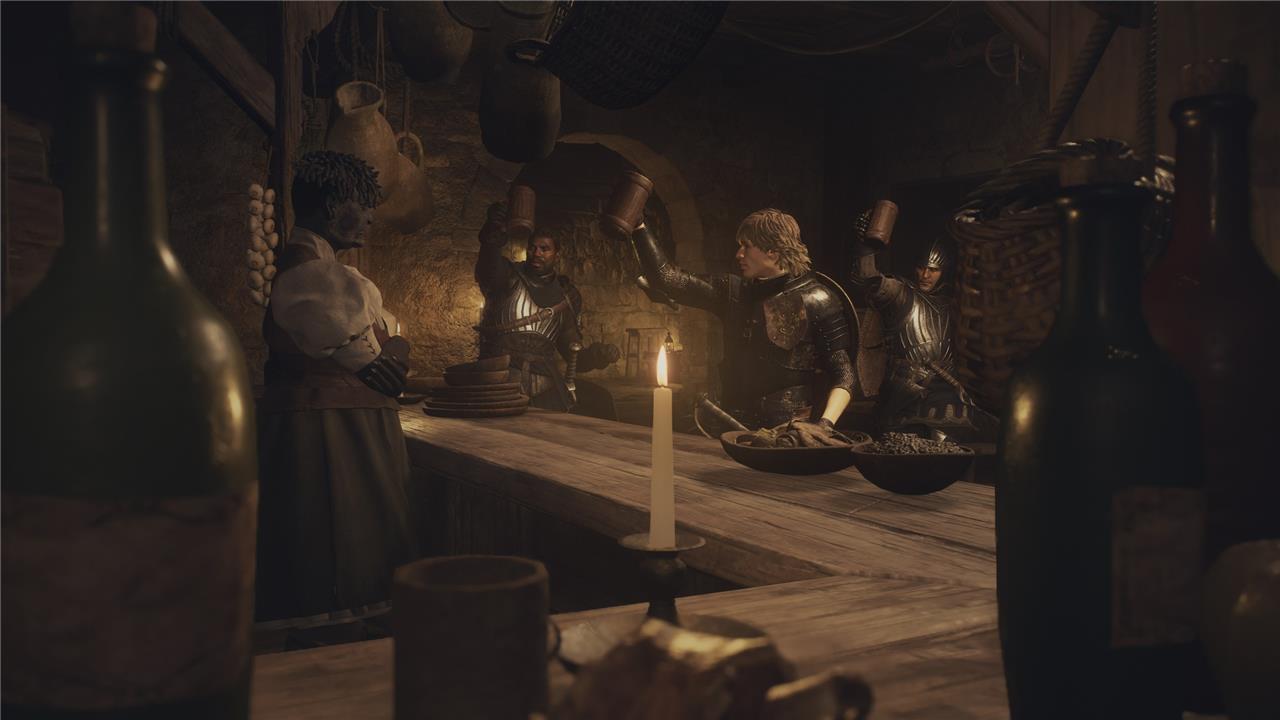
Dragon’s Dogma 2 has a day-night cycle that lasts about 45 minutes. Time of day affects the monsters you encounter and the resources you can find. And the progression of time plays into some quests. More importantly, though, time affects the contents of your inventory – specifically, the fruits, vegetables, and meat in it.
When you pick up, say, an apple, your inventory will show an apple, then a ripened apple, and then a rotten apple over the course of a few days. Meat just swaps “ripened” with “aged.” (Storing food at an inn or one of your houses essentially serves as a fridge for your food, stopping the aging process.)
Ripened and aged foods are better – more effective in terms of perks like healing – than raw foods. When food becomes “rotten,” though, it’s no longer safe to eat (but you can turn a rotten meat and a rotten vegetable into lantern oil). As mentioned, combining ripened food can result in potent healing items.
Be careful at night time
In Dragon’s Dogma 2, nighttime brings increased danger and challenges that require caution. The world becomes shrouded in darkness, drastically reducing visibility and allowing stronger and more frequent enemies to appear. Without a reliable light source like an oil lantern, navigating at night can lead to stumbling into packs of wolves or other deadly foes lurking in the shadows. It’s generally safer to rest at campsites or inns to skip the night, especially in the early and mid-game, as exploring after dark is intended as a late-game challenge for well-prepared players. Venturing out at night unprepared can result in difficult encounters and even death, so always be cautious and keep your lantern oil stocked if you must travel after sunset.
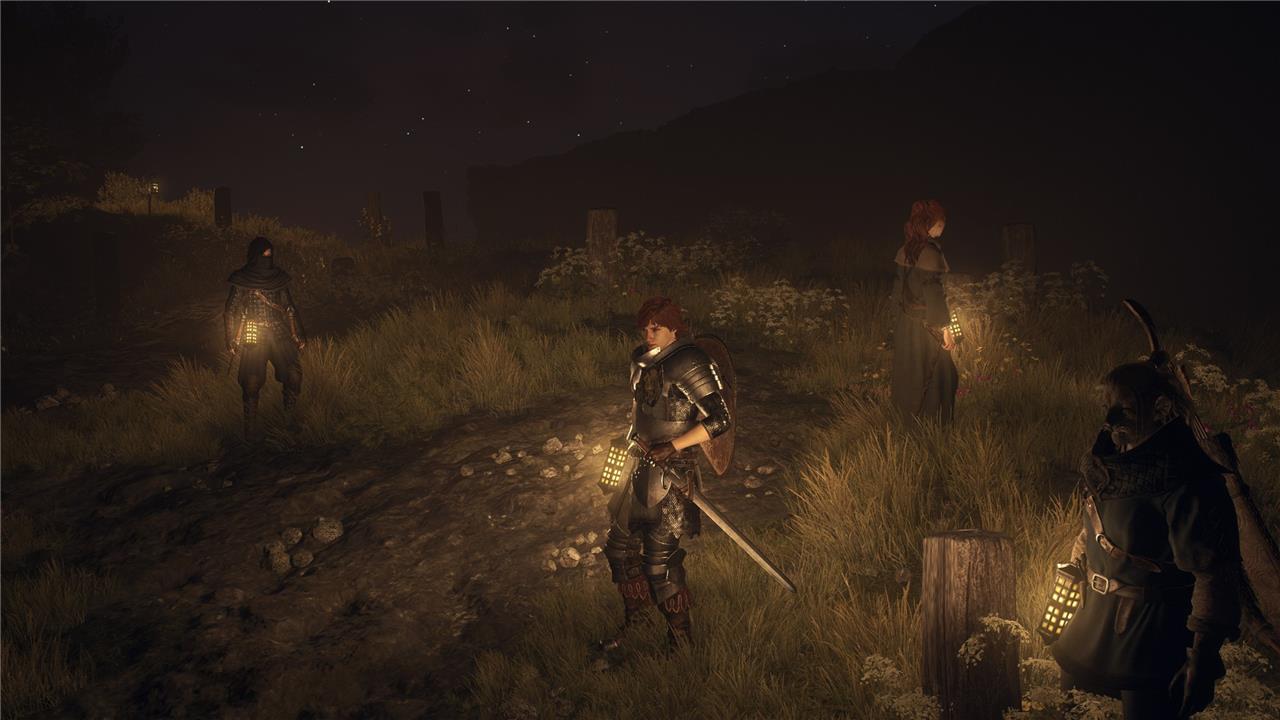
At night, all the big, nasty creatures come out to fight you in Dragon’s Dogma 2. Ghosts, spectral skeletons, invisible goblins – the list goes on. The point is, the game will warn you early on that night time is dangerous. Listen to the game.
If you’re close to town and the sun starts getting low, that’s a sign that it’s time to turn around and sleep for the evening. And you can do that even if you’re in the middle of nowhere, thanks to the power of camping.
Make sure to camp after a big fight
After a big fight in Dragon’s Dogma 2, it’s crucial to set up camp to rest and recover. Camping allows you to fully restore your health and stamina, as well as heal any debuffs affecting you and your Pawns. Cooking meat at the campfire provides beneficial buffs, enhancing your party’s readiness for the next challenge. Additionally, camping lets you manage and change your skills and skip time to suit your needs. Just be cautious, as there is a small chance of being ambushed while resting, but the benefits far outweigh the risks. Always make sure to camp after intense battles to keep your party in top shape for the journey ahead.
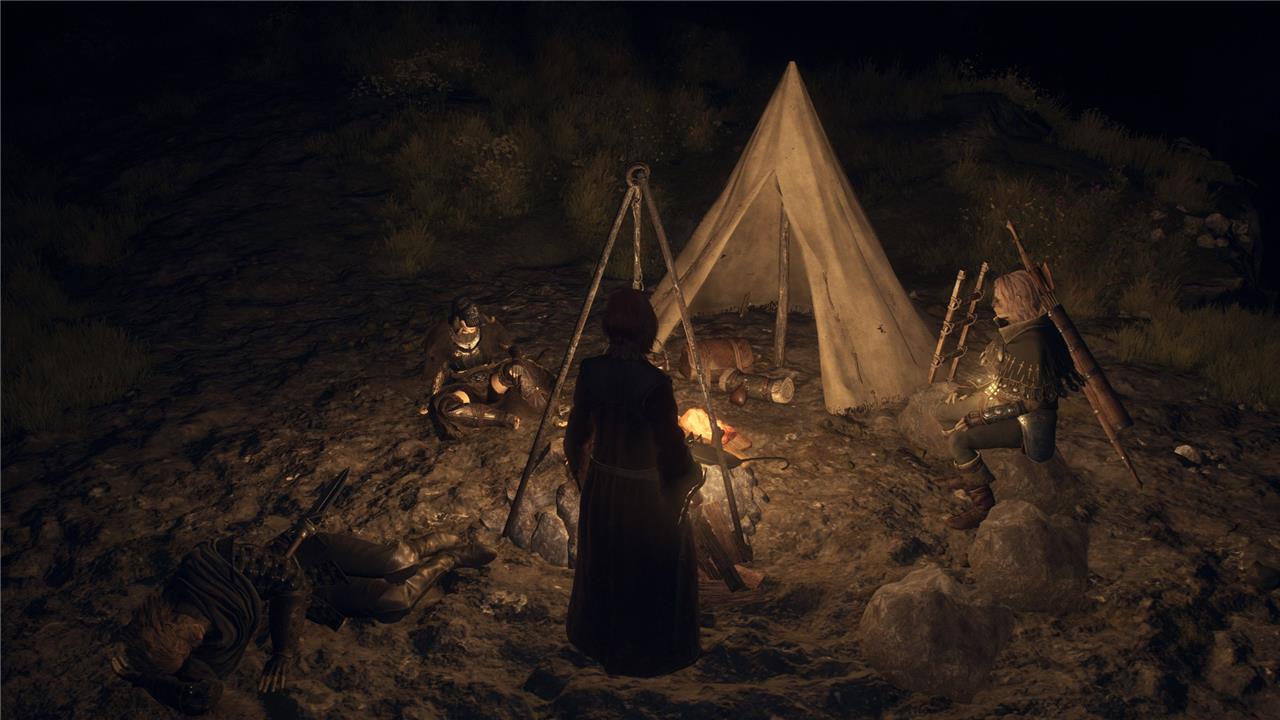
When you take damage in Dragon’s Dogma 2, it lowers your maximum health. Healing items won’t restore your health bar to normal levels. You’ll need to sleep – either at an inn or a campfire – for that.
Camping at a fire requires camping kits, which are both heavy to carry and limited in quantity. It’s still worth carting one around. Traveling reduced max health can quickly spell your doom. Save yourself the headache and camp out under the stars liberally.
Also, keep in mind that your pawns will learn more about the area of the world you’re in when you camp, making them more useful to you (and anyone who hires them).
Take a different return route
Taking a different return route in Dragon’s Dogma 2 can greatly enhance your exploration experience. Instead of retracing your steps along the same path, try to explore alternative routes when heading back to a previous location. This approach often leads to discovering hidden quests, new NPCs, and unexpected encounters that enrich the game’s world and story. Since quest progression sometimes depends on triggering events by visiting certain areas or speaking to specific characters, taking a different route can help uncover these triggers naturally. Additionally, using fast travel options like Oxcarts or Ferrystones strategically to land in the middle of a route can save time and open up fresh exploration opportunities. Embracing varied paths not only keeps the journey interesting but also maximizes your chances of finding valuable resources and side quests.
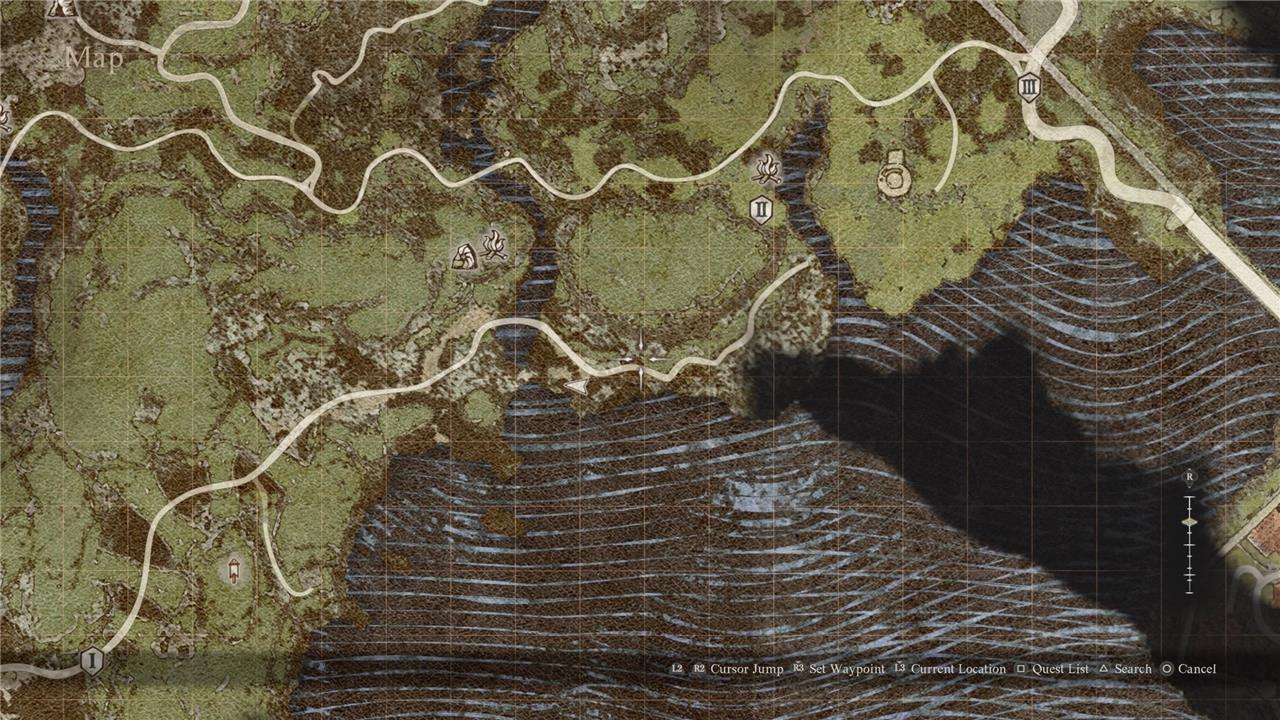
Dragon’s Dogma 2 features winding paths and numerable forks in the road. Most cities additionally have two or three gates, and some caves even have two or more entrances.
In order to fill out your map and the world, make sure to explore as many routes as you can. Came to a certain quest marker from the west? Take the east path on your way back to town. This will potentially expose you to new treasures and side quests you’d otherwise miss by sticking to the same road. Just keep in mind that you can also run into monster dens you didn’t previously know about, so make sure you’re ready for a fight before heading into new territory.
Keep an eye out for gold bugs and smoking discs
In Dragon’s Dogma 2, keeping an eye out for gold bugs and smoking discs can be highly beneficial. Gold bugs are valuable collectibles that can often be found in various locations and are worth seeking out for their rewards. Smoking discs, on the other hand, may indicate points of interest or hidden secrets in the game world, so noticing these can lead to discovering useful items or clues. Staying alert to these subtle environmental hints will enhance your exploration and resource gathering, giving you an edge as you progress through the game.
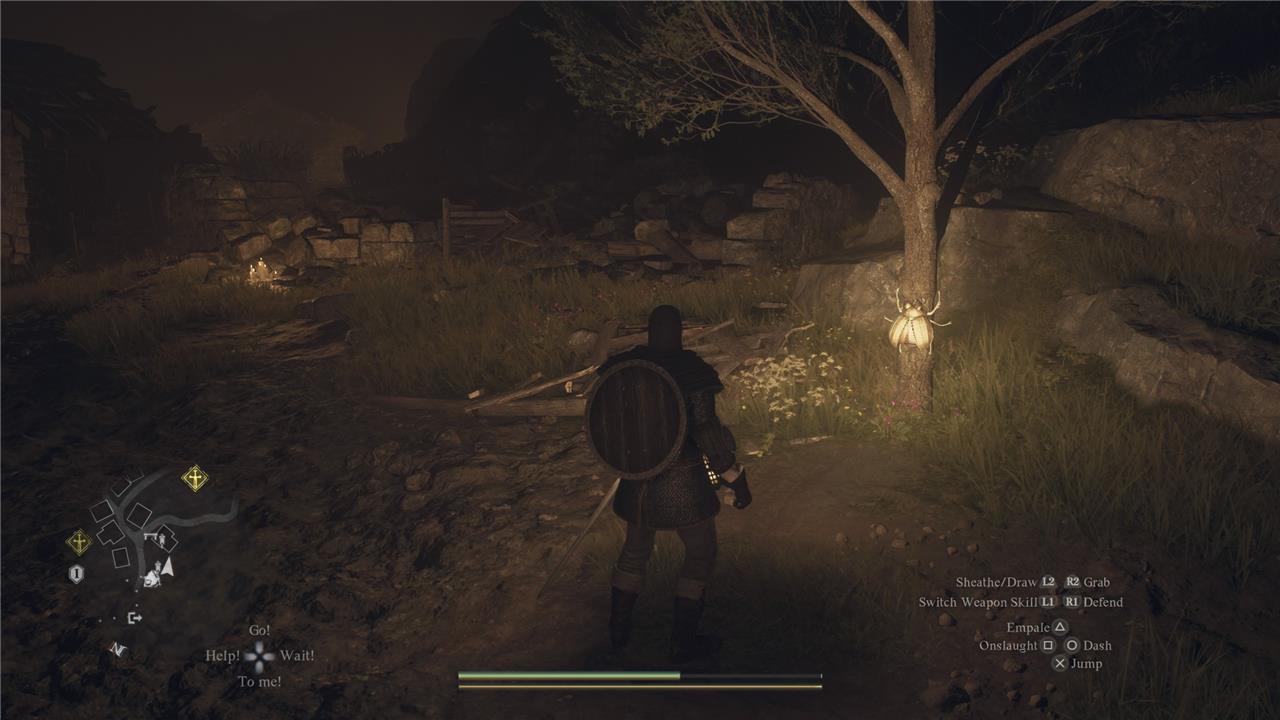
The primary rare collectibles of Dragon’s Dogma 2 are lightly smoking discs called Seeker’s Tokens. You can find them everywhere, but they’re extremely hard to spot. Also, there are 240 of them. But the hunt isn’t fruitless. When you gather a certain number of Seeker’s Tokens, you can turn them into your local Vocation Guild for a reward.
The unofficial (and arguably much more useful) collectibles are Golden Trove Beetles. These bugs sit on tree trunks and increase your inventory size by 0.15 if you or your main pawn consume them. This is a slow but fairly effective way to increase your inventory size.
Reserve your Wakestones for big fights
Wakestones are invaluable resources in Dragon’s Dogma 2 that can instantly revive you or any fallen ally during combat, making them essential for surviving tough battles and boss fights. Since they are rare and precious, it’s wise to reserve your Wakestones for big fights where death is more likely, allowing you to push through challenging encounters without losing progress. You can find Wakestones by collecting three Wakestone Shards, using the Dragon’s Gaze to locate them, or purchasing them from certain shops. Managing your Wakestone use strategically ensures you have a safety net when it matters most.
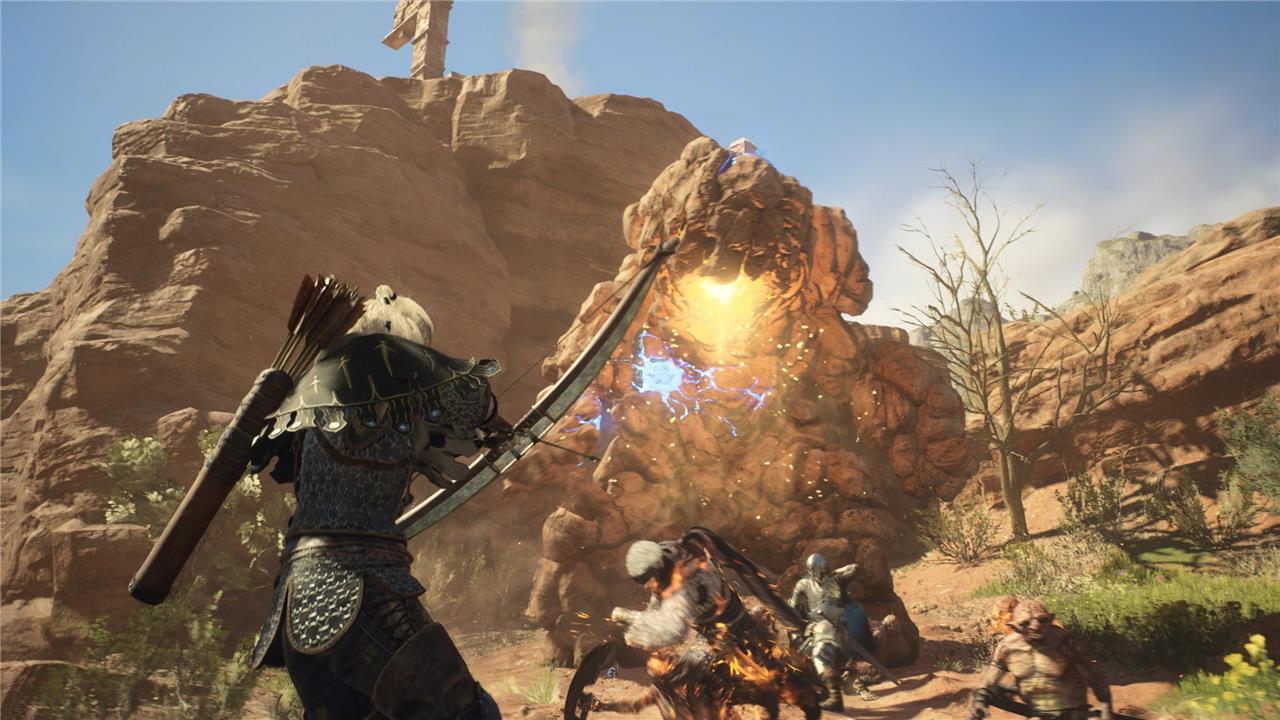
Wakestones are essentially 1UPs in Dragon’s Dogma 2. If you have one on-hand, you can consume it when you die to get back up to full health – even during the middle of a fight.
Though incredibly helpful, Wakestones are both rare and precious. Dragon’s Dogma 2 usually respawns you right before the fight that killed you, but during the more tedious battles, a Wakestone can be a huge time-saver.
You’ll need to combine three Wakestone Shards to create a full Wakestone. Try to be choosy about when you use these precious resources, as they’re best saved for long and very difficult fights.
Let yourself get distracted
Let yourself get distracted while playing Dragon’s Dogma 2. The game is designed to encourage exploration and discovery, so don’t feel pressured to rush through the main storyline. Take your time wandering the world, investigating points of interest, and following your curiosity. The game will naturally guide you back to important objectives when needed, but allowing yourself to get sidetracked can lead to finding hidden treasures, secrets, and unique encounters that enrich your adventure. Embrace the distractions-they are part of the experience Capcom crafted to make your journey memorable and enjoyable.

Dragon’s Dogma 2 is really good at shepherding you along to the next thing. Like a great Dungeon Master in D&D, it might put an enticing side quest in the same cave as your main quest, or you might encounter a villager on the road who needs an escort to their home town – which, as luck would have it, you already have a quest for.
This is part of the game’s charm, and what makes exploring its world feel both dynamic and lucrative. So feel free to let yourself wander and get distracted while you play. The game will find ways to refocus your attention on what matters. Go with the flow and you’ll eventually end up where you’re supposed to be.
What are the top beginner tips to survive Dragon’s Dogma 2’s early challenges
Here are the top beginner tips to survive Dragon’s Dogma 2’s early challenges:
-
Be Patient and Methodical: Take your time to understand the complex combat mechanics and intricate quests instead of rushing through the game.
-
Choose Your Vocation Wisely: Experiment with different vocations to find a playstyle that suits you. Beginners often find the Thief or Strider vocations effective due to their agility and versatility, but trying all vocations is recommended.
-
Manage Stamina Carefully: Conserve stamina during combat to avoid being vulnerable. Stamina management is crucial in fights, especially against large foes.
-
Follow the Road: Avoid straying off the beaten path early on, as the wilderness can be dangerous with hazards and tough enemies. Roads offer safer travel and opportunities to gather resources.
-
Don’t Hesitate to Run Away: If you encounter enemies that are too strong early on, retreat and come back later when you are stronger.
-
Use Pawns Strategically: Build a balanced party with pawns of complementary vocations (e.g., a mage for support, an archer for flying enemies, a fighter or warrior for tanking). Regularly update your pawns as you level up.
-
Explore and Gather Resources: Take time to explore, complete side quests, and collect materials for crafting and upgrading equipment, which is vital to survival and progression.
-
Learn Enemy Patterns and Use Environment: Study enemy attack patterns and use the environment to your advantage, such as climbing large foes to attack weak points or luring enemies into traps.
-
Rest and Cook Meals: Use campsites to rest and cook meals that provide temporary stat boosts, helping you endure tougher encounters.
-
Use Fast Travel Wisely: Unlock and use Portcrystals and Ferrystones to fast travel, saving time and avoiding unnecessary dangers.
Following these tips will help you navigate Dragon’s Dogma 2’s early challenges with greater confidence and effectiveness.
How important is choosing the right vocation early on in Dragon’s Dogma 2
Choosing the right vocation early on in Dragon’s Dogma 2 is quite important for your initial success and survival, as it determines your starting gear, skills, and combat style, which heavily influence your early gameplay experience. For beginners, the Fighter vocation is often recommended because it offers straightforward combat with good defense, making it easier to learn the mechanics and survive early encounters. Alternatively, the Thief vocation is favored for players who prefer speed, agility, and high damage output, especially useful for quickly taking down smaller enemies and exploiting weak points on larger foes. The Archer vocation also remains a strong choice for ranged combat and versatility.
However, it is worth noting that while the initial choice shapes your early game, Dragon’s Dogma 2 allows you to unlock and switch between vocations relatively early and freely, using a shared resource called discipline to learn skills and augments across classes. This flexibility means you can experiment and adapt your playstyle as you progress without being permanently locked into your starting vocation. Still, picking a vocation that matches your preferred combat style at the start will make the early game smoother and more enjoyable.
