
After fifteen years of familiar mechanics, Magic: The Gathering turns the battlefield itself into a weapon. Wizards of the Coast introduces “Battle,” a bold new card type set to reshape how players wage war across the planes.
According to the set’s official release notes from Wizards of the Coast, the battles serve as a thematic tie-in to the overarching story behind March of the Machine, where the cultist army of Phyrexians have launched their invasion of the entire multiverse. As players, we see this war unfold across 36 sieges, the first battle subtype and a permanent (like a land or creature card) that sits on the battlefield for players to attack. Wizards of the Coast has likewise indicated more battle subtypes are in the works for future sets.
The siege battles are transforming double-faced cards, with a front side that always gets played to the table first and provides a certain effect upon entering the game. Later, siege cards can flip over to their alternate side – a completely different card with different effects – when a certain condition is met.
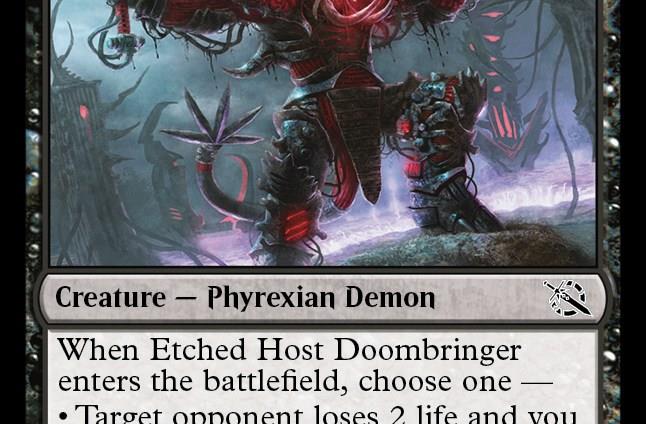
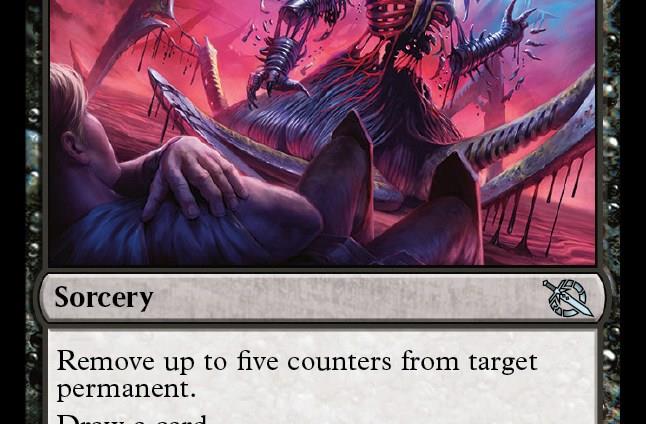
The sieges’ flip condition is removing defense counters via combat or direct damage spells. Plus, some new cards, like the Etched Host Doombringer and Render Inert, help remove defense counters explicitly.
Of course, Magic adds new game mechanics to practically every release. Commonly those are keyword abilities such as hexproof or horsemanship, and keyword mechanics such as morph and mutate that are essentially tweaks that reimagine how already existing card types interact with game rules. But a new type of permanent altogether is a much more significant addition, as it potentially redefines the entire texture of games by offering players a new outlet to spend resources, direct damage, and rethink how their decks operate.
Among the 36 battles, there are four or five in each of Magic‘s five primary colors, one or two in each of the 10 color pairs, plus one colorless battle and another that’s all five colors. Not only does this offer every type of Magic player new toys to experiment with, but the sheer number and variety of battles means they can potentially support or disrupt many of the game’s most familiar and recurring strategies.
With no preexisting method of assessing battles and their role in Magic decks, the weeks ahead will see an exciting race to discover the most powerful battles with good old-fashioned trial and error by deck designers and competitors alike. But how do we actually start evaluating these new game pieces and what’s our criteria for recognizing the ones that are worth keeping an eye on?
Let’s start by recognizing the battles’ range, including their in-game cost to play, also known as mana value, and the effects they provide for that cost – potentially the most critical threshold to establish, since a large part of effective deck construction is maximizing the return on your mana investment at various points in a game’s early and late stages.
Most of the battles cost between two and six mana. The cheapest battles, of which there are nine, touch all five Magic colors either by themselves or as part of a color pair. And thanks to their range in colors, these nine battles also provide a variety of effects for their cost.
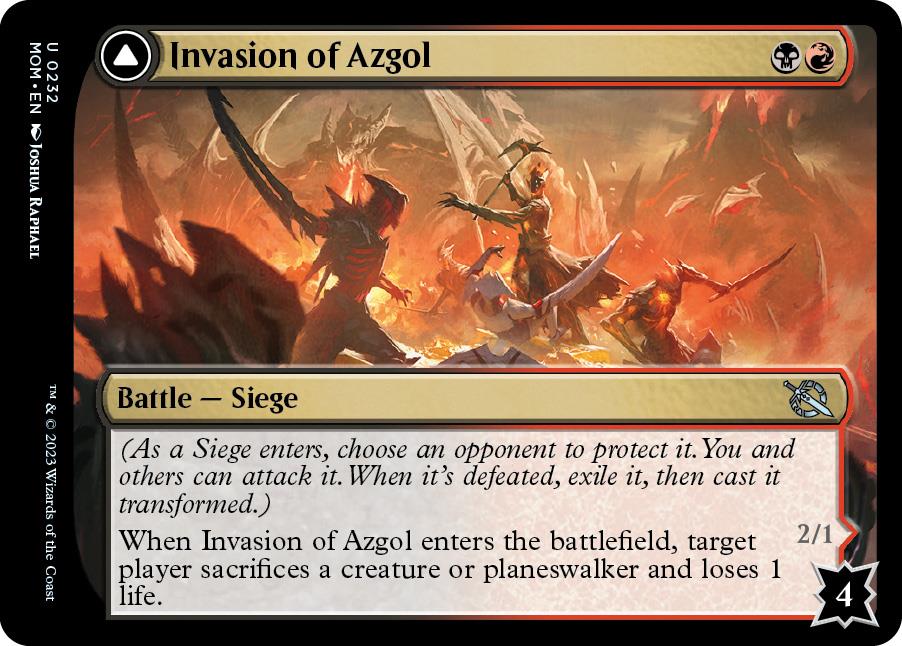
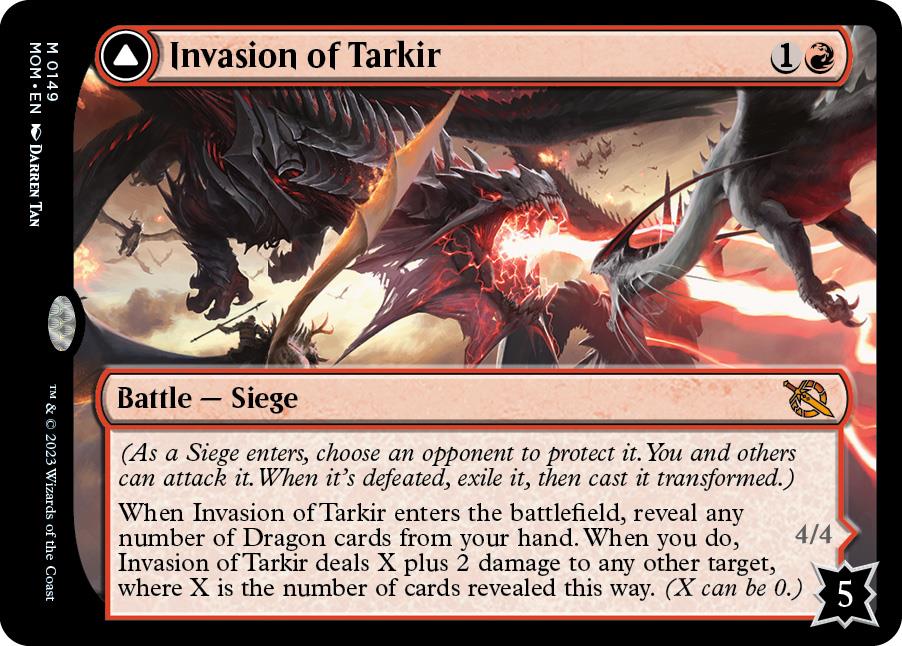
For instance, the Azgol and Tarkir invasions are removal spells that can kill opposing creatures on sight, whereas the Ixalan and Pyrulea invasions let you look at the top few cards of your library and draw one of them. Invasion of Kaladesh even creates a creature when it enters play, while Invasion of Gobakhan lets you look at an opponent’s hand and make one of their cards more expensive to play.
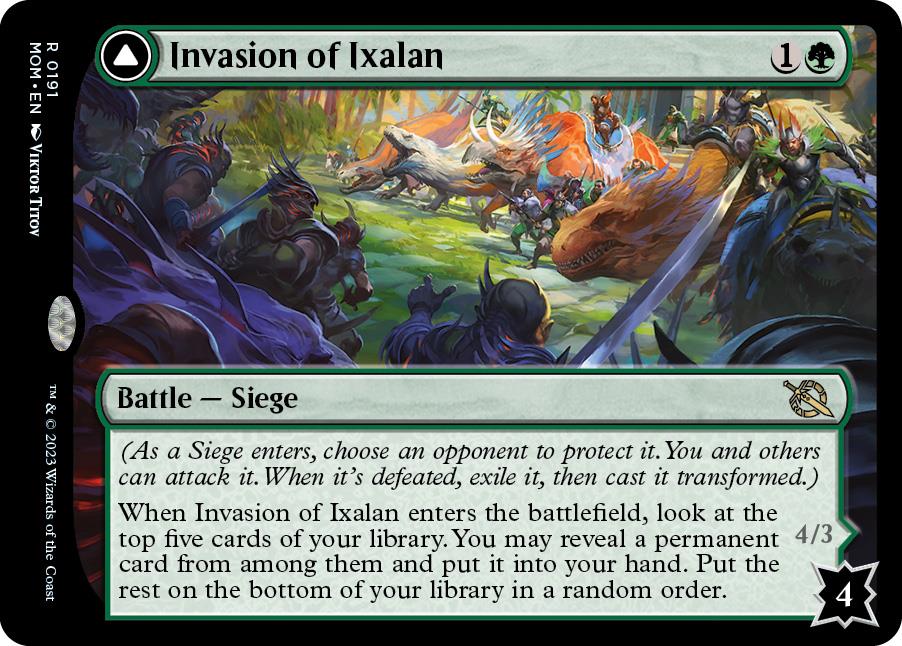
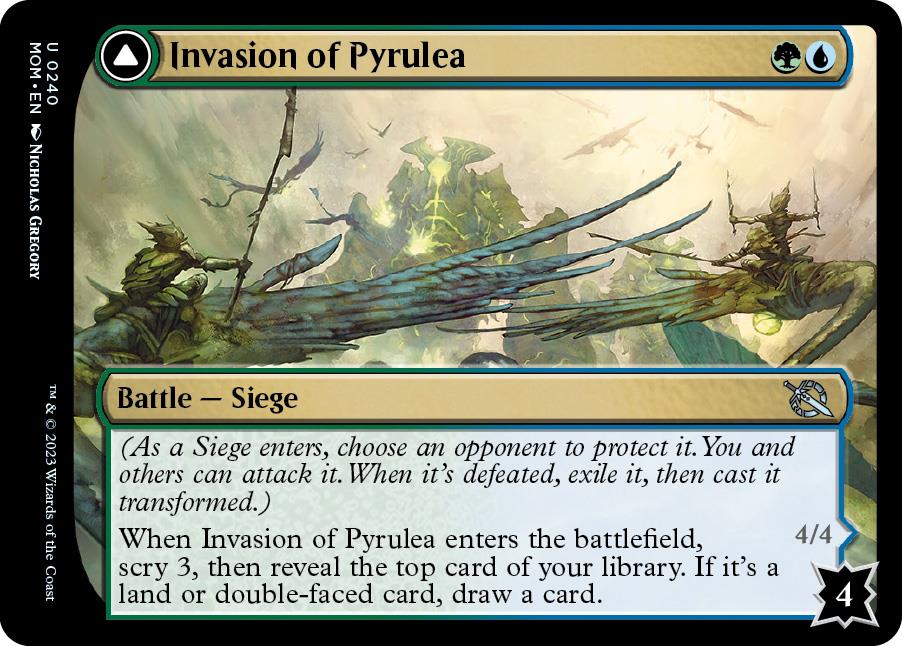
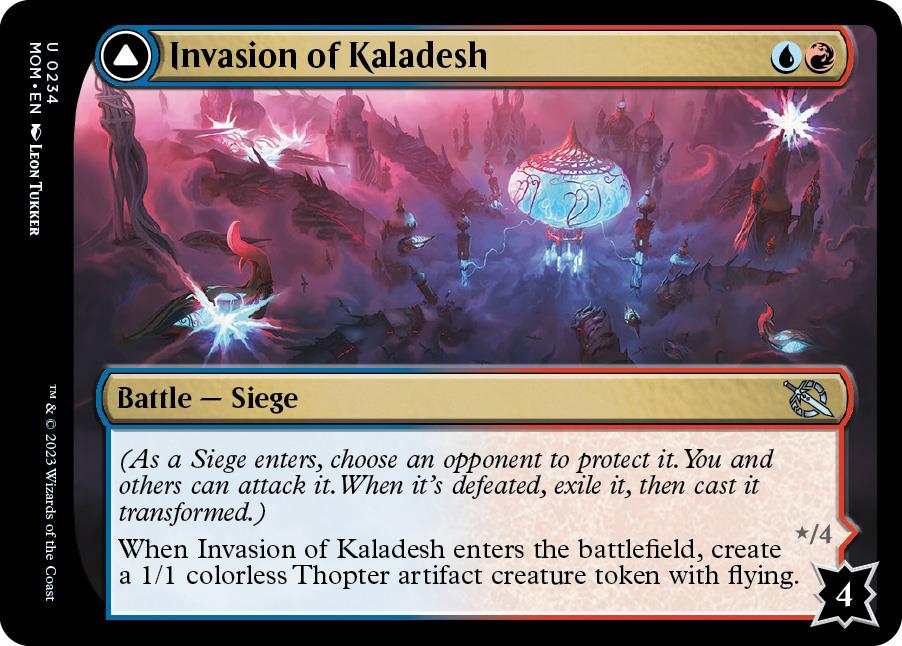
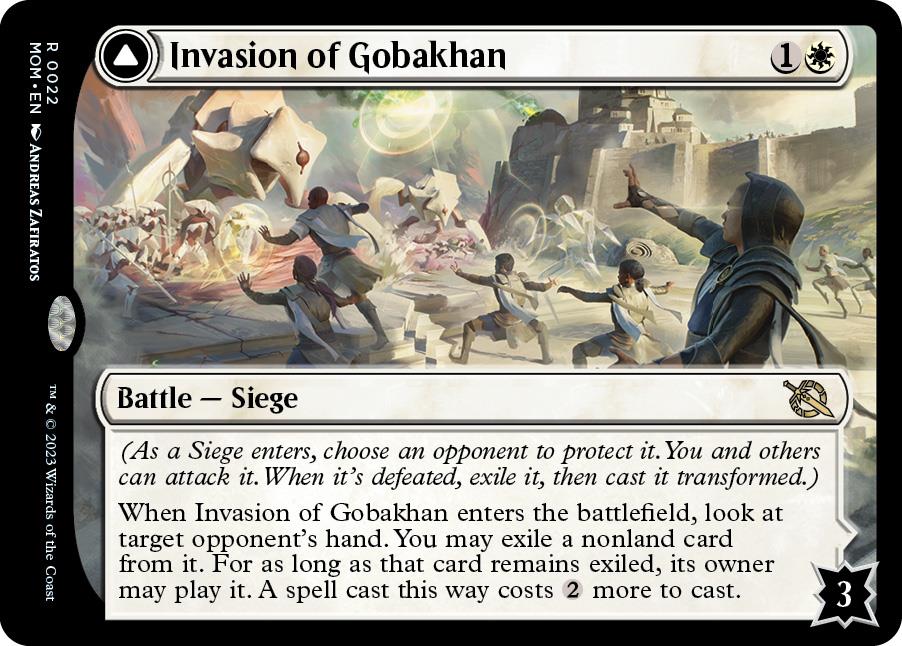
For the most part, these sieges basically replace themselves when they enter the battlefield, either by putting a new card in the player’s hand or creating an extra permanent in play. Decent effects for two mana, but not particularly game-winning on their face.
But this reveals two more challenges to battle evaluation: How easy are they to flip over, and is the backside card even worth flipping to at all? Since flipping battles requires some sort of damage, players now have to decide whether their time is better spent attacking opponents directly or if the game could potentially be won faster by focusing on the battle instead.
The easiest battles to flip, Invasion of Gobakhan and Invasion of Zendikar, each enter play with three defense counters. On the other end, the more challenging sieges, like Invasion of Arcavios and Invasion of Alara, enter with seven counters. You might expect the sieges with seven defense will always be the best battles to flip, but that’s not necessarily true.
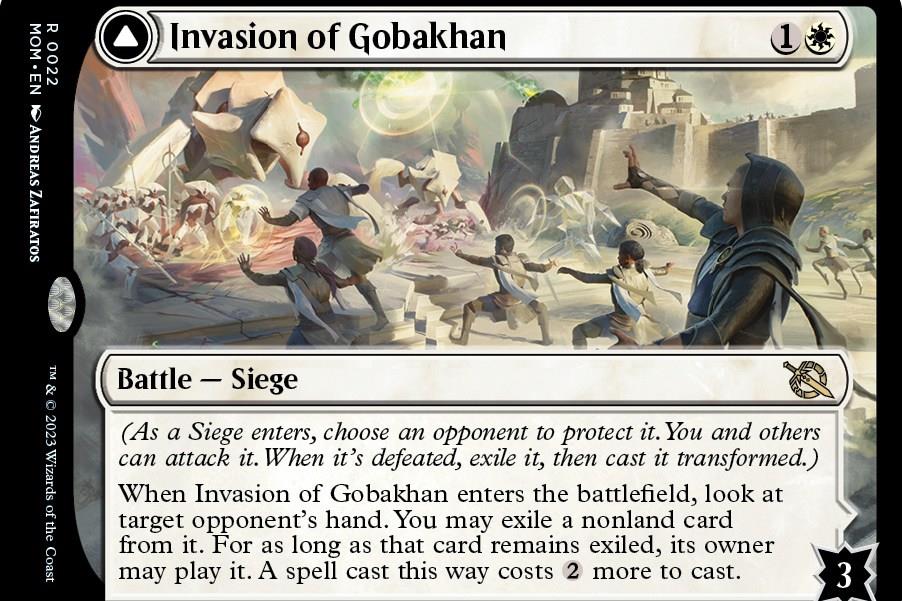
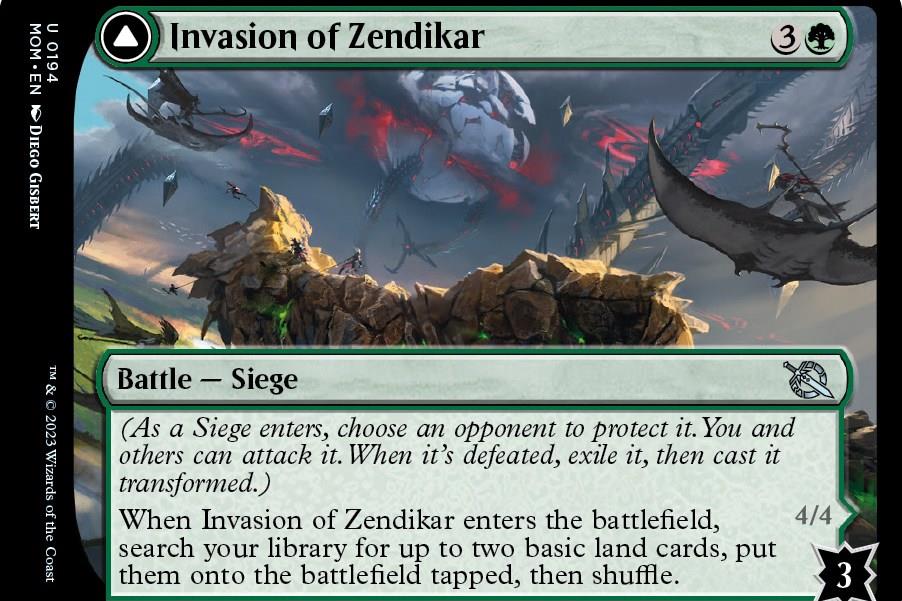
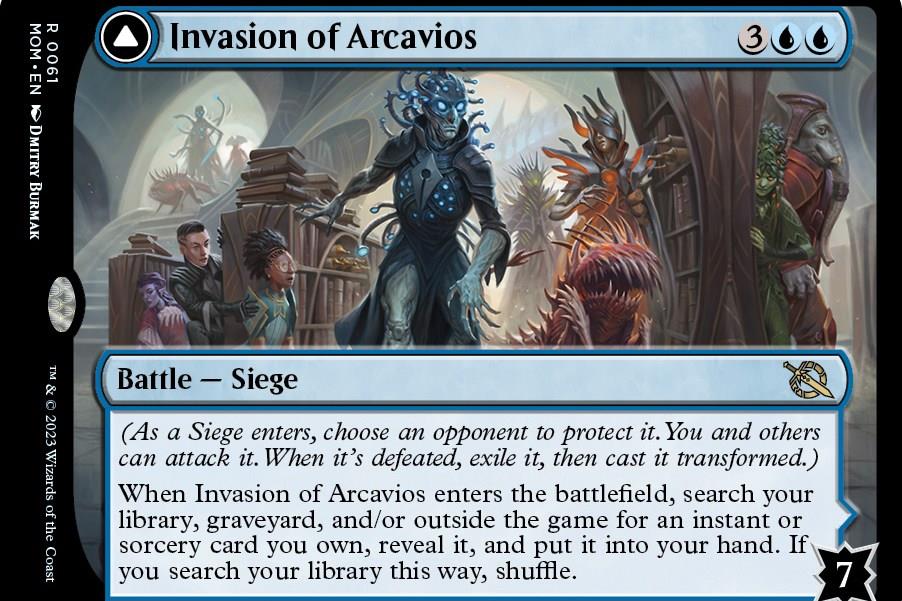
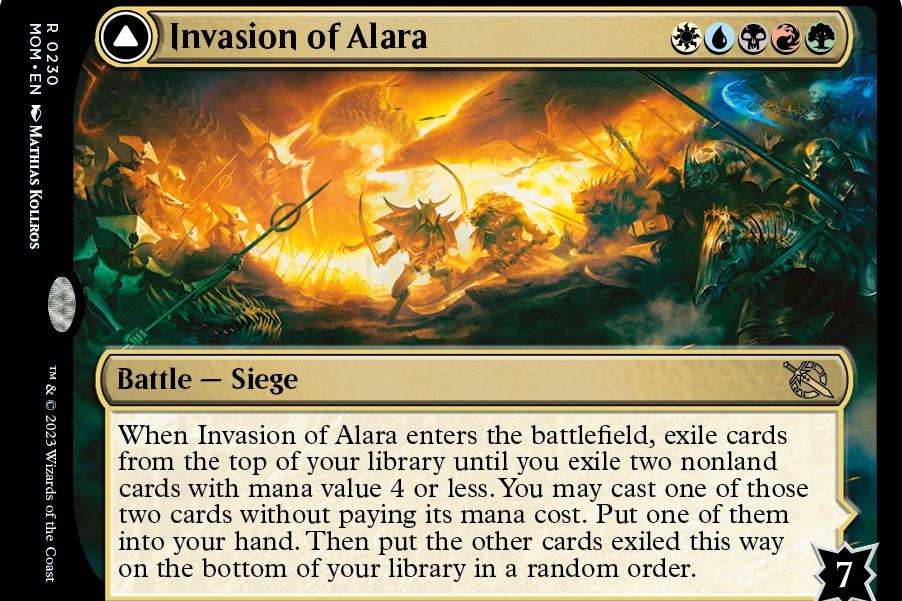
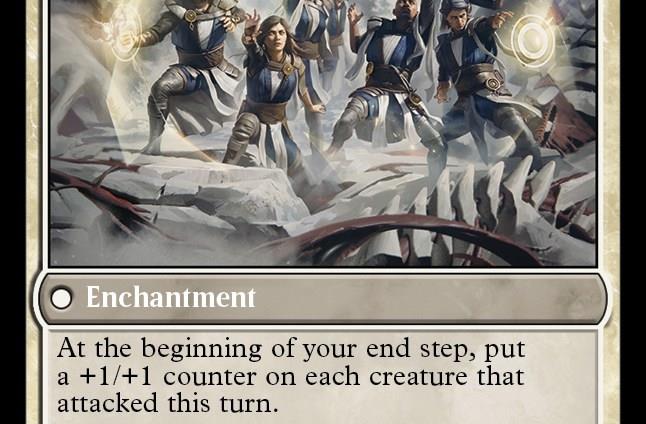
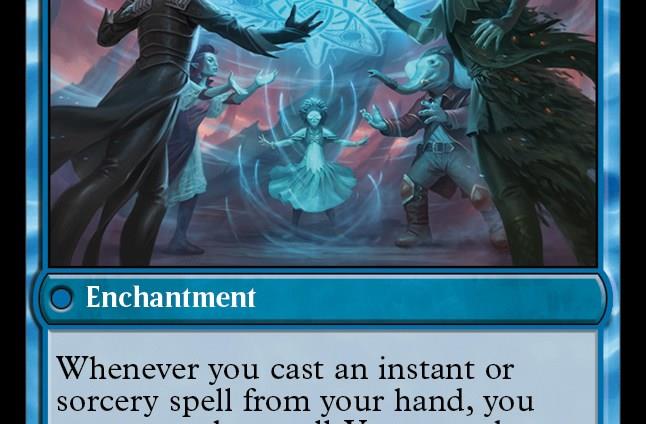
Both Gobakhan and Arcavios flip into enchantments that slowly generate value as you take additional game actions – attacking with other creatures or casting more spells, respectively. But if time is the limited resource that is spent flipping sieges, players will probably prefer a more meaningful threat to reward them for that effort and hopefully end the game sooner.
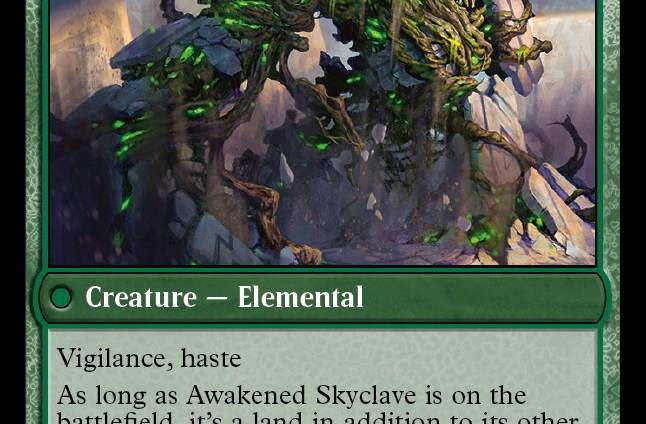
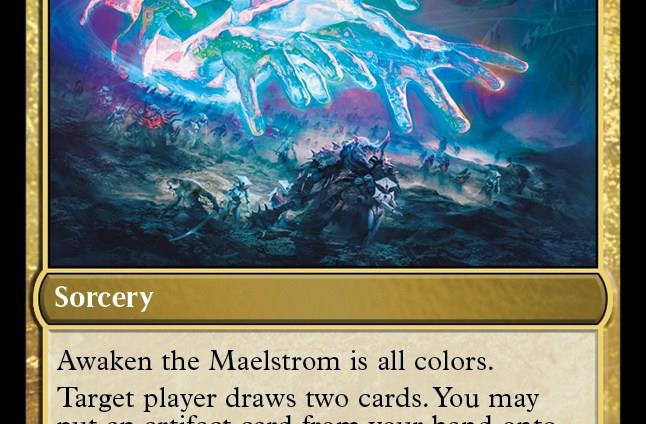
Consider the other three- and seven-defense battles, Invasion of Zendikar and Invasion of Alara. Zendikar transforms into the Awakened Skyclave, a big creature that can block well and even tap for mana. Alara transforms into Awaken the Maelstrom, a powerful sorcery, which draws you more cards, lets you play artifacts from your hand for free, destroys an opponent’s permanent, and also makes your own creatures bigger. It’s a lot of text, but feels appropriate for the time spent removing all those counters.
My personal favorite battle, Invasion of Ikoria, offers a flexible ability on the front that scales at different points of the game, and then sets up an outright win on the back with a giant creature that features a unique ability of its own to push through massive damage against your opponent.
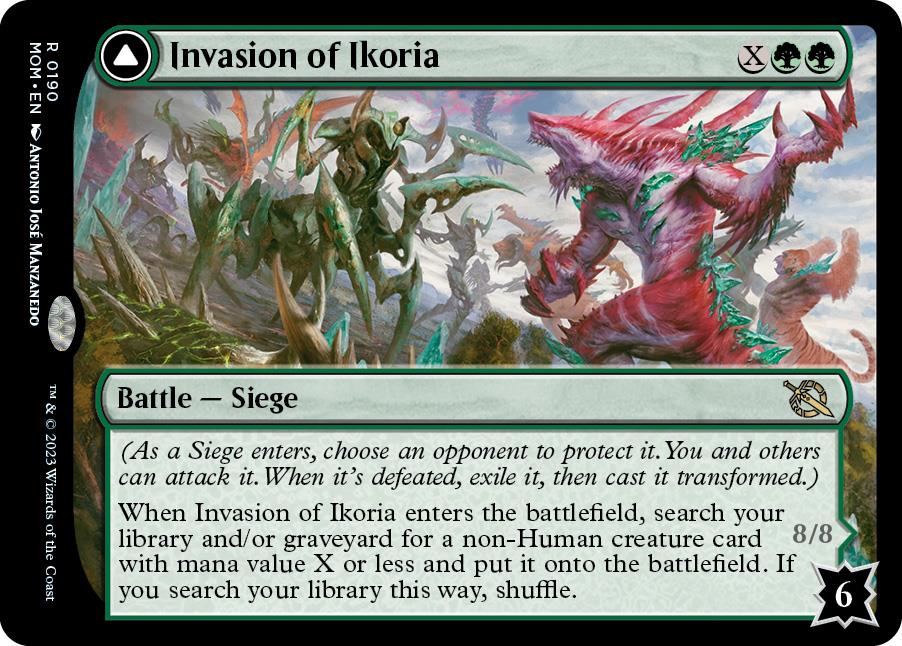
Unlike most of the other battles, Invasion of Ikoria costs two green mana plus X, where X is as much additional mana you want to sink into the card’s casting cost. You can then search your deck for a creature whose mana value equals X or less, and put it directly on the battlefield. In other words, for an extra two mana, you can play any creature you want, depending on the state of the game and the mana that you have access to.
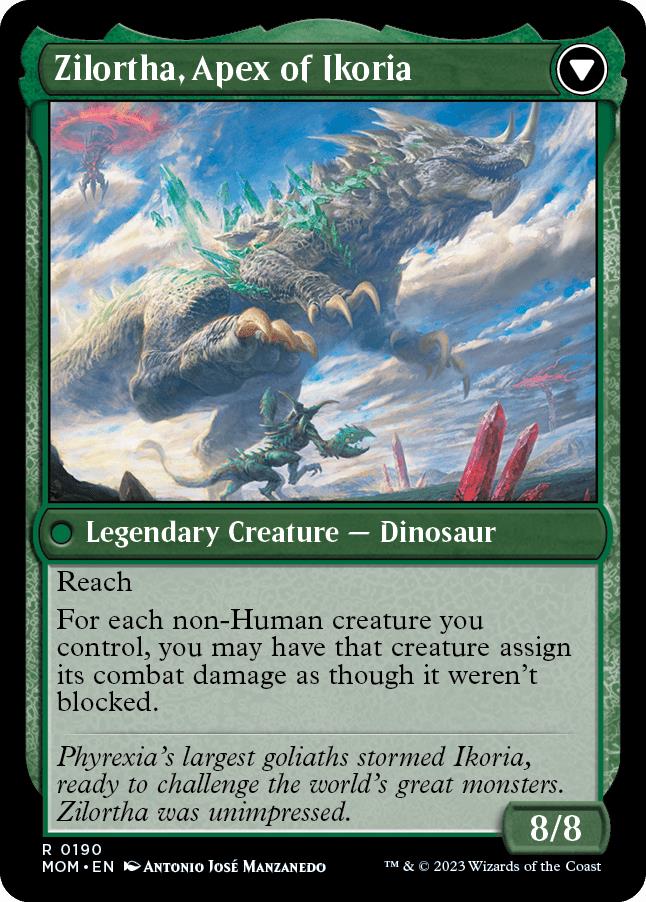
Then if the battle’s six defense counters are removed, it transforms into Zilortha, Apex of Ikoria, a massive dinosaur legend that makes creature combat connect with opponents even if attacking creatures are blocked. In the right deck, where an adequate battlefield of creatures is established, transforming into Zilortha will win a lot of games on the spot.
It helps that Invasion of Ikoria is a green spell, the color of ramp – Magic‘s term for accelerating mana production beyond the typical one-land-per-turn rule. So while some decks might struggle to produce a big payoff from an X spell, green strategies are often well suited to produce lots of mana in a short amount of time, allowing cards like Invasion of Ikoria to suddenly apply pressure with whatever creature is going to be the best solution to a given situation.
Most exciting for me is the invasion’s versatility across different game states. If you have enough mana to find any creature in your deck, either side of this card can single-handedly change the course of the game whether you’re winning, losing, or even in a stalemate.
When you’re ahead, this is the type of card that can set up an even faster win by finding a creature that prevents your opponents from ever recovering. If you’re losing, you can either find a creature to help turn the tides or set up a play to get Zilortha on the battlefield and stabilize with legendary dino power. And even in a stalemate, it can also produce a creature to break through an opponent’s defenses either by attacking a player directly or transforming into Zilortha and negating whatever blockers they might have.
As Wizards mentioned in March of the Machine‘s release notes, the 36 sieges are only the first version of battle cards. Although time will tell how future battles work compared to this first batch, the outlook is bright for this brand-new card type to inject some novelty into a game that hasn’t seen this level of iteration since the introduction of planeswalkers in 2008.
Magic: The Gathering March of the Machine arrives as a physical card set on April 21, and is currently available to play online in Magic: The Gathering Arena.
Magic: The Gathering March of the Machine: The Aftermath
$115$24152% off $115 $115 at Amazon (Collector Booster Box)
How do siege battles work mechanically
Siege battles in Magic: The Gathering are a subtype of the battle card type, functioning as double-faced permanents with unique mechanics centered on defense counters and protectors.
Casting and Entry
When you cast a Siege, it enters the battlefield as its front face (a battle) with a set number of defense counters-typically 4 to 8, depending on the card. As it enters, its controller must choose an opponent to be its “protector”; the controller themselves cannot be the protector. The protector cannot attack the Siege, but other players (including its controller) can.
Attacking and Damage
Sieges are attacked like planeswalkers: during your combat phase, after attackers are declared but before blockers, you can have your untapped creatures deal combat damage to the Siege instead of an opponent or planeswalker. Damage from spells, abilities, or sources that target permanents can also remove defense counters (1 counter per point of damage). The protector defends it normally against others’ attacks.
Transformation Trigger
Each Siege has an intrinsic triggered ability: “When the last defense counter is removed from this permanent, exile it, then you may cast it transformed without paying its mana cost.” The back face is usually a powerful creature, planeswalker, or enchantment, owned by the Siege’s controller. Only they can cast the transformed version; others cannot.
Key Rules and Interactions
-
If control of the Siege changes and the new controller was its protector, they immediately choose a new protector.
-
Defense counters can be added or removed by other effects, but damage always removes them one-for-one.
-
Sieges count as battles (a permanent type) for type-based effects like domain or “noncreature spells.”
What are examples of Siege cards in MTG
Siege cards are double-faced battle permanents from Magic: The Gathering’s March of the Machine set (2023), with 36 total introduced there, each tied to a plane invaded by Phyrexians.
Notable Examples
These highlight diverse colors, effects, and back faces:
| Front Face | Back Face | Key Features |
|---|---|---|
| Invasion of Zendikar | Awakened Skyclave | Searches for lands; transforms into vigilance/haste land-producer. |
| Invasion of Ikoria | Zilortha, Apex of Ikoria | Tutors big creature; dragon payoff with burn. |
| Invasion of Shandalar | Leyline Surge | Recurs permanents; enables repeated cheating in. |
| Invasion of Tarkir | Defiant Thundermaw | Dragon tribal tutor; flying dragon with pump. |
| Invasion of New Phyrexia | Teferi Akosa of Zhalfir | Self-flips; blink/protection planeswalker. |
| Invasion of Alara | Awaken the Maelstrom | Ramp/draw; reanimates nonlands. |
Later Additions
Post-March of the Machine, sets like Tarkir: Dragonstorm added non-battle “siege” enchantments (e.g., Barrensteppe Siege), but true Siege battles remain from the original cycle. All follow the core mechanic: enter with defense counters, choose protector, attack to flip.
