
When the night falls and the shadows lengthen, not all vampires lurk where you expect-some sneak up on you with a twist, a wink, or a chilling surprise. From the sly cameos in blockbuster hits like The Matrix Reloaded to the unforgettable charm of characters like Viago from What We Do In The Shadows, these are the best surprise vampires who redefine what it means to be a creature of the night. Ready to sink your teeth into the unexpected? This guide unveils the most intriguing, unconventional, and downright captivating vampires that have caught fans off guard and left their mark on pop culture.
Sometimes it is subtle, an easily missable detail that rewards only the most observant. In the best version, the vampires are always there, in the background, waiting for you to discover them – just like in real life.
Here are some of our favorite examples.
Baldur’s Gate 3: Astarion
Astarion, a captivating High Elf rogue in Baldur’s Gate 3, is a vampire spawn bound to a dark past of servitude under the cruel vampire lord Cazador Szarr. After centuries of enslavement and torment, he gains a chance at freedom following a mind flayer parasite’s intervention, which also grants him immunity to sunlight and some vampiric weaknesses. Known for his sharp wit, seductive charm, and complex personality, Astarion quickly became a fan-favorite character, praised for his intriguing backstory and nuanced portrayal. Players can recruit him as a companion, explore his personal quest to confront his former master, and even pursue a romance, making him one of the most memorable and surprising vampires in modern gaming.
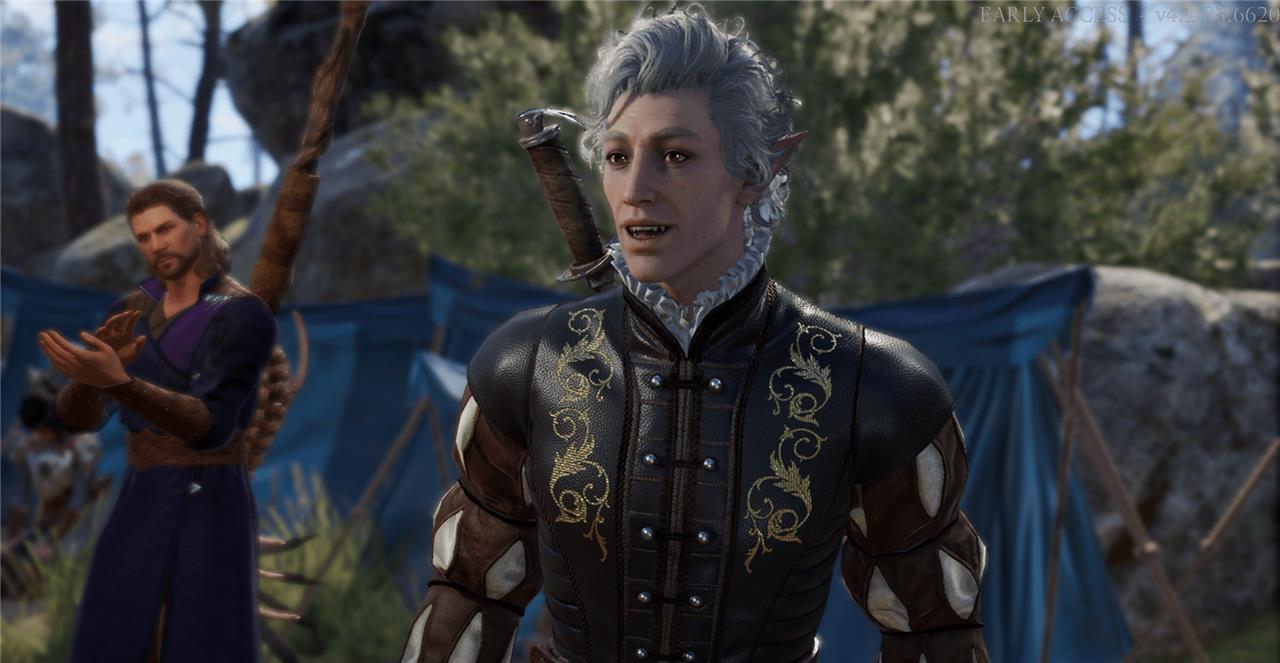
If Baldur’s Gate 3 was your introduction to the Forgotten Realms of Dungeons & Dragons, you might be shocked to find out about a lot of stuff that’s tucked away in the world’s most famous tabletop role-playing game. The great thing about Baldur’s Gate 3 is how it centers all that weird stuff – like Astarion, a haughty elf that you can either play as or recruit to your party very early on, and guess what? He’s a vampire! And dealing with his vampirism is a huge part of the game, should that be something you want to do.
The Matrix Reloaded: The Merovingian’s Henchmen
In The Matrix Reloaded, the Merovingian’s henchmen are revealed to be exile programs from earlier, failed versions of the Matrix, often referred to as the “Nightmare Matrix.” Among them are characters like Cain and Abel, who are believed to represent vampire and werewolf archetypes respectively, embodying supernatural traits such as superhuman strength and agility. These henchmen, including the ghostly Twins who can become intangible and heal rapidly, showcase powers that hint at their origins in a darker, more chaotic iteration of the Matrix. Their presence enriches the lore by blending folklore-inspired elements with the digital mythology of the Matrix universe, suggesting that myths of vampires and werewolves are programmatic anomalies integrated into human superstition within the Matrix.
Like a lot of ideas in the Matrix movies, a seemingly throwaway line leads to a blink-and-you’ll-miss-it scene with wild implications for everything you’re looking at. In The Matrix, The Oracle tells Neo that things that go bump in the night are in fact real, the result of a program misbehaving, an error in the virtual world of The Matrix. In The Matrix Reloaded, we meet some of those misbehaving programs in the form of the Merovingian’s henchmen. The Merovingian’s wife, Persephone, notes that they are very hard to kill – before she kills one of them with silver bullets. While the twin ghosts get significantly more screen time in Reloaded, the world of the films gets much more interesting when you realize that they are just two members of a whole assortment of ghoulies, and a superhuman kung fu god isn’t the only cool thing a character can be in these movies.
The Elder Scrolls: Everywhere
In The Elder Scrolls Online, vampirism is a dynamic and immersive feature that allows players to embrace the dark powers of the night. To become a vampire, players must be bitten by Bloodfiends, rare NPCs that spawn only at night in specific high-level zones such as Bangkorai, Reaper’s March, and The Rift. Alternatively, players can be turned by other vampires through a ritual performed at designated Vampire Shrines in these zones. After infection, players embark on the “Scion of the Blood Matron” quest, which delves into the vampire lore and unlocks a unique skill tree with powerful abilities. Vampires gain enhanced combat skills and stealth advantages but must manage vulnerabilities like fire damage and exposure to Fighters Guild enemies. The game also allows vampires to share their curse with others through a ritual, adding a social dimension to vampirism. This blend of risk, power, and narrative depth makes vampirism in The Elder Scrolls Online a compelling and surprising experience for players.
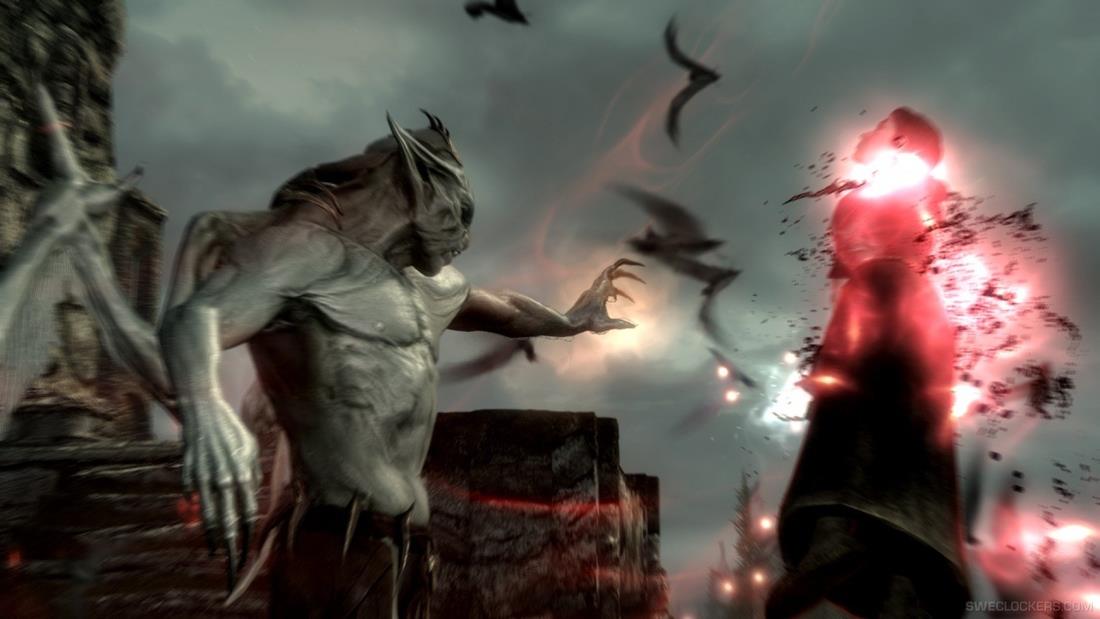
The fantasy of the Elder Scrolls games often presents as very straightforward. With the exception of Morrowind, each of the games starts out as a pretty up-the-middle fantasy setting, with nary a twist of any kind. But a big reason Elder Scrolls games have an enduring fan base is down to the fact that beneath the surface, there is always weird shit to find. Like vampires! And in keeping with the open-ended role-playing philosophy the series espouses, you can also become a vampire – it kicks ass.
Preacher: Cassidy
Cassidy, also known as Proinsias Cassidy, is a complex Irish vampire from the comic series Preacher. Originally a freedom fighter involved in the 1916 Easter Rising, he was bitten by a vampire hag, which transformed him into a vampire. Unlike typical vampires, Cassidy survives on alcohol and drugs instead of blood, though he retains classic vampire traits like superhuman strength, rapid healing, and vulnerability to sunlight. His troubled past, addiction struggles, and careless nature make him a deeply flawed yet compelling character. Cassidy’s story explores themes of guilt, self-destruction, and redemption as he navigates his immortal existence alongside Jesse Custer and Tulip O’Hare.
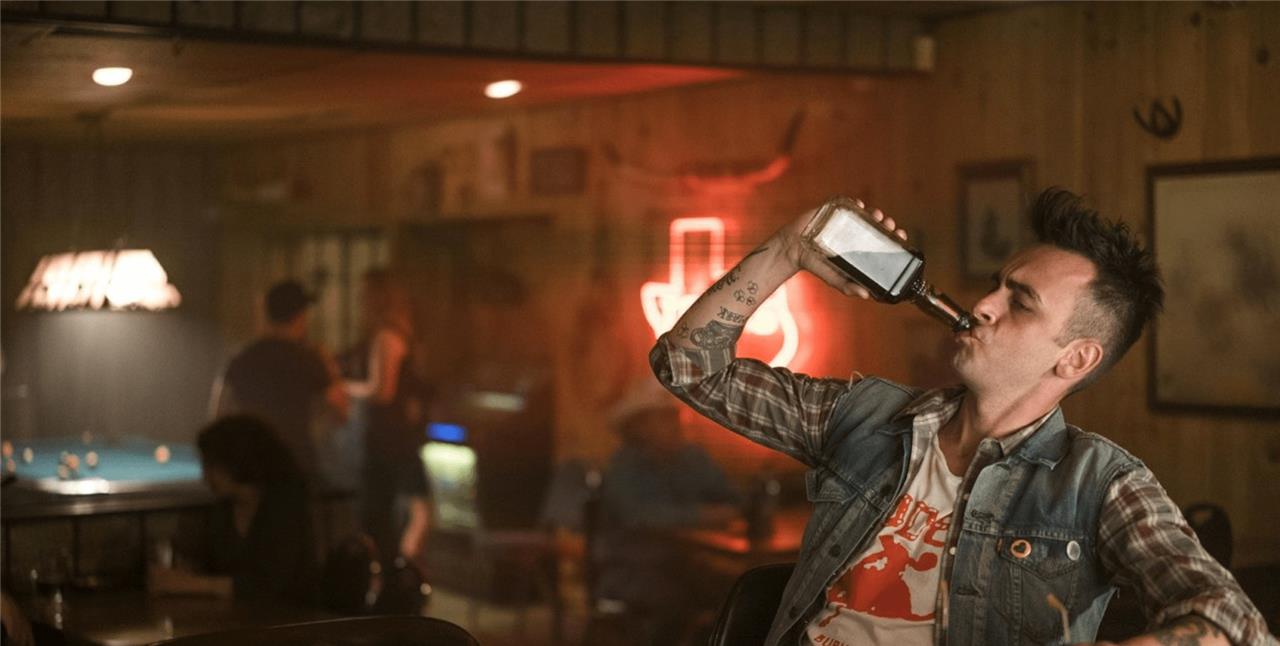
Preacher, the comic book by Garth Ennis and Steve Dillon – and its subsequent TV adaptation from Sam Catlin, Evan Goldberg, and Seth Rogen – starts with the basic assumption that God is real, and has walked out on the job. A lot of things are fair game at that point, namely angels, demons, and the like, but it’s still a shock when you meet Cassidy. A brawling, hard-drinking Irishman that’s already a load of fun when you meet him, Cassidy shoots up the power rankings when he sinks his teeth into a poor sap, because he’s a vampire.
Spider-Man: The Animated Series: Morbius
In Spider-Man: The Animated Series, Morbius is portrayed as a tragic figure-a brilliant biochemist who becomes a “living vampire” after a failed experiment to cure his rare blood disease using vampire bat DNA. His mutation grants him vampire-like abilities but also a desperate need to feed on human blood to survive. Throughout the series, Morbius struggles with his bloodlust and fluctuates between villainy and antiheroism, even teaming up with characters like Blade and Black Cat to hunt vampires. This animated portrayal introduced a generation to his complex character, blending science and supernatural elements within Spider-Man’s world.
Hands down the ballsiest Spidey villain to adapt in a cartoon for children that censors wouldn’t even let use the words “sinister” or “kill,” Morbius – the Living Vampire – frankly had no business being in a Saturday morning lineup. The clever folks behind Spider-Man got around the strict content standards of their network with a loophole that might be even creepier than how vampires normally feed: by giving him little suckers on the palms of his hands that drain victims of “plasma.”
Hilariously, a creative application of vampirism would be how the show would later adapt another villain normally too violent for kids TV: Carnage, a serial killing symbiote who now “drained” his victims’ “life force” instead of cutting them to bits.
Spider-Man: Across the Spider-Verse: Miguel O’Hara
Miguel O’Hara, also known as Spider-Man 2099, is a genetically enhanced hero from the future Earth-928 who gains spider-like abilities after an experiment gone wrong at the Alchemax corporation. In Spider-Man: Across the Spider-Verse, voiced by Oscar Isaac, Miguel is portrayed as a darker, more serious version of Spider-Man who leads a multiverse-spanning Spider-Society. His complex character is driven by a tragic backstory involving multiversal paradoxes and a fanatical belief that Miles Morales could cause catastrophic damage to the multiverse. Unlike Peter Parker, Miguel possesses unique powers such as venomous fangs and enhanced vision but lacks a spider-sense. His role as an antagonist with good intentions adds depth to the film’s narrative and sets up future conflicts in the Spider-Verse saga.
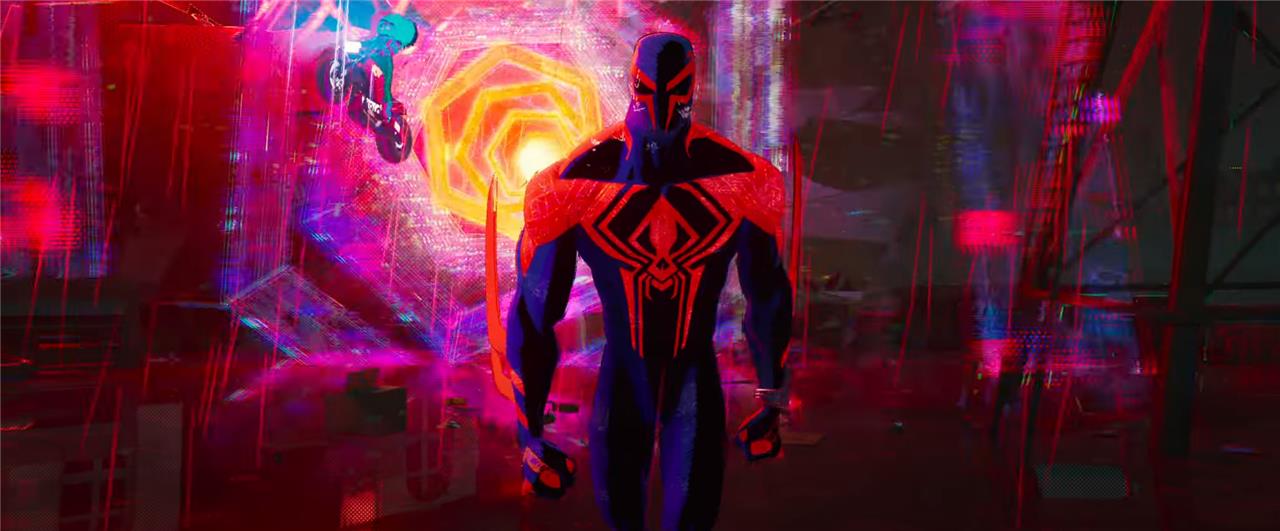
Miguel O’Hara, the Spider-Man of 2099, is one of Spider-Man: Across the Spider-Verse’s big enigmas. Comics readers will know plenty about his whole deal, but the movie doesn’t really explain much – except for a brief scene where he’s shown to have fangs, and an offhand reference that he is kind of a vampire? Sure, he’s a jerk, but he’s still kind of cool. It’s kind of hard not to be cool when you’re a vampire. That’s kind of the whole quandary with vampires as a metaphor.
Adventure Time: Marceline the Vampire Queen
Marceline the Vampire Queen is a captivating character from the animated series Adventure Time, known for her unique twist on vampire lore. Unlike traditional vampires, Marceline, a 1,000-year-old vampire queen, sustains herself by consuming the color red rather than blood. She is also a talented musician, playing an electric bass crafted from her family’s heirloom battle-axe. Initially introduced as an antagonist, Marceline evolves into a close friend of the main characters, Finn and Jake. Her rich backstory includes a human mother, a demon father, and a deep bond with Simon Petrikov (the Ice King). Throughout the series, Marceline’s complex relationships, especially her romantic connection with Princess Bubblegum, are explored, culminating in their affectionate reunion in the series finale. Marceline’s character embodies themes of friendship, identity, and acceptance, making her one of the most memorable and beloved surprise vampires in animated entertainment.
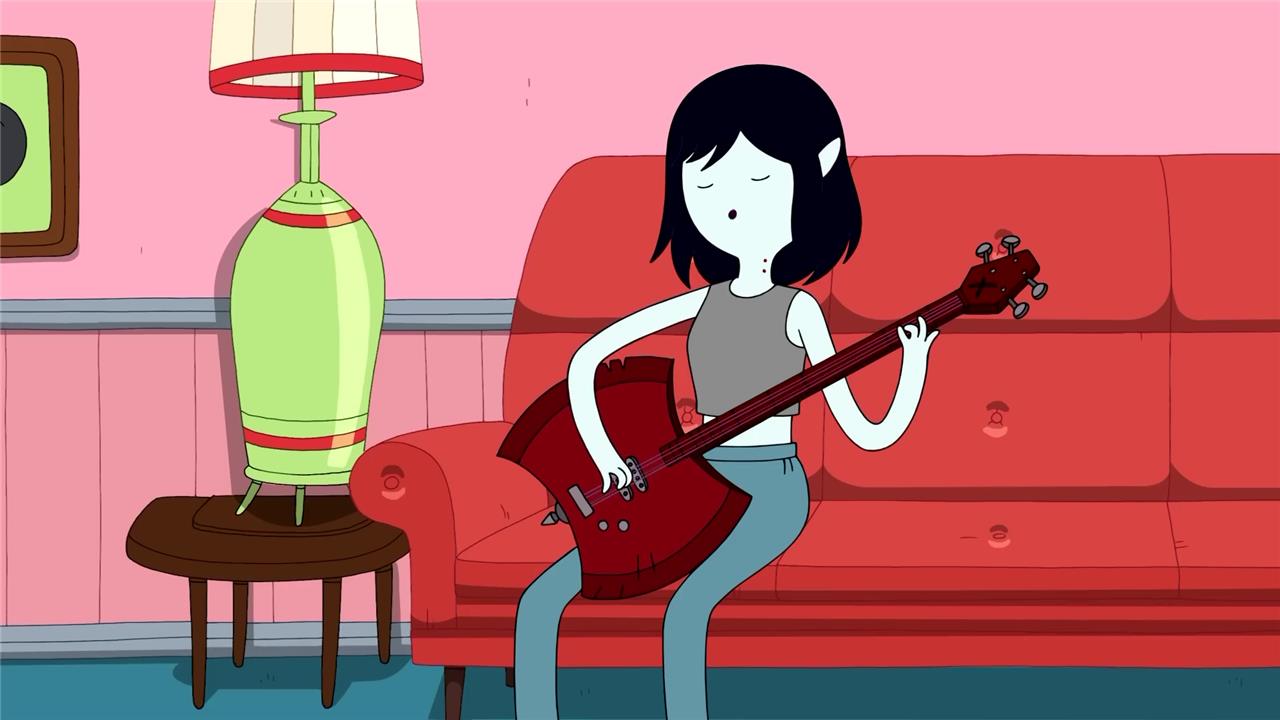
For 11 episodes, Adventure Time was a show with lots of weird shit, but no vampires. Then “Evicted!” introduced Marceline the Vampire Queen, and the show changed forever. Marceline was key to what the show would go on to do so well: use its goofy sensibilities to tackle existentially dark and frightening things quite seriously without losing its edge, and play with familiar tropes to create a fantasy like no other. Now with vampires!
Sesame Street: The Count
Count von Count from Sesame Street is a friendly vampire character modeled after Bela Lugosi’s Count Dracula, created to teach children about numbers and counting in an engaging way. First appearing in 1972, he is known for his Transylvanian accent, cape, fangs, and his signature laugh “Ah ah ah” after counting. Unlike traditional vampires, The Count is not scary but rather affable and educational, embodying a fun twist on vampire lore by incorporating the mythological trait of compulsive counting. His character also represents diversity and inclusion, making him a beloved and enduring figure on Sesame Street.
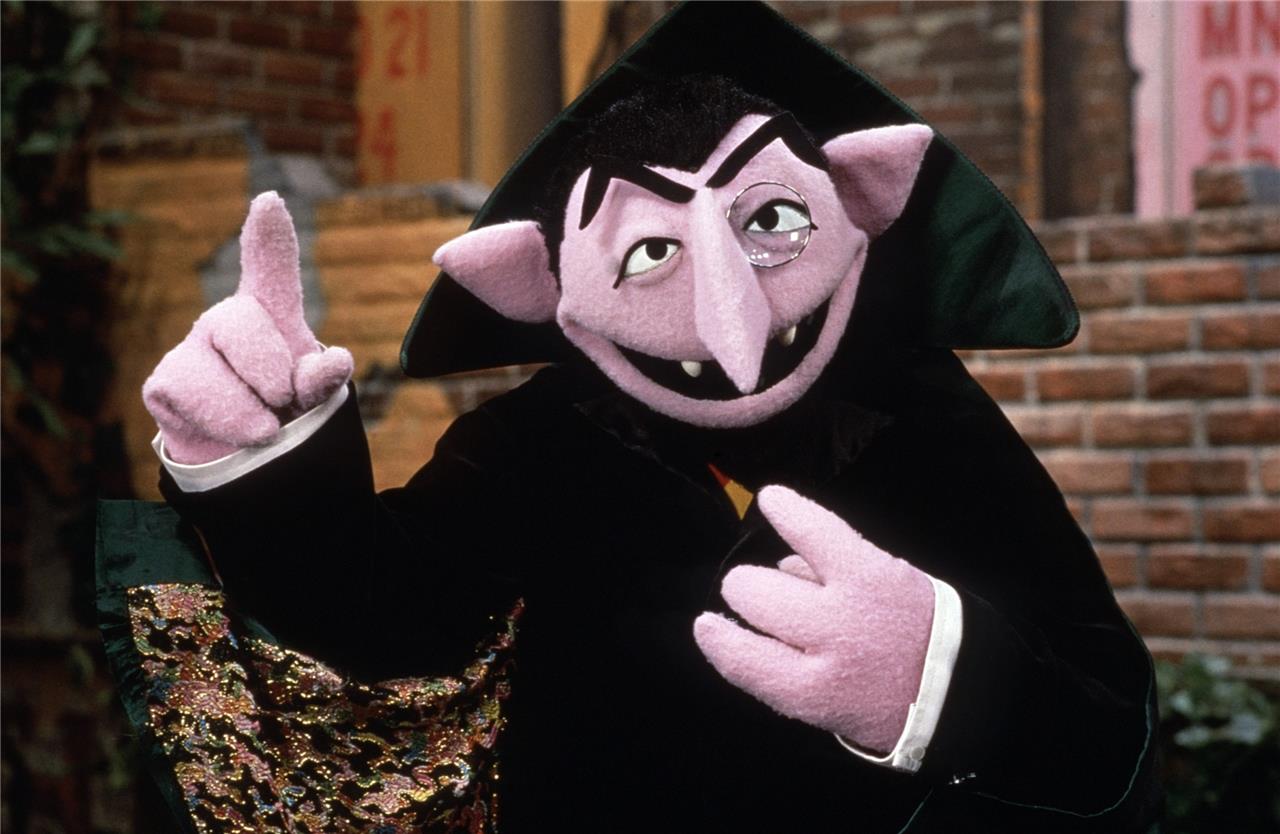
I don’t really know why there’s a vampire on Sesame Street. I love him, though.
Metal Gear Solid 2: Vamp
Vamp, a striking and enigmatic character from Metal Gear Solid 2: Sons of Liberty, is a member of the Dead Cell terrorist group known for his vampire-like abilities, including walking on water and extraordinary agility. Originally designed as a woman, his final appearance was inspired by flamenco dancer Joaquín Cortés. Vamp’s seemingly supernatural resilience is later explained by nanomachines enhancing his healing, making him a formidable opponent in a tense boss fight against Raiden. The battle with Vamp is challenging and skill-based, requiring players to carefully time shots, dodge knife attacks, and exploit moments when his red aura fades to inflict damage. His blend of supernatural mystique and deadly combat prowess makes him one of the most memorable surprise vampires in gaming.
The Metal Gear Solid games are kings of the nonchalant narrative curveball. It’s a series that takes great care to ground itself in near-future militaristic realism and hard sci-fi, only to suddenly introduce a man made of bees and a cyborg ninja. Vamp is one of those curveballs, the member of a rogue special forces unit with a superhuman resistance to injury, the ability to run on water, and a taste for blood – with an eerie origin story for that hunger, to boot.
The Bone Clocks: The Anchorites
The Bone Clocks: The Anchorites
In David Mitchell’s The Bone Clocks, the Anchorites are a sinister group of immortals who extend their lives by decanting and consuming the souls of innocent humans, whom they derogatorily call “bone clocks” due to their mortality. They are locked in a secret, centuries-old conflict with the Horologists, another faction of immortals who transfer their minds between bodies to achieve rebirth without killing others. The protagonist, Holly Sykes, becomes entangled in this supernatural war after a childhood encounter with the Anchorites nearly kills her. Later, she joins forces with the Horologists to destroy the Anchorites’ source of power-a chapel imbued with dark energy. This battle reveals the Anchorites as vampiric predators feeding on psychic energy, making them one of the most chilling and unexpected vampire-like entities in modern fantasy literature.
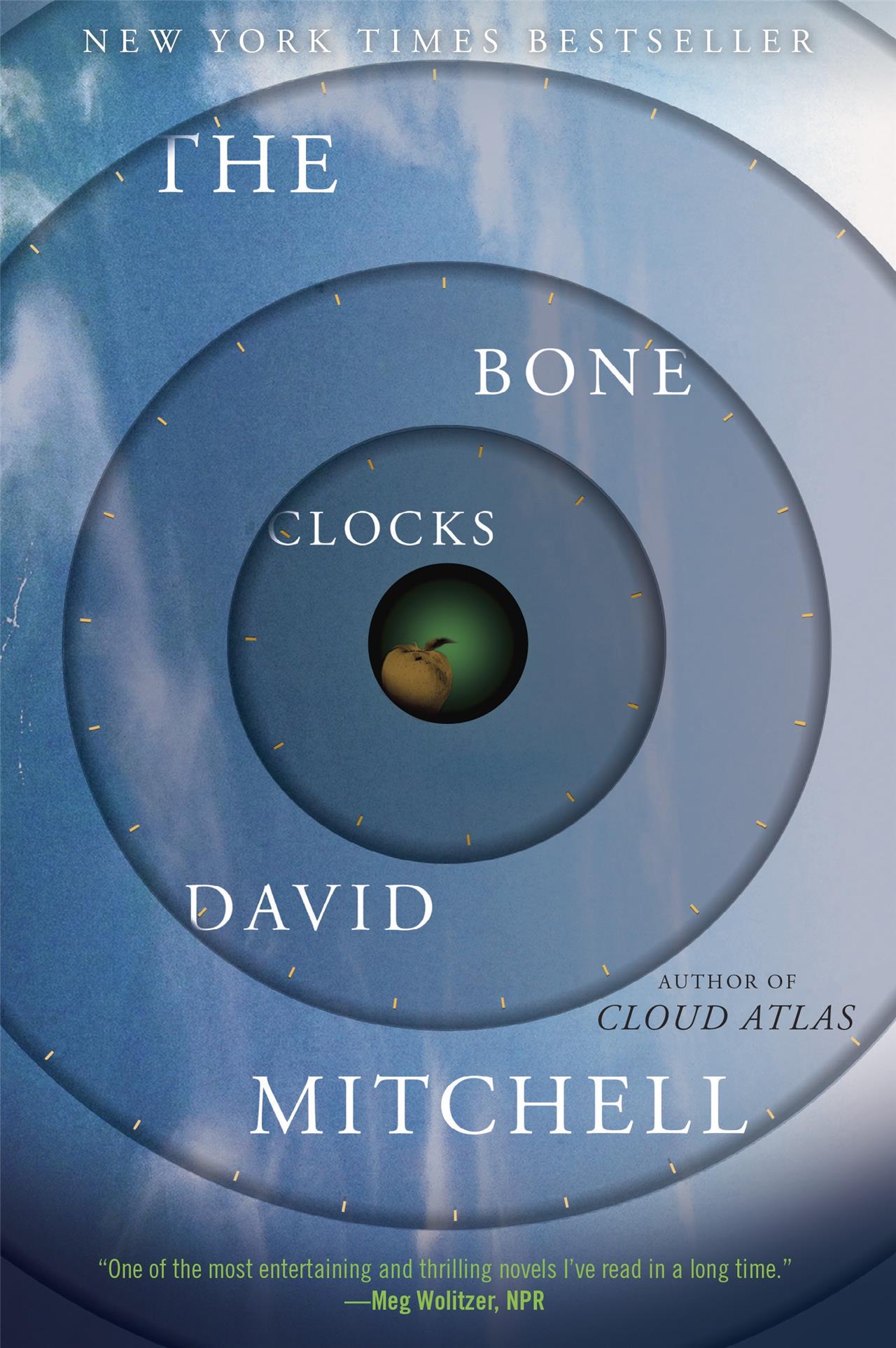
David Mitchell loves to write books that start as one thing then end up as another. But he writes them knowing that people know he’s famous for this, so he often turns these books into other things still. It’s a real trip. The Bone Clocks, then, is a book about a psychic girl who gets into a bit of a pickle, only to learn about vampiric ghosts called Anchorites, who achieve immortality by murdering others. Don’t worry, I didn’t spoil the book for you. I just thought you should know about the vampires.
Which surprise vampire cameo in The Matrix shocked fans the most
The surprise vampire cameo that shocked fans the most in The Matrix series is tied to the character of the Merovingian and his henchmen, who are widely believed to be vampires and werewolves from a previous version of the Matrix known as the “Nightmare Matrix.” In The Matrix Reloaded and Revolutions, these vampire-like programs exhibit superhuman strength and agility, and their presence hints at a deeper supernatural layer within the Matrix universe. The pivotal moment that fueled this theory is when Persephone leads Neo into a chateau where two characters named Cain and Abel appear-Cain is shot with a silver bullet, a classic werewolf weakness, but the ambiguity and other vampiric traits strongly suggest a vampire connection. This cameo was unexpected and added a rich, hidden mythology that surprised many fans.
Why did fans find the vampire cameo in The Matrix most shocking
Fans found the vampire cameo in The Matrix most shocking because it introduced an unexpected supernatural element-vampires and werewolves-into a sci-fi cyberpunk universe where such creatures were never anticipated. These vampires, tied to a previous version of the Matrix called the “Nightmare Matrix,” were portrayed as powerful programs with superhuman abilities, blurring the lines between folklore and digital reality. The scene where Persephone leads Neo into a chateau to meet Cain and Abel, with Abel being killed by a silver bullet, strongly hinted at classic vampire and werewolf mythology, which was completely surprising within the context of the film’s established narrative. This blending of traditional supernatural lore with the high-tech Matrix world created a striking and memorable twist that caught many fans off guard.
