
Power banks have become the quiet heroes of our wired lives, keeping phones, tablets, and laptops charged through long commutes, flights, and festivals. From compact pocket chargers to high-capacity bricks built for days off-grid, we’ve tested the standouts-including trusted names like Anker-to help you pick the right one for your power needs.
With countless options available, it can be tough to know which to buy – especially since everyone’s needs are a bit different. But we’ve found three great power banks, each of which has a unique set of strengths and all of which are approved by the Federal Aviation Administration to accompany you on a passenger plane. So whether your priority is price, speed, charging capacity, or size, we’ve got all the bases covered.
Best compact battery for Switch and phones
Compact power banks are perfect for long commutes and travel, offering enough capacity to recharge devices like the Nintendo Switch and smartphones without adding bulk. Models such as the Anker PowerCore 10000 or similar slim options balance portability and power, fitting easily in a pocket or small bag. Many support fast charging through USB-C, allowing you to top up both your console and phone quickly wherever you are.
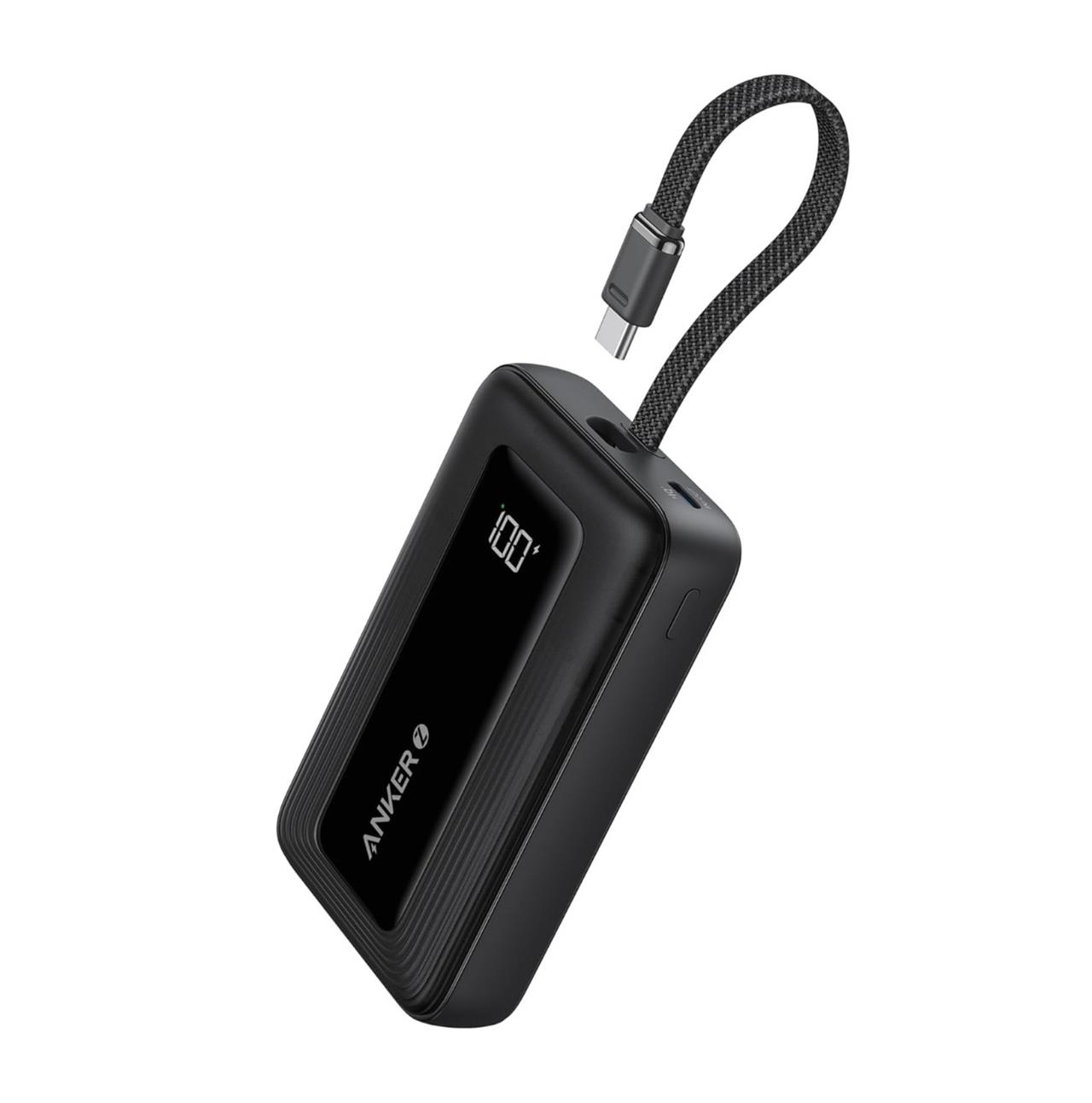
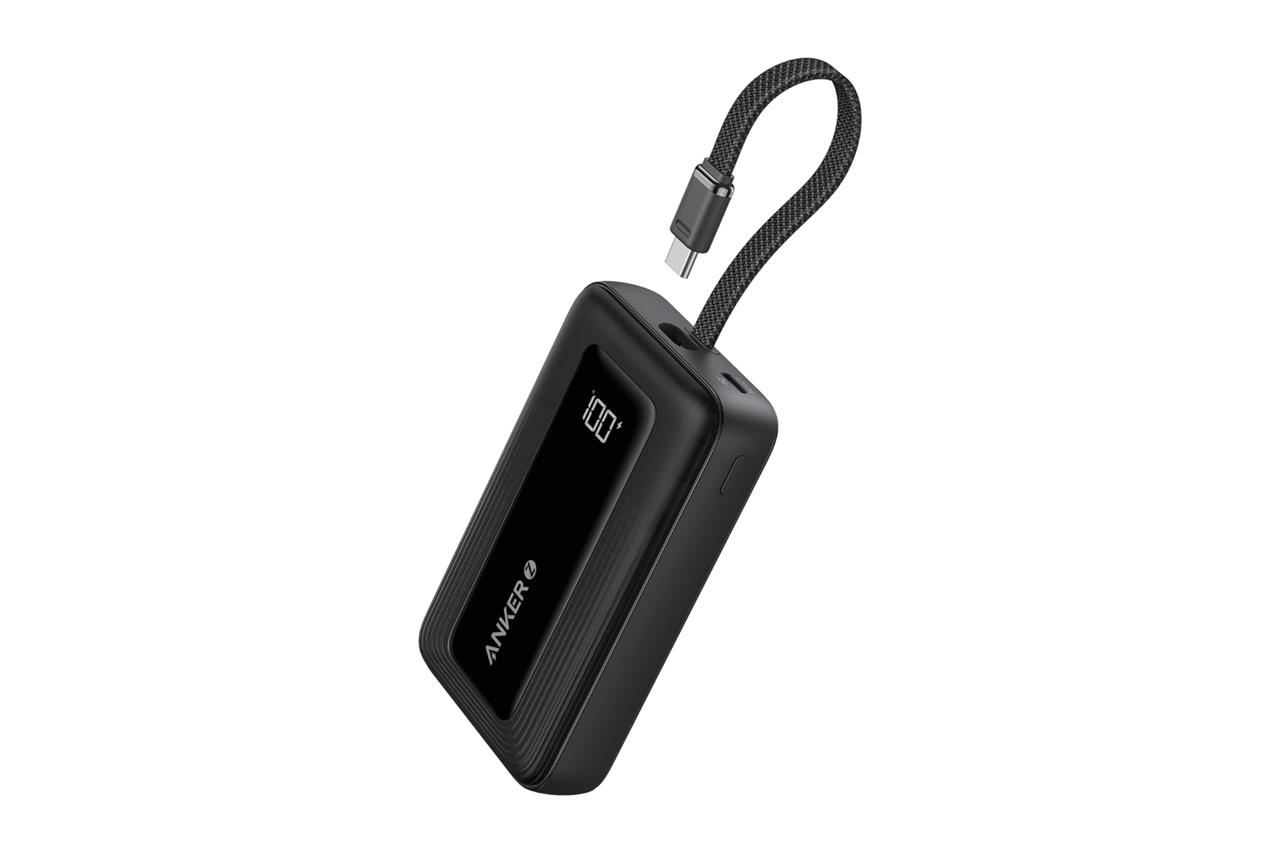
Anker Zolo 10,000 mAh 30 W power bank
$13$2650% off $13
Great for: Phones, tablets, Nintendo Switch
Not powerful enough for: Steam Deck, other powerful handhelds, laptops
If you’re interested in a compact option that can easily fit into a bag or a carry-on, check out Anker’s Zolo power bank that’s $25.99 at Amazon (and only $16.14 if you check out with a Prime subscription). It’s small with just a 10,000 mAh capacity, but it’s relatively speedy with 30 W charging – perfect for charging a phone, tablet, or Nintendo Switch at top speeds.
Best of all, you don’t need to supply your own USB-C cable, as this model has its own retractable, braided (in other words, durable) cable built in. Anker offers a 20,000 mAh version that’s a bit larger, understandably, but has the same charging speed for $27.35. Both sizes offer a USB-C port, letting you charge a second device.
Have an iPhone or an iPad that uses a Lightning connector? Anker makes a version of this battery that also has a Lightning cable built in, but it’ll cost you a tad more. The 10,000 mAh battery costs $35.99 ($24.99 if you have Prime). A 20,000 mAh version with both cables built in costs $49.99.
If you’re looking for a small alternative that has more ports and offers a bit more charging speed, the $29.99 Baseus Picogo 10,000 mAh option goes up to 45 W, features a built-in USB-C cable, and boasts a set of USB-C and USB-A ports.
Read More $13 at Amazon (10K mAh, USB-C)$25 at Amazon (20K mAh, USB-C)<
Best power bank for Steam Deck
The Steam Deck demands a power bank that can handle high output and prolonged gaming sessions. A model like the Anker 737 Power Bank (PowerCore 24K) stands out thanks to its 140W USB-C port, allowing you to charge the Deck at full speed while playing. Its 24,000 mAh capacity offers multiple recharges, and the smart display keeps you informed about charging status and remaining power. Solid build quality and wide device compatibility make it a dependable companion for portable gaming or travel.
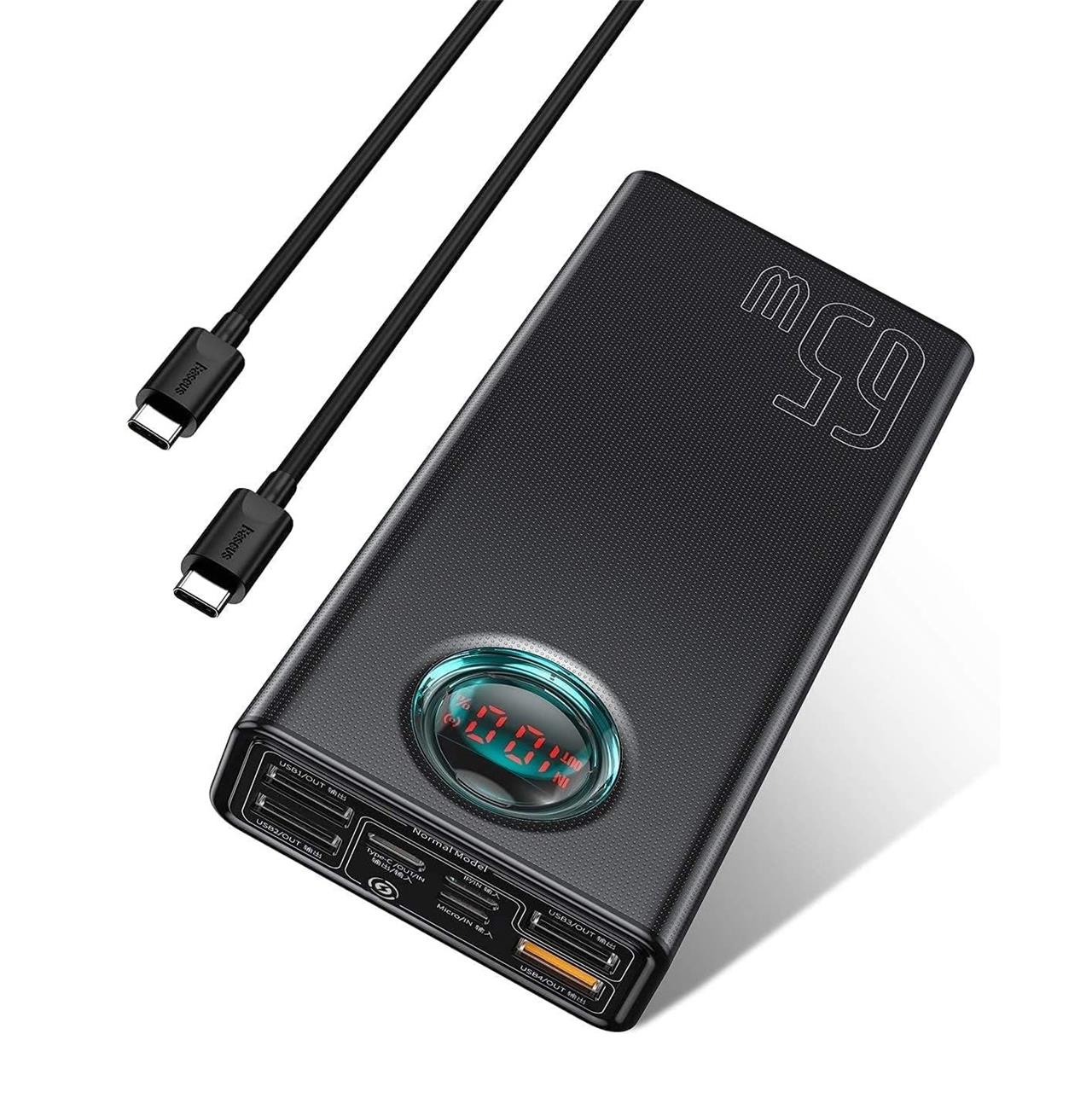
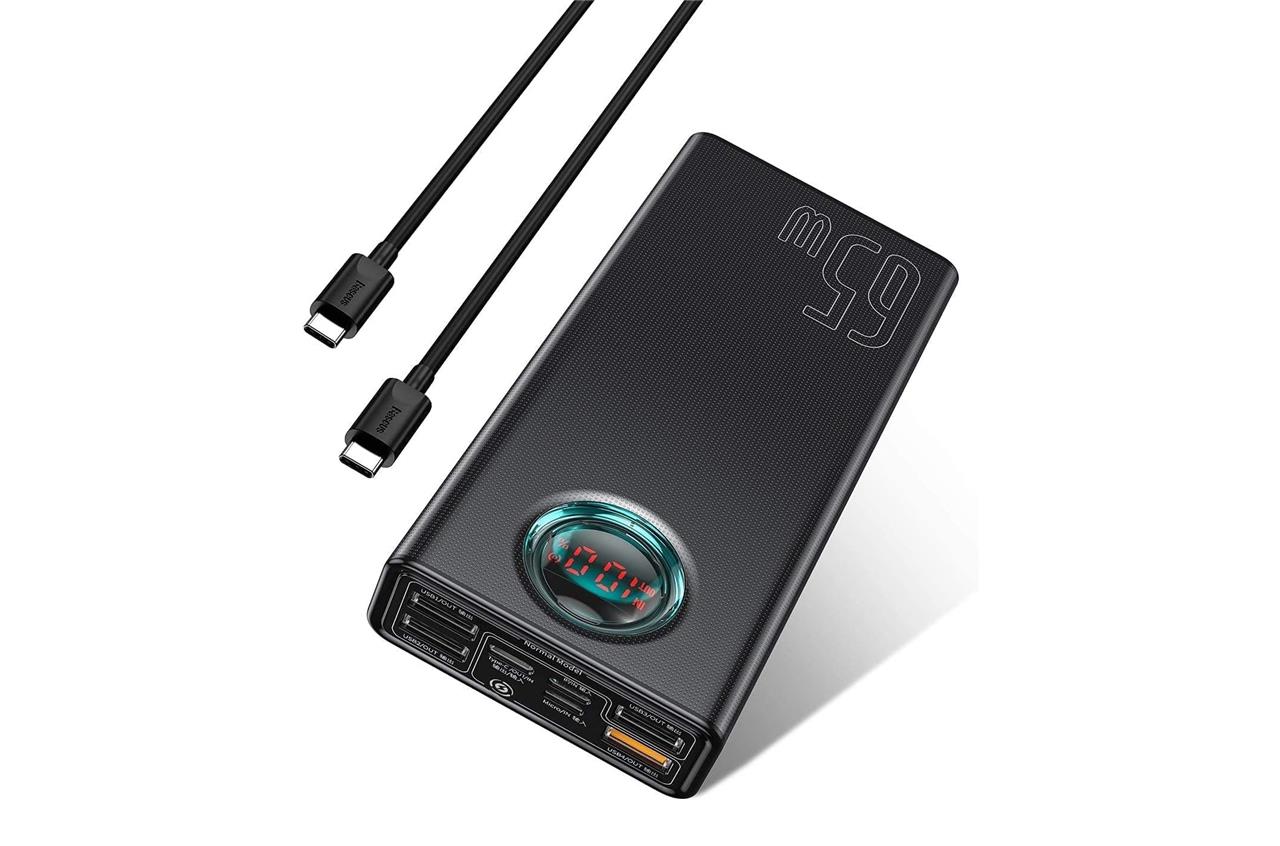
Baseus 30,000 mAh power bank
$56$8030% off $56
Great for: Steam Deck, ROG Ally, mainstream laptops (MacBook Air, Dell XPS 13), smaller gadgets
Not powerful enough for: Gaming laptops, recent MacBook Pro models
There are a load of powerful power bank options out there, and strangely, several of them skimp on battery capacity (even if they are cute, like Ugreen’s $49.99 12,000 mAh 100 W battery with a emoji display). Given that power-hungry devices like the Steam Deck, Asus ROG Ally, and other handheld gaming PCs often have large internal batteries to fill, you might be best served by a 65 W power bank that has 30,000 mAh capacity that’ll let you refill your gaming gear a couple of times on a single charge.
This model from Baseus ticks all the boxes (except for being compact), coming in at $79.99. At the time of writing, Amazon Prime members can get it for just $53.19, which is a fantastic deal. This battery features a whopping seven ports, four of which are USB-A, though only one is a USB-C port. A USB-C to USB-C cable is included with the battery.
For a 20,000 mAh option that goes up to 100 W, Ugreen’s Nexode power bank is a solid, reasonably priced alternative at Amazon, normally costing $79.99. It comes with a USB-C cable. At the time of writing, there’s a 30% off coupon on the product page that brings the cost down $55.99 before tax.
Read More $56 at Amazon<
Best battery for powerful laptops
High-performance laptops demand power banks with high-capacity batteries and fast output. Models such as the Anker 737 Power Bank or the Baseus Blade 100W offer enough energy to charge gaming and workstation laptops several times. These devices support USB-C Power Delivery with up to 100W output, ensuring steady performance during intensive tasks. A lithium-polymer battery with over 20,000 mAh capacity provides reliability and safety during long hours of use.
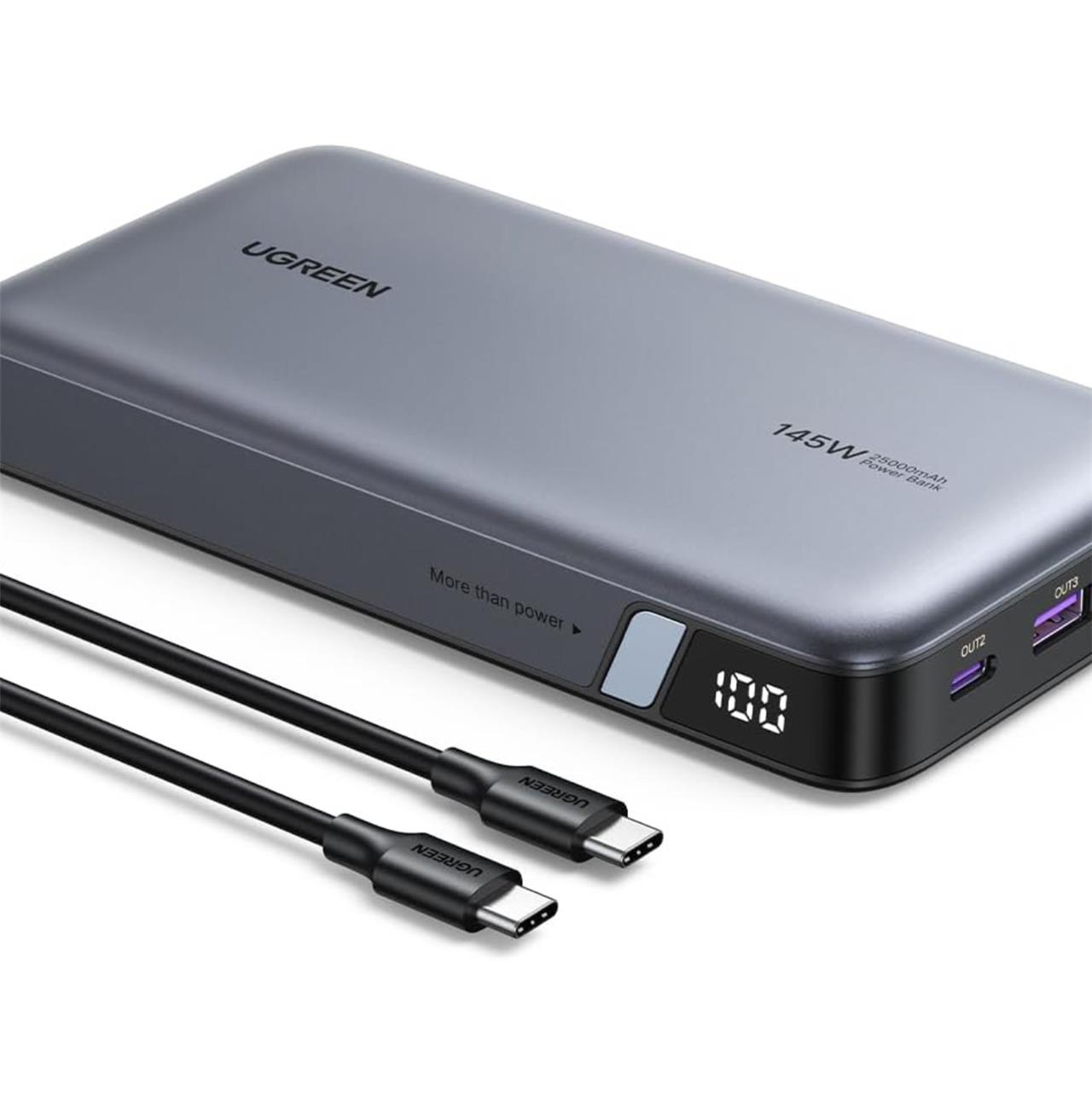
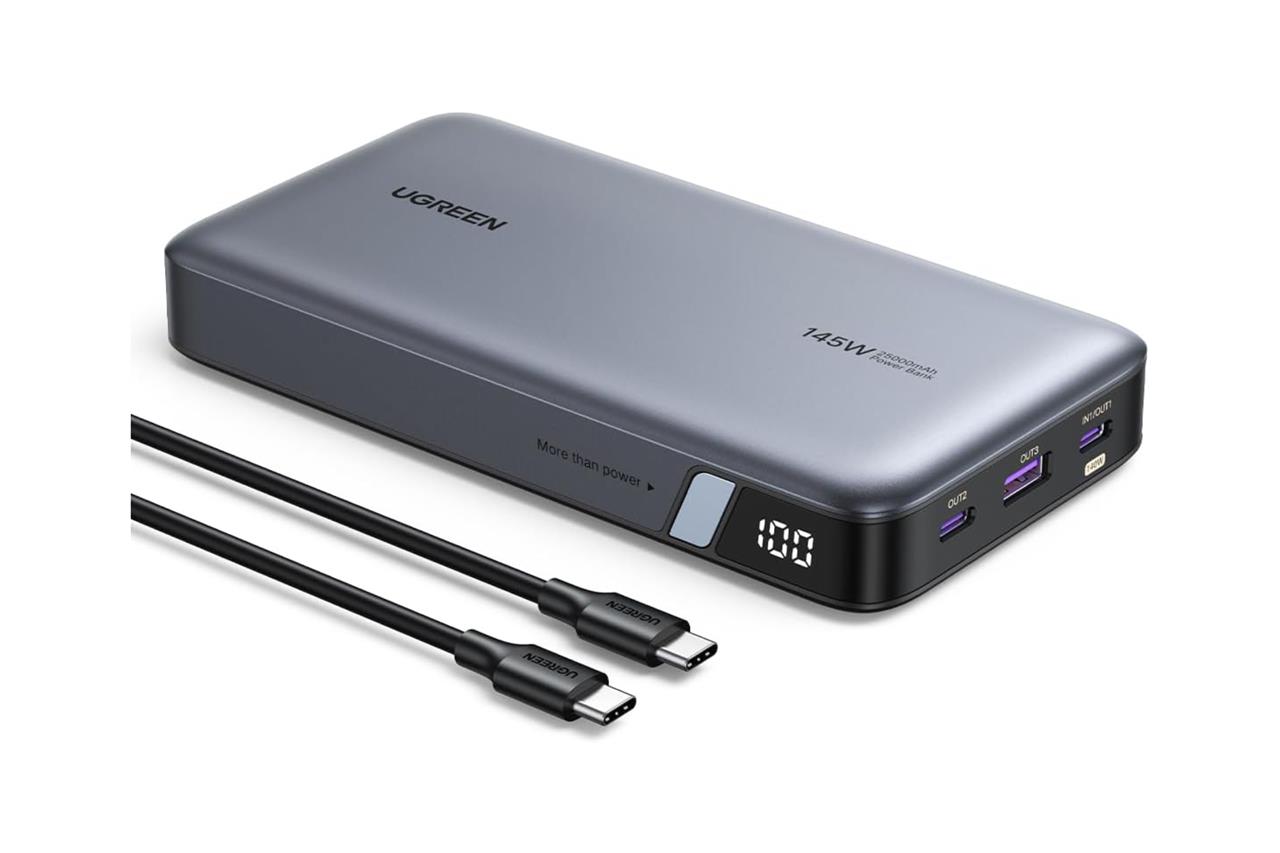
Ugreen 25,000 mAh 145 W power bank
$100 $100
Great for: Gaming laptops, high-end MacBook Pros, smaller gadgets
Not powerful enough for: Some ultra-powerful gaming laptops
While there are power banks that go beyond 145 W, you won’t need that much juice to charge most tech products. A power bank that packs in swift charging speeds with a 25,000 mAh capacity – at a great price, no less – is this model from Ugreen, which comes with a compatible USB-C to USB-C cable. It’s $99.99 at Amazon, and at the time of writing, Prime subscribers can get it for $75.99.
This model is compatible with phones, tablets, and the like, but it’s overkill unless your goal is to buy a battery that can refill them several times with a single charge. It’s made more for demanding gadgets that can quickly recharge at above 100 W and have hefty batteries to fill. This power bank has limits that extend to all higher-end options on the market, so it’ll drain quickly when plugged into a gaming laptop while you’re using it. Still, the power bank will significantly prolong the amount of time you can use your device without an outlet.
Ugreen makes another option worthy of consideration that’s nearly as powerful, but a little more compact. Its 20,000 mAh 130 W power bank looks like Anker’s 737, complete with similar ports, plus a display that shows the remaining power and readings of the wattage used by each of its USB ports. Normally $99.99, Ugreen’s model is $59.99 at the time of writing.
Read More $100 at Amazon
A great USB-C cable for your power bank
A sturdy USB-C cable makes a big difference in how quickly and safely your power bank charges your devices. Choose one that supports fast charging and high data transfer rates, with strong connectors that resist bending and wear. Braided nylon or reinforced cables last longer and tangle less, making them practical for travel or daily use. Investing in a certified cable ensures consistent performance with brands like Anker, Baseus, or Ugreen.
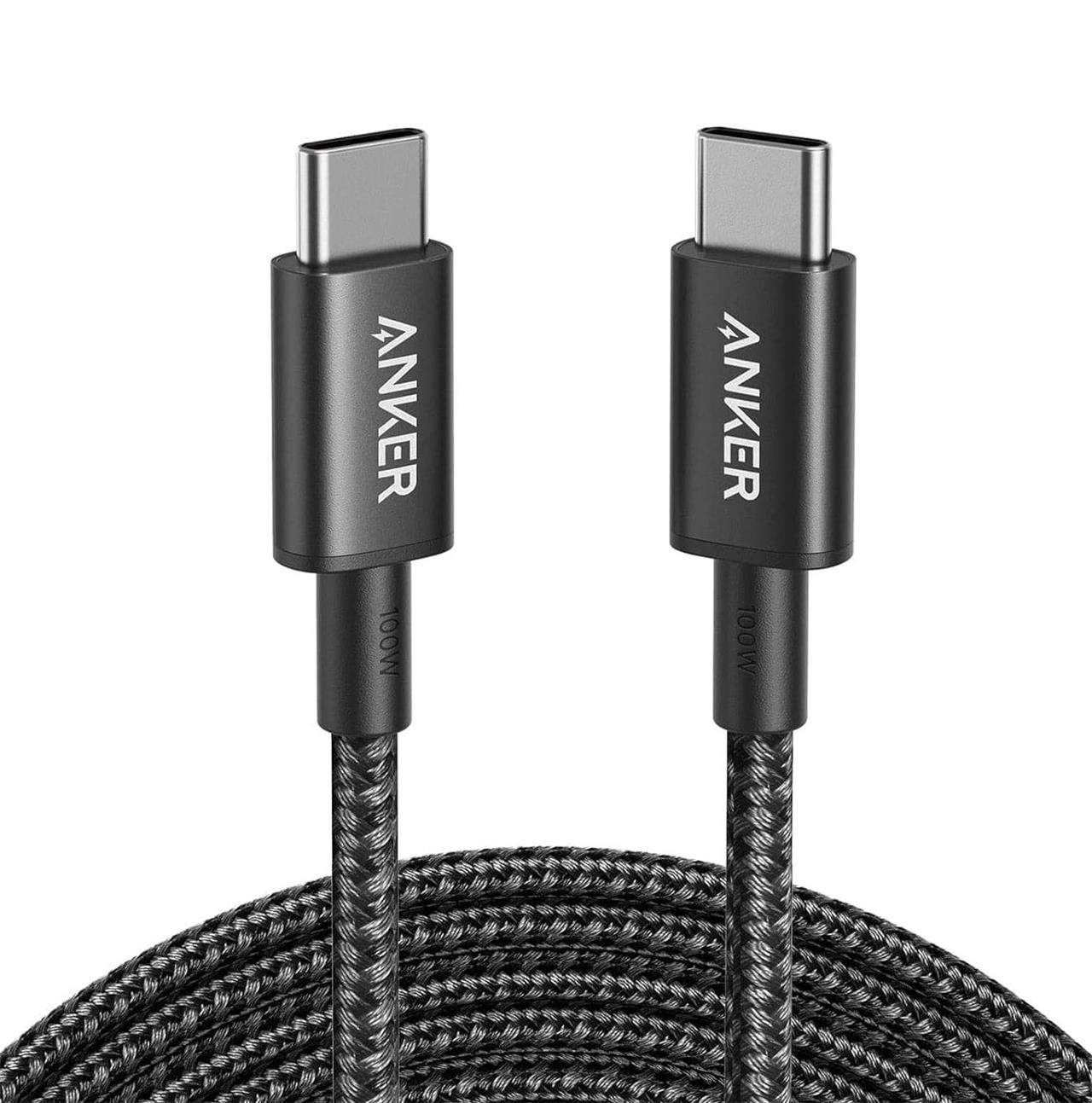
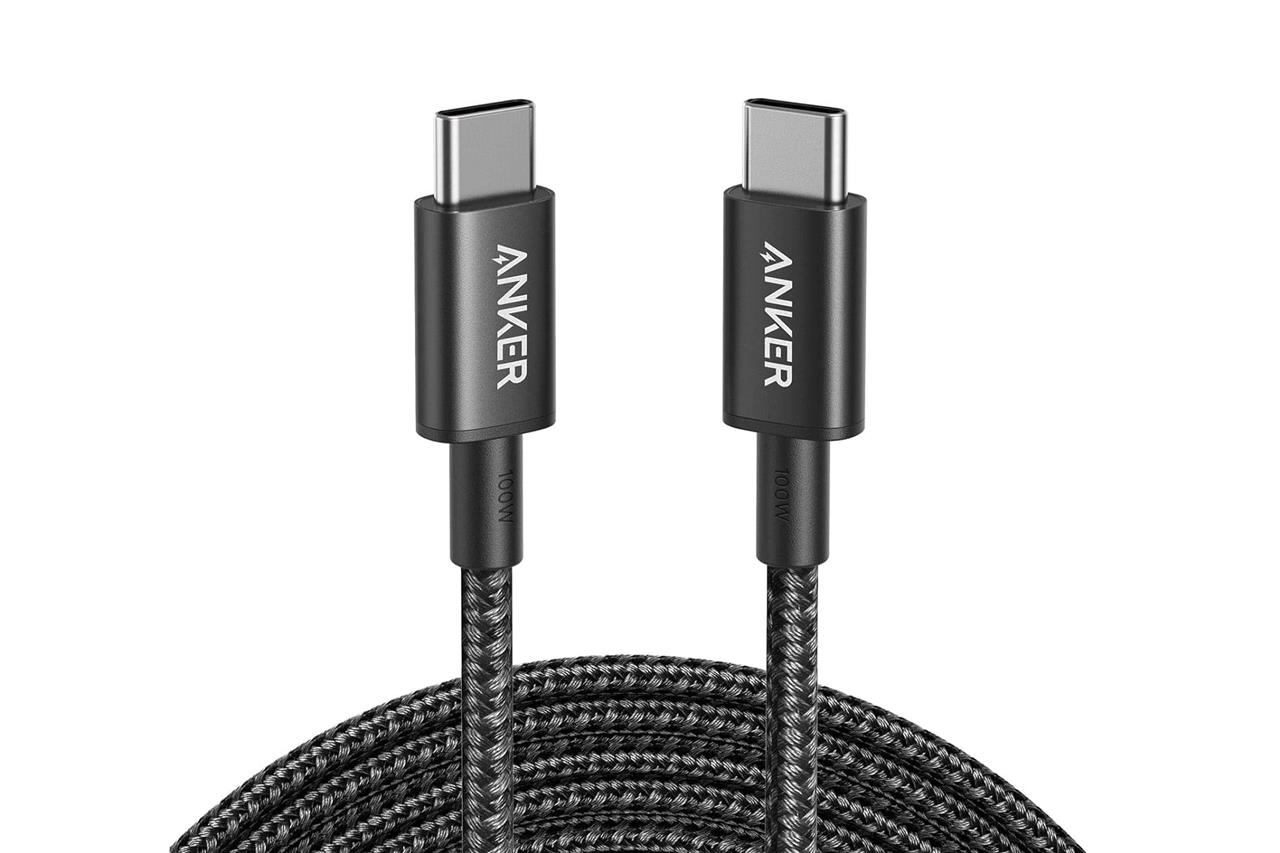
Anker 10-foot USB-C braided cable
$10$1217% off $10
We recommend picking up a spare USB-C cable, unless you’re figuratively swimming in them. Thankfully, it doesn’t cost much to get one that’s durable, can stretch from the ground to an NBA basketball rim, and is ready for a future full of fast-charging gadgets. This 10-foot USB-C to USB-C cable supports up to 100 W passthrough, and it comes in handy for stretching across the room. You can pick one up at Amazon for $9.99.
If you want a 10-foot option that can transmit even more power (up to 240 W), Anker has you covered with its Bio-Braided USB-C cable. Normally $18.99, it costs $15.99 at the time of publishing.
Read More $10 at Amazon
Anker Prime Power Bank vs EcoFlow RAPID Pro comparison
Anker Prime and EcoFlow RAPID Pro sit in the same “airline-limit, 300 W-class” tier, but they prioritize different things: Anker focuses on portability and maturity, EcoFlow on raw speed and multi-device use.
Core specs and capabilities
| Feature | Anker Prime 26K / 27K (300 W class) | EcoFlow RAPID Pro 27K |
|---|---|---|
| Capacity | ≈26,000-27,000 mAh, ~99 Wh (airline-legal) | 27,000 mAh, ~99 Wh (airline-legal) |
| Max total output | Around 200-300 W depending on variant; single USB-C up to 140 W | Up to 300 W total across USB-C ports and retractable cable; two outputs up to 140 W each |
| Max input/recharge | Up to ~170 W via dedicated charger or dual-USB-C setup | Up to 320 W via desktop charger and pogo-pin dock; ~80% in ~20 minutes |
| Ports | Typically 2× USB-C + 1× USB-A | 3× USB-C + 1 retractable/built-in USB-C cable |
| App / smart features | Anker app, detailed current readout, “find” sound feature on some Prime bundles | EcoFlow app, Wi-Fi connection, shared ecosystem with other EcoFlow gear; detailed status screen but dim outdoors |
(Exact numbers vary slightly by specific Prime model, but the positioning relative to RAPID Pro is consistent across reviews.)
Design and usability
-
Anker Prime
-
More compact and lighter, so better for everyday carry and travel where space matters.
-
Uses detachable cables; one or two USB-C plus a legacy USB-A, which some people now find less useful.
-
Screen is clear; app can trigger a sound to help locate the bank in some bundles.
-
-
EcoFlow RAPID Pro
-
Bulkier and heavier, described as a “serious charger” aimed at power users.
-
Has a retractable/built-in USB-C cable plus multiple USB-C ports, so you can often leave extra cables at home.
-
Display is very informative but harder to read in bright sunlight and can scratch more easily.
-
Real-world performance and speed
-
EcoFlow RAPID Pro
-
Up to 300 W output lets you charge a 140 W laptop while also fast-charging phone, tablet, and earbuds at the same time.
-
With the 320 W desktop charger, it can reach roughly 80% in about 20 minutes, making it one of the fastest-recharging power banks currently available, though tests show it may not always hit the full rated 320 W in practice.
-
-
Anker Prime
-
High power (up to 300 W for the 26K/27K class), but its fastest recharge in testing is around 170 W when pushed with dual high-wattage USB-C inputs or its own dock, so it generally takes longer to refill than RAPID Pro.
-
Output power is still enough to run or fast-charge most USB-C laptops and multiple smaller devices, but with fewer ports simultaneously compared with EcoFlow.
-
Reliability, ecosystem, and reputation
-
Anker Prime
-
Long track record in the power-bank market; many users cite reliability and “just works” behavior as a reason to prefer it.
-
Some anecdotal reports mention capacity fade over time, but community sentiment is still generally favorable, especially for portability.
-
-
EcoFlow RAPID Pro
-
EcoFlow is better known for larger power stations; some users love the unified app ecosystem (using the same app for Delta power stations, chargers, etc.).
-
A few reports raise concerns about EcoFlow customer support, though others strongly praise reliabilit
-
Current prices for Anker Prime 26K and EcoFlow RAPID Pro 27K
Current prices (as of early 2026): Anker Prime 26K typically ranges from $170-$185 USD on sale (MSRP $230), while EcoFlow RAPID Pro 27K is around $180-$200 USD, depending on retailer.
Price Breakdown by Retailer
Prices fluctuate with promotions; check for EU shipping from NL.
| Model | US MSRP | Current US Deals | EU/NL Estimates (converted) |
|---|---|---|---|
| Anker Prime 26K (300W) | $230 | $171-$184 at Anker/Amazon | €160-€175 (Proshop/Amazon.de) |
| EcoFlow RAPID Pro 27K (300W) | ~$200-$230 | $180 (noted vs Anker) | €185-€210 (EcoFlow NL site/Proshop) |
Quick Notes
-
Anker often dips lower on US sales (e.g., $171 recently), making it the value pick right now.
-
EcoFlow holds steadier but bundles sometimes include chargers/docks.
-
For Zoetermeer, NL: Add ~€10-20 shipping/VAT from Amazon.de or Proshop.nl; local stock may match these.
Prices from recent listings-verify live as they change fast. Which currency/region do you need exact links for?
