
Ancient China hides no mercy in Wo Long: Fallen Dynasty. Before you face its relentless demons and twisting battlefields, here are six things that can save you from countless defeats and wasted hours.
Our Wo Long beginner’s guide will help you figure out what’s going on, based on our roughly 20 hours of experience with the game (a shocking amount of which was just failing at the same boss fights over and over). We’ll help you understand the game’s Battle and Marker Flags, where and how you can travel, how equipment works and how much it slows you down, and how to think about your Spirit gauge.
Think of Wo Long as a linear soulslike
Wo Long: Fallen Dynasty follows a more directed structure than open-ended Souls games, guiding you through distinct missions instead of a vast interconnected map. Each level is designed with clear objectives and contained environments, making exploration focused rather than sprawling. This setup keeps the pace tight, with concise areas packed with combat encounters, shortcuts, and hidden loot. Think of it as channeling the spirit of a Soulslike through carefully crafted stages rather than a single, massive world.
Unlike other soulslike games, there’s not much looping and grinding in Wo Long: Fallen Dynasty (unless you want to). We described it as more of a long walk punctuated by periodic ass-kickings. The story plays out across a series of areas, called Battlefields, that are pretty big, but your path through them is mostly linear. (There are branching paths and you’ll be rewarded with loot for exploring them, though.)
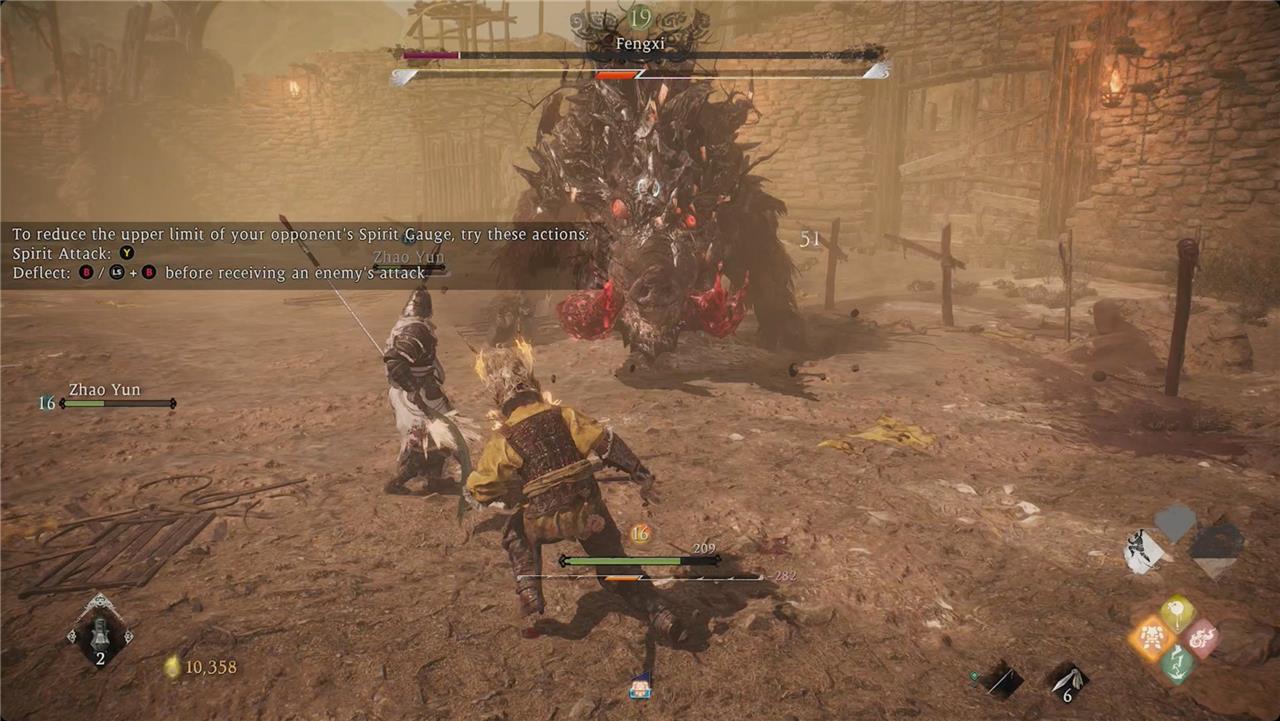
That linear path will lead you through a series of boss fights – those periodic ass-kickings we mentioned. Learn to love them.
As you travel through a Battlefield – and usually right before every boss fight – you’ll find Battle Flags and Marker Flags.
- Battle Flags are where you’ll restart when you (repeatedly) die. They’re where you’ll level up and learn new Wizardry Spells, and also where you’ll rest to refill your Dragon’s Cure Pot (health flask)
- Marker Flags look similar, but work differently. They refill your health, but not your Dragon’s Cure Pot. More importantly, they increase your Fortitude which is like Morale, but different.
Let’s talk about Morale.
Understand how Morale and Fortitude work
Morale and Fortitude shape how strong your character feels and fights during each mission. Morale rises as you defeat enemies and perform well in battle, granting higher attack power and resilience against tougher foes. But if you fall in combat, your Morale drops, making the next attempt harder. Fortitude acts as a floor for your Morale-it sets the lowest level it can fall to based on flag checkpoints you raise. Prioritizing these flags early on helps secure a strong foothold and keeps you from losing too much progress after defeat.
To oversimplify it, Wo Long‘s Morale system is a measure of how many baddies you’ve killed without dying. It’s more nuanced, of course, but that’s the core idea.
A character’s Morale (both yours and your enemies’) figures in to how powerful that character is – higher Morale equals a tougher fight. When you kill enough baddies, your Morale goes up. When a baddie kills you, your Morale goes down and theirs goes up – making the next time you encounter them a little bit harder.

When you are killed, you’ll also lose half of your Genuine Qi (your leveling up currency, kinda like souls in Dark Souls games) to whoever or whatever killed you. That baddie gets a flame icon around their Morale (the number over their head). For you to reclaim your Qi and your Morale points, you have to face them again and get your Revenge.
The way to prevent yourself from losing too much Morale is to raise your Fortitude. Fortitude is the lower limit to your Morale – your Morale will never fall below your Fortitude, and raising your Fortitude past your Morale will raise your Morale to match.
Your Fortitude increases every time your raise a Marker Flag. However, it resets each time you travel to a new Battlefield or Sub Battlefield. Speaking of which.
Sub Battlefields are side missions
Sub Battlefields offer smaller, optional missions that branch off from the main story. They provide a chance to gain extra loot, experience, and materials while deepening your understanding of the setting and its characters. Many of these side missions revisit familiar areas with new enemy placements or challenges, rewarding players who take time to explore beyond the main objectives.
At a Battle Flag (not a Marker Flag), you’ll have the option to travel. This is how you’ll replay previous sections of the game, find a replayable tutorial, and play through side missions.
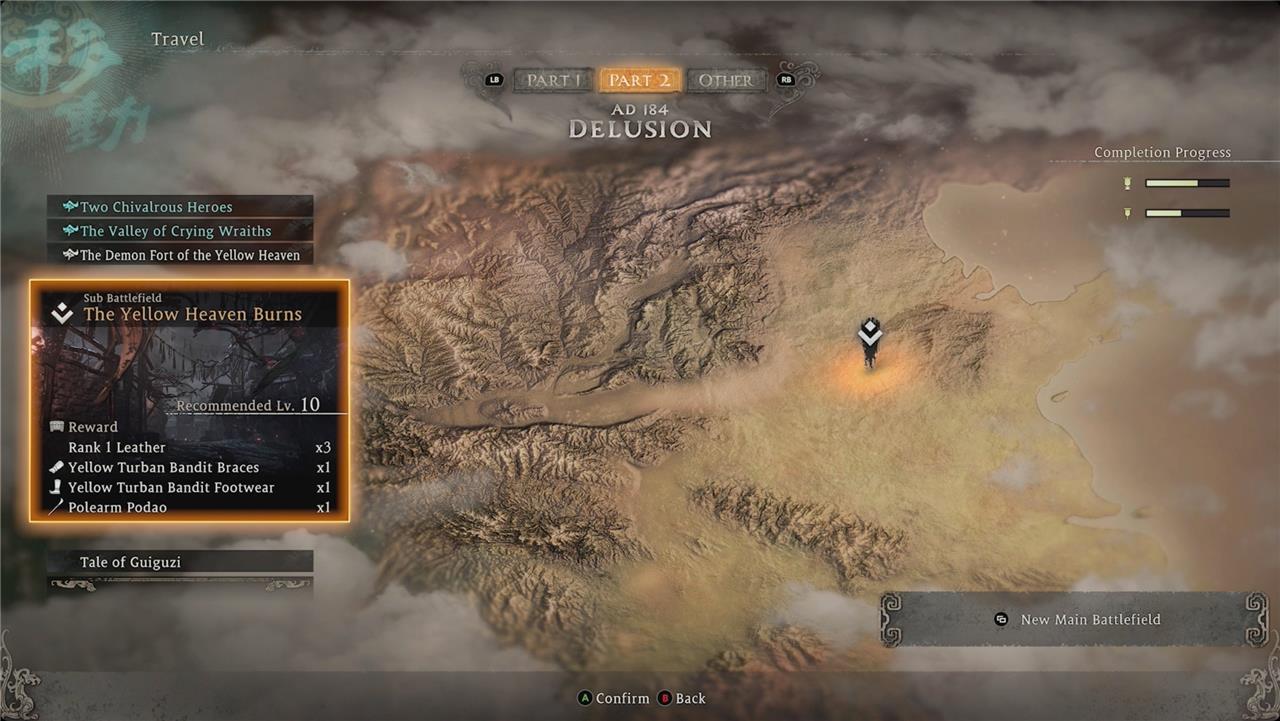
These Sub Battlefields are smaller, shorter fights compared to the main Battlefields. They’re good to take on, though, because they get you new gear and new upgrade materials as rewards.
We broke down Wo Long‘s confusing equipment system here, but let’s talk about equipment weight.
Gear and equipment weight are more important than you’d think
Carrying too much gear in Wo Long: Fallen Dynasty can seriously slow you down and make dodging or attacking feel sluggish. Your equipment weight affects stamina recovery and movement speed, so keeping your load balanced can mean the difference between a clean dodge and a punishing hit. Light armor lets you move quickly but offers less protection, while heavier sets absorb more damage at the cost of agility. Finding a setup that suits your fighting style will make battles far smoother and more enjoyable.
There are no classes in Wo Long, so you’re free to create your own based on how you level up – determined by which Five Phases Virtues you put points into when you level up – and the gear you decide to equip.
Gear has a whole system of upgrades and rarity. The most important part to understand early, though, is your Equipment Weight rating – basically, your character’s encumbrance. (You can increase your Max Equipment Weight by increasing your Earth Virtue when you level up.)
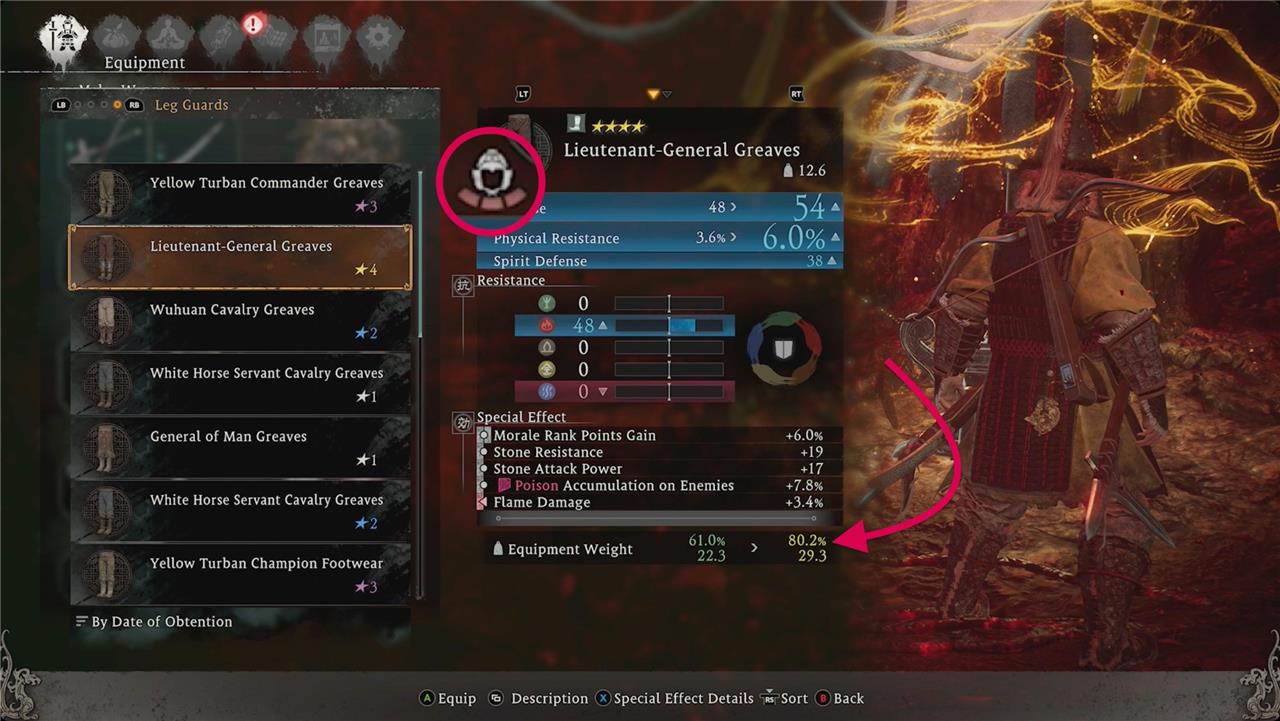
When you’re picking out armor, you’ll see a tiny icon just below and to the left of the picture. This is a marker for light, medium, and heavy armor. There’s a little gauge below the helmet icon with one, two, or three chunks filled in to indicate that.
There’s also an equipment weight displayed at the bottom of the equipment’s card. Confusingly, the percentage shown here is not the percentage of your max capacity. Instead, it’s how much this piece of equipment contributes to your current load. For the percentage of your max capacity, you’ll have to look on the Status screen.
The amount you’re carrying turns into a stat you can find on your character’s Status menu tab. You’ll see the max weight of equipment you can carry, the percentage of the max weight your current armor is, and a letter grade. The letter is your Agility stat – A is about 0-30% of your max, B is roughly 30-70%, C is 70-100% or so, and D is anything over 100%.
Aside from how quickly you move, that Agility stat determines how fast your Spirit drains. And Spirit is a big deal in Wo Long.
Spirit is the most important gauge
Spirit determines almost everything about your combat flow in Wo Long: Fallen Dynasty. It acts as both stamina and resource pool, affecting your ability to block, dodge, cast spells, and perform powerful attacks. Building positive Spirit through aggressive actions rewards you with stronger options, while excessive defending or missed hits pushes it into the negative, leaving you exposed. Managing this balance is the heart of each battle-players who master Spirit control will always have the upper hand.
In Wo Long: Fallen Dynasty, think of your Spirit as a combination of a stamina gauge and a mana gauge. Both your character and every enemy have Spirit Gauges.
You’ll lose Spirit when you get hit or dodge, and you’ll spend Spirit to cast Wizardry Spells or perform Martial Arts. You’ll gain Spirit when you land regular melee attacks or when you successfully deflect an attack. Getting hit with some attacks shrinks the upper and lower limits of a character’s Spirit gauge.
When a Spirit Gauge is drained to its lower limit, that person (or demon) will be stunned for a few seconds, opening them up to a powerful attack. Your goal is to avoid that happening to you, and, more importantly, make sure it happens to your enemy. Those attacks when they’re stunned are invaluable in boss fights.
Managing your Spirit gauge while you deplete your enemies’ is key in Wo Long. And the best way to do it is by deflecting.
Deflecting is just as important as attacking
In Wo Long: Fallen Dynasty, mastering deflection counters enemy strikes with precise timing, turning their aggression against them. This mechanic demands focus on parrying over pure offense, as successful blocks drain foe stamina while opening attack windows. Neglect it, and bosses overwhelm you; pair it with strikes for survival in brutal fights.
Wo Long‘s deflect is a lot like a parry in other games. You hit the B/circle button just before an enemy’s attack lands and it redirects the attack. This is different from simply guarding against an attack – something you can also do, but it’s less useful.
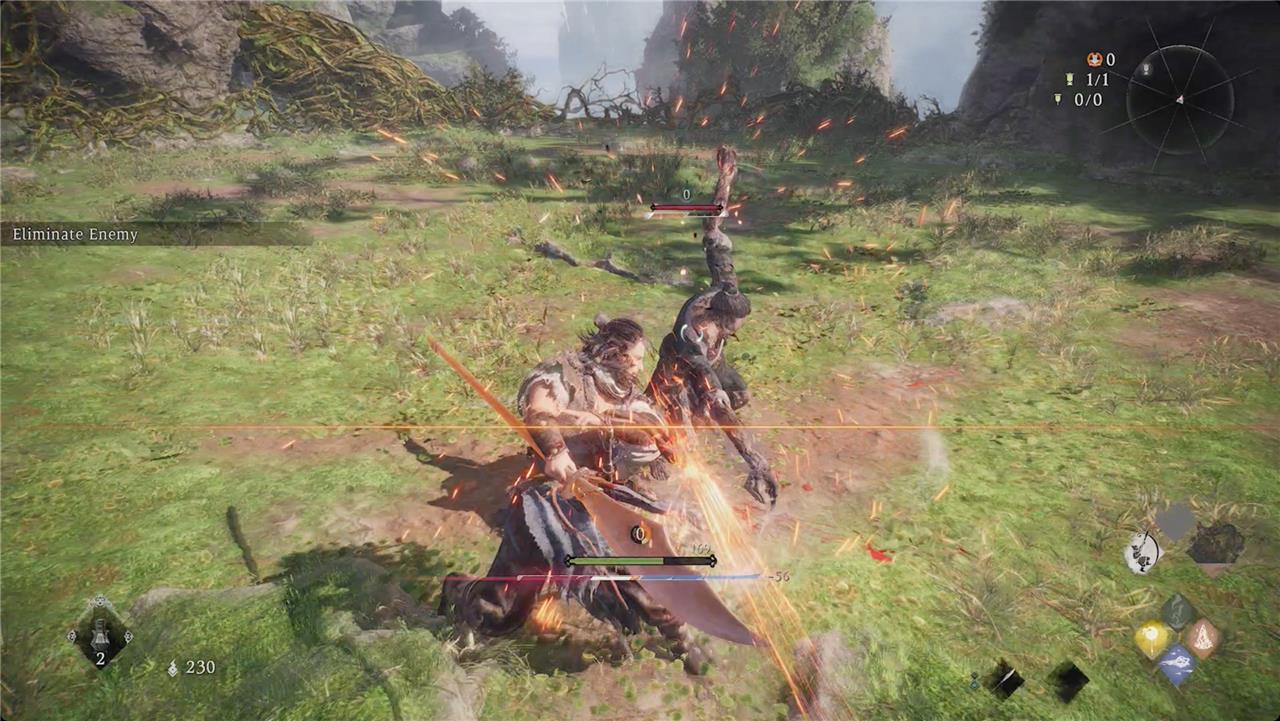
As opposed to guarding, that simply drains your Spirit gauge, deflecting both shrinks and damages the attacker’s gauge. And that is how you control fights – that’s why we brought it up so much in the first boss fight guide.
Best weapons and builds for beginners in Wo Long Fallen Dynasty
Wo Long: Fallen Dynasty offers flexible builds for beginners, emphasizing survivability through Wood and Earth Virtues early on. Focus on accessible weapons like the starting Ring Pommel Sabre while leveling key stats for HP, defense, and reach.
Wood-Earth Tank Build
Prioritize Wood (for HP) and Earth (for heavier armor tolerance) as primary stats.
Use Spears or Hammers for range and stagger potential, with Ring Pommel Sabre as a fast secondary option.
Equip heavy armor and spells like Absorb Vitality or Rock Toughness to sustain through early bosses like Zhang Liang.
Fire-Wood Melee Build
Level Fire and Wood for attack power and HP balance.
Swords or Ring Pommel Sabre shine here due to quick combos and scaling; pair with medium armor.
Add Flame Weapon or Amplify Damage spells for offense, relying on deflections over blocking.
Earth-Metal Glaive Build
Boost Earth and Metal for defense and cheaper wizardry.
Glaives provide speed, reach, and damage synergy; heavy armor maximizes tankiness.
Spells like Stone Weapon or Quakebound enhance melee pressure while holding Spirit.
Early Weapon Priorities
| Weapon | Type | Why Beginner-Friendly | Scales With |
|---|---|---|---|
| Ring Pommel Sabre | Sabre | Fast attacks, starting gear | Wood, Fire |
| Great Club of Polaris | Hammer | High stagger, early drop | Wood, Earth |
| Podao | Polearm | Reach for safe pokes | Wood, Earth |
| Sword (early variants) | Sword | Quick DPS chains | Wood, Fire |
Leveling Tips
Spend Genuine Qi at Battle Flags on one primary Virtue first (e.g., Wood to 20+), then branch out. Unlock elemental weapon buffs at 12 per Virtue for versatility. Respec freely later via the blacksmith; test at flags before bosses.
Where to find Ring Pommel Sabre and Great Club of Polaris early game
The Ring Pommel Sabre and Great Club of Polaris are both accessible right at the start of Wo Long: Fallen Dynasty, making them ideal early-game picks for beginners.
Ring Pommel Sabre Location
You start the game equipped with a basic version of the Ring Pommel Sabre, a fast straight sabre that excels in quick combos and scales primarily with Wood and Fire Virtues.
A stronger upgraded version drops early in the main story, often from enemies like Yellow Turban soldiers or officers in the first mission (“Village of Calamity”) or shortly after in “Two Chivalrous Heroes”.
Farm additional copies from terracotta soldiers or demonized foes in later early missions if needed for set bonuses.
Great Club of Polaris Location
Defeat Zhang Liang, General of Man-the very first boss after the tutorial and initial village section-to automatically receive the Great Club of Polaris as a drop.
This hammer offers high stagger damage and scales mainly with Earth (C-) and Fire (D-), pairing well with tanky Wood-Earth builds.
It also comes with bonus armor from the boss, though it’s heavy, so watch your equipment weight.
Quick Access Tips
-
Mission Path: Both are in Chapter 1, Mission 1 (“Village of Calamity”)-Ring Pommel is immediate, Club from the boss at the end.
-
Plant Battle Flags before the boss for easy retries and leveling.
-
Use these weapons’ reach and speed to practice deflections on early enemies.
